
Not with All These Trade Barriers!
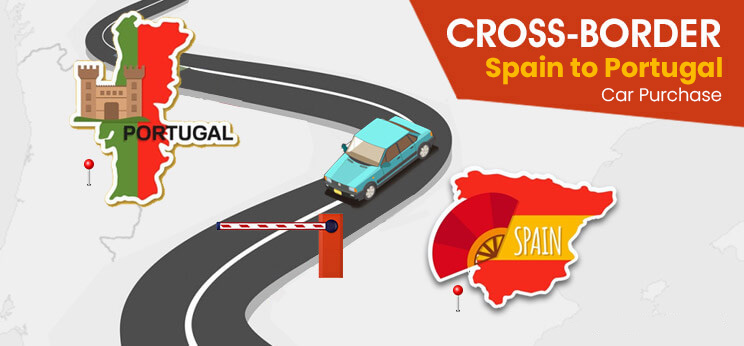
The European Union aims to enable EU citizens – and legal residents – to study, live, shop, work, and retire in any EU country while enjoying products from all over Europe. To accomplish this, it ensures the free movement of goods, services, capital, and persons in a single EU internal market.
Sounds like a great idea!
By removing technical, legal, and bureaucratic barriers, the EU also allows people to trade and do business freely in this “single market.”
That’s all well and good. But moving beyond principles to practice, let’s see if and how this market actually works. To simplify matters, we’ll consider just two EU members – Portugal and Spain – and one item to be traded: vehicles.
According to the EU’s Competition Commissioner Mario Monti:
“More competition in car distribution leads to lower prices. By finally tearing down remaining obstacles to cross-border vehicle purchases, consumers will make use of the full potential of the single market for car purchases.”
The above quote referred to new EU laws effective October 2003 that would make car sales more competitive throughout member nations.
Even before then, no dealers could be prevented from supplying cars to consumers from abroad, allowing them to make cross-border purchases.
The Commission’s twice-yearly car price report consistently revealed major differences in car prices between EU Member States. A study published for the Commission concluded that the differences couldn’t be totally explained by differences in tax levels.
So, why can’t I buy a car in Spain and register it in Portugal?
Theoretically, I should be able to …
But it just doesn’t work that way.
Let’s begin with buying the car. I’m a legal and fiscal resident of Portugal who wants to buy a car in Spain because there’s a much larger pool of competitive vehicles to choose from there and – bottom line – the prices are substantially lower for cars new and used in Spain than in Portugal.
What does Spain require of people to buy cars in its country? Can I really buy a car in Spain if I’m a non-resident foreigner? The good news is that non-residents can indeed purchase a car in Spain, regardless of their nationality.
Spanish law allows “foreigners” to own a car in Spain. You don’t need to be a resident in Spain to buy a car a Spain, whether new or second-hand, but you will be required to provide proof of address, even if this address is for less than six months of the year. Foreigners who don’t hold Spanish residency cards must present an identity document from their country of origin, if they are citizens of member states of the Agreement on the European Economic Area (EEA) … or a passport or certificate of nationality if they are citizens of third-party countries. It also stipulates that they must provide proof of address in Spain by any of the following documents: empadronamiento (certificate of residency from the municipality where you live full-time or on vacation), or house deeds, or a lease contract. Also required is a Tax Identification Number (NIE).
For those who own property in Spain, this shouldn’t be a problem as an NIE is prerequisite to making any major purchase—i.e., cars and homes. Nonetheless, unless you claim Spain as your fiscal and legal residency, you shouldn’t register as a padrón at your local town hall in Spain because doing so can subject you to Spanish taxes that you shouldn’t be paying!
Do I need a padrón certificate to purchase a vehicle?
“This is a question that continually crops up on our Facebook group page, owning to misinformation from personnel at many vehicle dealerships,” reports Citizens Advice Bureau Spain, a registered charity and Spanish Non-Profit/NPO/ONG organization (Registration nº 11253). “Nonresidents should not be registered on the padrón (unless habitual residents of a town in Spain). Nonresidents, many who own holiday homes here, are entitled to purchase a car … and many do. They are not registered on the padrón. What is needed to purchase a vehicle is your ID—such as passport or ID card and an NIE number. The padrón is a census and could have tax implications for those registering. By being inscribed on the register, you are stating that you reside in Spain.”
Maybe so. But reread the words above carefully: what’s referred to here is buying a car in Spain … not registering it in Spain. Yes, we can buy cars in Spain, but the country won’t let us register, drive, and maintain them there with Spanish plates unless we have Spanish residency. Otherwise, we can buy a car in Spain but register it in our country of residence. In Portugal, for instance, that takes lots of money (especially if the car is less than 15-years-old and you need to pay 23% IVA), time, and patience with the bureaucracy.
Okay, let’s take all this pomp and circumstance and see how or if it works.
I already checked the market for second-hand cars in Portugal online. I found one in Spain that matches what I’m looking for, Virtually the same car – make, model, mileage, year, condition, options, etc. – costs twice the price in Portugal than Spain. So, I send the dealer an email from Portugal saying I want to buy the car. Included as attachments are copies of my passport, NIE, deed to my house in Spain, utility bills, and my Portuguese residency.
The dealer in Spain, however, balks … insisting that I must provide a copy of my padrón from Olvera, the town where our getaway home in Spain is located. I send him a link to the Citizens Advice Bureau declaration, which I translate to Spanish. He refuses to budge, continuing to insist that I must send him a padrón I don’t have. We engage in emails back and forth as I research and report on the issue using Google with Spanish prompts.
Meanwhile, I am engaged in another herculean endeavor: trying to secure insurance for the car so I can drive it. I first contact the insurance agency in Portugal that’s issued insurance on our other car, health, and houses. “We’re sorry, Bruce,” says my agent. “We cannot insure cars that aren’t registered in Portugal. You must obtain Spanish insurance until your car is inspected and registered in Portugal.”
Okay, I think. No problem. I’ll contact the Spanish agency that insures our little pied a terre in Spain. I email our agent, explaining the situation, and attaching a copy of our original insurance policy issued more than five years ago when we bought our first car in Portugal. I also attach copies of the last two year’s renewal bills. Considering that we pay €400 per year in Portugal for comprehensive coverage of a new 2022 Dacia Duster, I’m blown away when our agent in Spain replies with an insurance proposal of €1,263 (per year!) on a 2008 car that would be driven only occasionally. This, from an agency that saved us almost €300 per year on our home and property insurance. The agent tells me that she will contact her superiors and try to do better. She comes back with several offers, all way too much.
Next, I use Google to search for “Seguros baratos para coches en España”–cheap vehicle insurance in Spain. Up pops a list of more than a dozen companies, all with websites and all with online premium simulators after answering a few simple questions. One by one, I visit the companies online and complete their questionnaires. I’m amazed at the results returned, ranging from €240 to about €500 per year. I breathe a sigh of relief: I can get insurance at a reasonable price in Spain to cover my car until I can get it registered in Portugal.
Except, I can’t …
Although the rates look great in their proposals, when I try to purchase the insurance, a few other questions appear: Approximately how many kms. do I estimate putting on the car each year? Will the car be used for business or pleasure? Will I be using it to commute back and forth to work? Is there anyone in my household under the age of 26 who will be driving the car? How long have I had vehicle insurance in effect—from less than one year to more than four? And, finally, what are the last five (5) digits of my current insurance policy?
Diligently, I answer the questions. But suddenly, a new rate is proposed … double or triple the original cost! Six different companies offered me reasonable rates. I went back to my saved proposals and tried to buy insurance from each. Same set of questions to answer, same result from each. Why, I wondered? What’s the problem here?
Turns out the culprit is those last five digits entered from my current insurance policy: They’re from Portugal and aren’t recognized in Spain.
One of the European Union’s comprehensive single market ambitions is what it says about insurance, specifically addressed in DIRECTIVE 2009/138/EC:
(2) “In order to facilitate the taking-up and pursuit of the activities of insurance and reinsurance, it is necessary to eliminate the most serious differences between the laws of the Member States as regards the rules to which insurance and reinsurance undertakings are subject. A legal framework should therefore be provided for insurance and reinsurance undertakings to conduct insurance business throughout the internal market, thus making it easier for insurance and reinsurance undertakings with head offices in the Community to cover risks and commitments situated therein.”
(11) “Since this Directive constitutes an essential instrument for the achievement of the internal market, insurance and reinsurance undertakings authorised in their home Member States should be allowed to pursue, throughout the Community, any or all of their activities by establishing branches or by providing services. It is therefore appropriate to bring about such harmonisation as is necessary and sufficient to achieve the mutual recognition of authorisations and supervisory systems, and thus a single authorisation which is valid throughout the Community and which allows the supervision of an undertaking to be carried out by the home Member State.”
(16) “The main objective of insurance and reinsurance regulation and supervision is the adequate protection of policy holders and beneficiaries. The term beneficiary is intended to cover any natural or legal person who is entitled to a right under an insurance contract. Financial stability and fair and stable markets are other objectives of insurance and reinsurance regulation and supervision which should also be taken into account but should not undermine the main objective.”
In other words, to benefit consumers, insurance companies in member states should cooperate with each other (and their respective states) to facilitate insurance transactions between one member state and another.
Quite a noble objective!
But this 2009 directive isn’t operating 14 years later (2023).
Meanwhile, the car dealership steadfastly refuses to sell me the car without a padrón. Even if I can find a comparable car from a more compliant seller, I still face the challenge of insuring it. To be honest, I now have in hand a document from my Portuguese insurance agency stating that I have had vehicle insurance with them for more than five years, and that I have had no accidents or claims during this time. Hopefully, this document will override the disconnect between the last five numbers of my Portuguese insurance in Spain.
Yet, assuming I could buy a car and have it insured in Spain, that doesn’t account for all I must do to register the car in Portugal.
First, I must have the car inspected by an authorized Portuguese vehicle inspection center. Cost: about €75. Second, I need to go to a customs agency and explain – perhaps in Portuguese – that I want to register my car in Portugal. They will give me a vehicle customs declaration (DAV) form to fill it out and then wait for a response, which usually takes the form of a vehicle tax (ISV), as well as Portugal’s 23% IVA. Cost for my €5,000 car: about €1,250. (In Portugal, the tax value depends on various factors like the level of CO2 emissions produced or the age of the car. I may be exempted from paying IVA only if the car has been in my name for at least six months prior to moving to Portugal; and I must have lived in the country the car is from for at least six months.) I must order a “Certificate of Compliance” from the car manufacturer’s licensed agent to document that the car meets Portugal’s (EU) standards. Cost: about €300. Within 60 days of being issued the Vehicle Customs Declaration, I need to go to an IMT counter with all the supporting paperwork and ask for Single Vehicle Documentation, kind of an identity card for my vehicle. I will also have to bring it to yet another institution, the automobile registry office, to complete the registration process after paying all the fees and taxes. But, first, IMT will need to have my Certificate of Compliance (COC) “homologated,” meaning that my car and its technical characteristics really match the technical characteristics stated in the COC. Supposedly, I will get the homologation after “some days” and, equally amazing, the process is free of charge!
I’m here to tell you that it just ain’t happening …
The European Union operates with the best of intentions. But let’s not forget that the road to perdition is paved with good intentions.
Ultimately, I spent about €3,000 more to buy my second-hand car in Portugal, where it already was registered. There were no taxes to pay, just a form to fill out and about €50 in IMT fees.
Bruce H. Joffe is publisher and creative director of Portugal Living Magazine.
 "Exactly!"
Hi, Did you ever get any joy from the trouble you had with the Jag, Maria Paula and DIMI … I ask because I had the same problem ….. Would be so glad to hear from you. Thanks.
Howdy.
No. None whatsoever. We filed “official” reports — online and in person — as well as spoke to several firms that specialize in “scam” schemes. Ours was too pittance of a sum for any to care or represent us.
Hope you do better!
/bruce.