Hiding in Plain Sight

How artificial intelligence quietly took up residence in our inboxes, cars, cameras, bank accounts, and living rooms—long before most of us started worrying about it

Bruce H. Joffe*

At 7:03 on a weekday morning, a man in Lisbon reaches for his phone before he’s fully awake.

He checks his email first. A few messages sit in the inbox; dozens more have been silently diverted elsewhere—junk mail, phishing attempts, marketing blasts, the digital equivalent of flyers stuffed under a windshield wiper. He glances at the weather. He asks for directions to an appointment across town and is told to avoid one route because traffic is building near the river. He dictates a quick text instead of typing it. On the way out the door, his phone suggests the podcast he usually plays on Wednesdays. Later, his bank pings him to confirm a purchase that doesn’t fit his normal spending pattern. That evening, a streaming service serves up a crime series eerily calibrated to his taste, while a security camera at home decides the movement on the front step is a package, not a person.

None of these moments feels especially futuristic. None would make a compelling movie scene. There are no humanoid robots, no glowing red eyes, no disembodied machine voice announcing that civilization has entered a new era. There is only the filtered inbox, the optimized route, the recommended song, the fraud alert, the sharpened photograph, the personalized feed.

Yet artificial intelligence is omnipresent and omniscient in nearly every one of those moments.

Is it omnipotent, too? And are these qualities of AI good things or bad?

That’s the oddity of AI in public life. For years, the technology has been sold to us in two contradictory ways. On one hand, it has been framed as an impending revolution, always just over the horizon, promising either astonishing prosperity or social collapse. On the other, it already has seeped so deeply into ordinary routines that much of it no longer registers as something extraordinary. We talk about AI as though it is arriving tomorrow, even as it has quietly spent the last decade rearranging the texture of daily life.

The result is a strange kind of collective misrecognition. Ask people where AI figures in their lives and many will point to chatbots, image generators, or the latest software capable of imitating human prose, voice, and imagery. Those are the visible, headline-grabbing forms of AI—the kind that inspire awe, panic, or breathless TED Talk predictions. But the more consequential story may be the less theatrical one: AI as a background infrastructure, embedded in the systems that sort, rank, predict, detect, recommend, translate, and optimize.

In that sense, artificial intelligence has become less like a robot and more like plumbing. It sits behind the walls of digital life, unseen but constantly at work, shaping what we see, where we go, what we buy, how we travel, whom we hear from (and don’t), and which risks get flagged before they become crises.

AI is not one single thing. It is a sprawling collection of systems making assumed judgments on our behalf—some trivial, some useful, some manipulative, some indispensable.

To understand how thoroughly AI has become the substance of ordinary life, it helps to stop thinking of it as a master machine and start considering the kinds of work it performs every day. Increasingly, that work falls into four broad categories: predicting what we want, watching for what might go wrong, curating what we see, and making small decisions on our behalf.

In other words, we need to become adept at connecting the dots.

The Prediction Conglomerate

One of AI’s most pervasive talents is prediction—not in the mystical sense of foretelling the future, but in the more mundane, commercially useful sense of guessing what is likely to happen next: What song will you want to hear? What route will get you home fastest? Which word are you trying to type? Which movie are you most likely to watch when you’re too tired to choose carefully? How much money is in your bank account at this moment? Who has taken money out and put money in? What’s the correct spelling of that word you’re wrestling with in Spanish?

Recommendation systems are perhaps the clearest example of AI’s predictive abilities.

Streaming platforms like Netflix, Spotify, and YouTube don’t merely store content; they study behavior. They track what users click, skip, replay, abandon, and binge, then use those patterns to forecast what will keep a person engaged for one more song, one more episode, one more hour. In practice, this means that entertainment platforms are no longer passive libraries. They are active editors of our leisure, arranging choices in ways designed to feel intuitive, personalized, and a little uncanny.

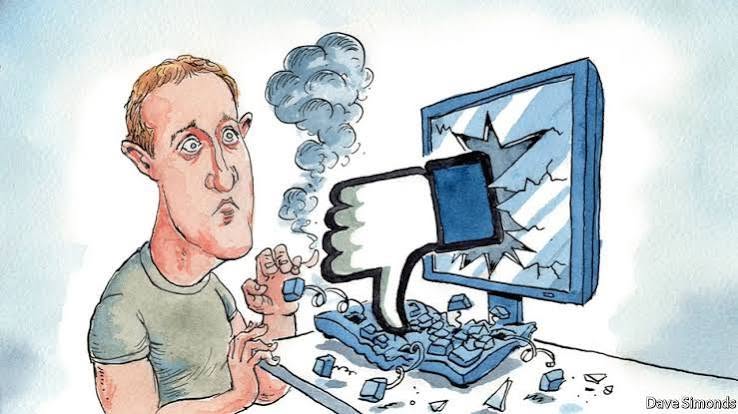
That can be very dangerous and illegal. Take the case of social media, which operates on the same premise. Remember the Facebook–Cambridge Analytica scandal which involved the unauthorized harvesting of personal data from an estimated 87 million Facebook users to micro-target voters during the 2016 U.S. presidential election? The personal data was used to build psychological profiles to influence voters in favor of political campaigns, most notably those of Donald Trump and Ted Cruz.

Following global outrage and an undercover investigation exposing corrupt practices by CEO Alexander Nix, Cambridge Analytica shut down in May 2018. Facebook CEO Mark Zuckerberg was forced to testify before the U.S. Congress, and the company later agreed to a $725 million class-action privacy settlement alongside a $5 billion fine.

How do I feel about knowing that AI is always lurking around, studying me everywhere and recommending what it presumes I would want to see, hear, or do based on my past behavior?

The same predictive logic animates navigation apps. A map app does not simply tell you the shortest route from one address to another; it predicts how traffic is likely to behave by the time you reach a particular interchange, whether an alternate road will save three minutes, and how thousands of other drivers are moving through the same geography. The estimated arrival time on a phone screen is not neutral. It is an algorithmic forecast, continuously revised as conditions change based on real-time data and patterns. That is, assuming it works. Often it doesn’t. Especially in later model vehicles whose GPS and navigation capabilities are based on your mobile phone and the car’s software being in sync and cooperating with each other.

AI algorithms are very different, however, from other qualitative and quantitative metaphysics. Both the primitive Dewey Decimal System and Library of Congress classification and coding systems were archetypical algorithms that helped us to find information easier and quicker. But they were neither predictive nor predatory. AI can be – and is – both.

Prediction also lives in the keyboard. Autocorrect, predictive text, grammar suggestions, “Smart Compose” in email, and even the quick one-tap replies that appear beneath a message all rely on the same premise: language is “patterned” enough that software can guess what a human is about to say or think. Sometimes the guess is useful. Sometimes it is absurd. Either way, it reflects a quiet but radical shift in the relationship between people and their machines. We no longer are simply using tools to write; increasingly, the tools are trying to write alongside or ahead of us.

Does that compromise our creativity? No longer do we scratch out and substitute something different and, hopefully, better (or erase, for that matter). We needn’t even rely on the backspace button on our keyboards. Because no matter the changes we make, AI adapts and adopts them. And continues insisting that it is merely an adjunct, helping us simply to do and make better.

Where does our inherently human train of thought fit amidst this predisposed writing?

Online shopping is fundamentally predictive. It begins when deciding whether “apple” means the fruit or Apple the computers and smart phones. Retailers track what customers browse, compare, buy, and leave behind in abandoned carts, then use those signals to infer taste, price sensitivity, urgency, and intent. The recommendation for the waterproof hiking socks that appears after you buy hiking boots is not random. It is a probabilistic judgment about who you are as a consumer and what you are likely to do next. If Amazon seems to know what you want before you do, that’s not magic. It’s pattern matching at scale.

The cumulative effect of all this prediction is subtle but powerful.

AI does not merely respond to our choices; it increasingly anticipates them, arranging digital life around what it assumes we are about to want

In plain English, AI is curating our reality one swipe at a time.

Foxes in the Hen House?

If one branch of everyday AI exists to anticipate desire, another exists to detect trouble.

This is the less glamorous side of the technology, but often the more valuable one: systems trained not to tease and delight us, but to notice when something is off.

Email spam filters are the veteran workhorses of this category. They scan incoming messages for patterns associated with fraud, phishing, manipulation, and bulk solicitation, quietly sparing users from a flood of junk and scams. Because they work so well most of the time, they have faded into the background. But the ability to distinguish between a legitimate invoice, a political fundraising plea, and a fake password-reset message is not a trivial technical feat. It is a continuous act of machine judgment, built on recognizing ever-changing patterns of digital deception.

It is here, I believe, that AI has gone too far and invades our privacy.

Yahoo Mail now reads my correspondence and, for almost every email I receive, categorizes it, tells me what it’s about, and provides a summary of the content. Sometimes, it even hints at (or suggests) how I am being asked to respond and what actions I should take.

Banks and credit card companies do something similar with money. When a card issuer texts to ask whether you really made a purchase in a city you’ve never visited or flags an online order that doesn’t match your typical spending behavior, it is often responding to an AI system trained to detect anomalies. The software is not “thinking” in any human sense, but comparing the present against a history of past behavior and asking a practical question: does this look like you? Did you do this? (No need to respond if, indeed, you did.)

Moreover, a lot of “Press 1 for billing” systems are now smarter than they sound.

The same logic is moving into homes and cars. Smart doorbells and security cameras distinguish between people, packages, animals, and harmless motion, reducing false alarms while turning ordinary household surveillance into a more selective form of machine attention. Refrigerators inform us when we’re running low on certain groceries. Wearables and smartwatches watch for irregular heart rhythms, unusual sleep disruptions, or sudden changes in biometric patterns. Modern cars monitor lane position, blind spots, nearby vehicles, and sometimes even signs of driver fatigue, sounding alarms or nudging behavior before a lapse becomes an accident. If my 2025 Open Astra suspects that I’m edging out of my lane or too close to the road shoulders, it physically pushes the car back into place.

Does this resemble the cinematic AI of science fiction? Or is it something both more prosaic and useful: software standing guard over the unnoticed vulnerabilities of daily life, scanning for the suspicious charge, the dangerous drift, the missed cue, the thing that doesn’t fit.

So far, so good, huh?

Minding My Business

Prediction and protection are only part of the story.

Some of the most powerful AI systems in everyday life do not simply guess what we want or warn us about danger. They decide what we see in the first place.

This is most obvious on social media, where the feed has become one of the defining AI products of the modern era. What appears on Instagram, Facebook, TikTok, X, or YouTube is not simply a chronological record of what other people posted. It is a ranked and filtered stream assembled by systems designed to maximize attention. AI decides which posts rise, which disappear, which videos autoplay, which creators gain momentum, which comments are hidden, and which ads seem to follow users from one app to the next. The feed can feel organic, even intimate, but it is the result of relentless technological curation. These social media have now invaded my personal email, advising me about job openings I should apply for, suggesting people to friend or follow, alerting me not to miss a given post, podcast, or person on their platforms.

News platforms increasingly work the same way.

Apps and websites recommend stories based on reading history, rank headlines according to predicted interest, and use moderation tools to suppress spam, abusive comments, or suspicious activity. In principle, this makes digital information easier to navigate. In practice, it also means that AI is helping shape the architecture of public attention—what seems urgent, what appears popular, what is amplified, and what quietly disappears.

Search engines belong in this category, too. They are often discussed as neutral gateways to information, but modern search is as much about curation as retrieval. AI helps determine what a query means, which sources deserve prominence, and what kind of answer format—webpage, map, video, snippet, shopping result—will most likely satisfy the user.

Gemini (owned by Google/Alphabet), ChatGPT, Claude, Copilot, Meta AI, and others are quickly replacing Snopes and other fact-checkers. See something posted on social media that doesn’t seem kosher? If it’s questionable, just ask one of these AI engines. Not only will they tell you whether it’s true or false but provide a history and context framing it.

How easy AI makes it to find information!

Who was the actor that played a given TV character? What warning is an H5 code on my air conditioner giving me … and what should I do about it if I can’t find the manual that came with the appliance five years ago? When did man first walk on the moon? Where can a find a particular product nearby (or online)? Why won’t my keyboard characters match what’s appearing on the screen … and how do I correct this? How do I say something in Spanish, French, or Swahili?  

Search no longer simply finds information. It organizes a version of the world and presents it back to us in ranked order.

This may be AI’s most underestimated power: not just to respond to human curiosity, but to structure it. To place certain choices, ideas, products, and stories directly in front of us while leaving others in the shadows.

That’s why, when in doubt, I tend to use more than one AI program to double-check another.

Making Decisions for Me

Another category of everyday AI feels almost administrative yet may be the most consequential of all: systems that make small decisions on our behalf so routinely that we barely notice the delegation.

When a customer-service chatbot decides which support path you need, when a call-routing system infers whether you are calling about billing or a lost password, when a hiring platform ranks one résumé above another, or when a translation app decides how to render your sentence into another language, AI is not merely making a suggestion. It is making a choice—sometimes a minor one, sometimes a consequential one—about how the world should be sorted and how a person should proceed through it.

AI is not just recommending content. It’s learning what version of content gets our attention.

Hiring software offers one of the clearest examples. Employers increasingly rely on AI to screen applicants, match résumés to job descriptions, and surface candidates who appear most relevant. On paper, this can sound efficient, even rational. In practice, it means that invisible systems may determine who gets noticed and who gets filtered out long before a hiring manager enters the picture. A messy, subjective human process does not become neutral simply because software now helps administer it. It’s not always fair or accurate, but it is very common.

Customer service works similarly, if on a smaller scale. Chatbots and automated support systems now answer routine questions, summarize previous interactions, draft replies for human agents, and steer customers toward specific solutions. Translation tools make judgment calls about tone, phrasing, and context. Meeting software decides how to transcribe spoken language into text. Smartphone cameras decide how aggressively to brighten a night shot, smooth a face, or blur a background. None of these are monumental decisions. But together they reveal something important about the trajectory of AI: much more of modern life is being mediated by systems that quietly decide, sort, classify, and act before a human intervenes.

That delegation is seductive because it feels efficient. It reduces friction. It saves time. It spares us from tiny acts of effort and judgment. But it also normalizes a world in which mechanisms make more of the small calls that shape daily experience—not only what we consume, but what we miss; not only what gets flagged, but what gets through; not only what gets recommended, but what gets decided for us in advance.

And for whose benefit?

Technology We’ve Already Accepted

The easiest mistake to make about artificial intelligence is to think of it primarily as a future event—as a dramatic threshold we are about to cross. This is the version of AI that dominates public argument: the chatbot that might replace writers, the autonomous agent that might replace office workers, the bots that flood politics with misinformation, the automated supermarket checkout that replaces cashiers, the machine that might one day become out of our control.

Those concerns are not imaginary. But they can obscure a simpler and more immediate truth: much of the AI revolution has already happened … and it happened quietly.

It happened in the inbox, where spam filters became smarter than human patience. It happened in the map app that rerouted the commute. It happened on the streaming platform that learned our tastes, the bank that learned our spending habits, the camera that learned how we preferred to look, and the feed that learned what could hold our attention a little longer. It happened in the thermostat, the smartwatch, the résumé screener, the caption generator, the chatbot, the fraud detector, and the keyboard trying to finish our sentences.

A lot of what people think is a “better camera lens” is actually computational photography powered by AI. Most newer cars are already partial AI systems on whells.

That is what makes AI both less exotic and more important than popular imagination often allows. It is not just a spectacle of futuristic possibility; it is a layer of decision-making and prediction already embedded in the infrastructure of ordinary life. It can be useful, manipulative, protective, intrusive, efficient, biased, boring, indispensable, and unnerving.

Sometimes simultaneously.

Before we ask what artificial intelligence will become, it is worth recognizing what it already is: not merely a tool of the future, but a hidden collaborator in the present. A system of quiet judgments, small conveniences, and invisible interventions that have taken up residence in modern life so thoroughly that most of us notice it only when it fails.

The most common AI in our daily lives isn’t glamorous. It’s not humanoid robots or dramatic sci-fi stuff.

AI, in other words, is no longer just coming for the future.

It has already moved into the house, woven into the invisible plumbing of modern life.

*with a little help from AI.

The Biggest Lie

If the “Big Lie” purported by Donald Trump referred to his verifiable loss of the 2020 election, fact-checkers to his continuing series of reckless lies (“alternate realities,” as one of his first-termers called them) have counted hundreds — possibly thousands — of other lies … especially since he was elected to a second term.

But, perhaps, his election is an even a bigger lie?

“Donald Trump filled his first 100 days back in office with the same relentless lying and inaccuracy that was a hallmark of his first presidency and his 2016 and 2024 presidential campaigns,” stated CNN’s Daniel Dane, who listed 100 separate false claims from Trump since his inauguration on January 20, fact-checked concisely with hyperlinks to more information.

During his first term as the 45th President (2017–2021), The Washington Post’s Fact Checker team documented 30,573 false or misleading claims over four years, averaging about 21 per day. This number increased over time: roughly 6 claims per day in his first year, 16 in the second, 22 in the third, and 39 in the fourth, especially spiking around the 2020 election.

For his second term as the 47th President (starting January 20, 2025), CNN’s fact-check of Trump’s first 100 days (through April 2025) noted “relentless dishonesty” with at least 100 specific false claims identified, though they didn’t provide a daily average. NPR’s analysis of a single August 2024 news conference found 162 misstatements, exaggerations, or lies in 64 minutes, over 2 per minute. These snapshots suggest the pattern of frequent false claims has continued, though comprehensive data for the second term is still emerging.

PolitiFact, fact-checking Trump since 2011, reviewed 1,078 claims as of March 2025, rating about 77% as Mostly False, False, or Pants on Fire (their term for egregious falsehoods).

Trump’s falsehoods are unprecedented in scale and impact.

Critics note his repetition of false claims, like those about the 2020 election, exploits the “illusory truth effect,” where repeated exposure makes falsehoods seem believable, especially among supporters. Nonetheless, they’re still lies.

“During and between his terms as President of the United States, Donald Trump has made tens of thousands of false or misleading claims,” begins Wikipedia. “Fact-checkers at The Washington Post documented 30,573 false or misleading claims during his first presidential term, an average of 21 per day. The Toronto Star tallied 5,276 false claims from January 2017 to June 2019, an average of six per day. Commentators and fact-checkers have described Trump’s lying as unprecedented in American politics, and the consistency of falsehoods as a distinctive part of his business and political identities. Scholarly analysis of Trump’s X posts found significant evidence of an intent to deceive.”

So, it should come as no big shock that Trump is lying about his contribution to Jeffrey Epstein’s so-called Birthday Book. “Fake!” screamed Trump. And many of his Republican supporters on the Hill supported him, quibbling over the veracity of his signature.

They’ve got to be kidding!

This is no smoking gun. Rather, it’s not unlike Bill Clinton’s blue dress scandal. In November 1997, Monica Lewinsky told her confidant and supposed friend, Linda Tripp, that she had in her possession a blue Gap dress that still bore the semen stain that resulted from her administering oral sex to President Clinton in February of that year. In late July, 1998, Lewinsky turned the dress over to Kenneth Starr’s investigators after signing an immunity agreement. A blood sample was taken from Clinton on August 3, and on August 17, the FBI reported its conclusion that Clinton was the source of the semen on the dress “to a reasonable degree of scientific certainty.”

When news of the the existence of the dress surfaced in published reports in early August, politicians and commentators alike agreed that the blue dress proved Clinton lied when he denied a sexual relationship with Lewinsky. Senator Orrin Hatch (R-Utah) called the evidence “very critical.” Senator Arlen Spector (R-Pa) agreed that it would be “the most powerful kind of corroboration” of an affair. A George Washington law professor, Jonathan Turley, appearing on “Meet the Press” said of the semen stain: “No one will be able to spin him out of that.”

A US congressional panel has released a redacted copy of an alleged “birthday book” given to Jeffrey Epstein in 2003 celebrating his fiftieth birthday. The 238-page book contains messages and photos sent by many of Epstein’s friends, including a letter carrying a signature resembling US President Donald TrumpThe alleged entry from Trump contains a signed note outlined by a sketch of a woman’s body. The final line reads: “A pal is a wonderful thing. Happy birthday – and may every day be another wonderful secret.”

Trump denied ever writing the birthday note.

As for his doodles and signature in the book, he’s lying when claiming that they’re not his, as doubters and forensic experts already have expressed. The Wall Street Journal reports that the signature is consistent with Trump’s autographs in the past.

If not Trump’s, whose are they?

Why would someone — over 20 years ago — insert a fraudulent, forged greeting that echoed a younger Trump’s bawdy behavior and his clearly documented friendship with pal Epstein? What could be a possible motive? By whom? To what end?

It makes no sense whatsoever.

Except that Trump, once again, is lying.

Rather than a red herring, he’s been caught red-handed in a really big lie that may well cost him voters, even among his base.

Democrats on the House Oversight Committee also released a photo from the book showing Epstein holding a novelty check selling a “fully depreciated” woman to Trump for $22,500.

Ironically, Jeffrey Epstein reportedly had an oil painting of Bill Clinton conspicuously displayed in his Manhattan townhouse. The artwork by Petrina Ryan-Kleid shows the former US president draped over a chair in the Oval Office, dressed in a blue dress and red heels recalling his tryst with Monica Lewinsky.

In December 1998, the House impeached Clinton for obstruction of justice and perjury after Starr and his team brought forth documents showing, among other allegations, that the commander in chief had lied under oath about a relationship with former White House intern Monica Lewinsky.

Maybe this page from Epstein’s birthday book will turn out to be Trump’s semen-stained blue dress?

Food for Thought

It’s said that in these parts of the Alentejo, the best porco preto (“black pork”) is served in a town named Arronches, not far from Portalegre. We’ve come to love the sweet and savory taste of this pork … when well prepared. If not, it’s just another Portuguese dish.

Arronches is about 45 minutes from our home in Vila Boim, Elvas. We’ve passed by the place when visiting friends who live in the nearby village of Assumar; but we’ve never been to Arronches.

Today we went.

During this time of the year, many villages, towns, and cities in Portugal hold their own special ferias–holiday fairs. Somewhere online I’d seen that Arronches would be celebrating this weekend.

“Want to go?” I asked Russ earlier this week.

“Sure!” he replied. “Let’s see if we can finally find a good restaurant to try the porco preto.”

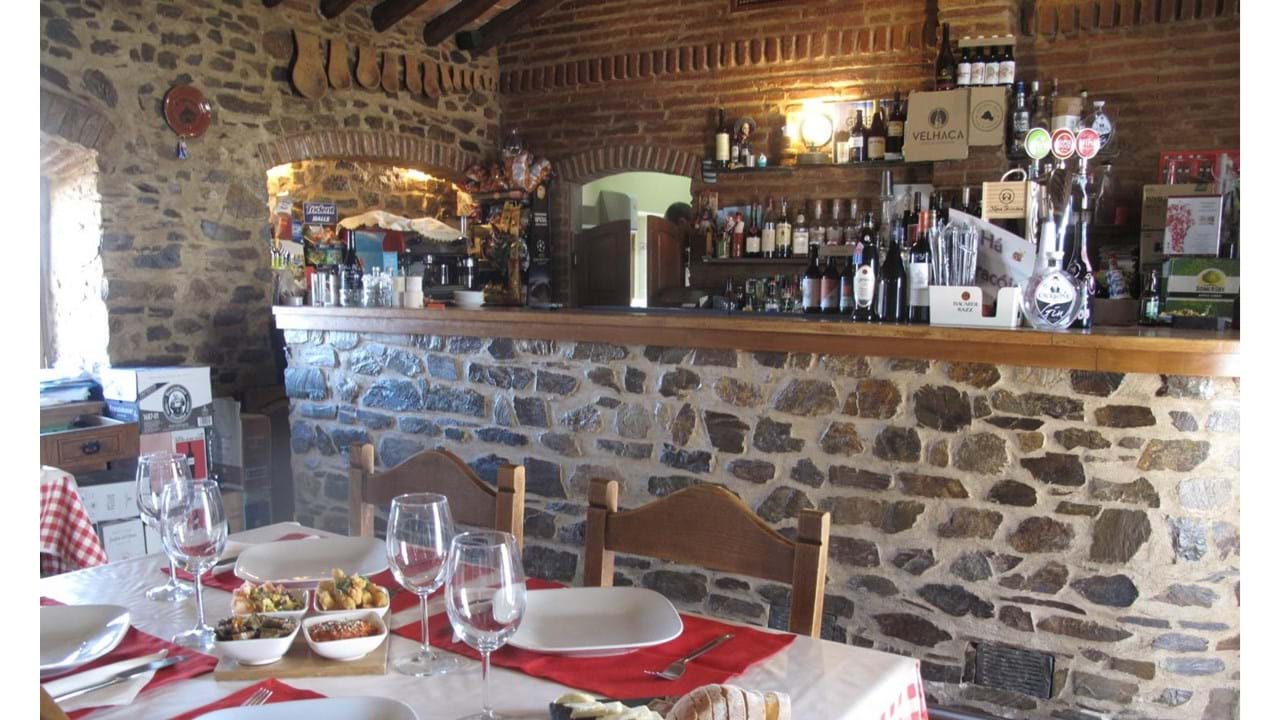
I searched on TripAdvisor and a bunch of other sites dedicated to recommending restaurants. On every single one of them, A Cabana (The Cabin) came up as #1 … with hundreds of 5★ and far fewer 4★ reviews. Its atmosphere was described as “romantic” (we found it charming and adorable) with prices ranging from € (Facebook) to €€-€€€ (TripAdvisor). Based on our tab, I’d say TripAdvisor is more accurate. In a way, the digs reminded me of a restaurant with the same name (The Cabin) on the outskirts of Sturgeon Bay, WI.

A Cabana doesn’t have its own website, but it does have a Facebook page. On Thursday, I messaged them to make a reservation for the two of us at 1:30 PM (13:30) on Saturday. We figured that would give us enough time to visit the fair and then eat a hearty meal early enough. Within five minutes — I kid you not! — I had a response: “combinado!” (confirmed).

Unless you’re an expat or immigrant living in Portugal, you can’t understand how unusual (even rare!) it is to receive a reply to one’s email or message here. The Portuguese tend to ignore them. You’re better off telephoning or stopping by.

Two thumbs up for A Cabana!

We arrived in Arronches at about 11:45 (AM), only to find ourselves lost in space. GPS and Google Maps were no help. Russ thought that the fair would be held in the “campo” (countryside), while I distinctly remember reading something about it being held in a pavilion. Before going around the bends another time, I asked Russ to pull off so that I could ask a local for information.

“Isn’t today a holiday in Arronches? Where can we find the fair grounds?” I asked a gentle giant of a man with a beard who nodded “yes” and pointed down the road … “Just continue going down this street until you come to he,” he said.

Russ turned to me before driving down the street to tell me, “He looks familiar. I think he might be the chef at A Cabana.”

Driving downhill, we finally approached the site. Amazing–there was plenty of parking! Very unusual in Portugal … especially when something of general interest is happening.

We soon understood why:

The only activity occurring at the fairgrounds when we arrived was a sheep competition. Nothing else. Not even the dozens of stalls selling food and souvenirs were open, let alone live music. It all would begin later that evening.

“What do you want to do?” Russ asked me.

“Let’s go to the restaurant and see if they’ll take us earlier,” I suggested. “That way, we can get an earlier start on doing some shopping we’d planned at E LeClerc, along with filling the car with GPL (liquefied gas) and washing it.

A bunch of people of all ages were already queuing up outside the restaurant, whose front door was open but nobody was inside. I approached the owner-chef-waiter — who, indeed, was the helpful man who’d given us directions earlier! — and asked if we could change our reservation to now rather than later. “Of course,” he said, pointing to the first of four tables for four. Behind them, in a row against the back wall, all of the tables were pulled together to accommodate 22 people … including those waiting outside, and then some.

“We understand that you make the best porco preto in town,” I told him while we both were standing in front of the chalk board where the menu was written.

He smiled broadly and recommended both the “secretos” (secrets) plate for €20 and the “plumas” (feathers) dish for €23. We ordered one of each, which came with salads and the best fried potatoes (“crisps,” per our British friends) we’d had in a while–super thin yet crispy, without any soggy orphans left behind. To go with our food, I had (two) glasses of tinto wine and Russ had (two) steins of beer.

It suddenly occurred to me that the maitre d was responding to my questions in Spanish, not Portuguese, although I was doing my best to speak coherent Portuguese. ¿No é portugues? (aren’t you Portuguese?) I asked him. “Sim, claro” (Yes, of course), he replied. “Then, why are you talking Spanish to me?” I asked in Portuguese. “I thought you were Spanish, he grinned.” It must have been my accent, One lesson I’ve learned since living in this western part of Iberia is always to speak Portuguese … to never initiate a conversation in Spanish, assuming the Portuguese understand it.

Anyway, everything was delicious!

The food, the service, the atmosphere were all extraordinary. (We personally preferred the plumas — cut thickly, parts cooked medium, others medium-rare to perfection — over the secretos.)

Of special note to us — who spend two months in Portugal and one month in Spain — was how relatively quiet and civilized the table of 22 behind us was. In Spain, you’d never be able to hear yourself think with that many people clustered together.

Our bill came to less than sixty euros. Although I tend to cringe when food here in Portugal costs that much, I reminded myself that we’d be gone from the USA for six years already. Who knew how much a meal like this would cost in a place like Sturgeon Bay?

Probably lots more.

Whatever …

It was well worth it!

P.S. If you plan to eat at A Cabina, remember to bring cash. The restaurant doesn’t accept plastic — credit or debit cards — although it does honor MB Way.

Pastor, professor, publisher, and journalist Bruce H. Joffe is an award-winning author of magazine features, academic research, journal articles, self-help manuals, and newspaper stories. His nine books deal with international (intercultural) living, progressive theology, gender studies, “social” politics, our vulnerabilities, marketing, and the media. 

Processing…
Success! You're on the list.

Cast Your Bread Upon the Waters …

No. I won’t pray for him.

So, please don’t ask me.

I may be a pastor, but I question the efficacy of intercessory prayer. Personally, I believe that prayer comforts the one praying more than it helps the intended beneficiary.

I don’t understand or respect why he was there, but I will light a candle for Corey Comperatore, the former fire chief killed at the Pennsylvania rally who spent his final moments diving down in front of his family, protecting them from the gunfire.

Remember when Jesus came upon a gang of zealots about to stone a woman for allegedly committing adultery? Each lay down his rocks when Jesus reminded them that the one among them without sin should be the first to throw a rock. One by one, they left … realizing that none of us is without indignities or indiscretions.

The man I’ve been asked to pray for — because his ear was pinged either by a bullet or a stray piece of glass — has used his bully pulpit to throw lots of rocks, warning the world about bloodshed if he doesn’t win. He’s called for chaos, using tear gas for his convenience to empty a park so he could have a photo op in front of a church with an upside-down Bible. He’s published his own Bible. He floated the idea of executing Joint Chiefs Chairman Mark Milley, inciting violence against the nation’s top general. He mocked the attack on Paul Pelosi. And he repeatedly has promised to weaponize the federal government by pursuing revenge, retaliation, and retribution against his political enemies.

Analyzing over 13,000 of his Truth Social posts from January 1, 2023 to April 1, 2024, media found that threatening political opponents has been a consistent fixation for him. Since the start of last year, he has issued direct or implied threats to use the powers of the federal government to target Joe Biden at least 25 times. He’s also threatened or suggested that the FBI and the Department of Justice should take action against senators, judges, members of Biden’s family and even non-governmental organizations. ABC News found 54 cases invoking his name in connection with violence, threats, alleged assaults. He declared New York Justice Juan Merchan a “highly conflicted” overseer of a “kangaroo court” and his supporters swiftly replied to his Truth Social post with a blitz of attacks on the judge. Some called for Merchan and other judges hearing cases against Trump to be killed.

As he was taken away from the rally and to a hospital, his campaign power brokers declared that the pictures of him punching the air with blood trickling down his face would become “iconic,” all too useful in painting him a strong man contrasted with his weak opponent. Such were their calculations during this photo opportunity. They will be especially useful motifs for the Republican Convention beginning today.

Indeed, the attempted assassination sparked a frenzy of online merchandise featuring pictures of the former president just after he was shot, with slogans such as “Bulletproof,” “Legends Never Die,” “Grazed but not Dazed,” and “Shooting Makes Me Stronger.”

Didn’t Jesus preach that we’re to love our enemies? Bless them that curse us? Do good to them that hate us? And pray for them who despitefully used and persecute us? (Matthew 5:43-44) Yes, he did. But he also warned that “blasphemy against the Holy Spirit will not be forgiven,” which I believe this man has committed.

Devout Jewish people traditionally throw food to the fish during their High Holidays — Rosh Hashanah and Yom Kippur — each year, as instructed by Ecclesiastes 11:1–“Send out your bread upon the waters, for after many days you will get it back” (NSRV), or this translation from the Complete Jewish Bible, “Send your resources out over the seas; eventually you will reap a return,” or this one from the Living Bible: “Give generously, for your gifts will return to you later.”

This verse about diligence is open to many interpretations.

But in the case of the former president, I believe that Ecclesiastes 11:1 was fulfilled this past Saturday night.

Pastor, professor, publisher, and journalist Bruce H. Joffe is an award-winning author of magazine features, academic research, journal articles, self-help manuals, and newspaper stories. His nine books deal with international (intercultural) living, progressive theology, gender studies, “social” politics, our vulnerabilities, marketing, and the media. 

Processing…
Success! You're on the list.

No Laughing Matter

With all that we have to worry about these days, nearly everyone appreciates a good burst of laughter.

Back in the day, didn’t Reader’s Digest tell us that “laughter is the best medicine”?

Predating the computer, the laugh track may be the first instance of artificial intelligence being used and hoisted on us.

If so, the first — and last — laugh is on us!

Even two rooms away from the living room television, the “laugh track” stands out as the annoying absurdity it was and still is, thanks to the Internet and sites like YouTube: it’s called “canned laughter,” where people in the audience supposedly split their sides laughing.

If you don’t know (or remember) the sickening sound of canned laughter, simply Google “laugh track sound effect” and play it for laughs or to feel like a laughing stock.

The use of canned laughter and other audience reactions was pioneered by American sound engineer Charles “Charley” Douglas, whose laugh track became a standard in mainstream USA … dominating most primetime sitcoms and other comedies from the late 1950s to the late 1970s.

While Douglas laughed all the way to the bank.

If a joke didn’t get the desired chuckle, Douglas inserted a barrel of laughs to encourage the live audience — including Seinfeld’s — to laugh.

This technique became known as “sweetening,” in which prerecorded laughter was used to enhance the response of studio audiences if they didn’t react as strongly as desired: howling with (canned) laughter.

Talk about manipulation!

With the demise of sitcoms and live studio audiences, laugh tracks decreased and gave way to the development of “stereophonic” laughter in the 1980s.

Researching this piece, I came across someone laughing at all of us who fell prey to this gimmick: “I don’t know how you can watch those old sitcoms,” she wagged. “Everything about them annoys me … starting with the canned laughter.”

Scientists have noted the similarity in forms of laughter induced by tickling among various primates, suggesting that laughter derives from a common origin which includes laughing in someone’s face.

Nonetheless, laughter isn’t always funny and can lead to some serious health problems. One woman with a racing heart syndrome collapsed and died after a period of intense laughter. Some other risks are: Protrusion of abdominal hernias — side-splitting laughter or laughing fit to burst. A quick intake of breath during laughing can cause foreign bodies to be inhaled. It can trigger asthma attacks, incontinence, and headaches.

CBS researchers said their search was limited to laughter without exploring related behavior such as chuckles or grins.

“We infer that laughter in any form carries a low risk of harm and may be beneficial.”

So, the next time you can’t stop laughing, go right ahead … with a wee bit of caution.

Because s/he who laughs last, laughs best.

LOL!

Pastor, professor, publisher, and journalist Bruce H. Joffe is an award-winning author of magazine features, academic research, journal articles, self-help manuals, and newspaper stories. His nine books deal with international (intercultural) living, progressive theology, gender studies, “social” politics, our vulnerabilities, marketing, and the media. 

Processing…
Success! You're on the list.

Can SCOTUS Be Stopped?

Formal group photograph of the Supreme Court as it was been comprised on June 30, 2022 after Justice Ketanji Brown Jackson joined the Court. The Justices are posed in front of red velvet drapes and arranged by seniority, with five seated and four standing. Seated from left are Justices Sonia Sotomayor, Clarence Thomas, Chief Justice John G. Roberts, Jr., and Justices Samuel A. Alito and Elena Kagan. Standing from left are Justices Amy Coney Barrett, Neil M. Gorsuch, Brett M. Kavanaugh, and Ketanji Brown Jackson. Credit: Fred Schilling, Collection of the Supreme Court of the United States

I am especially concerned about the growth and reach of the US Supreme Court (SCOTUS) into politics and other matters which the Founders had no intention for the Court to meddle. Unlike the balance of power allegorized by a troika, the merging and morphing of the USA’s three branches of government into an increasingly ultra-right orientation is dangerous to our civil rights and the Constitution. Especially when the highest court in the land is integrally involved.

Last week it was revealed that Justice Samuel Alito had, at two of his homes, flown flags associated with the “Stop the Steal” movement. The movement falsely asserts that the 2020 presidential election was stolen from Trump (by) Joe Biden, editorialized HuffPost Politics.

Barring other explanations, it would seem to be a clear conflict to the justice’s mandate to be — or at least appear — impartial and unbiased. Justices have certainly recused themselves from cases for less. But Alito has made no moves to suggest that he would bow out of the ruling on either relevant case, the newspaper continued.

And of course, this follows last year’s spate of stories suggesting that some justices had acted unethically, accepting lavish gifts and vacations from conservative influencers. Alito and Clarence Thomas, in particular, admitted to attending luxury vacations on billionaires’ dimes, which they defended by citing court disclosure guidelines that say personal hospitality from friends is permitted. Public disapproval prompted the high court to adopt new and clearer ethics guidelines — though they still lack an enforcement mechanism.

When put all together, HuffPost concluded, it’s hard to shake the feeling that the justices are now just doing what they please, secure in the knowledge that no one has the power, or the will, to enforce any consequences for them.

Can SCOTUS be stopped? Are there any limits to the powers it exercises? Can it, legally, be overruled?

Yes!

Here are some of the potential reins on the US Supreme Court:

> SCOTUS can reconsider and overturn previous rulings it has made, as in its recent Dobbs decision … and many others.

> When the Supreme Court rules on a constitutional issue, its decisions can be altered by the rarely used procedure of constitutional amendment or by a new ruling of the Court. However, when the Court interprets a statute, new legislative action can be taken.

> According to the League of Women Voters, with enough political will and a willing President, it is within Congress’ authority to limit the US Supreme Court’s power by restricting what type of appeals it can accept. Theoretically, Congress could therefore limit the Court’s ability to restrict or remove certain fundamental rights by preventing it from hearing cases about them in the first place.

> Given the unlikelihood of an admission of impropriety from any Supreme Court justice, a more extreme avenue available to lawmakers who would seek to hold them accountable for compromising the neutrality and legitimacy of the court: impeachment. Over the country’s history, 15 federal judges have been impeached, and eight removed from office; others resigned in the wake of scandal instead. So one thing, at least, is clear: Unlike for presidents, there is ample precedent for firing federal judges via impeachment. Article III states that these judges “hold their office during good behavior,” which means they have a lifetime appointment, except under very limited circumstances. Article III judges can be removed from office through impeachment by the House of Representatives and conviction by the Senate. The only Justice to be impeached was Justice Samuel Chase in 1805.

> The Constitution limits the Court to dealing with “Cases” and “Controversies.” John Jay, the first Chief Justice, clarified this restraint early in the Court’s history by declining to advise President George Washington on the constitutional implications of a proposed foreign policy decision. The Court does not give advisory opinions; rather, its function is limited only to deciding specific cases.

> Although the Court’s decisions cannot be appealed to any authority (as it is the final judicial arbiter in the United States on matters of federal law), the Court may consider appeals from the highest state courts or from federal appellate courts.

It is this last measure that most intrigues me. More than one newscaster’s panels have mentioned — merely mentioned, without going into any real detail — that it is within the power of a “coalition” of lower courts to question and arbitrate the roles played and decisions made by SCOTUS.

I, for one, would love to learn more about this!

The unique position of the Supreme Court stems, in large part, from the deep commitment of the American people to the Rule of Law and to constitutional government. The United States has demonstrated an unprecedented determination to preserve and protect its written Constitution, thereby providing the American “experiment in democracy” with the oldest written Constitution still in force.

Pastor, professor, publisher, and journalist Bruce H. Joffe is the award-winning author of magazine features, academic research, journal articles, self-help manuals, and newspaper bylines. His eight books deal with international (intercultural) living, interfaith theology, gender studies, “social” politics, marketing, and the media.

Processing…
Success! You're on the list.

Purge the Evil?

As genocide takes its toll in accordance with verses in which we’re told, “You must purge the evil from among you,” the Bible is complicit in many of the wholesale massacres and slaughters we’ve seen in the modern-day world … in places like Haiti, India, Zimbabwe, Turkey, Uganda, Russia, Ukraine, Serbia, Nepal, Rwanda, Afghanistan, Lebanon, The Solomon Islands, Ethiopia, Bosnia, Bangladesh, Brazil, Indonesia, and Cambodia. And certainly, of course, in Israel and the Gaza Strip.

Nor can we forget the United States, whose history is filled with a lack of tolerance for those who are “different” from mainstream WASPs and whose support has contributed to the killing of many in lands near and far. Former USA President Donald J. Trump used the fascist terminology “vermin” to describe immigrants, as he shouted words then repeated by others, that immigrants are “poisoning the blood of our country.”

Organized murder, the deliberate killing of many people from a particular nation or ethnic group with the aim of destroying that nation or group is genocide.

Sadly, it’s all around us.

For progressives and literalists, I wonder how many of these human slaughters can be attributed to the words not of God but men—Moses and the Apostle Paul, in particular: “You must purge the evil from among you.”

First found in Deuteronomy, the fifth book of the Bible and the conclusion of the Pentateuch, Moses wrote these words in the form of a farewell address to the Israelites before they entered the promised land under Joshua’s leadership.

In Deuteronomy alone, “… you must purge the evil from among you” appears eight separate times … in 13:5, 17:7, 17:12, 19:19, 21:21, 22:21, 22:22, and 24:7. Later, Paul alludes to these verses but embellishes their word in I Corinthians 5:13, “But God will judge those outside. Remove he evil person from among you.”

Ironically, these words were turned inside-out, with Jewish people in their homeland and across their diaspora the victims.

As early as 605 BCE, Jews who lived in the Neo-Babylonian Empire were prosecuted and deported. Antisemitism was practiced by the governments of many empires (i.e., Roman) and the adherents of many religions (i.e., Christianity, Islam) and Jews were often used as scapegoats for tragedies and disasters—from the Inquisition and pogroms to the Holocaust, Hitler’s “final solution” for purging “the evil” he believed had infiltrated his Aryan nation, Jewish people have suffered unmercifully.

Now, the shoe is on the other foot as modern-day Israelites under the direction of Prime Minister Benjamin Netanyahu are deliberately killing Hamas in Gaza … along with thousand of innocent people—Palestinians, young and old. Not that their attacks weren’t provoked or justified when, last October 7th, a barrage of at least 3,000 rockets were launched against Israel.

Hamas fighters breached the Gaza–Israel barrier, attacking military bases and massacring civilians. The attackers killed 1,139 people: 695 Israeli civilians (including 36 children); 71 foreign nationals; and 373 members of the security forces. About 250 Israeli civilians and soldiers were taken as hostages to the Gaza Strip, including 30 children.

The attacks consequently started the expansive Israel–Hamas war.

Every time these genocides occur, the world insists “never again.” But the political, religious, and moral blind spots that allow these atrocities will persist until anti-religious doctrines are disputed and the lessons of history are learned.

“You shall purge the evil from among you.”

Indeed.

Pastor, professor, publisher, and journalist Bruce H. Joffe is the award-winning author of magazine features, academic research, journal articles, self-help manuals, and newspaper bylines. His nine books deal with international (intercultural) living, interfaith theology, gender studies, “social” politics, marketing, and the media.

Processing…
Success! You're on the list.

The System Is Broken

When even Portuguese officials complain publicly about the “broken system” and tell you that it’s “impossible” to schedule an appointment online, by phone, or in person — yet recommend that you show up at the local AIMA office and storm the gates — you know that the problem is dire and probably unfixable.

I’m referring, of course, to AIMA, SEF, and SIGA (they’re all culprits in the conspiracy) … and getting your residency visa renewed.

We’ve lived in Portugal for over six years now, arriving when D7 residency visas were issued for one year … renewed for two … and then renewed again for two, before one could get “permanent” residency (a misnomer, as it’s only good for five years) or even apply for citizenship, if so desired.

During our tenure here, residency changed from 1+2+2 to 2+3 and we were caught betwixt and between, as our last residency was for three years (not two) … requiring us to wait an extra year (totaling six) before applying to renew our residency.

HAH! If it weren’t so serious, the foibles, facts, and fables told about trying to get an appointment with SEF’s current iteration (AIMA) would be the stuff bureaucratic boondoggles are laughed about.

We had tried ourselves through SIGA, Portugal’s official scheduling “app” for all the country’s often overlapping agencies and entities. That led us down a rabbit hole since, when searching by agency, neither AIMA (nor SEF) appear … and, when searching by purpose or keyword (“residency renewal”), we’re taken to Registros where the only real option is to select renewal of citizen, not residency, cards. Once you enter the requested data, however, a pull-down menu magically appears … allowing you to indicate that the purpose of your appointment is specifically residency renewal. When we appeared at the designated place and time, we had to wait almost an hour, only to be told by quite frustrated clerks that, no, they couldn’t renew our residency there … we’d have to go to either Portalegre or Évora. It was then and there that we were told by the frustrated bureaucrats that the system was broken and nothing worked now as regards to renewing one’s residency.

Ultimately, we hired a lawyer (lawyers, we were told had better access to the system) to make an appointment for us. She did. Scheduled for 24 January 2024, officialemail notification showed that our residency renewals would be for two “cases” (i.e., people). The next day, nonetheless, we received a cancellation notice–no reason given. Later that day, another email arrived confirming a new date: 31 January, a week later than originally scheduled.

When we arrived and our number was called, the attendant insisted that only one of us — me — was on the “list.” And my spouse? “Reschedule!” we were told. We called our attorney while seated opposite our interrogator and she spoke directly to him. Back and forth, back and forth, they argued in Portuguese … him finally handing me the phone. “He could handle you both, if he wanted to,” she told me. “He doesn’t want to. So, you’ll be processed now and I will try to schedule another appointment for your partner.”

Again, that was on 31 January.

My better half still doesn’t have an appointment, although our residency expired several months ago. And, despite being told that I’d receive my new residency card within 60 days, it’s been 90 already … and I’m still waiting, my proof of processing and payment in hand.

Is it any wonder that people are protesting, demonstrating in front of AIMA’s headquarters in Lisbon? (https://www.theportugalnews.com/…/immigrants-to…/88011)

Meanwhile, “The Portuguese Agency for Integration, Migrations and Asylum (AIMA) has said that it needs around one and a half years to resolve 350,000 pending residency applications filed by foreigners until 2025. (https://www.linkedin.com/…/portugal-wont-able-process…)

It will be 2025 before AIMA resolves the 350,000 pending residency applications? What about all the new visas being granted? Are they still good for four months only? How long will it take AIMA to get around to them?

May be a graphic of text that says "aSaS CROWN ROWN AIMA A A The Agency for Integration, Migrations, and Asylum wwww. aima.gov.pt Renewal appointments already open on SIGA WWW.CROWNPORTUGALEU Welcome"

Pastor, professor, publisher, and journalist Bruce H. Joffe is the award-winning author of magazine features, academic research, journal articles, self-help manuals, and newspaper bylines. His eight books deal with international (intercultural) living, interfaith theology, gender studies, “social” politics, marketing, and the media.

Processing…
Success! You're on the list.

Dear Dacia

You’ve Come a Long Way, Baby!

Dear Dacia,

I want you to know how much we appreciate our new (2024) Dacia Jogger Extreme+. It’s everything you promised—and more.

New cars cost lots of money in Portugal. Especially when augmented by the country’s 23% sales (IVA) tax, the annual IUC (Imposto Único de Circulação) road tax ranging from €158.31 to €512.33 for gasoline-powered cars, Portugal’s initial ISV (Imposto Sobre Veículos) when a car first gets a license plate (matrícula) here, and “administrative” fees costing between €1,000 and €1,500. Unlike the USA, buyers are also expected to pay the dealership for a new vehicle’s transportation costs. Add a few hundred euros more for that.

Altogether, these costs add up to a sizable sum!

As of June 2023, used cars cost an average of 23,750 euros in the Portuguese market. Three years earlier (2020), the average price for a new car was 32,483€.

While some makes and models here are available elsewhere, others are specific to the EU … and some of their options are specific to Portugal.

Like Dacia.

Pity that more Americans aren’t aware of the brand.

Our first exposure to Dacia occurred when we emigrated from northern Wisconsin in the USA to the Alentejo region of Portugal over six years ago. Since then, we’ve seen plenty of Dacias on the streets and the motorways:

> The utilitarian, all-electric Spring, Portugal’s lowest EV in weight and cost;

> The best-selling Sandero, starting at €12,500;

> The popular Duster, a sturdy SUV that effectively put Dacia on the map;

> The jaunty Jogger, a seven-seater with cargo capacity so massive that Dacia sells a full-size (“matrimonial”) bed which fits in the back. Sleek and sexy in its latest “generation,” the Jogger – like all Dacias – is priced low enough to compete handily against those look-alike toads on the road.

Dacia’s affordability is a result of such factors as simplified design, shared components, lean production, and strategic manufacturing locations. This cost-efficient approach allows Dacia to cater to budget-conscious consumers seeking the most for their money. Faithful to its values –simplicity, spaciousness, robustness, and price –Dacia’s growing commercial success comes from its focus on practicality and affordability. With admirable resilience, Dacia documents a modest depreciation rate of 2.41%. These cars hold their value.

Eighteen months ago, we bought a new Dacia Duster Extreme for €21,500 and liked almost everything about it. Especially its bi-fuel motor. The car has a 50-liter tank for gasoline and a second, 40-liter tank for LPG (liquified petroleum gas) that costs half that of gasoline or diesel yet delivers the same power and mileage per liter. With fuel costing the U.S. equivalent of $7.50 to $8.00 per gallon in Portugal, the savings realized with LPG are formidable and felt with every fill-up.

Recognized as a low carbon alternative fuel, LPG emits significantly fewer carbon dioxide (CO2) emissions compared to conventional fossil fuels like coal, oil, and gasoline. It also emits almost no black carbon, arguably the second biggest contributor to global warming. As a clean-burning fuel, LPG helps mitigate the effects of climate change by discharging 12% CO2 less than oil and up to 20% less than gasoline.

As we got to know our Duster better, the more we realized that the Jogger would be a better fit for us—literally. The Duster is 23.2 cm shorter and 4.9 cm lower than the Jogger, with 11% less cargo space.

We travel back and forth frequently between homes in Portugal and Spain, carrying “stuff” large and small. Luggage (boot) space in the Jogger Extreme maxes out at 1,808 liters by folding and snapping the third rows seats into the backs of the second, and then tumbling the second row forward to its fully horizontal position. This gives us a load of two meters (6.5 feet) long and just over one meter (about a yard) wide. Building on this interior storage space are lots of nooks, crannies, compartments, a glove box, and door bins, as well as the Jogger’s modular roof bars. Pull-up, fold-down trays on the rear of the front seats can be useful, especially with children aboard.

With 19,000 km on our odometer, we traded in the 2022 Duster for €18,500 against the €24,000 price of our 2024 Jogger Extreme+. Unlike the USA, where new cars typically lose one-third their value when driven off the dealer’s lot, the Duster depreciated only €3,000.

Included in our “Plus” (+) package are two of three available options: Nav Pack with 8-inch touchscreen navigation; DAB radio; smartphone replication; Bluetooth®; Western Europe Cartography; and three years of updates on maps and navigation. The other option? Comfort Pack which includes blind spot alert; front parking assistance system; assisted automatic parking brake; automatic air conditioning; semi-elevated center console with armrest and storage space; height-adjustable driver’s seat; and tables in the back of the front seats. Had we wanted to wait and order the car for delivery months later, we could have paid €200 more for heated front seats. The two rear rows in all Jogger models come with “theatre” seating in which each row is a bit higher than the one in front for enhanced passenger visibility.

The Jogger shares much of its guts with the Duster, so we were already familiar with the car’s systems and sounds. Once getting grip on its gears, the six speed manual transmission shifts seamlessly, up or down. Suspension is quite comfortable, as struts provide a ride between sporty (hard) and squishy (soft). In addition to its integral navigation (GPS) system which also alerts us to radar, the vehicle’s sensors – amplified by a rear-view camera – chime different warnings when we’re coming close to objects ahead, behind, and on the sides. The 2024 Jogger also greets us with a second or two of musical beats, the beginning of a song, when we open its doors and get seated.

With a turning diameter of 11.7 meters, the FWD car handles nimbly, its steering neither too loose nor too tight. Technical specs include total length: 454.7 cm; exterior width with mirrors: 200.7 cm; exterior height: 167.4 cm; wheelbase:289.8 cm; ground clearance: 20 cm; weight: 1,251 kg. Cargo volume ranges from 607 to 1,819 liters. Maximum speed is 183 km/h. By pressing the ECO button, the vehicle’s throttle response is adjusted and the function of some ancillary feature, such as air conditioning, is reduced.

Inside, the cabin is spacious and inviting, its instrumentation – buttons and dials – well-placed and positioned. Hard plastics, long the bane of Dacia design, have given way to a plusher, posher look and feel. Ergonomically comfortable, the seats, front ones especially, help to make longer drives more pleasurable.

Other niceties about the Jogger Extreme+ package are that it comes with:

• Electric exterior mirrors with demisting system

• Keyless entry and engine start

• Advanced Emergency Braking System [AEBS]

• Driver Fatigue and Attention Alert [DDAW]

• Traffic Sign Recognition with Speed Alert [ISA]

• Centralized door locking with remote control

• Automatic door locking in progress

• Light and rain sensors

• Lane Keeping Assistance [LKA]

• ECO Mode

• Leather steering wheel

• USB ports

• Over-tinted side and rear windows

• LED daytime running lights, LED dipped headlights, and fog lights

Not bad for such an economical car!

With a total power output of 140hp, the car clocks an acceleration time from zero to 100 km/h in 10.1 seconds and low emissions of 112g/km of CO2. According to official fuel economy figures, it can return up to 47 miles per gallon using petrol.

More good news about the Jogger:

Starting at €29,400, it’s available as a full hybrid with a rather unique way of charging its battery. Rather than plugging into electric outlets, the Jogger revitalizes its power source while driving—primarily when stopping (and going). This technology, which combines two electric motors and a combustion engine, does not need to be plugged in. With Jogger HYBRID 140, everything is simple: the battery recharges itself when you decelerate and brake.

Alas, there’s also some bad news about Dacia’s 2024 Jogger:

It lost marks for its lack of “active” safety equipment: When tested, the vehicle didn’t offer lane-keep assist (it does now!), pedestrian detection (ours beeps whenever someone is detected too close to the car), or seatbelt warnings for the rearmost row. These omissions – two of the three have been resolved – saw the Jogger clock up the equivalent of two stars for vulnerable road users, and just one star in the safety assist category. (The overall NCAP rating is dictated by the lowest score in any individual category, hence that one-star result for the Jogger.) Note, however, that it returned the equivalent of a four-star rating for adult occupant crash protection, and three stars for child occupants.

Rather respectable scores!

In my opinion, a car so cleverly conceived and assembled deserves better than vinyl cut out letters identifying the model on its lower rear panel.

For three consecutive years, the most popular new car sold in Portugal has been the Peugeot 2008—priced at €26,185 including IVA. After Peugeot, however, Dacia was the best-selling make in Portugal, with 1,337 Dacias sold to Peugeot’s 1,429 in September 2023. Ironically, for a relatively poor country like Portugal, Mercedes (1,267) and BMW (1,237) were the third and fourth favored brands, respectively, during that month and year. Other top sellers included Renault, Citroën, the Fiat 500, Seat, and Skoda from the Czech Republic.

Previously the bargain basement brand for Renault’s tired old platforms and retired parts, Dacia has come into its own as a robust and enviable entity which some say is surprisingly upbeat and sexy. Especially given its costs.

Dacia, you may be #2 now in Portugal, but remember the advertising campaign Avis car rental company ran against Hertz in the early 1960s: “We’re number two. We try harder.”

The rest, as they say, is history … and the future for Dacia.

Best wishes,

Bruce

Pastor, professor, publisher, and journalist Bruce H. Joffe is the award-winning author of magazine features, academic research, journal articles, self-help manuals, and newspaper bylines. His eight books deal with international (intercultural) living, interfaith theology, gender studies, “social” politics, marketing, and the media.

Processing…
Success! You're on the list.

Adultery: A Sin or a Crime?

Recently, a member of my spiritual community contacted me privately, seeking my advice. Married for years in a committed and loving relationship, he now found himself attracted to and caring about another. Is that a sin, he wanted to know, and what should(n’t) he do about it? The plot thickened because all three people involved were of the same sex. My interlocutor found himself increasingly thinking about the other. Although “nothing” had happened between the two, he was suffering pangs of guilt. What could I say to him? How could I help?

Takeaways:

• Biblical adultery is restricted to a man having sexual relations with another man’s wife. It occurs only within the confines and context of marriage.

• Jesus addresses adultery specifically as a matter between a man and a woman.

• “Sin” is open to many interpretations, understandings, and translations.

Adam was the first of many Bible men to have more than one wife.

The Bible appears to support “polygyny” (one man, two or more women in marriage), but not “polyandry” (one woman, two or more men in marriage).

• Although the Hebrew scriptures describe numerous examples of polygamy among God’s devotees, most Christian groups have historically rejected the practice.

Pastor, professor, publisher, and journalist Bruce H. Joffe is the award-winning author of magazine features, academic research, journal articles, self-help manuals, and newspaper bylines. His eight books deal with international (intercultural) living, interfaith theology, gender studies, “social” politics, marketing, and the media.

Processing…
Success! You're on the list.