
Olvera, our getaway home in southern Spain for the past 18 years, has plenty to be proud about … not the least is its designation – honored by a Spanish postage stamp – as Spain’s “Best Rural Destination” in 2022. The town of 8,500 straddles the intersection of Cádiz, Sevilla, and Málaga provinces.
Outside its town hall fly the flags of Olvera, Cádiz, Spain … and a rainbow flag.
Now, I just learned another reason for Olvera to be proud: On June 23rd, it will be hosting a Gay Pride event for its residents and guests.
Spain is said to be the first European country and the second in the world with more LGBT+ people, according to a study by Ipsos, which holds a 4.2 out of 5-star rating on Trustpilot with over 45,695 customer reviews. Spain is designated as the third country in the world that most supports the right to equal marriage. And, like Portugal, Spain protects LGBT rights and validates the “diversity of the collective.” The survey also corroborates that Spain is a country in which there is majority support for proposed measures to improve the integration of trans people, a country that embraces “diversity, freedom, and LGBT+ pride … that advances by leaps and bounds without (a) brake.”
According to the survey, “Spain is where respondents are most likely to say they are gay or lesbian (6%), while Brazil and the Netherlands are where they are most likely to say they are bisexual (both 7%). Japan is the country they are least likely to identify as either gay or lesbian (less than 1%) and as bisexual (1%).”
The Iberian nations of Spain and Portugal are known for their inclusiveness.
Like Lisbon and Porto, Madrid and Barcelona have huge Gay Pride celebrations and marches each year. Events honoring LGBTQI+ people take place in other major Spanish cities, too: Sevilla, Córdoba, and Torremolinos … as well as such gay-renown destinations as Ibiza, Sitges, and Benidorm.
But Olvera?
One of the “pueblos blancos” in the province of Cádiz, Andalucía, Olvera has much to commend—including its positive attitude toward sexual minorities that are marginalized and condemned elsewhere.
Of late, think Uganda. In fact, 64 countries (nearly half in Africa, including Nigeria) have laws that criminalize homosexuality. In the USA, the political right is bound and determined to introduce legislation that eliminates or rescinds LGBT social and constitutional rights gained only after centuries of exclusion and damnation.
So, it behooves “queer” people to call attention to their history of cruelty, mistreatment, and entrapment, along with its contributions to civilization at large in countries like Spain and Portugal where gay rights are endorsed and supported.
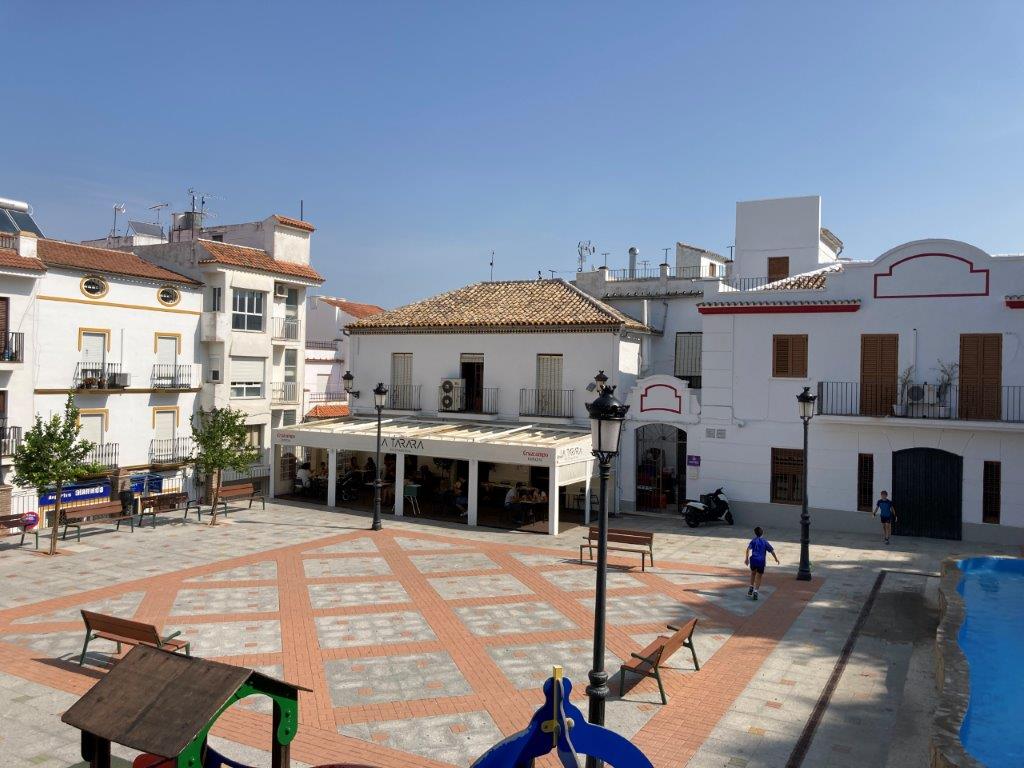
We learned about the June 23rd event over lunch from two female friends, a kitchen designer and her retired spouse. They knew the date and location it was to take place – in a public square on the main street of town, directly opposite the Iglesia de la Victoria, one of Olvera’s pristine churches – but not the time.
I thought about the LGBT people we are acquainted with in Olvera who might be there:
> The beautiful young man with sometimes pink dyed hair who owns an upscale furniture shop and has won multiple awards for his interior designs—commercial, residential, and dressing the windows of local shops;
> The male couple who live down the block of our former house who enjoy a long-distance relationship, spending time together in Olvera, Australia, and elsewhere;
> The respected and educated man of magnificent color who lives, for now, in Olvera but spends each month working in London;
> The adorable waiter at our favorite restaurant who I’ve been innocently teasing and playfully flirting with for several years;
> The reclusive couple living two doors from ours but won’t speak to us, for whatever their reasons;
> The tall, dark, and steamy recent arrival from Venezuela whose eyes locked with mine momentarily;
> The lady in red who – rumor has it – enjoys her bread buttered on both sides;
> The British couple who lived here for several years, opening and closing a few businesses before returning to England … but continue to visit time and again;
> The colorful youngsters with ink covering their bodies and piercings from lip to nose. Maybe they are the “Q’s” in the increasingly complex jargon of LGBT syntax.
We Americans tend to be more priggish when it comes to carnal matters than the Mediterranean peoples. Sex is sex to them, nothing more and nothing less … without getting into issues of gender identity or sexual branding. They’re much more comfortable with themselves and their bodies. It’s not unusual for men to have slept with other men or women with women. Passion isn’t scrutinized or sanitized to subvert the prurient interest. The heat of the moment doesn’t result in being branded with a homophobic scarlet letter. Lust and sex between consenting adults are considered normal. It is what it is.
Pride, however, is all about identity … about standing tall in society without apologizing or denying who we are. If it’s a moment to be silly, too, so be it.
Gay Pride also satisfies something we seriously miss when living abroad: a sense of community … of people like us that transcends individuals and friendships, regardless of where we are on Kinsey’s scale and spectrum.
It’s also an occasion for friends and allies to stand together with us.
If we’ve learned anything from the Trump years and thereafter, it’s as Streisand sang: “People who need people are the luckiest people in the world. We’re children, needing other children. And yet letting a grown-up pride hide all the need inside, acting more like children than children.”
You bet we’ll be there at Olvera’s Gay Pride!
Bruce Joffe is publisher and creative director of Portugal Living Magazine. Follow the magazine daily at www.facebook.com/PortugalLivingMagazine. It’s free!
 "Exactly!"