

Portuguese Law Wants to Know!
Seeking to put down roots in the right place for us – all things considered – we’ve bought and sold three properties since moving to Portugal.
To draw up the compraventa (buy/sell agreement) and the escritura (deed) for each transaction, our lawyer and/or notário needed some information from us: our legal names, passport numbers, fiscal numbers in Portugal, and estado civil—marriage status, especially if the property was to be jointly owned.
We answered the questions and provided copies of our residency cards, passports, fiscal documents, and marriage license (with apostille!).
Never did we experience any problems or have questions asked when purchasing our houses … until recently, when we decided to consolidate our homes and move to Elvas in the Alentejo, where we already owned property. We needed additional elbow room for our offices, an entertainment area that accommodated more than two people (in addition to us), and sleeping space for overnight guests. Ideally, the property would have a bathroom with shower and a small, efficiency kitchen.
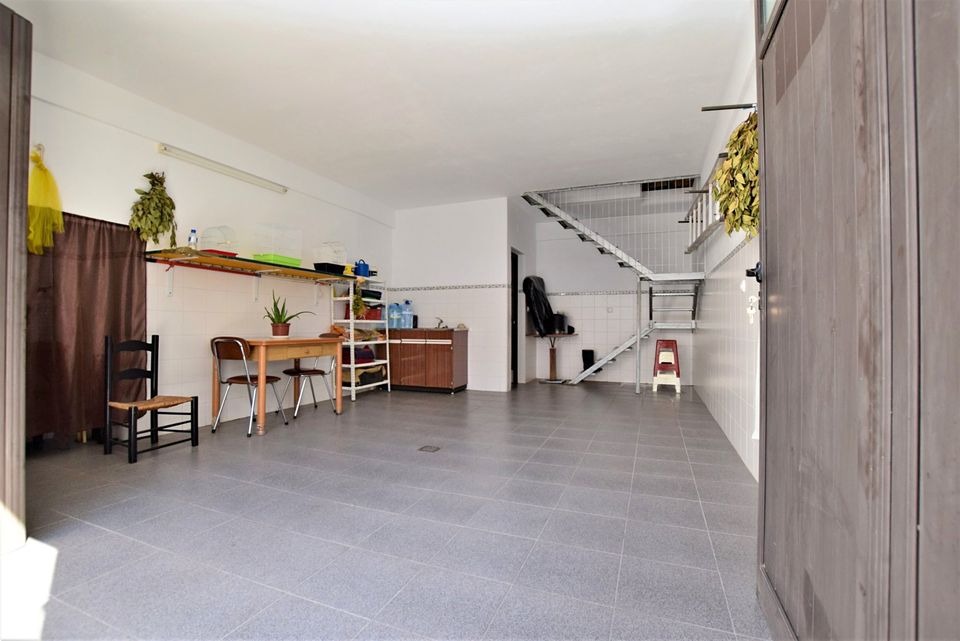
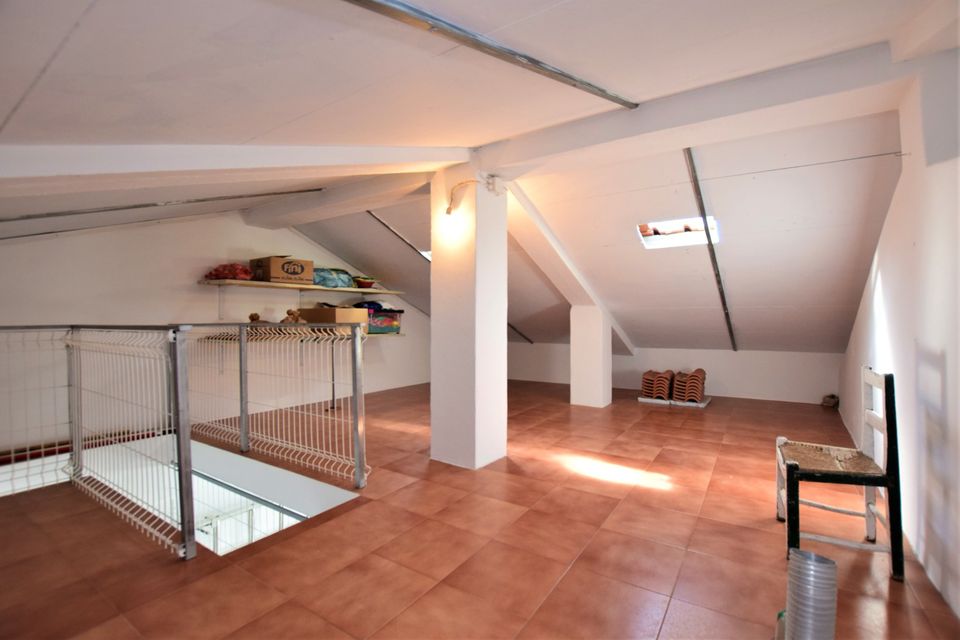
We found what we were looking for around the corner and two streets down – a four-minute walk – from our home there. Originally a house, it was abandoned and became a ruina before it was purchased by an architect and turned into a modern, updated, renovated, fully finished, two-level garage on the market for €35,000.
The sellers accepted our offer, the property agent asked for our respective credentials, the buy-sell agreement was sent to the notário.
That’s when our problems began …
“The notário needs to know what kind of marriage you have in the United States, specifically in the state of Iowa, where your marriage certificate was issued,” our property agent wrote.
He wasn’t asking about whether we had a good or bad marriage, an “open” or monogamous one, so I replied: “I don’t understand the question. What does the notário need to know?”
“Doctor. João Goes (the notário) is asking for the English name of your marriage regime. Do you have an English name for your nuptials? Do you have any document from the State of Iowa that indicates this regime of your marriage?”
Marriage regime?
“There are no separate marriage regimes in the US. Marriage is marriage,” I explained.
“It doesn’t matter whether it’s your first, second, or fourth marriage … if it’s a same-sex marriage, an interracial one, or a May-December romance. The only other type of ‘marriage’ in the USA is called ‘common law,’ where the parties were never legally married but lived together for several years, and may even have had children. In the entire United States – in each of the country’s 50 states – there are no other marriage ‘regimes.’”
The property agent then responded with a lesson about Portuguese marriages:
“In Portugal we have: 1-acquired goods regime. In other words, the couple’s common assets are those they acquire during their marriage; 2-general community of assets. All assets belong to the couple. Those acquired during marriage and those acquired before getting married. And, 3-separation of assets. Each person keeps their assets separate.”
To this, he added: “The point is that marriage regimes and the law vary from state to state (in the USA). There is no other option but to match the regime of the foreign State to the Portuguese one, in accordance with Opinion 54/CC/2018, issued in process R.P.31/2018 STJSR-CC, of the Institute of Registries and Notaries, and also of articles 93 and 68th of CRPredial. Any other scenario makes the acquisition registration unfeasible. We have had problems with foreign acquisition records due to the same situation. In light of Portuguese law, we must make this transcription.”
I certainly understood what he was saying. But that didn’t help me to identify the Iowa state marriage “regime” which governed our marriage. Not to worry: the notário did his homework and conducted some research.
Here are his findings:
“The marriage regime in the State of Iowa, USA, when transposed into the Portuguese legal system, is equivalent to the separation of property regime. This is what results from community law. When Bruce bought something, he did so together with his spouse; they bought it together, but each person acquired their share. Basically, it’s the same thing.”
And, so, the property purchase proceeded without any (other) problems.
P.S. Ironically, when sorting my documents to renew our residency in Portugal, I came across the deed to the property we owned in Elvas. Translated from Portuguese, this is what’s stated upfront in the deed: Bruce Howard Joffe, married under the common property regime …
Bruce H. Joffe is the award-winning author of Expat: Leaving the USA for Good and Spanish Towns, Portuguese Villages, A Journal for Expats and Immigrants.
 "Exactly!"