
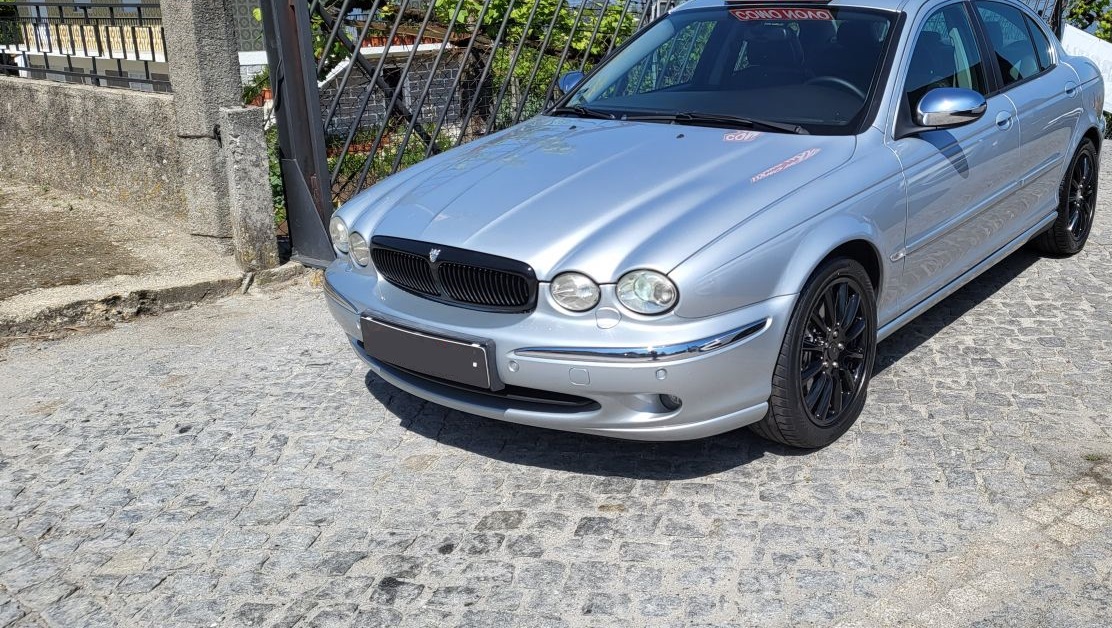


The name on her Portuguese bank account is “Lucilla Sous.” On the Certificate of Delivery for the car I purchased from her online, she’s identified as Fernandes Da Silva Câtia. And according to her Facebook profile — which shows that she moved with her family from Barcelos in Braga (Portugal) to Valence, Rhone-Alpes (France) in January this year — she goes by Catia Vanessa Rego Barbosa.
No matter.
Spanish and Portuguese people, especially, are given and take on any number of names. In our *correspondence, I just called her Vanessa.

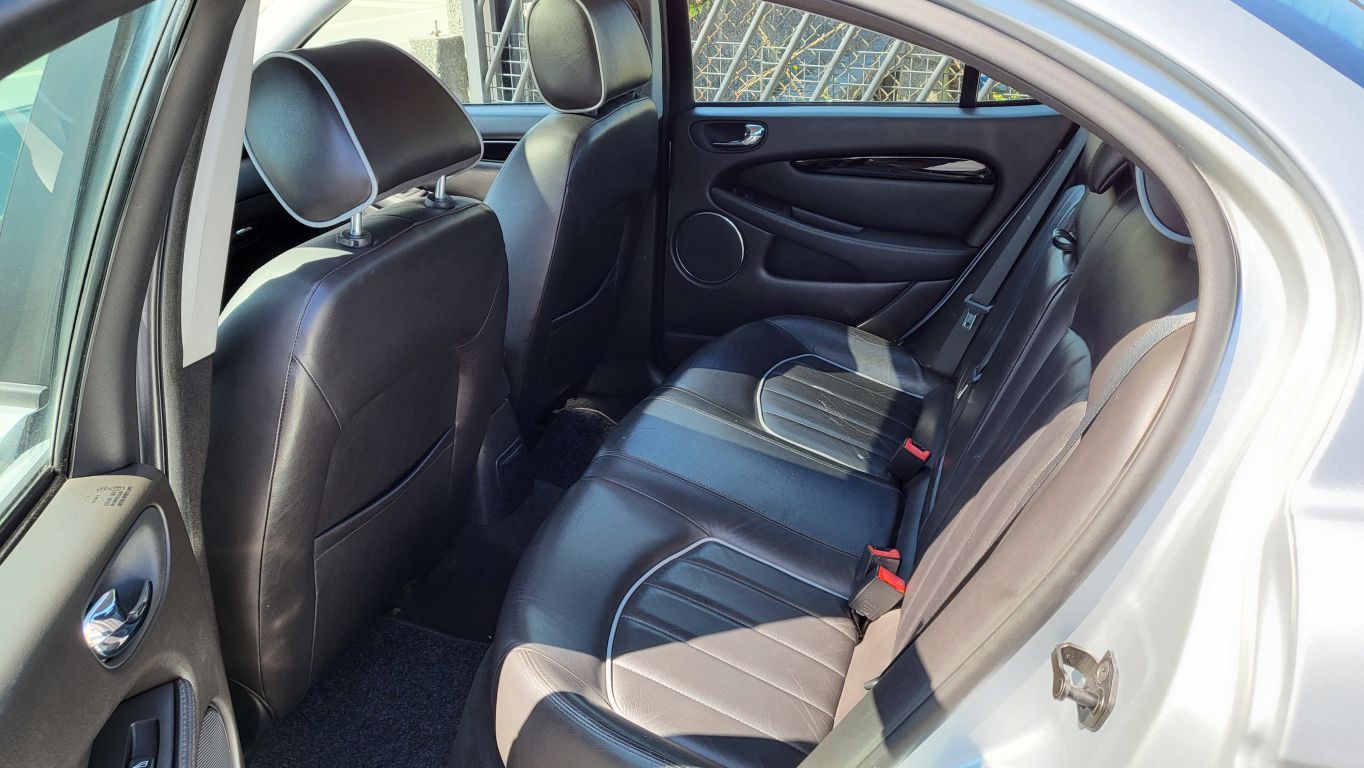
I first contacted her late in July 2023 for more information about a car she had listed for sale. It was advertised on a number of sites, which, by now, had been scrubbed. But the ad is still listed here. It’s a 2008 X-Type Jaguar 2.2 diesel with about 203,500 miles on the odometer, not bad for a 15-year-old car in the European Union. And this one was loaded: GPS Navigation, leather seats, moon roof, front and rear parking sensors, leather upholstery, heated seats, sports suspension … literally everything available in that model and year. As can be seen in the top photo above, the car was said to be “Como Novo” … like new.
This was to be a “new” toy for an old man (me), who had been infatuated with the sexy Jaguar X-Type (2004-2008 models) I had owned — new and used — between 2004 and 2017 while living in the USA. Unlike the American versions which came with all wheel drive, large V6 (3.0) gasoline engines and muscular “leapers” on their “bonnets,” the EU versions were mainly diesel, front wheel drive, and unadorned with machismo. Produced on the east side of the pond between 2001 and 2009, the gas (petrol) version was known to be a gas-guzzler, while the diesel engines were stronger, lasted longer, got far better mileage, and — strange as it seems — emitted less carbon into the atmosphere. Introduced in in mid-2005, the 2.2 diesel engine was superior in many ways to the smaller 2.0, according to reviews.
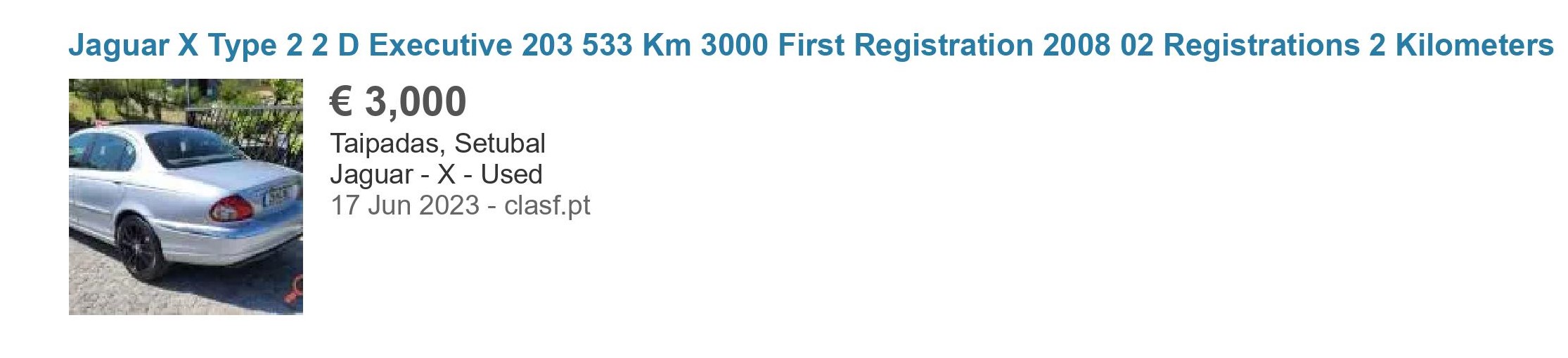
I had done my homework and knew that the advertised price of €3,000 for a car of this description was extraordinary; people in Jaguar X-Type groups couldn’t believe it and suggested I buy it and then flip it for twice the price.
If it’s too good to be true, trust me: it probably is!

Vanessa said that the car had been in storage since they moved to France and no longer had any need or use for it. She wanted a quick sale which she believed would be difficult, as the car would need to be transported from France to Portugal (where the car was still registered and had nine months left before its next required inspection) at extra cost: €906, which she would split with a buyer.

The storage agent/transporter also went by several names: On their website, the name is DL Transport Logistics, although their URL is dimilogistics.com. Their French bureau is headquartered at 4th avenue, C Saint-Denis, but the office I would be dealing with is elsewhere in France—at 19 Rue Henry Bordeaux, 74000 Annecy. The company also has an office in Luxembourg. Stamped on documents I received from it was DIMI Logistics Transport, although they referred to themselves as DLT. So did I.
From everything on their website, they appeared to be legit. No bad reviews (I searched) and a robust series of services.
Then, again, what did I know? Although I could understand and reply to emails with Vanessa in Portuguese, I had abandoned any French more than 50 years ago and needed to rely on Google Translate with a bit of tweaking to communicate with DL Transport Logistics.
On 15 August, I agreed to purchase the car and transferred €1,453 to Vanessa (aka Lucilla Sous). We agreed €1,000 would be a deposit on the €3,000 car and she’d transfer €453 to the delivery agent as my half of the transport fees to bring the car from France.
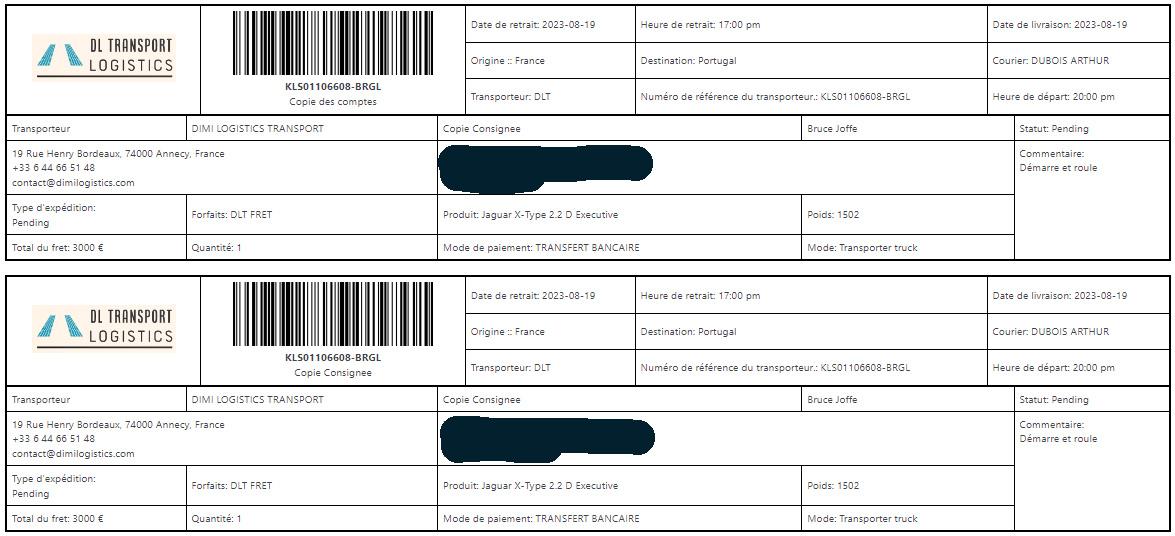
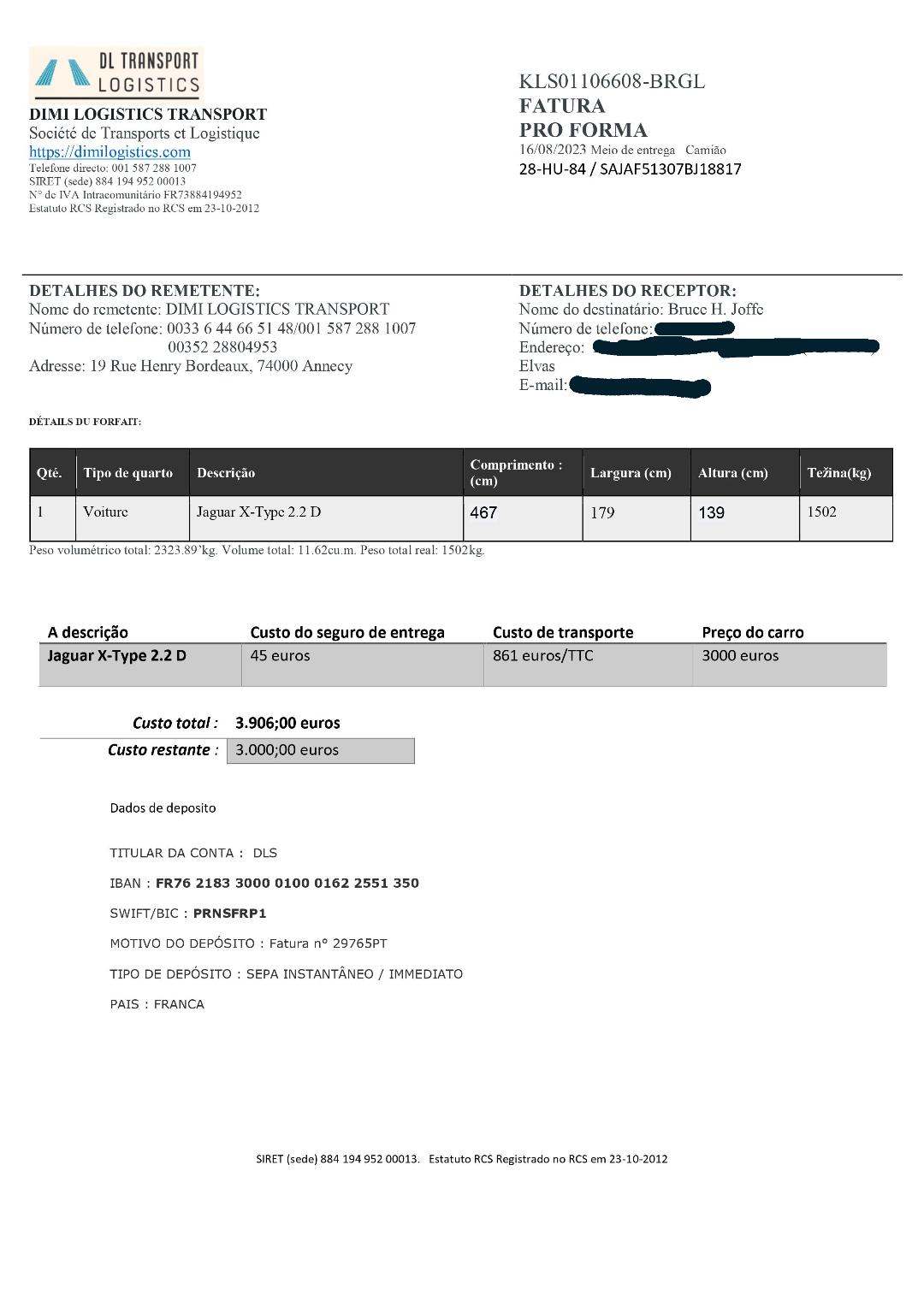
The next day (16 August), I received a flurry of documents from DLT, four in all: delivery information, a transport form, a delivery contract/guarantee, and – of course – an invoice. The documents informed me when the car would leave the facility, when it would arrive at my home, how it would be transported (by truck), the driver’s name, terms and conditions. Buried somewhere in the fine print was a statement that an additional €3,000 deposit, refundable three (3) days after the car was delivered, must be paid before the car could leave. Search as I did, I couldn’t find it.


I emailed Vanessa about this.
“Yes,” she agreed. “It’s additional insurance … for the truck, or the car, or the driver, or the person who’d be accompanying the driver. I’ve already transferred my €1,000 to DLT.” Vanessa insisted it would be better – and quicker – if I transferred the €2,00 to her for immediate transfer to DLT. “That way,” she proposed, “you won’t have to pay anything more when the car arrives. It will be yours.”
No, I demurred, I’d rather stick to our original agreement. So, on 16 August, I transferred €2,000 via immediate payment, as required, to DLT.
“The car will be delivered to your home on 19/08/2023 at 16:30,” said the email I received from DLT. “The order has already been given to the courier in charge of ordering this car for delivery. In accordance with the method chosen by the sender, the transport company takes a guarantor in the car to the agreed address. The courier will depart on 16/08/2023 at 18:45 (French time) and we will progressively inform you of your journey so that you become available to receive the car.”
My delivery, however, was cancelled the next day. Neither DLT nor Vanessa informed me of this; I learned about it through my bank online: DLT had refunded €2,000 to my account.
Responding to my “what happened?” email, Vanessa said, “Since yesterday we have a problem with the transport company that I am trying to resolve with my husband. We are doing everything in our power to resolve the situation and the transport company will continue with the delivery. So, don’t worry!”
But the weekend intervened.
On Monday, 21 August, I heard again from Vanessa. Insisting that the matters between her and DLT had been resolved, she stated that it would be best and most expedient for me to send her the €2,000 deposit, which she would transfer immediately to DLT. DLT agreed. But I refused. Instead, I sent €2,000 a second time to DLT via immediate transfer.
That same evening (21 August), the delivery was again cancelled by DLT. Again, I wasn’t told about the cancellation, but learned about it from the refund to my bank account. This time, however, there were differing accounts about what had happened.
According to DLT, the car had been stopped at the border between Spain and France because Vanessa had seven unpaid fines and tickets.
“Normally, I would forward messages from the carrier to you,” wrote Vanessa. “But the situation does not concern you. The car was stopped at the France-Spain border, and I have an unpaid fine that I must pay before the car is released. This is not the shipping company’s fault or your fault. But … I will resolve the situation. I hope you understand.” The next day (Sunday), she added, “I already fixed the problem. Tomorrow, the carrier will pick up the car and continue the delivery. I have resolved the situation and I think you will have the car tomorrow or Tuesday at the latest.”
Strange. What government agencies work on Sundays … or Saturdays, for that matter? Where was the courier and why was he to pick up my car the next day? Where was the car? And why was the car stopped and inspected when it was supposed to be inside a truck?
An hour later that Sunday, Vanessa sent me another email: “They (DLT) required (a) deposit to make an express delivery. It’s just an additional 78 euros. I will pay tomorrow morning. As they are late, they offered express delivery so the car (would be) delivered quickly.”
That was in addition to the €2,000 deposit which I would need to send DLT for a third time.
Once, shame on you; twice, shame on me! DLT had already refunded my €2,000 deposits–twice, which instilled a sort of confidence in me.
I exchanged a series of emails with Vanessa the following morning, notifying her that I no longer wanted the car. I said I didn’t trust her. She pleaded with me to finalize the purchase and had the transport company contact me to assure me that all was well. And again, I was told by DLT and Vanessa that the delivery would be expedited – and move forward – if I sent the €2,000 to her for immediate transfer to DMI. Still, I refused. This time, DLT gave me a Spanish account and IBAN in the name of Ribeiro Sampaio SC (a Portuguese, not Spanish, spelling) they told me was theirs to transfer the €2,000 deposit … which I did.
I didn’t hear from Vanessa again, but on Tuesday, 22 August, I received a series of email notifications from DLT:
• “The driver is not in possession of the delivery document; the act of delivery will be sent to you at 6 p.m. by email. The driver will start in a few minutes. After his departure the delivery time will be given to you. But the driver will drive a maximum of 9 hours.” (12:44 PM)
• “The estimated time for delivery to your home is 7 hours 54 minutes. The driver has already left. Thanks.” (1:33 PM).
• “Can you suggest hotels near you?” (3:26 PM)
• “The driver has just crossed the Portuguese border. He will take an hour’s rest before continuing on his merry way.” (5:22 PM)
• At 6:58 PM, I asked, “Where is he in Portugal please? I’m trying to visualize the route he’s following.
• “One moment please…” came the reply at 7:01 PM. “About 1 km from the Quintanilha border. He’ll be back on the road in a few minutes.”
• “That’s about 5 hours to us in Vila Boim,” I replied at 8:10 PM. “Do you still intend to deliver the car tonight? Should I stay awake and wait…or will you deliver the car tomorrow?”
• “There are two hours left for the driver to come to your home,” came the reply at 11:28 PM. But the time it is it will pass tomorrow before 9am. Stay connected …”
• At 10:09 AM Wednesday, the car hadn’t arrived. I sent this email: “I’m starting to worry.”
• The reply came at 10:21 AM: “Good morning. The road police just stopped the car this morning for unpaid tickets. We are currently resolving the problem with Madame Vanessa. You can go to place and check with your own eyes if you want because the car is already on Portuguese territory. Please wait …”

None of this made sense anymore—if it ever did! Wasn’t the transporter stopped days earlier at the France-Spain border for traffic violations Vanessa hadn’t paid? Did she have unpaid tickets both in France and Portugal? Why was the truck stopped again and inspected … with the vehicle’s information conveyed to the authorities, anyway? As alarming as all this seemed, it was complicated by a second email from the driver:
• “Your car should be delivered,” I was informed eight hours later at 6:23 PM. “The driver didn’t quickly leave his hotel today; we had trouble sending him money and doing some repairs on the car. Two tires are worn and have been changed. Repair times and the time it takes for banks to receive transfers affect the delivery time. This is the car that the driver drives from the Spanish border to Portugal. The tires are probably worn.”
The pieces began tumbling together. My car hadn’t been transported by truck, as contracted. Instead, it was driven more than 1,500 miles … which I never would have agreed to, given that the car already had 203,500 kms on its odometer. Who knows what had happened to it enroute from France to Portugal? Besides, the company’s own transport document listed “transporter truck” as its mode of transportation!
I had been duped. A victim of Internet thievery … in this case, conspiracy between the seller of an automobile and a transport agent determined to defraud me. I never did receive the car. Nor did either Vanessa or DLT reply to any of my emails. I was out €3,453.
Hindsight is always 20/20, especially when you want and anticipate something so eagerly. Senses dulled, you’re not fully aware of what’s happening. Or isn’t. Or shouldn’t be.
Neither Mme Vanessa nor DL Transport Logistics know me. They have no idea the lengths I will go to see them brought to justice. Already, my attorney in Portugal has been advised. And I’ve made initial contact with police departments in Portugal, France, and the European Union that specialize in Internet crimes.
Hopefully, you’ll never be conned by Internet crime. If you suspect that you have, please bypass those sponsored ads that come up first in Google searches. Despite their promises, some of them can make a bad thing even worse. Instead, be sure to keep careful records, to contact your lawyer, and to touch base with your local police.
If you’ve been swindled on the Internet, you can also start the complaints process online.
In Portugal, Safe Communities Portugal recommends this link: https://www.safecommunitiesportugal.com/report-a-crime-online/swindle-deception
Another Portugal site for reporting cybercrime: https://en.ministeriopublico.pt/en/contato/cybercrime-office
In France, use this link: https://www.service-public.fr/particuliers/vosdroits/R19620
In the European Union: https://www.europol.europa.eu/operations-services-and-innovation/services-support/joint-cybercrime-action-taskforce
Vanessa and DL Transport have been copied on this report … so that they will know what’s happening when they receive visits from the police.
*I have all correspondence, notices, and documentation referred to herein.
Bruce H. Joffe is publisher and creative director of Portugal Living Magazine.
 "Exactly!"
Buenas, me gustaría ponerme en contacto contigo para ver como has solucionado el problema, ya que me está pasando lo mismo.
No lo he solucionado, Asier. Todavía queda pendiente entre los tribunales de Portugal y de Francia.
Hello, did you ever resolve the situation? I think I just got duped for only 452 Euros to the transport company. (DIMI logistics) by a seller calling herself Maria Paula Nunes.
No, despite reporting it to the police and spending two hours filling out paperwork, it never was resolved. I’ve seen the same scheme online on autos for sale websites … different names but same particulars.
We you able to get your back to reverse any of the money?
No, no a cent.
Also a victim of these identical scammers – trying to get my money back at the moment!
I’m so sorry to hear about your loss, Sue. We’ve seen other scammers online pulling the same tricks. I really hope you are able to get your money back!