Shame on You, Portugal!

The post was published in one of the Facebook groups for towns and villages surrounding Penamacor in Central Portugal. But it’s only exemplary—it could (probably has been!) posted anywhere and everywhere across Portugal or, for that matter, Spain.

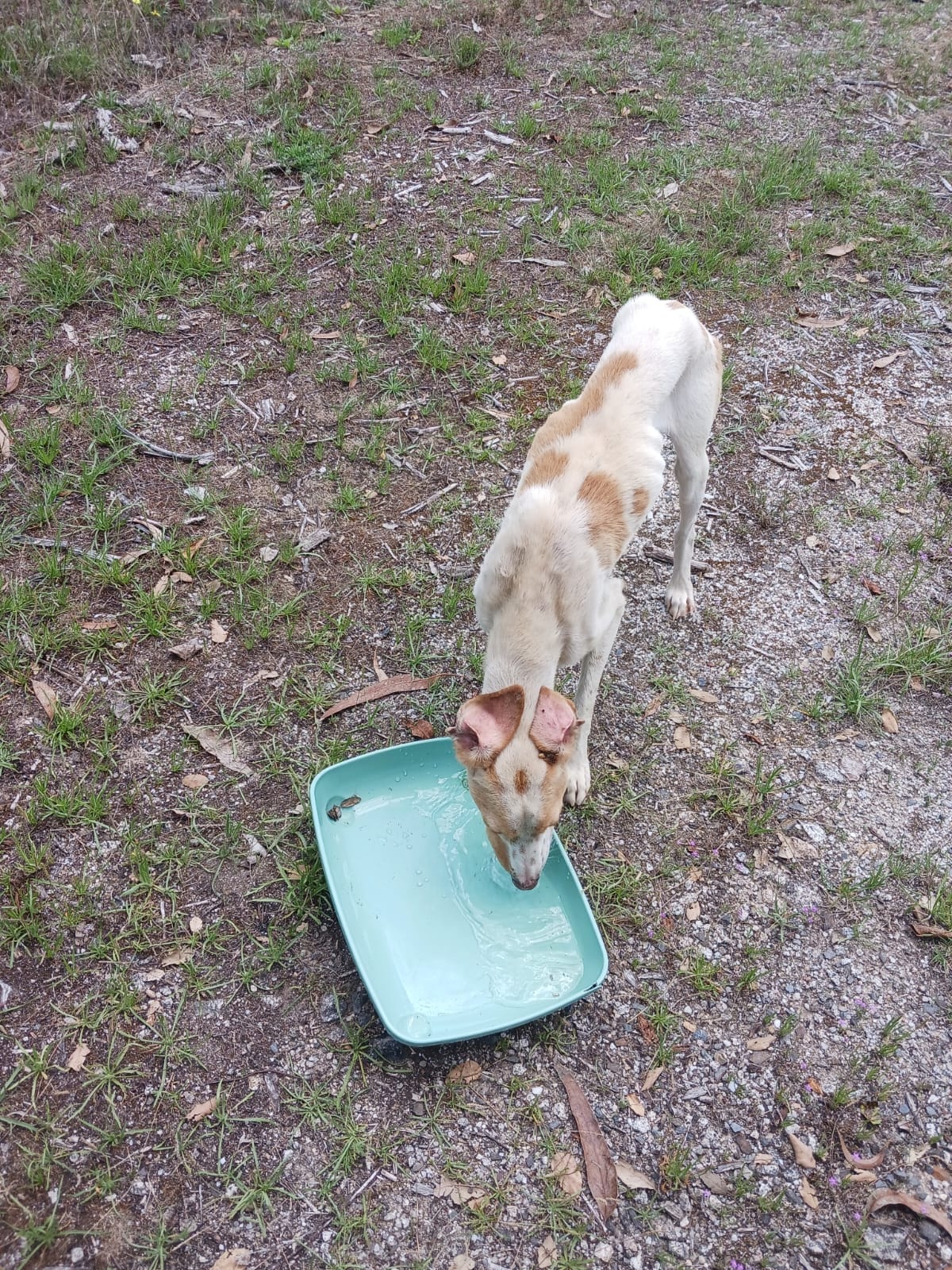
It began with a heart-wrenching photo of a dog.

“Does anyone recognize this dog by any chance?” were the words below it. “Poor boy is skeletal and covered in ticks. We’ve managed to get him in our car and are going to take him to the vet. He’s very scared and also friendly. I’m hoping he’s just lost.”

An update quickly followed: “No chip. The vet gave him a tick tablet. That’s all the vet can do for now, so we desperately need help. Can anybody, please, house him until we are able to sort either a home or sanctuary for him? We’re happy to pay for his dog food, etc.”

A second update was posted: “’Arnie’ slept through the night really well. He didn’t whimper or cry once, nor did he leave any mess. He is now flea- and tick-free and is showing signs of trust. Surprisingly, he hasn’t shown any aggression towards our cat, Bob. Now he has the chance to get healthy and find a family, as he deserves.”

Comments came fast and furious.

“Hundreds of dogs are abandoned here every day,” exclaimed an angry Miguel. “The kennels are full and there are no mechanisms for dealing with these issues.”

The author of the original post replied, “I know, it’s really sad. My partner has been in the kennel life over here, so we are very aware. We are trying to prevent Arnie from going to the Canil, as it’s no life for a dog. Not sure what we are going to do. For now, we will keep him at home, bathe him, and keep our dogs away until we can find somewhere to place him.”

Miguel quickly replied: “There are over 30 dogs in the farm next to mine that are extremely poorly treated. No vaccines, no treatments, no anything. They have so many insects, it looks like a horror movie when you’re close. I’ve contacted every government agency and animal advocacy group in Portugal. No one will do anything.”

He continued, “They keep having puppies and, when they’re older, they abandon them. They barely feed them; so, at night, they get into all the trash in the village and city in order to eat. They’re not neutered, so there’s constantly more. We find dead puppies all the time.”

I cringed when reading this. We, too, had found litters of day-old puppies trashed in the bins of our small village outside Castelo Branco. The first time, only one survived. We brought him home, stopping enroute to buy puppy formula, a couple of light blankets, a hot water bottle, and a toy. We shared responsibilities with Olga, another animal advocate in our village. We kept and cared for him during the days while she was at work. She picked him up on her way home from work and dropped him off with us the next morning. Both of us had other dogs of our own. No matter, this was an imperative. We nursed the baby until he was three weeks old, and his darling eyes had opened. A lovely British family living in a caravan then took him and kept him, ensuring he was properly treated and trained. Not even a month later, Olga knocked on our door. In her hand was a towel covering two tiny puppies her mother had found in another bin in the village. “Can you take him for me, just until I get home from work?” she asked. “We can do what we did last time, until someone who’ll adopt them can be found.” There was no question. Incredibly, the same Brits who adopted our first foundling took both of the babies and fostered them, sharing photos with us as they grew and finally found forever homes with others.

“The government needs to do more,” Tonii, the original poster, replied to Miguel. “This is a serious problem, poor souls. I will never be able to understand and wish I could do more to help!”

“Call the IRA (Intervenção e Resgate Animal),” suggested Jenny, who had joined the conversation. The IRA’s mission is to rescue animals that are victims of mistreatment, negligence, or when their welfare conditions provided for by law are not guaranteed.

Miguel replied, “The IRA told me they won’t respond so far outside of Lisbon and to call the local police. Police won’t do anything. The municipal vet says the kennel is full. That I should build fences. The government doesn’t do anything.”

Condolences and words of support from others began to appear in the comments.

“Thank you for what you are doing for this poor animal. Hope you will find a good home for him; he deserves a better life,” began Kristine.

“Thank you for helping!” echoed Sonja. “Poor thing, that could be the reason why I can’t really live in Portugal. I couldn’t stand the suffering. I would like to support, but I already did for a dog, 200 Euros, then he got hit by a car! I support every month a friend in Morocco. She saves donkeys, horses, dogs, cats. It’s amazing! Wish you all the best with this. Love from Belgium!”

“It is hard, at first it was a big culture shock, and I guess still is,” Tonii told Sonja. “But after living here three years, I know that not every dog you see on the street is a stray. A lot of Portuguese allow their dogs to roam freely here. But when they are in this state, you know they aren’t just roaming … they’re abandoned. It is hard, but please be careful what you say. The other day I was called xenophobic and racist for saying that Portugal needs to get with the times (i.e., education and help from government for poorer communities that can’t afford to neuter their animals). We have brought him home for now. He’s had a bath, some food, and is now resting in the other room. If we had the space (and fewer dogs), I’d keep him in a heartbeat. He’s so gentle.”

“Maybe he’s a lost hunting dog?” Hélia interjected. “The way he is, so skinny, shows that he’s probably been abandoned for a long time.” Jennifer agreed: “Probably a hunting dog left behind. They starve them for months, at least that’s what they do on this island.”

“Hunting dogs are usually chipped as they are worth a fair bit to the owners,” stated Caroline. Arnie wasn’t chipped, though.

“It’s heartbreaking, every time I see a new abandoned dog I want to help; but already having five, it isn’t possible,” shared Julie and several others. 

“Julie, this is how we ended up with 20 … not through choice but found on the streets in terrible condition,” Diane told her. “I know what you mean,” replied Julie, but sometimes you have to draw a line and give the best life to the rescues you already have.”

Portugal and Spain both have laws about mistreating and abandoning animals. As shown here, however, that doesn’t mean they can – or will – enforce them. And woe to the foreigners who intercede on behalf of these misbegotten critters. We’re called out, ridiculed, and told to go back where we came from if this devil-may-care attitude irritates us so much.

After all, it is their culture.

Bruce H. Joffe is publisher and creative director of Portugal Living Magazine
www.facebook.com/PortugalLivingMagazine

Processing…
Success! You're on the list.

Remembrances of Things Past

Lately — for several months now — the church bells in our town and village have been off, ringing randomly, incessantly, and pealing the wrong hours.

What is happening to these bucolic timepieces for which we’ve abandoned wearing watches?

“The bellringer has died and there’s no one to take his place,” we’ve been told. Even the automated, mechanical gongs must be precisely set and adjusted manually. Again, it’s a dying art form–few and far between are the people with the know-how to do it.

Yesterday, as we were walking down one of the town’s shopping streets, my eyes came to rest upon a shoemaker, also known as a cobbler or cordwainer. For fifty years, this professional man now in his seventies has had his shop in the same spot where he fixed and repaired shoes, sandals, slippers, and boots along with a litany of their parts: heels, hooks, eyelets, buckles, and laces. Twice, I had brought the same pair of my favorite shoes to him for new soles. And, hoping he’s still working, I’ll bring them back to him again for a third set. This makes me happy … to enjoy my favorite footwear for many, many years. But, how long can and will he be around? Is there anyone qualified to replace him? More importantly, with the abundance of low-cost, disposable, throw-away foot coverings, do we still need these craftspeople?

It got me thinking about a plethora of things I remember but no longer are around … at least where we live. Undoubtedly, some will disagree and point to these memories which continue to exist where they live (or not far), while others will nod in remembrance but shrug them off as antiquities which have withered in the chain of evolution … survival of the fittest.

In no particular order other than stream of consciousness, here are some of my memories that have faded along with cobblers and church bells:

Small businesses — mom and pop shops — instead of multinational corporations, tech start-ups, and ubiquitous franchises. Amazon and its ilk have made many obsolete.

Calligraphy, the art of handwriting, along with classes teaching cursive letters. Who needs them anymore, with the proliferation of word processed fonts?

Half-hour newscasts rather than round-the-clock commentary and news dumps. In my humble opinion, the obsession with knowing every detail and being up to the minute with constant streams of speculation and (mis)information has contributed significantly to our sense of stress, anxiety, madness, and troublesome vicissitudes.

Corner candy stores where, unlike today’s sanitized, mass produced, and covered delicacies, the chocolates were handmade and penny candies unfettered.

Luncheonettes with jukeboxes that have morphed into snack bars and “cafés,” especially here in Spain and Portugal.

Thrift shops, both old and new. Walmart, Target, E LeClerc, Carrefour, and Todo €1 will never rekindle the charm and romance of Woolworth, McCrory’s, or Ben Franklin stores. In the USA, “upscale resale” businesses are exploding … but here in Spain and Portugal, the natives disdain “used, old things,” unless they’re family heirlooms handed down through generations. Finding genuine thrift and “antique” shops requires both Google Maps and at an hour or two drive.

The seltzer man. Perhaps local to my New York City upbringing, Louis Arment came weekly to our Queens house, bringing a wooden case filled with a dozen glass seltzer bottles with triggers and a kick. Today, these bottles and boxes fetch a pretty penny at antiques shops. Somehow, today’s “club sodas” can’t replace the fizz of seltzer water.

Italian-style restaurants, rather than the pizzerias that, as afterthoughts, might serve lasagna, cannelloni, and similar pastas. Yes, I know they’re not “real” (i.e., authentic) Italian, but I hanker for meatballs and spaghetti, antipasto, and chicken parmesan … even if covered with mozzarella cheese not parmesan.

Soft drinks and milk in glass bottles. We’re drowning in plastics, so why not bring back those beverages in glass bottles? How many youngsters earned extra money beyond their “allowances” by collecting and returning the glass bottles to stores where they received a nickel for each one returned? That was real recycling and well behind its time!

Telegrams. Reminiscent of World War II, Western Union brought good news, as well as bad. With today’s email, instant and private messages, who needs telegrams anymore? Today, we’re all the messengers who are bound to be shot.

Standing the test of time, vinyl records are making a popular comeback as are comic books, retro style furnishings and clothing, avant-garde architecture, eyeglasses, and keepsakes.

Maybe we’re yearning for simpler times in nostalgia, when neighbors were friends, civics and penmanship were taught in our schools, and history wasn’t engulfing us and passing us by. When artificial intelligence meant using CliffsNotes rather than reading the books.

If you haven’t seen Pleasantville, go have a look.

Bruce H. Joffe is publisher and creative director of Portugal Living Magazine, the thoughtful daily online periodical for people everywhere with Portugal on their minds.
www.facebook.com/PortugalLivingMagazine

Olvera’s Pride

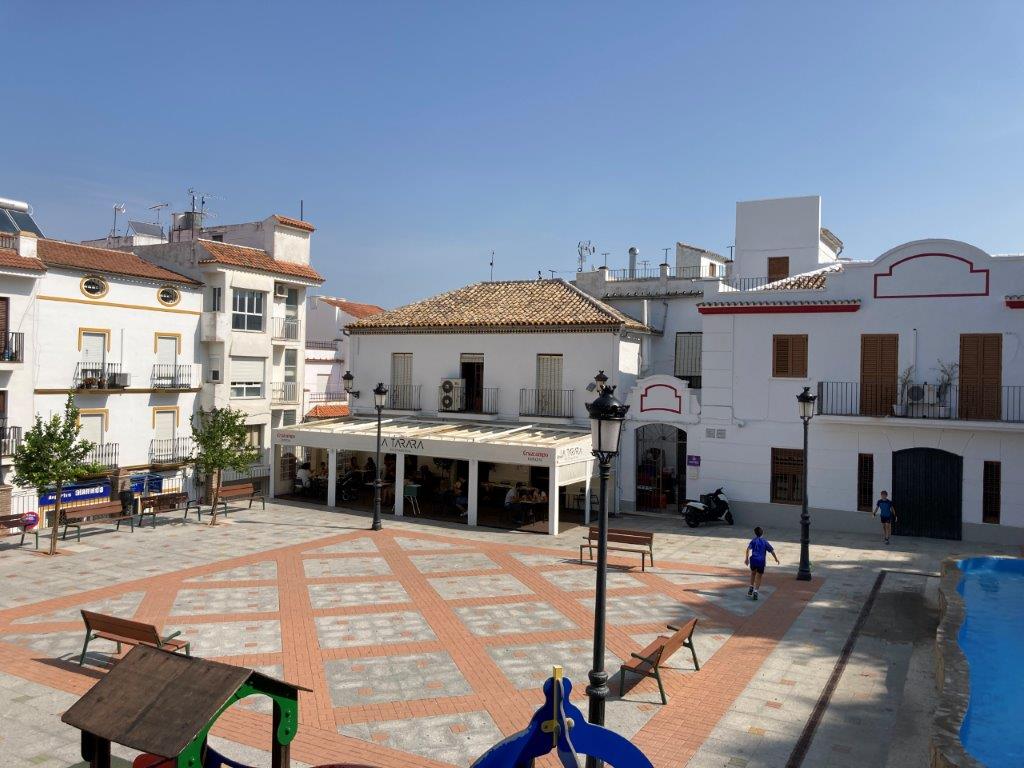
Olvera, our getaway home in southern Spain for the past 18 years, has plenty to be proud about … not the least is its designation – honored by a Spanish postage stamp – as Spain’s “Best Rural Destination” in 2022. The town of 8,500 straddles the intersection of Cádiz, Sevilla, and Málaga provinces.

Outside its town hall fly the flags of Olvera, Cádiz, Spain … and a rainbow flag.

Now, I just learned another reason for Olvera to be proud: On June 23rd, it will be hosting a Gay Pride event for its residents and guests.

Spain is said to be the first European country and the second in the world with more LGBT+ people, according to a study by Ipsos, which holds a 4.2 out of 5-star rating on Trustpilot with over 45,695 customer reviews. Spain is designated as the third country in the world that most supports the right to equal marriage. And, like Portugal, Spain protects LGBT rights and validates the “diversity of the collective.” The survey also corroborates that Spain is a country in which there is majority support for proposed measures to improve the integration of trans people, a country that embraces “diversity, freedom, and LGBT+ pride … that advances by leaps and bounds without (a) brake.”

According to the survey, “Spain is where respondents are most likely to say they are gay or lesbian (6%), while Brazil and the Netherlands are where they are most likely to say they are bisexual (both 7%). Japan is the country they are least likely to identify as either gay or lesbian (less than 1%) and as bisexual (1%).”

The Iberian nations of Spain and Portugal are known for their inclusiveness.

Like Lisbon and Porto, Madrid and Barcelona have huge Gay Pride celebrations and marches each year. Events honoring LGBTQI+ people take place in other major Spanish cities, too: Sevilla, Córdoba, and Torremolinos … as well as such gay-renown destinations as Ibiza, Sitges, and Benidorm.

But Olvera?

One of the “pueblos blancos” in the province of Cádiz, Andalucía, Olvera has much to commend—including its positive attitude toward sexual minorities that are marginalized and condemned elsewhere.

Of late, think Uganda. In fact, 64 countries (nearly half in Africa, including Nigeria) have laws that criminalize homosexuality. In the USA, the political right is bound and determined to introduce legislation that eliminates or rescinds LGBT social and constitutional rights gained only after centuries of exclusion and damnation.

So, it behooves “queer” people to call attention to their history of cruelty, mistreatment, and entrapment, along with its contributions to civilization at large in countries like Spain and Portugal where gay rights are endorsed and supported.

We learned about the June 23rd event over lunch from two female friends, a kitchen designer and her retired spouse. They knew the date and location it was to take place – in a public square on the main street of town, directly opposite the Iglesia de la Victoria, one of Olvera’s pristine churches – but not the time.

I thought about the LGBT people we are acquainted with in Olvera who might be there:

> The beautiful young man with sometimes pink dyed hair who owns an upscale furniture shop and has won multiple awards for his interior designs—commercial, residential, and dressing the windows of local shops;

> The male couple who live down the block of our former house who enjoy a long-distance relationship, spending time together in Olvera, Australia, and elsewhere;

> The respected and educated man of magnificent color who lives, for now, in Olvera but spends each month working in London;

> The adorable waiter at our favorite restaurant who I’ve been innocently teasing and playfully flirting with for several years;

> The reclusive couple living two doors from ours but won’t speak to us, for whatever their reasons;

> The tall, dark, and steamy recent arrival from Venezuela whose eyes locked with mine momentarily;

> The lady in red who – rumor has it – enjoys her bread buttered on both sides;

> The British couple who lived here for several years, opening and closing a few businesses before returning to England … but continue to visit time and again;

> The colorful youngsters with ink covering their bodies and piercings from lip to nose. Maybe they are the “Q’s” in the increasingly complex jargon of LGBT syntax.

We Americans tend to be more priggish when it comes to carnal matters than the Mediterranean peoples. Sex is sex to them, nothing more and nothing less … without getting into issues of gender identity or sexual branding. They’re much more comfortable with themselves and their bodies. It’s not unusual for men to have slept with other men or women with women. Passion isn’t scrutinized or sanitized to subvert the prurient interest. The heat of the moment doesn’t result in being branded with a homophobic scarlet letter. Lust and sex between consenting adults are considered normal. It is what it is.

Pride, however, is all about identity … about standing tall in society without apologizing or denying who we are. If it’s a moment to be silly, too, so be it.

Gay Pride also satisfies something we seriously miss when living abroad: a sense of community … of people like us that transcends individuals and friendships, regardless of where we are on Kinsey’s scale and spectrum.

It’s also an occasion for friends and allies to stand together with us.

If we’ve learned anything from the Trump years and thereafter, it’s as Streisand sang: “People who need people are the luckiest people in the world. We’re children, needing other children. And yet letting a grown-up pride hide all the need inside, acting more like children than children.”

You bet we’ll be there at Olvera’s Gay Pride!

Bruce Joffe is publisher and creative director of Portugal Living Magazine. Follow the magazine daily at www.facebook.com/PortugalLivingMagazine. It’s free!

Processing…
Success! You're on the list.

So Be It …

It is without shame, guilt, regret, or apologies that I acknowledge:

• I will never be Portuguese, no matter what I do or how hard I try.

• I will always be a foreigner living in Portugal. Even with permanent residency and Portuguese citizenship, I will still be an outsider who has been allowed in.

• Belonging, however, is different. After five years, I really do feel a sense of belonging here–that I have adapted to my habitat and that it has adopted me.

• Whether I like it or not, I cannot help but interpret what’s happening around me through the lens of my personal upbringing and cultural heritage. This may or may not be a good thing.

• Things are done differently here. I need to take deep breaths and exercise my patience when I do everything correctly but the “system” malfunctions or the bureaucracy balks.

• I am an immigrant residing in Portugal with no intention of moving “back home” (or anywhere else). Others who live here for a time and/or a reason, but plan to move on, are the only real expats.

• I will never speak Portuguese as the natives do. But I can strive to communicate with others in myriad situations and to do my best to understand the people’s language.

• Out of respect and interest, I participate in Portuguese holidays, ferias, other events and rituals; but I’m engaged without being able to fully feel, appreciate, or identify with the spirit and soul — the “why” — behind some cultural customs and traditions.

• It is because of my homeland that I can live as I do in Portugal.

• Although I have left my homeland to live abroad in Portugal, I can never cut the umbilical cord that ties me to whence I came. I vote from abroad here and care what happens there.

• While I live in the midst of Portuguese people, my lifestyle is probably different from theirs. I can afford big and little luxuries — air conditioning, a modern kitchen, extra bedrooms, a new car — that many of them can’t. It behooves me to be sensitive to this difference.

• Whenever possible, I try to buy locally … without disrupting, depriving, or displacing the Portuguese people or their land.

• Because I benefit from residing in Portugal — health care, education, elder care, etc. — I contribute to the country’s Social Security … even though, because of my age and limited years of contributions, I’ll never qualify for even the most minimal of pensions.

• I am but a guest here, yet I do have a right to abhor malevolent practices–from abandonment, abuse, or neglect of domestic animals to charging different prices for foreigners and native locals.

• For whatever their reasons, some people decide that Portugal is not for them and leave the country. It is incumbent upon me to be empathetic and understanding, not snide or sarcastic, about the life they choose to pursue elsewhere–whatever and wherever it may be.

Bruce H. Joffe is publisher and creative director of Portugal Living Magazine.

Processing…
Success! You're on the list.