Unknown's avatar

About Pastor Bruce

Church pastor, communications professor, and nonprofit executive, Pastor Bruce H. Joffe has amassed an extensive array of journalism, scholarship, and management experience. He has taught no-nonsense public relations, media, and marketing courses at The American University, George Mason University, Mary Baldwin College, Carthage College, and Kaplan College. As president and creative director of a metropolitan Washington, DC, public relations firm, he helped to manage the reputation of his clients for more than 20 years by creating promotional materials and metrics for large corporations and local businesses to use in their branding efforts, while positioning nonprofits to raise the bar on the resources and awareness they need to make a real difference. Academically, Joffe´s most recent focus has been Media and Gender Studies. Through research and publications, he continues to explore the relationship between gender, the media, and cultural norms--including organized religion. Ordained by the International Council of Community Churches and the Progressive Christian Alliance, Pastor Bruce considers himself a progressive Christian who believes that God is love and that loving God means having compassion and forgiveness towards others. Joffe is the author of numerous magazine features, academic research, professional journal articles, and newspaper byliners. His books include The Scapegoat; A Hint of Homosexuality? 'Gay' and Homoerotic Imagery in American Print Advertising; Square Peg in a Round Hole; Personal PR: Public Relations and Marketing Tips that Work to Your Advantage; The Facebook Gospel: Social Media and the Good News; My Name Is Heretic: Reforming the Church, from Guts to Glory; and Expat: Leaving the USA for Good. Since moving from the USA to Portugal and Spain in 2018, he's written EXPAT: Leaving the USA for Good ... and Spanish Towns, Portuguese Villages: A Journal for Expats and Immigrants. His latest book was published in June 2024--VULNERABLE: Why We Fear and Hurt So Much.

Checks and Balances: Banking in Spain & Portugal

Remember the days when American Express advised us not to leave home without the company’s ubiquitous traveler’s checks, accepted and exchanged virtually everywhere … for a fee?

Alarmy Stock Photo

Forget about them.

They’re no longer accepted at banks and few offices (far between) will convert them to the local Euro currency.

It’s not only American Express checks. It’s all checks. Especially, personal ones. Even if you have a bank account in Portugal or Spain, you can’t just deposit your Christmas card gifts from back home or birthday presents sent on paper. Some banks won’t accept them at all; others, will charge a hefty fee – upwards of 25€ — for the privilege of waiting while each check is sent back to the USA for conversion before posting to your account.

EU countries are becoming cashless societies where plastic is the financial instrument de rigeur—at least at retail stores and points-of-sale. No longer are cards inserted, slid, or swiped; they’re hardly even touched, since the card “reader” comes within kissing distance of approval or denial, as your hand hovers over it. Increasingly, too, is your telephone as the tool of choice in financial transactions. Same concept, different instrument: card or mobile.

It may be awkward for some, but remind anyone from the USA in the habit of sending you checks that, not only can it take up to two months for you to receive it in the mail … and most banks (if they’ll even accept American checks) charge a minimum of 12.5% of the check’s value to convert and deposit it to your Portuguese or Spanish bank account. In the end, it’s a lose-lose proposition with you paying coming and going.

Best bet? Impersonal as they may be, international funds transfer services – Paypal, (Transfer)Wise, Western Union, etc. – will charge a small fee and choose the exchange rate, but the money will be received by you usually within 24 hours. Money can be transferred quite easily from home via the Internet.

Online, too, deposits, withdrawals, and transfers are now virtual, if not literal. Buying and paying online has boomed thanks to stay-at-home shoppers who purchase everything not available to them through local merchants or shopping centers.

Think that’s going to change once Covid no longer is such a threat?

Brace yourselves for the brave new world of banking.

Neither Spain nor Portugal typically credit your money that they’re holding (and investing) with interest. Quite the contrary: For the privilege of granting banks the right to serve as clearing houses for your recurring bills and financial transactions, several of Spain’s largest banks are charging fees of 90 Euros quarterly – that’s €360, nearly US $500 per year – to steward your funds, plus additional fees for withdrawals, transfers, and other transactions. While few banks or any in Portugal (that I know of) charge such usurious fees, they all do eat away at your savings with fees for every transaction. Adding insult to injury is that – on top of these fees – banks are also required to charge IVA (sales tax, if you will) of 21% in Spain and 23% in Portugal.

(If/when you do open an interest-bearing account, it’s almost not worth it: we deposited €11,000 in a U$D account for six months—you need to specify how long the investment period will last. At the end, we had earned about 40€ on our deposit. But that was before taxes were deducted on our earnings. In the end, our €11,000 earned a whopping 14€! Plus, the account usually isn’t insured.)

A bank account is required for residency in both countries so that your recurring bills can be directly debited.
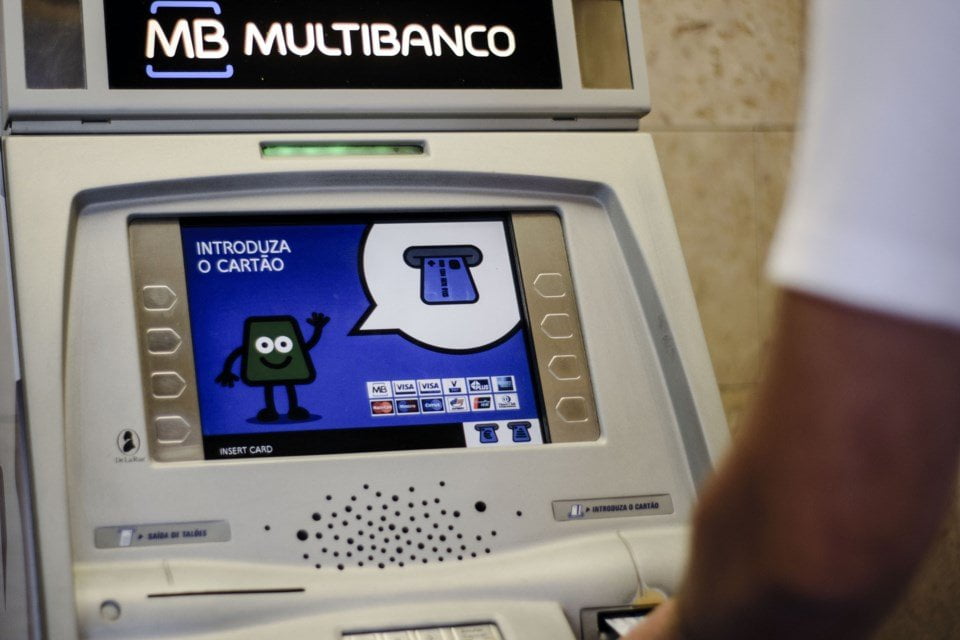
Then there’s the Multibanco:

More than the ATMs Americans are accustomed to, Multibancos do much more than disperse cash from your account, or allow you to move money from one account to another within the same bank. You can pay bills and/or transfer money to other people, businesses, and government agencies (regardless of their bank) and debit directly those recurring charges—like your electric, water, car payment, insurance, and telecommunication bills. Forgotten your personal IBAN number? You can obtain it – along with a detailed summary of your transaction history – electronically through your home computer or mobile device and, of course, the Multibanco.

We’ve come to appreciate the Multibanco, but know that all aren’t alike. There’s a difference between an ATM and the Multibanco.

The branch we bank at, for instance, has a Multibanco outside, while, inside the entrance is its own ATM. You can’t use any other bank’s credit or debit card at that ATM … but, theoretically, you can use your bank’s debit card at any Multibanco.

When using a debit card with a Multibanco to withdraw funds from a bank account in the USA, always be certain to reject the option for the amount to be deducted in dollars. It’s the last question prompted – twice, including a confirmation – before the transaction is completed. Instead, opt for the withdrawal to be done in Euros, with your home bank handling the transfer. The same holds true when using a debit card for purchases: always choose the “euros” option, not the dollars one.

On a withdrawal (or purchase) of 100€, we’ve saved ten to fifteen euros that way … enough to buy a really good lunch in Iberia.

Supposedly, you can’t withdraw more than two hundred euros (€200) on any day from the Multibanco. We ass-u-me they’re inter-connected … so if we withdraw €200 from this Multibanco, we won’t be allowed to withdraw another 200€ from that one, using the same card and account.

If one needs cash – more than €200 – on the same day, however, there are ways around the Multibanco’s limits. If you have more than one bank account and debit or credit card, for example, just use another one to draw out up to another two hundred euros. Keep going … until you reach what you need or run out of cards.

Then, of course, you can go into the bank itself to take out larger sums. But you’ll pay a higher fee for the personalized service.

Perhaps someone else can explain all the curious charges, fees, taxes, and take-aways affixed to our bank accounts in Portugal and Spain. You know: those amounts preceded by minus signs and abbreviations?

I understand “comissões” and my monthly “quotas” – fees charged for the bank’s associated accounts with additional benefits – but what about all those other encrypted letter deductions:

  • IMP.TRF.P?
  • DESP.TRF.P?
  • I.SELO OP.BANC?
  • COM SERV EST R O?
  • COM OE STP NET 24?

For pure economics, financial institutions are making money on top of money through a variety of fees, charges, and commissions.

“It is well enough that people of the nation do not understand our banking and monetary system, for if they did, I believe there would be a revolution before tomorrow morning,” Henry Ford claimed.

Thomas Jefferson charged, “I believe that banking institutions are more dangerous to our liberties than standing armies.” Of course, neither man had access to the Multibanco.

Disclaimer: I share these stories of our experiences not to complain or seek sympathy, but because we are North Americans acculturating to another country’s norms and expectations. Information in posts such as this aren’t found in tourist or relocation guides … nor asked about and answered in most Facebook groups. Hopefully, some will learn from my anecdotes and be better prepared for the grit and grist, the grain of living abroad. We love Portugal for what it is, not what it isn’t, and have no intention of returning to the USA.

Bruce is publisher and creative director of Portugal Living Magazine. Read the current online issue and subscribe to the magazine at no cost whatsoever: http://portugallivingmagazine.com/our-current-issue
Processing…
Success! You're on the list.

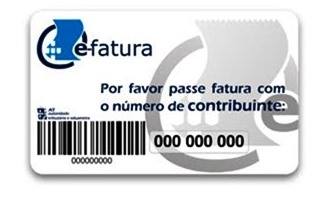
O Número Contribuente?

Americans are issued Social Security Numbers in the USA which are used to identify them—from taxpayer to pensioner.

Other countries assign their citizens (and residents) a variety of numbers. In Portugal, for example, in addition to a social security number, many of us also have a separate health care number, driver’s license number, and – of course – the ubiquitous “fiscal” (or taxpayer) number, technically known as our NIF but more popularly referred to as the número contribuente.

Every time we go shopping, we’re queried “Contribuinte?” by the cashier.

Merchants are required to ask if want to provide your “número contribuinte” for that purchase … although you aren’t required to give it. But, if you do, it’s recorded and reported to the tax office.

Will providing your NIFs for Lidl or Continente purchases affect your tax bill in Portugal?

It could!

Part of the reason behind tracking money spent and received is to thwart the “underground economy” and its financial transactions. But, thanks to giving our número contribuente, our own tax records display deductions we can take on our income taxes. And we’re entered in lottery-like “drawings” held regularly by Finanças and the tax office.

(Unless you pay income taxes here, however, you can’t claim these deductions. If you do pay taxes here, some “costs” are reclaimable.)

In welcoming us to their country, we want Portugal to know that we are investing in it, too, by purchasing from its businesses.

So, although not required or requested, when I head to SEF to renew my residencia, I’ll also be handing over a printout of the spending I’ve done here … attributed to my número contribuente!

Shared here are personal observations, experiences, and happenstance that actually occurred to us as we moved from the USA to begin a new life in Portugal and Spain. Collected and compiled in EXPAT: Leaving the USA for Good, the book is available in hardcover, paperback, and eBook editions from Amazon and most online booksellers.

Processing…
Success! You're on the list.

Moving Out, Moving On

What do you do when your doctor decides you cannot go up and down the 37 stairs (a dozen times daily) in your house anymore? Especially with your three dogs—which you walk twice around the village: once with the two little ones and, again, with the bigger boy? And, further, that the aches and pains in your back and your bones are unable to withstand the uneven cobble stones paving your streets because of the stresses and strains they put on you—especially when walking your dogs around your beloved village four times each day?

You don’t have 37 steps? Or three dogs? And your streets are paved with asphalt, not cobble stone, you say? Or you live on a quinta?

No matter.

Consider this scenario, one quite familiar to Americans seeking to move abroad to Portugal (and Spain). One of the indispensable requirements of obtaining a residency visa is documenting that you have a dwelling … at least for your first six months here.

You can rent or buy.

Though some opt for renting, knowing they will have to relocate when their lease is up, it’s a sensible choice—especially if you have few household items and worldly goods to transport. You’ll have a chance to live up close and personal and understand the lay of the land as you explore other neighborhoods, nearby towns and villages and cities, or (perhaps) elsewhere entirely in the country.

Your choice.

You have six months to travel and explore, gambling that, for whatever reason – a community of friends already living there, proximity to the coast and its Atlantic beaches, charm of the place that tugs at your heartstrings and beckons, a perfect plot to put down roots and live off the land instead of the grid – the time will provide opportunities so that you don’t have to rush to judgment about where you’ll live.

Others, like us, however, prefer to buy—submitting a property deed with our visa application, rather than a rental contract.

With all the moves we’ve made already, packing the mementos and monuments of our 25+ years together for a transatlantic shipment would be our last herculean undertaking before the Atlas in us shrugged.

Buying in a “foreign” country requires a different type of fortitude. For instance, you need to envision – even fantasize – the lay of the land where you want to be: Urban, suburban, or rural? Village, town, or city? On the coast, in the center, or along the border? Single-family detached house, “row” home, duplex, apartment, condo, or land enough to grow (maybe even sell) your edibles and comestibles? New build or resale, renovation or ruin to rebuild from scratch?

Along with such demographic factors, you’ll also want to weigh in with the “psychographics.” Close your eyes and picture your perfect place. What does it look like? More important, how does it feel to you? For the sake of seclusion are you opting for less in terms of Internet and telecommunications options—especially if you’ll be working online? If dogs are already part of your furry family (or will be), will you be comfortable in a home without any land, requiring you to walk and pick up after them, regardless of the weather … which can be day upon day and weeks at a time of continuous rain or brutal, scorching sun where it can be 100 degrees or more in the shade throughout the summer? Do you have special health issues or concerns which will dictate medical availability and accessibility?

And what many of us forget to take into account is our age: Will what seems reasonable, doable, and accommodating now feel or be just as easy to cope with down the road five, ten, twenty years hence?

In our case, we didn’t know if Russ would be able to continue working remotely. Would his close-knit Door County performing arts company consent to him not working under their thumb? Would they be willing to contract communications and marketing – as well as attendance, virtually, at staff meetings – from a time zone six hours later?

We didn’t know when we began planning our move; yet, discretion being the greater part of valor, we concluded that we’d best assume that we’d be “freelancers,” with new income flowing from the USA except for Social Security.

Along with a relatively modest budget, that was a reality which dictated many of our choices and criteria where to look and live in Portugal.

Eyes closed, we envisioned our new home set in an idyllic village with cobble stone streets and a picturesque church whose bells would mark the tempo of our daily lives. Our home would be easily accessible by car to shopping, dining, and entertainment. After ten years of flying to our vacation bolt in southern Spain, it would also be within an easy driving distance. Importantly, too, it had to be approved for commercial use, as we planned to open our “Tapas Americanas” to produce income.

All told, we made three round-trips between the USA and Portugal in search of the “right” property, searching for places between Coimbra and Castelo Branco that met our needs … and wants. We scheduled one of our trips to coincide with a Pure Portugal seminar on buying and building, losing one possibly perfect property close to Miranda do Corvo because it sold before we could make an offer; we bypassed another property after learning at the seminar that a “build,” enclosed on three sides by a mountain, would be difficult to maintain because of the moisture and constant battle against damp and mold.

Towards the end of our second tour, we found a house that ticked off all of our boxes. In a village just 15 minutes outside of Castelo Branco, it was postcard picturesque. On the street level, it had housed a café before the owner’s husband died and she put the property for sale—including the lower-level café, a courtyard, and large kitchen.

Above, rose two more levels. On the first was a huge living room, two smaller rooms (formerly bedrooms, but offices for us), and a separate wing above the downstairs kitchen with a large guest quarters and en suite that not only would provide privacy, but could be used as an AirBnB rental. The top floor featured a master bedroom with walk-in closet and separate en suite, an adjacent multi-purpose room with a second (service) kitchen, and a huge covered terrace. The house also included a large attic with ample room for storage.

The drawbacks? After being vacant for several years, the elements had taken their toll on the premises which needed repairs, mold remediation, and painting … not to mention an entirely new kitchen constructed downstairs. Those 37 steps would be our daily exercise. And, although the café was zoned “commercial,” the landlady had allowed its license to lapse. To be granted a new license would require bringing the café up to current code—at least €10,000 in construction costs to make it handicapped accessible, more mobile and modern.

Not that it mattered, anymore …

Russ’ employers wanted him to keep working for them. This was well before Covid closures and work restrictions; they were willing, at least, to give it a try. Fortunately, everything worked well. Not only did it prepare the organization for the new realities of work caused by the pandemic, but it also prepared the way for other employees and contractors to work remotely as well.

We fixed up and improved the house, using the former café as our gathering area for friendly get-togethers. Walking the streets with our dogs, we got to know our neighbors. Because few in this provincial village spoke English, our conversational skills grew beyond “Bom Dia” and “Obrigado.” These good-hearted yet private people knocked on our door, bringing baskets with fruits and vegetables from their gardens or quintas. We came to enjoy the local holidays and festivities, even as we respected the solemn processions of locals paying their last respects to those dearly departed. Living on the main street brought life’s realities and rituals to our windows, balcony, and front door.

With each chime of the church bells, I grew older … crossing that milestone from sixties to seventies, from an energetic “senior citizen” to an “elderly” fussbudget. Limbs broken 20 years earlier sent me not-so-gentle reminders with increasing frequency. New ills, aches, and allergies began to trouble me. Never particularly patient to begin with, I increasingly identified with grumpy old men filled with frustrations, feeling (felling) my physical limitations and life passing me by.

When a series of gastrointestinal problems and my first bout with sciatica brought me to hospitals, laboratories, pharmacies, and clinics, my physician insisted that pharmaceuticals could just do so much to help; some major changes must now be made in our lives.

“You cannot continue to climb up and down all those stairs,” she stated, “especially with the dogs. And the uneven cobble stones in the streets aren’t helping, as the dogs pull you going after a dog or cat.”

“So, what are you saying; what do you suggest?” I asked, presuming her forthcoming answer.

“You must move!” she informed me. “Find a one-level home with a backyard, a quintal. Maybe a bungalow. You will see how much better you will begin to feel.”

Move? Again? After all that planning? From a village that had welcomed and embraced us: Newcomers! Over the last ten years or so, the local population had been halved—from 1,200 to 600.

I had adjusted and adapted my life in retirement to one of active involvement. Since moving to Lousa, I had one book published and was working on a new one. I wrote regularly for The American Magazine (UK) and The Portugal News. I created and administer several popular Facebook groups—one for “Portalegre People” (where our other home was located); another for “LGBTQ+ People and Friends in Portugal”; and a third, “American Expats & Friends in Portugal and Spain,” for expats, immigrants, the curious, and wannabes. Most important, however, was the progressive, interfaith congregation I pastored for hurting and spiritually hungry “People of Faith Online.” And, most recently, we launched Portugal Living Magazine, an English language magazine that covers the entire country, connecting people throughout … as well as those seeking to relocate.

Move? At this point, I needed to think of it not as moving out, but moving on. Nonetheless, it’s not as easy as one might think.

Stay tuned …

Shared here are personal observations, experiences, and happenstance that actually occurred to us as we moved from the USA to begin a new life in Portugal and Spain. Collected and compiled in EXPAT: Leaving the USA for Good, the book is available in hardcover, paperback, and eBook editions from Amazon and most online booksellers.

Processing…
Success! You're on the list.

Buyers, Beware (Renters, Too)!

Technically, Portugal’s mainland is divided into 18 districts (distritos) formerly referred to as provinces; 278 municipalities (concelhos); 159 cities (cidades); 533 towns (vilas); and 2,882 civil parishes (freguesias). Countless “unofficial” villages like ours add to these numbers.

Unless you know someone with boots on the ground, speak the language well enough to be treated like a local, or are lucky by happenchance to be in the right place at the right time, finding an acceptable place to live means turning to “property agents” to help and guide you.

The property representation enterprise differs from country to country within the European Union, and is altogether different from what we have experienced back in the States.

Beginning online … where most people start their property searches. Property portals Kyero, Idealista, Custo Justo, Olx, and Milanuncios are good places to look, along with Facebook groups like Pure Portugal.

Then, if we use the handy form online to request more information or a showing, we have every right (if not reason) to expect a representative will contact us … if not today or tomorrow, sooner than later. No?

Often, multiple agencies will list the same property … but with different (and, sometimes, conflicting) information. Whether the property is connected to municipal water and sewer mains (and/or has wells and a septic tank or field) … if the water is heated by “bottled” gas, gas lines, or electricity … the condition and construction of the windows, doors, and roof … which appliances and what furniture shown in the pictures are included in the price … all of this matters to us and makes a difference regarding those properties that interest us.

Pictures are worth thousands of words. The more (current) pictures posted of a property, the more (or less) attractive it will appear. Pictures of any land included with the property are nice, but – by and large – we’ll want to see the inside of properties where we may live.

Yes, we’ll be noticing those cracks in the walls, the missing tiles on the floors, the damp mold on the ceiling, the condition of the roof and its wood, cement, or metal beams. Why shouldn’t we?

Most properties in Portugal and Spain have their own peculiar quirks, as there are few (if any) real building codes required … especially in the smaller towns and villages. With steps of different heights and widths, and slight little step-downs or -ups between rooms, mobility can be a major accommodation factor. Even those of us without wheelchairs have tripped, slipped, or bumped into something all-too-often. It’s part of the idiosyncratic “character” of these curious properties.

While “location, location, location” and its condition are factors in determining a property’s price, all too often, “time is of the essence” for us. Our time is limited when we’ve come to the country, primarily, to find a property.

So, after viewing a property, ask your property agent get back to you quickly with answers to your questions, reassurances about your concerns, and any helpful information that they can provide.

“The real estate market in Portugal offers the luxurious, the good, the average, and the mediocre … with prices adjusted to the condition of the property,” asserts one local, “depending on what you are looking for, where you’re looking, and your available budget.

”That’s why proper property representation is vital.

Or, as our British friends would say, “bloody brilliant!”

Shared here are personal observations, experiences, and happenstance that actually occurred to us as we moved from the USA to begin a new life in Portugal and Spain. Collected and compiled in EXPAT: Leaving the USA for Good, the book is available in hardcover, paperback, and eBook editions from Amazon and most online booksellers.

Processing…
Success! You're on the list.

Refuse, reuse, and reduce plastic!

Back in the day, supermarkets didn’t sell bottled water.

Most of us got our water directly from the tap.

Water just wasn’t something people thought about buying from the grocery, anyway.

Those were the days, my friend, when milkmen (no women that I can recall) delivered fresh milk daily or every other day to those milk boxes — now sold as “antiques” and “collectibles” — next to our front doors. Similarly, Louie Armet delivered a case of seltzer water (carbonated or “tonic” water) to our house weekly. Soft drinks (soda or pop, depending where you lived) were sold in groceries. But that’s before we became health-conscious and learned that soda was bad for us, while, for the most part, milk and water were good.

Nonetheless, most beverages came either in glass containers (jars and bottles) or metal cans.

You paid a deposit on them at the check out and many a youngster earned extra cents (sense?) foraging, gathering, and returning this glass and aluminum in exchange for the deposits.

I don’t know when — exactly — it happened that plastic became the packaging of our lives … but I do vividly remember the black and white “Plastics Make It Possible” television commercials in which plastic was heralded as the scientific “miracle” that would improve our lives.

Think about it: just try to go an hour without touching something plastic.

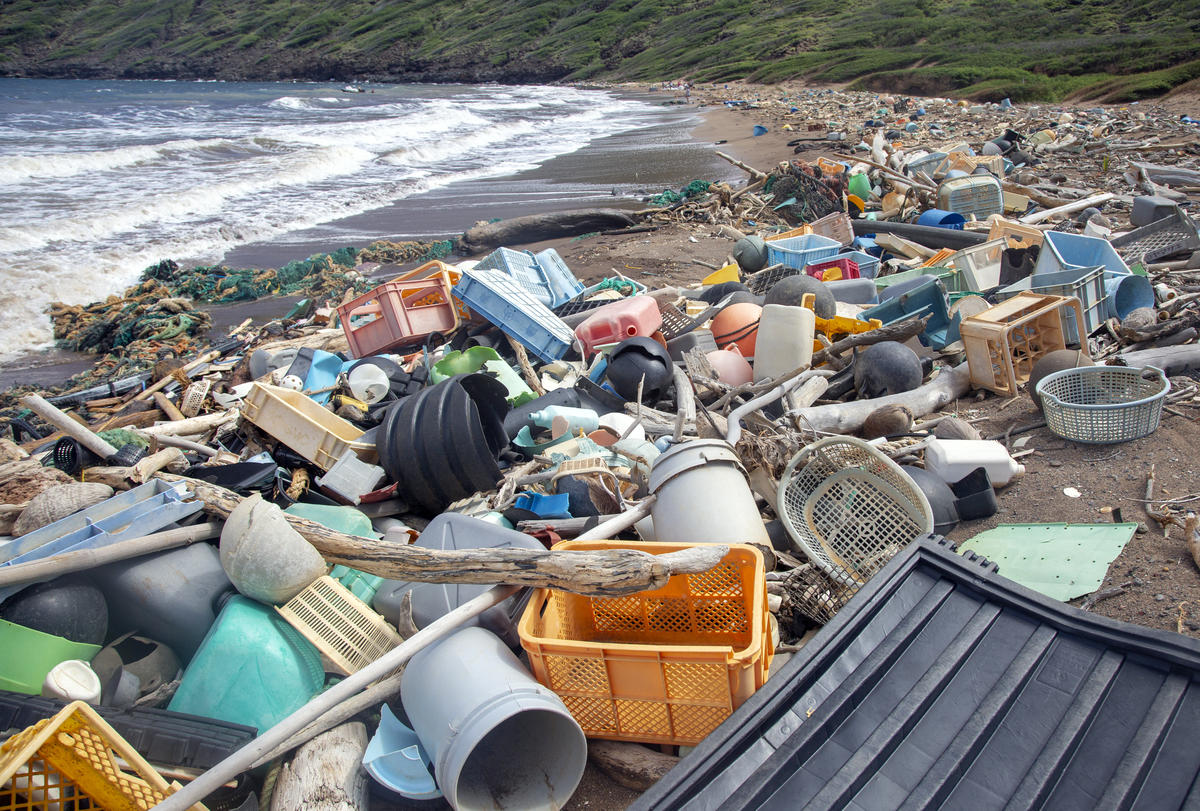
Greenpeace partnered with Protecting Kaho’olawe ‘Ohana (PKO) and Kaho’olawe Island Reserve Commission (KIRC) to do a beach cleanup and brand audit at Kanapou beach on Kaho’olawe Island, Hawaii. Trash washed up on the beach.

The stuff is everywhere: from our toilet seats to the electronic devices we constantly use (sometimes, it’s safe to ass-u-me, while likely sitting on said toilet seat) are made of plastic. In fact, try as we might, there’s not much in our day-to-day lives that doesn’t contain plastic.

“I just want to say one word to you. Just one word … Plastics.”

Remember that line from The Graduate?

More recently, however, plastic has begun to bother me in its excess.

If these words weren’t about a former boss, they could aptly apply to plastic: “Some is good; more is better; too much is just enough.¨

Maybe for the producers, vendors, and plastic distributors, but definitely not for us and our world.

Why must water be sold in single-use plastic bottles? And those plastic bottles then wrapped in layers of plastic? And, again, as we check out, those plastics inside of plastic put in plastic bags?Why is there so much hard plastic packaging around razors, cds and dvds, tooth brushes and floss? Almost everything that now hangs from retail store shelves?

It’s bad enough trying to remove it to begin with … but, time and again, I cut myself and end up bleeding from the plastic shards.

But, I’m being self-centered here. There are communal and global reasons why we need to reduce our dependence on disposable plastic. Primarily because they’re not disposable!

Plastic, undoubtedly, has revolutionized society, introducing a huge amount of convenience and affordability, and allowing for the development of things like computers, cell phones and many modern medical devices.

But our obsession with it also comes at a steep cost. Although originally hailed as a miraculous innovation that could reduce a rapidly industrializing society’s reliance on scarce natural resources, plastic has also created a monumental environmental mess. Worldwide, more that 400 million tons of the stuff are churned out annually, generating a huge amount of waste of which less than 10 percent is recycled. The rest either ends up in landfills, where it will take an average of 500 years to decompose, or in waterways and oceans. 

A study by a scientific working group at UC Santa Barbara’s National Center for Ecological Analysis and Synthesis (NCEAS), concluded that every year, eight million metric tons of plastic end up in our oceans. What is more concerning is that, according to the study, the cumulative input for 2025 would be nearly 20 times the eight million metric tons estimation.

One of the most concerning problems that our oceans are facing nowadays – if not the most important – is plastic pollution. Plastics are the cause of increasing ocean pollution, which in turn affects marine life and, consequently, humans as well.

Did you know:

  • Plastic causes many adverse effects in wildlife because chemicals include reproductive abnormalities and behavioral effects.
  • All sea turtle species, 45% of all species of marine mammals, and 21% of all species of sea birds have been affected by marine debris.
  • Plastics can absorb toxins from surrounding seawater, such as pesticides and those in the class of chemicals known as Persistent Organic Pollutants (POPs). They can also release harmful components.
  • Plastics can be ingested by many organisms. This can cause damage to their health.
  • The main cause for the increase in plastic production is the rise of plastic packaging.
  • The drilling of oil and processing into plastic releases harmful gas emissions into the environment including carbon monoxide, hydrogen sulfide, ozone, benzene, and methane (a greenhouse gas that causes a greater warming effect than carbon dioxide) according to the Plastic Pollution Coalition.
  • The Environmental Protection Agency or EPA estimated that five ounces of carbon dioxide are emitted for every ounce of Polyethylene Terephthalate produced (also known as PET – the plastic most commonly used to make water bottles).

What can we — you and me — do about all this plastic pollution?

The solutions are simple and can be applied by everyone, everywhere.

The best way we can all help is to reduce new litter entering the environment. This may sound naïve, but it is a fact. To do that, there are three Rs that can remind us to do this:

  • Reduce: Choose products with less packaging, or shops where you can refill your own container.
  • Reuse: Use reusable products.
  • Recycle: Separate items that can be recycled (i.e. plastic, paper, cardboard).

Short of lobbying for government intervention in plastic packaging, there’s lots we can do to reduce our individual plastic pollution footprint: Have three receptacles in your kitchen–one for recycling, one for compost and one for trash. Collect all your plastic trash for one week just to see how much you actually use. It may make you think twice about how much plastic you buy. Stop buying single use plastic bottles and fill a reusable bottle, instead. Notice how things are packaged and opt for items packaged in cardboard vs. plastic whenever possible, for example laundry detergent. Minimize your use of plastic bags. Keep reusable bags handy. Use a thermos for your morning cup of coffee and bring it with you to your local coffee shop. Don’t buy disposable razors. Swap out or minimize all those plastic food storage containers you’ve collected over the years, especially those without lids or bottoms. Use glass or metal containers. Buy from bulk bins. This doesn’t mean buying in bulk. Bring your own reusable cloth containers or bags. Stop using disposable plastic plates. Donate plastic household items or decor you don’t love or are no longer using. Don’t just throw them out.

Don’t just throw them out!

Shared here are personal observations, experiences, and happenstance that actually occurred to us as we moved from the USA to begin a new life in Portugal and Spain. Collected and compiled in EXPAT: Leaving the USA for Good, the book is available in hardcover, paperback, and eBook editions from Amazon and most online booksellers.

Processing…
Success! You're on the list.

Much Ado about Nothing? Opening a Business in Portugal or Spain

Starting a business anywhere isn’t easy … or cost-efficient … and we began to question the wisdom (and value) of opening a small “snack bar” outside of Castelo Branco that sells small-plated, typically American food: Tapas Americanas.

In addition to rent, utilities, furnishings and/or fixtures, merchandise (or whatever you are selling), to be factored into one’s business costs in Portugal we’re told are:

–LEGAL FEES to start up the business. Good lawyers — and we have a great one! — are worth their time and fees. In addition to all the government “red tape,” we understand that that “council” of our municipality must approve the request to open a new business;

–LICENSE FEES AND PERMITS

–BUILDING CODES & CONSTRUCTION

–INSURANCE (Health). With or without owning a business, to be granted long-term residency in Portugal, one must have, at minimum, given health coverages. Our health insurance for the two of us is about €200 per month;

–INSURANCE (Liability). The business will need coverage to protect itself and its owners (us!) against possible “injuries” suffered by customers and bystanders;

–A REGISTERED ACCOUNTANT is absolutely required. Add another €50-150 each month;

–EVERY EMPLOYEE, INCLUDING YOURSELF, AS OWNER, MUST BE PAID AT LEAST THE MINIMUM SALARY. Currently, we’re told that’s €665 every month … for 14 months each year

–SOCIAL SECURITY CONTRIBUTIONS. Each employee, including the owner, must contribute @ €184 per month to Portugal’s Social Security system.

–DEBIT/CREDIT CARD FEES. 4% of gross sales. Actually it’s O.9% with BPI, Millennium and Novobanco; 0.75% with CGD and up to 1.5% with BIC. Minimum payment taken back by the bank is usually 0.05c

–FINANCAS and their ‘connected’ cash register(s). So, even before you open the door (assuming you have one) or invest in inventory or stock or ingredients for food to sell, one must cover monthly costs of at least €850!!!!!!

If we sell our “Tapas Americanas” at the very reasonable rate of €4 per plate (or dish), we would need to sell over 200 tapas per month just to meet our essential expenses … not counting other overhead (utilities, etc.), salaries and Social Security for each additional employee, and taxes.

Profits?

LOL!

www.youtube.com/watch?v=2wtbQUaC9mE

Shared here are personal observations, experiences, and happenstance that actually occurred to us as we moved from the USA to begin a new life in Portugal and Spain. Collected and compiled in EXPAT: Leaving the USA for Good, the book is available in hardcover, paperback, and eBook editions from Amazon and most online booksellers.

Processing…
Success! You're on the list.

Fado & Flamenco: Evocative and Provocative

A picture may be worth a thousand words, but nothing expresses the soul of a people quite like their music. Perhaps nowhere does this resonate so clearly as with the Portuguese fado and the Spanish flamenco. Those seeking to familiarize themselves with the unique character and personality of Spain v. Portugal need only wrap themselves in these two existential music genres.

Even if you don’t know a word of either language and haven’t studied its culture, you can still experience it profoundly as you listen – no, engage – with the primal emotions aroused by the music.

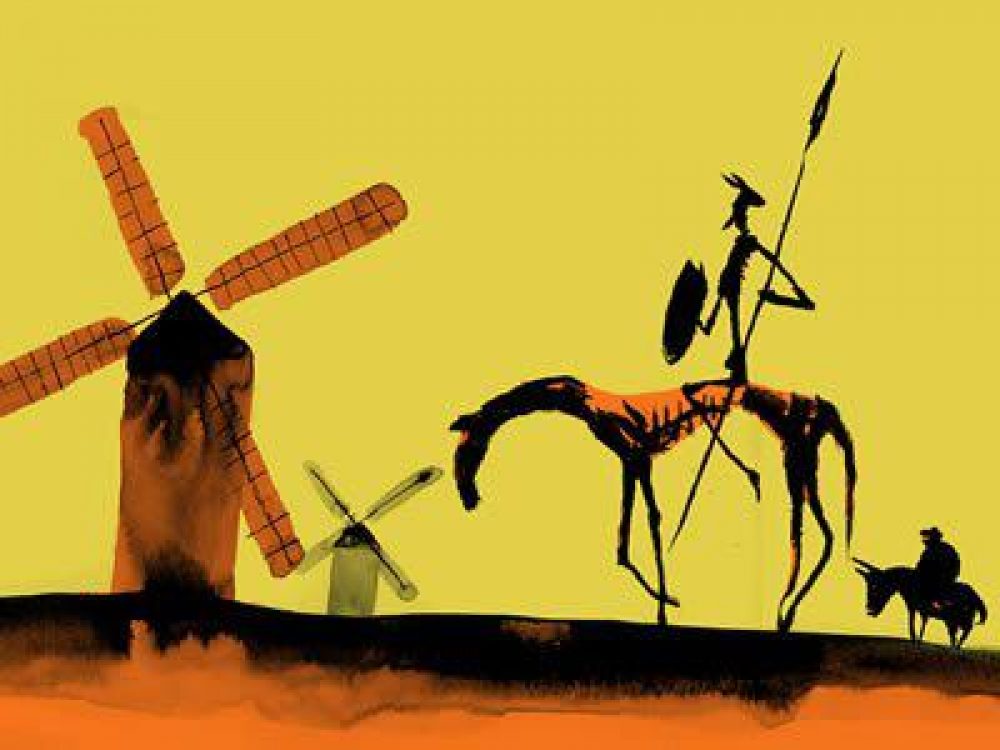
Spain is quixotic, teasing and tempestuous, outgoing and flirtatious. Portugal, on the other hand, is sadly melancholic, holding tenuously onto a yearning sense of nostalgia.

Fado is traditional folk music, a form of Portuguese singing that is often associated with pubs, cafés, and restaurants. This music originated in Portugal around the 1820s, although it is thought to have much earlier roots. Fado is known for its profound expressiveness and melancholy. A musician – often a woman — will sing about the hard realities of daily life, balancing resignation and hopefulness that a resolution to its torments can still occur.

Best described with the Portuguese word saudade, an impenetrable word which encompasses more than “longing” and stands for a feeling of loss, fado was brought to mainstream music by Amália Rodrigues (1920-1999), known as the Rainha do Fado (Queen of Fado). Acknowledged throughout the world, Amalia’s charisma, extraordinary timbre of voice, and beauty made her an acclaimed artist. She became one of the most important personalities for the genre and the main inspiration for contemporary and modern fado.

I first heard Amália Rodrigues in my elementary Portuguese classroom, singing one of her best-known fados through a downloaded file on a decrepit laptop computer. Nonetheless, I was enthralled. Much as I’ve come to enjoy other fado singers and songs, nothing will ever compare for me to “Uma Casa Portuguesa” as she delivered it:
 www.youtube.com/watch?v=RU-Z0SiQKgU

The only non-Portuguese singer I am aware of whose music – especially her song La Llorona — comes close to the Portuguese saudade inherent to fado is Chavela Vargas, a  Costa Rica-born Mexican singer known especially for her rendition of Mexican rancheras, although she is also recognized for her contribution to other genres of popular Latin American music. Hailed for her haunting performances, she was a muse to such figures as Pedro Almodóvar and called la voz áspera de la ternura, “the rough voice of tenderness.”

Here is Chavela singing La Llorona (The Weeping Woman):
www.youtube.com/watch?v=tP2R-kqtkJo

If the Portuguese fado is evocative, Spain’s flamenco is provocative.

Sultry and seductive, flamenco brings together distinctive chirping, cooing, “come hither” voices with dance and instrumentals (mostly guitar) responsive to the speakeasy Spanish spirit. Flamenco features the call and response known as jaleo, a form of bravado involving hand clapping, foot stomping, and audiences’ encouraging shouts. clapping, finger snapping, and foot stomping.

Though somewhat mysterious, the roots of flamenco seem to lie in the Roma (gypsy) migration from Rajasthan in northwest India to Spain, between the 9th and 14th centuries. These migrants brought with them musical instruments – tambourines, bells, and wooden castanets – as well as an extensive repertoire of songs and dances to Spain, where they encountered the rich cultures of Sephardic Jews and the Moors. Their centuries-long cultural intermingling produced the unique art form known as flamenco.

In the U.S. and elsewhere, flamenco is a pervasive Spanish national identity marker. For proof of its pop culture currency, look no further than Toy Story 3: Buzz Lightyear is mistakenly reset in “Spanish mode,” and becomes a passionate Spanish flamenco dancer.

Indeed, the world outside Spain often stereotypes the country as inhabited by flamenco dancers, singers, and guitar players so “passionate” that they have little time to engage in the day-to-day world of the mediocre and mundane.

Much like our soap operas (telenovelas in Spanish).

Flamenco performance was once ostracized, considered a vulgar and pornographic spectacle. Over the years, many Spaniards considered flamenco a scourge of their nation, deploring it as an entertainment that lulled the masses into disorientation, hampering Spain’s progress toward modernity. Flamenco’s shifting fortunes show how Spain’s complex national identity continues to evolve to this day, where it is widely enjoyed as performance art.

This brief clip hardly does justice to the flamenco genre, where a single song can go on – with audience participation – for hours:

www.youtube.com/watch?v=XNhfV_53W7A

Spain and Portugal.
Flamenco and Fado.
Spirit and Soul.
Yin and Yang.
Salido and Saudade.

Shared here are personal observations, experiences, and happenstance that actually occurred to us as we moved from the USA to begin a new life in Portugal and Spain. Collected and compiled in EXPAT: Leaving the USA for Good, the book is available in hardcover, paperback, and eBook editions from Amazon and most online booksellers.

Processing…
Success! You're on the list.

Mother Nature’s Teardrops

I’m depressed …

Because of this relentless, obstinate, continuous rain.

Today marks the tenth consecutive day that rain – mist, fog, drizzle, downpours – is omnipresent across the Iberia peninsula … hovering intransigent, dismal, and unmoving.

The damp is everywhere, manifest in mold and mildew seeping through our walls. Swollen doorknobs and jambs pregnant with moisture protrude, disabling the opening and closure of doors, even as legs and arms broken decades ago remind us that they’re still hurting. Walls without windows to open (even in this weather) are wet. Clothing refuses to dry; umbrellas become the rite of passage.

Anyone who believes that the rain in Spain “stays mainly in the plain” obviously hasn’t been here in a while. Including the weather forecasters: wrong, wrong, wrong, wrong, day after day! The rain is everywhere, crossing closed borders between Portugal and Spain.

Alas, whether vestige or herald, brief glimmers of sunlight hardly hint of days filled with cheery sunshine and overall brightness.

Perhaps it’s a government conspiracy, forcing us to stay inside, alone with our families, as the sun flees from new, more contagious variants of the virus?

More probably, it’s just the weather, whither here or there. After all, doesn’t everyone complain about the weather? Everywhere? It’s far better than complaining about people or politics! I’m beginning to feel sorry for the cows and sheep in the meadows, with nowhere to run or hide from these bloody torrential buckets and lingering, lackluster leftovers that won’t lift. With heavy heart, I hurt for those who are ailing (physically, mentally, or emotionally).

And me?

I just want to curl up and wait for it all to end: Covid. Unreasonable politics. Fearsome fulcrums of flooding, earthquakes, foolhardiness the world over.

But I can’t; I’m a pastor. It’s my responsibility to minister, lifting the downtrodden with words which belay belief. Not today, though. Instead, I will count my blessings:

• I have a roof (in fact, several) over my head.

• For a 72-year-old, I enjoy relatively good health.

• I love and am loved.

• There’s food in our fridge and freezer, even if we can’t go out to eat. In the pantry, there’s food for our furry family, too.

• We can stay busy – even entertained – at home. There are people to talk to, messages to share, films to watch, books to read, writing to ponder, floors and furniture to clean, food to be prepared, repairs to be made, problems to be fixed, dogs to fed and walked.

Which brings us outside as toys, yet again, of the weather.

Let’s think of Mother Nature crying, shedding tears for how we have hurt her. Let’s be grateful for all that we have, instead of what we’re wanting. Let’s appreciate the beauty cast even in the gray. Let’s hope, once again, that tomorrow will be better. Let’s promise to do one thing – whatever – to make it a bit brighter.

A wise man once said, “Blessed are those who mourn, for they will be comforted,” to which he added, “Blessed are the meek, for they will inherit the earth.”

Days of drizzle, countless clouds, nightfalls of rain.

Blessed be!

Shared here are personal observations, experiences, and happenstance that actually occurred to us as we moved from the USA to begin a new life in Portugal and Spain. Collected and compiled in EXPAT: Leaving the USA for Good, the book is available in hardcover, paperback, and eBook editions from Amazon and most online booksellers.

Processing…
Success! You're on the list.

Health Care Providers


Reminiscing about our first three years living in Portugal after relocating from the USA, I remember when we went to see a doctor for the first time.


No, nothing was wrong; our health, thankfully, was fine. But we had just about exhausted our medicines and needed to renew and refill our prescriptions.
Which meant a visit to the doctor.

Consulting friends and acquaintances associated with us through the local online expat groups, a variety of suggestions and referrals were offered. Basically, they came down to these two:


(1) Find an English-speaking “private” doctor through our insurance plan, pay for his/her time and services (“quite reasonable,” we were told), and leave with the needed prescriptions to take to our local farmácia; or


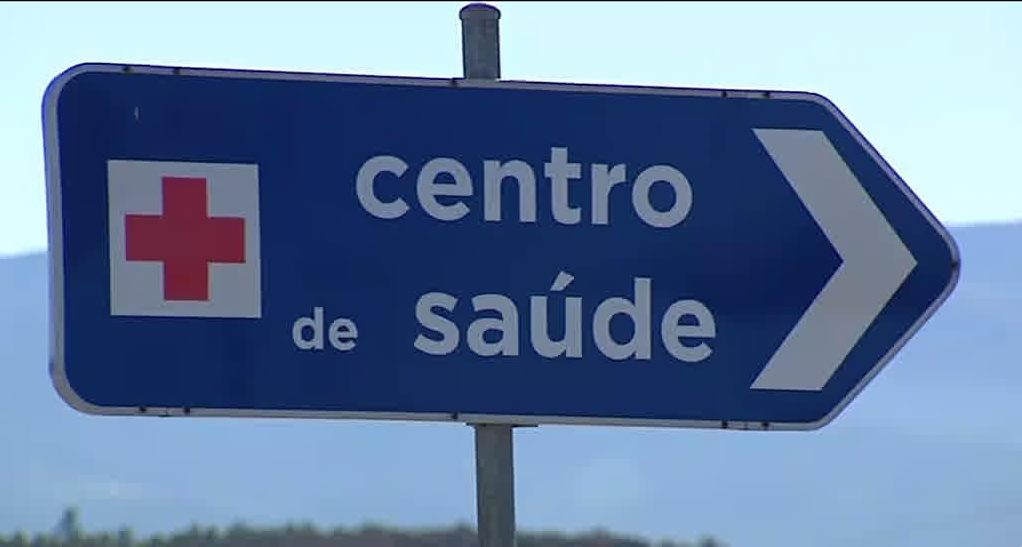
(2) Begin using the Portuguese health system by visiting our town’s “Centro de Saúde,” where our primary physician would be located, and explain that we would pay directly for the services we needed now.


Of course, everything would rely on Google Translate, since the number of Portuguese words we knew – and could pronounce – back then only had expanded from five to nearly ten. Plus, we are Americans who, unlike our EU brethren that arrive in another Schengen nation with health cards and coverage from their homelands, we only had emergency medical coverage through our travel insurance. And, although we had been here for a month already with residency visas affixed to our passports, it would be another 20 days until our SEF appointment, when (hopefully!) our residency visa and required paperwork would provide us with proper permits—at least for a year or two, to begin with. This residency, in turn, would enable us to register for the needed number to avail ourselves of the low-cost Portuguese health care system … even if we were to pay out of pocket or be covered by our private health care insurance.


Since I was retired and not earning income from either the USA or Portugal, I didn’t need to register, first, at the Castelo Branco Social Security office before requesting my health care number; later, Russ would learn, that – since he was working remotely with USA-based clients – he should have registered at Social Security and, then, sought his health care number.


We decided to take our chances, first, and visit our village health center. Armed with a print out of the Google-translated document explaining (in Portuguese) who we are and why we were there – along with our NIF documents, passports and visas, medical records, and empty prescription pill bottles – I ventured a try during a day and time the sign posted on its door said the health center would be open.


Only a nurse was there that day.


Using her best ten words of English interspersed with Portuguese, which I responded to with my only ten words of Portuguese interspersed with Spanish, I understood that she was telling me to come back the following Tuesday, after 10:00 AM, when the doctor would be there.


Unfortunately, the following Tuesday was one of those holidays to which the Portuguese people are entitled and they take quite seriously. So, of course, the health center was closed.


Attempting again two weeks later, we entered the health center to find a raucous group: people of all ages and medical conditions standing in the entry way or sitting in the waiting room, expecting to be seen by the doctor or nurse. The administrative assistant had taken a break to get some coffee from a café down the road a bit; we’d have to wait to talk with her before we could proceed any further.


Despite our introductory letter translated into Google’s best Brazilian Portuguese, the keeper of the files and records was at a total loss as to what to do and how to process us … after all, we didn’t have those specific numbers her computer program required to grant us access to the sanctum sanctorum. After discussing our situation with other patients waiting to register for the doctor (or nurse), she picked up the phone and dialed someone somewhere … raising her voice with each question she asked and every answer she gave.

After hearing her say, “Tá bem, tá bem, obrigada, obrigada, ciao,” she turned to me and managed to explain that we needed to go to the regional medical center in Alcains – about a 15-minute drive – at 15:00 and ask for Sandra, who had been made aware of our circumstances.


Sandra knew exactly who we were and why we were there. But figuring out which boxes to tick and how to input our personal information was a challenge that required 40 minutes and the help of three other people seated with her in the reception area. Finally, the printer spat out two pieces of paper from which she cut off the bottoms, stamped each with a seal, and signed them. “That will be nine euros,” she said, about US $10, “€4.50 each for the doctor’s consultation.”


She also gave us forms whose many boxes were populated with numbers now.


“The next time,” she explained, “You will go to your own health center in Lousa and show them these papers. They will now have the information they need to serve you there.”

“Muito obrigados!” we replied, effusive in our gratitude.


The doctor, who had been sitting there throughout the entire episode, motioned us to follow her back to her office. Seated behind her desk, she entered some information into a computer and gathered each of our medicines needing refills. Click, click, click. Out from the printer came official forms containing our prescriptions … along with the maximum amount we could be charged for each.


We left the Alcains medical center and headed for the pharmacy.


All told, we had prescriptions for 20 mg Cectoconazol (30 g) cream with three refills; fifty-six, 20 mg Omeprazol capsules (sold over-the-counter without a prescription in the USA), also with three refills; 120, 1 mg Alprazolam (generic Xanax) pills sold in “blister” packs, requiring a new prescription to refill; a blister pack of 60, 15 mg Meloxicam pills; and another blister pack of 60 pills combining two separate prescriptions – 20 mgs + 15 mgs of Olmesartan medoxomilo + Hidroclororotiazida (one for high blood pressure, the other a diuretic) — also with three refills.


The combined cost for all these 13 boxes of medicines, some of which will last us for six months?


Fifty-one euros.


Less than US $60.00.


And that’s without insurance, co-payments, or deductibles.


The same supply of pharmaceuticals – even with Medicare or health insurance – would easily cost us hundreds of dollars more (at least) in the USA. Because Portugal and Spain subsidize their health care, taking a major burden of their people: citizens and residents.


Believe it or not, the same Portuguese prescriptions cost even less in Spain!

Exceptional, low-cost health care is yet another reason why we do so love Iberia.


It’s patience that we still need to develop.

Shared here are personal observations, experiences, and happenstance that actually occurred to us as we moved from the USA to begin a new life in Portugal and Spain. Collected and compiled in EXPAT: Leaving the USA for Good, the book is available in hardcover, paperback, and eBook editions from Amazon and most online booksellers.

Processing…
Success! You're on the list.

Nursery Rhyme Conspiracies

As we grow older, we subconsciously return to the years of our youth and adolescence, remembering – in dreams as well as when awake – the words of songs, TV tunes, and even advertising jingles from back in the day … nonetheless, we can’t remember where we left our spectacles, why we went to a room in the house, or what we were saying.

Lately, I have been awakening from fitful night sleeps with nursery rhymes running through my mind.

Have you ever revisited them and wondered — whatever was their genesis, meaning, and purpose — how they may have affected our later lives? I believe I may have put my finger on the primal source of our fears and frustrations, anxieties, neuroses and psychoses—sadistic or masochistic.

Maybe it’s my own paranoia, but I’ve come to suspect that nursery rhymes are nowhere nearly as benign as Mother Goose and her ilk would have us believe!

Consider, if you will:

“Peter, Peter pumpkin eater, had a wife but couldn’t keep her. He put her in a pumpkin shell. And there he kept her very well.”

Peter, Peter may well have been the first real vegan, an organic and sustainable living diehard. But why couldn’t he keep his wife? Was it something that he did or didn’t do (perhaps he couldn’t satisfy her?) or something which was her responsibility, not his? The plot thickens in the second verse, where we learn Peter had another wife and that he didn’t love her.

In terms of double names, another nursery rhyme speaks quite negatively of women. Is this how women would like to be described—or your wife, daughter, sister, friend?

“Mary, Mary, quite contrary.” And then, out of nowhere, Mary is asked, “How does your garden grow?” She answers: “With silver bells and cockleshells. And pretty maids all in a row.” Contrarian, indeed! (Not to mention sexist.)

If there ever was a case to be made for women’s health, reproductive rights, and the potential for child abuse, it dates back to that old woman who lived in a shoe:

“She had so many children, she didn’t know what to do. She gave them some broth without any bread; Then whipped them all soundly and put them to bed.”

Maybe, in fact, Old Mother Hubbard was really that old lady living in a shoe? Talk about problems. And we blame the dog, not her, for being misanthropic:

Old Mother Hubbard went to the cupboard, to give her poor doggie a bone; When she came there, the cupboard was bare, and so the poor dog had none. She went to the baker to buy him some bread; when she came back, the dog was dead! She went to the undertakers to buy him a coffin; when she came back, the dog was laughing.

Cupboards and pantries bring up the matter of eating disorders. Along with bulimia and anorexia, who ever would want to eat something less savory or nourishing than this:

“Pease porridge hot, pease porridge cold, Pease porridge in the pot, nine days old; Some like it hot, some like it cold, Some like it in the pot, nine days old.”

Evidently, expiration and use dates didn’t exist back in the day when children would pair up and clap their hands to the rhyme. Talk about bad influences! Is it any wonder that some youngsters reject proper table manners, with Jack Horner as their example?

Little Jack Horner sat in the corner, eating his Christmas pie; he put in his thumb, and pulled out a plum, and said, “What a good boy am I!”

Why was that poor child eating in the corner, in the first place … especially during Christmas? We’ve all heard of holiday fruit cake and even plum pudding; but a plum in a Christmas pie? Give me a break, please: What a self-serving egotist Jack Horner must have been, anyway!

And the discipline – punishments! – doled out by these sing-song voices and verses …

Little Miss Muffet sat on a tuffet eating her curds and whey; there came a big spider, who sat down beside her and frightened Miss Muffet away.

Poor little Miss Muffet. Not only did she have to eat while sitting on a tuffet, but her food sounds rather unpalatable. Then a spider (a big one at that) decides to sit down beside her. It’s truly frightening, I daresay.

Spiders figure prominently into nursery rhymes. Remember this one? It gives me the heebie-jeebies just imagining:

The itsy-bitsy spider went up the waterspout. Down came the rain and washed the spider out. Out came the sun and dried up all the rain, and the itsy-bitsy spider climbed up the spout again.

Ugh!

Of course, spiders aren’t the only creatures and critters whose plight incites fear and terror. Consider mice:

Three blind mice, three blind mice. See how they run, see how they run! They all ran after the farmer’s wife. She cut off their tails with a carving knife. Did ever you see such a sight in your life as three blind mice?

Danger lurks in harm’s way amid many nursery rhymes. There’s the tale of those mischievous siblings who made it to the top of the hill, only to roll all the way back down: 

Jack and Jill went up the hill, to fetch a pail of water. Jack fell down and broke his crown, and Jill came tumbling after.

Falling down and breaking more than a crown is the lot of Humpty Dumpty:

Humpty Dumpty sat on a wall. Humpty Dumpty had a great fall. All the king’s horses and all the king’s men couldn’t put Humpty together again.

And then there are those nursery rhymes that, seemingly, make no sense whatsoever … unless they’re coded chatter messages to co-conspirators:

Hey, diddle, diddle, the cat and the fiddle, the cow jumped over the moon; the little dog laughed to see such sport, and the dish ran away with the spoon.

There are lots more cases to be made against nursery rhymes and their nightmarish world to which children are subjected. As is the case, as well, with our favorite fables and fairy tales. Woe to Hansel & Gretel! The trials and tribulations of three little pigs against the voracious wolf. Little Red Riding Hood, Sleeping Beauty, Beauty and the Beast. Like many of their friends — the Pied Piper, Snow White, Rumplestiltskin, et al — they’re Frankensteins in disguise.

People love to tell dark scary stories. Fairy tales often had lessons in them to teach kids. They were dark, because the protagonist would suffer a consequence for a behavior that is deemed undesirable. Essentially, they served the same purpose as telling a kid that Santa won’t deliver presents if they’re not good.

Processing…
Success! You're on the list.