
The post was published in one of the Facebook groups for towns and villages surrounding Penamacor in Central Portugal. But it’s only exemplary—it could (probably has been!) posted anywhere and everywhere across Portugal or, for that matter, Spain.
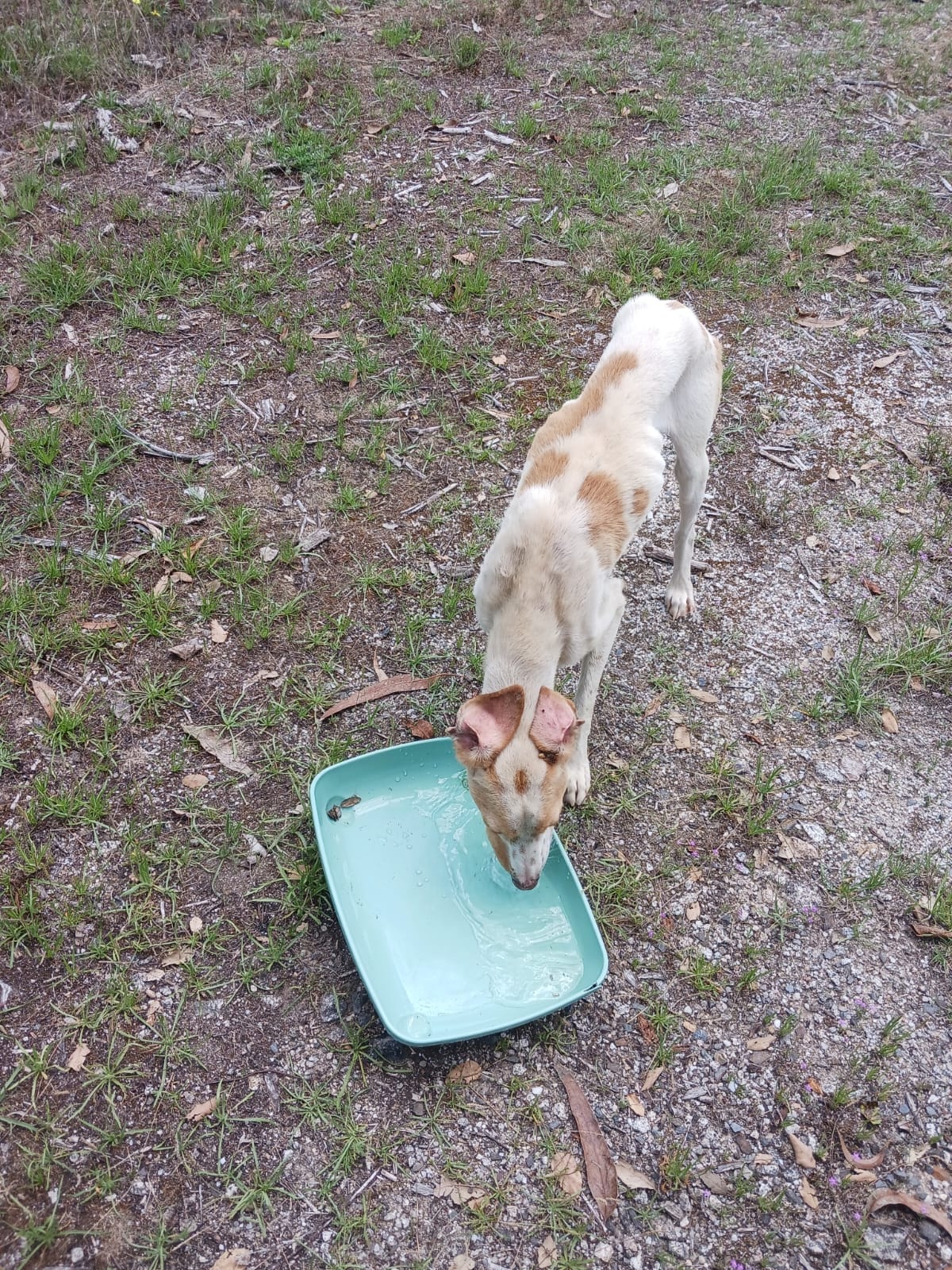
It began with a heart-wrenching photo of a dog.
“Does anyone recognize this dog by any chance?” were the words below it. “Poor boy is skeletal and covered in ticks. We’ve managed to get him in our car and are going to take him to the vet. He’s very scared and also friendly. I’m hoping he’s just lost.”
An update quickly followed: “No chip. The vet gave him a tick tablet. That’s all the vet can do for now, so we desperately need help. Can anybody, please, house him until we are able to sort either a home or sanctuary for him? We’re happy to pay for his dog food, etc.”
A second update was posted: “’Arnie’ slept through the night really well. He didn’t whimper or cry once, nor did he leave any mess. He is now flea- and tick-free and is showing signs of trust. Surprisingly, he hasn’t shown any aggression towards our cat, Bob. Now he has the chance to get healthy and find a family, as he deserves.”
Comments came fast and furious.
“Hundreds of dogs are abandoned here every day,” exclaimed an angry Miguel. “The kennels are full and there are no mechanisms for dealing with these issues.”
The author of the original post replied, “I know, it’s really sad. My partner has been in the kennel life over here, so we are very aware. We are trying to prevent Arnie from going to the Canil, as it’s no life for a dog. Not sure what we are going to do. For now, we will keep him at home, bathe him, and keep our dogs away until we can find somewhere to place him.”
Miguel quickly replied: “There are over 30 dogs in the farm next to mine that are extremely poorly treated. No vaccines, no treatments, no anything. They have so many insects, it looks like a horror movie when you’re close. I’ve contacted every government agency and animal advocacy group in Portugal. No one will do anything.”
He continued, “They keep having puppies and, when they’re older, they abandon them. They barely feed them; so, at night, they get into all the trash in the village and city in order to eat. They’re not neutered, so there’s constantly more. We find dead puppies all the time.”
I cringed when reading this. We, too, had found litters of day-old puppies trashed in the bins of our small village outside Castelo Branco. The first time, only one survived. We brought him home, stopping enroute to buy puppy formula, a couple of light blankets, a hot water bottle, and a toy. We shared responsibilities with Olga, another animal advocate in our village. We kept and cared for him during the days while she was at work. She picked him up on her way home from work and dropped him off with us the next morning. Both of us had other dogs of our own. No matter, this was an imperative. We nursed the baby until he was three weeks old, and his darling eyes had opened. A lovely British family living in a caravan then took him and kept him, ensuring he was properly treated and trained. Not even a month later, Olga knocked on our door. In her hand was a towel covering two tiny puppies her mother had found in another bin in the village. “Can you take him for me, just until I get home from work?” she asked. “We can do what we did last time, until someone who’ll adopt them can be found.” There was no question. Incredibly, the same Brits who adopted our first foundling took both of the babies and fostered them, sharing photos with us as they grew and finally found forever homes with others.
“The government needs to do more,” Tonii, the original poster, replied to Miguel. “This is a serious problem, poor souls. I will never be able to understand and wish I could do more to help!”
“Call the IRA (Intervenção e Resgate Animal),” suggested Jenny, who had joined the conversation. The IRA’s mission is to rescue animals that are victims of mistreatment, negligence, or when their welfare conditions provided for by law are not guaranteed.
Miguel replied, “The IRA told me they won’t respond so far outside of Lisbon and to call the local police. Police won’t do anything. The municipal vet says the kennel is full. That I should build fences. The government doesn’t do anything.”
Condolences and words of support from others began to appear in the comments.
“Thank you for what you are doing for this poor animal. Hope you will find a good home for him; he deserves a better life,” began Kristine.
“Thank you for helping!” echoed Sonja. “Poor thing, that could be the reason why I can’t really live in Portugal. I couldn’t stand the suffering. I would like to support, but I already did for a dog, 200 Euros, then he got hit by a car! I support every month a friend in Morocco. She saves donkeys, horses, dogs, cats. It’s amazing! Wish you all the best with this. Love from Belgium!”
“It is hard, at first it was a big culture shock, and I guess still is,” Tonii told Sonja. “But after living here three years, I know that not every dog you see on the street is a stray. A lot of Portuguese allow their dogs to roam freely here. But when they are in this state, you know they aren’t just roaming … they’re abandoned. It is hard, but please be careful what you say. The other day I was called xenophobic and racist for saying that Portugal needs to get with the times (i.e., education and help from government for poorer communities that can’t afford to neuter their animals). We have brought him home for now. He’s had a bath, some food, and is now resting in the other room. If we had the space (and fewer dogs), I’d keep him in a heartbeat. He’s so gentle.”
“Maybe he’s a lost hunting dog?” Hélia interjected. “The way he is, so skinny, shows that he’s probably been abandoned for a long time.” Jennifer agreed: “Probably a hunting dog left behind. They starve them for months, at least that’s what they do on this island.”
“Hunting dogs are usually chipped as they are worth a fair bit to the owners,” stated Caroline. Arnie wasn’t chipped, though.
“It’s heartbreaking, every time I see a new abandoned dog I want to help; but already having five, it isn’t possible,” shared Julie and several others.
“Julie, this is how we ended up with 20 … not through choice but found on the streets in terrible condition,” Diane told her. “I know what you mean,” replied Julie, but sometimes you have to draw a line and give the best life to the rescues you already have.”
Portugal and Spain both have laws about mistreating and abandoning animals. As shown here, however, that doesn’t mean they can – or will – enforce them. And woe to the foreigners who intercede on behalf of these misbegotten critters. We’re called out, ridiculed, and told to go back where we came from if this devil-may-care attitude irritates us so much.
After all, it is their culture.
Bruce H. Joffe is publisher and creative director of Portugal Living Magazine
www.facebook.com/PortugalLivingMagazine







 "Exactly!"