It’s one thing to travel the world with a USA passport.
It’s quite another to apply for a residency visa and actually live — not just visit — in another country (and world).
EXPAT details the differences.
Trials and tribulations. Gains and losses. Physical upheavals, pathos, emotional turmoils, and special satisfactions. Rules and regulations, processes and procedures. Bureaucracy and red tape. Finances and household budgets. Conflicts and comedy. Assorted hodgepodge.
It’s said that in these parts of the Alentejo, the best porco preto (“black pork”) is served in a town named Arronches, not far from Portalegre. We’ve come to love the sweet and savory taste of this pork … when well prepared. If not, it’s just another Portuguese dish.
Arronches is about 45 minutes from our home in Vila Boim, Elvas. We’ve passed by the place when visiting friends who live in the nearby village of Assumar; but we’ve never been to Arronches.
Today we went.
During this time of the year, many villages, towns, and cities in Portugal hold their own special ferias–holiday fairs. Somewhere online I’d seen that Arronches would be celebrating this weekend.
“Want to go?” I asked Russ earlier this week.
“Sure!” he replied. “Let’s see if we can finally find a good restaurant to try the porco preto.”
I searched on TripAdvisor and a bunch of other sites dedicated to recommending restaurants. On every single one of them, A Cabana (The Cabin) came up as #1 … with hundreds of 5★ and far fewer 4★ reviews. Its atmosphere was described as “romantic” (we found it charming and adorable) with prices ranging from € (Facebook) to €€-€€€ (TripAdvisor). Based on our tab, I’d say TripAdvisor is more accurate. In a way, the digs reminded me of a restaurant with the same name (The Cabin) on the outskirts of Sturgeon Bay, WI.
A Cabana doesn’t have its own website, but it does have a Facebook page. On Thursday, I messaged them to make a reservation for the two of us at 1:30 PM (13:30) on Saturday. We figured that would give us enough time to visit the fair and then eat a hearty meal early enough. Within five minutes — I kid you not! — I had a response: “combinado!” (confirmed).
Unless you’re an expat or immigrant living in Portugal, you can’t understand how unusual (even rare!) it is to receive a reply to one’s email or message here. The Portuguese tend to ignore them. You’re better off telephoning or stopping by.
Two thumbs up for A Cabana!
We arrived in Arronches at about 11:45 (AM), only to find ourselves lost in space. GPS and Google Maps were no help. Russ thought that the fair would be held in the “campo” (countryside), while I distinctly remember reading something about it being held in a pavilion. Before going around the bends another time, I asked Russ to pull off so that I could ask a local for information.
“Isn’t today a holiday in Arronches? Where can we find the fair grounds?” I asked a gentle giant of a man with a beard who nodded “yes” and pointed down the road … “Just continue going down this street until you come to he,” he said.
Russ turned to me before driving down the street to tell me, “He looks familiar. I think he might be the chef at A Cabana.”
Driving downhill, we finally approached the site. Amazing–there was plenty of parking! Very unusual in Portugal … especially when something of general interest is happening.
We soon understood why:
The only activity occurring at the fairgrounds when we arrived was a sheep competition. Nothing else. Not even the dozens of stalls selling food and souvenirs were open, let alone live music. It all would begin later that evening.
“What do you want to do?” Russ asked me.
“Let’s go to the restaurant and see if they’ll take us earlier,” I suggested. “That way, we can get an earlier start on doing some shopping we’d planned at E LeClerc, along with filling the car with GPL (liquefied gas) and washing it.
A bunch of people of all ages were already queuing up outside the restaurant, whose front door was open but nobody was inside. I approached the owner-chef-waiter — who, indeed, was the helpful man who’d given us directions earlier! — and asked if we could change our reservation to now rather than later. “Of course,” he said, pointing to the first of four tables for four. Behind them, in a row against the back wall, all of the tables were pulled together to accommodate 22 people … including those waiting outside, and then some.
“We understand that you make the best porco preto in town,” I told him while we both were standing in front of the chalk board where the menu was written.
He smiled broadly and recommended both the “secretos” (secrets) plate for €20 and the “plumas” (feathers) dish for €23. We ordered one of each, which came with salads and the best fried potatoes (“crisps,” per our British friends) we’d had in a while–super thin yet crispy, without any soggy orphans left behind. To go with our food, I had (two) glasses of tinto wine and Russ had (two) steins of beer.
It suddenly occurred to me that the maitre d was responding to my questions in Spanish, not Portuguese, although I was doing my best to speak coherent Portuguese. ¿No é portugues? (aren’t you Portuguese?) I asked him. “Sim, claro” (Yes, of course), he replied. “Then, why are you talking Spanish to me?” I asked in Portuguese. “I thought you were Spanish, he grinned.” It must have been my accent, One lesson I’ve learned since living in this western part of Iberia is always to speak Portuguese … to never initiate a conversation in Spanish, assuming the Portuguese understand it.
Anyway, everything was delicious!
The food, the service, the atmosphere were all extraordinary. (We personally preferred the plumas — cut thickly, parts cooked medium, others medium-rare to perfection — over the secretos.)
Of special note to us — who spend two months in Portugal and one month in Spain — was how relatively quiet and civilized the table of 22 behind us was. In Spain, you’d never be able to hear yourself think with that many people clustered together.
Our bill came to less than sixty euros. Although I tend to cringe when food here in Portugal costs that much, I reminded myself that we’d be gone from the USA for six years already. Who knew how much a meal like this would cost in a place like Sturgeon Bay?
Probably lots more.
Whatever …
It was well worth it!
P.S. If you plan to eat at A Cabina, remember to bring cash. The restaurant doesn’t accept plastic — credit or debit cards — although it does honor MB Way.
Pastor, professor, publisher, and journalist Bruce H. Joffe is an award-winning author of magazine features, academic research, journal articles, self-help manuals, and newspaper stories. His nine books deal with international (intercultural) living, progressive theology, gender studies, “social” politics, our vulnerabilities, marketing, and the media.
Processing…
Success! You're on the list.
Whoops! There was an error and we couldn't process your subscription. Please reload the page and try again.
From the International New York Times, these words give me cause for pause and fill me with fear:
“I watched the Biden-Trump debate alone in a Lisbon, Portugal, hotel room, and it made me weep. I cannot remember a more heartbreaking moment in American presidential campaign politics in my lifetime — precisely because of what it revealed: Joe Biden, a good man and a good president, has no business running for reelection. The Biden family and political team must gather quickly and have the hardest of conversations with the president, a conversation of love and clarity and resolve. To give America the greatest shot possible of deterring the Trump threat in November, the president has to come forward and declare that he will not be running for reelection and is releasing all of his delegates for the Democratic National Convention.”
Other international press reviews were equally sour on Biden:
Wall Street Journal–“In the first presidential debate of the 2024 campaign, President Biden gave the kind of delivery that Democrats feared, one that lacked vigor and combativeness. Trump, meanwhile, uncharacteristically was able to keep his composure in a 90-minute show that brimmed with insults and policy contrasts.”
Associated Press–Biden “just didn’t have the spark that we needed tonight,” Rosemarie DeAngelus, a Democrat from South Portland, Maine, said from her watch party at Broadway Bowl. Trump, she said, showed “more spunk or more vigor” even if, in her view, “he was telling a pack of lies.”
CBC–“How bad was it? It had the Democrats on post-debate panels asking if Biden will drop out.”
DW–“One of the biggest takeaways: The Democrats are in trouble. From the very start, Biden’s voice sounded brittle, which several campaign sources after the debate attributed to a cold. This would normally not be a huge deal, normally, it made 81-year-old Biden, whose age has been a major point of contention throughout the campaign, seem extra frail.”
Politico–“Europe’s press was stunned by Joe Biden’s “near-catastrophic” performance in the first U.S. presidential debate of 2024 in the early hours of Friday morning. The Continent’s leading websites splashed with scathing reactions and commentary about the showdown between Biden and former U.S. President Donald Trump, with many singling out Biden for criticism after a rocky display in which he struggled with detail and delivered halting lines.”
CNN–“If Joe Biden loses November’s election, history will record that it took just 10 minutes to destroy a presidency. It was clear a political disaster was about to unfold as soon as the 81-year-old commander in chief stiffly shuffled on stage in Atlanta to stand eight feet from ex-President Donald Trump at what may turn into the most fateful presidential debate in history.”
HuffPost–“Biden struggled to land any real blows himself. Democrats are sounding the alarm about the president’s performance. We knew the stakes of this debate were high — but the impact on November’s election is hard to understate.”
Hollywood Reporter–“The president has been locked away at Camp David engaging in strenuous preparations for the last week, but you wouldn’t know it from his rambling, unfocused performance. From the very beginning, he spoke too quickly, failing to form coherent sentences and frequently losing his train of thought. And why, oh why, did no one think of giving him a lozenge? He didn’t just have a frog in his throat — he had the entire amphibian kingdom.”
The Guardian (UK)–“Could there be a contested Democratic convention? How would that even work? Replacing the president may not be an option, they said, but many acknowledged Democrats are talking about it, spurred by Biden’s troubling debate performance.”
New York Times–“A halting debate performance by President Biden left Democratic strategists reeling, raising questions about his fitness to stay in the race. President Biden’s shaky … debate performance has Democrats talking about replacing him on the ticket.” Later, the NYT’s editorial board issued a call for Biden to step aside.
Bloomberg–“Joe Biden delivered an excruciating performance, at one point freezing mid-sentence, heightening fears about the 81-year-old president’s mental acuity. It also reminded the rest of the world what they’ll get if Trump wins in November.”
BBC–“Before Thursday evening, many Americans had expressed concerns about Joe Biden’s age and fitness for office. To say that this debate did not put those concerns to rest may be one of the greatest understatements of the year.”
Público (Portugal)–“Biden had a ‘disastrous’ debate against Trump and left Democrats in ‘panic.'”
Jornal de Noticias (Portugal)–“Biden’s shaky performance, especially at the beginning of the debate, has fueled concerns among many voters who fear an uncertain future with his reelection, sparking a new wave of calls among Democrats for the candidate to step down and make way for someone more capable of standing up to Trump at the polls. Despite playing the offensive role in his speeches, the current president appeared confused and lost his train of thought several times, mixing different topics in the same response and stopping for a few seconds while searching for the right word.”
Diário de Noticias (Portugal)–“US Vice President Kamala Harris emerged early Friday as a critical figure in the Democratic campaign, following Joe Biden’s disastrous performance in the first presidential debate with rival Donald Trump.”
Sky News (UK)–“Democrats are questioning whether Joe Biden should continue his re-election bid after a debate “disaster” against Donald Trump.”
Sueddeutsche Zeitung (Germany)–“The true losers of the first TV debate in the U.S. election campaigns are the Americans.”
Matt Kiser (WTF Happened Today)–“The first presidential debate between the two oldest candidates to ever seek the White House was an embarrassment for America – and a disaster for Biden.”
And this from No Labels–“No Labels saw our effort as a necessary insurance policy against the possibility that both major parties would put forth candidates most Americans don’t want—which is precisely what they have done. If there was one good thing about the presidential debate starting at 9 p.m., it’s that we didn’t have to subject our children to … whatever THAT was. Two men were arguing about their golf handicaps and struggling to make honest, coherent points about solutions for our country. You better believe Hamas terrorists, Russia and China were watching. This is why we tried to add a third choice for president to the ballot. Extreme forces took unprecedented and potentially unlawful action to stop us. Now we’re fighting back “
On June 14th last year (2023), I posted these words on this blog:
People may say (or tell pollsters) that they’ll be voting for Biden … but how many, instead, will stay home … or vote for third-party candidates in protest? Even voters who are “resigned” to the current candidates are looking — and hoping — for a lifeboat.
In this perfect storm, the damage has been done.
But, can it be rectified?
I will vote Democrat, regardless of the candidate. But, like those on The View and MSNBC (see links below), I feel only resignation about voting for Biden. No joy or excitement … as Trump is eliciting from his MAGA Repugs.
As my British friend living in Spain put it, “There is a school of thought that debate was scheduled early to ‘manufacture consent’ for Biden’s removal. The article simply represents the consent that has been manufactured.”
We need to nominate charismatic leaders — like Gavin Newsom (CA) or Roy Cooper (NC) and Gretchen Whitmer (MI) or Amy Klobuchar (MN), around whom people will rally … and vote!
Veteran journalist Bob Woodward declared Biden’s debate performance deplorable, egregious, the worst he’d ever witnessed. The Washington Post Associate Editor said, “We know WHAT happened.” But, “as journalists” reporting to the public, he demanded to know “HOW” and “WHY” it happened. Therein is the real story.
Why weren’t Biden’s spark plugs firing? Was it a matter of not enough rest and sleep? Stress overload? Something clinical, perhaps, and degenerative? Pharmaceutical? A focus on something else, something even more important happening elsewhere? When-how-why might it happen again?
For the sake of the country and its democracy, I am among those who believe Biden should step aside. If he does, his legacy will treat him well for everything he’s accomplished during his four years in office. If he doesn’t and Trump wins — with such razor-sharp margins, perhaps Trump has a better chance of doing so now, after this debate — Biden will be remembered for allowing Trump and his legions to destroy democracy … and the USA.
Pastor, professor, publisher, and journalist Bruce H. Joffe is an award-winning author of magazine features, academic research, journal articles, self-help manuals, and newspaper stories. His nine books deal with international (intercultural) living, progressive theology, gender studies, “social” politics, our vulnerabilities, marketing, and the media.
Processing…
Success! You're on the list.
Whoops! There was an error and we couldn't process your subscription. Please reload the page and try again.
When even Portuguese officials complain publicly about the “broken system” and tell you that it’s “impossible” to schedule an appointment online, by phone, or in person — yet recommend that you show up at the local AIMA office and storm the gates — you know that the problem is dire and probably unfixable.
I’m referring, of course, to AIMA, SEF, and SIGA (they’re all culprits in the conspiracy) … and getting your residency visa renewed.
We’ve lived in Portugal for over six years now, arriving when D7 residency visas were issued for one year … renewed for two … and then renewed again for two, before one could get “permanent” residency (a misnomer, as it’s only good for five years) or even apply for citizenship, if so desired.
During our tenure here, residency changed from 1+2+2 to 2+3 and we were caught betwixt and between, as our last residency was for three years (not two) … requiring us to wait an extra year (totaling six) before applying to renew our residency.
HAH! If it weren’t so serious, the foibles, facts, and fables told about trying to get an appointment with SEF’s current iteration (AIMA) would be the stuff bureaucratic boondoggles are laughed about.
We had tried ourselves through SIGA, Portugal’s official scheduling “app” for all the country’s often overlapping agencies and entities. That led us down a rabbit hole since, when searching by agency, neither AIMA (nor SEF) appear … and, when searching by purpose or keyword (“residency renewal”), we’re taken to Registros where the only real option is to select renewal of citizen, not residency, cards. Once you enter the requested data, however, a pull-down menu magically appears … allowing you to indicate that the purpose of your appointment is specifically residency renewal. When we appeared at the designated place and time, we had to wait almost an hour, only to be told by quite frustrated clerks that, no, they couldn’t renew our residency there … we’d have to go to either Portalegre or Évora. It was then and there that we were told by the frustrated bureaucrats that the system was broken and nothing worked now as regards to renewing one’s residency.
Ultimately, we hired a lawyer (lawyers, we were told had better access to the system) to make an appointment for us. She did. Scheduled for 24 January 2024, officialemail notification showed that our residency renewals would be for two “cases” (i.e., people). The next day, nonetheless, we received a cancellation notice–no reason given. Later that day, another email arrived confirming a new date: 31 January, a week later than originally scheduled.
When we arrived and our number was called, the attendant insisted that only one of us — me — was on the “list.” And my spouse? “Reschedule!” we were told. We called our attorney while seated opposite our interrogator and she spoke directly to him. Back and forth, back and forth, they argued in Portuguese … him finally handing me the phone. “He could handle you both, if he wanted to,” she told me. “He doesn’t want to. So, you’ll be processed now and I will try to schedule another appointment for your partner.”
Again, that was on 31 January.
My better half still doesn’t have an appointment, although our residency expired several months ago. And, despite being told that I’d receive my new residency card within 60 days, it’s been 90 already … and I’m still waiting, my proof of processing and payment in hand.
Meanwhile, “The Portuguese Agency for Integration, Migrations and Asylum (AIMA) has said that it needs around one and a half years to resolve 350,000 pending residency applications filed by foreigners until 2025. (https://www.linkedin.com/…/portugal-wont-able-process…)
It will be 2025 before AIMA resolves the 350,000 pending residency applications? What about all the new visas being granted? Are they still good for four months only? How long will it take AIMA to get around to them?
Pastor, professor, publisher, and journalist Bruce H. Joffe is the award-winning author of magazine features, academic research, journal articles, self-help manuals, and newspaper bylines. His eight books deal with international (intercultural) living, interfaith theology, gender studies, “social” politics, marketing, and the media.
Processing…
Success! You're on the list.
Whoops! There was an error and we couldn't process your subscription. Please reload the page and try again.
I want you to know how much we appreciate our new (2024) Dacia Jogger Extreme+. It’s everything you promised—and more.
New cars cost lots of money in Portugal. Especially when augmented by the country’s 23% sales (IVA) tax, the annual IUC (Imposto Único de Circulação) road tax ranging from €158.31 to €512.33 for gasoline-powered cars, Portugal’s initial ISV (Imposto Sobre Veículos) when a car first gets a license plate (matrícula) here, and “administrative” fees costing between €1,000 and €1,500. Unlike the USA, buyers are also expected to pay the dealership for a new vehicle’s transportation costs. Add a few hundred euros more for that.
Altogether, these costs add up to a sizable sum!
As of June 2023, used cars cost an average of 23,750 euros in the Portuguese market. Three years earlier (2020), the average price for a new car was 32,483€.
While some makes and models here are available elsewhere, others are specific to the EU … and some of their options are specific to Portugal.
Pity that more Americans aren’t aware of the brand.
Our first exposure to Dacia occurred when we emigrated from northern Wisconsin in the USA to the Alentejo region of Portugal over six years ago. Since then, we’ve seen plenty of Dacias on the streets and the motorways:
> The utilitarian, all-electric Spring, Portugal’s lowest EV in weight and cost;
> The popular Duster, a sturdy SUV that effectively put Dacia on the map;
> The jaunty Jogger, a seven-seater with cargo capacity so massive that Dacia sells a full-size (“matrimonial”) bed which fits in the back. Sleek and sexy in its latest “generation,” the Jogger – like all Dacias – is priced low enough to compete handily against those look-alike toads on the road.
Dacia’s affordability is a result of such factors as simplified design, shared components, lean production, and strategic manufacturing locations. This cost-efficient approach allows Dacia to cater to budget-conscious consumers seeking the most for their money. Faithful to its values –simplicity, spaciousness, robustness, and price –Dacia’s growing commercial success comes from its focus on practicality and affordability. With admirable resilience, Dacia documents a modest depreciation rate of 2.41%. These cars hold their value.
Eighteen months ago, we bought a new Dacia Duster Extreme for €21,500 and liked almost everything about it. Especially its bi-fuel motor. The car has a 50-liter tank for gasoline and a second, 40-liter tank for LPG (liquified petroleum gas) that costs half that of gasoline or diesel yet delivers the same power and mileage per liter. With fuel costing the U.S. equivalent of $7.50 to $8.00 per gallon in Portugal, the savings realized with LPG are formidable and felt with every fill-up.
Recognized as a low carbon alternative fuel, LPG emits significantly fewer carbon dioxide (CO2) emissions compared to conventional fossil fuels like coal, oil, and gasoline. It also emits almost no black carbon, arguably the second biggest contributor to global warming. As a clean-burning fuel, LPG helps mitigate the effects of climate change by discharging 12% CO2 less than oil and up to 20% less than gasoline.
As we got to know our Duster better, the more we realized that the Jogger would be a better fit for us—literally. The Duster is 23.2 cm shorter and 4.9 cm lower than the Jogger, with 11% less cargo space.
We travel back and forth frequently between homes in Portugal and Spain, carrying “stuff” large and small. Luggage (boot) space in the Jogger Extreme maxes out at 1,808 liters by folding and snapping the third rows seats into the backs of the second, and then tumbling the second row forward to its fully horizontal position. This gives us a load of two meters (6.5 feet) long and just over one meter (about a yard) wide. Building on this interior storage space are lots of nooks, crannies, compartments, a glove box, and door bins, as well as the Jogger’s modular roof bars. Pull-up, fold-down trays on the rear of the front seats can be useful, especially with children aboard.
With 19,000 km on our odometer, we traded in the 2022 Duster for €18,500 against the €24,000 price of our 2024 Jogger Extreme+. Unlike the USA, where new cars typically lose one-third their value when driven off the dealer’s lot, the Duster depreciated only €3,000.
Included in our “Plus” (+) package are two of three available options: Nav Pack with 8-inch touchscreen navigation; DAB radio; smartphone replication; Bluetooth®; Western Europe Cartography; and three years of updates on maps and navigation. The other option? Comfort Pack which includes blind spot alert; front parking assistance system; assisted automatic parking brake; automatic air conditioning; semi-elevated center console with armrest and storage space; height-adjustable driver’s seat; and tables in the back of the front seats. Had we wanted to wait and order the car for delivery months later, we could have paid €200 more for heated front seats. The two rear rows in all Jogger models come with “theatre” seating in which each row is a bit higher than the one in front for enhanced passenger visibility.
The Jogger shares much of its guts with the Duster, so we were already familiar with the car’s systems and sounds. Once getting grip on its gears, the six speed manual transmission shifts seamlessly, up or down. Suspension is quite comfortable, as struts provide a ride between sporty (hard) and squishy (soft). In addition to its integral navigation (GPS) system which also alerts us to radar, the vehicle’s sensors – amplified by a rear-view camera – chime different warnings when we’re coming close to objects ahead, behind, and on the sides. The 2024 Jogger also greets us with a second or two of musical beats, the beginning of a song, when we open its doors and get seated.
With a turning diameter of 11.7 meters, the FWD car handles nimbly, its steering neither too loose nor too tight. Technical specs include total length: 454.7 cm; exterior width with mirrors: 200.7 cm; exterior height: 167.4 cm; wheelbase:289.8 cm; ground clearance: 20 cm; weight: 1,251 kg. Cargo volume ranges from 607 to 1,819 liters. Maximum speed is 183 km/h. By pressing the ECO button, the vehicle’s throttle response is adjusted and the function of some ancillary feature, such as air conditioning, is reduced.
Inside, the cabin is spacious and inviting, its instrumentation – buttons and dials – well-placed and positioned. Hard plastics, long the bane of Dacia design, have given way to a plusher, posher look and feel. Ergonomically comfortable, the seats, front ones especially, help to make longer drives more pleasurable.
Other niceties about the Jogger Extreme+ package are that it comes with:
• Electric exterior mirrors with demisting system
• Keyless entry and engine start
• Advanced Emergency Braking System [AEBS]
• Driver Fatigue and Attention Alert [DDAW]
• Traffic Sign Recognition with Speed Alert [ISA]
• Centralized door locking with remote control
• Automatic door locking in progress
• Light and rain sensors
• Lane Keeping Assistance [LKA]
• ECO Mode
• Leather steering wheel
• USB ports
• Over-tinted side and rear windows
• LED daytime running lights, LED dipped headlights, and fog lights
Not bad for such an economical car!
With a total power output of 140hp, the car clocks an acceleration time from zero to 100 km/h in 10.1 seconds and low emissions of 112g/km of CO2. According to official fuel economy figures, it can return up to 47 miles per gallon using petrol.
More good news about the Jogger:
Starting at €29,400, it’s available as a full hybrid with a rather unique way of charging its battery. Rather than plugging into electric outlets, the Jogger revitalizes its power source while driving—primarily when stopping (and going). This technology, which combines two electric motors and a combustion engine, does not need to be plugged in. With Jogger HYBRID 140, everything is simple: the battery recharges itself when you decelerate and brake.
Alas, there’s also some bad news about Dacia’s 2024 Jogger:
It lost marks for its lack of “active” safety equipment: When tested, the vehicle didn’t offer lane-keep assist (it does now!), pedestrian detection (ours beeps whenever someone is detected too close to the car), or seatbelt warnings for the rearmost row. These omissions – two of the three have been resolved – saw the Jogger clock up the equivalent of two stars for vulnerable road users, and just one star in the safety assist category. (The overall NCAP rating is dictated by the lowest score in any individual category, hence that one-star result for the Jogger.) Note, however, that it returned the equivalent of a four-star rating for adult occupant crash protection, and three stars for child occupants.
Rather respectable scores!
In my opinion, a car so cleverly conceived and assembled deserves better than vinyl cut out letters identifying the model on its lower rear panel.
For three consecutive years, the most popular new car sold in Portugal has been the Peugeot 2008—priced at €26,185 including IVA. After Peugeot, however, Dacia was the best-selling make in Portugal, with 1,337 Dacias sold to Peugeot’s 1,429 in September 2023. Ironically, for a relatively poor country like Portugal, Mercedes (1,267) and BMW (1,237) were the third and fourth favored brands, respectively, during that month and year. Other top sellers included Renault, Citroën, the Fiat 500, Seat, and Skoda from the Czech Republic.
Previously the bargain basement brand for Renault’s tired old platforms and retired parts, Dacia has come into its own as a robust and enviable entity which some say is surprisingly upbeat and sexy. Especially given its costs.
Dacia, you may be #2 now in Portugal, but remember the advertising campaign Avis car rental company ran against Hertz in the early 1960s: “We’re number two. We try harder.”
The rest, as they say, is history … and the future for Dacia.
Best wishes,
Bruce
Pastor, professor, publisher, and journalist Bruce H. Joffe is the award-winning author of magazine features, academic research, journal articles, self-help manuals, and newspaper bylines. His eight books deal with international (intercultural) living, interfaith theology, gender studies, “social” politics, marketing, and the media.
Processing…
Success! You're on the list.
Whoops! There was an error and we couldn't process your subscription. Please reload the page and try again.
Well before we knew of people leaving their homes in the USA to live abroad in places like Portugal, we’d heard about Douro cruises. Friends more well-heeled than we enjoyed tantalizing trips up and down the Portuguese river, taking them from Lisbon to Porto and Salamanca (Spain), then back.
During our six years in Portugal, we’ve made quick stops in Lisbon, met friends for lunch in Coimbra, and bypassed Porto enroute to Santo Tirso where we picked up a car. Except for short stops, we never had an opportunity to be tourists.
We searched the Internet for Douro cruises which fit our pocketbook and visit many of the special sites we want to see in Lisbon and Porto, spending time in Coimbra and cruising to other notable places.
Prior to Covid, we loved cruising to different Caribbean ports and, once, around the Mediterranean. There’s no comparison, however, between a 138-passenger riverboat and a sea-going behemoth for several thousand with round-the-clock feeding stations and an abundance of cholesterol bolstered by afternoon art auctions and evening entertainment galas.
We had taken several cruises to a host of Caribbean and Mediterranean ports aboard the Holland America, Norwegian, Royal Caribbean, Celebrity, and Carnival lines before moving to Europe and the pandemic. Friends who had taken or booked Douro cruises mentioned price tags starting at (US) $3,500 per person and going beyond the $10,000 mark, depending on the length and breadth of the voyage.
Village dwellers rather than city slickers, our means are more modest.
This would be our first French voyage and riverboat cruise.
Vive la difference!
Coasting the river provides different views than Caribbean and Mediterranean cruises. Rather than surrounded by sea waters except for our (shopping) ports of call, the river cruise glides gently between banks of the Douro, passing eye-popping residences, spectacular scenery, and quaint villages along the way.
Based on the advice of friends – veteran Douro cruisers – we didn’t avail ourselves of any optional excursions. Instead, we got off the ship and walked around on our own, hired a private guide for Porto, had dinner with friends in Lisbon and Porto.
All-inclusive price of the trip for two was €2,510, exclusive of optional excursions. In addition to all port fees, travel and repatriation insurance was included, as were all drinks in the restaurant and lounge except “premium” beverages.
Built in 2003 and renovated in 2014, the M.S. Infante D. Henrique accommodates 138 passengers. Its versatile, hard-working crew of 26 is responsible for everything—from cleaning the rooms and serving “refined French” meals to entertaining us evenings in the lounge. We enjoy daily cocktails, parlor games, and one-man bands on the Douro … not to mention the Michelin-quality meals over which we get to know our assigned table mates: the three other English-speakers. Perched atop the floating vessel is a sundeck and plunge pool that goes used.
The eight-day tour package operated by French family-owned CroisiEurope includes accommodations at a 4-star hotel (Sana Metropolitan) in Lisbon, all meals – breakfast, lunch, and dinner – on board and off, and two full-day sightseeing tours (Lisbon followed by Coimbra) before a motor coach takes us to Porto, where we embark on the cruise ship.
All the same size, functional by somewhat cramped cabins offer little space to move around. But large, panoramic windows offer remarkable views.
The good news: this Douro cruise is a grand value for the money—comfortable cabins and beds, enchanting places shown to us by consummate professionals, drinks galore, and delicious meals rivaled only by their exquisite presentation … service and all.
The bad? Well, read on …
The bone-chilling weather throughout the trip is depressing—dreary gray skies and gutsy, gusty winds provoking outbursts of rain … tears crying for the state of affairs. In fact, it rains every single day of our seven-day cruise.
Every. Single. Day.
Each morning, I picture Barbra Streisand crooning, “Don’t rain on my parade.”
At times, I think we are on a biblical ark rather than a modern-day cruise ship. Other moments, I suspect we’re in Babel where everyone else speaks a foreign language—French, which I struggle to decipher through the prism of my 60-year-old high school classes. Either way, it’s cause for more than one headache.
As far as capitals go, Lisbon is a world-class city filled with treasures old and new. Its pastel homes, blue waters, and charismatic trams brilliantly cross a rich combination of history and modernity.
Ours is a typical tour of the old and the new of Lisbon, or, as Patrick puts it, “different districts, from low to high.”
Born in Switzerland, our Portuguese tour guide is fluent in French and English. Since French-speakers on our cruise far outnumber the English (99% of the cruise passengers are French), most of his commentary is given in French followed by excerpts in English. Keeping up with his narrative is a struggle, as Patrick rattles away about the places we pass. In a running monologue, he provides informative narration. (The rest of the time he just keeps running … with me and my cane scrambling to keep up.)
We begin with a tour of the Tile (Azulejo) Museum connected to Madre de Dios church. In all its golden splendor and glory (and associated convent), the church dates to 1509. Our group next heads to the Jerónimos Monastery, which includes the Church of Santa María. Construction began in 1501, and the structure is now divided into six or seven divisions. The church’s “secondary” entrance was probably intended as an altarpiece for the common folks, who weren’t allowed to rub elbows with the nobility inside. The entire structure survived Lisbon’s great earthquake and subsequent tsunami that swept through the ground floor.
After touring the church, we emerge to the theme of this trip: “Oh, look. It’s raining again.” We go to the Tower of Belém but don’t get off the coach to queue up for the world-famous Pasteis de Belem shop because of gale-force winds churning up waves in the Tagus River. Instead, we’re off to the Monument of Discovery (Padrão dos Descobrimentos), with views of the April 25th and Vasco de Gama bridges. Circling the Oriente train station what seems like several times, we’re shown the Cristo Rei Christ statue, “University City” — 3.5 miles from Rossio Square and 3.6 miles from the Dona Maria II National Theater — along with both the USA and French embassies.
Lunch is at Aldea, a popular restaurant frequented by the locals. We’re given no menu options. A tasty vegetable soup is followed by salmon, wine, and pudding for dessert. Although the salmon is good, I’m not particularly a fish fan, and I wonder about any vegans and vegetarians among us.
On the morning of day three, the motor coach departs Lisbon and takes us to Coimbra … and, later, on to Porto.
We look forward to our time in Coimbra. We’ve been there before, but only to meet friends for lunch. Our tour will show us the whole nine yards.
Passing the “elevator” still used to transport people between the lower and higher parts of Coimbra, we visit the Monastery of the Holy Cross (Mosteiro da Santa Cruz), a national monument where the first two kings of Portugal are buried. Our bus then deposits us near a popular pedestrian street in the city’s lower parts where we shop and have lunch at Oi8o (Eight), a new restaurant. Today’s special: duck. Again, no options.
Afternoon is spent at the University of Coimbra. Established in Lisbon in 1290, it went through several relocations until moving permanently to Coimbra in 1537, when King João III bequeathed his palace and its grounds to establish the school. It is among the oldest universities in continuous operation in the world, the oldest in Portugal, and has played an influential role in the development of higher education in the Portuguese-speaking world organized among eight faculties, granting bachelor’s (licenciado), master’s (mestre), and doctorate (doutor) degrees in nearly all major fields.
I’ve taught at several universities, none of which boasts such an impressive campus as Coimbra’s. Nonetheless, I’m glad that I didn’t defend my doctoral thesis in the room dedicated to this purpose, where students from any university in Portugal can suffer through the rituals in these austere, somber surroundings. Moreover, what student (or faculty member) would accept being incarcerated in an academic prison today – with walls two meters thick – whose dungeon-like cells squat below the stately library levels above where bats protect the priceless books by devouring the paper-eating bugs??
The tourist shop umbrellas we buy during a deluge don’t last even five minutes … until brutal whirlwinds shear them apart, giving them (and us) a brutal beating.
Early morning on day four of our tour, we set sail, briskly treading the Douro’s water, added to daily by the continuous downpours. The ship takes us from Porto to Régua, passing through the Crestuma and Carrapatelo locks. After lunch, we arrive in Régua where a “Lamenco with Sparkling Wine Tasting” is offered. The sun peeks out momentarily and brightens our morning. This charming village housing the Douro Museum is well worth the walk … umbrellas in hand.
Day five takes us from Régua to Pinhão and Porto Antigo. We can visit the Douro Museum and Quinta do Tedo, if we choose. We leave the ship and walk shortly to the museum—a €3.50 per person bargain for seniors and souvenirs. Later, following dinner – a sumptuous pork filet mignon – is an optional “Porto by Night” excursion and dance. We decline to boogie-woogie with the other geriatrics.
Saturday, our sixth day, is spent cruising the Douro from Porto Antigo back to Porto (the former refers to the drink, the latter to the place). Two excursions are offered this afternoon: one is a guided tour of Porto; the other sees Porto by tram and visits the tram museum. Unfortunately, all that rainwater has affected the locks we need to pass through and delays our arrival in Porto by several hours. The crew scrambles to reschedule both outings. Our Uber arrives promptly at 6:00PM to drive us to dinner with friends who live on the outskirts of Porto beyond Matosinhos (across the river from Nova da Gaia, where we’re docked).
Easter Sunday, day seven, includes visits to Porto and nearby Guimarães. Although we would like to have visited “medieval” Guimarães, allegedly one of Portugal’s first capitals (others include Coimbra and – believe it or not! – Río de Janeiro), that’s when we’ve scheduled our private tour of Porto.
“Portugal’s name came from Porto!” declares our guide, Bernardo, explaining that the country grew from north to south. Born in Coimbra, Bernardo has degrees in both architecture and sociology, and thinks of himself as “a little ambassador for Porto, my city,” pointing to the “Eifel” Bridge” built in 1886 that now serves both passengers and trains. Passing a 12th century cathedral and the sixth century Episcopal Palace, we drive along Boa Vista Avenue in the upscale Bom Fim neighborhood.
“Five hundred years ago, we discovered the world … now the world is discovering us,” quips Bernardo, pointing out a shipyard where boats built specifically to carry the Porto wine are moored. He continues driving us through Afurada, a traditional village known for its many fresh seafood restaurants.
We see the Casa da Música, a cultural highlight, where choirs and orchestras are known to perform baroque music. Those huge houses we pass along the ocean on Boa Vista? “They’re known as ‘Brazilian houses,’ mansions built by the Portuguese who went to Brazil, made their fortunes, and returned to Portugal where they built these manor homes,” Bernardo tells us. The beautiful homes continue along Avenida Jorge Nuno Pinto da Costa, the street onto which we have turned. Homes in this “Foz” neighborhood cost well over a million euros, Bernardo exclaims. “Put another way, that’s €5,000 per square meter to buy in Foz!”
Cruising down Montevideo Avenue, we come upon the richest houses in Porto. A large city park resounds with echoes of Manhattan’s Central Park and Madrid’s Parque del Buen Retiro. As we approach the Santa Catarina chapel on the corner of Rua de Santa Catarina, Porto’s main shopping street, I’m struck by the stunning decorative Portuguese tiles, azulejos, that cover the outside and lower half of the inside of the church. Nearby, fishermen bid farewell to their families before heading off to sea.
Near Porto’s Tram Museum, installed in a former power station, Bernardo points out a former jail, which now houses the Center for Photography, and the world’s most beautiful bookstore, Livraria Lello, visited by 3,000 people each day.
Our sightseeing continues with the artistic area of the University of Porto, founded in 1911, before encountering what appears to be the biggest church in the city. Located in downtown Porto, the Carmo and Carmelitas churches actually are two churches separated by one of the world’s narrowest houses, built to make all contact between the nuns and the monks almost impossible. Carmelitas Church was part of a convent in the 17h century. The building has a classical façade with a single bell tower and a rich gilded interior. The church was used as barracks during the French Invasion of Porto (1808-1814). Carmo Church is simpler, almost gothic on the outside but more decorative inside. The former convent left of Carmelitas Church is now the headquarters of the GNR (Portuguese National Guard).
Citing the 20,000 azulejo tiles in the São Bento train station designed and painted by Jorge Colaço, Bernardo completes our tour with Porto’s most prominent gothic monument: the 14th century St. Francis church, so appropriate for Easter Sunday. A fire caused by the siege of Porto in 1832 destroyed the old cloisters. In its place, the Commercial Association of the city built the Stock Exchange Palace (Palácio da Bolsa), a magnificent example of 19th century Neoclassical architecture.
Before the cruise ends on the morning of day eight, we return to our room to find several papers decoratively tied together with a blue ribbon on our bed. Among the check out and security procedures is an envelope “to thank all the crew. Please leave it in a box at the reception area,” we’re told. “The amount is at your discretion and will be divided equally among all 26 members of the crew.”
Liberté, égalité, fraternité, I suppose.
On previous cruises, gratuities – ranging from $10 to $20 dollars per day per person, or 15-20% — were automatically added to our tab before debarking.
A chance to win substantial discounts on future CrosiEurope cruises by completing a questionnaire evaluating our cruise experience is among the documents on the bed. My suggestions are but twofold:
> Offer more than one meal option. Many of us don’t enjoy fish (me) or are vegan or vegetarian. Perhaps the statement, “If you have food restrictions, we kindly ask you to let us know at the reception” in the cruise contract covers that?
> Provide programming on the large screen TVs in every cabin. Except for the ship’s daily information and one channel (maybe two) offering French TV, the other four stations simply say “Sem sinal” (no signal). One English station, perhaps channeling news, would have been appreciated.
The cruise ends with one last breakfast buffet. I disembark, exiting into the rain, with a rip-roaring cold. “Constipado,” as the Portuguese say.
Award-winning journalist Bruce H. Joffe is the author of Spanish Towns, Portuguese Villages: A Journal for Expats and Immigrants and EXPAT: Leaving the USA for Good. He administers the Portugal Living group on Facebook.
Before getting into the nitty-gritty of this contentious quagmire, I must confess, upfront, that I have an opinion: I’d like to see more political parties active in U.S. elections … and a coalition style government, as in other “Western” nations.
Why can’t we have that in America?
Politics. Tradition. And scores of whirling dervishes.
What has gone so wrong with the two-party nominating process that voters again are facing yet another election in which the parties are producing candidates they don’t like? And they – especially independents – really don’t like these candidates.
Despite the divides catapulting the country into chaos, it’s presumed that Donald J. Trump will win the Republican nomination for President and that current President Joe Biden will be the presumptive candidate of the Democratic party.
“When U.S. voters go to the polls to elect a president in 2024, they may be confronted with more familiar names on the ballot than they are used to seeing,” predicts Rob Garver in a November 11, 2023 Voice of America (VOA) article, “as relatively high-profile third-party candidates seek to take advantage of a year in which the likely candidates of the two major parties are suffering from low favorability ratings.”
Adding kindling to the fire, early last October, AP News reporter Steve Peoples emphasized that, “The rise of outsider candidates is an acute reminder of the intense volatility – and uncertainty – that hangs over the 2024 presidential election. Biden and Trump are extraordinarily unpopular. They’re running as the nation grapples with dangerous political divisions, economic anxiety, and a deep desire for a new generation of leadership in Washington.
The emergence of potential third-party nominees – independent or bilateral – is, once again, creating fearmongering on the entrenched pollical landscape with the assumption that no candidate other than a Democrat of Republican can win the USA’s 2024 presidential election … and that independents do collateral damage by taking away votes from the existing two parties and their chosen disciples.
But this year is different. Because of Trump and Biden. Not only is their rematch something most Americans don’t want to go through again, but, apart from their rather limited “bases,” most electors will be voting against one or the other rather than for them. Razor thin margins in Greek chorus polls put either the former president or current one ahead … but not by much. The twice impeached, four times indicted former president is beset by legal problems that he’s turned on their heads to his advantage, while Biden’s baggage (like Trump’s) includes misplaced classified documents, along with awkward foreign dis/entanglements, discontent about his avid support for Israel, and family connections with indicted felons. And, of course, there’s the matter of their ages—they’re both old and allow little elbow room for emerging voices.
Where’s the outcry? The public outrage?
The climate is far different heading into this year’s elections, with many voters from both parties exhausted by years of turmoil and chaos in Washington.
Historically, our electorate has featured 40% voting for Democrats, 40% voting for Republicans, and 20% identifying as issues-based voters. Today, the situation has significantly worsened for the two major parties, as both have shed support from center-oriented voters who perceive both the right and the left as increasingly pandering to activists and the extremes of each party.
Recent polling data indicate a new split: 35% leaning Democrat, 35% leaning Republican, and a full 30% who are unaffiliated, issues-based voters. Close to a third of voters today are issue-driven voters looking for solutions to the nation’s problems. These voters may well determine the winner in 2024.
“These are unprecedented times,” says Benjamin Chavis, a former head of the NAACP who is now working with third party group No Labels. “Never before has such a large number of Americans expressed their concerns and expressed their views and their aspirations for more choices.”
Nonetheless, we’ve been numbed into complacency, believing that – somehow – this, too, will pass … and life will go on, Ob-La-Di, Ob-La-Da. It’s the venerable Alfred E. Neuman shrug-off, “What, me worry?”
But that’s no longer the case—not this time around.
The New Yorker
There’s no denying that voters want other choices in 2024. But neither party is delivering, and voter dissatisfaction is becoming increasingly obvious as people migrate to “independent” status. Exit polls in 2020 reaffirmed the trend toward nonpartisan self-identification, with 26% of the electorate calling themselves conservative Republican, 17% liberal Democrat, and 57% … something else.
These percentages signify that the majority of the electorate no longer considers themselves part of either party’s base. Frustrated, they’re dominated by unhappy voters. They see the country’s two parties ignoring their concerns and continuing to nominate presidential candidates they neither like nor want as their leaders.
Call it a Catch 22, if you will … or “check” between the competing mates.
“What’s first going on at this point is that about 60% of the American public does not want to see a Trump-Biden rerun,” said CBS News (Minnesota) reporter Esme Murphy, “and therefore are looking for other candidates.”
Facing a likely choice between Republican Donald Trump or Democrat Joe Biden, many Americans are desperate for younger, less divisive options.
The electoral system in the U.S. is a two-party one. Two parties dominate the political field in all three branches of government: legislative, executive, and judicial. These are the Republicans and the Democrats.
Political factions or parties began to form during the struggle over ratification of the federal Constitution of 1787. Friction increased as attention shifted from the creation of a new federal government to how powerful that federal government would be.
Followers of the two first political parties, the Federalists and the Democratic Republicans, were organized in loose alliances led by members of the social elite who served in Congress or the executive branch.
Party labels were very fluid at this time, but for the most part, supporters of Washington and Adams adopted the label Federalists, while the opposition, led by Thomas Jefferson, became known as Democratic Republicans.
While many third-party and independent candidates ran for office in the past, few received enough public recognition and even fewer received states’ electoral votes. Ross Perot, who ran as an independent, received 19 percent of the overall vote in 1992 but did not win a single electoral vote. Democrats blame Green Party nominee Jill Stein for spoiling Hillary Clinton’s would-be victory in 2016, when Stein got more votes in Michigan, Pennsylvania, and Wisconsin than Trump’s margin of victory. “In 2020, a shift of just 45,000 votes in Arizona, Georgia, and Wisconsin would have been enough to tilt the election from Biden to Trump,” claims AP News writer Jonathan J. Cooper.
When such candidates get electoral votes, racial tensions are often involved. George Wallace (who won 46 electoral votes in 1968) and Strom Thurmond (39 electoral votes in 1948) were Southerners who ran as staunch opponents of integrating black and white Americans and are the last two non-Republicans and non-Democrats to win electoral votes.
The only candidate not running under the banner of one of the two major parties to have a legitimate chance at winning a general election was Theodore Roosevelt.
With the assassination of William McKinley on September 14, 1901, Roosevelt became the 26th president of the United States. Elected to a full term in 1904, he declared that he considered it his second term and would not run again. Almost immediately, he regretted making this statement. Roosevelt would only be 51 years old when he left office, more than able to seek another term.
Nevertheless, determined not to go back on his word, Roosevelt hand-picked his Secretary of War and close friend, William Howard Taft, to succeed him as the Republican candidate in 1908. Taft was not the progressive candidate Roosevelt had hoped he would be. Taft’s first term performance would eventually convince Roosevelt to go back on his word and run for a third term as president in 1912.
On the evening of June 22, 1912, former President Theodore Roosevelt asked his supporters to leave the floor of the Republican National Convention in Chicago. Republican progressives reconvened in Chicago’s Orchestra Hall and endorsed the formation of a national progressive party.
According to Reuters, citing a Gallup poll, some 63% of U.S. adults today agree with the statement that the Republican and Democratic parties do “such a poor job” of representing the American people that “a third major party is needed.” That is up seven (7) percentage points from a year ago and the highest since Gallup first asked the question in 2003.
“Putting up a third-party candidate for president will be a much bigger challenge and, if history is any indication, probably a quixotic endeavor,” writes Michael Collins in USA Today. “No third-party candidate has ever come close to winning the presidency, but some sense that dissatisfaction with Biden and Trump could provide a viable path to victory in 2024.”
“Voters may be surprised at how many choices they actually have,” Kyle Kondik, a political analyst at the University of Virginia told NBC News. “It’s going to make polls even harder to figure out. It’s an added haze over the whole battlefield.”
Bernard Tamas, a political scientist at Valdosta State University who studies third party movements in the United States and the author of The Demise and Rebirth of American Third Parties told Politico, “There is a huge opening for third parties.”
No Labels claims to be born from the horrible divisiveness of our current politics. “In reality, it is the fully begotten child of Citizens United,” says Charles P. Pierce in Esquire magazine’s January 17, 2024, issue. “Mother Jones (magazine) ran through the roster of the people funding No Labels and found that it is thickly infested with bet-hedging plutocrats:
“Among the No Labels backers are donors who contributed millions of dollars to Republican causes, such as past GOP presidential candidates and super-PACS connected to Republican congressional leadership, and several who have poured money into the Democratic presidential campaigns of Barack Obama, Hillary Clinton, and Joe Biden. One donor provided a big chunk of political cash to Donald Trump. Generally, these No Labels supporters, who mostly made contributions of $5,600 to its 2024 project, appear to favor conservative candidates, though many have played both sides of the aisle, financing both Republican and Democratic politicians.”
No Labels has ties to moderates from both parties: Democratic Sen. Joe Manchin of West Virginia, former independent Sen. Joe Lieberman of Connecticut, former Republican Gov. Jon Huntsman of Utah, and Republican Gov. Larry Hogan of Maryland, as well as Benjamin Chavis, former executive director of the NAACP.
Concludes Pierce: “What is plain from all of this is that the country’s oligarchs are seeking a safe space in our politics where their interests are protected until all this unseemly uproar among the proles settles down again. They don’t really care what the country’s like when it does.”
No Labels party members skew younger. More than half are younger than 35 and just 5% are older than 65, according to Phoenix-based Democratic data analyst Sam Almy.
More than 15,000 people in Arizona have registered to join this new political party floating a possible bipartisan “unity ticket” against Joe Biden and Donald Trump.
While that’s less than the population of each of Arizona’s 40 largest cities, “it’s still a number big enough to tip the presidential election in a critical swing state,” insists Jonathan J. Cooper, who believes that “The very existence of the No Labels group is fanning Democratic anxiety about Trump’s chances against an incumbent president facing questions about his age and record.”
In 2024’s election, however, Trump is also considered an incumbent president.
Supporters of No Labels maintain that the political climate is far different heading into this year’s election, with voters in both parties exhausted by years of turmoil and chaos in Washington.
No Labels leaders vehemently deny that they’ll be a spoiler for Trump and say they’ll only proceed if their candidate has a path to victory. Further, the group says it would withdraw its ticket if it feels it’s in danger of putting the former president back in office again. What’s more, No Labels would pursue a third-party ticket only if voters remain dissatisfied with the Democratic and Republican nominees, indicated Ryan Clancy, the group’s chief strategist.
“Donald Trump should never again be president of the United States,” wrote Lieberman and Chavis in a recent op-ed. At the same time, “a growing commonsense majority” is exhausted “by the politics of grievance and victimhood. They seek unity and cooperation. And they believe our country can do so much better than the choices of the election we seem headed for in 2024.”
Perhaps. But the major challenge for all this year’s candidates is navigating the onerous rules put in place by Republicans and Democrats to keep others off the ballot and freeze them out of the debates.
“Maybe the real threat to democracy is the unwillingness of the two parties to acknowledge a broken process that leaves too many voters without ‘good choices’ and might just open the door to independent or third-party candidates,” longtime congressional Republican adviser David Winston proposes in his Roll Call essay.
A key lesson of the 2020 election is that the process for electing the U.S. president is open to abuse. In addition to Section 3 of the 14th Amendment, the 12th Amendment looms as a possible threat in 2024. Through a process known as a “contingent election,” it requires Congress to select the president and vice president if no one gets a majority in the Electoral College.
“With two candidates, an Electoral College tie is always possible. But if a third-party candidate can win any electors, the likelihood of a majority winner decreases substantially,” declare Beau Tremitiere and Aisha Woodward in their October 30, 2023, article published in Lawfare. Unlike other third-party efforts, the bipartisan “unity ticket” floated by No Labels “could plausibly win a state or two in 2024 and keep anyone from reaching 270 electors.”
In U.S. presidential elections, there is no requirement that the winner receive a majority of the vote. The winner is the individual who receives 270 or more votes in the Electoral College—a complex system under which the candidate who receives the most votes in each state is awarded that state’s electors, the number of whom is determined by the state’s population.
This means that not only can someone who receives less than 50% of the popular vote become president, but, under certain circumstances, a candidate can win the presidency despite losing the popular vote. This has happened several times in U.S. history, most recently when Donald Trump defeated Hillary Clinton in 2016.
No one can predict what would happen next, Tremitiere and Woodward shrug, because there is no federal law governing how a contingent election would be administered. The foreseeable outcomes range from destabilizing to calamitous.
“Unsettled legal and procedural questions permeate nearly every aspect of the process, and in today’s political environment, high-stakes legal disputes and constitutional hardball would be inevitable,” contend Tremitiere and Woodward. “Even if Congress could avoid a prolonged presidential vacancy, it might elevate to the White House a candidate who decisively lost at the ballot box and in the Electoral College.”
Today, a third-party ticket could trigger a contingent election simply by winning a small handful of electors, because the current electoral map “reliably delivers each major party a sizable and relatively equal number of electors, leaving only a small number of competitive races,” they say. As a result, the likelihood is reasonable that the leading candidate will barely exceed the majority threshold.
Larry Sabato of the University of Virginia’s Center for Politics, a highly respected election expert, identifies four toss-up states for the 2024 election: Georgia (16 electoral votes), Arizona (11), Wisconsin (10), and Nevada (6). That’s a total of 43 electoral votes. Other analysts include North Carolina (16 votes), Pennsylvania (19), and Michigan (15).
Sabato’s calculations assume that Democrats begin with 260 blue-state electoral votes. To Republicans, he allots 235 red-state votes. If the Republican candidate were to win both Georgia and Arizona, those 27 additional electoral votes would provide 262 to the Republican candidate.
If a strong third-party candidate were to win two of the remaining states, say Wisconsin and Nevada, he or she would have 16 electoral votes … leaving no candidate with the requisite number of electoral votes.
Could this example, or a similar scenario using other swing states, happen?
Let’s just say that it’s possible.
Historically, our electorate has found 40% voting for Democrats, 40% voting for Republicans, and 20% being unaffiliated, issues-based voters. But today, the situation has significantly worsened for the two major parties as they’ve shed support from center-oriented voters who perceive both the right and the left as increasingly pandering to activists and the extremes of each party.
Recent polling data indicate a new split: 35% leaning Democrat, 35% leaning Republican, and 30% who are unaffiliated, issues-based voters. Close to a third of today’s electorate are issue-driven voters seeking solutions to the nation’s problems. These voters may well determine the winner in 2024.
“If the universe of candidates is spinning things around, Biden is entirely in his own orbit,” alleges Hanna Trudo in The Hill (November 25,2023). “That is to say, the president is not really even acknowledging that there are forces working against him beyond the Republican primary field.”
Trudo notes that Biden is polling at historically low numbers, and voters in the states he needs to win – like Pennsylvania and Michigan and Arizona – are showing, in a handful of surveys, that they prefer Trump.
Last summer, after a reporter cited poll numbers suggesting just 26 percent of Democrats wanted him to be the nominee, the president rejected the idea that a large majority of his own party’s voters didn’t want him on the ballot in 2024.
“Read the polls, Jack!” Biden argued. “You guys are all the same. That poll showed that 92 percent of Democrats, if I ran, would vote for me.” Biden’s statement, however, was somewhat misleading: Ninety-two percent of Democrats said they would vote for Biden in a general election rematch with Trump, not that they wanted him to run. In fact, 2022 exit polls showed that two-thirds of USA voters didn’t want him to run for reelection.
Nevertheless, Joe Biden launched his re-election campaign with a video in which he said the country faces a pivotal moment in the 2024 vote. The 2024 “outsiders” likely won’t make it any easier for Biden. In fact, they’re actively challenging his core message on democracy, which the president’s team says is essentially on the ballot next fall as Trump and his supporters undermine the rule of law and integrity of the vote.
The Democratic Party will need convincing that Biden’s the best candidate they have against Trump. Polls show about half of Democrats want the party to nominate someone else—although many of those have said they will still vote for him. Because of Trump … not because of Biden’s record.
Following decades of public service working both sides of the aisle, Joe Biden has realized the dream of his lifetime: to be the USA’s president. But even if he were to win the 2024 election, he’d face formidable challenges with a potential GOP-dominated Congress and Supreme Court.
Within the Democratic party, concerns have grown over the president’s age (he’ll be 82 shortly after the 2024 election), his low approval ratings (he’s mired in the low 40s in job approval), ongoing political struggles, … and a series of stories examining whether Biden should run again and, if not, who might take his place.
News of classified documents found in his Delaware home have not helped in soothing these concerns. Nor has Republican finger-pointing at his son, Hunter, decrying a double standard against their own. Biden is having a hard time convincing Congress to increase funding for Russia’s war with Ukraine, as well as public uneasiness for his staunch support of Israel and Benjamin Netanyahu. The world outside of Washington, DC, is increasingly rallying around the Palestinians.
If Biden does not run, the 2024 Democratic primaries would become a much more open contest. There are several potential candidates:
• Kamala D. Harris would be the presumptive nominee. Biden’s announcement may raise some doubts about her. According to The Washington Post, “There have been questions about how voters might feel about that, given that her ascension to the top job is a more real prospect with Biden in his 80s, and she’s generally less popular than both Biden and recent vice presidents. Polls suggest she’s the nominal front-runner in a Biden-less race, albeit without anything approaching a convincing margin.
• Gretchen Whitmer Democrats have shown they’re interested in pragmatism by nominating Biden in 2020. It’s hard to see them doing worse than the well-regarded and liked female governor of a swing state (Michigan) who has won two campaigns there by about 10 points. Whitmer has said she wouldn’t run even in a Biden-less race, but it’s not difficult to see a huge recruiting effort emerging. Plenty will believe she is the answer.
• Amy Klobuchar The Minnesota senator is among those seen as quietly doing the things one would do to remain a part of the conversation in a post-Biden race. She makes sense as a stand-in for Biden and his more pragmatic brand of politics, but she might have competition for that lane with others.
• Pete Buttigieg The transportation secretary seemingly is aiming higher — whether in 2024 or 2028 — after passing on running for an open Senate seat in his adoptive home state of Michigan. While he finished fifth in 2020’s pledged delegates, it’s worth recalling that he just about won both of the first two states, Iowa and New Hampshire. His lack of appeal to minority voters is a major obstacle that must be dealt with—especially given his open sexual orientation. But he’s also the most established and capable national messenger on this list. And perhaps more people would give him a look now that he’s no longer just a 30-something mayor of a medium-size city. If elected, Buttigieg would be the youngest ever president and the first openly gay man to become president.
• Gavin Newsom Despite his protestations, the California governor is widely viewed as being among the most likely candidates to run if Biden falters. He’s gone to great lengths to build his national profile, while pushing his party toward a more in-your-face approach to taking on Republicans. It’s easy to see how that message might play well. Newsom is less disliked than Biden and Harris, but is still polling in the single digits—which may be explained by his slightly lower name recognition among voters. If Newsom enters the race for the Democratic nomination, his campaign strategies would need to be focused on raising his public profile across the nation.
“These points may be obvious but bear repeating: a great many voters are hurting and rightfully angry: about powerful corporations controlling their democracy and profiting off disease and poverty. About endless wars draining national coffers and maiming their kids. About stagnating wages and soaring costs. This is the world – inflamed on every level – that the two-party duopoly has knowingly created,” notes UK’s The Guardian newspaper.
No sitting president in modern American history has been primaried successfully, although intraparty challenges usually end up hurting the incumbent in the general election. If something happens to change Biden’s mind or circumstances in the months before the 2024 Democratic National Convention in Chicago, however, “then it’s open season,” Tampa-area Democrat Doris Carroll told The Wall Street Journal.
The ball is in the president’s court. If he decides not to run amid increased calls for him to step aside, the Democratic party certainly has options, and the primaries could shape up to become a highly competitive contest.
Seeking to put down roots in the right place for us – all things considered – we’ve bought and sold three properties since moving to Portugal.
To draw up the compraventa (buy/sell agreement) and the escritura (deed) for each transaction, our lawyer and/or notário needed some information from us: our legal names, passport numbers, fiscal numbers in Portugal, and estado civil—marriage status, especially if the property was to be jointly owned.
We answered the questions and provided copies of our residency cards, passports, fiscal documents, and marriage license (with apostille!).
Never did we experience any problems or have questions asked when purchasing our houses … until recently, when we decided to consolidate our homes and move to Elvas in the Alentejo, where we already owned property. We needed additional elbow room for our offices, an entertainment area that accommodated more than two people (in addition to us), and sleeping space for overnight guests. Ideally, the property would have a bathroom with shower and a small, efficiency kitchen.
We found what we were looking for around the corner and two streets down – a four-minute walk – from our home there. Originally a house, it was abandoned and became a ruina before it was purchased by an architect and turned into a modern, updated, renovated, fully finished, two-level garage on the market for €35,000.
The sellers accepted our offer, the property agent asked for our respective credentials, the buy-sell agreement was sent to the notário.
That’s when our problems began …
“The notário needs to know what kind of marriage you have in the United States, specifically in the state of Iowa, where your marriage certificate was issued,” our property agent wrote.
He wasn’t asking about whether we had a good or bad marriage, an “open” or monogamous one, so I replied: “I don’t understand the question. What does the notário need to know?”
“Doctor. João Goes (the notário) is asking for the English name of your marriage regime. Do you have an English name for your nuptials? Do you have any document from the State of Iowa that indicates this regime of your marriage?”
Marriage regime?
“There are no separate marriage regimes in the US. Marriage is marriage,” I explained.
“It doesn’t matter whether it’s your first, second, or fourth marriage … if it’s a same-sex marriage, an interracial one, or a May-December romance. The only other type of ‘marriage’ in the USA is called ‘common law,’ where the parties were never legally married but lived together for several years, and may even have had children. In the entire United States – in each of the country’s 50 states – there are no other marriage ‘regimes.’”
The property agent then responded with a lesson about Portuguese marriages:
“In Portugal we have: 1-acquired goods regime. In other words, the couple’s common assets are those they acquire during their marriage; 2-general community of assets. All assets belong to the couple. Those acquired during marriage and those acquired before getting married. And, 3-separation of assets. Each person keeps their assets separate.”
To this, he added: “The point is that marriage regimes and the law vary from state to state (in the USA). There is no other option but to match the regime of the foreign State to the Portuguese one, in accordance with Opinion 54/CC/2018, issued in process R.P.31/2018 STJSR-CC, of the Institute of Registries and Notaries, and also of articles 93 and 68th of CRPredial. Any other scenario makes the acquisition registration unfeasible. We have had problems with foreign acquisition records due to the same situation. In light of Portuguese law, we must make this transcription.”
I certainly understood what he was saying. But that didn’t help me to identify the Iowa state marriage “regime” which governed our marriage. Not to worry: the notário did his homework and conducted some research.
Here are his findings:
“The marriage regime in the State of Iowa, USA, when transposed into the Portuguese legal system, is equivalent to the separation of property regime. This is what results from community law. When Bruce bought something, he did so together with his spouse; they bought it together, but each person acquired their share. Basically, it’s the same thing.”
And, so, the property purchase proceeded without any (other) problems.
P.S. Ironically, when sorting my documents to renew our residency in Portugal, I came across the deed to the property we owned in Elvas. Translated from Portuguese, this is what’s stated upfront in the deed: Bruce Howard Joffe, married under the common property regime …
It’s that time again for holiday greeting cards, gift shopping, eggnog, family get-togethers … and health insurance bills.
As one of those “seniors” who retired to Portugal almost six years ago, I’ve been walloped with a major 60% increase in my annual premium for the special plan negotiated between Afpop (the resident and visitor association), Medal (its insurance broker), and Allianz (the underwriter). Jumping from about €2,200 annually for my spouse (60) and me (74), the new plan increases co-payments and decreases reimbursements substantially.
Like many, I have participated in online conversations … sometimes as the original poster (OP) and other times as the Greek chorus (GC) about what’s happened.
I agree with many that the culprit is the insurance company, hiking its rates stratospherically and beyond proportion. Allianz certainly kicked the wind out of our sails with its terms, conditions, and rates.
But the powers that be should have seen it coming …
Allianz has a history of catering to large groups of people (i.e., association members) with extremely reasonable rates, then holding them hostage for ransom after several years. It’s happened before (i.e., in Spain) and it will happen again. Of course, Covid and the large percentage of Afpop members whose demographics skew toward the elderly and more likely to be infirm must be taken into consideration.
Afpop knew that. And so did Medal.
Rather than feverishly trying to cobble more sensible (and sensitive) alternatives at the last minute, they should have had a “Plan B” ready to roll. Just in case. They didn’t, trusting that Allianz would continue being good to them.
Considering the coverage offered by Allianz … or MGEN … and other health insurance providers, we were paying too much for too little.
Take, for instance, our emergency needs and getting to a hospital as quickly as possible. In our case, the hospital in Castelo Branco is 15 minutes from our house but, to be covered by health insurance, we’d have to drive 45 minutes to the nearest “network” hospital. Same thing in Elvas, where we’re located 10 minutes from the hospital but would have to drive to Évora – nearly an hour away – for our health care to be covered by private insurance.
Why? Because private insurance doesn’t cover public hospitals or clinics.
It didn’t matter so much that affiliated health care providers were few and far between if one lived outside the major expat havens—Lisbon, Porto, the Algarve, even Coimbra to a degree. Consulting with a non-network health care professional was reimbursed by Allianz after a small co-pay. Not anymore. As mentioned earlier, Allianz co-pays will be higher and reimbursements lower in 2024. The irony is that many of these health care professionals work both in public hospitals and private practices.
For those who considered MGEN as an alternative to Allianz, many were in for a rude awakening: for some, the annual premiums were higher while, for others, the range of services were fewer.
We began researching and investigating our options. Bear in mind that our ages (74 & 60) restricted us basically to health care networks – where you pay an annual fee for access to specific providers who’d agreed on specific discounts for group members – or annual premiums we couldn’t afford. In the case of Allianz-Medal-Afpop, our cost would jump more than €2,000 in 2024 alone. Living on US Social Security payments of $2,200 per month, the belt would be tightened too much. Other “international” insurers – Cigna, Bupa, April International, AXA, et al – quoted us premiums of €5,000, €7,000, even €10,000 or more!
So, here’s the skivvy on the givees for the “insurance” companies we considered. Please remember that each of the premiums listed are for a married couple ages 74 and 60 with no pre-existing conditions:
• Médis—As noted by Medal and Afpop, a real insurance plan isn’t available to those of us over the age of 70. Instead, Médis offers us a Vintage and Vintage Plus plan. For €919.06/year, its Vintage plan offers 2,500€ of hospitalization, €150 of outpatient care, one flu shot per year and assorted “assistance” services. The higher-priced (€1,364.88) Vintage Plus plan doubles hospitalization coverage €5,000 and increases outpatient care by €100 to €250 per year. But – and this is a very big but – all coverage requires a 50% co-pay! Need €5,000 for surgery? You’ll pay out of pocket €2,500. Simulate your costs and options at https://www.medis.pt/seguros-de-saude/saude-medis/
• Tranquilidade AdvanceCare—Another health insurance plan, this one offers both “Light” and “Higher Value” plans. Only the more expensive one (€864.06/year) includes 5,000€ of health care cover annually, without any copayment. You’re also entitled to six consults from health care in its network, with a 15€ copayment. Also included are unlimited home-based consultations (€15 copay per consult) and a bunch of assorted goodies. For those younger than 55, Tranquilidade also offers cost-effective “More” and “Top” plans, with hospitalization coverage ranging from €75,000 to €500,000 … and all the extras. from Simulate online: https://www.tranquilidade.pt/particulares/seguros/saude/saude-individual
• Medicare—Believe it or not, this plan is FREE … at least for the first six months. After that, it increases to about €44 per month. For us, all of our medical team are providers on the Medicare network. Details: https://www.medicare.pt/
• “Age Doesn’t Count,” the Automobile Club of Portugal’s (ACP), accident and illness insurance for everyone. For the youngest, the best protection at the best price. For older people, health insurance with no age limit–70, 80, 90 or even older. This insurance covers expenses arising from hospitalization and/or surgery in a hospital environment, such as “hospital daily allowance for the insured person,” “medical and surgical fees.” and “other hospitalization expenses.” Offering total freedom to choose the hospital, or clinic, the plan provides annual coverage of €35,000 with 75% reimbursement of expenses and a deductible of €2,000. After a 365 day waiting plan, this ACP insurance offers coverage generally excluded in other health insurance plans including operations for varicose veins, cataracts, kidneys or gallstones. What’s more, coverage can be combined with other health insurance. Cost per month of this insurance is €20 for me (age 75) and €14 for my spouse (60), or a total of €34/month. That’s €408 per year for the two of us. “Prices below the market, says the automobile club, “because only ACP has the capacity to negotiate the best conditions for more than 290,000 members.
• Keepwells—Connected, somehow, to Continente, Keepwells offers a free plan as well as Keep Simple (@ €9.50/month per person), Keep More (@ €12.50/month per person), and Keep Top (@ €25.50/month per person) plans. Only the Keep More and Keep Top plans offer hospitalization insurance: €20,000 per year with Keep More and €50,000 with Keep Top. Surgeries and hospitalization under these two plans require a €500 copayment. All plans – including the free one! – come with unlimited outpatient visits to its network providers. All three paid plans come with discounts (as do most health plans), a large provider network, and 15% on your Continente card! Were we but a little younger, we would have qualified for the Keepwells Keep More plan. We did, however, sign up for the Keep Simple Plan, costing us 228€ for 2024. Great website with lots of information: https://keepwells.pt/
• Fidelidade 60+ Activcare 2—Offering online medicine, reduced price consults, access to its health care network, and a daily subsidy (25€) if you’re hospitalized, this plan also offers six outpatient consultations per year. This plan costs about €400 per year. Seniors who qualify for Fidelidade’s Multicare plans also receive €50,000 hospital coverage with a €1,500 copay (60+ Multicare 1) or €200,000 of hospital cover with a €2,000 copay (60+ Multicare 2). Check it out: https://www.fidelidade.pt/PT/particulares/Saude/seguros2016/60-mais/Paginas/60-mais.aspx
For starters, the free Medicare plan is a no-brainer. Even if only for six months. During that time, we’re each entitled to a complete dental exam and cleaning at no charge. To the Medicare plan, we added the Keepwells Keep Simple plan–just €114 for the two of us. Last but not least, we opted to add MGEN’s “Base” care (not the “Essential” care offered by Afpop and Medal). MGEN’s plan provides us with €30,000 in hospital coverage with a minor deductible, as well as outpatient care. The cost? €1,288.10. Upon joining the Automobile Club of Portugal, we dropped the Keepwells plan and joined ACP’s “Age Doesn’t Count” plan. Our total health care cover for 2024 is now costing us €1,856.10–including €112 for our ACP membership. That’s almost €400 less than we paid in 2023 for the Allianz plan bought through Medal at the Afpop member rate. All things considered — including the “fear factor” — we believe we have more than adequate private health insurance protection. In fact, we have better and more health insurance than we did earlier!
And we always have our SNS public insurance as backup, if needed.
Honestly, living in Portugal, we don’t think we need any more insurance than this. Many of us tend to forget the real value — and cost — of insurance, buying more than we actually need or will use. We’re not gamblers, but do realize when the deck is stacked in favor of the insurance companies.
In the end, perhaps what we really need is less insurance and more assurance.
When push comes to shove, I remind all those who are fiscal residents of Portugal that automatic participation in the country’s universal health care system (SNS) comes with the territory. Some people take issue with immigrants and expats using Portugal’s SNS national health care system because they feel it isn’t proper or appropriate for us to participate in it since we haven’t contributed. There are those of us, however, paying into the Portuguese system: both substantial annual income taxes and monthly Social Security payments whose pension benefits we will never see because of our ages.
Please don’t fault foreigners who move to Portugal because of its universal health care for all residents. Portugal is using its SNS to promote itself to would-be residents, expats, and immigrants … as well as peddling this point in its outreach promotions and advertising.
Processing…
Success! You're on the list.
Whoops! There was an error and we couldn't process your subscription. Please reload the page and try again.
Today is a national holiday in Portugal. In Spain, as well.
For the most part, businesses are closed, and people aren’t working. Back in the USA, we’d refer to these special days as “bank holidays.”
Here in Iberia, today’s honor belongs to the Feast of the Immaculate Conception, which recognizes the Roman Catholic belief of the Virgin Mary’s immaculate conception (preserved from “original sin”) in her mother’s womb and is considered the first official day of Christmas celebrations for many people.
Others, however, look to “Black Friday” (no translation needed) as the true beginning of their holiday season.
In countries where Catholicism is the national religion, today is considered a “holy day of obligation,” religious feast days on which Catholics must attend mass and refrain from unnecessary work.
Do they?
Some do, especially older folks; others don’t, preferring to sleep in, enjoying a day with their families while catching up on household chores or taking day trips together.
Of Portugal’s 13 annual legal holidays, seven – more than half – are religious. In addition to Feast of the Immaculate Conception, there’s Good Friday (April), Easter (April), Corpus Christi (June), Assumption of Mary (August), All Saints’ Day (November), and Christmas Day (December) in 2023.
Spain has ten national holidays of which seven – 70% — are also based on religious observances: Today’s Feast of the Immaculate Conception, Christmas Day, Epiphany, Maundy Thursday, Good Friday, Easter, Assumption of Mary, and All Saints’ Day.
Add to these the regional holidays devoted to a given area’s particular saint.
While the vast majority (81%) of today’s Portuguese identify as Roman Catholic, most consider themselves “non-practicing.” And, according to the Spanish Center for Sociological Research, 52% of the Spanish self-identify as Catholic … with 35.2% defining themselves as non-practicing, while 16.8% see themselves as practicing their religion.
For many Spanish and Portuguese people, national and cultural identity is often linked to Catholicism rather than purely a religious affiliation.
Certainly, everyone appreciates the time off of work as designated by the state.
Rather than be obligated by religious holy days that no longer are the fabric of their lives, perhaps it’s time to be more flexible … allowing people to determine their own personal, meaningful holidays?
Processing…
Success! You're on the list.
Whoops! There was an error and we couldn't process your subscription. Please reload the page and try again.
One of the things I feel most vulnerable about is money—or, more specifically, lack thereof. I remember stories my father used to tell us as youngsters about going to the “poorhouse.”
When I graduated from college and got my first job, I spent too much money, paying for what I couldn’t afford by credit cards. To pay them off, I took out a loan from the teacher’s credit union. I worked three jobs – teaching Spanish full-time, teaching French part-time after school in another town miles away, and tutoring students in English in whatever my spare time – until my debts had been paid. Nonetheless, I still lived paycheck to paycheck.
But I swore that I would never again be held hostage by creditors.
Among the reasons we left the USA was the skyrocketing cost of living. Even without the high inflation, housing prices (to buy or rent) would have been beyond my means if I hadn’t bought early, before costs became prohibitive and mortgage rates exorbitant. Insurance – property, vehicle, health – was out of control. Through our local agent, we were able to secure insurance for our two cars at about $1,200 per year (a bargain!). Housing insurance was another $500. And, by the time we said “Adios” to the states, I was on Medicare but having about $170 per month deducted from my monthly payment to cover “Part B” while, at 54, my spouse was paying nearly $1,000 each month for bare-bones health insurance … under “Obamacare.”
Insurance in Portugal is a good case in point about how the cost of living here has been substantially lower without sacrificing our quality of life. Our annual homeowner’s insurance here is about €125 (US $132); we pay about €675 ($710) each year to insure our two cars – one new, the other older – with top-of-the-line coverage. Even though national health care is free in Portugal to citizens, resident expats, and immigrants, we chose to augment it with private health insurance. Nothing against Portugal’s excellent health care … but the bureaucracy; we wanted to be able to choose which doctors and dentists we saw when and where without waiting months for appointments. Through our membership in afpop (Association of Foreign Property Owners in Portugal), we qualified for comprehensive health insurance at about €2,200 ($2,300) per year. Reduced, fixed cost dental coverage was included. If a provider was out-of-network, the insurance company reimbursed us 80% of what we spent.
All things considered, we lived comfortably within our budget with even a little to spare from my $2,200 Social Security payments each month.
With 2024 looming, we were in for some unsettling shocks that made us worry anew about whether Portugal was still affordable and, if so, what would we have to cut to feel (relatively) comfortable again about income and expenses. When you’re on a fixed income, it’s challenging!
The first change was announced in the fall of 2023: Portugal was doing away with its Non-Habitual Resident (NHR) program and status, introduced to entice foreigners to live and invest in Portugal. Essentially, it capped our taxable income at 20% or zero if we were pensioners. Open to people with a variety of “essential” backgrounds, to qualify one must not have lived in Portugal during the previous five years. The benefits lasted for ten.
Prime Minister António Costa argued that the Government decided not to prolong “a measure of fiscal injustice, which is no longer justified, and which is a biased way of inflating the housing market, which has reached unsustainable prices. In 2024, special taxation for non-habitual residents will end. Whoever has it will keep it”, he said in relation to foreigners residing in Portugal who already have this tax benefit.
According to the leader of Portugal’s executive branch, “the measure for habitual residents has already fulfilled its function and, therefore, it makes no sense to maintain a tax for non-habitual residents. There was a time when it was necessary. This measure made sense. In the first ten years, 59% of people who had benefited remained in Portugal, despite the regime having ended. But at this point it doesn’t make sense anymore,” he reinforced.
Costa’s announcement was the latest example of Portugal’s diminishing enthusiasm for new residents, following a decision to abolish a “golden visa” program for wealthy non-Europeans. The moves have been driven by angst over the impact of foreign money in the real estate market, where a surge in house prices left many residents struggling to find adequate accommodation, particularly in the cities of Lisbon and Porto and in the Algarve. The head of a Socialist government facing widespread public discontent over the issue, Costa told CNN Portugal: “To maintain this measure in the future would prolong a fiscal injustice that is not justified and would continue to inflate the housing market in a skewed way.”
The tax breaks, available to people who become resident in Portugal by spending more than 183 days a year there, include a special tax rate of 20 per cent for work income from “high value-added” activities, which covers professors, doctors, and architects among other professionals. Another element is a flat tax rate of 10 per cent on pensions from a foreign source. Originally a full exemption from tax on pensions, Portugal introduced the 10% rate to quell complaints from EU countries, including Sweden and Finland, whose retirees were moving to the country. A third benefit under the special regime was a tax exemption on foreign-sourced income, including rental payments from tenants if it is taxed in the country of origin.
What would be the practical effects of eliminating NHR? The chart below tells one story, but people potentially affected by it tell another.
A Swiss developer who had planned an investment of more than 100 million euros in Lisbon decided to cancel the project after António Costa announced the end of the non-habitual resident regime (NHR) in the country.
At issue was a project of 150 residential units “for middle and upper-middle class Portuguese in the center of Lisbon,” according to Pedro Vicente, CEO of the Overseas developer and reported by Jornal Económico. “The Swiss investor us told us that they had lost confidence in the Portuguese market and that they are very worried about the effect this decision will have on the market.”
In addition to the “domino effect” the end of the regime will have on real estate, José Cardoso Botelho, CEO of Vanguard Properties, warned of the impact on the entire economy.
Debating the issue, one Portugal resident put it this way: “After this bill has passed, they might change their mind later after all the foreigner revenue dries up. Honestly, this change is mostly because life in PT is now unaffordable for its own citizens—in large part because of the foreign earned income influx. That is a policy problem, not a foreigner problem. I think they’re betting on all of us coming, anyway. But Americans, especially, aren’t accustomed to paying high taxes and will find other solutions. Compared to other EU countries, Portugal’s infrastructure is poor Things do cost more here. It was something to put up with for the tax break. But without that it doesn’t look so appealing. I hope it makes life better for the locals, but I think of all the local people who took a gamble and started a business that serves those who had made that plan to move to PT permanently. They will lose revenue, too. And possibly their family businesses. It’s a bad move and a short-sighted political stunt.”
Added another, “My wife and I bought a house in Portugal two years ago, planning to retire here in four years. Like most Americans, Portuguese taxes without NHR will be triple our US taxes. You are lucky you have not yet closed on your purchase. If you are not yet legally obligated to buy, I would pull out. There are many good programs elsewhere in Europe including Italy, Greece, and France. Portugal is a wonderful country in many ways, but without NHR its taxes are totally obscene.”
Complained a third, “My wife and I are a retired professional couple from Maine who were planning to move to Cascais on January 1, 2024. We retained an attorney in Lisbon to help us with the process. Our consulate appointment in Boston was scheduled for October 24th. We also retained the services of a relocation firm that had found us what appeared to be a terrific apartment. We opened a bank account and purchased airline tickets. On October 12th, we met via Zoom with both our attorney and accountant. Our attorney advised us that we had at best a 50/50 chance of obtaining NHR status by December 31st. Our accountant warned us that without that status our tax liability would triple over our US obligations. Our hope was to assimilate into a new culture and to contribute in some fashion to our new home. That hope is now over.”
If you registered as a non-habitual resident before 31 March 2020, your foreign source pension income is generally tax-free. If you are registered from April 2020 onwards, your foreign pension income is generally taxed at 10%.
Residents in Portugal for tax purposes are taxed on their worldwide income at progressive rates, varying from 14.5% to 48% for 2023:
Taxable income (€)
Rate (%)
Deductible amount (€)
Up to 7,4797
14.5
–
+ 7,479 up to 11,284
21
486.14
+ 11,284 up to 15,992
26.5
1,106.73
+ 15,992 up to 20,700
28.5
1,426.65
+ 20,700 up to 26,355
35
2,772.14
+ 26,355 up to 38,632
37
3,299.12
+ 38,632 up to 50,483
43.5
5,810.25
+ 50,483 up to 78,834
45
6,567.33
+ de 78,834
48
8,932.68
Although foreign pension income is no longer tax free under the non-habitual residence regime, it does benefit from a flat 10% tax rate. Considering the income tax rates range from 14.5% to 48%, the 10% tax is still a significant advantage.
Even though Portugal and the USA, among other nations, have “no double-tax” treaties, they mean that Portugal won’t tax you on the money the USA’s IRS does—and vice-versa. But there’s a catch: Say, Uncle Sam doesn’t impose taxes on those earning less than US $15,000 per year. Portugal can tax this amount. And Portugal’s income taxes are high—very high!
400% increase in car tax
If doing away with its Golden Visa and Non-Habitual Resident tax incentives weren’t enough, Portugal also announced in late October 2023 that it would quadruple the annual road taxes (IUC) consumers paid for older cars.
A 900cc petrol car, registered in May 2005, paid 19.34 euros in IUC in 2023, a value that will reach 96.92 euros (a 401% increase) over the coming years.
At issue is a measure included in the State Budget proposal for 2024 (OE2024) that changes the taxation rules, in terms of IUC, for category A vehicles registered before 2007 and motorcycles (category E), determining that these are no longer taxed solely based on engine capacity (as is currently the case), but the environmental component is now to be considered.
The OE2024, however, contains a “safeguard” clause, determining that the increase in tax cannot, each year, rise by more than 25 euros.
Thus, that gasoline car, with 900 engine capacity, will pay around 44 euros in IUC in 2024, reaching in 2027 the tax value equivalent to a car with the same characteristics, but with registration after July 2007. The same Simulations show that a diesel car, with registration from January 2006 and 1995 engine capacity, for example, will see the IUC rise by around 430%, going from 45 euros paid in 2023 to 231 euros with the new rules.
The measure has led to the launch of a public petition against this worsening of the IUC, which already has more than 163 thousand signatures.
Insurance Rates Skyrocket
If tax increases aren’t enough to blow a budget for living in Portugal, consider what’s happening to insurance—health care insurance, especially. Rates from 2023 to 2024 aren’t just increasing … they’re going through the roof.
Most who retire to Portugal are of “a certain age,” precluding their ability to purchase private health care coverage (which, by and large, is only available to people under 60). In fact, only two reputable insurance companies – Allianz* and MGEN – offer (non-cancellable) comprehensive health care packages to those 70 or older without “previous conditions” clauses. *These policies underwritten by Allianz are only available to afpop (Association of Foreign Property Owners in Portugal) members through its partner brokerage, Medal.
Afpop members with health insurance coverage through their agreement with Allianz recently received this email:
Dear Customer,
Your health insurance will soon renew, with new conditions.
The insurance market has seen significant increases in costs in recent years, particularly in the health sector. High inflation and technological advances, which provide access to new treatments and medicines, contributed to these increases, which occur across all age groups.
In order to guarantee the sustainability and quality of service to which we are committed, we annually check the renewal conditions of our clients’ policies, taking into account market costs and contract accident rates. After this analysis, we concluded that it is necessary to adjust the conditions of your insurance.
The contact premium will increase by 60% compared to the previous year.
That means:
• Co-pays will be higher;
• We’ll be reimbursed less;
• Our out-of-network costs will increase; and
• Our annual policy will jump from its current €2,200 to more than €3,520 as of January 1, 2024.
That’s absurd and totally unacceptable!
I contacted both afpop and our Medal agent to confirm the accuracy of my calculations. Here’s the reply:
Hello Bruce,
Thank you for your e-mail and I can assure you that the letter from Allianz came as a big surprise to me also. Not because I wasn’t expecting an increase from them this year, but because I know that at the end of last week when I spoke with Sr Pinheiro of Medal Seguros, they were still in discussion with Allianz and looking for a better solution. It appears that Allianz has decided, for whatever reason, that the discussion is over, and this is their proposal for their clients this year.
I can tell you that Sr Pinheiro and his team are indeed looking for alternatives, MGEN already being one of course, and I know that they held a meeting last Thursday with an alternative insurance provider, which I have been advised was very positive. I know also that Medal already has other options and that it is their commitment that no afpop Member be left without health insurance.
I will not say more at the moment because the discussions I am party to are not complete and, in any case, it is not within my scope to advise Members about insurances, but I can tell you that Sr Pinheiro and his colleagues are working hard to find solutions for those Members who can’t, or don’t want to, accept the Allianz offer. The good news is of course that the insurance is valid until the end of the year, so no-one is left uncovered until then. As soon as I have more information, I will transmit it to Members when I may know a little more about what alternative proposals there are.
Given that all who have legal (fiscal) residency in Portugal – citizens, expats, and immigrants – are covered at no cost by national health insurance, the comprehensive coverage offered by Allianz in partnership with afpop and Medal have been good buys for the money. But not at these rates–especially because the health care provider network is focused on the Algarve, Lisbon, and (to a lesser degree) Porto. Those of us living outside these areas had to rely on non-network providers. I’m waiting to see the “option/s” afpop and Medal might be offering us, instead (of Allianz) but wouldn’t be surprised if they came up with a cooperative agreement through MGEN. Medal already represents MGEN, whose online offer far surpasses the package referred to in the letter from Allianz.
We may not be in the poorhouse (yet), but our belts are getting tighter. We do, very much, love Portugal … still. But had we known then what we know now – while in the USA evaluating where we would relocate and retire – I can say for certain that we probably would have looked beyond the borders of Portugal.
Back in 1789, Benjamin Frankling reminded us that, “Nothing is certain but death and taxes,” to which I’d add “… and increases in the cost of living!”


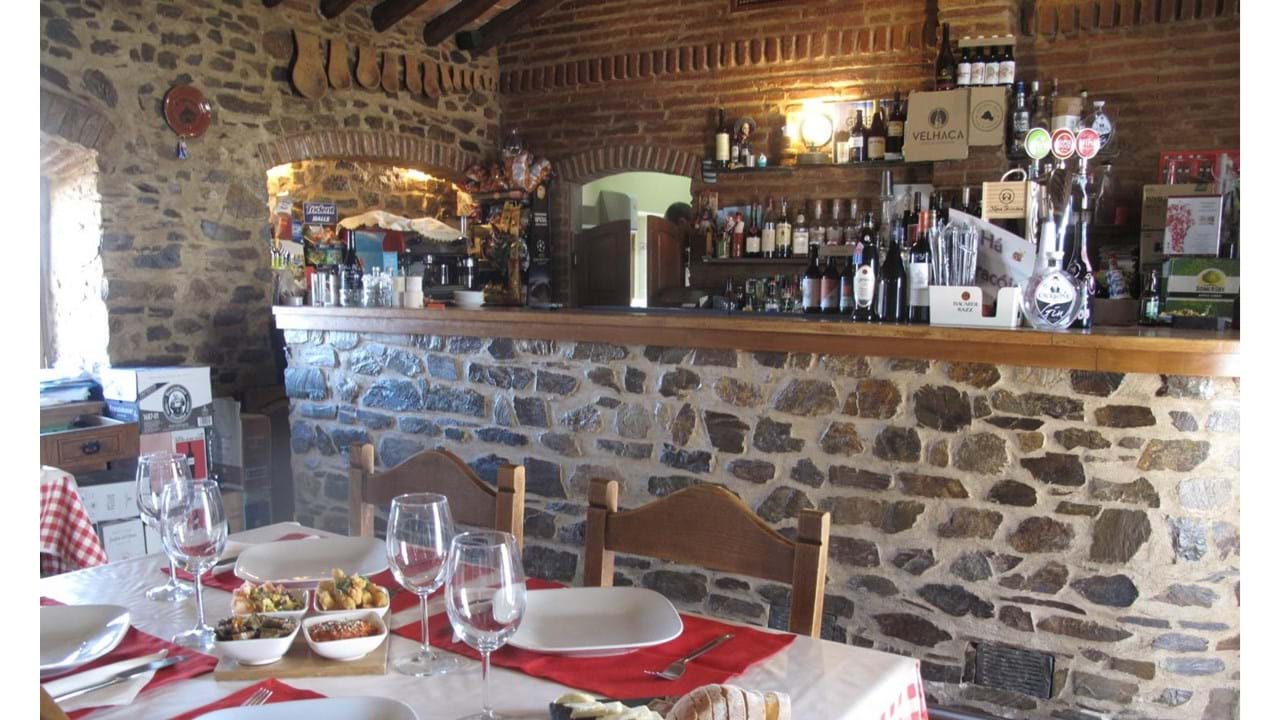








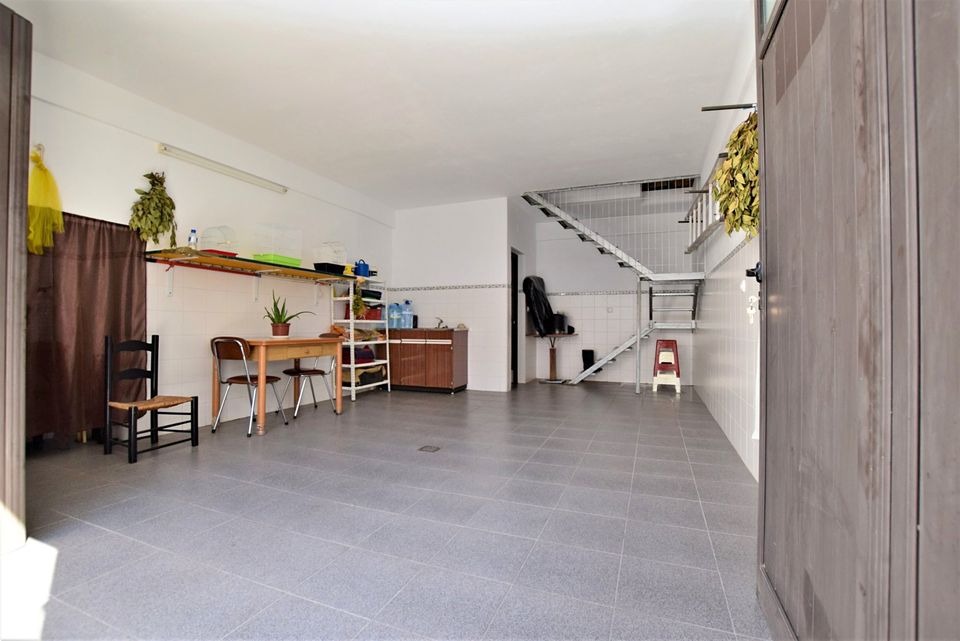
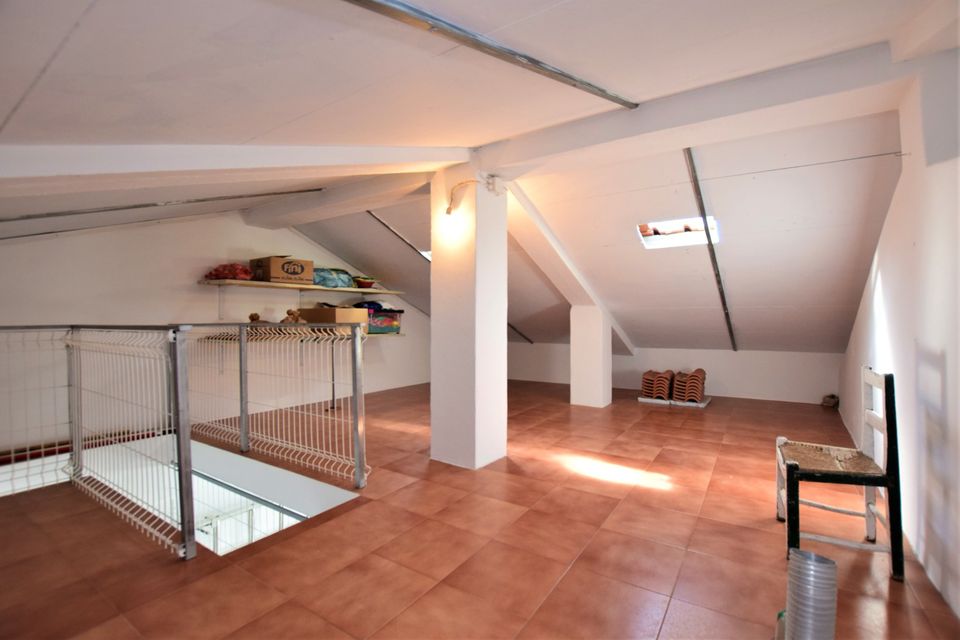


 "Exactly!"