Residency and/or Citizenship?

Dr. Sanjay Gupta, CNN’s chief medical correspondent, was confused and concerned after hearing Donald Trump state that – despite FDA, CDC, and vaccine manufacturers pledges to the contrary – he was prepared to use his presidential powers to override objections to emergency use authorization approving the use of new vaccines for the Covid-19 virus even before final determination of their efficacy (and potential dangers) had been made by doctors, research specialists, and scientists.

Trump suggested that the White House would overrule the FDA if the agency issued new, tougher standards for the emergency authorization of a coronavirus vaccine.

How can this be, wondered Gupta? By what right did the president assume he could make or break such life-or-death decisions … especially in the midst of a persistent pandemic which had been so politicized?

So, he spent a good deal of time doing research.

Turns out, through the ins and outs of government oversight, Trump could indeed manipulate the vaccine through the role of the Office of Management and Budget Control, which must sanction all such approvals and expenditures. OMB is part of the USA government’s executive branch, over which presidents can exert control.

The OMB isn’t the only federal agency over which this president has exerted his control. Through FEMA funds, he’s disbursed billions of dollars to Puerto Rico—despite his disdain for the island protectorate. He’s discharged funds from (agency) to build his wall between the USA and Mexico, as well as used federal border control agents to intercede in constitutional protests around the country (which rightly should be the domain of the states, their governors, mayors, and law enforcers). And, in his “law-and-order” campaign, he’s threatened to defund democratic cities and states with Democratic mayors and governors. Let’s not forget the U.S. Postal Service, so important to the timely delivery of our mail, whose new director — a major Trump donor — began dismantling the venerable institution, tossing out vital sorting equipment, reducing personnel, and limiting work hours. Or the National Security Council, which has become a revolving door of expert professionals replaced by “acting” directors answerable only to Trump. The same can be said of the FBI, CIA, and Justice Department–the latter of which is paying for Trump’s personal defense in criminal activities that occurred before he was president. Ditto for his campaign funds. And the money paid to Ukrainian officials to illegally influence the upcoming election.

Daily enforcement and administration of federal laws is in the hands of the various federal executive departments, created by Congress to deal with specific areas of national and international affairs. The heads of the 15 departments, chosen by the president and approved with the “advice and consent” of the U.S. Senate, form a council of advisers known as the president’s “Cabinet.” Once confirmed, these “cabinet officers” serve at the pleasure of the president. In addition, a number of staff organizations are grouped into the Executive Office of the President: the National Security Council, Office of Management and Budget, Council of Economic Advisers, Council on Environmental Quality, Office of the U.S. Trade Representative, Office of National Drug Control Policy, and Office of Science and Technology Policy. “Independent” agencies – the United States Postal Service, National Aeronautics and Space Administration, Environmental Protection Agency, and United States Agency for International Development. All are ultimately controlled by the president.

More importantly to my point here is that the State Department – under the Executive branch – controls the processing, issue, and renewal of passports to US citizens.

Which got me to thinking …

What if (for whatever reason), the U.S. president decides to restrict and control our passports? Who knows why? Trump is an autocrat who acts on impulse, rewarding his loyalists and punishing those who don’t favor him by pulling and pushing all the levers available to him.

Without valid passports, we’d be severely hampered in our international travel and dealings. Including the ability to maintain our residencies in other countries … because a current and valid passport must be presented whenever foreign residency is requested or renewed.

For those of us who aren’t EU nationals, in addition to other requirements, a passport is our “passport” to residency. In Spain, passports are required when applying for visas; when applying for temporary, one-year residency; for each subsequent two-year residency renewal; and for final – permanent – residency granted after five years.

The good news is that Portugal allows dual citizenship with most countries, so you won’t have to give up your original nationality. Similarly, U.S law doesn’t mention dual nationality or require a person to choose one nationality or another.

A U.S. citizen can naturalize in a foreign country without any risk to his or her citizenship. You can vote in U.S. elections, continue to receive Social Security payments, and travel to or from the USA without impediment.

Before the coronavirus pandemic, holding a U.S. passport granted visa-free access to 185 countries around the world. The American passport wasn’t the most powerful on earth (that honor belongs to Japan), but it still got most of us where we needed to go. Until now.

With current EU restrictions and other pandemic-related travel bans, there currently are much fewer places where Americans can go. Frustrated by this newly hampered mobility, some are seeking dual citizenship … often as an opportunity to reconnect with the country their parents or grandparents came from, to reevaluate their careers and potential business opportunities overseas, or simply to retire in peace legally in another country of choice.

Now, that got me to thinking some more …

Hitherto, I’d never really considered dual citizenship with the USA and Portugal (or Spain). Permanent residency was good enough, I assumed. I had no plans to vote in Portugal’s elections, which (I believed) was the only reason to seek citizenship over residency.

According to the Henley Passport Index, Portuguese citizens are among those who face the least restrictions when travelling to the four corners of the globe. Portuguese citizens are also European citizens whose rights include living, working, and retiring in any member state of the European Union for an unlimited period, as well as the right to vote in local and European elections in other member states.

“Portugal remains one of the best places in the world to invest and retire,” reports the Portuguese American Journal. “The Portugal Golden Visa Program has seen an increase in applications in the first quarter of 2020.” Between January and April 2020, 259 applicants and 515 dependents received their Golden Visa residence cards from the program.

(Both the Golden Visa and Non-Habitual Residency programs – which have been attracting wealthy foreigners to Portugal for years – were due to be ‘curtailed’ in the last State Budget, but have continued in light of the crisis created by the coronavirus until at least 2021.)

By no means are we “wealthy.” But there are other routes to Portuguese citizenship. The government has announced plans to overhaul Portugal’s Foreigners and Borders Office (SEF) in a bid to reduce bureaucracy barriers and improve conditions for immigrants.

Portuguese citizenship can be acquired by a legal resident of Portugal for at least five years plus one (more) year of permanent residency. Unlike residency, application for permanent citizenship is submitted to a civil registry office and not to SEF. Once citizenship is acquired, however, Portuguese passport applications are handled by SEF.

Some applicants for citizenship must submit documentary evidence of effective ties to Portugal and/or the Portuguese community, and the State Attorney may oppose the granting of citizenship if such ties are either too few or too weak. Typical documentation includes:

• Registration with Portugal’s Tax Authority and National Health Service;

• Regular trips to Portugal in case the applicant doesn’t live in the country;

• Having owned or rented property in Portugal for at least three (3) years;

• Having participated during the previous five (5) years in the cultural life of a Portuguese community existing in the country of residence of the applicant—i.e., activities of cultural or recreational associations of that community.

After 10 years of living in Spain, you can also obtain Spanish nationality, thus becoming a Spanish citizen. The main downside of using this path in order to get the long term residency is that you will need to renounce to your USA citizenship (in order to get the Spanish one).

So, take that into consideration. If you wish to preserve your nationality, go for the permanent residency and renew it every five (5) years. If that is not a problem for you, nationality will be a better option.

(Nevertheless, there’s an exception to that rule: If you have citizenship from Andorra, Portugal, Equatorial Guinea, the Philippines, or from a Latin American country, you can obtain your dual nationality; therefore there won’t be any need to give up your current citizenship.)

It’s a brave new world that we live in, with new “normals” changing rapidly. Under the current circumstances, at least, we have no plans to return to or visit the USA.

Beyond permanent residency in Portugal, dual citizenship with both countries increasingly seems like a good idea. Especially since it gives us equal access to Spain!

Shared here are personal observations, experiences, and happenstance that actually occurred to us as we moved from the USA to begin a new life in Portugal and Spain. Collected and compiled in EXPAT: Leaving the USA for Good, the book is available in hardcover, paperback, and eBook editions from Amazon and most online booksellers.
Processing…
Success! You're on the list.

Magical Monsaraz and Other Pleasurable Portuguese Places

We did the “tourist thing” this past weekend, visiting the town of Monsaraz in the Évora district of the Alentejo, about an hour’s drive from our house in Elvas (Vila Boim). The village prospers on tourism today, with a handful of restaurants, guesthouses, and artisan shops.

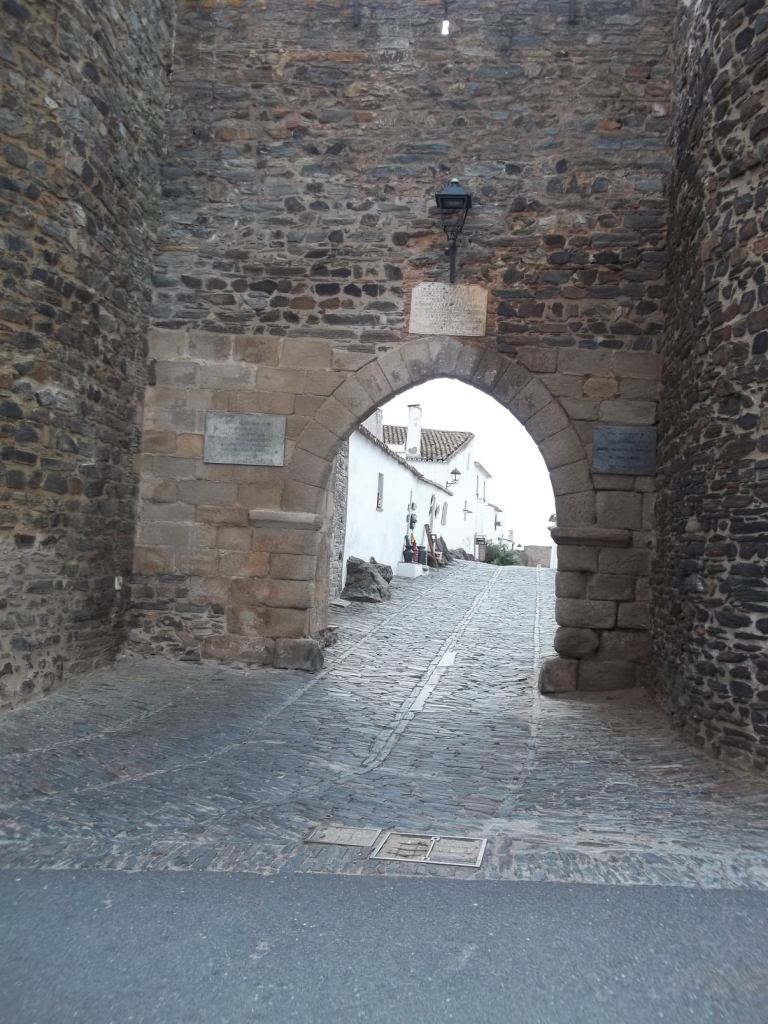
Monsaraz: Entrance and Exist

Perched high atop the surrounding countryside, Monsaraz is a charming village with a looming castle at its edge … spectacular views of the river Guadiana and Alqueva Dam … panoramic vistas showcasing many nearby Portuguese villages … and olive groves sprinkling the landscape. Its narrow schist streets are lined with whitewashed cottages.

Monsaraz: Schist Streets

The hilltop on which Monsaraz sits has long been coveted, as it affords far-reaching views over the surrounding plains and enabled communication between neighboring watchtowers. Since prehistoric times it has been occupied … more recently by Romans, Visigoths, Jews, Moors, and Christians, with control passing among Arabs, Spanish and the Portuguese until it finally settled in Portuguese hands in the 13th century.

This graceful, medieval village maintains its magic from ancient times like few others in the world. One of the oldest villages in Portugal, the historic village is well worth a visit! In 2017, Monsaraz won the category “Monument Villages” in the Seven Wonders of Portugal (Villages) competition.

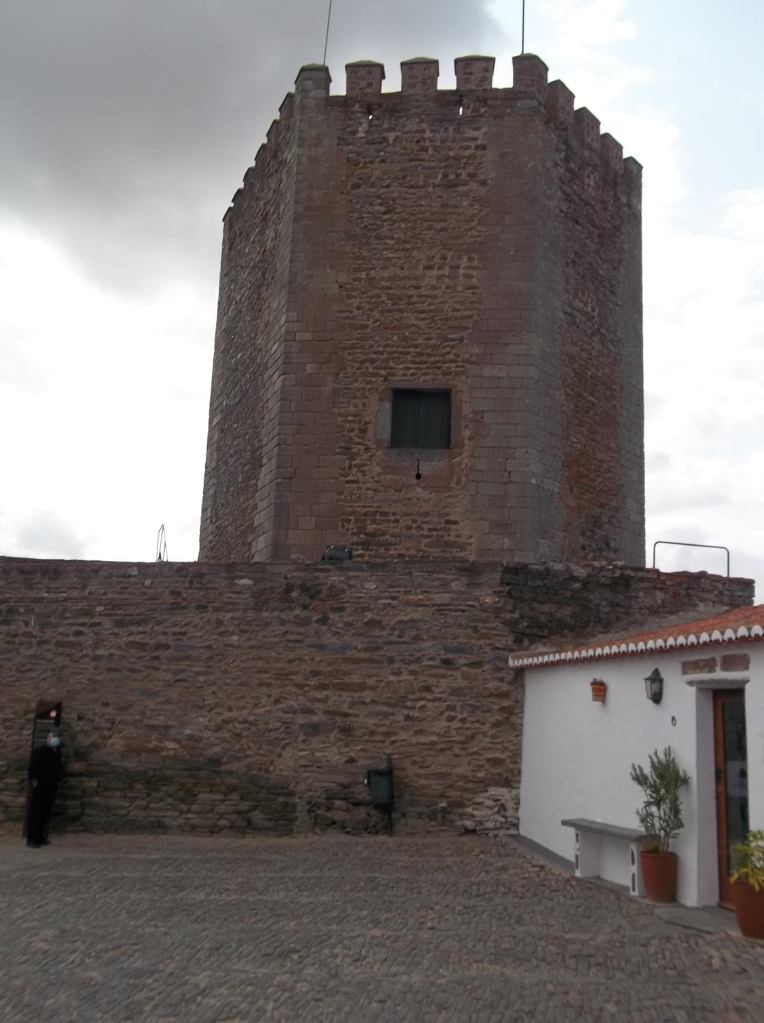
Monsaraz: Castle

Located on the top of the hill with a view over the river Guadiana with the wonderful Alqueva Dam – the largest artificial lake in Europe and one of the greatest Portuguese constructions of the century – its frontier with Spain has made it highly coveted by the peoples who disputed it.

Monsaraz: Church

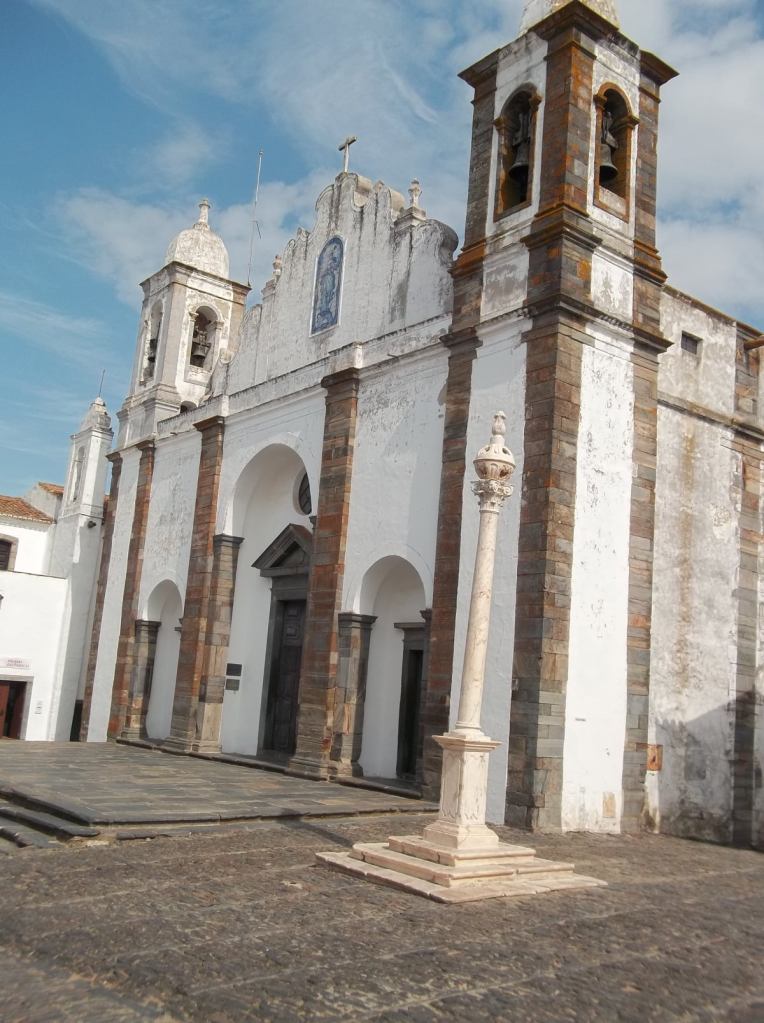
The walls around Monsaraz guard a welcoming village including its ubiquitous castle. Towards the center of the village is the stunning Igreja Matriz de Nossa Senhora da Lagoa (church), built with schist in the 16th century on the ruins of a gothic church destroyed due to the black plague. Inside is the tomb of Gomes Martins Silvestre, a Knight Templar and first Alcaide (Mayor) of Monsaraz. With 17 sculpted figures on the front representing a funeral procession, the tomb is made of marble from nearby Estremoz. Not to be overlooked is the Jewish history here.

Monsaraz: House of the Inquisition and Interactive Jewish History Center in Monsaraz

As we paid for a few purchases at the entrance (and exit) of Monsaraz, our eyes were drawn to a tiny house facing it with a “Vende-se” sign affixed. “Quanto custa?” I asked the shopkeeper. “Cento e cinquenta mil euros (€150,000),” she replied. Such are the prices of modernized housing within these idealized Portuguese places with such tightly-knit, small populations.

Monsaraz (782) reminds me of aspects that delighted us during earlier trips to Monsanto (616) and Belmonte (2,511) in the Castelo Branco district, as well as Estremoz (7,433) and Vila Viçosa (4,931) in Évora. (The last census was taken in 2011.)

Vila Viçosa: Main Square

Perhaps the most striking of all “marble towns” in the Alentejo is Vila Viçosa. In the 20th century, marble extraction and processing — responsible for around 93% of jobs in the municipality – along with tourism, became the main income sources of the municipality (although agriculture is still important for its economy). Vila Viçosa is known as the “Princess of Alentejo.” Truly an “open-air museum,” the name Vila Viçosa (lush village) is due to the fertility of its soils and the charming territory. Everywhere the eye wanders is marble: water fountains, monuments, mail boxes, street signs and benches, even garages.

Estremoz

The semi-arid plains of the eastern Alentejo stretch for miles before the pyramid-like settlement of Estremoz looms into view. To sum this place up in a few words, one could choose “historically significant,” “strategically situated,” and “dramatic.” Estremoz is one of the “white cities” in Alentejo. You can recognize it from far away by its white houses spread across a hill, embraced by old walls, and protected by the impressive fortified tower. During Portugal’s long struggle to retain its sovereignty in the face of invading Spanish armies, Estremoz always played a pivotal role.

Monsanto

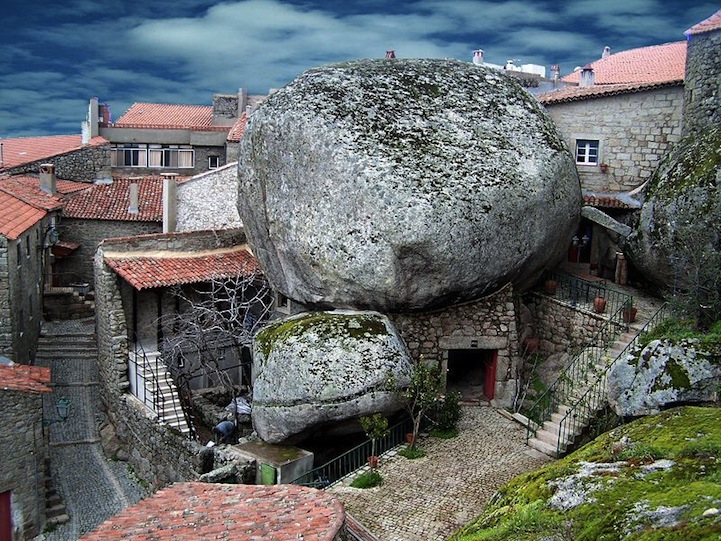
Monsanto hangs off a mountaintop overlooking the Portuguese countryside, with views for miles. Houses are tucked between, on, and underneath giant boulders. Its tiny streets wind up a steep grade past red-roofed cottages tucked against mossy boulders. Some of the boulders are actually fitted with doors, leading to structures carved right into the rocky landscape.

The village has hardly changed in hundreds of years, and enjoys distinction in Portugal as a living museum. Dubbed the “most Portuguese town in Portugal” in 1938, the tribute is a bit of a misnomer since Monsanto technically is a village (aldea), not a town (vila).

Belmonte is one of Portugal’s most fascinating villages. Nestled in the interior of the country, close by the mountains of Serra da Estrela, it was here that thousands of Jewish people escaped from the Inquisition in Spain and settled safely around this area, close to the border with Spain. Belmonte is, perhaps, the Portuguese town with the strongest Jewish presence and it stands out because it was a unique case within the Iberian Peninsula, where Hebrew culture and tradition have lasted since the early 16th century until today. But the community here is one of the few on the Iberian Peninsula that has retained rituals and other elements of its identity that date back to the Spanish Inquisition, thanks to the sacrifices and commitment of successive generations of crypto-Jews—Jewish people forced to convert to Christianity under the Inquisition, but who continued to practice Judaism in secret.

Belmonte

Unlike Monsaraz, whose Casa da Inquisição (House of the Inquisition) and Centro Interativo da Historia Judaica memorialize the expulsion of 80 former Jewish residents persecuted by the Portuguese Inquisition some 500 years ago, Belmonte continues to celebrate its Sephardic heritage with a Jewish synagogue, museum, radio station, and specialty shops.

For such a small country, Portugal is packed with pristine architectural gems, well-preserved historical sites, and monumental natural beauty.

Released by the Carpenters in 1970, the lyrics of our love affair with the western side of Iberia can be summed up in their words:

“We’ve only just begun to live … So many roads to choose … Sharing horizons that are new to us … Watching the signs along the way … We’ll find a place where there’s room to grow … And yes, we’ve just begun.”

Shared here are personal observations, experiences, and happenstance that actually occurred to us as we moved from the USA to begin a new life in Portugal and Spain. Collected and compiled in EXPAT: Leaving the USA for Good, the book is available in hardcover, paperback, and eBook editions from Amazon and most online booksellers.
Processing…
Success! You're on the list.

They’re Not “Mosquitos!” Gnat-Swatters and Drain Flies

Following a three-week absence, we returned to our house in the Alentejo … which we had cleaned thoroughly and removed every bit of trash before leaving.


Nonetheless, we were greeted by an infestation of “gnats” everywhere: During the day, they’re attracted to the light emanating from our windows, forming beaded curtains against the glass and marching brazenly across our mirrors; at night, it’s the light bulbs that propel them; while, regardless of the hour, they dart aggressively around my computer screen, dive-bombing unmercifully as I’m trying my best to conduct some work while waving them away.

You haven’t truly lived until you nick yourself shaving or shoo them away in the bathroom while dealing with “personal hygiene.” Or, sharing your dining table with these unwelcome visitors. Or, fishing around a wine glass to remove an errant gnat floating in your tinto.

Without exaggeration, we have encountered and tried our best to remove hundreds of these nasty no-goodniks. Yet, each time we ass-u-me we’ve dealt with them — Surprise! — more of them miraculously appear.

There’s not even a proper Portuguese word that translates “gnat” appropriately: “Mosquito,” say the English > Portuguese dictionaries and Google Translate. No, I think not. We’ve got real mosquitos, too, as well as moscas.

Since we can’t convey the substance of our dilemma, seeking help from merchants won’t work. Instead, I contact Facebook friends. I want to know: Where are all these unwanted pests coming from? Why are they paying us unwelcomed visits? More importantly, how do we get rid of them … once and for all?

• “I am/was having a similar problem,” shared Teri. “A contractor friend suggested covering all open water pipes, drains, etc. I used clear packing tape around the dishwasher and washing machine drainage pipes; put a plug in the tubs; pulled up the stopper for the bidets; installed small mesh filters on all the sinks; closed off the chimney; closed the vents in the bathroom. Surprisingly, those irritating gnats have almost disappeared. Not sure what had the biggest impact because I went with the sawed off shotgun approach.”

It’s incredible the lengths we go to against these smallest of predators in our own daily David v. Goliath battles!

• “I think you might have ‘drain flies,’ offered my friend Robin. “I had a horror film-like infestation when I had a plumbing leak and my ceiling was opened up. Check for leaks or built-up water or waste in pipes. I’m no expert, but hopefully this might put you on the right track.”

Robin was onto something …

 Immediately, I keyed “drain fly” into English > Portuguese online dictionaries and Google Translate. Again, all I got was “mosquito.”

• “We had those little fruit-loving gnats and flies in the three open stories to our house,” commiserated Beverly, who bought three cans of the tall fly spray and started at the top floor with all windows closed. “I sprayed everywhere up high to let it fall to the floor. I sprayed going down the stairs and then the next floor … and then the last. I closed all the rooms with doors, andI then left for a few hours. When I returned I had not one!”

God bless you, Beverly. You’ve redeemed us as not the only stewards of nature who want to pulverize these little demons for invading our space. We, too, went through entire cans of “all-fly-killer” sprays and thoroughly doused our 50m2, single story bungalow.

But determined they were and a few remain, flitting about.

• According to María, “If they’re fruit flies, you can create a trap with a small glass and a little red wine in the bottom. Make a funnel out of stiff paper or plastic so they can fly in, but not out. Keep the trap away from the areas you don’t want them in, so you direct them away from the spaces where they irritate you the most.”

“Gnats and mosquitoes come in through the electrical outlets, whose conduits are open to the outside,” Lila pointed out.


But, despite Googling pictures, I still don’t know if they’re gnats, mosquitos, drain or fruit flies because we really don’t want to get up close and personal to them. But, we’re willing to try (almost) anything to purge our property. .

• Henry advised using a “fogger,” but the logistics of dealing with our three pets delayed us from trying it. Instead, we followed Deb’s advice: “A little bleach in the drains also helps kill any larvae developing.” Cristina added that, “yellow sticky traps used in greenhouses are effective.”

I added the fly paper to our shopping list.

Already, we’d gone through three tall cans of “fly” killer and put bleach down the drains and pipes, which we then plugged. We bought — and lit — some vanilla candles for the bathroom and near our computers, hoping the “sweet” smell would attract them to the flame and the molten wax below. Still on our to-do list are taping electrical outlets and drainage pipes.

Next time we go shopping, we’ll buy and hang some of that sticky fly paper. What a lovely accessory that will be to our furnishings and decorating scheme!

Yeah, right.

Shared here are personal observations, experiences, and happenstance that actually occurred to us as we moved from the USA to begin a new life in Portugal and Spain. Collected and compiled in EXPAT: Leaving the USA for Good, the book is available in hardcover, paperback, and eBook editions from Amazon and most online booksellers.
Processing…
Success! You're on the list.

Belts and Suspenders: “Weather” or Not No Longer Is the Question

Climate change is real, without a doubt.

Just ask the scientists. Or any legitimate fact-checker.

Those who deny the reality of climate change and global warming are the same foolish, mistaken people who claim that Coronavirus (Covid-19) is a hoax and refuse to wear masks or maintain social distances.

All of a sudden, climate change is here—up close and personal. We’re witnessing it with our own eyes. Who can deny the devastation ravaging the USA’s Pacific coast (and parts of the midwest) caused by “uncontrollable” forest fires?

“Bobcat” fire in California

Faster and more furious hurricanes threaten the Western hemisphere – even unprecedented back-to-back dynamos along the USA’s Gulf coast – while typhoons, monsoons, and tsunamis invoke nature’s wrath in the East. Already this year, we’ve run out of names for these tempests and will need to revert to the Greek alphabet.

Flash flooding is now commonplace, even as raging forest fires devour California, Oregon, Washington, and Colorado … as well as Spain and Portugal. Meanwhile, droughts of dry and parched land have come home to roost.

Earthquakes are occurring everywhere. Even in Spain and Portugal!

The Amazon is ablaze, while the Everglades are being turned into suburban housing. The sea is swallowing villages, eating away at shorelines, withering crops. And our oceans are bloated by unimaginable amounts of plastic, choking their marine inhabitants.

In effect, we’re losing our belts and suspenders, as Atlas shrugs and we drop our coverings: We’ve been warned!

“Concentrations of greenhouse gases in the Earth’s atmosphere are at record levels, and emissions that saw a temporary decline due to the pandemic are heading towards pre-COVID levels, while global temperatures continue to hit new highs,” according to a major new United Nations report.

United in Science 2020,” released September 9th, highlights the increasing and irreversible impacts of climate change on glaciers, oceans, nature, economies … along with its cost on people across the globe; manifest more and more often through disasters such as record-breaking heatwaves, wildfires, droughts and floods.

Speaking at the launch of the report, UN Secretary-General António Guterres emphasized that there is “no time to delay” if the world is to slow the trend of the devastating impacts of climate change, and limit temperate rise to 1.5 degree-Celsius.

“Whether we are tackling a pandemic or the climate crisis, it is clear that we need science, solidarity, and decisive solutions,” said Guterres.

If there’s any hope for the planet’s survival, it won’t come from survivalists building bunkers and shelters to protect themselves from the doom and gloom … or from the Trumpers, for that matter … but from youngsters.

In 2019, Time magazine chose 16-year-old climate activist Greta Thunberg as its Person of the Year. The young lady had made a splash that year leading protests around the world, speaking at the United Nations, meeting with the Pope, and sparring with the president of the United States on Twitter.

Students protest, demanding global action on climate change as part of the “Fridays for Future” movement in Madrid. Youngsters in Spain are using social media to create groups aimed at pressuring politicians and civil society leaders

Here in Portugal, six youths have filed an “unprecedented” climate change lawsuit against almost all of Europe – 33 countries! — for failing to take adequate action on the crisis that they say threatens their human rights.

The case was filed on September 3 in the European Court of Human Rights in Strasbourg, France. It is the first climate case brought directly to this international court. Lawyers for the young plaintiffs will argue that European governments’ current plans for cutting greenhouse gas emissions are insufficient to prevent catastrophic climate change and therefore constitute human rights violations under the European Convention on Human Rights.

“If successful, the 33 countries would be legally bound, not only to ramp up emissions cuts, but also to tackle overseas contributions to climate change, including those of their multinational companies,” the charity Global Legal Action Network, which is providing legal support for the case, explained in a press release.

“It’ll start getting cooler, you just watch.”

That is what Donald Trump said during a televised summit in California focused on the catastrophic wildfires ripping through the state and other regions of the western United States. He claimed that “exploding trees” were the catalyst.

Trump—a notorious denier of climate science and the global consensus that human activity and fossil fuel emissions are driving planetary heating—has met his match in the youngsters who are so much smarter and wiser. My money (if I had any) would be on those kids!

Shared here are personal observations, experiences, and happenstance that actually occurred to us as we moved from the USA to begin a new life in Portugal and Spain. Collected and compiled in EXPAT: Leaving the USA for Good, the book is available in hardcover, paperback, and eBook editions from Amazon and most online booksellers.

Processing…
Success! You're on the list.

Land of Opportunity

Mr. Green Jeans I’m not.

Far from having a green thumb, everything I try to cultivate, to grow in the ground, gives up its ghost. Despite my best intentions, the only organisms thriving around our home are creepy crawlers and flying beasties.

Which is why we thought it practical to buy a row house without any land. It has several outdoor areas: a large covered terrace where our washing machine and laundry lines live … a cozy courtyard where we could enjoy a glass of wine, except for the dive-bombing flies and surface-surfing gnats … a balcony outside our bedroom wide enough for some potted plants and flowers, but too narrow for us to go out to tend to them … and a nook adjacent to our guest quarters, where company can sit in the shade and enjoy a good book—with that glass of wine (or a gin and tonic).

We have no land whatsoever, either enclosed yard or flowering garden. Nowhere to let the dogs out during inclement weather, when we’re not inclined to take them on their long walks. No dirt to dig in, space even to support a meager herb garden … or grow Chia pet gifts for Christmas, let alone anywhere to store a metric ton of winter firewood.

Many of the folks we’ve met here moved to Portugal specifically to live on the land and off the grid. Such modern mainstays of our life – running water and indoor plumbing, air conditioning and blow dryers – are conveniences neither needed nor wanted by these robust people. Their water comes from wells, not spigots or taps, and the wind winds turbines rather than turbans. Fertile and flourishing, their pristine plots are filled with blossoms and blooms, yielding edibles to eat and enjoy.

And these land dwellers are probably better off because of that—certainly superior to us who, generally, dislike the color green (on cars) and have kept Tupperware in business for too long. Where does our food come from? The refrigerator, of course!

“Quinta” (“finca” in Spanish) people are environmentally-conscious, community-minded inhabitants who have no problem slinging mud, tilling turd, picking prickly stuff off trees, or sleeping under the stars. They’re the new pioneers we’re more likely to find at open air markets than Lidles, Continentes, Aldis, or Pingo Doces.

Yes, I confess: we are homebodies, not quintaessentials.

So, imagine my shock when, walking the dogs down along our Rua do Cemitério, I came across a gated property with a “For Sale” sign posted. I spied just enough to bring up the possibility to Russ after dinner.

“Let’s take a walk,” I said, nonchalantly. “I want you to see something.”

We walked down the street and continued around the church’s corner, ambling toward a part of our town we’d hardly frequented during our time here. Exactly six minutes into our hike, I stopped. We stood about four meters away from a large new house under construction.

“What do you think?” I asked, more excited now on my second visit with someone to share the thrill of something decidedly different.

“About what?” he replied.

“This!” I pointed, hand sweeping panoramically across the property.

“That?” he asked, looking at me quite quizzically. “It’s land!”

“Yes, it is. But think of the possibilities …”

Justifying and rationalizing its purchase was easy.

Fortunately, I had composed and memorized a list of attributes, which I proceeded to tick off: We’d have a place for our dogs to run around safely. Majestic fruit trees already were bursting with color, as oranges and lemons ripened throughout December (with some olives still hanging around). The rooftops of some structures (whatever they were) could be seen over the stone wall encircling the grounds, so we’d have a place to store all that firewood we’d ordered. Plus, it could increase the value of our existing property. As the real estate agents explained, “People don’t want to move out here if there’s no land. You don’t have any.” Pièce de résistance: We could use the property to shelter the half-dozen or so stray dogs and cats living on our village streets. And the exercise! We could become Portuguese Paul Bunyans or Johnny Appleseeds, Orangeseeds, Lemonseeds, Cherryseeds …

“What do you think?” I asked, anxious not to appear too eager.

“It’s worth considering,” Russ replied. “Let’s see what it says on the website about it … and make arrangements to have a closer look.”

We wrote down the website listed on the sign and cranked up the computer as soon as we were home. Not too big or too small – 1,000 square meters – the property had a well, several “rustic” agricultural buildings, and access to municipal water, sewer, and electricity.

We completed the inquiry form online, requesting that the property be shown to us.

Shared here are personal observations, experiences, and happenstance that actually occurred to us as we moved from the USA to begin a new life in Portugal and Spain. Collected and compiled in EXPAT: Leaving the USA for Good, the book is available in hardcover, paperback, and eBook editions from Amazon and most online booksellers.

Processing…
Success! You're on the list.

What’s App?

Three major players dominate the digital communications landscape in Portugal: MEO, NOS, and the UK’s Vodafone.

We have a MEO “package” w/Internet, TV, landline and mobile phones. The service has been excellent and the rates reasonable: €49.90 per month for high-speed broadband Internet + “cable” TV with 190 different stations + a mobile phone + a landline. How much would Comcast, Spectrum, Time-Warner, et al in the USA charge for a similar package?

Anyway … overall, we’d been very satisfied with our service and bills.

Until we tried calling outside of Portugal.

A friend from the UK — who spends lots of time in Spain with us – had told us that, within the EU, all phone calls now are “free” … without additional charges. Regardless of which country your phone belongs to and what country you’re calling.

But only sometimes, it turns out …

We made phone calls from both our land line and mobile to the UK, Spain, and even France.Then we received our MEO bill, loaded with charges for all these calls (and messages) outside of Portugal.

We took our bill into the nearest MEO loja, where the helpful customer service rep explained (I think) in Portuguese, “Only calls from cell phone to cell phone are free within the EU.”

Our Brit friend didn’t buy that, telling us it’s bloody rubbish.

“I use my O2 phone in Portugal, Spain, etc. I don’t get charged for any calls I make to any phone that is in the EU, irrespective of where I am (as long as I am in the EU),” she said.

Evidently, O2 is the main UK mobile phone provider. Those with 02 can use their phones anywhere in the EU for making calls or sending data and pay no charges. But, if they had Portuguese phones, they’d be charged for data outside of Portugal, and phone calls to non-Portuguese phone numbers.

OHHHHHHHHHH … so that’s why our UK friend wasn’t being charged for her calls anywhere within the EU: Her OK phones are 02s!

Nevertheless, we made certain to use only our mobile when calling outside of Portugal. Like yesterday. We briefly called a number in Badajoz, Spain.

Immediately, we received a text message from MEO stating that our account had been charged for that call.

Back we went to MEO.This time, the helpful customer service rep drew us a picture. According to him, the new law about “free calls within the EU” refers only to roaming: If we take our Portuguese mobile phone to Spain, France, Italy, Greece, or wherever … and we call any Portuguese number, it’s free. But, regardless of which phone we use — mobile or land line — if we call another country from our Portuguese phone (number), we will be charged because it’s considered an “international” call.

“We have UK mobile phones with UK mobile phone numbers and we can call anywhere within the European Union at no charge–free!” insisted our British friend. “That’s what the new law is about!”

Yes, but only with 02 phone-provided numbers.

Mind you, we’re not complaining … we only want to understand the rules. And to color within the lines!

So, we sought additional advice.

We learned that what EU law has changed is applicable only to mobiles and, then, only when one is “roaming”; i.e., using your Portuguese mobile phone when in Spain … or your Spanish mobile in Portugal.

In addition, the calls aren’t free; they are charged at the same tariffs you would pay when on your home network. Unless you purchase an “enhanced” package of benefits, when at home in Portugal, you would pay for all international calls and texts not included as free in your plan.

“The best thing to do is to use apps like WhatsApp or Facebook Messenger when calling or texting internationally,” suggested someone more-in-the-know than moi. “They are completely free … whoever you are speaking to and wherever they are.”

Some telecomm plans offer incentives for international calling. “I am with NOS and get free calls to all European landlines from my landline after 9pm and all weekend,” the same friend continued, “which is great, as my technophobe mother of 78 does not even own a mobile phone … let alone know what an app is!”

Actually, I am right there with his mother. It’s my partner who has the mobile and makes our calls (or sends the texts). Five years ago, I killed my cell phone by throwing it against the wall and then stomping on it. Bringing the plastic bits and bytes back to the company where I purchased it, I informed them that, “When you offer a simple class showing dumb old men like me how to use these new-fangled smart phones, just ring me up!”

On my land line …

Shared here are personal observations, experiences, and happenstance that actually occurred to us as we moved from the USA to begin a new life in Portugal and Spain. Collected and compiled in EXPAT: Leaving the USA for Good, the book is available in hardcover, paperback, and eBook editions from Amazon and most online booksellers.

Processing…
Success! You're on the list.

Then, Again. But Better!

There’s just so much you can do with 55m2 (not even 600-square-feet), when one-third of the space is taken up by a bathroom and terrace. When a double/full-size (“matrimonial”) bed occupies the majority of the bedroom level. When the only other floor (ground level) measures just about 10 X 15 (15m2 at most) … and comprises our entry and reception area, an office, kitchen, eating space, and living room. Quite the creative challenge to reclaim that three-story townhouse and return it to a home that’s functional, yet comfortable and cozy.

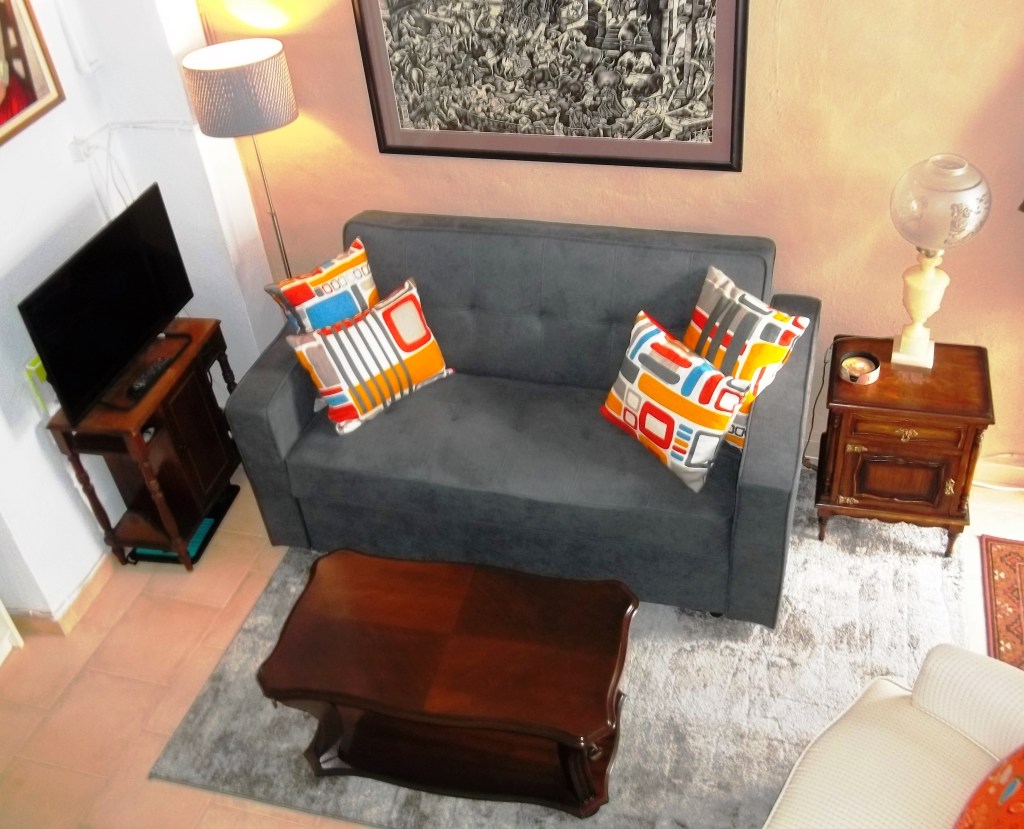
Living room

But such was our task when we purchased a little vacation bolt in one of the “pueblos blancos” dotting Andalucia (southern Spain) almost 15 years ago … sold it to a British chap when “la crisis” decreased its value by at least 50% … and then bought it back from him when he decided that he preferred life on the coast.

We purchased the property for €43,000 at the height of the property boom in 2006; when “la crisis” hit in 2008, we sold it (at a substantial loss) for €28,000; as the financial crisis continued to plague the international property sector — and the seller was eager to sell it and move, after listing it to no avail with local property agents — we repurchased it for €24,000.

Almost half the price we originally paid … and in far better shape, all things considered.

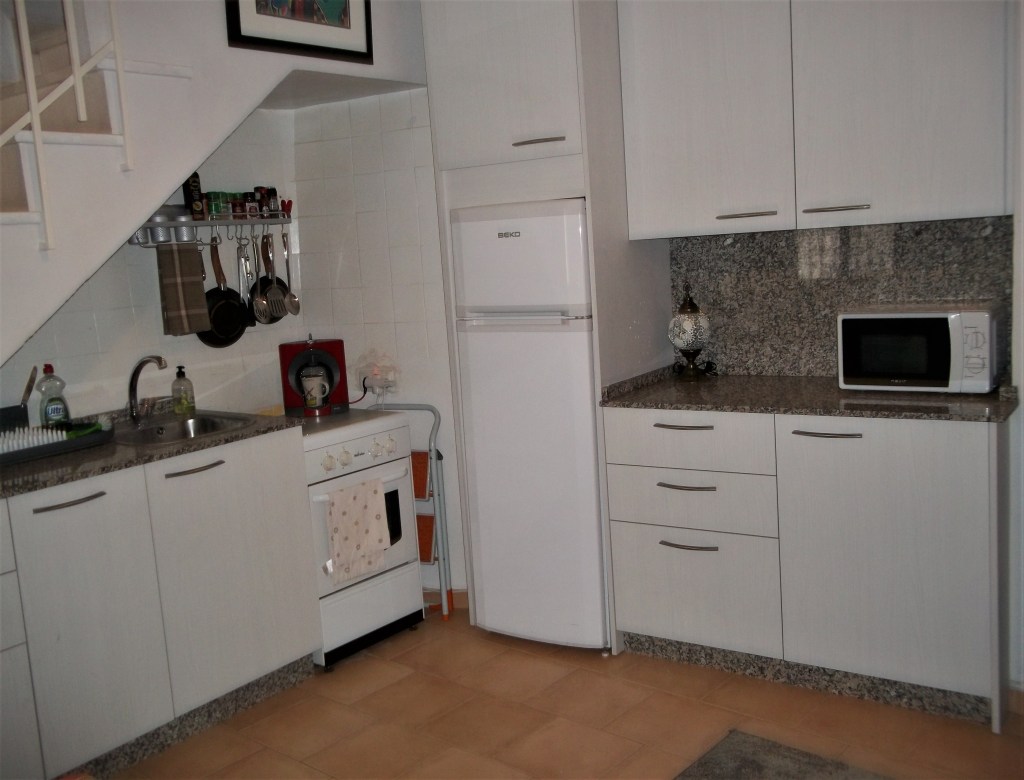
Newly-fitted kitchen

The town is Olvera, a hamlet with a population of about 10,000 (including a great assortment of expats from more than a dozen countries), with spectacular vistas and lots of steep streets. Most of these streets would be called “alleys” elsewhere; but many do allow for two-way traffic, as well as parking on one side of the street (which often rotates on a monthly basis). Trying to move vehicles through this obstacle course of pedestrians and pets competing with cars and trucks for limited space results in dings and scratches, bangs and bumps, which the natives affectionately refer to as “Olvera Kisses.” It also makes it difficult to transport, load, and unload both passengers and cargo – groceries, furniture, supplies – since, every time you stop, the street backs up and the horns start blaring. Redecorating can be trying when one needs to remove old stuff and bring in the new.

“Office”

That’s what faced us as we made the six-hour drive from Portugal in a van loaded with two adult men, three pet dogs, and household items ranging from towels and linens to pots and pans … pet food, pet toys, and pet beds for three very spoiled Schnauzers … objets d’art, kitchen gadgets, tools, and other assorted essentials.

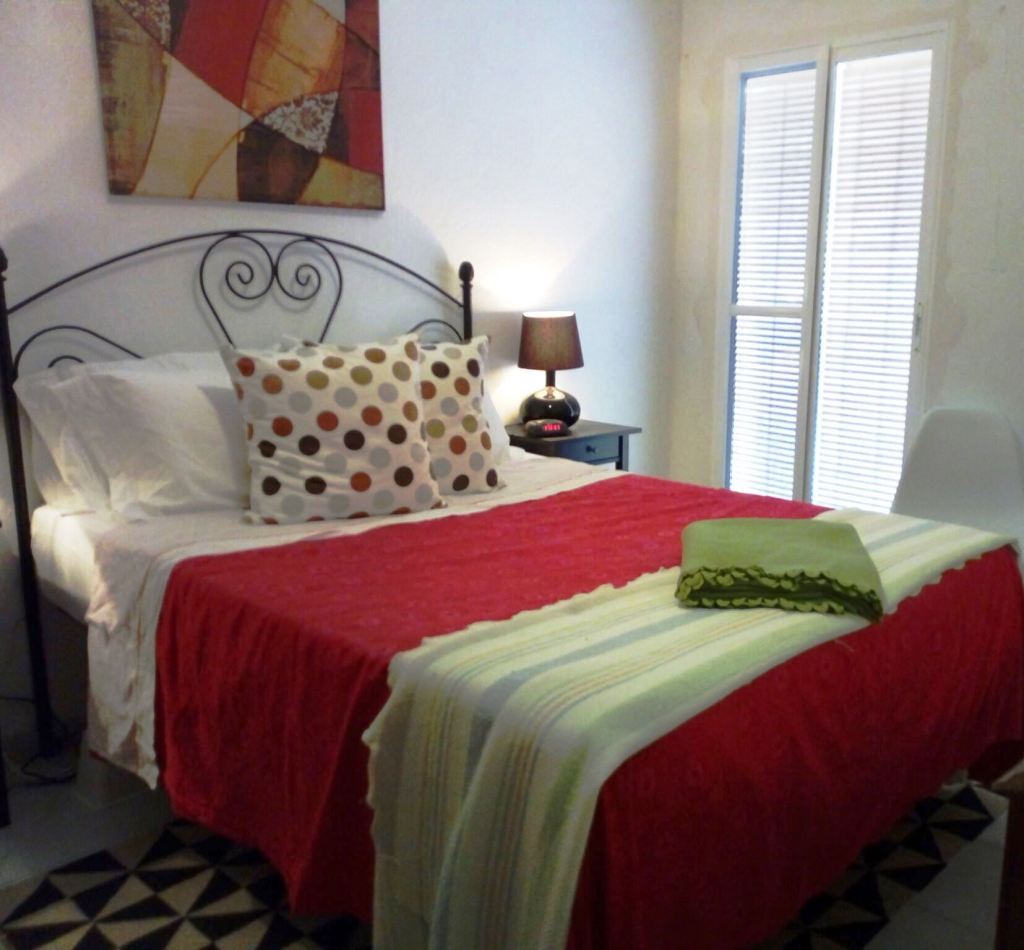
Bedroom

In the years since we’d sold the place, little had changed: most of the furniture, appliances, artwork, dishes and glasses that we’d originally put in place were still there – and then some – even if their current placement and arrangement didn’t agree with our personal tastes.

We emptied bureau drawers filled with odds and ends of papers and outdated manuals; we removed posters taped to the walls; we sorted through what had once been complete sets of dinnerware, flatware, and glasses; we moved furniture to discover hidden art treasures (along with other debris); we donated an oversize recliner chair to charity; we took out numerous bags of rubbish for pick up by the bin men, while a 10-year-old mattress slept on by who knows how many people went down to the dump.

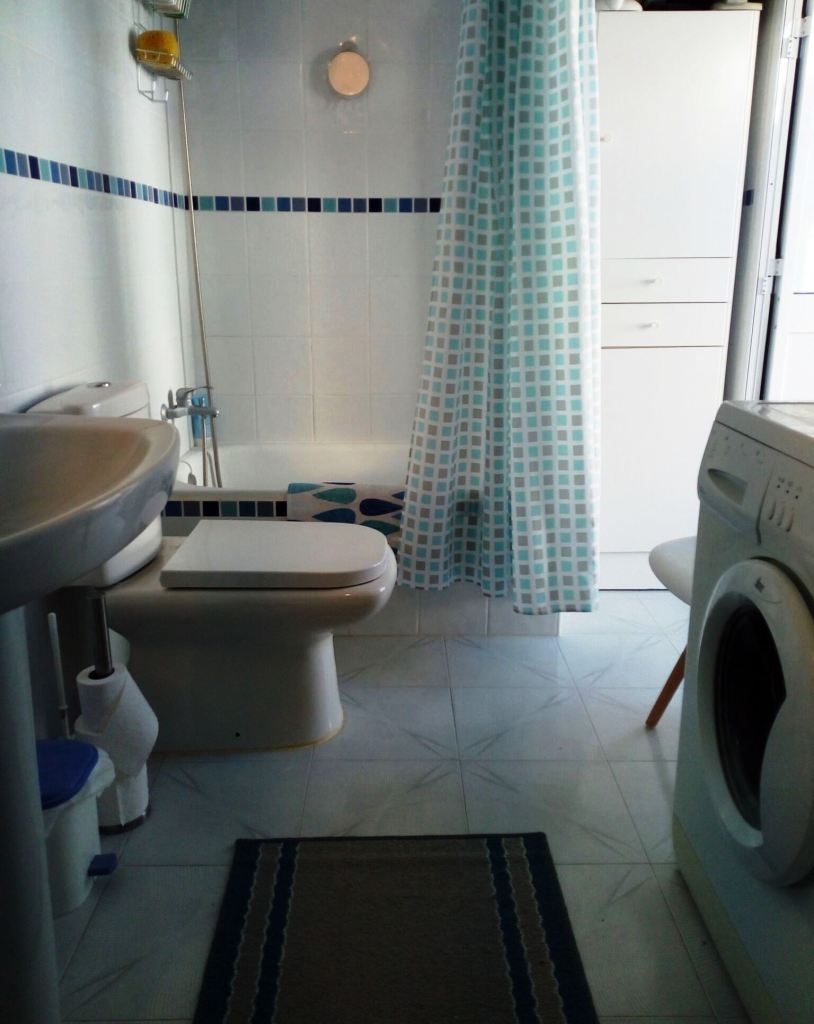
Bathroom

Then the “real” work began: replacing old, single pane windows and doors with heavy metal frames that took up valuable space by opening in rather than sliding side-to-side on tracks with bonus fly screens; painting the concrete walls which had been damaged by replacing the windows and doors (as well as the toll taken by years of “damp” and mold that build up when fresh air doesn’t circulate in unventilated spaces during the wet weather); dealing with an obsolete, overflowing water tank on our roof and a fickle water heater on the terrace; rearranging the furniture to better suit its purposes; and shopping, shopping, and more shopping for all the stuff that we needed (and things that we didn’t need but wanted).

We made what had been ours (then) ours, again.

But better!

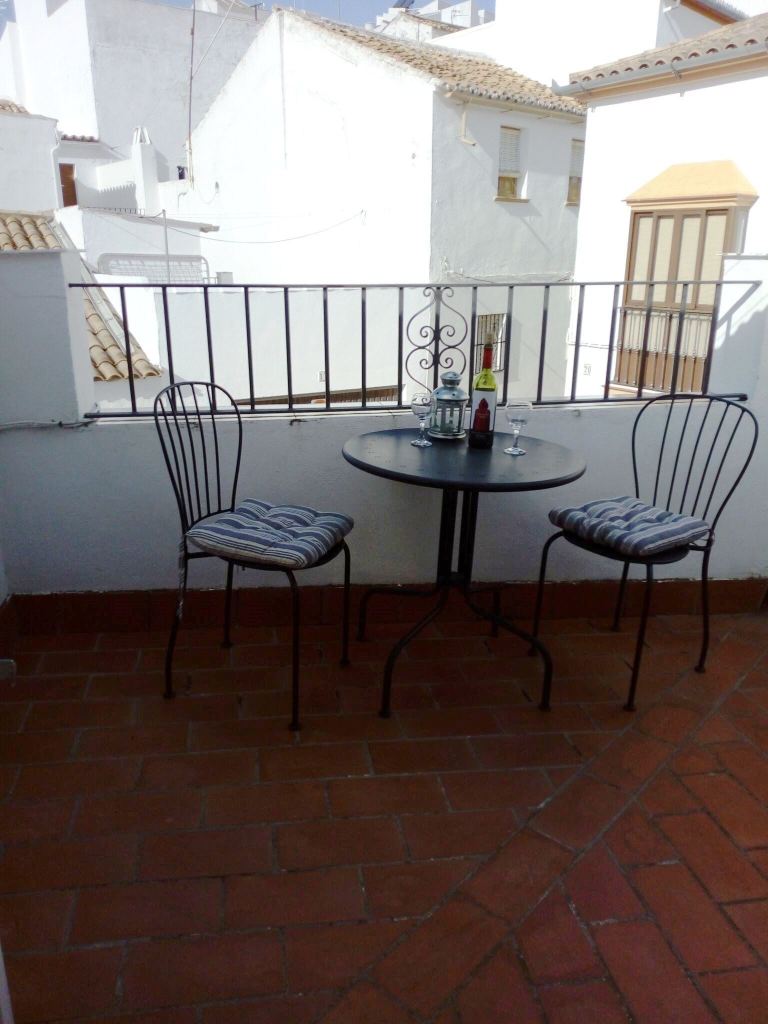
Terrace

Olvera photo by Luis Francisco Fotografia

Shared here are personal observations, experiences, and happenstance that actually occurred to us as we moved from the USA to begin a new life in Portugal and Spain. Collected and compiled in EXPAT: Leaving the USA for Good, the book is available in hardcover, paperback, and eBook editions from Amazon and most online booksellers.
Processing…
Success! You're on the list.

A Moving Experience

Thinking about shipping your household goods from the USA to Portugal, Spain, or anywhere else in the European Union?

Think again. And again. Very, very carefully!

From finances to frustrations, the entire process of getting your stuff from there to here (or here to there) can take a toll on even the most patient and persevering people.

I’m persistent, yes! But patient? Hardly.

Some international shipping companies are thieves, cheaters, and liars. I’d call how they operate and charge “highway robberies,” but they’re on the seas, not on land. So, let’s just say I think they are pirates …

Start by trying to get a price quote on shipping your household goods – clothing, furniture, linens, artwork, tools, etc. – from various international shipping companies. Here’s how:

Go to Google. Enter “International-shipping-household-goods-USA-to-Portugal (or wherever).” Oilà! Up pops a list beginning with paid advertisers that supposedly are in the business of shipping your domestic drayage anywhere around the world. Most of the ad listings, especially, include “click-me” bait, offering free price quotes and/or estimates by filling out their online questionnaires on the specifications of your shipment. Your information is then shared with a number of shipping companies that will contact you, offering the “best deal anywhere,” if you’ll only complete their own set of questions, too.

Avid art lovers and collectors, all we really had wanted to ship from the USA to Portugal were about two dozen pieces of artwork that we treasured, because we’d found them in our 25 years of life together. Everything else we could leave behind: Adios, clothing. Adieu, furniture. Sayonara, dishes and glassware. Arrivederci, rugs and rags. Adeus, America.

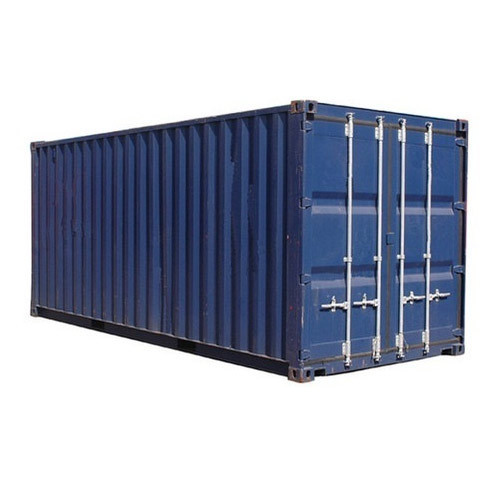
But, time and again, we were told by these international moving companies that it’s “more practical … much cheaper, too,” to ship a full container (a contrivance that measures approximately 8’ x 8’ x 20’) than to share one with someone else or to ship – regardless of the transport means – a dozen or so boxes containing whatever.

So, we filled out the forms identifying what we would be shipping, including how many boxes and cartons of various sizes.

Responses ranged from the ridiculous to the sublime.

One highly-regarded and recommended company proposed an “all-inclusive” charge that brought its fee to more than twice what the others wanted … but they shared an invaluable nugget of wisdom: Whichever company we ultimately chose to carry the contents of our lives across the Atlantic, be sure that (1) it included destination terminal handling charges and port charges, which many don’t include or even mention; and (2) it is a member in good standing of FIDI, the largest global alliance of professional moving and relocation companies.

Based on our online communications, we narrowed our choice of international shipping companies to three. Only one belonged to FIDI. All were members of other moving industry alliances. We researched everything we could find that had been reported in reviews about each – positive and negative – and paid particular attention to their ratings and how they responded to complaints posted with the Better Business Bureau. We asked lots of questions, expressed our concerns, and requested clarifications.

Ultimately, we chose an international shipping company based on its price, communications, and reputation. Even before signing the contract and paying a deposit, we understood that the company was, essentially, our “broker” and liaison to other companies … kind of like the hub of a wheel with many spokes: the company that came to our house to pick up everything we were shipping and deliver it to the port of Chicago; the company in the port of Chicago that unloaded the truck, packed it into a container, and put it aboard the ship; the actual “ship”ping company that would transfer our goods from one of its ships to another (and another), before arriving here in Portugal; the logistics company in Lisbon that handled all the paperwork and clearance procedures with Customs; and the company that would ultimately unload our container and deliver its contents to our home in Lousa.

Before anything at all can be imported “duty-free” to Portugal, however, one first must be granted a residence visa from a Portuguese consulate. Suffice it to say that household goods and personal effects can be imported duty-free by people establishing residency in Portugal who have secured a residency visa … provided that these “household goods” were part of your previous residence and you don’t have a furnished home in Portugal.

To qualify for this duty-free status, the goods must be accompanied by a “Baggage Certificate” (Certificado de Bagagem) issued by the Consulate handling your visa. The goods must be cleared through Customs within 90 days of their arrival in the country.

Obtaining the certificate isn’t that difficult: You submit a list in triplicate of all items that you’re sending to Portugal. Each numbered page should state, “List of Personal Effects of (Name)”; it can identify items by box (Box #1: Clothing, Box #2: Kitchen Utensils, Box #3: Books, etc.) or by description (King Size Bed and Mattress, Chest of Drawers, Artwork, etc.); and all electronic appliances must clearly list their serial numbers. The Consulate wants you to leave a few blank spaces after the last listing on each page for official signatures, and this statement must accompany your list: “I hereby certify that the above items have been in my use and possession for over six months” (Signature and date). Finally, a company, bank, or certified check – or a money order – payable to the Consular Section-Embassy of Portugal must be included and a postage paid, self-addressed (preferably trackable) envelope enclosed.

With all required documents in hand, scanned and sent to the shipping company, we began packing and making certain that every box, along with every non-boxed item, was clearly numbered and identified exactly as listed on our official baggage certificate. Measuring off an area slightly less than 8 x 8 x 20 feet in our garage, we made sure that we didn’t go beyond what would fit in the container.

Recalling the fires that had left so many Portuguese homeless and destitute not far from where we’d be living, we bought blankets, comforters, quilts, spreads, linens, towels, and curtains that could be used to wrap our household goods and then donated to those in need.

Unfortunately, the shipping company had other ideas.

The company insisted that, for insurance reasons, they needed to pack and “shrink-wrap” all of the furniture that we had so carefully covered with layers of blankets held tight to their contents with bungee cords. The unused blankets and coverlets would be shipped in other boxes.

Honestly, we experienced no real problems until about three weeks before our container was scheduled to arrive in Lisbon. The Portuguese “partner” of our American agent then requested additional documents.

Because our “contribuinte” – or fiscal – numbers had been obtained for us by our Portuguese attorney when we assigned her power of attorney to purchase our house, the forms showed her address. Not acceptable. To release our container from the port and deliver its contents to our home in Lousa, our address – not hers – was required. We contacted Liliana, our lawyer. Though it was no simple matter to have our address changed on the official documents, she was able to accomplish it for us. The new documents were forwarded to our Portuguese shipping agent.

“Perfect!” they exclaimed. “Now you must send us an official copy of your Atestado de Residencia,” the document issued with a seal by the town hall of our jurisdiction and signed by its president. The Atestado declares that we are known to be living in the town. With a note hastily translated by Google and printed out, we rushed off to our local town hall (freguesia), where the document was produced for a small fee. Since the freguesia shared space with the local post office, the document was dispatched via DHL with guaranteed next-day delivery.

It got there just fine, but the document wasn’t …

“No,” said customer service agent at our shipping company. “The Atestados must state that you have been living in Lousa since the 25th of March.”

But that wasn’t true. I tried to explain that we had arrived on the evening of the 26th, due to delays in our flights.  Then, each time we attempted to visit the town hall, it was closed. After all, it was the week before Easter and everything (along with everyone) was operating on limited schedules and hours. Very limited. It was April 3rd that we were finally able to get our Atestados de Residencia.

“No matter,” she replied. “It is not our choice. Portuguese law requires that the documents be worded and dated precisely as I have stated.” Well, fiddle-dee-dee. Now what? A newcomer to town, was I supposed to annoy the town hall clerk by trying to explain what was wrong, why and how it needed to be revised? “Never mind,” the agent advised. “We will take care of it for you.”

And they did. Somehow, they contacted the town hall’s clerk in our tiny village and convince him not only to revise the document, affix the official seal, get the president to sign it again, and send it via courier to the shipping company’s offices in Lisbon … without involving me or even an additional fee.

With all our papers and documentation in order, we waited for our shipment to arrive. Three times, we were notified that our ship would be delayed. Finally, it arrived: ten days later than anticipated. All things considered, not too bad.

But, then came the bills from our Portuguese shipping representatives: €420 in port charges, to be paid immediately. I dashed out to the bank and transferred the funds. Immediately, came this reply: Your balance remaining is €970,00 … another €420 in “terminal handling charges” (THC)  plus €550 for shuttle van service, as our street is too narrow for a truck to park and unload a 20 x 8 x 8 container. We knew we’d have no choice but to pay for this shuttle: we couldn’t block the two-way traffic coming and going on the “main” street in town!

“Why did you wait to send me this second invoice?” I asked. “I just came back from driving to the bank to transfer the funds from your first payment request. Now, I have to go back again to transfer more money!”

Her explanation didn’t make any sense whatsoever to me but, at that point, I didn’t care anymore. It was only more money hemorrhaging. As long as the contents of our container were delivered on Wednesday …

They were.

But a bunch of stuff that we didn’t pack, the movers did – an antique chest-of-drawers, a large baking “stone,” some collectible glassware – arrived broken beyond repair. I sent emails and pictures of the damaged goods to everyone professionally involved with our move, but I still haven’t heard a word back in reply. It’s been over a week now.

As I said at the beginning of this chapter, if you are considering shipping household goods internationally, please think very carefully about it. Then, think again. And again.

Consider your options.

Shared here are personal observations, experiences, and happenstance that actually occurred to us as we moved from the USA to begin a new life in Portugal and Spain. Collected and compiled in EXPAT: Leaving the USA for Good, the book is available in hardcover, paperback, and eBook editions from Amazon and most online booksellers.

Processing…
Success! You're on the list.

Around the Margins: Property Contrasts in Portugal & Spain

In March 2017, Russ and I sold our modest home in Sturgeon Bay, Wisconsin, and walked away from the house and the USA with $135,000 in proceeds.

We invested the money in two Portuguese properties: one in a small village about 15 minutes outside of Castelo Branco … and the other – 18 months later – in a small village outside of Elvas in the Portalegre district, deliberately near the Spanish border at Badajoz.

(Almost fifteen years earlier, we had purchased a vacation bolt in one of the towns that dot inland Andalucía.)

While “privileged” in the absolute sense of the word, by no means were we rich, entitled, upper-class, or even upwardly mobile. One of us was about to retire on monthly Social Security payments of less than $2,000; the other earned about $1,000 per month as an independent contractor working remotely for a nonprofit organization. Yet, all three properties were purchased, renovated, updated and upgraded, then furnished (where needed) … with cash.

Takeaways from the above are that we believe in the value of real estate investments (at least here and now in Portugal and Spain); we prefer native villages, where learning to speak and understand other languages are de rigueur, rather than more “fashionable” and trendy places surrounded by other expats and immigrants whose language of choice is English; and that it’s definitely possible to purchase perfectly proper property in Portugal and Spain at remarkably low prices. Brilliant!

Each of our homes in Portugal is a study in contrasts, and quite different from our place in Spain.

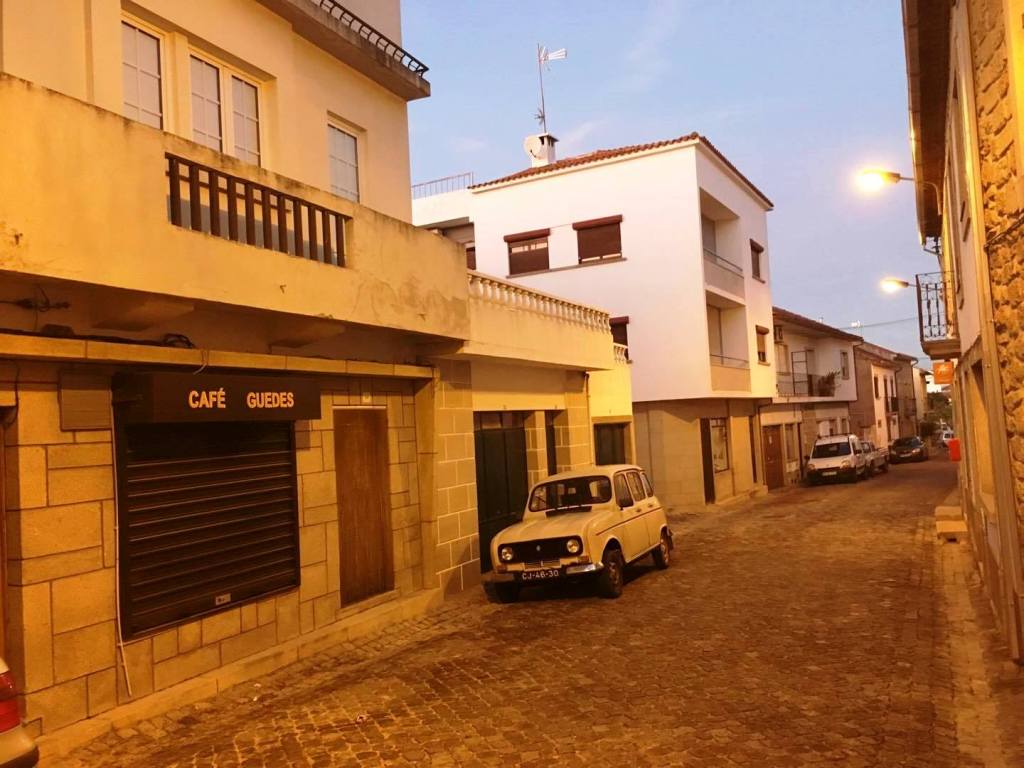
With some 150m2 spread among three floors separated by a stairwell containing 37 steps, our first Portuguese purchase is in Lousa, a village of some 600 souls adjoined by its partnered “parish” (freguesía), within 20 kilometers of the big city: Castelo Branco. Sited on Rua Nossa Senhora Dos Altos Céus – the main street in town – it’s always amazing how vehicles large and small move in both directions, traversing such narrow confines, with cars and trucks parked on one side.

One of our first neighbors told me (in Portuguese) that people in the village wondered what would possess two American men to move to such a “nondescript” yet typical village in the central core of the country. I tried to explain to her that, perhaps it was the increasingly dark Americanisms devouring the USA that motivated us to move to a place with a slower pace, peaceful coexistence, and tangible tranquility.

Lousa has all the charm one could want in a homestead. Its cobblestone streets, standard blueprint church (igreja matriz) with bells that signal appointed times of our rotes and rituals exude an aura that is truly Portugal. Like every village, it reveres several saints, although paying homage to Nossa Senhora Dos Altos Céus during an annual, four-day festival.

Bespoken are the health care center, primary school, multi-sport playground, senior day care facility, “casa de cultura,” and meeting space for the “junta de freguesía.”

Not quite so obvious, however, are Lousa’s charm and character … a place where everyone knows who you are, if not your name. What the town is missing, however, are retail shops and eateries, whether snack bar or restaurant. With two, sometimes three, cafés and two facing mini-markets along the main street, all of the action passes by our house (which, earlier, had housed the village’s most popular café—where lottery tickets were sold).

Our third-floor bedroom has four large windows overlooking the street; so, everything from funeral processions to passing sheep and achingly old diesel engines crunching up the cobbled stones looms loud, up close and (a bit too) personal.

Remember those 37 steps mentioned at the top of this tale? With three dogs but without a backyard, they need to be four times every day (eight separate outings, as only two can be walked at a time). Going up and down that staircase certainly takes a physical toll!  

We do love the property, though.

The former café with its two separate restrooms (the men’s has a working urinal!) has been our gathering space, where we welcome friends and neighbors for food and drink. Behind it is a small patio, off of which is our kitchen and family room combination, where we cook, eat, and relax with our critters and Netflix. Above the kitchen, in that separate wing, is a secluded guest suite with private bathroom. Also on this first floor (as numbered in Portugal and Spain), albeit in the main part of the house, are our offices and an expansive living room. Up 18 steps from the landing is our own bedroom suite featuring an adjoining breakfast room and sleeping areas for the dogs, the master bedroom, walk-in closet, and another full bath. There’s quite a large, covered terrace comprising space for doing laundry, grilling, eating, and socializing. Atop the building is an attic with concrete floor under a new, insulated roof providing plenty of storage space.

All things considered – purchase price; major repairs to walls and floors; a new roof; upgrading the electricity throughout; new appliances: water heaters, four inverter aircon units, washer, dryer, three refrigerators, electric range and oven; and new cabinetry built to spec in the upper and lower kitchens – we spent about US $70,000 (slightly more than €50,000 at the current exchange rate).  Furniture and furnishings (artwork!) were shipped over from the USA.

We had thought about selling this property, as walking the dogs during the incredibly hot and nasty rainy seasons is a royal pain, encumbered by all those stairs. But how could we leave a place that had adopted us, where we’re integral strands in the fabric of the gentry, surrounded by immigrant friends from nearby towns and villages? We couldn’t.

Until we had no choice.

Our other Portuguese property is located in what’s known as the “high” Alentejo: Vila Boim is a village of 1,200, five kilometers outside of Elvas – a UNESCO World Heritage site – which, in turn, is just about 10 kilometers from Badajoz, Spain. Around the corner and up the street are several snack bars, cafés, and an upscale restaurant, along with a bank, pharmacy, and mini-market. Our streets here are paved in asphalt, rather than cobble-stoned.

If our former place in Lousa is spacious and plentiful, this property is cute and cozy. The bungalow style, single-story structure has one large bedroom, one full bath, a spacious dining room, intimate living room, brand new galley-style kitchen, and an office … all under roof housed in a tidy 55m2. The bonus “room” is a small, bricked backyard (quintal), where our dogs can take care of their business, and a substantial storage shed. My own, special bonus is a dishwasher in the kitchen (although Russ prefers the side-by-side “American” style refrigerator and freezer). From soup to nuts, we purchased and primed this property for carefree, full-time living at an approximate cost of US $55,000 (€46,500).

Even as novice language learners, we’re aware of slight differences in Portuguese pronunciation and accents between the two villages separated by less than 200 kilometers. In both locations we have guardian angels who watch out for our welfare and help us to better understand the Portuguese people, their language and culture. Similarly, opening our front doors to knocks or the bell, we find neighbors bringing us food from their farms. In return, we take home-made meals to them: classic American cuisine: mac and cheese, franks and beans, meatloaf, cheesecakes, our own ”piri-piri” meatballs and spaghetti.

Unlike our house in Lousa, the layout and build of the Vila Boim bungalow place the bedroom squarely in the middle of the house—cutting down, substantially, on street noise. Exterior walls are at least a meter thick, providing natural insulation and keeping our heating and cooling bills to a minimum. Due to its size, it’s easier to clean, maintain, and use the premises in full than our Lousa lodging.

Besides being next-door to Badajoz, a busy and bustling metropolis, two hours were shaved off our trip each way back and forth to Spain by leaving from our Vila Boim property, rather than the one in Lousa.

(A separate post on  pastorbrucesblog.com deals with our operating costs, living expenses, and monthly budget for all three properties.)

If you’ve been adding up the numbers given here, you’ll notice that we spent $125,000 of the $135,000 received from the sale of our house in Sturgeon Bay, Wisconsin. What did we do with the remaining $10,000? Half we put into savings. With the rest, we added a “fitted” kitchen and replaced our leaky, cast iron bathtub with a walk-in shower at our Olvera home.

But that is another story!

Bruce is publisher and creative director of Portugal Living Magazine, a free digital quarterly that covers the country top to bottom, east to west, inside and out. Read our current issue and subscribe at now cost: http://portugallivingmagazine.com/our-current-issue Visit the magazine’s popular Facebook Page (www.facebook.com/PortugalLivingMagazine) for dozens of daily posts and comments.

Shared here are personal observations, experiences, and happenstance that actually occurred to us as we moved from the USA to begin a new life in Portugal and Spain. Collected and compiled in EXPAT: Leaving the USA for Good, the book is available in hardcover, paperback, and eBook editions from Amazon and most online booksellers.

Processing…
Success! You're on the list.

Pissed Off!

We’re pissed off …

… because we are tired of stepping in dog poop on the cobble stones of our streets.

Today, one dog – wearing a collar but no leash attached to a person – followed us as I walked our dog around town. Ours had a collar, along with a leash held in my hand. In my pocket was a stash of poopy bags. Bending over to scoop up my dog’s “litter,” the other dog lifted his leg against the wall in front of us. Immediately, a window opened above and a woman began berating me to clean up after my dogs.

Waving the plastic poopy bag in her direction and explaining that only one of the dogs was mine, “I did!” I insisted. “It’s this other dog who is making the mess … following us and not leaving us alone.

”She slammed the window.

This is the time of year that families and friends visit our village as it swelters in heat and humidity. All those vacated houses shut up for much of the year are flung open again, filled with lives producing lots of litter.

Accompanying the adults are their children and pets.

Suddenly, it’s not just one or two stray dogs meandering and messing on our streets—at times it’s nearly a dozen. Because people open the front doors to let their dogs out and about town to dispense their “necessities.”

I don’t doubt that they love them, but being responsible and respectful of others are other matters entirely … regardless of culture of local tradition.

“We are planning on spending this summer in Portugal and taking our dog,” someone recently remarked online. “He’s not very sociable and doesn’t tolerate other dogs. Everything’s fine if we walk on the street and the other dog is on a leash, too; but things get nasty if the other dog is roaming free with no leash–our dog takes it as a potential attack and goes crazy, barking and pulling unbelievably!”

So, it’s not just a matter of health and hygiene for dogs to be restrained on leashes, but the safety of others as well.

I know it is wrong for foreigners like us to move into another country, imposing our own sets of values and assessing appropriate behavior. But the laws of Portugal are being broken.

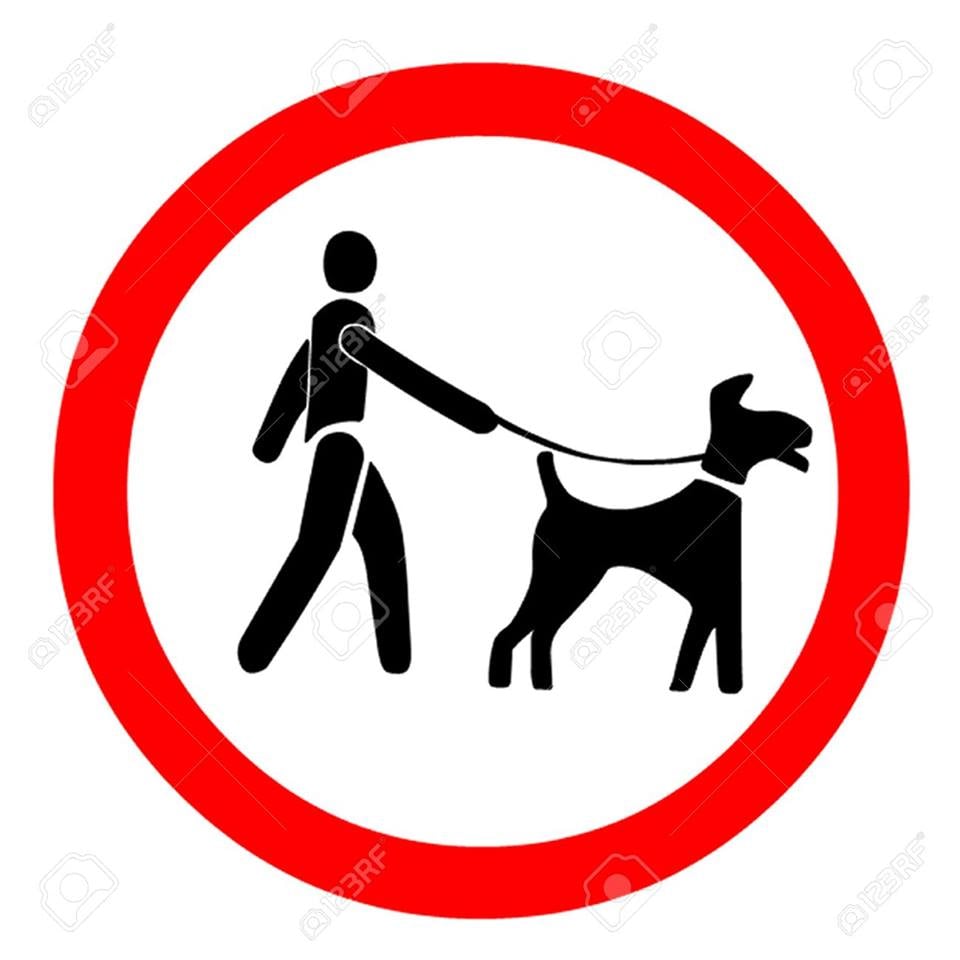
Recent legislation requires people to be responsible for their pets. According to current law, it is mandatory to put a leash on pets in public places—like our village streets.

Moreover, every cat and dog “walking” in public places must wear a collar or harness with the name, address, and/or telephone number of its owner clearly inscribed.

Dogs and cats that haven’t been neutered, but allowed to roam loosely on the streets will follow their natural instincts and biology. Which means that more unwanted puppies and kittens will either be abandoned to the streets or dealt with fatefully in a way that makes me cringe and breaks my heart … even though (some) people believe it’s more merciful than condemning them to a life on the street.

Street animals will always be with us. It’s just the way things are. My comments here aren’t about these destitute critters, but directed to people with pets: Not only are they part of your family, but you have responsibilities – legal obligations — to your dogs and cats, as well as to others who live in the community.

Noise is one of the biggest problems between dogs and the people living around them. You’re responsible for ensuring they don’t disturb your neighbors.

Anyone experiencing problems can contact the police (GNR or PSP) and request that they stop the source of the noise. If you don’t, they can alert the council … which will issue a minimum fine of 500 euros! (You’ll also be fined if driving with dogs or cats in the car that aren’t tethered to the seat belt clasps or in carrying crates or “containers.”)

In addition to walking with pets on leashes in public places (and, presumably, picking up after them), and keeping them from being noisy neighbors, Portuguese law requires that you register your pet and have it licensed at the town hall (Junta de Freguesia) where you and the dog (or cat) live.

You’ll need a health report for the animal (with an up-to-date rabies vaccination) and documentation that an electronic identification chip has been implanted by a veterinarian in the left lateral side of the neck. You then have 30 days to register and license your pets(s) … and the registration must be renewed annually.

(Leave it to Portugal to identify dogs and cats as belonging to specific categories: Category A – Pet dog; B – Dogs for your economic livelihood; C – Dogs for military purposes; D – Dogs for scientific research; E – Hunting dogs; F – Guide dogs; G – Potentially dangerous dogs; H – Dangerous dogs; and I – Cats.Category G includes: Rottweilers, Brazilian Fila Dogs, Argentine Dogo, Pitt Bull Terriers, American Staffordshire Terriers, Staffordshire Bull Terriers, and Tosa Inu.)

People, please respect the rights of others by overseeing your pets. And if you’re planning to move to Portugal (or Spain, which imposes similar requirements and restrictions on pets and their people), be aware of what will be expected of you … and your furry family.

# # # # # # # # # # # # # # #

Disclaimer: I share these stories of our experiences not to complain or seek sympathy, but because we are North Americans acculturating to another country’s norms and expectations. Information in posts such as this aren’t found in tourist or relocation guides … nor asked about and answered in most Facebook groups. Hopefully, some will learn from my anecdotes and be better prepared for the grit and grist, the grain of living abroad. We love Portugal for what it is, not what it isn’t, and have no intention of returning to the USA.

Bruce is publisher and creative director of Portugal Living Magazine. Read the current online issue and subscribe to the magazine at no cost whatsoever: http://portugallivingmagazine.com/our-current-issue

Processing…
Success! You're on the list.