Who Knew?

Portugal and Spain, we believe, offer something for every person, family, lifestyle, orientation, age group, budget, and taste.

There are those who choose to cultivate culture, teas, restaurants, and museum outings while living in major cities or their suburbs nearby … while others have come here to dig in the dirt, retrenching their roots.

Whether – like Eva Gabor in Green Acres – you prefer big city bustle, or an area with expats and river beaches, historic surroundings, life in a typical village, or living on lots of land, they’re all here.

But along with “location, location, location,” comes the price …

… particularly in a world that is discovering Portugal’s beauty and bounty, gobbling up properties primarily for investment purposes.

Not everyone buying, of course, is affluent or big bucks investors. Plenty of people are attracted to Iberia because of its surplus of “habitable” properties in the €40K-€75K price range. You’ll find plenty of them in Portugal’s central regions and along its Spanish border.

Spanish and Portuguese people refer to their age-old properties on the market for €25K-€40K as “antigas”; but Americans partial to this style of antiquities consider them “primitives.”

For even less than €25K, you can find and rebuild a “ruina.” or even a “quinta” (farm).

But not near Lisbon, Algarve, or Porto. Or Coimbra, for that matter.

One reason the visa application process can be so exasperating is the need to find suitable housing. That’s the beginning of your challenges. Once you arrive and set about daily living with all of its obligations and commitments, you begin to realize the vital importance of a resourceful online community such as this one. After all, into each life, some rain will fall.

For us, the rains related to our location.

Who knew about home inspections, often referred to as “surveys?” Not us. Had we been cautioned to arrange for a professional appraisal of our property, we surely would have done so. Property inspections, surveys, and appraisals may be commonplace in more upscale markets; but in Castelo Branco and Elvas, you’d probably end up relying on your local handyman or a neighbor’s friend (who works in construction) for an assessment. Again, that’s if you even knew to ask for one.

Then, there’s something most people do ask about: health care!

Just because you purchase the best insurance available, doesn’t mean you’ll necessarily have access to quality health care when and where you need it. Your insurance coverage is only as good as the physicians in its local network. Despite being metropolitan areas, few (if any) English-speaking doctors practice in Castelo Branco or Elvas … let alone Olvera, Spain. So, to discuss what’s hurting you with words that are understood, forget about family doctors, general practitioners, and internal medicine specialists.

They’re few and far between in the heart of these cities.

Our health insurance company sent us a list of thirteen providers. We discovered that three no longer are here … three are dentists, not doctors … four are laboratories, not doctors … and one single doctor is listed four separate times: as a generalist, family physician, internal medicine specialist, and gastroenterologist. He’s the one we saw … but he was often inaccessible: never available when we needed him, his staff referring us, instead, to the public hospital’s emergency room.

(Or, we could wait, with an appointment to see him eight days later.)

On another front, who knew what role an attorney should play in one’s move from the USA to Portugal? Along with all the legal work involved in your property’s transfer, should she serve as a surrogate, obtaining your NIF? Be there with you to open a bank account … arrange to have the utilities put in your name … and help you decide which level or type of service will best serve your needs and purposes? Do you expect her to order, organize, and oversee property inspections for you? Or, for that matter, defend you and your interests if what you get isn’t what you’d seen and agreed to in the contract?

Definitely, these are questions that require counsel and consultation.

Those with more disposable income (than ours, at least) may seek to benefit from customized services that handle everything for them. Good for them! If we had had the wherewithal, we would have taken advantage of such turnkey services, too (although I’m reminded that responsible people often urge us to do whatever we can personally, employing the “professionals” only when categorically necessary).

There are limitations to living in a “small” town, village, or area—even one as big as Castelo Branco (Lousa), Elvas (Vila Boim), and Olvera (Spain).

All things considered, there’s good news and bad.

The cost of living here is lower here. There’s less of a wait, swifter service, friendlier bureaucrats, and quicker turnaround times for all those vital services handled by SEF, IMT, and Finanças in the smaller towns and cities within the interior regions of Spain and Portugal.

Along with advocates, specialists, and property inspectors, the expert medical care we couldn’t find in our immediately vicinity is available just 30 minutes or so away.

The bad news is that the quantity and quality of professional services are still sadly lacking. But, who’s going to tell you that before buying?

Through my personal “stories,” I have tried to recount what we experienced in our move from the USA and transition to life here in Portugal and Spain. Some, more experienced and wiser at international maneuvers such as ours, may feel as though I’ve been overly dramatic, too often prone (perhaps) to problems, hardships, and misfortunes.

Maybe so. We’ve had our measure of dangling dilemmas.

What I share here with you isn’t published as “tales of woe,” but recaps of experiences that really happened to us.

Sometimes, because we didn’t know how to navigate, manipulate, and/or play the “system” … and other times, simply because of bad luck. Or, because where we live, options – even foods! –elsewhere available, just aren’t here (yet).

I’m not complaining or questioning our decision to buy in Castelo Branco or Elvas, with their easier access to our home away from home in Spain. We’ve made friends with many other expats and local Portuguese here.

No … it’s more of that wistful, yearning emotion the Portuguese know so well as “saudade.”

All those “who knew” questions? More important is learning how to anticipate and resolve these matters in advance. How do we effectively prepare for life’s (trivial) pursuits in a welcoming but “foreign” land?

It boils down to knowing what we don’t know – but need to – in terms of unfounded or unrealistic expectations and the real facts of life here. For better and/or worse, you then deal with the outcomes.

Especially if you‘re charmed where you live, despite its shortcomings.

That’s one of the beauties and benefits of Facebook communities like this one. Yes, with so many “newcomers,” it’s sometimes frustrating for long-timers to see the same posts, comments, questions and answers published over and again.

By sharing this series of anecdotes, we hope that you can avoid some of the pitfalls which have tripped and frustrated us. We’re not seeking sympathy (empathy, perhaps). But I do hope to avoid snarky smugness from those lurking, eager to snarl and pounce.

Shared here are personal observations, experiences, and happenstance that actually occurred to us as we moved from the USA to begin a new life in Portugal and Spain. Collected and compiled in EXPAT: Leaving the USA for Good, the book is available in hardcover, paperback, and eBook editions from Amazon and most online booksellers.

Processing…
Success! You're on the list.

More or Less?

Among our daily devotions to a lifestyle we’d all but forgotten back in the USA are a number of people-oriented practices in Portugal and Spain that underscore our different orientations and lifestyles, as well as how we pack and parcel our time.

Here are a few observations based on life in our Portuguese village and small Spanish town:

 Food isn’t fast or full of preservatives, but enjoyed slowly, sans extra embellishments or a plethora of added attractions. If and when a bit more richness is desired, mayonnaise – yes, even on hamburgers and fries! – or lemon juice are among the condiments of choice, although ketchup and mustard are always available. And, in Portugal, Piri Piri!

 Fish and seafood (like shrimp!) are served intact with their shells, heads, eyes, and legs … to be removed by us at the table. Bones, fat, and gristle aren’t surgically extracted for eating convenience or epicurean pleasure. We deal with them.

 “Juice” often comes in little cardboard containers found on the store’s shelves, not refrigerated sections. After opening, it’s then kept cold in the fridge.

 Coffee is much bolder here … “half-and-half” doesn’t flavor or temper it … café con leche may be translated as “coffee with milk,” but not the way we Americans think of coffee with cream or half+half… and black coffee is “café sólo” (coffee only), not “café negro” (coffee colored black).

 Beer or wine can be cheaper than water, while so-called “soft drinks” (colas, etc.) are the most expensive beverages.

 Before Covid-19, “take-out” was an attribute few Portuguese and Spanish could fathom. Either one enjoys a meal out somewhere … or you stay at home, cooking and eating. Sometimes, with friends!

 We walk more than drive, deriving the benefits of exercise while scoping our surroundings.

 Traffic signals (lights) in towns and villages are few and far between–roundabouts determine our directions and destinations. But when entering a town on its main thoroughfare, respect the “Velocidad Controlada” signs: Go just a smidgen faster than the speed limit and you’ll trigger the traffic light to turn from green to red. You’d best stop!

 Plumbing, though effective and efficient, is rather wimpy by American standards.

 Water “softeners” and such contrivances are foreign extravagances. Similarly, there’s hardly any HVAC – central heating and air conditioning – here in the villages and small towns. Space heaters and room air conditioners (inverters) do the job when and where needed.

 Windows without screens remain wide open—despite the flies, bees, and other flying insects that invade our sanctuaries … beaded curtains allow air to flow in through the doorways.

 Currency, the electric kind, comes in just one potency (220 v), regardless of what it’s powering.

 Corner grocery stores and food “stands” still do exist … and are essential. They’re where many people shop daily for their comestibles, rather than trekking to the big box stores in industrial malls and shopping centers.

 People, not machines, do the work and heavy lifting.

For some, these observations may seem silly and semantic; others, however, will see how our own lives, perhaps, can be a bit sterile and antiseptic. Even a week spent in a sedate Spanish town or pure Portuguese village reminds us that it’s not just about a slower and more sedate approach to life, but sometimes a simpler yet more sensible one as well.

Shared here are personal observations, experiences, and happenstance that actually occurred to us as we moved from the USA to begin a new life in Portugal and Spain. Collected and compiled in EXPAT: Leaving the USA for Good, the book is available in hardcover, paperback, and eBook editions from Amazon and most online booksellers.

Processing…
Success! You're on the list.

“Partners”

“The people of Portugal don’t judge a person’s sexual orientation but, rather, his or her character,” a wise woman said to me.

As hate crimes continue to escalate in the USA and same-sex marriage, though now the law of the land there, faces renewed opposition and denials by government representatives, I am reminded of yet another reason why we love Portugal and Spain.

Sexual orientation and gender identity don’t appear to be issues here.

How ironic that two of the most “Catholic” countries in the world – Portugal and Spain – have been in the forefront of recognizing both civil and human rights, regardless of the church’s official teaching and position.

In fact, the entire nomenclature – the words we use to identify and call this or that – takes a bit getting used to and understanding on this side of the pond.

Take “partner,” for instance. Despite its business associations and financial connections, it’s my own preferred word to describe a relationship in which we share the substance of our lives together.

Evidently, others feel the same way, too.

We’ve met more married couples here who refer to their spouses as “partners,” rather than husband or wife. The same goes for committed couples who, but for common law, aren’t technically married.

And, although I advocate gender-neutral vocabulary whenever possible (and practical), “spouse” simply doesn’t convey that warm-and-fuzzy feeling as does “partner” (or husband and wife, for that matter).

“Mate” can also be gender-neutral, but no longer implies what it did. Once upon a time – for many Americans, at least – one’s mate referred to one of a pair. Like socks or matching earrings. A sexual connection was often implied or inferred when referring to someone as one’s mate. Not anymore: Now, especially among Brits, “mate” is more commonly used as a familiar form of address—as in “friend” or “buddy.”

Attraction, like emotion, is legitimate but not logical … less a product of the mind than what abides in our hormones and hearts. So, whatever term of endearment – partner, spouse, mate, husband, wife – you’re most comfortable with when referring to that special companion in your life is yours to choose and use.

Yet, how does that play out among the Spanish and Portuguese, who refer to their intimate relationships as “esposo” and “esposa” (husband and wife, in both languages), but “marido” and “mujer” (“mulher” in Portuguese)?

The man is a husband in both countries; but the wife is referred to as “my woman.” Both countries are rather progressive, yet with remnants of provincial sexism and property ownership.

What’s more, do the same standards hold true for the Portuguese people and Spaniards today? Look around: Depending on where you live, the answers may vary. Or maybe they won’t.

You’ll need to get to know your neighbors better.

Which is how it should be, anyway.

But don’t interfere!

# # # # # # # # # # # # # # #

Shared here are personal observations, experiences, and happenstance that actually occurred to us as we moved from the USA to begin a new life in Portugal and Spain. Collected and compiled in EXPAT: Leaving the USA for Good, the book is available in hardcover, paperback, and eBook editions from Amazon and most online booksellers.

Processing…
Success! You're on the list.

The Way We Were

“Mem’ries light the corners of my mind

Misty water-colored mem’ries of the way we were …”

I’m beyond 70-years-old now. Not young; truly a “senior” citizen! At best, my body is 70% of what it was and I’m functioning with about 70% of that “gray matter” cooperating consistently. But age does give one perspective, a remembrance of things past … when disagreements were resolved diplomatically and debts of all kinds were repaid with dignity.

Honestly …

I do miss my homeland. At least, how the USA used to be.

“Scattered pictures of the smiles we left behind

Smiles we gave to one another for the way we were …”

Wherever we lived – in Jacksonville (Duval County), Florida, the country’s most expansive geographical area … Racine and Sturgeon Bay, Wisconsin, where the bitter-sweet cold weather warmed the hearts of friendships kindled and kept glowing … or Staunton, Virginia, verily a Queen City – we were family and friends, neighbors and community.

Sadly, that sense of “community” has changed: People we’d considered friends, now disenfranchise us because trust has become a matter of convenience and compromise. That’s what hurts most when reminiscing about our lives in the United States of America: It’s been broken and divided now.

“Can it be that it was all so simple then

Or has time rewritten every line…”

Cutting the umbilical cord with our homeland, we’re grateful to the two countries that welcomed and adopted us—Portugal and Spain.

In Portugal, we reclaimed our souls; Spain enlivens our spirits.

We’ve learned that less can be more and more can be less—especially when bundling up and wearing layers in the watery cold that pervades those thick (but uninsulated) concrete walls of our village house. So, we’re miserly about the rooms where the heating or cooling is turned on … and are adjusting to leaving spaces with mechanically controlled climates, passing through those where the temperature soars and/or plunges. Electricity adds up quickly and the bills can be mind-boggling. You learn to compromise and do lots with less. Similarly, with gasoline costing almost €1.50 per liter, we pay about six euros (almost U.S. $8.00) for a gallon here. Apart from thinking twice about whether a drive is “necessary” or recreational, we’ve learned that walking really is the most convenient way to get around our village. For those longer trips into the city, there’s the bus (two blocks away) which comes and goes throughout the day. Roundtrip transport: six euros or so.

That two-hour “lunch” between 1:00 and 3:00 in Portugal? It’s to relax and enjoy. Spain’s “siesta” is even longer … but you get used to stores closing and reopening again later, between 5:00 and 8:00 daily, and adjust your routine accordingly.

Everyone benefits!

What you see is what you get in Portuguese villages and Spanish towns. What you don’t get is pretension and attitude. There’s little or no need to keep up with the Joãs or Juanas.

The good things in life – bread, soup, wine – are readily available and absurdly cheap … but the best things – crystal blue skies, accessible health care, the inherent decency of people, church bells telling times rather than us running to stop watches – are priceless.

“So it’s the laughter we will remember

Whenever we remember the way we were.”

Shared here are personal observations, experiences, and happenstance that actually occurred to us as we moved from the USA to begin a new life in Portugal and Spain. Collected and compiled in EXPAT: Leaving the USA for Good, the book is available in hardcover, paperback, and eBook editions from Amazon and most online booksellers.

Processing…
Success! You're on the list.

Househunters International: Portugal

“You guys really should consider Portugal,” our neighbors Linda and Russ in Sturgeon Bay, Wisconsin, urged us. “We love it there. We own some property just outside a small town, Alpedrinha, and we’ll be moving there – for good! – in February, next year.”

It all looks so simple on HGTV—buying a house in another country.

Trust me: it isn’t!

Sure, it’s fun to see what’s for sale elsewhere and explore international properties online and via the telly. But putting your “boots on the ground” and confirming that what you see represented in all those come-hither Internet snapshots is actually what you’ll be getting can be a real eye-opener. The fun stops and the headaches begin once you make an offer … and it’s accepted.

Why? Take closing costs, for instance.

Apart from any deposit or down payment, in Spain the transaction can cost you about 20% above and beyond the purchase price to cover transfer taxes, lawyer and Notario charges, and an assortment of administrative fees. So, a relatively inexpensive property purchased for 50,000 Euros,would cost about another 10K in € to legally own it.

Still relatively inexpensive, all things considered.

Friends told us that “settlement” costs in Portugal are much lower … and, indeed, they are!

Take purchase and transfer taxes on a property: In Spain, one now pays 8% of the property’s value (its selling price) in taxes. While Portugal has several taxes that can accompany a property’s purchase, if you’re married and the place is your first and primary residence in Portugal, you’ll pay only 0.8% in taxes on the purchase.

That’s ten times the savings (vs. Spain’s), just in taxes!

And Portugal grants most newcomer residents the first three years of ownership tax-free. If you fill out the forms— correctly and on time.

The lower costs to purchase property is one benefit of buying Portugal. The friendly, simpatico, but saudade Portuguese people is another. The history, the magnificent topography, the exquisite monuments, memorials, castles, and cobble stone streets of intimate towns and villages are yet others. Not only is Portugal’s cost of living lower than that in many other countries, but its quality of life is high. Plus, Portugal consistently ranks among the five most peaceful countries in the world, as well as one of the most welcoming.

All told, we made several trips to look at and evaluate properties in Portugal. We stayed in cozy little hotels and inns, wandering around through their towns and cities. We attended seminars for people considering a move to Portugal or already living there. We narrowed our choices and looked at houses in in the Coimbra and Castelo Branco areas.

We found what we were looking for in Lousa – not to be confused with Lousã! – a small village about 20 minutes outside the city of Castelo Branco, with cobble stone streets and a church whose bells chimed as a heart beat, punctuating the daily rhythm of life there.

Because of its proximity to Spain, the privacy of its separate guest quarters with en suite, and the potential of opening some sort of eatery in the property’s former cafe, we purchased the property shown to us by a property agent using the flashlight of his phone. The next day, when we returned to “tour” the town, we met the owner: a lovely, little old lady who communicated with us in a polyglot of Portuguese, Spanish, and (especially) French.

Despite her honesty and answers to our questions, we’ve learned some invaluable lessons about buying property in Portugal. First and foremost, always have your property inspected and its condition evaluated by a qualified professional. If you’ve seen the place online first and gotten excited about it, remember, too, that pictures and descriptions supplied by property agents are a classic case of “what you see isn’t (necessarily) what you get!”.

So, get a second opinion.

Thanks to our lawyer, Liliana Solipa, who represented us through our power of attorney, we were assigned fiscal numbers (NIFs), the property was purchased and put in our names, a bank account opened, the water and electricity turned on again.

That’s when we decided to take advantage of a special sale offered by the airlines and spend a November week in our “new” Portugal home.

With keys in hand and hand on the front door handle, we quickly discovered how much work the place really needed after having been vacant and closed up for more than five years.

OMG!

I’ll save that for another story.

Shared here are personal observations, experiences, and happenstance that actually occurred to us as we moved from the USA to begin a new life in Portugal and Spain. Collected and compiled in EXPAT: Leaving the USA for Good, the book is available in hardcover, paperback, and eBook editions from Amazon and most online booksellers.
Processing…
Success! You're on the list.

Murphy and Me

“Anything that can go wrong, will go wrong.”

That’s Murphy’s Law.

Named after Capt. Edward A. Murphy, an engineer working on a project designed to see how much sudden deceleration a person can stand in a crash, Murphy’s Law and its corollaries explain why sh*t happens and causes the angst in our lives.

Like this, for example:

We purchased a 2012 Ford S-Max from a dealer’s lot in Cascais (two hours from where we live in Portugal) with the standard, required, one-year guarantee.

Soon, both the “Engine Malfunction” and “Traction Control” warning lights came on, as the minivan lost almost all power.

Murphy’s Corollary #1: “Whenever you set out to do something, something else must be done first.”

We pulled off to the side and searched the manual downloaded earlier to our mobile (after discovering the printed manual in the glove box was purely in Portuguese. Even the diagrams!). In English, we read that the instrument cluster warning symbols alerted us to “stop driving and seek immediate assistance from a properly trained technician.”

Immediately, we eased the car into a nearby underground parking area and left it there, locked.

Friends drove us home.

Murphy’s Corollary #2: “Nothing is as easy as it looks.”

Not knowing anything about the technicalities and legalities that govern guarantees provided by (commercial) dealers selling used vehicles here in Portugal, we went online and Googled the Internet.

It didn’t take long to discover some interesting information on an official European Union “Your Europe” website page. The link is below.

“Q: If the product is defective, who is responsible for putting things right? A: The seller, even for purchases made on an internet platform.”

Yeah, right.

Murphy’s Corollary #3: “Everything takes longer than you think.”

It was Saturday. Both the auto dealership and our insurance agency were closed. Wouldn’t the weekend be when people had time to go shopping for cars and need insurance if they bought one?

Weird, huh? Welcome to Portugal!

We waited until Monday, then contacted the dealership in Cascais … our insurance agent … a towing company … the local Ford dealership to alert them we’d be bringing the vehicle to them for diagnosis … the area’s only rental car agency … and a taxi company, to pick us up and drive us around to all these places in Castelo Branco.

Murphy’s Corollary #4: “If there is a possibility of several things going wrong, the one that will cause the most damage will be the one to go wrong.”

Later that day, the Ford technician contacted us with disturbing news: All four fuel injectors need to be replaced, at a cost of €1,500-€2,000. He attached an analysis and cost estimate to the email.

Murphy’s Corollary #5: “Left to themselves, things tend to go from bad to worse.”

We sent the report to the dealer who sold us and guaranteed the S-Max. We waited and waited for a reply. The dealer insisted that the repairs be made in Cascais … and that we arrange to have the vehicle towed there.

But the insurance company balked at towing it such a great distance.

Meanwhile, from the Ford dealership, we learned of other problems: When the mechanic opened the hood, he poked around and said to us, “The motor has rust. This is not good.” He could offer no assurance that we wouldn’t experience even more problems down the road.

Murphy’s Corollary #6: “If everything seems to be going well, you have obviously overlooked something.”

We contacted Cascais again, reviewing our experiences with the dealer and vehicle since purchasing it. Among them:

The day after we got it, the air conditioner wouldn’t work. Dealer said it was working when he drove the car to us. But a mechanic found only 10% of the “gas” necessary for the air conditioner to function. We paid €100 for the air conditioning system to be filled with gas and recharged.

Murphy’s Corollary #7: “Nature always sides with the hidden flaw.”

We believe we’d been sold a defective vehicle.

Deliberately, perhaps.

After the sale, the dealer certainly wasn’t cooperative. In fact, we hadn’t even received our legal ownership papers for the S-Max!

If there are lessons to be learned here, I’d caution: (1) Be very careful when purchasing a car if the dealer isn’t a reputable, full-service dealership; (2) Never purchase a used vehicle until it’s been inspected by a qualified, objective mechanic; and (3) Buy a vehicle as close to home as possible.

We certainly appreciate all the ideas, input, opinions, and feedback received from concerned folks via Facebook.

So, add this corollary to Murphy’s law: “Post a problem on Facebook and people will *Like* something that’s terrible, comment with advice and admonishments, attribute any mistakes in what they’ve written to auto-correct, and insist that you’ve written too much.”

“Much ado about nothing?”

That’s William Shakespeare, not Murphy.

But between Murphy and me, the Bard never purchased a used car in Portugal!

europa.eu/youreurope/citizens/consumers/shopping/guarantees-returns/portugal/index_en.htm?fbclid=IwAR3whE93SFTqJLv1CRJpHkNMWuiGf–WBhuoJgPkp0qeVupNK3zXayUYz_Y

From EXPAT: Leaving the USA for Good. Available in hardcover, paperback, and ebook formats, please order your copies today from Amazon … or your preferred online bookseller.

Processing…
Success! You're on the list.

Pets on Planes

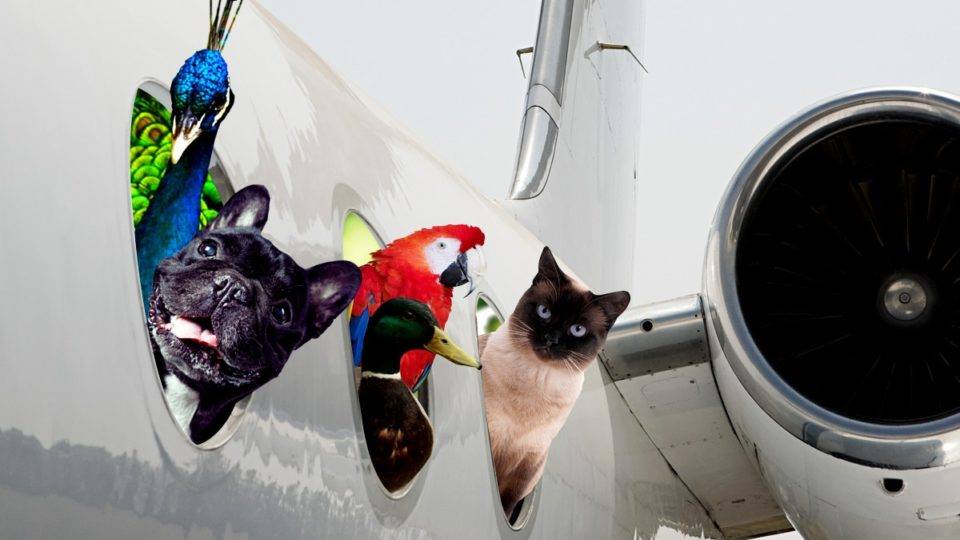
“If they can’t come with us, we’re not going,” my partner and I agreed: If our three Miniature Schnauzers – our children, now that our biological one was grown – couldn’t travel with us and be allowed entry into the EU, we wouldn’t follow our hearts and minds to Portugal and Spain … much as we were distraught and disillusioned with what has been happening in the United States.

That meant not only would we expect our dogs to fly in the cabin with us – not the cargo hold – for all three flights from Green Bay, Wisconsin, to Madrid, Spain … but it also presumed that they would be allowed to pass through Immigration in Spain and then into Portugal without any beastly requirements.

Bringing our furry family members with us would become the most complex and frustrating part of making a new home on the other side of the big pond.

The “kids,” as we refer to them, had lived with us in Florida, Wisconsin, and Virginia. But whenever we traveled to our vacation bolt in southern Spain, we’d leave them at home with carefully vetted pet-sitters.

Now, our future depended on them being there with us.

Fortunately, due to our own personal maladies, the dogs were qualified as “service” animals with the airlines. Unfortunately, there are three of them and only two of us.

American Airlines was the only carrier that would allow two people to bring three designated service dogs aboard … and that was only after (working with our travel agent) we completed their forms, had medical testimonies vouchsafed by our doctors and submitted to the airlines, and were interrogated in telephone interviews by airline officials.

We qualified and our dogs were approved to travel with us!

But that just covered their transportation. Getting them into the European Union was another matter that would require entirely different documents and protocols.

They’re called “pet passports” in the EU. But they’re issued only once you’re inside the EU. Emigrating from the United States, one needs to complete a reasonable facsimile – an official EU Health Certificate – specific to the language and place of entry. For us, that was Spanish, as our entry to the EU would be through Madrid’s Barajas airport.

The eight-page bilingual document, requiring a separate 22-page set of instructions for completing it, attests that each of the named and described dogs has received a state-of-the-art microchip (manufacturer’s name and number identified) followed by a new rabies shot (with batch number and effective dates identified). It had to be filled out by a USDA-accredited veterinarian and then certified by the appropriate United States Department of Agriculture office in our state.

Was our vet USDA-accredited?

“Darned if I know,” Dr. Randy laughed. “I’m certified by the American Veterinary Association and by the Wisconsin Veterinary Association. Does that count?”

Nope. He had to be USDA-accredited.

Try finding the USDA office in your state specifically charged with handling documentation for pets traveling abroad. It took us two weeks through a variety of sources and referrals to find that USDA office in Madison, Wisconsin.

The amiable USDA rep who helped us deal with the process confirmed that Dr. Randy was, in fact, USDA-accredited and advised us to have him inject the microchips and rabies shots between three and four weeks before we traveled, and to go back and have him sign all the paperwork ten days before leaving. We were then to send the docs via overnight mail from our city to the USDA’s office in Madison ($50) and to enclose a postage-paid return overnight envelope (another $50) so that, theoretically, we’d have them in hand a week before our travel. Apart from the vet costs, we’d need to pay the USDA’s $38 certification fee.

Signed, sealed, and delivered!

Our dogs were ready to enter the European Union, traveling with us as passengers aboard our American Airlines flights.


We arrived early the next morning in Madrid, not knowing who – or where – we’d be asked to show the dogs’ docs. Not the customs agent who stamped our passports. Nor the immigration agent whose station we needed to pass through after retrieving our luggage.

Just as we were about to leave the airport building for the rental car area, a man dashed out of an adjoining vestibule. “The paperwork, please, for the dogs,” he asked in Spanish.

We handed over our new, eight pages of documentation.

He looked only at one page, bypassing every sheet of paper with the dates and signatures and certifications. Of interest to him only were the microchips, which he waved over each dog with a wand to confirm that the numbers listed on our papers agreed with the numbers shown on the wand.

They did.

It was a long, complicated, and exacting trip that lasted some 18 hours with our dogs.

Would we do it all over again if the need be?

You bet we would!

How can you begin a new life in another country without your “family” … even if they’ve got four legs and fur?

Considering traveling with your pets on a plane? Here are links to the pet policies of several airlines that fly directly between the USA and Portugal or Spain:


American Airlines:
www.aa.com/i18n/travel-info/special-assistance/pets.jsp

Delta Airlines:
www.delta.com/eu/en/pet-travel/overview

United Airlines:
www.united.com/ual/en/us/fly/travel/animals.html

British Airways:
www.britishairways.com/…/travel-assist…/travelling-with-pets

Iberia Airlines:
www.iberia.com/us/fly-with-iberia/pets/

TAP Air Portugal:
www.flytap.com/en-us/travelling-with-animals/pets

Shared here are personal observations, experiences, and happenstance that actually occurred to us as we moved from the USA to begin a new life in Portugal and Spain. Collected and compiled in EXPAT: Leaving the USA for Good, the book is available in hardcover, paperback, and eBook editions from Amazon and most online booksellers.

Processing…
Success! You're on the list.

Férias for the French

It’s common knowledge that Paris and much of France shuts down for vacation in August.

What’s not that well-known is that many French people head to Spain and Portugal, where they visit their “poor” cousins, friends, and family members while enjoying down-home Portuguese and Spanish hospitality.

In other words, “férias!”

Throughout the month of August, those of us living in central Portugal cannot help but be bombarded by ubiquitous brightly-colored plastic bags hanging everywhere, imprinted with too many letters too small to read while driving, announcing this town’s férias … or that one’s.

Suddenly, little villages and larger towns are where it’s happening … with overpriced food cooked and eaten with flies al fresco, beer by the barrel or bottle, and second-string singers who – though advertised as famous – appear in our own little hamlets to entertain us.

Observes the Rev. António Vitalino in Reconquista, Beira Baixa’s regional religious newspaper, “Infelizmente não é apenas por causa da sua condiçao de ser peregrine, que o ser humano se desloca do torrã e do país onde nasceu. Mas também devido a guerras, a perseguições, a cataclismos e à fome.”*

Father Vitalino obviously overlooked or forgot about the férias!

Assuming, of course, that fires don’t disrupt the festivities, the férias change everything … for better and worse, beginning with the people. Overcapacity indulging is what turns community “festas” into férias.

Joyous occasions though these celebrations can be, they bring along with them troubles … and trash.Trash bins that barely can contain their own disposables now overflow, unable to close. More refuse in plastic bags continues to be added and placed on top of and next to the bins, where cats and dogs roaming the streets rip them open and feast of their entrails … leaving tracks of thrown-away food and decayed vittles throughout the village.

“Land mines” multiply, as an influx of immigrant dogs and cats that accompany adults and children are let loose to litter on our streets.

Capillaries barely capable of carrying – or accommodating – vehicles to begin with are suddenly overwhelmed beyond capacity. Cars are left wherever: in the middle of streets, at roundabouts and intersections, double- and triple-parked, anywhere and everywhere.

No room at the inn? Forget the inn. There’s no room for the locals at their own coffee shops and bars, a sacrilege greater than sin.

Hobbit houses otherwise abandoned the rest of the year are brimming, bulging, and bursting at their seams with visitors and far-away families. Adolescents aged from barely double-digits to teenagers and young adults – people who should know better – go carousing noisily through the streets at very early morning hours, while their elders desperately try to rest and sleep. There’s plenty of noise-making at these férias. From the babble of voices around communal tables, eating and drinking … to the spine-chilling feedback of rebellious sound amplifiers … too-late hijinks of intoxicated youngsters weaving their way through our streets … and the firecrackers, a bit too dangerous for these times of ferocious fires.

Just as férias can be good for one’s soul and community spirit, it’s also quite healthy to bypass the hustle-bustle for calm and tranquility.

Needless to say, this year is quite different.

Maybe for their own good — and ours — people will stay put?

*“Unfortunately it is not only because of their pilgrim condition that the human being moves from the torrent and the country where he was born. But also because of wars, persecution, cataclysms and famine.”

# # # # # # # # # # # # # # #

Shared here are personal observations, experiences, and happenstance that actually occurred to us as we moved from the USA to begin a new life in Portugal and Spain. Collected and compiled in EXPAT: Leaving the USA for Good, the book is available in hardcover, paperback, and eBook editions from Amazon and most online booksellers.

Processing…
Success! You're on the list.

Dirty Water and Other Cravings

Undoubtedly, I’m going to be crucified for my confessions here, so be my guest … skip to the end of this piece … and give it your best shot.

“What do you miss most from the USA?” I’m frequently asked.

That’s changed quite a bit since living in Portugal and Spain almost four years; but, originally, leading my list was American-style coffee.

You know: what the locals, especially, refer to as “dirty water.”

Coffee is almost a religion in Portugal; but unlike religion, it’s worshiped daily here. Both the Portuguese and Spanish are addicted to their bold beverage, which they drink from early in the morning until late at night. From black Espresso Intenso to Ristretto Ardenza, the consistency of Iberian coffee seemed more like motor oil to me than the “pish” water we Americans drink and consider caffeine.

No, I wasn’t looking for that over-priced, sugary, syrupy Starbucks stuff that’s more like make-believe ice cream dressed up as coffee, but something more akin to my mellow-morning-medium-roast-breakfast-blend: Folgers, Maxwell House, Chock Full O’Nuts, even Costco’s Kirkland brand.

Anything but “instant.”

Along with the coffee, I yearned for my Keurig coffee maker. Nescafé (clutching my pearls!) makes something like it, known as “Dolce Gusto,” but it’s just not the same. Besides, the polluting plastic pods (Nescafé produces them for the Dolce Gusto) are more java-jolting than Green Mountain’s, whose name, at least, implies environmentally-friendly.

So, we ditched the Dolce and, little by little, I adjusted to Portuguese (and Spanish) coffee. Actually, there are some “flavors” and brands that I really appreciate … even more than the American stuff I’ve abandoned. Especially the Sical blend. By the numbers, I guess I prefer those deemed 5, 6, or 7. Beyond that, the brews are too bitter and brash for my taste.

Having satisfied my need for a morning pick-me-up, what I miss most from the USA — apart from some people — is food.

Topping the chart is a real New York City Carnegie Deli-style sandwich piled high with spicy pastrami on rye bread with a shmear of mustard, some creamy cole slaw, a sour pickle, and cheese cake that adds pounds to your waistline just by admiring it. (Carnegie’s has closed, but similar fare has been available at Katz’s Delicatessen—since 1888!)

Oh, for Nathan’s “Coney Island” all-beef hot dogs heaped high with sauerkraut and plenty of mustard on a bun. Heck, given those turd-like specimens swimming about in slimy water that are sold in the stores here, I’d be happy with Hebrew National or even Ball Park franks.

Freshly-made bagels – even “plain” ones not already in plastic bags – though onion, garlic, cinnamon raison, asiago cheese, and “everything” bagels would be heaven sent … if they were more easily accessible across the Iberian peninsula.

And steaks! Hunger-hunkering slabs of beef, perfectly cut with just the right amount of fat. Filet Mignon. Porterhouse. Rib Eye. Strip steak, flank steak, even top sirloin! But, please, not those strange cuts of meat butchered in too many Portuguese churrasqueira restaurants.

I wonder whether those Kansas City mail order steak houses deliver to Portugal?

Other favorite foods that are hopefully hiding on shelves somewhere around these parts are a wide(r) variety and selection of salad dressings – not just mayonnaise, olive oil, and vinegar, along with a token “ranch” – and Tabasco-style hot sauces (anything but Piri-Piri!) for Bloody Marys and Sunday brunches. Add a dash of red (hot) pepper flakes to the list!

Yes, yes, yes, I know: Much of this stuff is available in Lisbon and Porto, Madrid and Barcelona, and other expat ghettos. Or online. But we live in more rural areas, where it’s just not available or to be found.

Restaurants, too, I miss.

Hey, we have a food court with pepperoni pizza and foot-long, all beef hot dogs at the Costco in Sevilla … and Swedish meatballs are plentiful at Ikea.

But, what I wouldn’t give for a Tex-Mex restaurant’s multi-page menu featuring variations on the taco and tortilla themes! They’re probably there in the larger, more tourist-oriented cities. But what about Thai restaurants? Where are they hiding, apart from on the back pages of our Chinese restaurant menus? Speaking of Asian food, a Japanese restaurant couldn’t hurt. Heck, sometimes I even grow nostalgic for IHOPs (although rumor has it their menu has changed from stacks of flapjacks and waffles to burgers and pizza), Baskin-Robbins, and Dunkin’ Donuts–which I just came across in my local Continente.

It’s not that some of this stuff isn’t available here … just daring to be found. Expensive, too, at times. But we don’t live along the coast where Lisbon, Porto, and Algarve cater to the appetites of English-speaking expats and immigrants. Yes, I know that many if not most of these delicacies can be found in these big cities, along with wonderful supermarkets like Aldi and the Corte Inglés.

They’re just not here, where we live, or within driving distance.

Lest anyone worry, rest assured that we’re doing fine – really well – with what we do have here. And what we don’t have? We probably don’t need it, anyway. We’re still newbies, who are adjusting. Especially to all those flies attracted by food eaten al fresco!

After all, we do have with the coffee.

Despite being serious business in Portugal and Spain – an amphetamine and aphrodisiac of the gods to some – to me, coffee is just a morning beverage that’s sometimes enjoyed at the end of a good meal.

Blasphemy! Sacrilege! Heresy!

Now, let the carnage continue.

Shared here are personal observations, experiences, and happenstance that actually occurred to us as we moved from the USA to begin a new life in Portugal and Spain. Collected and compiled in EXPAT: Leaving the USA for Good, the book is available in hardcover, paperback, and eBook editions from Amazon and most online booksellers.

Processing…
Success! You're on the list.

Franchising Tapas

When I was a younger man with more vim and vigor, earning more than my mere Social Security income, I seriously considered opening a franchised restaurant in Sturgeon Bay (Door County), Wisconsin.

Not another burger bunker, taco take-out, chicken coop, or sandwich shack. We had plenty of those already …

Analyzing the market for what might make a successful enterprise, I believed that a Noodles and Company franchise – combining various pastas, sauces, and toppings in a mishmash of Italian, Thai, Chinese, American, and Vegetarian dishes – could be a winning recipe.

Fast food, savored slowly or gobbled quickly, at an affordable price!

We left Wisconsin for the European Union before nogging the noodles; but I remain convinced that an eatery like this could be quite profitable, catering to the consumers’ tastes.

Living in Spain and a Portugal border town, I now suspect that tapas may be the next big (little) global franchise for foodies.

Moreover, we could have umpteen variations on the theme: tapas españolas, tapas americanas, tapas francesas, tapas italianas, et al.

Tapas tend to be popular wherever they’re served and already are available in many places. My point here is that somewhere, some entrepreneur or fast food chain looking to expand, sometime soon, will recognize the commercial potential for franchising them … eliminating their unique tastes and variations on the theme by reducing them to their lowest common denominators.

Tapas aren’t particularly made for “take-out.” They’re more of a social experience in a sit-down together environment.

Tapas are:

Delicious. Satisfying every taste bud, tapas are smaller-sized versions of almost everything on the full-size menu. They typically come with a basket of bread (and/or breadsticks), olives, a side salad and/or chips (fries)

Healthy. Nutritionists and dieticians will attest that, not only are tapas a “balanced” meal, but their serving size portions are the amount we, ideally, should be eating at each sitting.

Social. Tapas are meant to be shared. Everyone around the table orders one or two, with enough to be shared around the table. Folks get to sample different dishes and discuss their observations over gossip and glad-handing.

Inexpensive. Away from the big cities, tapas typically range from €1.50 to €3.00 per serving (averaging about €2.50). And that includes all the extras: bread, small side salad and/or fries, olives, and other hors d’ouevres. With wine and beer costing less than water or soft drinks, add another euro or so for each beverage. Total bill for two tapas to share, two more tapas to be enjoyed independently, and two drinks per person: less than fifteen euros.

Diverse. Nearly everything on the complete menu is available as a tapa. Eat one or more of the same tapa – it’s also available in a double-size portion (“media ración”) or a full-size plate (ración) – or sample several goodies to delight.

Experiential. How often do we get to try something different, something we may find delicious (or not), by sampling it in a smaller size at a bottom-line price? From meats and poultry to fish and seafood, cheeses and wraps or soups and salads, tapa economics are as incalculable as their substance and variations!

And, since we all deserve a break today, tapas allow us to eat fresh, make it great, and have the food our way.

Now, that’s thinking outside the bun!

Shared here are personal observations, experiences, and happenstance that actually occurred to us as we moved from the USA to begin a new life in Portugal and Spain. Collected and compiled in EXPAT: Leaving the USA for Good, the book is available in hardcover, paperback, and eBook editions from Amazon and most online booksellers.

Processing…
Success! You're on the list.