In an unprecedented time of turmoil and political chaos creating personal conflicts and public confusion, increasing numbers of Americans are considering moving out of their country for a better, more peaceful life … and to enjoy a higher standard of living at lower costs. The U.S. State Department, in fact, estimates that 9 million Americans were living abroad in 2016. And the emigrant exodus is rising!
Every year, more Americans leave the USA to seek better lives elsewhere. The “New World” has become old and decayed to many and they’ve chosen to reside abroad for any number of reasons–personal, political, financial, family, health, retirement, etc.
Gallup reports in its January 2019 survey that an astounding number of Americans want to leave the USA permanently. As noted in the UK’s *Daily Mail newspaper:
• A record 16% of Americans wanted to move out of the country in 2018;
• Wanting to flee the country is significantly higher under Donald Trump than past presidents;
• The desire to leave the USA permanently fell along gender lines, with 20% of women vs. 13% of men wanting out;
• Younger people were more likely to consider packing their bags: 30% of those aged 15-29 said they hoped to leave the country permanently.
If there’s one household hardship that makes me aware of our vulnerability, it’s losing power—being without electricity. Or, as it’s called in Portuguese, a luz, and la luz in Spain. For, while many believe that Jesus is the light of the world, electricity is the light of our homes.
Occasionally, we all lose electricity.
Sometimes it’s just us; other times it’s our entire neighborhood.
¿Tem luz? One neighbor will ask another gathering in the street to assess the situation. Except for the verb form – tiene instead of tem – it’s the same question in Spanish.
Interesting how both the Spanish and Portuguese refer to electricity as “light.”
You sit there in the dark, shivering, waiting for the electrician.
Without any coffee.
It dawns on us how dependent we are on a steady flow of “leccy.” All the food that may spoil in the refrigerator and freezer. No warmth in most Portuguese homes without insulation, built to keep the heat out but the cold (and mold) inside. No flickering pictures on the television or ability to reach out and touch someone online because the mobile hasn’t been charged. No shower or shave. No coffee. The dreadful darkness.
Yes, of course, we have had outages from time to time.
Most often, it occurs when we overload the circuits. Electricity in Portuguese houses is typically set at 2.3 kVA (or 3.45 kVA)—not enough to run a stove and refrigerator or aircon inverter, microwave, and coffee pot simultaneously. To upgrade our “potencia” to 4.6 kVA, the thin old wiring had to be upgraded to newer and thicker wiring on (not inside) the walls, which then are covered with conduit. Then, your meter and circuit breaker box need to be replaced to sync with the higher surging current. We had taken care of this when we first moved into our property, to the tune of about three thousand euros—which also included replacing the old light switches and adding almost two dozen new outlets, especially in the kitchen. Few Portuguese homes of our vintage have more than one socket per room. All are placed midway up the wall, at light switch height, rather than at the bottom as we were accustomed to.
Lowering our power could save us up to 33 euros per year, while increasing it might imply another 26€ years per year. No big deal, right?
Anyway …
This past Wednesday we lost our electricity at 1:30 AM while we were asleep. How did we know the time it went off? Because our water heater is hooked up to a timer. It told us precisely when the power failed.
I opened the circuit breaker box and saw that the main one – which controls all the electricity throughout our house – had flipped. I toggled it up and the lights came on. But not for long. I noticed the red light near the meter flashing … quicker and quicker. Within 15 seconds, I heard a *Pop* and the circuit breaker flipped off. Again and again, I tried, with the same results. It was Thursday morning at 10:30 AM and time to call the electrician.
Francisco arrived within 20 minutes. Methodically, he first checked the circuit breaker box and the meter, confirming the results I had experienced. Next, he checked every outlet he’d installed for us two and a half years earlier when we purchased the house. Ultimately, he tracked down the problem.
“I have some good news and some bad,” he informed us.
He’d identified the cause of the problem. That was the good news. The bad? The problem was the “American style” refrigerator we’d purchased with the rest of the kitchen appliances when we moved into the house. Evidently, something – possibility the weather or lightning – had caused the refrigerator circuits to short and give up the ghost. It couldn’t be fixed. At least not easily or quickly or cost-efficiently. We’d be better off buying a new one.
With a twinkle in his eye and smile on his lips, Francisco told us about something he had done before leaving: He’d installed some sort of electronic device that divided our electric zones in half. So, should we lose power in the back of the house where the kitchen is located, the rest of our dwelling wouldn’t be affected. We’d still have some electricity.
God bless you, Francisco, our certified electrician and plumber!
Time was wasting, however. It was now about noon on Thursday and the stores would close shortly. If we were to purchase – and have delivered – a new fridge by the next day (wishful thinking) or Monday at the earliest, we’d need to dash off to Castelo Branco immediately.
We checked out the inventory and stock at three separate stores and decided to purchase the new frigorifico from our tried-and-true appliance shop. As suspected, considering the weekend, the earliest delivery would be Monday. “Certo?” I asked. The proprietor nodded affirmatively.
Next stop was the supermarket to pick up a couple of bags of ice. We needed to keep everything as cold as possible in the refrigerator and freezer chuck full of food—including plenty of meats.
Mission accomplished.
I tried contacting the dealership where we purchased the terminally ill unit. Based on our paperwork, we should have a three-year warranty. Emphasis on the word should. Our warranty had expired, even though it still had four more months to go on it. Back and forth we emailed, the store’s customer service rep trying to explain to me why the warranty had lapsed. His words made no sense to me; it must have something to do with the way the Portuguese count.
Friday morning:
I wondered if our homeowner’s insurance would cover the damage and cost to replace the broken refrigerator. Pulling the policy – which included “all risks” and electrical coverage – we headed to the insurance agency.
Fortunately, a portion of the new refrigerator’s cost, as well as the food spoilage (but not the electrician’s charge), would be covered. The agent filled out some forms online, which he asked me to sign. “All I need now,” he said, “is a copy of the paid invoice for the new refrigerator … pictures of the food in the old fridge and freezer … and, most importantly, a letter from the electrician stating that the refrigerator cannot be fixed.”
We collected the documents, took pictures, and emailed them to the agent later that day.
I never realized how vulnerable we are to the whims of the “luz.”
Let there be light!
Bruce H. Joffe is the author of Expat: Leaving the USA for Good and Spanish Towns, Portuguese Villages: A Journal for Expats and Immigrants. This post is from the new book he’s working on: Vulnerable. Why Do We Fear So Much?
Processing…
Success! You're on the list.
Whoops! There was an error and we couldn't process your subscription. Please reload the page and try again.
“The pithy, punchy line ‘Portugal is the California of Europe’ resonates for a lot of West Coasters,” writes Becca Williams in The Portugal News. “The two bask in look-alike sweeping coastlines (Cali with 840 miles, Portugal with 1,114), undulating hills, mountains, valleys, deserts, and forests. Both share a rich biodiversity up and down the coast of plants and animals in varying climates and landscapes with wine regions flourishing in each.”
Portugal’s sunny Algarve coast is often branded the “California of Europe.” Although Portugal experiences more hours of sunshine per year than California, and its winter is less harsh, their weather is relatively similar.
While some compare California to the Algarve, others look to Lisbon, the capital city, when seeking to put down roots in “Portugal’s California.”
Then, too, there are undeniable similarities between San Francisco and Lisbon, from iconic bridges to quaint trams and hilly landscapes. Comparisons between the two cities run deeper than that, with some people wondering whether they are twin cities. And then it hits you: Lisbon is a sister city to San Francisco. The older sister city. Identical in nature. Steep, narrow, winding residential streets. Well adorned buildings, and great, big bridges.
“It seems like an odd choice, doesn’t it?” Madonna quipped after moving from London to Lisbon in 2017. But lately, Portugal has become a vital destination for Californians in search of reinvention and rejuvenation, says Jonathan Littman in his LA Magazine story about Portugal. “A nation that once split the globe with Spain, then lost relevance for centuries, is the new chic spot to grow a startup, forge an international team, buy an apartment, or truly live. The cost of living is less than half that of California, dinner for two runs about $25, good vinho de supermercadois cheaper than our state’s bottled water, and the work-force malaise and politicization of the pandemic that gripped the Golden State and the nation are refreshingly absent.”
“Lisbon pulses with a vibrant expat community,” he continues: “Brazilians, French, Ukrainians, Brits, Africans, Italians, and, increasingly, Californians. Scarlett Johansson bought a flat in the city’s tony Principe Real neighborhood; fellow superhero Michael Fassbender scored a $2 million apartment overlooking the Tagus River. John Malkovich was so smitten he delivered a video mash note: ‘a feast for the eyes … the architecture and the variety of it, the colors, the landscape … great culture, great people, great food.’
“Portugal’s newly arrived celebrities are symbols of a larger diaspora in the making,” Littman concludes. “U.S. emigration to Lisbon and Porto leapt 33 percent in the year before the pandemic. And that quintessential California experience, the tech confab, is back … in Lisbon with the massive Web Summit conference, its in-person status a product of a nation that now boasts an 89 percent vaccination rate, the world’s highest. Once Europe’s budget-vacation destination, Portugal is now Europe’s top tourist spot several years running.”
While not to begrudge Littman and others of their fondness for Lisbon and Portugal’s coastal cities, the adulation doesn’t begin or end there.
Take Portugal’s central cities: Do any deserve the recognition and regard of the Midwestern USA’s? Different though they may be, are there places in Portugal like Chicago, Madison, Cincinnati, Philadelphia and Pittsburgh, Ann Arbor, Omaha, Indianapolis, Minneapolis, Rochester, Des Moines, and Kansas City?
Yes, indeed there are!
Coimbra, Peniche, Aveiro, Castelo Branco, Monsanto, Óbidos, Ovar, Espinho, Vila de Rei, Leiria, Caldas da Rainha, Viseu, Almeida, Tomar, Fátima, and Évora immediately come to mind.
You’d be forgiven for associating Portugal with and tourist resorts. Yet for many expats, the Portugal they know and love is a world away from these sun, sea, sand, golf course stereotypes. The peaceful mountainous landscapes of central Portugal are a world away from the bright lights and relentless energy found in Lisbon and Porto.
“Much of the region is the very definition of unspoiled, both in terms of landscape and lifestyle,” writes Ben Taylor in Portugal Property Guides. “The ancient villages dotted throughout the undulating verdant surroundings make it appear as if time has stood still.”
Rural getaways in the countryside between the city of Coimbra and the Serra de Estrela Natural Park are particularly popular. In this region, new arrivals tend to learn Portuguese out of necessity. This enables them to integrate more quickly than in places like the Algarve, where English is widely spoken. Although plenty of expats are scattered around the area, it’s more likely that your neighbors will be Portuguese–which is exactly what most people who choose to move to this kind of area prefer.
Even east coast Portugal has its worlds of wonder. Among them: Elvas, Belmonte, Chaves, Monsaraz, Almeida, Marvão, Vila Viçosa, Vila Nova de Cerveira, Montalegre, Figuera de Castelo Rodrigo, and, of the Alentejo region bounded on the east by the Spanish frontier. While these may not have the same name recognition as such east coast USA cities as Atlanta, Atlantic City, Boston, Charleston, Charlotte, Hartford, Miami, New York, Portland, Philadelphia, Providence, Richmond, and Washington, DC, what they may lack in nomenclature is offset by history and charm.
The lyrics of California Dreamin by the Mamas and Papas have absolutely nothing in common with the realities of Portugal: All the leaves are brown. And the sky is gray. I’d be safe and warm If I was in L.A. If I didn’t tell her, I could leave today. California dreamin’ on such a winter’s day.
Nonetheless, the California Dream is a concept with which we all are familiar: dreaming about being free and away from hardships, a popular phrase used in the 1960s during the Vietnam war and the Civil Rights movement.
Seeking to strengthen connections between Portugal and California through surfing and conservation — with initiatives linked to sustainability and the blue economy — the Portuguese consulate in San Francisco hosted a conference organized by the consulate and TMA Blue Tech, bringing together an audience of surfers and academics from the University of California San Diego (UCSD).
“As I often say, California is Portugal on steroids,” said Pedro Pinto, in an interview with Lusa/The Portugal News on the sidelines of the ‘Surf Industry Sustainability Initiatives’ conference held in San Diego (USA).
“It’s four times bigger, [it has] four times more population, but there are many similarities and a natural empathy,” he mused. “This is something that we work on—to promote synergies … mutually beneficial at a political and economic level, a macro level, but it is also important to do this at a local level.”
With the similarities, he said, also come common challenges. “One of them is coastal protection, another is the use of offshore renewable energy. It’s something we see more and more with relevance, this connection between Portugal and California, and [we] also want to promote this through surfing.”
(The San Diego event kicked off the Global Wave Conference between Peniche, Nazaré, and Ericeira from October 2nd to 4th, 2023.)
Yes, there are similarities between California and Portugal. But regardless of where you’re from, you can find cities, towns, and villages in Iberia that remind you of physical aspects of America once that “if only …” qualifier is factored in.
We should look to Portugal for what it is, not what it isn’t: California or a replica of anywhere else!
“For the seventh year in a row, the immigrant population in Portugal has increased, totaling 752,252 in 2022,” writes Lara Silva in in Portugal.com. “According to the Immigration and Borders Service (SEF), there was an increase of 58,365 immigrants in comparison to the year prior (2021), an 8.3% increase.”
The largest growing immigrant populations in Portugal in 2022 were from Brazil and India. The Brazilian community remains the largest immigrant population in Portugal, with over 230,000 people, a 13% increase since 2021, according to Silva (and SEF). The Indian community also increased by 13% to around 34,000 residents, making it the fourth-largest immigrant population in Portugal.
According to SEF, the 10 largest immigrant populations in Portugal are:
Brazil (233,138)
United Kingdom (36,639)
Cape Verde (35,744)
India (34,232)
Italy (33,707)
Angola (30,417)
France (27,614)
Ukraine (26,898)
Romania (23,967)
Nepal (23,441)
Nowhere near that figure are (North) Americans–whether from the USA or Canada.
So, why are the Portuguese increasingly pointing fingers at Americans as the source of their malaise … unable to afford the costs of living in their own country?
Frankly, it’s a matter of politics, not pocketbook economics or immigration.
Brazilians are the most prevalent foreign nationality. The 239,744 resident Brazilians represent 2.29% of the total population. Other significant foreign communities (excluding naturalized citizens) are the ones from other countries of the Lusosphere. In 2023 there were 110,517 from PALOP countries (Equatorial Guinea, Guinea-Bissau, São Tomé and Principe, Angola, Mozambique, Cape Verde) as well as from Timor-Leste and Macau, corresponding to 1.06% of the total population. In addition, there is a thriving community of people from the Indian subcontinent (chiefly Indians and Nepalis) adding up to 86,698 people or 0.83% of total population. A number of EU citizens have also chosen Portugal as a destination, with the majority being part of the British, Italian, French, German, Spanish, Dutch, Belgian or Swedish communities. These communities are mostly composed of persons looking for quality of life and include an increasing number of pensioners.
Again, no mention of Americans.
It is important to acknowledge that Portugal has become a great destination for expats, digital nomads and international investors looking for a stable country to reside and invest. It is a safe country, with “comfortable” weather, stunning pristine beaches, and an effervescent cultural scene, making Portugal a hotspot for foreigners seeking a great place to emigrate. The friendly population, universal health coverage, free public schools system, and receptive policies, likewise, are elements that define Portugal as among the better destinations for a foreigner to live and grow roots. Even the language is not that a great barrier, since Portugal has one of the biggest English populations in Europe and offers a free translation service available through a simple phone call.
Because of the few Americans they’ve come across daily, many Portuguese people assumed that everyone who speaks English is British. Thanks to the USA’s massive media machine and social media, now almost everyone who speaks English is assumed to be American. Articles come out almost daily saying Americans are driving up housing prices, putting Portuguese people out of their homes. It’s beginning to feel as though (some) Portuguese people resent Americans and have stopped welcoming us to their country.
Truth be told, Portugal is being oversold.
Professionals are pumping up the rhetoric and joining the bandwagon of those selling Portugal. Grocers specializing in food products generally hard to find ship them to your doorstep. Therapists deal with post-expat syndrome and other unsettling behaviors. Lawyers cater to the big slice of business that comprises the market of people needing NIFs, bank accounts, and houses. Property agencies are a dime a dozen. Relocation experts promise to facilitate the transition. Packed tighter than sardines in a tin are webinars, blogs, vlogs, and YouTube channels catering to expats, immigrants, and foreigners. We have countless scores of people and groups teaching Portuguese in a variety of formats. Others arrange round-trip scouting trips to the destination(s) of client interest(s), as well as charter flights bringing people and their pets to Portugal. Customized trips and tours are at your disposal, as are money lenders and currency brokers. Portugal itself is subsidizing numerous public relations undertakings that lure people — tourists, travelers, and residents — to its land of the fado and saudade.
Yesterday, I posted an article on my personal Facebook feed about our budget and expenses here in Portugal. (We spend significantly less and have a greater quality of life than in the USA.) Immediately, I was attacked: “Enough! You should know better because you live here. Don’t encourage any more Americans to come here … you are making it impossible for the Portuguese people to live in their own country,” indignantly came a response in Portuguese. Angry, belligerent, and frustrated, she demanded that I remove my post. With nasty, condemning words, she pointed a finger personally at me for failures of a society.
I can understand her frustrations.
“There are probably all sorts of reasons to resent US citizens, starting with our last 50 or more years of foreign policy,” writes Barbara Grassey. “Reality TV is a good reason, too. The MAGA mentality is seen as naïve and offensive. Fortunately, Portuguese people mostly find the things we do odd, more than something that needs to be resented.”
Inflation and housing prices are going up everywhere.
Are Americans driving up the prices?
Americans may be more willing to pay higher prices for housing because their frame of reference is US housing prices. But there aren’t enough US citizens in Portugal to be the sole driver (or really any kind of driver) of higher housing prices.
Part of the problem is that wages are low here. Portuguese minimum wage is €887 per month or about $967–the lowest in western Europe. In Portugal’s larger, preferred, and coastal cities, the average rent for a one bedroom begins at €600 to €700–and more. One thousand euros seems closer to average. So yes, just like in the US, people making minimum wage or a little more cannot afford housing in areas where their families have lived for generations. That is bad and wrong, no matter what country you’re in. Jobs are in the cities; affordable housing is outside the cities. Americans coming in with remote jobs or retirement income are better able to afford these places, but even some of them are looking outside the cities due to the skyrocketing rents.
Will this housing problem be resolved? There are no quick and easy solutions, but the Portuguese government is making moves to help keep costs down.
Some of the housing upheaval has been caused by corporations buying up large numbers of apartments in major cities and tourist areas for Airbnb-type rentals. A new law put in place bans short term rentals (read: Airbnb) in residential buildings where people live permanently. An Airbnb host can make a lot more money with overpriced short term rentals than s/he can on an annual rental agreement. This new law should limit the number of Airbnbs and create more permanent housing for residents, which will hopefully stabilize rents and perhaps cut the ROI for overpriced units, making them a bad investment. While I don’t expect prices to go down, hopefully it will stall some of the huge price jumps and settle the market.
The Portuguese Golden Visa program also has changed its requirements to encourage investment outside of the popular cities where Portuguese are being priced out of housing. Minimum investment for a Golden Visa has been raised to €500,000 and, if you’re investing in residential real estate, you are restricted to buying in the interior of Portugal (not in popular coastal areas like Lisbon, Porto, and The Algarve) or Madeira and the Azores. The “record numbers” of US citizens receiving Golden Visas in 2021 was 102. Few Americans are arriving waving wads of cash and screwing the housing market.
Also to be considered is Portugal’s debt.
“While the troika (comprising the European Central Bank, the European Commission, and the International Monetary Fund) was determining Portugal’s fate, China was busy buying Portuguese companies,” charged writer Jochen Faget. “That trend has continued. Is the EU member on the road to economic and political dependence?”
“At one time the Portuguese power company Energias de Portugal (EDP) was a proud state- owned company with more than 25,000 employees. Soon it could be a lucrative corporation owned by the Chinese,” Faget predicts. China Three Gorges (CGT), a state owned power company which already owns a quarter of EDP, has made a takeover bid on the Lisbon Stock Exchange, intending to buy the remainder of the company’s stock.
It’s part of a ‘master plan’ with which the People’s Republic wants to take over key areas of the Portuguese economy, warn critics. The Portuguese government, on the other hand, says that the Chinese are just as welcome as any other foreign investors.
The chronically cash-strapped government of hard hit Portugal is pleased with the Chinese financial injections — especially since they helped the country at the western end of Europe through the tough troika (made up of the European Central Bank, the European Commission and the International Monetary Fund) period. The Chinese even stepped up during the crisis and bought — as no one else did — Portuguese government debt.
Today, the Portuguese insurance company Fidelidade belongs to the Chinese Fosun Group, just like the highly lucrative private clinic operator Luz Saude. Fosun also controls a quarter of the Millennium BCP Bank. Haitong bought the investment bank BESI for €379 million ($423 million at the time).The HNA Group became a junior partner at the airline TAP. The Portuguese power grid operator REN is now part of China’s State Grid International. In Sines, south of Lisbon, a barely used deep-sea port is being expanded by Chinese companies.
Chinese investment raised through golden visas totaled 433.7 million euros between 2020 and July 2023, with eight visas granted that month, according to SEF data, reports The Portugal News.
“The Chinese are investing mainly in finance, insurance and banking, as well as infrastructure,” said Ilidio Serodio, vice president of the Portuguese-Chinese Chamber of Commerce in the capital.
Meanwhile, a total of 78% of US companies anticipated new investments on Portuguese soil, according to the most recent Barometer of the American Chamber of Commerce in Portugal cited by The Portugal News in March 2022. “In a universe of around 1,000 American companies in Portuguese territory – which employ close to 50,000 workers – 75% believe their turnover will increase this year, while 25% predict that it will continue. Regarding investments, the trend is similar. A total of 78% of US companies anticipate new investments on national soil, with 19% not expecting to make any investments.”
Whether capitalism or communism, Portuguese nationals are less concerned about corporate buyouts and takeovers … unless they’re directly affected consequentially. Isn’t it easier to take umbrage at individuals collectively than at multi-national corporations?
As is unfortunately true in many nations worldwide — especially in western Europe — the growth of alt-right politics always requires a scapegoat for its purposes and propaganda:
Americans.
But let’s not forget that Americans, especially the USA, historically have been welcoming of Portuguese immigrants.
In 1957–58, the Capelinhos volcano erupted on the Azorean island of Faial, causing massive destruction from lava and smoke. In response, then Senators John F. Kennedy and John Pastore co-sponsored an Azorean Refugee Act. President Dwight Eisenhower signed the legislation in 1958, making 1,500 visas available to victims of the eruption. An extension was enabled in 1962, providing opportunities for even more Portuguese immigrants. According to the United States Census from 2000, there were 1,176,615 Portuguese-Americans, the majority being of Azorean descent.
This led to the passing of the 1965 Immigration Act, which stated if someone has legal or American relatives in the United States, they could serve as a sponsor and, therefore could be a legal alien. This act dramatically increased Portuguese immigration into the 1970s and 1980s. Today, a national organization — PALCUS — represents Portuguese-Americans.
By and large, we don’t want to be those “ugly Americans” of lore.
For the most part, Americans who move to Portugal tend to be respectful and sensitive. We don’t want to change Portugal. Someone who moves anywhere and starts a sentence with “Well, back home we did it like this …” is not going to be happy and will most likely leave.
The name on her Portuguese bank account is “Lucilla Sous.” On the Certificate of Delivery for the car I purchased from her online, she’s identified as Fernandes Da Silva Câtia. And according to her Facebook profile — which shows that she moved with her family from Barcelos in Braga (Portugal) to Valence, Rhone-Alpes (France) in January this year — she goes by Catia Vanessa Rego Barbosa.
No matter.
Spanish and Portuguese people, especially, are given and take on any number of names. In our *correspondence, I just called her Vanessa.
I first contacted her late in July 2023 for more information about a car she had listed for sale. It was advertised on a number of sites, which, by now, had been scrubbed. But the ad is still listed here. It’s a 2008 X-Type Jaguar 2.2 diesel with about 203,500 miles on the odometer, not bad for a 15-year-old car in the European Union. And this one was loaded: GPS Navigation, leather seats, moon roof, front and rear parking sensors, leather upholstery, heated seats, sports suspension … literally everything available in that model and year. As can be seen in the top photo above, the car was said to be “Como Novo” … like new.
This was to be a “new” toy for an old man (me), who had been infatuated with the sexy Jaguar X-Type (2004-2008 models) I had owned — new and used — between 2004 and 2017 while living in the USA. Unlike the American versions which came with all wheel drive, large V6 (3.0) gasoline engines and muscular “leapers” on their “bonnets,” the EU versions were mainly diesel, front wheel drive, and unadorned with machismo. Produced on the east side of the pond between 2001 and 2009, the gas (petrol) version was known to be a gas-guzzler, while the diesel engines were stronger, lasted longer, got far better mileage, and — strange as it seems — emitted less carbon into the atmosphere. Introduced in in mid-2005, the 2.2 diesel engine was superior in many ways to the smaller 2.0, according to reviews.
I had done my homework and knew that the advertised price of €3,000 for a car of this description was extraordinary; people in Jaguar X-Type groups couldn’t believe it and suggested I buy it and then flip it for twice the price.
If it’s too good to be true, trust me: it probably is!
Vanessa said that the car had been in storage since they moved to France and no longer had any need or use for it. She wanted a quick sale which she believed would be difficult, as the car would need to be transported from France to Portugal (where the car was still registered and had nine months left before its next required inspection) at extra cost: €906, which she would split with a buyer.
The storage agent/transporter also went by several names: On their website, the name is DL Transport Logistics, although their URL is dimilogistics.com. Their French bureau is headquartered at 4th avenue, C Saint-Denis, but the office I would be dealing with is elsewhere in France—at 19 Rue Henry Bordeaux, 74000 Annecy. The company also has an office in Luxembourg. Stamped on documents I received from it was DIMI Logistics Transport, although they referred to themselves as DLT. So did I.
From everything on their website, they appeared to be legit. No bad reviews (I searched) and a robust series of services.
Then, again, what did I know? Although I could understand and reply to emails with Vanessa in Portuguese, I had abandoned any French more than 50 years ago and needed to rely on Google Translate with a bit of tweaking to communicate with DL Transport Logistics.
On 15 August, I agreed to purchase the car and transferred €1,453 to Vanessa (aka Lucilla Sous). We agreed €1,000 would be a deposit on the €3,000 car and she’d transfer €453 to the delivery agent as my half of the transport fees to bring the car from France.
The next day (16 August), I received a flurry of documents from DLT, four in all: delivery information, a transport form, a delivery contract/guarantee, and – of course – an invoice. The documents informed me when the car would leave the facility, when it would arrive at my home, how it would be transported (by truck), the driver’s name, terms and conditions. Buried somewhere in the fine print was a statement that an additional €3,000 deposit, refundable three (3) days after the car was delivered, must be paid before the car could leave. Search as I did, I couldn’t find it.
I emailed Vanessa about this.
“Yes,” she agreed. “It’s additional insurance … for the truck, or the car, or the driver, or the person who’d be accompanying the driver. I’ve already transferred my €1,000 to DLT.” Vanessa insisted it would be better – and quicker – if I transferred the €2,00 to her for immediate transfer to DLT. “That way,” she proposed, “you won’t have to pay anything more when the car arrives. It will be yours.”
No, I demurred, I’d rather stick to our original agreement. So, on 16 August, I transferred €2,000 via immediate payment, as required, to DLT.
“The car will be delivered to your home on 19/08/2023 at 16:30,” said the email I received from DLT. “The order has already been given to the courier in charge of ordering this car for delivery. In accordance with the method chosen by the sender, the transport company takes a guarantor in the car to the agreed address. The courier will depart on 16/08/2023 at 18:45 (French time) and we will progressively inform you of your journey so that you become available to receive the car.”
My delivery, however, was cancelled the next day. Neither DLT nor Vanessa informed me of this; I learned about it through my bank online: DLT had refunded €2,000 to my account.
Responding to my “what happened?” email, Vanessa said, “Since yesterday we have a problem with the transport company that I am trying to resolve with my husband. We are doing everything in our power to resolve the situation and the transport company will continue with the delivery. So, don’t worry!”
But the weekend intervened.
On Monday, 21 August, I heard again from Vanessa. Insisting that the matters between her and DLT had been resolved, she stated that it would be best and most expedient for me to send her the €2,000 deposit, which she would transfer immediately to DLT. DLT agreed. But I refused. Instead, I sent €2,000 a second time to DLT via immediate transfer.
That same evening (21 August), the delivery was again cancelled by DLT. Again, I wasn’t told about the cancellation, but learned about it from the refund to my bank account. This time, however, there were differing accounts about what had happened.
According to DLT, the car had been stopped at the border between Spain and France because Vanessa had seven unpaid fines and tickets.
“Normally, I would forward messages from the carrier to you,” wrote Vanessa. “But the situation does not concern you. The car was stopped at the France-Spain border, and I have an unpaid fine that I must pay before the car is released. This is not the shipping company’s fault or your fault. But … I will resolve the situation. I hope you understand.” The next day (Sunday), she added, “I already fixed the problem. Tomorrow, the carrier will pick up the car and continue the delivery. I have resolved the situation and I think you will have the car tomorrow or Tuesday at the latest.”
Strange. What government agencies work on Sundays … or Saturdays, for that matter? Where was the courier and why was he to pick up my car the next day? Where was the car? And why was the car stopped and inspected when it was supposed to be inside a truck?
An hour later that Sunday, Vanessa sent me another email: “They (DLT) required (a) deposit to make an express delivery. It’s just an additional 78 euros. I will pay tomorrow morning. As they are late, they offered express delivery so the car (would be) delivered quickly.”
That was in addition to the €2,000 deposit which I would need to send DLT for a third time.
Once, shame on you; twice, shame on me! DLT had already refunded my €2,000 deposits–twice, which instilled a sort of confidence in me.
I exchanged a series of emails with Vanessa the following morning, notifying her that I no longer wanted the car. I said I didn’t trust her. She pleaded with me to finalize the purchase and had the transport company contact me to assure me that all was well. And again, I was told by DLT and Vanessa that the delivery would be expedited – and move forward – if I sent the €2,000 to her for immediate transfer to DMI. Still, I refused. This time, DLT gave me a Spanish account and IBAN in the name of Ribeiro Sampaio SC (a Portuguese, not Spanish, spelling) they told me was theirs to transfer the €2,000 deposit … which I did.
I didn’t hear from Vanessa again, but on Tuesday, 22 August, I received a series of email notifications from DLT:
• “The driver is not in possession of the delivery document; the act of delivery will be sent to you at 6 p.m. by email. The driver will start in a few minutes. After his departure the delivery time will be given to you. But the driver will drive a maximum of 9 hours.” (12:44 PM)
• “The estimated time for delivery to your home is 7 hours 54 minutes. The driver has already left. Thanks.” (1:33 PM).
• “Can you suggest hotels near you?” (3:26 PM)
• “The driver has just crossed the Portuguese border. He will take an hour’s rest before continuing on his merry way.” (5:22 PM)
• At 6:58 PM, I asked, “Where is he in Portugal please? I’m trying to visualize the route he’s following.
• “One moment please…” came the reply at 7:01 PM. “About 1 km from the Quintanilha border. He’ll be back on the road in a few minutes.”
• “That’s about 5 hours to us in Vila Boim,” I replied at 8:10 PM. “Do you still intend to deliver the car tonight? Should I stay awake and wait…or will you deliver the car tomorrow?”
• “There are two hours left for the driver to come to your home,” came the reply at 11:28 PM. But the time it is it will pass tomorrow before 9am. Stay connected …”
• At 10:09 AM Wednesday, the car hadn’t arrived. I sent this email: “I’m starting to worry.”
• The reply came at 10:21 AM: “Good morning. The road police just stopped the car this morning for unpaid tickets. We are currently resolving the problem with Madame Vanessa. You can go to place and check with your own eyes if you want because the car is already on Portuguese territory. Please wait …”
None of this made sense anymore—if it ever did! Wasn’t the transporter stopped days earlier at the France-Spain border for traffic violations Vanessa hadn’t paid? Did she have unpaid tickets both in France and Portugal? Why was the truck stopped again and inspected … with the vehicle’s information conveyed to the authorities, anyway? As alarming as all this seemed, it was complicated by a second email from the driver:
• “Your car should be delivered,” I was informed eight hours later at 6:23 PM. “The driver didn’t quickly leave his hotel today; we had trouble sending him money and doing some repairs on the car. Two tires are worn and have been changed. Repair times and the time it takes for banks to receive transfers affect the delivery time. This is the car that the driver drives from the Spanish border to Portugal. The tires are probably worn.”
The pieces began tumbling together. My car hadn’t been transported by truck, as contracted. Instead, it was driven more than 1,500 miles … which I never would have agreed to, given that the car already had 203,500 kms on its odometer. Who knows what had happened to it enroute from France to Portugal? Besides, the company’s own transport document listed “transporter truck” as its mode of transportation!
I had been duped. A victim of Internet thievery … in this case, conspiracy between the seller of an automobile and a transport agent determined to defraud me. I never did receive the car. Nor did either Vanessa or DLT reply to any of my emails. I was out €3,453.
Hindsight is always 20/20, especially when you want and anticipate something so eagerly. Senses dulled, you’re not fully aware of what’s happening. Or isn’t. Or shouldn’t be.
Neither Mme Vanessa nor DL Transport Logistics know me. They have no idea the lengths I will go to see them brought to justice. Already, my attorney in Portugal has been advised. And I’ve made initial contact with police departments in Portugal, France, and the European Union that specialize in Internet crimes.
Hopefully, you’ll never be conned by Internet crime. If you suspect that you have, please bypass those sponsored ads that come up first in Google searches. Despite their promises, some of them can make a bad thing even worse. Instead, be sure to keep careful records, to contact your lawyer, and to touch base with your local police.
If you’ve been swindled on the Internet, you can also start the complaints process online.
Passed by Congress June 13, 1866, and ratified July 9, 1868, the 3rd section of the US Constitution’s 14th Amendment appears as unambiguous today as when it was written:
No person shall be a Senator or Representative in Congress, or elector of President and Vice-President, or hold any office, civil or military, under the United States, or under any State, who, having previously taken an oath, as a member of Congress, or as an officer of the United States, or as a member of any State legislature, or as an executive or judicial officer of any State, to support the Constitution of the United States, shall have engaged in insurrection or rebellion against the same, or given aid or comfort to the enemies thereof. But Congress may by a vote of two-thirds of each House, remove such disability.
Look carefully and reread the first (very long) sentence.
It makes no hint or mention that any elected official who has sworn to protect the Constitution of the United States must be criminally convicted of insurrection. Rather, the words state that those who “shall have engaged in insurrection or rebellion against the same, or given aid or comfort to the enemies thereof …”
Nonetheless, therein lies the crux of debate about what this means today.
Constitutional scholars – both academic and judicial – have researched and studied this clause dutifully, especially in recent years.
A law review article claiming that Donald Trump is automatically disqualified from holding elected office is getting attention in large part because it was written by two conservative, originalist law professors, William Baude and Michael Stokes Paulsen, who argue that Trump should be excluded from ballots for giving aid to an “insurrection or rebellion” in violation of Section 3 of the 14th Amendment.
The Washington Post questioned the validity of the scholars’ thesis: “… although Baude and Paulsen’s originalism is honest and conscientious, originalists outside of academia typically won’t apply their originalism if it leads to a result at odds with their conservatism. Second, there is precedent that contradicts their argument — precedent the scholars dismiss because they say it contradicts the original meaning of Section 3.”
When the 14th Amendment was drafted after the Civil War, the original meaning of Section 3 was that anyone who previously held public office and then rebelled against the US government should be automatically barred from office unless two-thirds of Congress made an exception. This constitutional provision is law and requires no further action by Congress to implement it, the article says. Courts can and should apply it, but we don’t need to wait for them to do so. Any government official, state or federal, whose duty it is to apply the Constitution must obey Section 3. It follows, the authors say, that the state officials who set the ballots for the primaries and general elections should exclude Trump. If he wants to fight that in court, he can. But there’s no need for the officials to await a judicial determination.
“To state this argument is to see why it won’t be followed by state officials,” argued the Washington Post in an opinion piece published on August 20, 2023. “Was the Jan. 6 attack on the Capitol an ‘insurrection’? Did Trump participate or give aid and comfort to the ‘enemies’ of the Constitution under Section 3? These are contentious questions of constitutional interpretation.”
From Trump’s second impeachment to his fourth criminal indictment and his very own words, I believe the answers to the Post’s questions are irrefutable:
Apart from the evidence, the case against Donald Trump engaging in insurrection is clear even by his own words.
According to CNN, Trump called for the termination of the Constitution to overturn the 2020 election and reinstate him to power in a continuation of his election denialism and pushing of fringe conspiracy theories:
“Do you throw the Presidential Election Results of 2020 OUT and declare the RIGHTFUL WINNER, or do you have a NEW ELECTION? A Massive Fraud of this type and magnitude allows for the termination of all rules, regulations, and articles, even those found in the Constitution,” Trump blasted in a post on his Truth Social network and accused “Big Tech” of working closely with Democrats. “Our great ‘Founders’ did not want, and would not condone, False & Fraudulent Elections!”
Trump falsely cited election fraud as a reason to terminate the Constitution, after Elon Musk released information about Twitter’s role in limiting access to a story about Hunter Biden, says Axios.
The irony, huh?
White House spokesman Andrew Bates said that Trump’s remarks are “anathema to the soul of our nation and should be universally condemned.”
“You cannot only love America when you win,” Bates declared. “The American Constitution is a sacrosanct document that for over 200 years has guaranteed that freedom and the rule of law prevail in our great country. The Constitution brings the American people together – regardless of party – and elected leaders swear to uphold it. It’s the ultimate monument to all of the Americans who have given their lives to defeat self-serving despots that abused their power and trampled on fundamental rights.”
Republican Rep. Liz Cheney of Wyoming, an outspoken Trump critic, denounced the former president’s Truth Social statement. Cheney, who served as vice chair of the House select committee investigating the January 6, 2021, attack on the US Capitol, tweeted that, “Donald Trump believes we should terminate ‘all rules, regulations and articles, even those found in the Constitution’ to overturn the 2020 election. That was his view on 1/6 and remains his view today. No honest person can now deny that Trump is an enemy of the Constitution.”
Trump expressed support for the rioters behind the deadly January 6, 2021, attack on the US Capitol, saying in a video played during a fundraiser that, “People have been treated unconstitutionally in my opinion and very, very unfairly, and we’re going to get to the bottom of it.” Further, in a September 2022 interview, Trump said he was “financially supporting” some January 6 defendants and promised he would issue pardons and a government apology to those being prosecuted if he were re-elected.
In the aftermath of the events of January 6, 2021, in and around the U.S. Capitol, there have been calls for accountability for those who participated, as well as for those who may have helped instigate it. The breach of the Capitol resulted in numerous injuries, multiple deaths, and significant property damage. It also delayed Congress’s constitutional duty of certifying electoral votes for President-elect Joseph Biden and caused Capitol Police and other law enforcement personnel to evacuate the Vice President and Members of Congress from the House and Senate floors to safer locations. Some observers, historians, and other commentators are wondering whether the Disqualification Clause of the Fourteenth Amendment might provide a mechanism to disqualify individuals who participated in or encouraged the siege, including former and sitting government officials, from holding office.
“Invocation of the Disqualification Clause raises a number of novel legal questions involving the activities that could trigger disqualification, the offices to which disqualification might apply, and the mechanisms to enforce disqualification,” reports the Congressional Research Service. “The clause has been seldom used, and the few times it has been used in the past mainly arose out of the Civil War—a very different context from the events of January 6. It is therefore unclear to what extent historical precedents provide useful guidance for its application to the events of January 6. This Legal Sidebar describes the Disqualification Clause, explains to whom it might apply and what activities could incur a bar on holding office, and discusses possible mechanisms to implement it.”
The same Congressional Research Service report states, “Section 3 of the Fourteenth Amendment does not expressly require a criminal conviction, and historically, one was not necessary” and indicates that, “Section 3 does not expressly provide a procedure for its implementation other than Section 5’s general authority of Congress “to enforce [the Fourteenth Amendment] by appropriate legislation.”
There might be multiple ways Congress could enforce the Disqualification Clause, including relying on federal criminal prosecution for insurrection and treason, allowing private civil enforcement through writs of quo warranto or other procedures, enacting legislation establishing general procedures for adjudicating disqualification under Section 3, or for identifying specific disqualified individuals, or measures by the House or Senate to exclude or expel individuals from their respective houses.
In the June 7, 2022 issue of Lawfare, Roger Parloff, a Washington, DC-based journalist who was the main legal correspondent at Fortune magazine for 12 years, writes: “It’s extremely likely that at least one of those election officials will find Trump disqualified under Section 3.” Parloff continues, “There is actually a disquietingly strong case at this point that Trump should be disqualified under Section 3 as a factual matter. I say ‘disquietingly’ because the prospect of seeing his name blocked from the ballot in at least some states — though certainly not in others — gives pause in terms of both the violence it might unleash among his followers and the chaos it could bring to the 2024 presidential election. Still, the prospect of his returning to power, notwithstanding all the evidence of his having incited the Capitol insurrection, is even more disquieting.
“The decisions about whether Trump’s name can appear on the presidential ballot will be made, in the first instance, by 51 different secretaries of state. It’s extremely likely that at least one of those election officials — perhaps quite a few — will find Trump disqualified under Section 3. And that will usher in a truly unprecedented and volatile situation,” concludes Parloff.
Mechanisms to implement Section 3 of the 14th Amendment purportedly involve the secretaries of state in each of the 50 states and “territories” where people vote in the USA. The secretaries of state must approve all candidates who appear on the ballot. A single “nay” can – and will – trigger a constitutional crisis, as the election cannot proceed without the approval of all eligible voters.
The case will immediately be presented to the U.S. Supreme Court for adjudication. With three Trump-appointed associate justices, SCOTUS is heavily conservative (6 to 3).
Unfortunately, the media – mainstream and “(un)social” – have paid but mere and passing attention to Article 3 of the 14th Amendment, preferring, instead, to cover the ever-widening web of intrigue surrounding Donald Trump and his supporters from before the 2020 election to today and beyond. In effect, it’s been a case of the spider (Trump) to the flies (the media).
Back in 1964, Canadian communication theorist Marshall McLuhan coined the “Medium is the message” phrase, contending that a message could be construed by any of three ways: (1) The content of the message, per se, could be construed as the message—i.e., it is what it is and says what it means; (2) The messenger, himself or herself, can personify the message incarnate—witness such charismatic personalities as Oprah Winfrey, Michelle and Barack Obama, Hitler, Winston Churchill, John F. Kennedy, and Donald Trump. What they’re saying is secondary to the people, themselves, who are saying it; and (3) The medium is the message in that what’s most important to a message being received and re/acted upon isn’t what’s being said or by whom, but where—on Fox News or MSNBC, on Rachel Madow or Tucker Carlson, in the New York Times or New York Post, on Facebook or Truth Social.
For Section 3 of the 14th Amendment to become the message even before the general election, it’s up to us to use all the media at our disposal: posts on Facebook, YouTube, Twitter, Instagram, LinkedIn, and others … letters written to the editors of the New York Times, Boston Globe, USA Today, Washington Post, Los Angeles Times, and our local newspapers … emails, faxes, and telephone messages sent to our legislators and justices … feedback and questions sent via the websites of cable news shows and anchors, streaming services, and radio speakers.
There’s a lot of rage in this country at a lot of things, so much so that newscaster Howard Beale’s cry in the 1976 film Network, “I’m as mad as hell and I’m not going to take this anymore!” has become a kind of national mantra.
The Dow goes up. The Dow goes down. Today it’s up. Everybody is smiling. Everybody is happy. Great. Maybe I’m wrong. I don’t think I am, but maybe I am. I think people understand that with all of the spending and the uncertainty from government, we are far from standing on solid ground. But the media seem to be painting a picture of anyone who is worried enough to prepare for the future as crazy. Call them crazy. I’m crazy. You’re crazy. We’re all crazy together.
Those who have followed my musings about the national elections which, already, have left the starting gate may recall that I was toying with the idea of third-party candidates.
I am well aware of the bleak history of those running against the Democrats and Republicans … especially in the cases of Gore v. Bush (2000) and Clinton v. Trump (2016). Without third-party contenders, election victories would easily have gone to Hilary Clinton and Al Gore.
For all the talk about why Donald Trump was elected president while losing the popular vote and how he could win again, one of the least discussed results of the 2016 election offers valuable lessons for Democrats.
Their strong showing was due to the unpopularity of the two major-party nominees.
New?
If anything, lack of enthusiasm for both party candidates is even stronger today. People will be voting against rather than for: A vote for Biden will likely be a vote against Trump … and vice-versa.
Please, don’t misunderstand: When push comes to shove, the bottom line is simple: Joe Biden is a good man. Donald Trump is not. He’s a very, very bad man. But both are politicians playing to their bases, with difficulty attracting independent voters and suburban women who will probably decide the winners. And if push comes to shove, with Biden as the Democrats’ nominee v.Trump or any other Republican, I will vote for Joe Biden.
However …
Our electorate historically has had 40% voting for Democrats, 40% voting for Republicans, and 20% being unaffiliated, issues-based voters. But today, the situation has significantly worsened for the two major parties as both have shed support from center-oriented voters who perceive both the right and the left as increasingly pandering to activists and the extremes of each party.
Recent polling data indicates a new split: 35% leaning Democrat, 35% leaning Republican, and a full 30% who are unaffiliated, issues-based voters. Yes, close to a third of voters today are issue-driven voters looking for solutions to the nation’s problems. These voters may well determine the winner in 2024. What’s more, in another recent poll, close to half of American voters say they would consider backing a third-party candidate if President Biden and former President Trump head toward a rematch in 2024.
Nonetheless, I have changed my mind about supporting third-party candidates in the 2024 presidential election.
Why?
Because I think there’s a better option:
For the greater good of the USA and democracy, per se, I believe President Biden needs to complete his term, step aside, and defer to another candidate.
Not because of his age or health, which concerns many voters, and is a very legitimate concern. But because Americans need to shed these years of divisiveness – of which Joe Biden is part – and move on.
Last summer, after a reporter cited poll numbers suggesting just 26 percent of Democrats wanted him to be the nominee, the president rejected the idea that a large majority of his own party’s voters don’t want him on the ballot in 2024. “Read the polls, Jack!” Biden said. “You guys are all the same. That poll showed that 92 percent of Democrats, if I ran, would vote for me.” This statement, however, was somewhat misleading: Ninety-two percent of Democrats said they would vote for Biden in a general election rematch with Trump, not that they wanted him to run. In fact, 2022 exit polls showed that two-thirds of USA voters don’t want him to run for reelection.
Nevertheless, Joe Biden launched his re-election campaign with a video in which he says the country faces a pivotal moment in the 2024 vote.
The Democratic Party, however, still needs convincing that he is the best candidate they have. Polls show about half of Democrats want the party to nominate someone else – although many of those have said they will still vote for him. Because of Trump … not because of Biden’s record.
Joe Biden has made it clear he intends to stand for re-election in 2024, but despite his fighting spirit, Biden’s intention may not necessarily hold up.
Within the Democratic party, concerns have grown over the president’s age (he’ll be 82 shortly after the 2024 election), his low approval ratings (he’s mired in the low 40s in job approval), and ongoing political struggles … and you get this: a series of stories examining whether Biden runs again and, if not, who might take his place.
Recent news of classified documents found in his Delaware home have certainly not helped in soothing these concerns. Nor did the dogged plea deals arranged with his son, Hunter.
If Biden does not run, the 2024 Democratic primaries would become a much more open contest. And there are several potential candidates:
• Kamala D. Harris would be the presumptive nominee. Biden’s announcement may raise some doubts that Harris will be his running mate again in 2024. According to The Washington Post, “There have been questions about how voters might feel about that, given that her ascension to the top job is a more real prospect with Biden in his 80s, and she’s generally less popular than both Biden and recent vice presidents. Polls suggest she’s the nominal front-runner in a Biden-less race, but without anything approaching a convincing margin.
• Gretchen Whitmer Democrats have shown they’re more interested in pragmatism, including by nominating Biden in 2020. And it’s hard to see them doing worse than the well-regarded and liked female governor of a swing state (Michigan) who has won two campaigns there by about 10 points. Whitmer has said she wouldn’t run even in a Biden-less race, but it’s not difficult to see a huge recruiting effort emerging. Plenty will believe she is the answer.
• Amy Klobuchar The Minnesota senator is among those seen as quietly doing the things one would do to remain a part of the conversation in a post-Biden race. She makes sense as a stand-in for Biden and his more pragmatic brand of politics, but she might have competition for that lane with others.
• Pete Buttigieg The transportation secretary is seemingly aiming higher — whether in 2024 or 2028 — after passing on running for an open Senate seat in his adoptive home state of Michigan. While he finished fifth in pledged delegates in 2020, it’s worth recalling that he just about won both of the first two states, Iowa and New Hampshire. His lack of appeal to minority voters is a major obstacle that must be dealt with—especially given his open sexual orientation. But he’s also the most established and capable national messenger on this list. And perhaps more people would give him a look now that he’s no longer just a 30-something mayor of a medium-size city. If elected, Buttigieg would be the youngest ever president and the first openly gay man to become president.
• Gavin Newsom Despite his protestations, the California governor is widely viewed as being among the most likely candidates to run if Biden falters. He’s gone to great lengths to build his national profile in recent months, while pushing his party toward a more in-your-face approach to taking on Republicans. It’s easy to see how that message might play well. Newsom is less disliked than Biden and Harris, but is still polling in the single digits. But this may be explained by his slightly lower name recognition among voters. Data from the January Granite State Poll in New Hampshire shows that some voters felt they do not know enough about him to form an opinion yet. If Newsom enters the race for the Democratic nomination, his early campaign strategies would need to be focused on raising his public profile across the nation.
No sitting president in modern American history has been primaried successfully, although intraparty challenges usually end up hurting the incumbent in the general election. If something happens to change Biden’s mind or circumstances in the long months before the 2024 Democratic National Convention in Chicago, however, “then it’s open season,” Tampa-area Democrat Doris Carroll told The Wall Street Journal.
Whether vice president or wild card favorite, no Democrat except Biden has formally declared an intention to run. The ball is in the president’s court. But if he decides not to run amid increased calls for him to step aside, the Democratic party certainly has options, and the primaries could shape up to become a highly competitive contest.
As they should be.
Processing…
Success! You're on the list.
Whoops! There was an error and we couldn't process your subscription. Please reload the page and try again.
The post was published in one of the Facebook groups for towns and villages surrounding Penamacor in Central Portugal. But it’s only exemplary—it could (probably has been!) posted anywhere and everywhere across Portugal or, for that matter, Spain.
It began with a heart-wrenching photo of a dog.
“Does anyone recognize this dog by any chance?” were the words below it. “Poor boy is skeletal and covered in ticks. We’ve managed to get him in our car and are going to take him to the vet. He’s very scared and also friendly. I’m hoping he’s just lost.”
An update quickly followed: “No chip. The vet gave him a tick tablet. That’s all the vet can do for now, so we desperately need help. Can anybody, please, house him until we are able to sort either a home or sanctuary for him? We’re happy to pay for his dog food, etc.”
A second update was posted: “’Arnie’ slept through the night really well. He didn’t whimper or cry once, nor did he leave any mess. He is now flea- and tick-free and is showing signs of trust. Surprisingly, he hasn’t shown any aggression towards our cat, Bob. Now he has the chance to get healthy and find a family, as he deserves.”
Comments came fast and furious.
“Hundreds of dogs are abandoned here every day,” exclaimed an angry Miguel. “The kennels are full and there are no mechanisms for dealing with these issues.”
The author of the original post replied, “I know, it’s really sad. My partner has been in the kennel life over here, so we are very aware. We are trying to prevent Arnie from going to the Canil, as it’s no life for a dog. Not sure what we are going to do. For now, we will keep him at home, bathe him, and keep our dogs away until we can find somewhere to place him.”
Miguel quickly replied: “There are over 30 dogs in the farm next to mine that are extremely poorly treated. No vaccines, no treatments, no anything. They have so many insects, it looks like a horror movie when you’re close. I’ve contacted every government agency and animal advocacy group in Portugal. No one will do anything.”
He continued, “They keep having puppies and, when they’re older, they abandon them. They barely feed them; so, at night, they get into all the trash in the village and city in order to eat. They’re not neutered, so there’s constantly more. We find dead puppies all the time.”
I cringed when reading this. We, too, had found litters of day-old puppies trashed in the bins of our small village outside Castelo Branco. The first time, only one survived. We brought him home, stopping enroute to buy puppy formula, a couple of light blankets, a hot water bottle, and a toy. We shared responsibilities with Olga, another animal advocate in our village. We kept and cared for him during the days while she was at work. She picked him up on her way home from work and dropped him off with us the next morning. Both of us had other dogs of our own. No matter, this was an imperative. We nursed the baby until he was three weeks old, and his darling eyes had opened. A lovely British family living in a caravan then took him and kept him, ensuring he was properly treated and trained. Not even a month later, Olga knocked on our door. In her hand was a towel covering two tiny puppies her mother had found in another bin in the village. “Can you take him for me, just until I get home from work?” she asked. “We can do what we did last time, until someone who’ll adopt them can be found.” There was no question. Incredibly, the same Brits who adopted our first foundling took both of the babies and fostered them, sharing photos with us as they grew and finally found forever homes with others.
“The government needs to do more,” Tonii, the original poster, replied to Miguel. “This is a serious problem, poor souls. I will never be able to understand and wish I could do more to help!”
“Call the IRA (Intervenção e Resgate Animal),” suggested Jenny, who had joined the conversation. The IRA’s mission is to rescue animals that are victims of mistreatment, negligence, or when their welfare conditions provided for by law are not guaranteed.
Miguel replied, “The IRA told me they won’t respond so far outside of Lisbon and to call the local police. Police won’t do anything. The municipal vet says the kennel is full. That I should build fences. The government doesn’t do anything.”
Condolences and words of support from others began to appear in the comments.
“Thank you for what you are doing for this poor animal. Hope you will find a good home for him; he deserves a better life,” began Kristine.
“Thank you for helping!” echoed Sonja. “Poor thing, that could be the reason why I can’t really live in Portugal. I couldn’t stand the suffering. I would like to support, but I already did for a dog, 200 Euros, then he got hit by a car! I support every month a friend in Morocco. She saves donkeys, horses, dogs, cats. It’s amazing! Wish you all the best with this. Love from Belgium!”
“It is hard, at first it was a big culture shock, and I guess still is,” Tonii told Sonja. “But after living here three years, I know that not every dog you see on the street is a stray. A lot of Portuguese allow their dogs to roam freely here. But when they are in this state, you know they aren’t just roaming … they’re abandoned. It is hard, but please be careful what you say. The other day I was called xenophobic and racist for saying that Portugal needs to get with the times (i.e., education and help from government for poorer communities that can’t afford to neuter their animals). We have brought him home for now. He’s had a bath, some food, and is now resting in the other room. If we had the space (and fewer dogs), I’d keep him in a heartbeat. He’s so gentle.”
“Maybe he’s a lost hunting dog?” Hélia interjected. “The way he is, so skinny, shows that he’s probably been abandoned for a long time.” Jennifer agreed: “Probably a hunting dog left behind. They starve them for months, at least that’s what they do on this island.”
“Hunting dogs are usually chipped as they are worth a fair bit to the owners,” stated Caroline. Arnie wasn’t chipped, though.
“It’s heartbreaking, every time I see a new abandoned dog I want to help; but already having five, it isn’t possible,” shared Julie and several others.
“Julie, this is how we ended up with 20 … not through choice but found on the streets in terrible condition,” Diane told her. “I know what you mean,” replied Julie, but sometimes you have to draw a line and give the best life to the rescues you already have.”
Portugal and Spain both have laws about mistreating and abandoning animals. As shown here, however, that doesn’t mean they can – or will – enforce them. And woe to the foreigners who intercede on behalf of these misbegotten critters. We’re called out, ridiculed, and told to go back where we came from if this devil-may-care attitude irritates us so much.
Lately — for several months now — the church bells in our town and village have been off, ringing randomly, incessantly, and pealing the wrong hours.
What is happening to these bucolic timepieces for which we’ve abandoned wearing watches?
“The bellringer has died and there’s no one to take his place,” we’ve been told. Even the automated, mechanical gongs must be precisely set and adjusted manually. Again, it’s a dying art form–few and far between are the people with the know-how to do it.
Yesterday, as we were walking down one of the town’s shopping streets, my eyes came to rest upon a shoemaker, also known as a cobbler or cordwainer. For fifty years, this professional man now in his seventies has had his shop in the same spot where he fixed and repaired shoes, sandals, slippers, and boots along with a litany of their parts: heels, hooks, eyelets, buckles, and laces. Twice, I had brought the same pair of my favorite shoes to him for new soles. And, hoping he’s still working, I’ll bring them back to him again for a third set. This makes me happy … to enjoy my favorite footwear for many, many years. But, how long can and will he be around? Is there anyone qualified to replace him? More importantly, with the abundance of low-cost, disposable, throw-away foot coverings, do we still need these craftspeople?
It got me thinking about a plethora of things I remember but no longer are around … at least where we live. Undoubtedly, some will disagree and point to these memories which continue to exist where they live (or not far), while others will nod in remembrance but shrug them off as antiquities which have withered in the chain of evolution … survival of the fittest.
In no particular order other than stream of consciousness, here are some of my memories that have faded along with cobblers and church bells:
• Small businesses — mom and pop shops — instead of multinational corporations, tech start-ups, and ubiquitous franchises. Amazon and its ilk have made many obsolete.
• Calligraphy, the art of handwriting, along with classes teaching cursive letters. Who needs them anymore, with the proliferation of word processed fonts?
• Half-hour newscasts rather than round-the-clock commentary and news dumps. In my humble opinion, the obsession with knowing every detail and being up to the minute with constant streams of speculation and (mis)information has contributed significantly to our sense of stress, anxiety, madness, and troublesome vicissitudes.
• Corner candy stores where, unlike today’s sanitized, mass produced, and covered delicacies, the chocolates were handmade and penny candies unfettered.
• Luncheonettes with jukeboxes that have morphed into snack bars and “cafés,” especially here in Spain and Portugal.
• Thrift shops, both old and new. Walmart, Target, E LeClerc, Carrefour, and Todo €1 will never rekindle the charm and romance of Woolworth, McCrory’s, or Ben Franklin stores. In the USA, “upscale resale” businesses are exploding … but here in Spain and Portugal, the natives disdain “used, old things,” unless they’re family heirlooms handed down through generations. Finding genuine thrift and “antique” shops requires both Google Maps and at an hour or two drive.
• The seltzer man. Perhaps local to my New York City upbringing, Louis Arment came weekly to our Queens house, bringing a wooden case filled with a dozen glass seltzer bottles with triggers and a kick. Today, these bottles and boxes fetch a pretty penny at antiques shops. Somehow, today’s “club sodas” can’t replace the fizz of seltzer water.
• Italian-style restaurants, rather than the pizzerias that, as afterthoughts, might serve lasagna, cannelloni, and similar pastas. Yes, I know they’re not “real” (i.e., authentic) Italian, but I hanker for meatballs and spaghetti, antipasto, and chicken parmesan … even if covered with mozzarella cheese not parmesan.
• Soft drinks and milk in glass bottles. We’re drowning in plastics, so why not bring back those beverages in glass bottles? How many youngsters earned extra money beyond their “allowances” by collecting and returning the glass bottles to stores where they received a nickel for each one returned? That was real recycling and well behind its time!
• Telegrams. Reminiscent of World War II, Western Union brought good news, as well as bad. With today’s email, instant and private messages, who needs telegrams anymore? Today, we’re all the messengers who are bound to be shot.
Standing the test of time, vinyl records are making a popular comeback as are comic books, retro style furnishings and clothing, avant-garde architecture, eyeglasses, and keepsakes.
Maybe we’re yearning for simpler times in nostalgia, when neighbors were friends, civics and penmanship were taught in our schools, and history wasn’t engulfing us and passing us by. When artificial intelligence meant using CliffsNotes rather than reading the books.
If you haven’t seen Pleasantville, go have a look.
Bruce H. Joffe is publisher and creative director of Portugal Living Magazine, the thoughtful daily online periodical for people everywhere with Portugal on their minds. www.facebook.com/PortugalLivingMagazine
Olvera, our getaway home in southern Spain for the past 18 years, has plenty to be proud about … not the least is its designation – honored by a Spanish postage stamp – as Spain’s “Best Rural Destination” in 2022. The town of 8,500 straddles the intersection of Cádiz, Sevilla, and Málaga provinces.
Outside its town hall fly the flags of Olvera, Cádiz, Spain … and a rainbow flag.
Now, I just learned another reason for Olvera to be proud: On June 23rd, it will be hosting a Gay Pride event for its residents and guests.
Spain is said to be the first European country and the second in the world with more LGBT+ people, according to a study by Ipsos, which holds a 4.2 out of 5-star rating on Trustpilot with over 45,695 customer reviews. Spain is designated as the third country in the world that most supports the right to equal marriage. And, like Portugal, Spain protects LGBT rights and validates the “diversity of the collective.” The survey also corroborates that Spain is a country in which there is majority support for proposed measures to improve the integration of trans people, a country that embraces “diversity, freedom, and LGBT+ pride … that advances by leaps and bounds without (a) brake.”
According to the survey, “Spain is where respondents are most likely to say they are gay or lesbian (6%), while Brazil and the Netherlands are where they are most likely to say they are bisexual (both 7%). Japan is the country they are least likely to identify as either gay or lesbian (less than 1%) and as bisexual (1%).”
The Iberian nations of Spain and Portugal are known for their inclusiveness.
Like Lisbon and Porto, Madrid and Barcelona have huge Gay Pride celebrations and marches each year. Events honoring LGBTQI+ people take place in other major Spanish cities, too: Sevilla, Córdoba, and Torremolinos … as well as such gay-renown destinations as Ibiza, Sitges, and Benidorm.
But Olvera?
One of the “pueblos blancos” in the province of Cádiz, Andalucía, Olvera has much to commend—including its positive attitude toward sexual minorities that are marginalized and condemned elsewhere.
So, it behooves “queer” people to call attention to their history of cruelty, mistreatment, and entrapment, along with its contributions to civilization at large in countries like Spain and Portugal where gay rights are endorsed and supported.
We learned about the June 23rd event over lunch from two female friends, a kitchen designer and her retired spouse. They knew the date and location it was to take place – in a public square on the main street of town, directly opposite the Iglesia de la Victoria, one of Olvera’s pristine churches – but not the time.
I thought about the LGBT people we are acquainted with in Olvera who might be there:
> The beautiful young man with sometimes pink dyed hair who owns an upscale furniture shop and has won multiple awards for his interior designs—commercial, residential, and dressing the windows of local shops;
> The male couple who live down the block of our former house who enjoy a long-distance relationship, spending time together in Olvera, Australia, and elsewhere;
> The respected and educated man of magnificent color who lives, for now, in Olvera but spends each month working in London;
> The adorable waiter at our favorite restaurant who I’ve been innocently teasing and playfully flirting with for several years;
> The reclusive couple living two doors from ours but won’t speak to us, for whatever their reasons;
> The tall, dark, and steamy recent arrival from Venezuela whose eyes locked with mine momentarily;
> The lady in red who – rumor has it – enjoys her bread buttered on both sides;
> The British couple who lived here for several years, opening and closing a few businesses before returning to England … but continue to visit time and again;
> The colorful youngsters with ink covering their bodies and piercings from lip to nose. Maybe they are the “Q’s” in the increasingly complex jargon of LGBT syntax.
We Americans tend to be more priggish when it comes to carnal matters than the Mediterranean peoples. Sex is sex to them, nothing more and nothing less … without getting into issues of gender identity or sexual branding. They’re much more comfortable with themselves and their bodies. It’s not unusual for men to have slept with other men or women with women. Passion isn’t scrutinized or sanitized to subvert the prurient interest. The heat of the moment doesn’t result in being branded with a homophobic scarlet letter. Lust and sex between consenting adults are considered normal. It is what it is.
Pride, however, is all about identity … about standing tall in society without apologizing or denying who we are. If it’s a moment to be silly, too, so be it.
Gay Pride also satisfies something we seriously miss when living abroad: a sense of community … of people like us that transcends individuals and friendships, regardless of where we are on Kinsey’s scale and spectrum.
It’s also an occasion for friends and allies to stand together with us.
If we’ve learned anything from the Trump years and thereafter, it’s as Streisand sang: “People who need people are the luckiest people in the world. We’re children, needing other children. And yet letting a grown-up pride hide all the need inside, acting more like children than children.”
You bet we’ll be there at Olvera’s Gay Pride!
Bruce Joffe is publisher and creative director of Portugal Living Magazine. Follow the magazine daily at www.facebook.com/PortugalLivingMagazine. It’s free!
Processing…
Success! You're on the list.
Whoops! There was an error and we couldn't process your subscription. Please reload the page and try again.



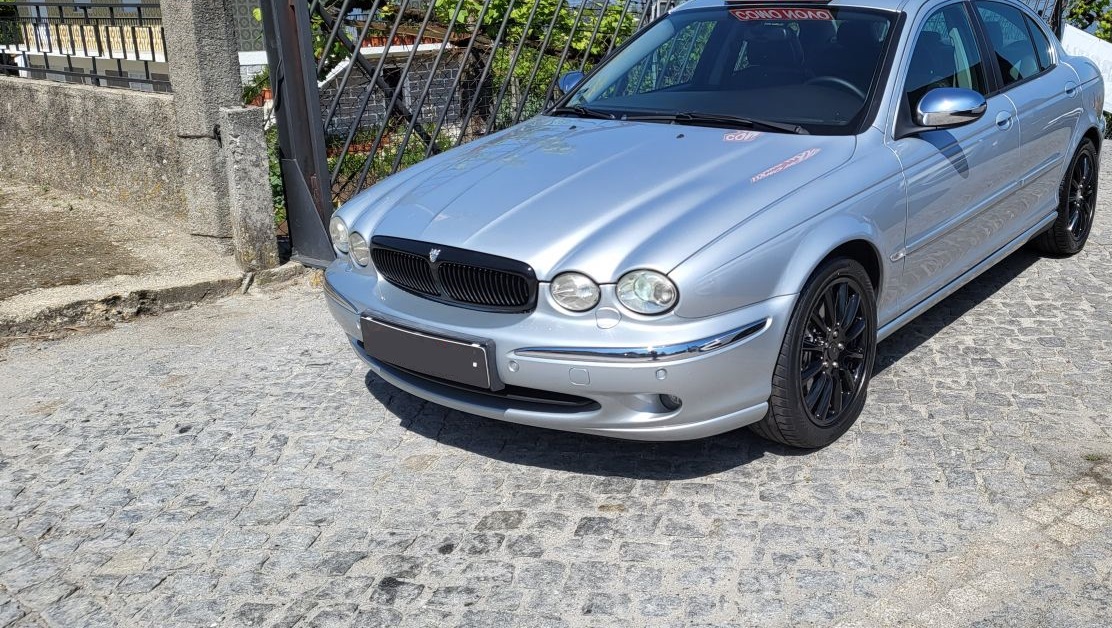



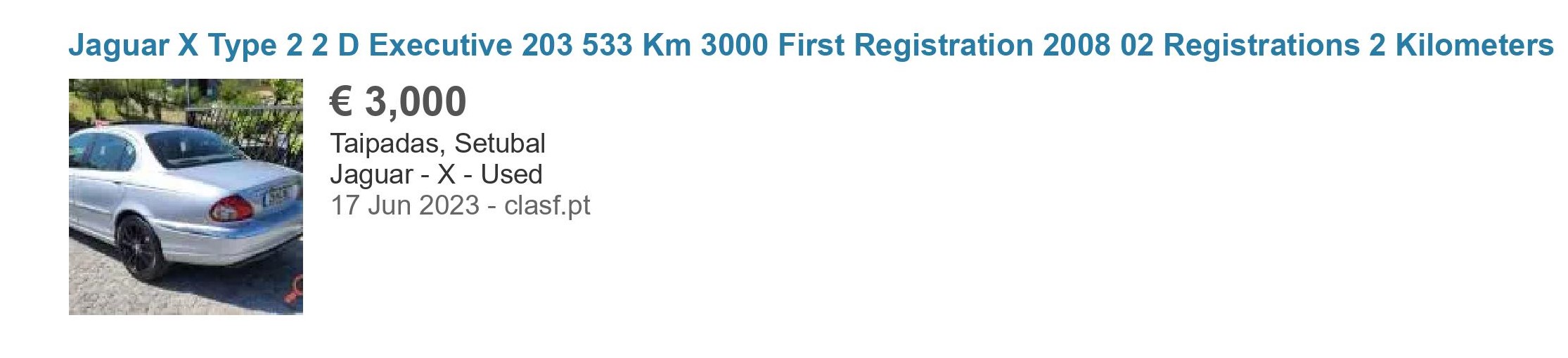



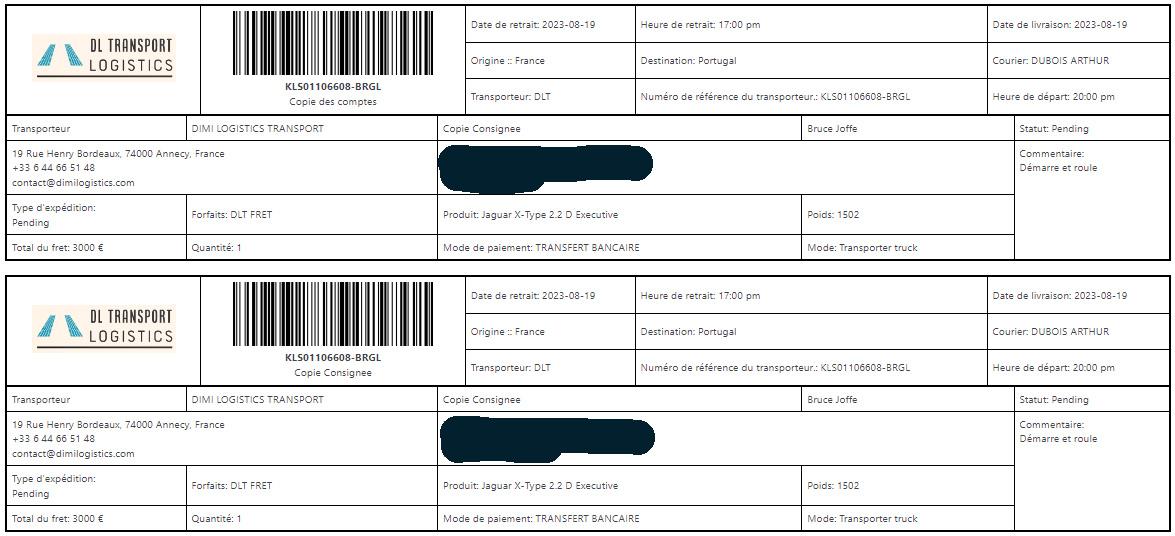

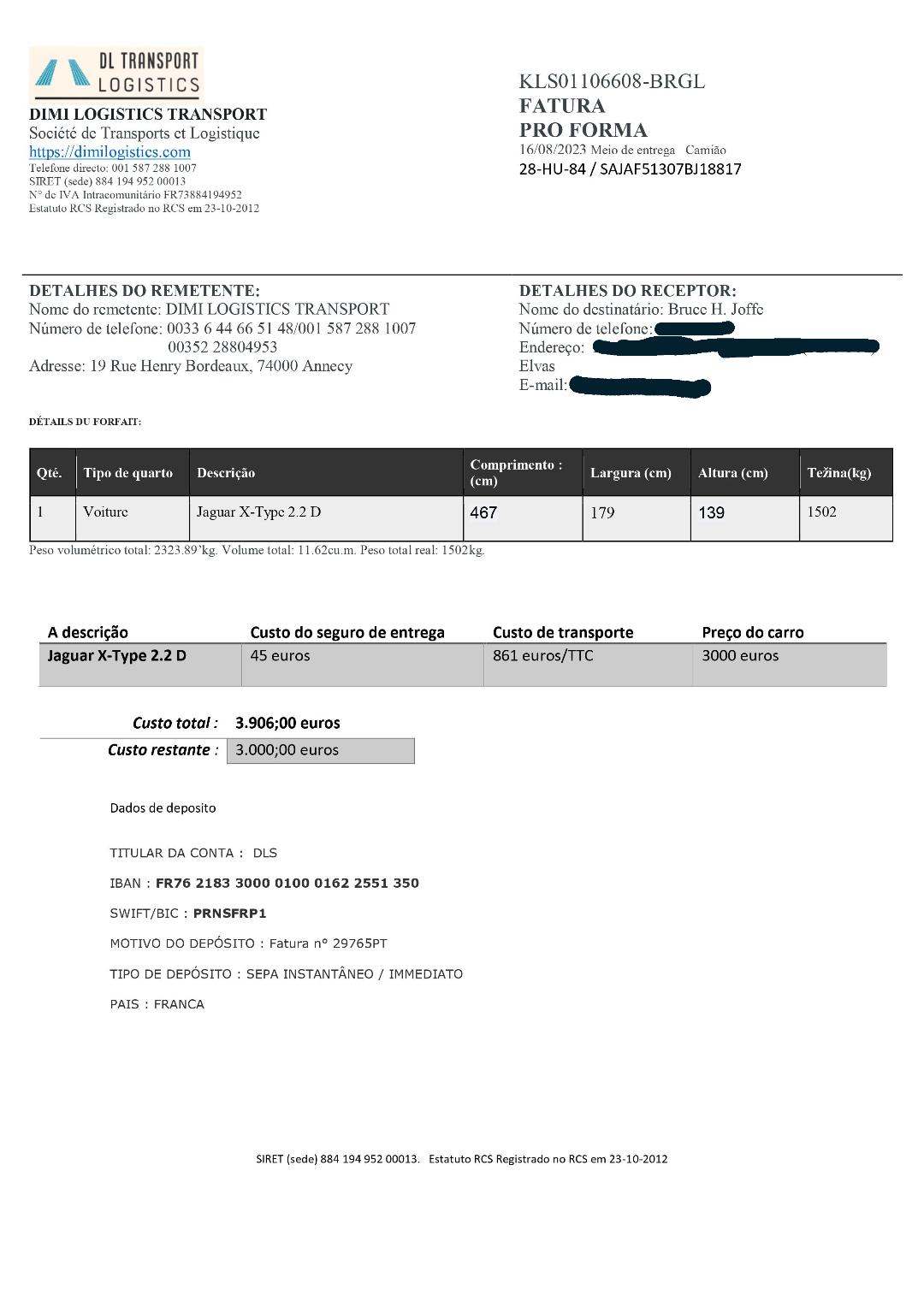
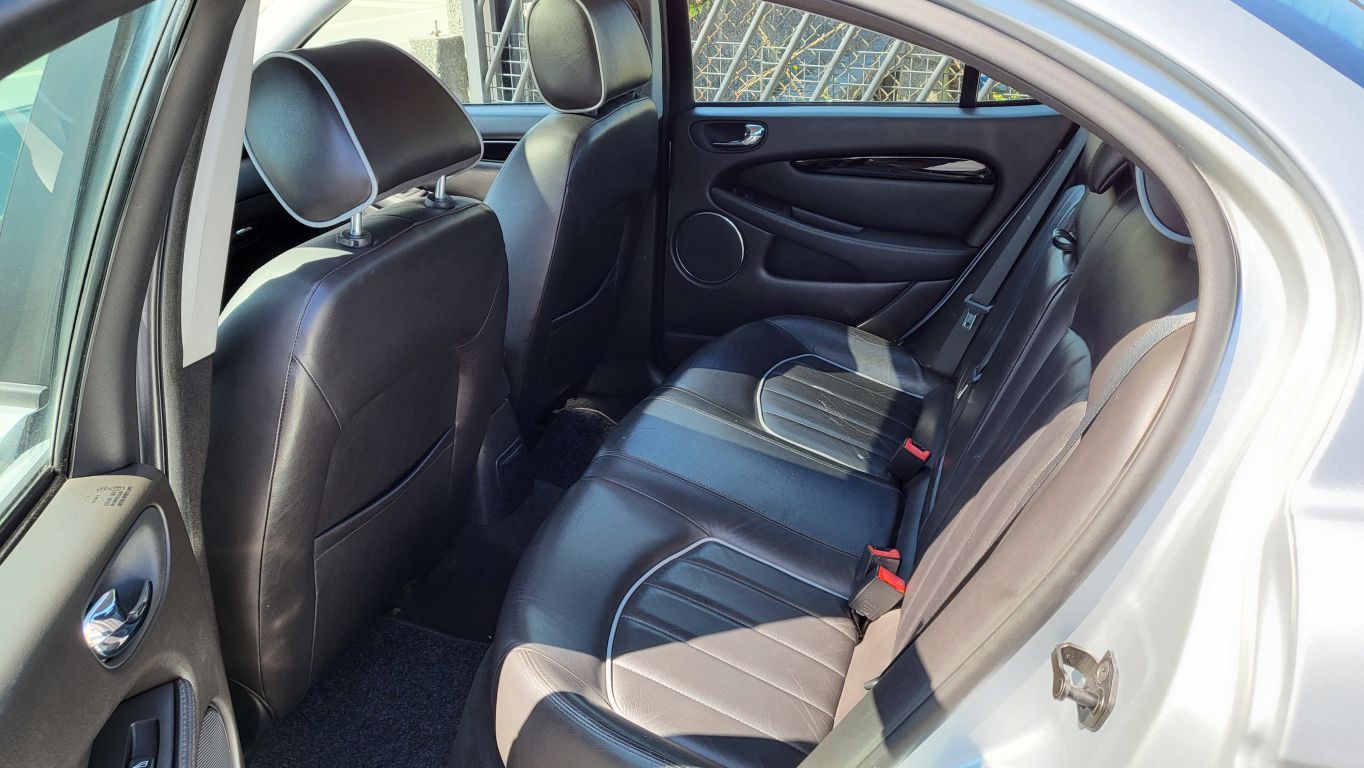







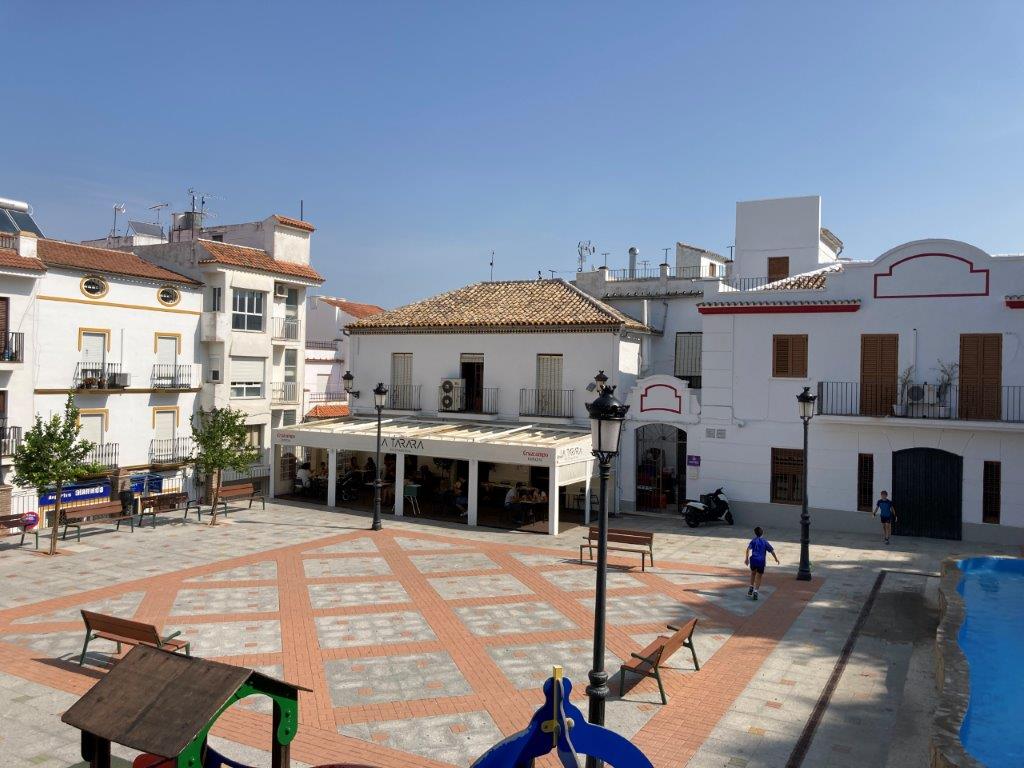
 "Exactly!"