It’s hard enough being a “stranger in a strange land” … with new neighbors, culture, language,etc. It can be even harder without that unique sense of community that offers understanding, support, friendship, and camaraderie.
As no man, woman, or country is an island, also shared here is LGBT news and information of more universal interest.
Seeking to put down roots in the right place for us – all things considered – we’ve bought and sold three properties since moving to Portugal.
To draw up the compraventa (buy/sell agreement) and the escritura (deed) for each transaction, our lawyer and/or notário needed some information from us: our legal names, passport numbers, fiscal numbers in Portugal, and estado civil—marriage status, especially if the property was to be jointly owned.
We answered the questions and provided copies of our residency cards, passports, fiscal documents, and marriage license (with apostille!).
Never did we experience any problems or have questions asked when purchasing our houses … until recently, when we decided to consolidate our homes and move to Elvas in the Alentejo, where we already owned property. We needed additional elbow room for our offices, an entertainment area that accommodated more than two people (in addition to us), and sleeping space for overnight guests. Ideally, the property would have a bathroom with shower and a small, efficiency kitchen.
We found what we were looking for around the corner and two streets down – a four-minute walk – from our home there. Originally a house, it was abandoned and became a ruina before it was purchased by an architect and turned into a modern, updated, renovated, fully finished, two-level garage on the market for €35,000.
The sellers accepted our offer, the property agent asked for our respective credentials, the buy-sell agreement was sent to the notário.
That’s when our problems began …
“The notário needs to know what kind of marriage you have in the United States, specifically in the state of Iowa, where your marriage certificate was issued,” our property agent wrote.
He wasn’t asking about whether we had a good or bad marriage, an “open” or monogamous one, so I replied: “I don’t understand the question. What does the notário need to know?”
“Doctor. João Goes (the notário) is asking for the English name of your marriage regime. Do you have an English name for your nuptials? Do you have any document from the State of Iowa that indicates this regime of your marriage?”
Marriage regime?
“There are no separate marriage regimes in the US. Marriage is marriage,” I explained.
“It doesn’t matter whether it’s your first, second, or fourth marriage … if it’s a same-sex marriage, an interracial one, or a May-December romance. The only other type of ‘marriage’ in the USA is called ‘common law,’ where the parties were never legally married but lived together for several years, and may even have had children. In the entire United States – in each of the country’s 50 states – there are no other marriage ‘regimes.’”
The property agent then responded with a lesson about Portuguese marriages:
“In Portugal we have: 1-acquired goods regime. In other words, the couple’s common assets are those they acquire during their marriage; 2-general community of assets. All assets belong to the couple. Those acquired during marriage and those acquired before getting married. And, 3-separation of assets. Each person keeps their assets separate.”
To this, he added: “The point is that marriage regimes and the law vary from state to state (in the USA). There is no other option but to match the regime of the foreign State to the Portuguese one, in accordance with Opinion 54/CC/2018, issued in process R.P.31/2018 STJSR-CC, of the Institute of Registries and Notaries, and also of articles 93 and 68th of CRPredial. Any other scenario makes the acquisition registration unfeasible. We have had problems with foreign acquisition records due to the same situation. In light of Portuguese law, we must make this transcription.”
I certainly understood what he was saying. But that didn’t help me to identify the Iowa state marriage “regime” which governed our marriage. Not to worry: the notário did his homework and conducted some research.
Here are his findings:
“The marriage regime in the State of Iowa, USA, when transposed into the Portuguese legal system, is equivalent to the separation of property regime. This is what results from community law. When Bruce bought something, he did so together with his spouse; they bought it together, but each person acquired their share. Basically, it’s the same thing.”
And, so, the property purchase proceeded without any (other) problems.
P.S. Ironically, when sorting my documents to renew our residency in Portugal, I came across the deed to the property we owned in Elvas. Translated from Portuguese, this is what’s stated upfront in the deed: Bruce Howard Joffe, married under the common property regime …
One of the things I feel most vulnerable about is money—or, more specifically, lack thereof. I remember stories my father used to tell us as youngsters about going to the “poorhouse.”
When I graduated from college and got my first job, I spent too much money, paying for what I couldn’t afford by credit cards. To pay them off, I took out a loan from the teacher’s credit union. I worked three jobs – teaching Spanish full-time, teaching French part-time after school in another town miles away, and tutoring students in English in whatever my spare time – until my debts had been paid. Nonetheless, I still lived paycheck to paycheck.
But I swore that I would never again be held hostage by creditors.
Among the reasons we left the USA was the skyrocketing cost of living. Even without the high inflation, housing prices (to buy or rent) would have been beyond my means if I hadn’t bought early, before costs became prohibitive and mortgage rates exorbitant. Insurance – property, vehicle, health – was out of control. Through our local agent, we were able to secure insurance for our two cars at about $1,200 per year (a bargain!). Housing insurance was another $500. And, by the time we said “Adios” to the states, I was on Medicare but having about $170 per month deducted from my monthly payment to cover “Part B” while, at 54, my spouse was paying nearly $1,000 each month for bare-bones health insurance … under “Obamacare.”
Insurance in Portugal is a good case in point about how the cost of living here has been substantially lower without sacrificing our quality of life. Our annual homeowner’s insurance here is about €125 (US $132); we pay about €675 ($710) each year to insure our two cars – one new, the other older – with top-of-the-line coverage. Even though national health care is free in Portugal to citizens, resident expats, and immigrants, we chose to augment it with private health insurance. Nothing against Portugal’s excellent health care … but the bureaucracy; we wanted to be able to choose which doctors and dentists we saw when and where without waiting months for appointments. Through our membership in afpop (Association of Foreign Property Owners in Portugal), we qualified for comprehensive health insurance at about €2,200 ($2,300) per year. Reduced, fixed cost dental coverage was included. If a provider was out-of-network, the insurance company reimbursed us 80% of what we spent.
All things considered, we lived comfortably within our budget with even a little to spare from my $2,200 Social Security payments each month.
With 2024 looming, we were in for some unsettling shocks that made us worry anew about whether Portugal was still affordable and, if so, what would we have to cut to feel (relatively) comfortable again about income and expenses. When you’re on a fixed income, it’s challenging!
The first change was announced in the fall of 2023: Portugal was doing away with its Non-Habitual Resident (NHR) program and status, introduced to entice foreigners to live and invest in Portugal. Essentially, it capped our taxable income at 20% or zero if we were pensioners. Open to people with a variety of “essential” backgrounds, to qualify one must not have lived in Portugal during the previous five years. The benefits lasted for ten.
Prime Minister António Costa argued that the Government decided not to prolong “a measure of fiscal injustice, which is no longer justified, and which is a biased way of inflating the housing market, which has reached unsustainable prices. In 2024, special taxation for non-habitual residents will end. Whoever has it will keep it”, he said in relation to foreigners residing in Portugal who already have this tax benefit.
According to the leader of Portugal’s executive branch, “the measure for habitual residents has already fulfilled its function and, therefore, it makes no sense to maintain a tax for non-habitual residents. There was a time when it was necessary. This measure made sense. In the first ten years, 59% of people who had benefited remained in Portugal, despite the regime having ended. But at this point it doesn’t make sense anymore,” he reinforced.
Costa’s announcement was the latest example of Portugal’s diminishing enthusiasm for new residents, following a decision to abolish a “golden visa” program for wealthy non-Europeans. The moves have been driven by angst over the impact of foreign money in the real estate market, where a surge in house prices left many residents struggling to find adequate accommodation, particularly in the cities of Lisbon and Porto and in the Algarve. The head of a Socialist government facing widespread public discontent over the issue, Costa told CNN Portugal: “To maintain this measure in the future would prolong a fiscal injustice that is not justified and would continue to inflate the housing market in a skewed way.”
The tax breaks, available to people who become resident in Portugal by spending more than 183 days a year there, include a special tax rate of 20 per cent for work income from “high value-added” activities, which covers professors, doctors, and architects among other professionals. Another element is a flat tax rate of 10 per cent on pensions from a foreign source. Originally a full exemption from tax on pensions, Portugal introduced the 10% rate to quell complaints from EU countries, including Sweden and Finland, whose retirees were moving to the country. A third benefit under the special regime was a tax exemption on foreign-sourced income, including rental payments from tenants if it is taxed in the country of origin.
What would be the practical effects of eliminating NHR? The chart below tells one story, but people potentially affected by it tell another.
A Swiss developer who had planned an investment of more than 100 million euros in Lisbon decided to cancel the project after António Costa announced the end of the non-habitual resident regime (NHR) in the country.
At issue was a project of 150 residential units “for middle and upper-middle class Portuguese in the center of Lisbon,” according to Pedro Vicente, CEO of the Overseas developer and reported by Jornal Económico. “The Swiss investor us told us that they had lost confidence in the Portuguese market and that they are very worried about the effect this decision will have on the market.”
In addition to the “domino effect” the end of the regime will have on real estate, José Cardoso Botelho, CEO of Vanguard Properties, warned of the impact on the entire economy.
Debating the issue, one Portugal resident put it this way: “After this bill has passed, they might change their mind later after all the foreigner revenue dries up. Honestly, this change is mostly because life in PT is now unaffordable for its own citizens—in large part because of the foreign earned income influx. That is a policy problem, not a foreigner problem. I think they’re betting on all of us coming, anyway. But Americans, especially, aren’t accustomed to paying high taxes and will find other solutions. Compared to other EU countries, Portugal’s infrastructure is poor Things do cost more here. It was something to put up with for the tax break. But without that it doesn’t look so appealing. I hope it makes life better for the locals, but I think of all the local people who took a gamble and started a business that serves those who had made that plan to move to PT permanently. They will lose revenue, too. And possibly their family businesses. It’s a bad move and a short-sighted political stunt.”
Added another, “My wife and I bought a house in Portugal two years ago, planning to retire here in four years. Like most Americans, Portuguese taxes without NHR will be triple our US taxes. You are lucky you have not yet closed on your purchase. If you are not yet legally obligated to buy, I would pull out. There are many good programs elsewhere in Europe including Italy, Greece, and France. Portugal is a wonderful country in many ways, but without NHR its taxes are totally obscene.”
Complained a third, “My wife and I are a retired professional couple from Maine who were planning to move to Cascais on January 1, 2024. We retained an attorney in Lisbon to help us with the process. Our consulate appointment in Boston was scheduled for October 24th. We also retained the services of a relocation firm that had found us what appeared to be a terrific apartment. We opened a bank account and purchased airline tickets. On October 12th, we met via Zoom with both our attorney and accountant. Our attorney advised us that we had at best a 50/50 chance of obtaining NHR status by December 31st. Our accountant warned us that without that status our tax liability would triple over our US obligations. Our hope was to assimilate into a new culture and to contribute in some fashion to our new home. That hope is now over.”
If you registered as a non-habitual resident before 31 March 2020, your foreign source pension income is generally tax-free. If you are registered from April 2020 onwards, your foreign pension income is generally taxed at 10%.
Residents in Portugal for tax purposes are taxed on their worldwide income at progressive rates, varying from 14.5% to 48% for 2023:
Taxable income (€)
Rate (%)
Deductible amount (€)
Up to 7,4797
14.5
–
+ 7,479 up to 11,284
21
486.14
+ 11,284 up to 15,992
26.5
1,106.73
+ 15,992 up to 20,700
28.5
1,426.65
+ 20,700 up to 26,355
35
2,772.14
+ 26,355 up to 38,632
37
3,299.12
+ 38,632 up to 50,483
43.5
5,810.25
+ 50,483 up to 78,834
45
6,567.33
+ de 78,834
48
8,932.68
Although foreign pension income is no longer tax free under the non-habitual residence regime, it does benefit from a flat 10% tax rate. Considering the income tax rates range from 14.5% to 48%, the 10% tax is still a significant advantage.
Even though Portugal and the USA, among other nations, have “no double-tax” treaties, they mean that Portugal won’t tax you on the money the USA’s IRS does—and vice-versa. But there’s a catch: Say, Uncle Sam doesn’t impose taxes on those earning less than US $15,000 per year. Portugal can tax this amount. And Portugal’s income taxes are high—very high!
400% increase in car tax
If doing away with its Golden Visa and Non-Habitual Resident tax incentives weren’t enough, Portugal also announced in late October 2023 that it would quadruple the annual road taxes (IUC) consumers paid for older cars.
A 900cc petrol car, registered in May 2005, paid 19.34 euros in IUC in 2023, a value that will reach 96.92 euros (a 401% increase) over the coming years.
At issue is a measure included in the State Budget proposal for 2024 (OE2024) that changes the taxation rules, in terms of IUC, for category A vehicles registered before 2007 and motorcycles (category E), determining that these are no longer taxed solely based on engine capacity (as is currently the case), but the environmental component is now to be considered.
The OE2024, however, contains a “safeguard” clause, determining that the increase in tax cannot, each year, rise by more than 25 euros.
Thus, that gasoline car, with 900 engine capacity, will pay around 44 euros in IUC in 2024, reaching in 2027 the tax value equivalent to a car with the same characteristics, but with registration after July 2007. The same Simulations show that a diesel car, with registration from January 2006 and 1995 engine capacity, for example, will see the IUC rise by around 430%, going from 45 euros paid in 2023 to 231 euros with the new rules.
The measure has led to the launch of a public petition against this worsening of the IUC, which already has more than 163 thousand signatures.
Insurance Rates Skyrocket
If tax increases aren’t enough to blow a budget for living in Portugal, consider what’s happening to insurance—health care insurance, especially. Rates from 2023 to 2024 aren’t just increasing … they’re going through the roof.
Most who retire to Portugal are of “a certain age,” precluding their ability to purchase private health care coverage (which, by and large, is only available to people under 60). In fact, only two reputable insurance companies – Allianz* and MGEN – offer (non-cancellable) comprehensive health care packages to those 70 or older without “previous conditions” clauses. *These policies underwritten by Allianz are only available to afpop (Association of Foreign Property Owners in Portugal) members through its partner brokerage, Medal.
Afpop members with health insurance coverage through their agreement with Allianz recently received this email:
Dear Customer,
Your health insurance will soon renew, with new conditions.
The insurance market has seen significant increases in costs in recent years, particularly in the health sector. High inflation and technological advances, which provide access to new treatments and medicines, contributed to these increases, which occur across all age groups.
In order to guarantee the sustainability and quality of service to which we are committed, we annually check the renewal conditions of our clients’ policies, taking into account market costs and contract accident rates. After this analysis, we concluded that it is necessary to adjust the conditions of your insurance.
The contact premium will increase by 60% compared to the previous year.
That means:
• Co-pays will be higher;
• We’ll be reimbursed less;
• Our out-of-network costs will increase; and
• Our annual policy will jump from its current €2,200 to more than €3,520 as of January 1, 2024.
That’s absurd and totally unacceptable!
I contacted both afpop and our Medal agent to confirm the accuracy of my calculations. Here’s the reply:
Hello Bruce,
Thank you for your e-mail and I can assure you that the letter from Allianz came as a big surprise to me also. Not because I wasn’t expecting an increase from them this year, but because I know that at the end of last week when I spoke with Sr Pinheiro of Medal Seguros, they were still in discussion with Allianz and looking for a better solution. It appears that Allianz has decided, for whatever reason, that the discussion is over, and this is their proposal for their clients this year.
I can tell you that Sr Pinheiro and his team are indeed looking for alternatives, MGEN already being one of course, and I know that they held a meeting last Thursday with an alternative insurance provider, which I have been advised was very positive. I know also that Medal already has other options and that it is their commitment that no afpop Member be left without health insurance.
I will not say more at the moment because the discussions I am party to are not complete and, in any case, it is not within my scope to advise Members about insurances, but I can tell you that Sr Pinheiro and his colleagues are working hard to find solutions for those Members who can’t, or don’t want to, accept the Allianz offer. The good news is of course that the insurance is valid until the end of the year, so no-one is left uncovered until then. As soon as I have more information, I will transmit it to Members when I may know a little more about what alternative proposals there are.
Given that all who have legal (fiscal) residency in Portugal – citizens, expats, and immigrants – are covered at no cost by national health insurance, the comprehensive coverage offered by Allianz in partnership with afpop and Medal have been good buys for the money. But not at these rates–especially because the health care provider network is focused on the Algarve, Lisbon, and (to a lesser degree) Porto. Those of us living outside these areas had to rely on non-network providers. I’m waiting to see the “option/s” afpop and Medal might be offering us, instead (of Allianz) but wouldn’t be surprised if they came up with a cooperative agreement through MGEN. Medal already represents MGEN, whose online offer far surpasses the package referred to in the letter from Allianz.
We may not be in the poorhouse (yet), but our belts are getting tighter. We do, very much, love Portugal … still. But had we known then what we know now – while in the USA evaluating where we would relocate and retire – I can say for certain that we probably would have looked beyond the borders of Portugal.
Back in 1789, Benjamin Frankling reminded us that, “Nothing is certain but death and taxes,” to which I’d add “… and increases in the cost of living!”
Vintage American Underwear Ads Feature Sexual Innuendo between ‘Boys’ in the Brands
“Over the years, underwear has been associated with modesty — or with the lack of it,” points out Vintageskivvies.com. “Underclothes are inextricably associated with morality, sensuousness, cleanliness, sexuality, hygiene and — sometimes — even social status,” claims the underwear retailer on the archival pages of its Web site: http://www.vintageskivvies.com/pages/archives/history/thetwentiethcentury.html.
The online retailer has a twist: In addition to its virtual store selling products with a sizing chart and posting its sales/return/shipping policies, along with a clickable list of brick-and-mortar underwear retailers, vintageskivvies.com features an archives section with articles, blogs, a glossary, history, and ad gallery all about underwear. It’s the world’s first e-museum to focus on what men have worn under their trousers.
According to Vintageskivvies, undergarments “have had — and still have — important ‘psychological’ characteristics. To understand this aspect of what we wear nearest to our skin, we have to view undergarments in the light of the epoch in which they were popular.”
It’s a complex topic, further complicated by the whims of fashion:
Then as now, advertising attempted to fulfill its raison d’etre by communicating the changes in underwear to consumers. But in the process, it succeeded in doing more: Explicit or implied, advertising incorporated homoerotic overtures, themes and subtexts within its messages. Take the saga of B.V.D., for instance.
A Better View Designed
Founded in 1876 by three businessmen — surnamed Bradley, Voorhees, and Day — B.V.D. was first known for its men’s “spiral bustle” with long sleeves and legs made of a heavy knitted fabric. In 1908, that bulky and tight-fitting garment was turned into a new, looser line of underwear. B.V.D. then added a two-piece number and the popular “union suit” to its offerings. With the ever-popular advertising slogan “Next to Myself I Like B.V.D. Best,” the company introduced a lightweight, waffle-like fabric, notes Esquire contributor John Berendt (1987).
Intrinsic to almost every B.V.D. ad produced between 1913 and 1926 is a pair of book-ended boys who seem to become increasingly involved with each other as their advertising adventures unfold.
“The Fag-Free ‘Fans’ Wear B.V.D.” (Figure 1) published in 1913 features a crowd of people illustrated in cartoon-like fashion. Headline and copy literally flow below the illustration to form a T-format layout with the two buddies in their B.V.D.s placed symmetrically in ovals aligning the copy as somewhat mirror images. Though obviously interested in each other, the B.V.D. boys are young, fresh and still relatively innocent. “Cool and comfortable despite the grueling heat, the fag-free ‘fans’ in the foreground wear Loose Fitting, Light Woven B.V.D. Coat Cut Undershirts and Knee Length Drawers, or Union Suits,” states the copy.
Following their fag-free outing, the buddies are back in 1914 with another ad that, again, fits them to a “T.” This time they appear cool, calm and collected below a bunch of chums struggling to enjoy their vacation from the stifling summer heat. “No Fun,” Says He, “Unless You Wear B.V.D.” It’s not precisely clear who the speaker is in the headline here, but, for argument’s sake, let’s assume it’s one of the smiling guys lifting the boat out of the water. If so, he’s facing the seated lad who’s uncomfortably wiping sweat off his brow, tie undone and hat on his knee, a duffle bag on the ground beside him. The plot thickens as we continue reading the copy: “Get the full fun out of your vacation in B.V.D. If you’re cool, work is play, and either side of the road is the shady side.” Either side of the road is the shady side? Could this possibly be construed as referring to men who like their sex both ways, with women … and with men? Probably not – at least not at the time; but it’s something today’s reader might consider.
The boys are joined by others seeking comfort at Camp B.V.D. in a 1915 ad. Though a line in the advertising copy – “It’s the Underwear of red-blooded, right-living men who find clean fun in keen sport” – conjures up images of fundamentalists denigrating what Arnold Schwarzenegger has called “girly-men,” taken as a whole cloth, this advertisement is both welcoming and inclusive. From a man in business attire to another wearing more casual dress (and, of course, the emblematic B.V.D. boys in their cool and comfortable socks, sneakers, and undergarments), the environment, as the clothing, “won’t bind or irritate.”
In other ads published during these years, the B.V.D. lads visit the movies, take a train ride, go cruising on an ocean liner, fish, play a game of shuffleboard, avoid the summer’s stifling heat … and just lounge around enjoying being together. The loose-fitting, light woven B.V.D. underwear teaches them the fine art of “Take-It-Easy,” as in a 1916 ad where they’re admiring each other while holiday travelers hustle and bustle about in an illustration above them. Wherever they are and whatever they’re doing, there’s one thing they both agree upon … the B.V.D. slogan: “Next to myself I like ‘B.V.D.’ best.” A bit conceited and self-serving? Perhaps. But, to B.V.D., they’re obviously worth the words and congenial compliment.
The graphic “T” layout returns in an 1917 ad in which the B.V.D. boys continue to enjoy each other’s company (at the bottom of the ad) while a baseball game is played above. Any question about the appropriateness of the appreciation the B.V.D. boys may share for each other is overshadowed by the ad’s striking athleticism, in which a batter and catcher face a crowd full of fans.
Recreation is also the theme of a 1917 ad where our buddies, crisp as cucumbers, relax in their underwear. Above them, a park filled with people swelter wearing parisols and hats. The boys, as always, are at their best “physically and mentally,” because their B.V.D.’s “cool, clean touch helps take your mind off the heat, as well as the heat off your body.” When you’re hot you’re hot; when you’re not, you’re not, n’est-ce pas?
Whatever the temperature might be outside (or in), the relationship between the B.V.D. boys has heated up by the time they appear in a 1919 ad. While still separated by the copy between them (below), their thoughts are on the two men pictured (above) who’d be too close for comfort in other circumstances or surroundings. Here, however, they’re quite at home … ready to turn in and spend the night together.
As World War I raged, a 1918 B.V.D. ad reminds us that “the comfort of the individual must come second to the need of the nation.” Back then, even government requirements urged all citizens to “please be tolerant,” since undergarments weren’t as freely available as previously. The consequences of such a shortage surely must have created a challenge, as well as untold possibilities. Even though the B.V.D. boys by now have been liberated from their chaperones, spectators and companions – they appear alone (without even a “double-date”) from this point on in B.V.D. ads – it’s comforting to know, especially given the circumstances, that their undergarments haven’t been sacrificed to the war efforts.
Somewhat older and a bit more mature in a 1920 ad (Figure 2), our buddies are seeing red as color is added to the B.V.D. advertisement. Perhaps it’s a registration problem with the printing press or process, but our protagonists appear to have rouge on their cheeks … and the man on the left has obvious traces of red lipstick on his mouth. Nobody overseeing their activities, the guys are in close proximity in front of a phonograph. One’s holding onto the Victrola, the other has a vinyl record in his right hand with his left hand resting atop a nearby chair. Smiling, both seem to be happy in their underwear—alone yet together. The man with darker hair (on the left) has his undershirt unbuttoned from top to bottom, although the buttons fastening his bottoms are completely closed. Is this a “pajama” (underwear) party? Are they preparing to spend another night together by setting the tone, tenor and treble for a possible paso doble? Clearly, they approve of the music selected. Is it time for an encore?
In this continuing B.V.D. soap opera whose storyline could track a progressive relationship between these two buddies, can a later (1921) ad showing them in the same underwear as the earlier (1920) ad be an allusion to the morning after? It looks like the one on the left is holding a note in his hand as his line of vision heads directly towards his partner’s crotch. What’s more, a small inset of his posterior may hint of another view they’ve shared together. His undershirt still unbuttoned, feet sheathed in slippers, one of the boys holds onto a bathrobe. Has he just taken it off … or is he about to put it on?
Two other 1920 advertisements for B.V.D. merit a mention. In both, the boys again are alone in their underwear.
In “Longwear,” the man on the left holds out what looks like a tennis ball, inches from his buddy’s lips. It’s a gesture reminiscent of Eve tempting Adam with an apple and one almost expects to hear that “the serpent beguiled me and I did eat.” Copy in this ad seems rather defensive or competitive, making the point that you get a lot for your money with the B.V.D. brand: “Materials of enduring strength and workmanship of scrupulous care make B.V.D. wear far beyond what it is fair to expect.”
The second 1920 ad, “Quality,” refers to it being a “tradition with its makers and a proverb with its wearers.” While it might be a proverb for other wearers, our boys here seem to be scanning the morning newspaper instead of reflecting on their Bibles.
Looking almost angelic and cherubic, the B.V.D. boys pose in front of a Christmas tree inside a home parlor in a 1924 ad. Despite any pretense about what they’ve been doing together, undressed except for their undies, they’re obviously comfortable and at ease. Though the headline copy reiterates the slogan, “Next to myself I like ‘B.V.D.’ best,” one has a sneaking suspicion that what (or who) each really likes best next to himself isn’t an undergarment—B.V.D.s or any other brand!
Modeling their starchly-pressed union suits, our own Betty (blond) and Veronica (brunette) are warned to “Look before you leap!” in a 1925 ad. To their right, sketchy cartoonish characters incautiously jump off a diving board onto the beach below. But they hold little interest for the B.V.D. boys, who are immaculately attuned to each other. The “‘Looking for the label’ after you’re sorry won’t change it to ‘B.V.D.’” subhead is a curious reminder during our current era of STDs, HIV and AIDS to use protection and practice safe sex rather than suffering the potential consequences later.
In 1926, the B.V.D. ads took on a new look with illustrator Walter Jardin. Artwork is sketchier, with less emphasis on the earlier style of portraiture or classical realism. The ads, here one-third instead of full-page, are smaller but contain almost the same wording and copy in their texts and headlines. To be sure, the type and font is similar … but the focus remains on both B.V.D. boys.
In one 1926 ad they’re in a park or forest, again spinning records and enjoying music. Flies, ants, bugs and bees don’t bother these two, even as dressed only in their underwear. “The test of underwear comfort is to be able to forget you have underwear on,” advises the ad copy. Somehow, one doesn’t think that’s an issue for these buddies in their B.V.D.s.
A second 1926 ad places the boys inside a house … maybe in a parlor, living room, or sitting room adjoining a bedroom. The men appear ready to call it a night and head off to bed, as a bathrobe is about to slip off one of their arms. “Every Time You Dress give yourself the delight of slipping into cool, fresh B.V.D.”! headlines the copy. Given the implications of the illustration, however, a slight variation might make for a more appropriate title and lead copy: “Every Time You Undress, give yourself the delight of slipping out of cool, fresh B.V.D.”!
Battles among the Brands
B.V.D. wasn’t the only brand courting the male underwear market in the 1920s. Other makers included Duofold, Hanes, Hatch, Madewell, Munsingwear, Navicloth, Superior Underwear, and Topkis. Unlike today’s sensual poster boy exhibitionists in their Calvin Kleins, underwear wasn’t always attire for the fashion-conscious male. Instead, men sought comfort and value from the clothing that came closest to their skin. And, maybe, a psychological pick-me-up from their advertising, too.
“All a man used to seek was some sort of underwear that would not bulge, bind, gap, chafe, or sag,” says vintageskivvies.com on http://www.vintageskivvies.com/pages/archives/history.html, “something that — when hung out to dry — would not attract enemy fire.”
“Oil paintings of men in their Kenosha Klosed Krotches by Saturday Evening Post artist J.C. Leyendecker were daring for 1911 and made history as the first national print ads for men’s underwear,” according to the web site, http://www.vintageskivvies.com/pages/archives/history/theteenyears.html. “Most of the [m]en [s]hown in early underwear advertisements were fellows who ‘Put hustle in the tussle!’ as the Superior Underwear Company put it, men who were likely to put a lot of ‘strain’ on their undergarments.”
A cute 1915 Wilson Bros. ad, for example (Figure 3), advances the company’s undergarments with two men in their Athletic Union Suits out on a dock of the bay casually shooting the breeze and smoking pipes. Neither appears to be embarrassed or self-conscious about doing something out of the ordinary as they chat and relax outside dressed only in their underwear. (A tall wooden wall does partially hide them from potential onlookers.) “Seat opening cut generously full for greatest convenience,” states the copy, neatly positioning one of the product’s prime benefits.
“Sold in a Cleaner Way” was the distinguishing characteristic of Sealpax Athletic Underwear for Men. Surrounded by admiring male fans in the bleachers, an athletic underwear champion jumps over the Cool and Clean sidelines holding honors in hand in a 1921 Sealpax ad loaded with homoerotic innuendo: “‘Boy, oh Boy,’ you appreciate Sealpax when you’re mixed up in a crowd, when it’s hot—and stuffy—and everybody ‘round you is sweltering. Sealpax keeps you cool as a cucumber. It’s that kind of underwear—built for man-sized comfort. Cool because the fine nainsook fabric is cool—comfortable because it is cut to follow the movements of your body—no chafe—no irritation—the coolest, finest underwear a man can slip into.” But the best thing about the underwear is the brand’s package: “Sealtex is better athletic underwear and it is sold in a cleaner way—packed in the individual Sealpax envelope which keeps it as fresh and clean as the day it was made and laundered.” Not unlike today’s prophylactics, that sanitary covering was salutary and undoubtedly appealed to health-conscious men.
That same year (1921), Hatch advertised its one button union suit with a two-thirds page black and white ad (Figure 4). Two pretty men standing very close to each other draw all eyes to their interaction. With an hourglass body, the one on the left has his right hand on his hip in a most unmanly manner. Meanwhile, the man on the right has his right hand on the other’s shoulder and his left touching the man’s chest. The way they’re drooling over each other as caught at this snapshot in time leaves little question about what’s on their minds and what they intend to do about it.
The Focus Shifts
As the industry turned the corner, making inroads through the 1920s, its emphasis began to shift towards convenience, comfort, and value. Perhaps no other company better synthesized these concepts in its market positioning as Topkis Athletic Underwear.
If B.V.D. had its boys preening and admiring each other as the company’s advertising developed, Topkis — whose very name conjures up a talisman capable of girding one’s loins — distinguished the different men pictured in each of its ads not as playful, peek-a-boo boys but more mature and fully functional men capable of carrying on life’s affairs and, perhaps even, a relationship with each other.
Moreover, B.V.D. may have been the market leader in men’s underwear back then but Topkis had its own marketing strategy and unique selling proposition: value. In fact, nearly all Topkis ads emphasized how much quality you got for just a dollar!
A young man formally dressed in a suit, white shirt and tie sits backwards on a chair ogling another youthful gentleman wearing only his underwear in a half-page, black-and-white Topkis ad published in 1921. Even though it’s only early fall, the headline warns, “Your skin must breathe in winter, too.” Mid-way through the copy, however, we find out that “The way to let your skin breathe properly is to wear the Topkis Athletic Union Suit all year ‘round.” Soon, the brand’s positioning statement appears: “It’s the biggest underwear value your dollar ever bought.” That being said, a rationale for the graphics still must be questioned: Why are two young men — one fully attired, the other only in his underwear — sitting that closely together and smiling so playfully at each other?
Unlike the iconic B.V.D. boys who appeared in each of the brand’s advertisements we’ve seen, different men participate in the action of Topkis.
Once again, a fully and formally clad gentleman is seated backwards on a chair and seriously contemplating a young man — this time standing with a brush in his right hand, his left hand ruffling through his hair — in a 1923 ad of the same size and graphics. The Topkis positioning statement is prominently articulated in the headline: “You can’t beat Topkis at double the price.” Advertising copy continues to belt home the fact that, regardless of the price, no athletic underwear beats Topkis for quality or value. Succinctly stated at the end of the ad: “Why should I pay more, when I can get Topkis for a dollar?” Copy is convincing and market-driven. But what’s the story of the two men in the picture? Why does it seem that one is standing in the footlights, “auditioning” for the other?
“Topkis is worth lots more than a dollar,” insists the headline of another Topkis ad, also published in 1923 (Figure 5). Evidently, the handsome man looking intently at the binoculars he’s holding — possibly a gift from the chap dressed to the nines in a sailor’s jacket, cuffed slacks, cap, white shirt, and bowtie who’s seated in front of a ship’s porthole — is worth lots more than a dollar, too. From the following copy, it’s obvious that the clothes-horse is used to paying the price for what he wants and that he’s used to having his way: “An athletic union suit has to be a good bit above the average to satisfy me,” he says. “It must fit me without either skimpiness or bagginess — the material must be of good quality — and I insist on long service.” We learn a bit more about him, too, in his following revelation: “I’ve been accustomed to paying fairly stiff prices to get the kind of underwear I want. But no more! Topkis gives me everything I could ask for—and at One Dollar!” Are the binoculars a gimmick or prop … or are they a bribe, a teasingly tempestuous toy that will figure more prominently into whatever may happen next between these two swains?
The beat goes on as another debonair young man, hat in hand, admires the virgin-white Topkis athletic underwear exposed when his cute friend removes his bathrobe. Unlike the previous ads, both men are standing here. This half-page ad, which ran in 1924, bears the headline: “Dollar Topkis worth more say the men who wear it.” Why, just ask any man who wears it and he’ll tell you “the way to be sure of getting the most for your money when you buy underwear is to look for the famous Topkis label.” Maybe that’s what the well-groomed dandy is looking at here: the Topkis label? But where, exactly, is that label? Following the gentleman’s line of vision, the label must be directly below the belly button, somewhere above the crack in the shorts!
Two months later, Topkis ran a half-page ad featuring two other men. A hunky stud in all-white undies begins to unbutton his athletic underwear in the April 1924 ad’s foreground, as a shorter and somewhat stoical cohort — maybe his butler or valet? — is standing nearby. Dressed in dark colors, he uses a brush to remove any lint from the jacket he’s holding. For some reason, the guy appears subservient and not too happy. Maybe it has something to do with the book on the bench between them with its pages open to a particular passage? Though the darker man’s face has turned in the direction of his client or patron, he stands with an arched back angled away from him. “One dollar — and a dollar never bought more value,” heralds the headline. Perhaps any acrimony (rightly or wrongly) perceived in the ad can be attributed to the following copy. “No good dealer asks more than One Dollar for Topkis. Many will tell you it’s worth more.”
And the Boys in the Brands Played on …
As the underwear battles continued throughout the 1920s, one maker’s attributes and the qualities that set it apart from another manufacturer’s jockeyed for market position. Whether it was Wilson’s, Hanes, B.V.D. or Topkis, the boys in the brands played on.
Hanes had the anti-squirm shorts with the seamless seat, but Topkis underwear boosted the roominess, allowing men to move in comfort: “Why, man, Topkis lets you forget you have underwear on! Fit? It sure does! Roomy, easy — never a hint of skimpiness anywhere,” claimed a company ad published in 1921. “In your most active hours or work or sport, as well as your moments of rest, Topkis gives your body full freedom. Seats open easily. Drawer legs don’t creep up.”
About a decade later, in a statement to fashion-conscious men of the time, an Arrow underwear ad (Figure 6) appearing in the Spring 1933 issue of Apparel Arts: Fabric & Fashions skirted the delicate line between being Gay … but not too gay: Two handsome jocks in a locker room (either dressing or undressing) evidently are pleased with the virtues of their underwear. “And now the Shorts with the Seamless Crotch go Gay! (BUT NOT TOO GAY),” we’re happy to learn from the headline, as the text’s message extols the “greatest contribution ever put in shorts—the seamless crotch.”
After all, who wouldn’t be glad to say goodbye forever to binding … bunching … climbing … and cutting? What’s more, Arrow now has taken its seamless crotch to new heights of haute couture by adding color “that makes men blush in the locker room,” according to the ad.
Homoerotic or Simply a ‘Gay’ Trompe L’Oeil?
Advertising is typically designed to convince us to buy a specific product or service, whether for the first time or by switching brands. In pursuit of consumers, themes such as vanity, vitality and pleasure are strategically communicated.
So, what can we conclude from these early years of underwear advertising … before gay-specific images became so prolific? That ads infused with same-sex imagery and intimacy simply stood out and caught the readers’ attention because they were oddly dramatic or hinted at homoerotic themes?
Or is it all but a devotion to smoke and mirrors, a razzle-dazzle gay trompe l’oeil? Exploring, explaining and extolling the homo-eccentricities of these ads, perhaps what we see here is just a curious byproduct of the author’s misguided imagination?
No; the trail of evidence is quite clear: Discount, if you will, some of these ads as funny fabrications and fantastic stretches of the imagination. Remaining is a large number of advertisements that, without question, are indicative of sexual and/or emotional intimacy and contact. They’re more than a matter of pure camaraderie or platonic companionship between members of the same sex.
These men’s underwear ads from the early 1900s are suggestive … with homosexual imbroglios and innuendo teasing at us amid the subliminally seductive elements perceived and quixotically portrayed.
Obviously, the time wasn’t right for Madison Avenue to launch a concerted effort to court and woo the homosexual consumer … for this market and constituency didn’t yet dare to speak its name. It wasn’t defined or measured and the power of its purse strings hadn’t been imagined — qualitatively or quantitatively. Nor were the media yet in place to target the community of gay consumers efficiently, effectively … or even legally!
Looking back at them now through the trajectory of time and prism of exposure, we’re tempted to presume that some of the people — or activities — depicted were, in fact, Gay … or, at least, given the circumstances, that they found themselves involved in actions, activities, situations and/or environments we’d label today as “gay.”
“Even in ads intended to appeal primarily to heterosexuals, there may be a homosexual subtext,” opines journalist Georgia Dullea(1992).
Now that’s the real givvies on the skivvies!
A Professor of Communication focused on Gay and Lesbian Studies, Bruce H. Joffe taught such courses as “Foundations of Gay & Lesbian Studies” and “Studies in Gay and Lesbian Communication” at George Mason University (Fairfax, VA) before relocating to Virginia’s Shenandoah Valley and joining the faculty of Mary Baldwin College (Staunton, VA) where he continues to explore sexual minorities, the media, and cultural norms. This article is based on the research Dr. Joffe conducted for his book A Hint of Homosexuality? ‘Gay’ and Homoerotic Imagery in American Print Advertising.
Processing…
Success! You're on the list.
Whoops! There was an error and we couldn't process your subscription. Please reload the page and try again.
Olvera, our getaway home in southern Spain for the past 18 years, has plenty to be proud about … not the least is its designation – honored by a Spanish postage stamp – as Spain’s “Best Rural Destination” in 2022. The town of 8,500 straddles the intersection of Cádiz, Sevilla, and Málaga provinces.
Outside its town hall fly the flags of Olvera, Cádiz, Spain … and a rainbow flag.
Now, I just learned another reason for Olvera to be proud: On June 23rd, it will be hosting a Gay Pride event for its residents and guests.
Spain is said to be the first European country and the second in the world with more LGBT+ people, according to a study by Ipsos, which holds a 4.2 out of 5-star rating on Trustpilot with over 45,695 customer reviews. Spain is designated as the third country in the world that most supports the right to equal marriage. And, like Portugal, Spain protects LGBT rights and validates the “diversity of the collective.” The survey also corroborates that Spain is a country in which there is majority support for proposed measures to improve the integration of trans people, a country that embraces “diversity, freedom, and LGBT+ pride … that advances by leaps and bounds without (a) brake.”
According to the survey, “Spain is where respondents are most likely to say they are gay or lesbian (6%), while Brazil and the Netherlands are where they are most likely to say they are bisexual (both 7%). Japan is the country they are least likely to identify as either gay or lesbian (less than 1%) and as bisexual (1%).”
The Iberian nations of Spain and Portugal are known for their inclusiveness.
Like Lisbon and Porto, Madrid and Barcelona have huge Gay Pride celebrations and marches each year. Events honoring LGBTQI+ people take place in other major Spanish cities, too: Sevilla, Córdoba, and Torremolinos … as well as such gay-renown destinations as Ibiza, Sitges, and Benidorm.
But Olvera?
One of the “pueblos blancos” in the province of Cádiz, Andalucía, Olvera has much to commend—including its positive attitude toward sexual minorities that are marginalized and condemned elsewhere.
So, it behooves “queer” people to call attention to their history of cruelty, mistreatment, and entrapment, along with its contributions to civilization at large in countries like Spain and Portugal where gay rights are endorsed and supported.
We learned about the June 23rd event over lunch from two female friends, a kitchen designer and her retired spouse. They knew the date and location it was to take place – in a public square on the main street of town, directly opposite the Iglesia de la Victoria, one of Olvera’s pristine churches – but not the time.
I thought about the LGBT people we are acquainted with in Olvera who might be there:
> The beautiful young man with sometimes pink dyed hair who owns an upscale furniture shop and has won multiple awards for his interior designs—commercial, residential, and dressing the windows of local shops;
> The male couple who live down the block of our former house who enjoy a long-distance relationship, spending time together in Olvera, Australia, and elsewhere;
> The respected and educated man of magnificent color who lives, for now, in Olvera but spends each month working in London;
> The adorable waiter at our favorite restaurant who I’ve been innocently teasing and playfully flirting with for several years;
> The reclusive couple living two doors from ours but won’t speak to us, for whatever their reasons;
> The tall, dark, and steamy recent arrival from Venezuela whose eyes locked with mine momentarily;
> The lady in red who – rumor has it – enjoys her bread buttered on both sides;
> The British couple who lived here for several years, opening and closing a few businesses before returning to England … but continue to visit time and again;
> The colorful youngsters with ink covering their bodies and piercings from lip to nose. Maybe they are the “Q’s” in the increasingly complex jargon of LGBT syntax.
We Americans tend to be more priggish when it comes to carnal matters than the Mediterranean peoples. Sex is sex to them, nothing more and nothing less … without getting into issues of gender identity or sexual branding. They’re much more comfortable with themselves and their bodies. It’s not unusual for men to have slept with other men or women with women. Passion isn’t scrutinized or sanitized to subvert the prurient interest. The heat of the moment doesn’t result in being branded with a homophobic scarlet letter. Lust and sex between consenting adults are considered normal. It is what it is.
Pride, however, is all about identity … about standing tall in society without apologizing or denying who we are. If it’s a moment to be silly, too, so be it.
Gay Pride also satisfies something we seriously miss when living abroad: a sense of community … of people like us that transcends individuals and friendships, regardless of where we are on Kinsey’s scale and spectrum.
It’s also an occasion for friends and allies to stand together with us.
If we’ve learned anything from the Trump years and thereafter, it’s as Streisand sang: “People who need people are the luckiest people in the world. We’re children, needing other children. And yet letting a grown-up pride hide all the need inside, acting more like children than children.”
You bet we’ll be there at Olvera’s Gay Pride!
Bruce Joffe is publisher and creative director of Portugal Living Magazine. Follow the magazine daily at www.facebook.com/PortugalLivingMagazine. It’s free!
Processing…
Success! You're on the list.
Whoops! There was an error and we couldn't process your subscription. Please reload the page and try again.
MEO – the largest telecommunications provider in Portugal – belongs to the latter.
So, when I read that MEO has been hit with a €2.46 million fine imposed by Portuguese media regulator Anacom, which found that MEO had violated rules applicable to the termination of contracts on the initiative of subscribers … nor had it confirmed complaints about contracts submitted by customers … and also provided incomplete information on the means and contacts available for submitting termination requests, I cheered.
Because my household and I are among MEO’s most recent victims.
Did you know that once your “loyalty period” (fidelização) – usually 24 months – is over, you are free to change companies and/or plans. Whichever offers you the most for the least.
At the time, our bills for both houses were totaling 140-150€ per month.
We trekked over to the large MEO store in the Forum shopping center, only to learn that its function is only to sell MEO packages and products. We couldn’t discuss the better terms we had seen advertised, nor could we cancel, change, or remove a second móvel which we no longer used, from our account. That would have to be done by phone, the salesman informed us, asking for a good time to have a customer service representative contact us. We could negotiate a better deal during the call.
“Will whoever calls speak English?” I asked. My faltering Portuguese was substantial to engage in conversations, ask and answer questions, and talk to my doctor and pharmacist face-to-face. But over the phone? No way.
“No,” replied the salesman. “But you can ask to speak to someone who does speak English. Can you do that—ask to speak to someone who speaks English?”
I nodded and agreed to receive a call from MEO at 4:00 pm that afternoon.
“Be certain to answer the call,” the salesman warned, “you will only receive that one call from MEO.”
Sure enough, at 4:30 (Portuguese time), the call came from MEO.
“Posso falar com um empregado que fale inglês?” I asked.
“Sim senhor. Mas ela precisará ligar de volta para você. Está ocupada falando com outro cliente no momento.”
I agreed. After all, what other choice did I have.
Twenty minutes later, an English speaking MEO customer service rep rang me up. We spoke for about 20 minutes, and she seemed to understand exactly what I wanted. Now, how much would the two plans – we had one for each house – cost? She asked if she could put me on hold while plugging all the data into her system to determine the monthly charges. “Only if you don’t disconnect me,” I replied, having experienced the agony of being cut off, of being disconnected, and trying to reach that same person again. “No worries,” she assured me. “If anything should happen, I will call you right back.”
She called back within a few minutes and ran through the numbers with me. Bottom line: For the two plans with the services we wanted, the total cost amounted to €104. A substantial savings over what we had been paying. She told me that, within an hour, I would receive the contracts for both properties in my email. All I needed to do was to click on the “Validate” button to create new contracts and cancel my former ones.
The contracts came, albeit with slight discrepancies from what we had discussed. The one for our second house at €29.99 was fine … but the bigger, main package linked to our principal residence was eleven euros more than she told me, bringing the total monthly cost to €111—not that great a savings.
Frustrated, I Googled “Portugal Internet Plans” and discovered NOWO, a company being bought by Vodafone that currently lags behind MEO, NOS, and Vodafone. Based on its advertising, NOWO appeared to be the best value in terms of our needs: For 90€ per month, NOWO would provide us with 1 Gbps with 360° coverage, a TV package including all the channels we watched (or wanted to), four TV boxes, 5,000 minutes or SMS on our móvel, a fixed telephone line with 9,000 minutes nationally and 1,000 minutes internationally at our two locations.
That would amount to a savings of at least fifty euros (50€) per month.
The next morning, we headed over to the one (and only) NOWO store in Castelo Branco. The lone salesperson was lovely—friendly, outgoing, helpful, and alternating her English with my Portuguese. Unfortunately, NOWO wouldn’t work for us; it had no broadband (fiber) service available at our home in the Alentejo and the best it could do for us in Alcains was to provide half the speed we currently have. She was as disappointed as we were.
“Before you go,” she asked, “would you mind if I take a look at the contracts that MEO proposed?”
Seeing no reason not to, I handed them to her. She looked at the first contract—the €29.99 monthly service to our second property, in Alentejo. “This looks fair and reasonable,” she nodded. “Let me take a look at the other one,” the bigger bill assigned to our primary residence in Castelo Branco.
“€81.89 per month,” she questioned, shaking her head negatively. “That’s way too much. You shouldn’t be paying more than 60€ or so for this package.”
“Do you have any suggestions?” I asked.
“Yes. Go to the MEO store a few doors down and show them this contract. Tell them that there must be a mistake to pay so much … “
That’s what we did.
The gal behind the counter took one look at the €81.89 contract proposal and made a series of faces ranging from curiosity to incredibility. She hit a key on her computer which, in turn, caused something to print out. It was a flyer and she handed it to me. Evidently a major mistake had been made by someone.
Except for a second MEO TV box (€2.99/month), everything included in that €81.89 was also included in her offer for €56.99!
Between the two houses, our monthly MEO bill would be 50€ less than we’d be paying. Exactly what we were hoping for. Yes, ma’am, we’ll take it.
If only life with MEO were so simple.
We had two choices: Either cancel our current contract and sign up for this plan under my partner’s name (MEO wouldn’t allow it to be put in my name). Or receive another call from MEO’s negotiating team and renegotiate.
Discretion being the better part of valor, we decided to renegotiate.
Again, the MEO store employee made all the arrangements for an English-speaking negotiation agent to contact us at a given time with all of our particulars. Including the mistakes made by the previous agent. She was quite pleasant and accessed our previously proposed contract. “You spoke with Carmen, is that correct?” she asked. That was correct, as were all the other details she had about us, our dealings with MEO, and even information about our discussions with the latest salespeople we had spoken with at the MEO store.
“And you want to renegotiate your contract?” she confirmed. “Exactly,” I replied. “We want the €56.99 package MEO is offering.”
“Let me see what I can do,” she said.
Over the next ten minutes, she came back several times, thanking me for my patience and saying she needed just a few more minutes. Finally, she came back on the line prepared with an offer: “I cannot give you that €56.99 package. The best I can do is to give you the same package for 66€.”
“I don’t understand,” I said. “Why can’t you give me the same package for the same package that the MEO store can give.”
“I’m sorry,” she said. “It’s not in my script. I cannot offer that price to you.”
“MEO is giving me no choice but to cancel my contract and write a new one under my partner’s name at the MEO store,” I argued.
“You certainly can do that,” she agreed. “But then, you would lose all of the MEO points you have earned—18,444 so far.”
MEO points? I’d never heard of them before. What were they?
“For each euro you pay to MEO, we give you one MEO point. You can use these points to purchase many items … from telemóvels to small and large appliances and many other valuable items. Just look at everything you can choose from on the MEO website. For a difference of nine euros each month, is it worth giving up all your MEO points? They’re non-transferrable. If you accept my offer, the points will stay with you and be transferred with your new contract. If you cancel your current contract and go with the one offered at the MEO store, you will lose all your points.”
“Let me think about it,” I said. “I’ll take a look at what’s available on your website.”
“No problem,” she said. “But before we can do anything in either case, we will need to remove your second móvel, which you no longer use or want, from your account before we can proceed.”
“Is that something I can do now with you?” I asked.
“No,” she answered. “We have a separate department that handles removals of specific services contained in your contract. If you hold on briefly, I will transfer you to that department. I will also send them all the details we’ve discussed.”
“Will the person you transfer me to speak English?” I continued.
“I cannot say for sure,” she said. “But you can ask to talk with someone who speaks English in that department.”
“Okay, go ahead and transfer me.”
The person on the other end spoke rapid-speed Portuguese, but no English. I understood what she was telling me, though: The English speaker in this MEO department was currently engaged with another customer. But she would call me back within the hour. I confirmed that she had all my correct contact and account information. She did, repeating my name, phone number, and contract ID to me in Portuguese. Yes, all the information was correct.
While waiting for the call back, I meandered through MEO’s website “store.” There really wasn’t anything we needed … but, who knows, we could have taken advantage of our points and redeemed them for products. Discovering how the point system worked was another exercise in futility. While we earned one MEO point for each euro we paid MEO, it didn’t work that way with purchases using points. Much like my Travel Rewards credit card, each point earned didn’t equal one euro to spend. One hundred points earned equaled one euro to spend. So, my 18,444 MEO points were worth €184.44. Sure, nothing to sneeze at. But was it worth it? Especially given all the grief MEO already had put me through?
The straw that broke the proverbial camel’s back was that the designated English speaker from MEO’s service “removals” department never called back. We waited three days. No calls from MEO, nor even a new contract in my email.
Despite my annoyance, this whole round-and-round-we-go had become a matter of principle for me by now. My partner and I agreed that the MEO points be damned. We would cancel our contract and sign up for a new one under his name. Doing so would achieve our overall goal: to reduce our monthly MEO bills substantially. We’d be saving over fifty euros each month, even if we had to go through the motions and inconvenience of bringing our routers and MEO boxes into the store to cancel our account and having MEO’s technicians schedule a time to come and bring us other ones. No installation work was needed … just bringing us a new router and two MEO TV boxes.
“That doesn’t make sense,” I told the gal at the MEO store. “We already have the router and boxes in place, working fine. Why not let us keep them instead of playing this ‘musical MEO’ with our time and equipment?”
She shrugged. I guess she didn’t get the reference to American “musical chairs.”
But I was reminded of that quintessential refrain: “Once, shame on you; twice, shame on me.”
P.S. Despite the machinations involved in dealing with MEO—and, I suspect, its brothers in arms—one of the customer service reps I spoke to gave me a good piece of advice: Once your “loyalty” period has ended, check the offers MEO (or NOS, Vodafone, NOWO) are offering, which change every month. You could end up saving a bushel and a peck!
Back in the day parents, teachers, and caretakers would warn or advise their kinfolk (typically children) to “use your inside voice” when they were becoming too loud.
Even outside.
Described as a modulated, relatively calm voice considered polite and socially appropriate when speaking indoors (at home, in school, or at the office), an inside voice is opposed to an outside voice: the latter a strong, elevated voice considered acceptable when speaking outdoors to be heard above a crowd or other background sounds.
Inside or out, an inside voice means that you’re thinking about the eardrums of others and that you know how to communicate without hollering.
Such is not the case in Spain.
Spain is loud.
People — especially women — tend to use their outdoor voices everywhere and all the time. Especially in the streets and right outside their front doors. That’s where they socialize. The streets are their living rooms, reception areas to interact and communicate.
Perhaps that’s because, for the most part, houses in Spain (and Portugal) were built with spaces too small to accommodate gatherings and inside voices. So people, their families, and neighbors congregate in the street, speaking up without realizing how loud is their talk.
My grandmother looked down on the street (although she also disapproved of jeans and bell bottoms, popular at the time). She came from money, married into more, and lived in a 12-room apartment on the fourth floor of Madrid’s prestigious Salamanca barrio (neighborhood). There was plenty of room for guests to gather in one of her several sitting rooms. “Sólo los Fulanos de tal se quedan por las calles” (Only nondescripts stay out on the streets), she would say.
Of course, those were the days of Francisco Franco, “caudillo de España por la gracia de Dios” (leader of Spain by the grace of God), according to the coins, when one never used outside voices while walking the streets patrolled by stern faced guardia civil with firearms.
So, maybe using outside voices is a social thing learned from childhood: to be heard over one’s male siblings and family members, girls tend to lift up their voices. It could be, too, that screaming and screeching are learned and reinforced on unsupervised toddlers when they’re ignored rather than disciplined for running amok and yelling at the top of their lungs in supermarkets and other public places, where inside voices are expected.
Spain is loud, a country of outside voices and sounds.
Facing us on the same street is a family comprising a middle-aged woman, her elderly mother, a twenty-something young man without work and living at home, and two very young grandchildren. A husband appears periodically. From early morning until what we consider late at night (10:00 pm), they are in their doorway using loud, outside voices.
And it’s not only them.
Some women, especially, terrify our dogs with their loud, high-pitched voices. Men, too, project their bass and baritone tenors decibels beyond normal hearing levels. Sometimes, we’re not certain whether they’re having a heated argument or just an everyday discussion … so we mind our business and don’t get involved. Due to the often industrial nature of their workplaces, men can be heard using outside voices inside.
Why do the Spanish shout when talking?
Sometimes, people may shout to be heard. This is not necessarily rude but indicates full engagement with the discussion. One often hears Spaniards call out and even heckle during speaking engagements and performances. This is expected to be taken in jest.
“I live in Madrid and share a flat with a few Spaniards,” says Sofía. “It depends on the crowd, to be honest, but I found that Spanish girls in particular tend to get pretty loud, even for me (Italian f). I used to live in Germany before moving to Spain and I am not surprised to find the difference in decibels a bit jarring.”
Nuno, a Spaniard, responds: “We love being loud. Loud means friends. Loud means fun. Loud means interesting. Loud means fiesta. There’s nothing worse than a silent bar.”
Spain is a loud country.
The bread man leans too long on his horn during his morning runs up and down the streets. Machismo throttling of motorcycles going the wrong way on one-way streets is deafening, as if the whine of the loudest motors denotes riders with the biggest cojones (or vice-versa). The vendors at the outdoor market bark as part of their sales routine. Even the rumbling of cars with diesel engines momentarily stopped albeit beating and belching — along with their fumes — are enough to disturb the peace. Heck, there’s even slang in Spanish (ruidoso/a) or (escandaloso/a) to describe the noise. Language textbooks make note of Spain’s noise:
• Mike didn’t like going to the city because it was always so noisy. A Miguel no le gustaba ir al centro porque siempre era muy ruidosa.
• María was happy when school started because the noisy children were gone for a while. María estaba contenta cuando empezaron las clases porque los niños ruidosos se irían por un rato.
Excessive noise seriously harms human health and interferes with people’s daily activities at school, at work, at home and during leisure time. It can disturb sleep, cause cardiovascular and psychophysiological effects, reduce performance, and provoke annoyance responses and changes in social behavior. According to research by the American College of Cardiology, noise pollution is linked to an increase in cardiovascular problems. The stress of constant noise results in the more frequent release of cortisol — the infamous stress hormone — which damages blood vessels.
Noise has emerged as a leading environmental nuisance in the WHO European Region, and the public complains about excessive noise more and more often.
“It doesn’t matter what time it is, or what type of environment. I have been having breakfast at 8:00 am in a restaurant with Brits and Swedes and there is conversation. I can make out every word they say from across the room … until one Spanish family arrives,” shares a Brit. “They arrive at the table with their speaker phones on because, apparently, they think I need to hear both sides of their loud conversation. And they ignore their children to the point that the kids are screaming for attention. When they do decide to acknowledge the kids, they scream even louder.”
Attempting to sound a bit more diplomatic, I’ve often said that the Portuguese evidence more soul, while the Spaniards are more spirited.
Nonetheless, much as I have been tempted to (nicely) ask a Spaniard to speak more softly, I remind myself that I am an expat for a time in their country. I have no right to intrude on their culture … or communication modus operandi, for that matter.
Yet, even foreigners are entitled to a fair share of accommodation and hospitality …
Last night, I was awakened after midnight by the voices of a man, his young son, and their dog cavorting in the street in front of our house. The ruckus continued for more than half an hour, awakening my dogs who began barking. Finally, I went to the window and said, “Es medianoche. Cállense, por favor” (It’s midnight. Please be quiet.).
First and foremost, let me say that we love Portugal … despite its quirks and eccentricities. There is nowhere else we would want to live, except for our periodic vacations at our pied a terre in Olvera, Spain.
It’s been five years now that we’ve been living in Portugal. Though Portugal hadn’t been on our radar — we´d had a vacation bolt in Spain for 15 years — friends who lived near us in Sturgeon Bay, Wisconsin, urged us to consider the little country between Spain and the Atlantic Ocean where they had bought some property in Alpedrinha, a charming village between Castelo Branco and Fundão.
Why Portugal and not Spain?
As non-EU nationals, the bottom line for us was this: Portugal wanted us and did everything possible to make our residency there easier; Spain didn’t.
Over these years, we’ve seen a lot of hype and disinformation spread about Portugal. For us and many others, it’s a great place to live. But too many people get caught up in all the hype and the hoopla: How many different media and magazines have decreed that Portugal is the top place to be … to visit … to live … to retire?
Do you have any idea how many Americans from the USA (alone) are moving to Portugal in increasing numbers?
Why all the hype and hoopla about this tiny, westernmost European nation?
Lots of reasons … including the selling of Portugal.
“Portugal is a good country to live in,” reports the Goa Spotlight newspaper. “Security, the friendliness of the people, the open and tolerant culture, education, among many other aspects, are factors that lead Brazilians to seek out the country. However, promises of an El Dourado, designed by youtubers from Brazil, are bringing people from the other side of the Atlantic in search of a reality that does not exist.”
The reality of Portugal is framed by what happens on the planet. The war continues to leave its marks on post-pandemic growth, and the economic recession threatens, above all, those who cannot extend what they earn at the end of the month.
In addition, with rents rising – last year they rose by an average of 37%, with the energy bill rising, gas, water, food and transport at more expensive prices, it’s complicated for anyone looking for a better life easier, or at least with surmountable challenges, in Portugal.
Truth be told, Portugal is being oversold.
I suspect that many professionals who can’t find appropriate work (and pay) in the country are pumping up the rhetoric and joining the bandwagon of those selling Portugal. Grocers specializing in food products generally hard to find are shipping them to your doorstep in Portugal. Therapists are dealing with post-expatric syndrome and a host of other unsettling behaviors. Lawyers are catering to the big slice of business that comprises the market of people needing NIFs, bank accounts, and houses. Property agencies are a dime a dozen. Relocation experts promise to facilitate the transition. Packed tighter than sardines in a tin are webinars, blogs, vlogs, and YouTube channels catering to expats, immigrants, and foreigners. We have countless scores of people and groups teaching Portuguese in a variety of formats. Others are arranging round-trip scouting trips to the destination(s) of client interest(s), as well as charter flights bringing people and their pets to Portugal. Customized trips and tours are at your disposal, as are money lenders and currency brokers. Portugal itself is subsidizing numerous public relations undertakings that lure people — as tourists, travelers, and residents — to its land of the fado and saudade.
Even the letter of the law in Portugal is designed to work in the consumer’s favor. Consider this one: “Restaurants and beverage establishments are obliged to provide customers with tap water and non-disposable cups for consumption on site, and cannot charge any amount for this.” How many other countries have a law like this on their books? The entry into force of the changes introduced by Law No. 52/2021, “made it mandatory to keep a container with tap water and sanitized non-disposable cups available to customers for free on-site consumption, and cannot charge even at a lower cost than packaged water,” said Ana Jacinto, the general secretary of the Portuguese Hotel, Restaurant and Similar Association.
Still, there’s a point to be realistic and not conjure up expectations of cobble stone streets with porto flowing freely. It just doesn’t work that way.
“The sales gimmick of Portugal having the best beaches in Europe, the warm weather, low cost of living, and hospitable people was charming and very appealing. However, as reality set in, I discovered a different picture–more of a western country being operated as a third world country, or an eastern bloc bureaucratic central system,” one critic said.
This particular person itemized his disappointments with and complaints about Portugal:
Regarding responsibility: The irresponsible behavior of the Portuguese citizens exacerbated the (Covid lock-down) problem. For example, the Portuguese government imposed a travel restriction over the 2021 Easter Weekend, so 50% of the country (5 million residents) traveled to the Algarve a day before the travel restriction started to go to the beach, only to spike the covid-19 numbers with this super spreader practice. So, Portugal went from easing the restriction phases of Mar/Apr/May to a delayed roll-out easing rules for Aug/Sep/October plan, with no consequences to law breakers.
Regarding taxes: The Non-Habitual Resident tax system for expats went from 0% to 10% overnight, with the stroke of a pin starting from 31 Mar 2020. Also, that NHR expires after 10 years, leaving expats’ pensions at the mercy of the Portuguese income tax brackets of 14.5%-48%. Another thing that I didn’t learn till later was the effect of obtaining Portuguese citizenship on tax exempt pensions under the current 1994 tax treaty with the US, where federal pensions (from Fed, State, and local governments) would be subject to Portuguese income taxes once the recipient is both a resident and a citizen of Portugal. Thus requiring the recipient to stay under the 183 days per year to avoid being a tax resident, provided that the expat’s primary residence was not considered by Finanças as being in Portugal, a big grey-area open to interpretation, especially if you own a property in Portugal!
Regarding the cost of living: While in general the cost of living in Portugal is lower than most places in the USA, some things just aren’t that much cheaper in Portugal. Many posts rant about how cheap the food is here, where lunch shouldn’t exceed 10 Euros, and dinners shouldn’t exceed 20 Euros, and never tip more than one euro. Well no one tells you that locals have two menus, where an Algarve restaurant owner emailed me his Portuguese patrons’ local-priced menu, but handed his walk-in customers the overpriced touristy priced menu. I ordered a breakfast cheese omelet, a coffee, bread, and water, for which I was charged 17 Euros! The concept of exploiting your expat residents is appalling to me. The grocery stores are not cheap, and are comparable to USA prices, unless you elect to forfeit all “luxury” foods and brands you’ve grown accustomed to back home. Residential electricity cost in PT is 211.4% of that in the USA. The average price a residential customer in the United States pays for electricity is $0.149 per kWh, where in Portugal the average residential rate [with the 23%IVA tax] is 0.262 Euro per kWh ($0.315 per kWh). The gasoline price in PT is 228% of that in the USA: The average price of gasoline in the United States is $3.043 per gallon, where in Portugal the average price of gas is $6.95 (1.527€ per Liter/5.78 per gallon). Even though renting can be affordable in Portugal, the entire Algarve region spikes rents to three or four folds in the tourist season month’s May through September, asking their tenants to pay up or evict them, resulting in the entire expat population in the Algarve desperately pleading for accommodations on expat groups. Cars cost at least twice as much as they are in the USA, simply because of the outrageous taxes imposed on imported cars and the added VAT and road taxes. Used cars are unreliable and are triple and quadruple what a reasonably priced used car should comparably cost in the USA.
(Note: I disagree with several of the points the writer made above. For one, the price of electricity. Numbers can be tricky and used every which way to justify a point. Personally, we have lived from Florida to Wisconsin and places in between, where our typical monthly electric bills were U.S. $300-500. In Portugal, we’re paying €125 on average for two separate properties with aircons, washers, dryers, dehumidifiers, and hot water heaters in use. Our Internet “package” — including a fixed line telephone, a mobile phone with more minutes and data that we’ll ever use, over 100 channels — more with a “Smart” TV — and high-speed broadband is 70€ per month. Compare that to Comcast! And property taxes? For us in the USA, it was well over $3,000 per year vs. €125 in Portugal. All things considered, our cost of living is covered by my monthly Social Security payments–about US $2,000.)
Regarding health care: Everyone touts the great prices of medical care in Portugal. That may be true in emergency medicine (life, limb, or eye sight), which one could very well require if you drive enough in this country, being cut off around every corner at high speeds for no apparent reason. However the public health system is grossly inadequately equipped and understaffed, where my diabetic expat neighbor is waiting over three months to get his eye exam scheduled. I attempted to schedule an appointment with a public clinic doctor to no avail for eight months now; every time I go to the clinic they say it’s not possible or no doctors available in the next month, and refuse to schedule future appointments that are beyond a 30-day window. The fact is that the public health doctors in Portugal moonlight at private clinics during the tourist season for more income, and their staff at the public clinics cover for them.
(Note: Free, national health care plans — from Canada to the UK and beyond — suffer similar problems. Voilà: enter another money-making service catering to confused and frustrated foreigners in Portugal–the health concierge, whose team helps you navigate the system, make appointments with doctors and dentists, and resolve any concerns you may have. All for a fee, of course. On the other hand, private health insurance is a bargain in Portugal. My partner, 59, and I, 73, together are paying €2,000 for the most comprehensive coverage we’ve had anywhere … and it includes all of Iberia, Spain as well as Portugal.)
Like everywhere these days, Portugal — and the European Union — has its share of liberals and alt-righters. There are robberies, both burglaries and advantage-taking. Not everyone is nice–some people are downright nasty. Fuel is more expensive here, at least three times its cost in the USA. It gets bone-chilling cold all over the country, a different type of cold that we’ve not experienced elsewhere. There’s mold and bugs and flies and creepy crawlers. And lots of houses that continue to be inhabited since they were built (and hardly upgraded) in the 1930s, 40s, and 50s. Yes, there are some people who have different attitudes about domestic pets than we do. We cringe when we hear of their abuse and abandonment. They may cringe when they see us treating our dogs and cats as children, rather than pets. But, increasingly, I see Portuguese people walking their dogs on leads, picking up after them, buying specialty foods at upscale pet shops, and taking their “familiars” to the vet to be diagnosed, treated, and inoculated.
My friend João (don’t we all have at least one?), whom I respect immensely, responded to a litany of complaints about living in Portugal with these words:
“We describe things as we are, not as they are. As objective as one can be, the overall joy of living in one place cannot be calculated from some parameters on a bullet list. I must say that as a former expat myself, what some considered negative points were truly the things that made me happy. Take into consideration that the grass is always greener … and there will always be people (seeking to) overrate their products–countries included.”
One of the questions asked of would-be members to the largest Facebook group for expats, immigrants, and others interested in moving to Portugal is “What do you like most about Portugal?” By far, the majority of those answering say “Everything!”
Give me a break, please. Most of them have yet to set foot in the country, but they already know that they like everything about Portugal. Yeah, right.
A friend, Rudi, posted this on her Facebook feed today: “I love my little village. I spent this morning emailing and calling four companies to ask if they could send me an invoice for work they had done at my place and materials they had delivered. After four texts from me, the wood guy finally did send me an invoice for wood he delivered the first week of October. I don’t think I ever before had to beg to pay my bills.
That’s the paradox of Portugal.
For some reason, I’m reminded of these lyrics from Joni Mitchell’s Big Yellow Taxi: “They paved paradise, put up a parking lot.”
Those who come to Portugal because they’ve been sold on it being paradise are in for some surprises and reality checks. But just what is “paradise,” anyway? One person’s paradise may put another in the doldrums.
For us, it’s living in peace–safely and securely. It’s having a diverse group of multi-lingual friends who enjoy being together. It’s marveling at the splendors of the world within driving distance. It’s integrating to the culture rather than making it subordinate to ours.
We experience that in Portugal.
“At the end it’s a wonderful country to experience but it’s not paradise,” commented Jon Collier in a post. “That’s a place you create in your heart.”
Bruce Joffe is publisher and creative director of Portugal Living Magazine, the “thoughtful magazine for people everywhere with Portugal on their minds.” To read the current issue and subscribe — free of charge! — please visit https://portugallivingmagazine.com/our-current-issue/
Processing…
Success! You're on the list.
Whoops! There was an error and we couldn't process your subscription. Please reload the page and try again.
Some people continue to wear them when out walking, shopping, even driving in their cars.
Most people no longer wear them, except where it’s obrigatorio–in pharmacies, health centers, and other such places.
Others should — but don’t — wear them. Like the waitress in the restaurant we ate at on Saturday. Her cough was continuous. Not the dry, hacking kind … nor the wet, sneezing kind that’s symptomatic of colds or the flu with phlegm. Hers was an incessant cough, like something scratching relentlessly at her throat. When she didn’t have anything in her hands — a plate of food, a pitcher of wine, a menu — she’d cough into her hands. Not once did she wash her hands while working or waiting on customers.
“Deves chevar uma máscara,” I told her in my best Portuguese while she stood over our table taking our order. Não, she shook her head. She’d have nothing to do with wearing a mask. Except for her father (maybe her husband?), nobody else was handling the food. And he was too busy moving ice cream around in the freezer to notice or be bothered about the need for good hygiene–especially around food.
Even during the height of the pandemic, most people in Portugal understood the need to wear masks to protect themselves as well as others. It didn’t require a government mandate (although one was issued), nor was it a matter of government interference, intervention, and/or disinformation. Certainly, there were those who believed in government conspiracies and refused to wear masks. But they were few and far between. The same could be said for Spain, where the protective face shields are called mascarillas instead of máscaras.
While there was some grumbling at times, mask-wearing never became the cause celébre provoking country-wide revolutions and demonstrations as has women not wearing face covering hijabs in Muslim countries–especially the Islamic Republic of Iran. Nor was mask wearing (or not) the divisive political issue at rallies and riots in the USA (and elsewhere).
Today when I see people wearing masks, I assume it’s because of common sense: people caring for themselves and others. Although their facial apparel makes them stand out in the crowds, I respect them for going against the grain and taking care.
Russ and I suffered through bad colds, or maybe the flu, for two weeks recently. When not bedridden or staying inside, we wore masks. In the supermarkets. In shops. On the streets.
As Covid restrictions and travel advisories become realities again, mainly because of China’s international travel while cases of this plague-like virus and its variants are surging, it’s well worth remembering that an ounce of prevention is worth a pound of cure.
When in doubt, wear a mask.
There’s no law requiring you to do so … but there’s no law saying you shouldn’t.
Bruce Joffe is publisher and creative director of Portugal Living Magazine, the thoughtful magazine for people everywhere with Portugal on their minds. To read current and past issues … and subscribe — free! — visithttps://portugallivingmagazine.com.
Processing…
Success! You're on the list.
Whoops! There was an error and we couldn't process your subscription. Please reload the page and try again.
After owning a vacation home in southern Spain for 15 years and two properties in Portugal for five, we’ve started to notice and track a variety of not so subtle lifestyle differences between the two countries.
When or if comparing your experiences with ours, please bear in mind that we live in towns and villages – not coastal cities – where our neighbors are natives, and many don’t speak English. We’re comparing typical suburban standing, not urban ubiquities, between the two countries.
For example, shopping centers and supermarkets are closed on Sundays (and holidays) in Spain; they’re open in Portugal. For the most part.
With every purchase made in Portugal, merchants are required by law to ask for your fiscal number (NIF in Portugal, NIE in Spain). It’s your choice whether to give it. But if you do provide the number, merchants report the transaction – and the taxes you paid – to Finanças and you’re automatically credited for these tax payments against your annual income taxes. For whatever reason, we’ve never been asked for a fiscal number in Spain. Perhaps, Portugal’s central accounting system is more sophisticated than Spain’s … or maybe Spain simply doesn’t tabulate taxes paid on purchases to offset one’s annual income tax liability.
Trash in most Spanish towns is picked up daily – seven days per week, including holidays – by garbage trucks with door-to-door service. Residents hang their bags of trash on nearby railings or set them out against convenient spaces nearby. A recycling center is centrally located, although there may be a few bins scattered throughout the area for the purpose. In Portugal, however, people take their garbage to trash and recycling bins conveniently grouped together and located every few blocks. Large items – furniture, major appliances, etc. – are collected in both countries by calling and scheduling the pickup.
IVA is 21% in Spain and 23% in Portugal.
The Spanish might assume that all Portuguese women — except for children — are married, as there are no “señoritas” in Portugal. Just senhoras.
Speaking of which, there’s no such thing as gender neutrality in Portuguese or Spanish. Everything that’s named must either be masculine or feminine. Except, sometimes, the two countries and their respective languages can’t agree on the gender. Take “Christmas,” for example. The Spanish call it female (la Navidad), while the Portuguese think of it as male (o Natal).
Houses are comparable in cost in both countries.
Nevertheless, property purchase costs (taxes, stamps, legal and notary services, other fees) are far lower in Portugal—especially on a primary residence costing less than €100,000. Depending on location, figure between 10-14% on top of the purchase price in Spain v. perhaps 1% in Portugal. That’s because the transfer tax in Spain on such properties varies between 6% and 13%, while the same tax in Portugal is a meager 0.1%.
Drying laundry is another matter. In Portugal, all sorts of rack contraptions are used to hang drying clothes from windows, terraces, and balconies. It remains a mystery to me where the Spaniards hang theirs.
Spain, even in rural areas, is much louder, longer … and later. Portuguese people tend to hold their peace and tranquility much longer.
The spirit of Spain is expressed in its flamenco; the soul of Portugal in its fado.
Parking your money in traditional, brick-and-mortar banks – even those with online banking – is a losing proposition in both countries. Portugal charges between four and six euros each month (Montepio and Millenium) per account, while Spain charges many accountholders €45 per quarter (€180 per year). All for the privilege of using our money to invest in the bank’s profitability.
Petrol (gasoline, diesel, LPG) has historically been cheaper in Spain than Portugal. Not so anymore. Portugal is giving Spain a run for its money at the fuel pump, although canisters of propane and butane continue to cost far less in Spain.
Electrodomésticos – especially large screen “smart” TVs – are far more expensive in Spain than Portugal. Take, for example, this 43-inch, 2022 LG Smart TV: It’s advertised at a “promotional price” of €449 at “Electrochollo,” a chain of discount appliance stores throughout Spain. The same unit and model at Worten throughout Portugal, however, costs just €299.99. Even the ads are the same. The same holds true for many other major appliances—washing machines, cookers and hobs, frost-free refrigerators and freezers, even computers and peripherals. I guess it has something to do with the market: Spaniards typically earn more than the Portuguese; Portuguese are poorer than Spaniards.
Maybe it’s the electricity—which also is somewhat higher in Spain?
Curiously, despite Portugal’s pharmaceutical subsidies, Spain is far cheaper when it comes to over-the-counter drugs (not prescriptions). “Baby” aspirin (90 or 100 mgs) for the heart, anti-fungal cream, and pills to fight the allergies in the air everywhere here, cost less than ten euros combined in Spain vs. 25 in Portugal.
For those who savor haute cuisine, for the most part Spanish food is better than Portuguese. I know, I know: all those articles raving about how delicious the food – especially fish and other concoctions – are in Portugal. Perhaps that’s true if you don’t know what you’re eating or see pictures of it in supermarket flyers.
Disculpa, Portugal, but Spanish food looks and tastes better. A lot of credit for that goes to its small plated “tapas” served with bread, plastic packages of crackers, and olives (or, sometimes, peanuts) … all included for €2.50-€3.50 per dish. Add another euro for a large pour of tinto and two people can share a variety of food – croquetas, chicken, meat, fish – for less than fifteen euros, including salad and crisps (fries) that come with the “meal.”
But the bread …
Spanish bread cannot compete with its Portuguese cousins. Dry, tasteless, starchy, and bland, the best that can be said about it is “blah.” For its part, Portuguese bread tends to be hard crusted but moist and flavorful inside, luscious when served warm. The same holds true for pastries and desserts: The sheer variety of sweets in Portugal is mind-blowing, loaded with creams, and succulent—a delicious and delightful way to end a meal. Except for its flan, perhaps, the best to be said about pasties in Spanish towns and villages is “blah” … they’re just not finger-licking good.
I’ve often told friends (so it’s no longer funny) that when my time comes, I don’t want funebre faces or empathetic eulogies. Instead, rent a Portuguese pastelaria and enjoy remembering me for my sweet tooth.
Rather than end this epistle on a morbid note, I share this curious beginning of the most commonplace greetings in Spanish towns and Portuguese villages: Why is it that the Portuguese greet us in the singular: bom dia … boa tarde … boa noite, while the Spanish express such pleasantries in the plural: buenos días, buenas tardes, buenas noches?
Is there something they know that we don’t?
Bruce Joffe is publisher and creative director of Portugal Living Magazine, the award-winning thoughtful magazine for people everywhere with Portugal on their minds. He and his partner divide their time between homes in Spanish towns and Portuguese villages—and vice-versa. Read the current issue of Portugal Living Magazine online and subscribe – FREE! – at https://portugallivingmagazine.com/our-current-issue/
Processing…
Success! You're on the list.
Whoops! There was an error and we couldn't process your subscription. Please reload the page and try again.
We’re fortunate to have a slew of supermarkets – Aldi, Auchan, Continente, Lidl, MiniPreço, Pingo Doce – conveniently located, within driving distance.
Except (possibly) for Auchan, we unfortunately lack the hipermercados … like El Corte Inglés, Carrefour, and E. LeClerc.
Why should that matter?
Because I’m fickle to the point of fetish about my foods. And not one of our area supermarkets – not even Auchan – carries the variety, brands, and even foods that I crave. Which means that going to the grocery is a day of shopping and playing supermarket sweepstakes.
Granted, I can get most of what I’m looking for at Auchan. Especially my wine. Heck, I’ve even purchased some clothes there! You must be careful about their prices, though. (The same J&J baby powder Auchan sells for €2.49 costs only €1.75 at my neighborhood grocery.) And the super-sized box doesn’t sell the zumo de toronja rosa (grapefruit juice) that I mix with my morning zumo de laranja (orange juice) and daily dose of pills.
I don’t particularly care for Auchan’s orange juice. Even the squeeze-it-yourself machine that, depending on the oranges, puts out too sweet or sour juice.
The OJ honor goes to Lidl, whose cold bottled orange juice (with just a little pulp) is by far my favorite. At Lidl – or Aldi – I can get orange juice I’ll drink, although we prefer the cuts of meat butchered by Lidl. Aldi’s delicious mini quiches in the bakery department aren’t sold anywhere else. But, like Lidl, their stock always changes, and you never can be certain that what you bought there last week will be there next. Aldi’s prices are higher on that good stuff on special that week … of which there’s much more of it at Lidl. Lidl also carries a rather decent cole slaw (ensaladilla americana) and – sometimes – even the better potato salad (ensaladilla de patatas) brands, of which they sell two. We’ve tried them both. One is slathered with gobs of mayonnaise or crème fraiche (we don’t care for that one), while the other isn’t covered with so much sloppy fat and contains small pickles, carrots, and other appropriate veggies.
A creature of habit, I know what I like … so, our weekly shopping trek usually takes us from Auchan > Lidl > Continente.
Why Continente? Because, to us, the bakery items sold there are better. (At least they taste better to us.) Plus, Continente is the only store in Castelo Branco that sells real, honest-to-goodness grapefruit juice … produced or packaged by Andros. Elsewhere, you can find juices of other flavors – orange, apple, multi-fruit – with the Andros label, but not grapefruit. Sometimes, if we’re lucky, we’ll also be able to find Continente’s own brand of Bailey’s Irish Cream, a lip-smacking bargain at just €5.99 per bottle.
Alas, the only place where we can buy anything that comes close to Nathan’s, Hebrew National, Oscar-Meyer, Ball Park, or even Costco hot dogs is in Spain—at Mercadona. That’s why we purchased a “vacation” home (casa de ferias) on the Portuguese border with Spain at Badajoz. A side dish benefit is the number of restaurants in Spain that serve real, mouth-watering, hamburgers. There’s a chain of The Good Burger(s), along with Foster’s Hollywood … kind of a cross between Fuddruckers and Planet Hollywood.
After the car’s boot has stuffed itself on our groceries, it’s time to treat ourselves to lunch out. There are more than enough places around here with different cuisines that we like, although it usually boils down to either pizza or a family-style restaurant serving only a dozen or so Portuguese dishes … and we like at least half of them!
We bemoan the lack of good hamburger joints, frankfurter stands, even breakfast bistros like International House of Pancakes, Denny’s, Bob Evans, Waffle House, and Cracker Barrel. But we’re more than satisfied with the out-of-this-world pastries and breads here in Portugal that make for mighty fine breakfast fixings.
The problem with the restaurants around where we live – a district that occupies one-third of Portugal’s land space! – is that there just are too many or not enough. Feast or famine. If I had the money, I’d open a Tex-Mex, Thai, Japanese (more than sushi), or beefy steak house restaurant that serves London broil, prime ribs, and filet mignon. The thought of a real delicatessen makes my mouth water. Or even a takeout (“take away”) bagel emporium.
With all the Chinese shops on every corner, you’d think there’d be room for several Chinese restaurants here. One, at best, is mediocre. The other advertises “All you can eat” … which is not the same thing as a Chinese buffet! You order one dish at a time and, by the time your server comes to take away your third plate, you’re looked at disdainfully should you dare to order more. In Estremoz, near our second home (in Elvas), are some excellent restaurants where I enjoy eating even Portuguese food. Yummo: porco preto! Yet, tucked out of the way, on the outskirts of town, is a building that looks like it’s a lamp showroom. Instead, it houses the best Chinese buffet I have enjoyed in Portugal—down to General Tso’s chicken and hot-and-spicy whatevers.
Here, there´s rotating Indian food here that takes turns as the favorite. First, it was 7 Especiarias. It closed. Swagat, a combination of Indian and Nepalese—still is our favorite. Along came a family-owned and operated take away place which listed its menu for the following day on Facebook. People marvelled at the taste and heapings of the food carried away, as well as the gentility of the owners. Now, it appears that Taste of India is the flavor de jour, outshining Namaste (Vegeterian).
In terms of pizza parlors, we have more than enough … thank you. But what about Italian restaurants that serve more than pizza, spaghetti, and lasagna loaded with bechemel? Bring me some meatballs, at least!
Yeah, I know; I’ve heard it before: Some of you have no problem finding foods or places to eat. That’s what makes Lisbon, Porto, and Coimbra different in cuisine and culinary delights than Castelo Branco.
Here, we have our pastelerías. OMG! Portuguese sweets are second to none.
Bruce Joffe is publisher and creative director of Portugal Living Magazine, the “thoughtful magazine for people with Portugal on their minds.” You can read the current issue online and subscribe — FREE! — at https://portugallivingmagazine.com/our-current-issue. Prefer the feel of fingers flicking paper pages? High-quality, low-cost copies of Portugal Living Magazine are available through all Amazon sites.
Processing…
Success! You're on the list.
Whoops! There was an error and we couldn't process your subscription. Please reload the page and try again.


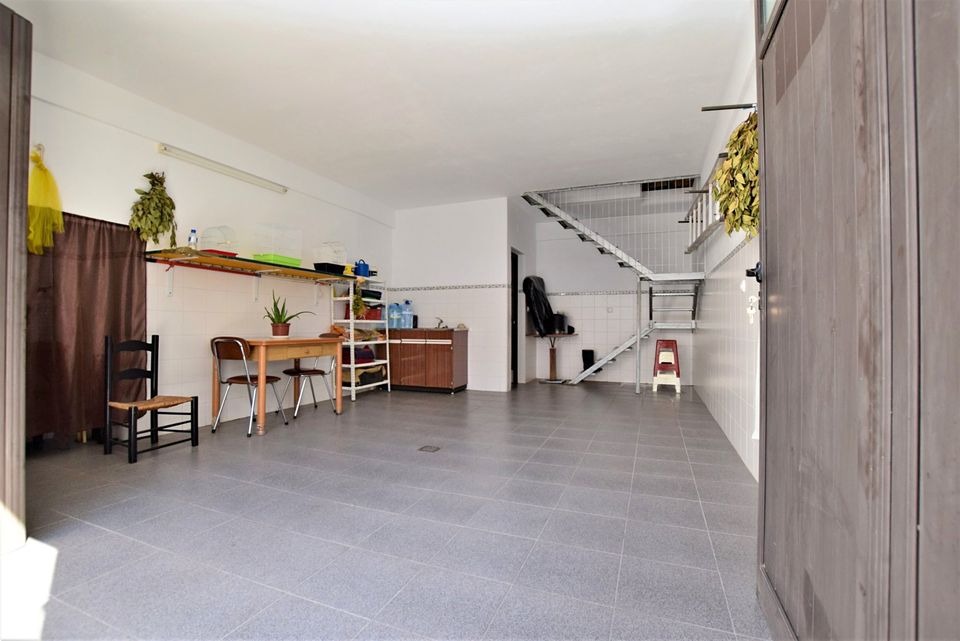
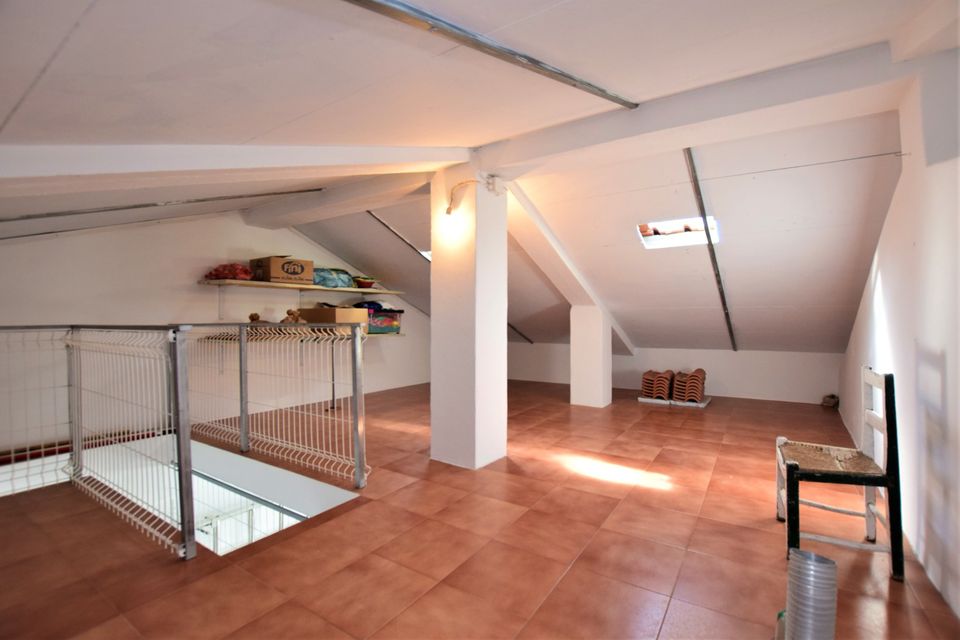


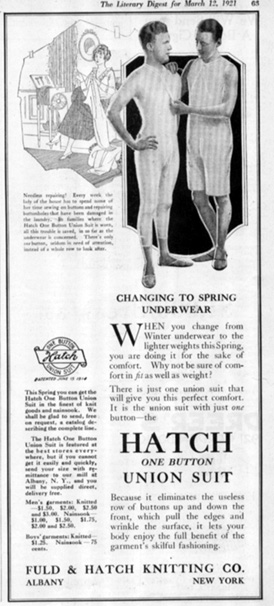


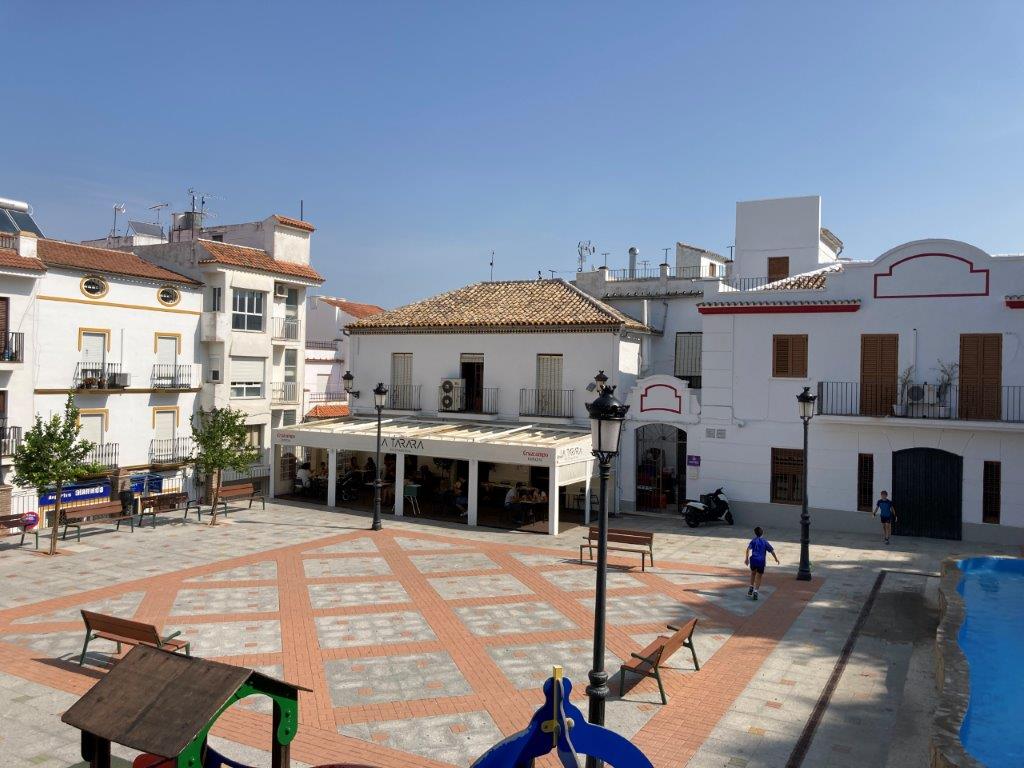


 "Exactly!"