Illegitimate, Illegal and Condemnable:

Portugal Decries Russia’s War with Ukraine

Let’s be clear: In the early hours of 24 February, Russia launched a wide-ranging attack on Ukraine, hitting cities and civilians with airstrikes and shelling. As a result, thousands of innocent people piled into trains and cars to flee the unprovoked aggression, while Russian tanks and troops continued to roll across the border launching a “full-scale war” that could rewrite the geopolitical order of the region.  

At the request of the Ukrainian authorities, Portugal agreed to provide military equipment such as vests, helmets, night vision goggles, grenades and ammunition of different calibers, complete portable radios, analogue repeaters and G3 automatic rifles.

Speaking at a televised news conference, Portuguese Prime Minister António Costa said that the country would be sending 175 military reinforcements to help Ukrainian soldiers on the ground secure their borders as this “is a war against the freedom of self-determination of a democratic country and therefore it is also a war against … democracy.”

“It’s been reported that close to 1,800 additional Portuguese military could be mobilized to take part in NATO’s dissuasive mission within allied countries on Ukraine’s borders. The soldiers will be made up of contingents from all three arms of the military (Air Force, Navy and Army),” reported the Portuguese Journal American. “In a second phase, another 472 military could be dispatched, along with 36 tactical vehicles and two Naval war ships.”

In addition, the United States has been reinforcing its use of Portugal’s Lajes military air base on Terceira island in the Azores, including storage and maintenance of munitions and explosives.

Ukrainians in Portugal, the second-largest foreign community in Portugal, are living in fear for their family and friends back home.

Citizens, residents, and expats of one of the world’s most peaceful nations expressed their frustration and anger, decrying Russian President Putin’s decimation of the world order.

Outside the Russian embassy in Lisbon, thousands of demonstrators held signs and waved flags to protest the Russian invasion and Portugal’s solidarity with the Ukrainian people. Additional protests in Porto and Algarve called for military support from European countries to Ukraine, as well as urged the Portuguese to not purchase products from Russia.

“Portugal supports Ukraine, which is defending itself against an unjustified, illegal, and unacceptable invasion,” Defense Minister João Cravinho tweeted.

On behalf of Portugal, Foreign Minister Augusto Santos Silva also expressed his solidarity with Ukraine and condemnation of Moscow:

“We have to be prepared for all scenarios. I am sorry to say it, but I cannot say anything else: today we have to work with all scenarios on the table because what is happening is that Putin’s action is not only exceeding his words, but Putin’s action at every moment is also exceeding the maximum that we had foreseen as possible …”

Santos Silva remarked that “whatever the objective” of the Russian offensive, “it is illegitimate, it is illegal, and it is condemnable,” describing it as “the biggest security crisis that Europe has gone through since World War II.”

Prime Minister Antonio Costa condemned the Russian invasion, adding that any Ukrainians who have family, friends, and acquaintances in Portugal are welcome in Portugal. Instructions to facilitate visas to those feeling the Russian invasion were given to embassies in Ukraine, as well as neighboring countries. The Portuguese Embassy in Ukraine urged Portuguese citizens in Ukraine to leave through European Union borders, particularly enroute to Romania or Moldova.

“While refugees are usually allowed in Portugal through a case-by-case analysis of the danger each applicant faces, the government acknowledged that all refugees from Ukraine are facing dangerous conditions,” wrote Lara Silva in Portugal.com. “The only reason someone might be denied asylum is if they have committed crimes against humanity or serious crimes, according to the Minister of Internal Administration and Justice, Francisca Van Dunem.” 

Unclear whether any changes will be made to the Portugal Golden Visa, “the war in Ukraine is likely to affect Portugal’s state budget for 2022,” Silva predicted. The Prime Minister, however, said it was too early to assess whether this is the case; some Portuguese economists, however, have stated that it will – directly and indirectly – impact the state budget:

“Oil and natural gas prices will continue to skyrocket, as Russia is one of the main energy suppliers to European countries. GDP is also likely to decrease in Portugal and there could be increased military spending attributed to the budget, depending on the course of the conflict.”

The Foreigners and Border Service previously announced that it would stop the Golden Visa scheme for Russian citizens. In addition, Foreign Minister Augusto Santos Silva stressed that more Russian citizens inn Portugal would be subject to sanctions.

“SEF has suspended the appreciation of any dossier of candidacy for authorization of residency through investment, commonly known as golden visas, for Russian citizens,” he pointed out.

In addition, Santos Silva stressed that the scheme was also suspended for citizens from Belarus.

According to Portugal’s Immigration and Border Service (SEF) data, investment from citizens from Russia brought a total of €277.8 million to Portugal’s economy in the nine years since the program was created.

With a view to receiving refugees from Ukraine, Portugal’s government recently published in the Diário da República the amendment to an ordinance that regulates the regime for granting temporary protection to refugees. In a press conference after an extraordinary Council of Ministers, the Minister of Social Security announced that Ukrainians who arrive in Portuguese territory “are guaranteed to stay regular,” being immediately assigned a user number of the National Health Service, Social Security number, and Tax Identification Number (NIF).

The official also announced that the Institute for Employment and Vocational Training (IEFP) has created a “task-force” “to accompany people in a personalized way and manage to find ways of real integration,” through accommodation and a platform where companies will be able to upload job offers.

According to the Minister of Justice and Internal Administration Francisca Van Dunem as quoted by CNN Portugal’s Barbara Cruz, the regime will have an initial duration of one year, renewable for two periods of six months “provided that conditions are maintained that prevent people from returning” to Ukraine.

Although no one in the West is quite sure what Putin’s intentions are, a weakening or breakup of the European Union is suspected of being one of his primary goals, says Len Port, a journalist and author based in the Algarve who writes for the Portugal Resident.

“Fortunately for Portugal, unlike much of the rest of Europe, it is not dependent on natural gas supplies from Russia, which it is feared the Kremlin might be using as a weapon in the current stalemate. Portugal’s gas originates in Algeria, Nigeria, and the US,” Port wrote on 26 January.

Nonetheless, Portugal has concerns even though it is the most distant EU country from Ukraine and, thus, perhaps the least vulnerable should dialogue fail. It is situated more than 3,000 km west of Ukraine. In past years, top Russian warships have passed along Portugal’s coast, at times as close as 26 nautical miles from the Algarve’s shores.

“As distant as it is, defence minister João Gomes Cravinho told his 26 EU counterparts at a meeting … in Brest, France, that he was delighted with the ‘absolute refusal’ by all EU member states to give in to Russia’s attempts to divide the Union by threatening Ukraine,” Port added.

“It’s clear that Russia’s attitudes seek to divide–divide the Europeans and divide the Europeans from the North American,” claimed the defense minister. He described it as “a very worrying situation that must be dealt with firmly, with a clear purpose, and in unity among all Europeans.”

The President of Ukraine, Volodymyr Zelensky, thanked his Portuguese counterpart, Marcelo Rebelo de Sousa, for the support Portugal has provided to Ukraine.

Zelensky said on Twitter that he spoke to Marcelo Rebelo de Sousa, whom he thanked for the closure of Portuguese airspace to Russian planes, Portugal’s support in excluding Russia from the Swift international interbank platform, and for “concrete defence assistance.”

The Ukrainian head of state called the President of the Republic, who reiterated Portugal’s “strong condemnation” of the Russian invasion of Ukraine and “solidarity support for the courageous Ukrainian resistance,” according to a note published in official website of the Portuguese Presidency.

Portugal also aims to accelerate its energy transition and increase the proportion of renewable sources by 20 percentage points to 80 per cent of its electricity output by 2026, four years earlier than previously planned, a transition that is being accelerated after Russia’s invasion of Ukraine,” according to a 2 April report by Reuters.

Unlike central European countries, Portugal does not depend on Russian natural gas pipelines, as it mainly imports liquefied natural gas from Nigeria and the USA, not importing Russian crude since 2020.Committed to become carbon-neutral by 2050, Portugal currently gets 60 per cent of its electricity from renewable sources—one of the largest proportions of green energy in Europe.

Elsewhere, Pope Francis prayed for peace in Ukraine in a ceremony that harkened back to a century-old apocalyptic prophecy about peace and Russia sparked by purported visions of the Virgin Mary to three peasant children in Fatima, Portugal, in 1917.

The pontiff invited faithful from around the world to join him in the prayer, which opened with Francis entering St. Peter’s Basilica before an estimated 3,500 people and concluded with him sitting alone before a statue of the Madonna. There, he solemnly asked forgiveness that humanity had forgotten the lessons learned from the tragedies of the last century, the sacrifice of the millions who fell in two World Wars,” noted Nicole Winfield for the Associated Press.

“Free us from war, protect our world from the menace of nuclear weapons,” the pope prayed.

The service was Francis’ latest effort to rally prayers for an end to the war while keeping open options for dialogue with the Russian Orthodox Church and its influential leader, Patriarch Kirill. “Francis has yet to publicly condemn Russia by name for its invasion, though his denunciations of the war in Ukraine have grown increasingly outraged,” observed Winfield.

Bruce Joffe is publisher and creative director of Portugal Living Magazine. Read the magazine’s current issue online and subscribe at no cost via this link:
https://portugallivingmagazine.com/our-current-issue/

Processing…
Success! You're on the list.

A Seat at the Table for Elijah?

For many of the same reasons that Christians celebrate Easter – being released from bondage into freedom – Jewish people traditionally celebrate Passover as a series of observations passed down from generation to generation. It’s a holy day to recall how God saved his called people from plagues and the death of their first-borne sons, the latter by painting the lintels framing their doorways with the blood of sacrificial sheep so that the angel of death “passed over” their homes while the Egyptians suffered an entirely different fate.

One of the central themes of Passover is telling the story of oppression and the journey to liberation.

“Let my people go!” Moses repeatedly pleaded with Pharaoh.

And finally, with the death of his own first-borne son, the story goes that Pharaoh relented. Miracles of the water parting so the Jewish people could walk safely through while, later, as Egyptians had second thoughts and pursued the Israelites through that same water, it gathered back together and drowned the Egyptians hunting their hostages. Even the matzoh – the unleavened bread – is part of the Passover story, reminding us of the haste in which the Hebrews fled (with not even enough time for their bread to rise).

While we may understand that spiritual maturity means accepting that life is the integration of the bitter and the sweet, the matzoh sandwich also reminds us that we live our lives “in-between.” We hang in the balance, alive, but not immortal, sandwiched between a fragile, limited, carnal self and our eternal Divine DNA.

For both faiths, Easter and Passover have the same significance: remembering our freedom from bondage. We gather together, observe certain rituals, and share a communal meal while passing down these remarkable legends.

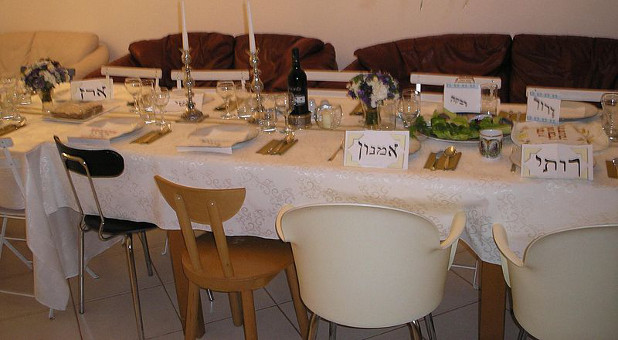
For Christians, Easter Sunday is preceded by Palm Sunday which, in turn, is preceded by days of Lent, preparing ourselves for worship in church. Often, there are processions (especially in predominantly Roman Catholic countries) with banners, floats, and flowers. For Jews, however, Passover is a home-based, solemn festivity, worshiped around the family table … with a very interesting tradition: one of the chairs is always left empty.

It’s Elijah’s.

Jewish tradition teaches that Elijah the prophet will be the harbinger of the coming of the Messiah and the world’s redemption. It is a chair of hope. Elijah’s cup, in Judaism, the fifth ceremonial cup of wine poured during the family (seder) dinner on Passover is left untouched in honour of Elijah, who, according to belief, will arrive one day as an unknown guest to herald the advent of the Messiah. His presence signals the messianic era: a time of redemption, peace, and spiritual bliss. The full cup ―one for the future ― remains untouched to honor and offer hospitality to Elijah when he ultimately appears. Symbolically, he is also welcomed when families open their doors during the Passover Seder.

During the last generation, however, Elijah’s chair and cup have been taken.

By cell phones and digital devices.

How ironic that holidays which are supposed to lead us by faith from bondage and oppression to freedom and peace have been usurped by humans putting their faith on hold should they be beckoned by a telephone call, Facebook message, or Instagram photo.

Each year, the chairs around our table are filled with different individuals who join together to retell, once again, the story of our enslavement and redemption. The Passover seder is more than a history lesson, for each of us is instructed to see ourselves as if we had personally been freed from Egypt. It must become our own story, told in the context of our family’s generations and community. We add new layers as each new year’s experience melds with the memories of the past.

Some years are painfully different. A beloved family member or friend has died during the past year. A country has been destroyed, whether by politics, war, and division. There is an empty chair – Elijah’s – at the table. How can we go through the same rituals when life has been so drastically altered? What if we begin to cry at the seder table? What if everyone is so afraid of pain and grief that they ignore the empty chair? Are we even allowed to bring our sadness to the seder, which seems like it should be a happy occasion? Sometimes death changes family/social relations, also the empty chair at the table.

How do we find meaning in the holidays now?

With God’s grace, hopefully beyond our fleeting “new normals.”

Bruce Joffe is publisher and creative director of Portugal Living Magazine. You can read the current issue and subscribe — at no cost! — by clicking on this link:

Processing…
Success! You're on the list.

Parable, Extended

Whoever has ears, let them hear:

The Kingdom of God beckons like a splendid real estate listing for a sprawling property still under construction. But, instead of a firm or non-negotiable asking price, its Multiple Listing Service (MLS) description states, “All offers considered.”

From near and far, many people looking for a new place to live decide to visit this extraordinary place. Some are newcomers to the neighborhood, while others are old-timers who have lived here much of their lives but, for one reason or another, have decided that the time now has come to change their residence.  Although a number of those interested in the property are first-timers entering the market, more than a few are quite experienced with making monthly mortgage payments including the PITI: principal, interest, taxes, and insurance.

Approaching the entrance to the building, a sign has been tacked to the front door:  “Open. All are welcome here. Please come in, make yourselves at home, and look around our habitat.”

Inside, it’s a marvel to behold.

Off the entry way referred to by the broker’s brochure as the “Gathering Room” leads a meandering corridor with rooms on the left and to the right. People introduce themselves, hang up their outerwear, and laugh about such a remarkable property on which they have been encouraged to make an offer. 

All offers considered. Really? What is expected and how much is enough?

The Great Room beyond the Gathering Room is filled with extraordinary antiques and lovely old keepsakes. The scent of wax from candles and on heavily polished wooden seating areas permeates the air as clusters of people “ooh” and “aah” over the leaded stained glass windows which filter prisms of light. They bow before vintage figurines or larger statues, murmuring softly and reverently. By the look in their eyes and peaceful demeanor, some people appear to be touched by a ghost or holy spirit amid all the hallowed icons amassed here.

Adjoining this room of antiquities is another room—not quite so old, yet classic and traditional. Here, the people cloistered seem a bit more reserved as they pay homage to the place in a pristine and orderly fashion.  They all know the specific reply to each statement or comment made, as everyone echoes the proper response promptly and with great precision. Though, to some, this seems somewhat stifled and/or silly, the appointed words and common traditions underscore a sense and sensibility resulting in a bond enrapturing quite a few people in the semblance of hearing a holy, holy, holy celestial choir.

Several visitors to the property are held spellbound by these two rooms and find themselves passing back and forth between them. In some ways, both rooms are similar although, quite naturally, certain folks are more beholden to the antiques and heirlooms while others are bound to their more customary rites and rituals.

The formal rooms continue to unfold as we step into the Library. Silently, one of the men seated around one of several large tables looks up as we enter and points to his lips, making the “Shhhhhhhhh!” sign that we are not to speak while here. If the other two rooms we had been through were warmed by the touch of flesh through handshakes, a squeeze to the shoulder, or pat on the back, this room seems fundamentally cold and foreboding. Those seated at the tables here have their eyes glued resolutely to the pages in front of them. Their fingers follow the words on each page with Talmudic scrutiny, parsing laws and prohibitions. Every so often, someone nods in affirmation with the book or glances up at the ceiling as though the Holy One can be found ensconced there. While a few linger here acknowledging whatever truths (evidently) cause the readers to follow in thanksgiving and submission, others are very eager to move on.

Passing a series of Dormitories whose doors are slightly ajar, we peek inside. Time blurs in these bedrooms where we expect peaceful people to be sleeping. Instead, they are silently meditating on some noble truths, softly chanting their mantras, or stretching contemplatively in yoga positions—reaching reflexively toward a higher moral principle, perspective, or purpose.

Next, we approach the grand Fellowship Hall where people seem to enjoy getting together. Music plays as we smile back at those grinning our way; yet something seems amiss—odd and out of sorts. A measured “all for one and one for all” aura appears like icing to a cake—except there is no cake and the sugar is really saccharine. Squinting for a closer look, we notice close cliques and distinct separations among the people present. What’s more, apparently they’re oblivious to anyone outside of their room. Despite the frivolous camaraderie, some people evidence a heavenly joy, as if being together in a general store surrounded with all its goods.

To the left of the Fellowship Hall in an open-concept Family Room, people are listening to a lecture that follows a movie shown here earlier. No rules or regulations are enforced here, just respect for each person’s uniqueness and a hallelujah chorus of diversity, social justice, and emancipation proclamation. The emphasis here is on leaving the room a better place than how you found it.

We cannot help but put hands over our ears for all the hooting and hollering coming from down the hall. In this room, people are shouting and clapping, dancing and singing with words that don’t make any sense (to us).  As quickly as someone stands and utters a string of unknown sounds, another interrupts, prophesying praises and/or condemnations. There is neither rhyme nor reason, and, despite people lying jubilantly helter-skelter across the floor, a sense of mystical satisfaction seems to permeate the activity here. Who can say that, miraculously, they aren’t swept up in some sort of spiritual ecstasy? 

You can see the light at the end of the tunnel, so to speak, as only a few rooms are left before the backyard door which is wide open.

The next room our group comes across – those who haven’t stayed behind in one of those rooms we’ve already been through – has a bright, neon sign above its portal flashing: “Bonus Room!” But the door to this room is closed and locked. We knock and the door opens from the inside. “You have to pay – spend your money as well as time – in this room,” a voice intones.  “How much?” a member of our group asks. “That depends on what you want,” quickly comes the reply. “You need to sow seeds in order to reap a harvest.”

We are allowed to peek into the room without crossing the threshold. Truth be told, the room looks more like a bank or investment firm, with people standing as best they can – some holding tightly onto canes, the blind being led by guides gripping their hands, and others waiting impatiently as nervous tics ravage their faces – all awaiting their turn at the convenience counter.

“Do you have faith? Do you trust God? Do you believe God’s Word? Will you confess and claim it? Are you willing to put God to the test and prove that you’ve been promised health, wealth, and happiness?” asks the well-dressed proprietor behind the window grills. “Yes! Yes!! Yes!!!” cries each person approaching.

“Then, plant a seed.  Put a deposit, a down payment, on the riches in store for you,” the hawker urges, as people peel off $50, $100, and $500 bills … or more.

Shocked as we are at the nature of these “covenant” transactions, it’s amazing how some of those believers are being blessed in the process of their dealing!

Two rooms remain for us to see in this cathedral of a house.

One, we decide to bypass as it seems too reminiscent of the Family Room. This one, though, is named the “Play Room,” and it’s obvious why: Entertainment is the focus here. There are video games and sound stages with bands blasting contemporary gospel music (variety shows and theatrical performances), with plenty of young, exuberant faces eager to soak it all in. Keurig coffee makers and bagels with cream cheese are set out as snacks here. At the end of their time in this spacious room, people hug and say, “See you next week,” as they leave the room and go merrily on their ways. Yes, they have given a dollar or several during the collection and were reminded to be back a week following.

And, in between? That’s their time, to do with as they please.

The Kitchen, warm and welcoming, is full of joyful volunteers who charitably cook and clean up after themselves to feed those hungry and/or homeless. It’s truly amazing how the pantry here is never empty—each time groceries are removed and divided among the guests, the food multiplies so that even more can be served. A banner strung over the serving area subtly reminds folks that, “Joy shared is doubled. Sorrow shared is halved.”

Strangely, the last room before our exit is quite stark and quiet. People here sit in a circle on simple chairs, without the grandiose décor found elsewhere on our tour. Nobody speaks or acknowledges us as we look in; they continue in a reverie of prayer and contemplation. There is no coffee hour or refreshments here, no glad-handing or promises of prosperity, just a solemn serenity begging for peace.

Tired as we are from previewing this property, we need, at least, to take a quick look around the outside. We are standing in front of an open door that looks out on a back yard stretching as far as the heavens. People continuously coming and going from this expanse of nature are both kind and helpful to those they know or don’t know, as they bend beneath the weight of carrying another’s burdens. Here, they lay down parts, parcels, and packets of their lives for others to take while picking up pieces of wood and kindling to fuel the fires of friendship. Children and animals romp together as sunshine and rain nourish the ground, rendering it friendly and fertile.

“So, what do you think of my parents’ house?” inquires the heir and agent apparent, suddenly standing there among us.  “My family’s house has many rooms. Didn’t I already tell you that?”

We all agree—in principle, at least.

“Can I prepare a place – a room – for you here?” he asks, offering each of us our choice of no-money-down, obligation-free reservations.

It seems too good to be true to us wayfarers, as there’s faith abounding here for everyone to live together harmoniously—despite whatever our differences.

Bidding adieu, we remember the words in the property’s listing:

“All offers considered.” Yes, all offers truly are considered by the householders. This house is called The Gospel, it’s fully furnished, and the ageless rock of its cornerstone is grace.

Born Again?

Like so much else in the Bible and the important matters that Jesus talks about, being “born again” may be a metaphor … though a metaphor that is essential to the Christian testament, indeed to the Christian experience.

If I were creating a college curriculum for Christians, I might call my foundational course “Christianity 101: Being Born Again.”

Unfortunately, the term has been given a bad rap and held hostage by evangelical, fundamentalist and conservative Christians; so we tend to cringe a bit, preferring to stay away from talking about it.

But we need to.

Conservative Christians have had a near monopoly on what many people refer to as “born again language” and culture … populated by terms like fallen, sinner, altar calls, and saved … to reciting a string of words as a given formula.  You know what I’m talking about:

 Heavenly Father, have mercy on me, a sinner. I believe in you and that your word is true. I believe that Jesus Christ is the Son of the living God and that he died on the cross so that I may now have forgiveness for my sins and eternal life. I know that without you in my heart my life is meaningless.”  Next, we add a bunch of our particular brand of dogma and doctrine.  And then we say: “I give you my life and ask you to take full control from this moment on; I pray this in the name of Jesus Christ.”

In Charismatic and Pentecostal circles, being born again is further complicated to mean receiving the gifts of the Spirit … especially as evidenced by speaking in tongues, if not being “slain in the Spirit.”

In addition, most of us have known at least one person who was born again in a remarkably unattractive way—practicing a rigid kind of religious righteousness, judgmentalism, and imposing strict boundaries between an “in-group” of acceptable Christians and all others.

I remember some of the churches I attended in my earlier years as a Christian, where certain places of worship were referred to positively, passionately, as “believing” churches, while most mainstream churches were summarily dismissed as not valid to be called Christian.

And yet, there is something special about being born again. 

Rightly understood, being born again is a fulfilling and comprehensive notion, one that we – and all – need to reclaim.

The theme of the story about Nicodemus and Jesus from the third chapter of John’s gospel is rich in metaphor and symbolism.  We’ll focus on verses 3-7 because they explain why being born again or born anew is so vitally important:

“In reply, Jesus declared, ‘I tell you the truth, no one can see the kingdom of God unless he is born again … no one can enter the kingdom of God unless he is born of water and the Spirit.  Flesh gives birth to flesh, but the Spirit gives birth to spirit.  You should not be surprised at my saying, ‘You must be born again.’”

The idea of being born again of the Spirit is not new, nor did it end with these words of Jesus. One of my own personal favorites is the prophecy found in Jeremiah 31:

31 “The days are coming,” declares the LORD, “when I will make a new covenant with the people of Israel and with the people of Judah … 33 “This is the covenant I will make with the people of Israel after that time,” declares the LORD. “I will put my law in their minds and write it on their hearts. I will be their God, and they will be my people. 34 No longer will they teach their neighbor, or say to one another, ‘Know the LORD,’ because they will all know me, from the least of them to the greatest,” declares the LORD. “For I will forgive their wickedness and will remember their sins no more.”

 Later, in I Peter 1:3, we read:

Blessed be the LORD God who has invited us to be born again to a living hope through the resurrection of Jesus Christ.”

But, let’s return to Nicodemus: a Pharisee who had dedicated his life to keeping the rules and regulations of the Old Covenant, a man totally committed to serving God in the only ways that seemed right to him.

Not only was Nicodemus a Pharisee, he was also a member of the Sanhedrin, the ruling body or supreme court of the Jews at the time.

So, what on earth was someone like Nicodemus doing coming to Jesus?  Was he out to trap Jesus into saying something controversial?  Was he gathering evidence? 

No, I don’t think so …

Nicodemus came in the dark, looking for light.  There’s one of our metaphors!  He starts the conversation with a compliment:  “Teacher,” he says to Jesus, “we all know that God has sent you to teach us.  Your miraculous signs are proof enough that God is with you.”

But Jesus brushes aside the compliment to get to the heart of his message: It’s not external signs that are important, he tells Nicodemus; it’s what happens inside a person’s heart … and that has to be such a profound change that it can only be described as being “born again.”

These two Greek words can be translated three different ways.  And they have been, in different translations of the Bible where, in some versions, the words are “born again,” in others, “born anew,” and yet in others, “born from above.”  What’s more, all three are valid!  It’s one of those concepts that can’t be contained accurately in English and retain its full meaning.

What is its full meaning?  The words mean a radical and complete change … it can mean “again,” in the sense of a second or third or fourth time … and it can mean “from above,” and therefore from God.

When we try to bring all these meanings together, to get a sense of what Jesus was trying to say to Nicodemus, we essentially have Jesus saying that there is a fundamental change that happens to someone who experiences and enters into the Kingdom of God.  Something happens deep inside, in the soul, in the heart of that person, which can only be described as being reborn … and there’s nothing of self in this because it comes from the grace and power of God.

Like all of us, Nicodemus was a man who saw the need for change – and wanted to change – but he couldn’t change himself.  It’s a problem that has plagued humanity from the earliest pages of the Bible.  Nicodemus came to Jesus knowing that there was something lacking in his life. Jesus saw the root of the problem and told him what was needed.  It was too radical for Nicodemus, so he clutched at straws: “I just don’t understand how it works,” he seems to say.

Here Jesus does what he often does: He takes pictures from everyday life and uses them to open people’s eyes to the truth.  I’ve referred to pictures like this, before, as metaphors.

“See the wind,” Jesus says to Nicodemus.  “You’ve seen trees flattened by it, or leaves blown by its gusts. You may not understand the physics of what you see, but the effects are plain to see.  It’s like that with the Spirit, too. You may not know how it works, but the effects are plain to see in lives that have been changed.”

Today, Jesus may have referred to television, a computer, or the Internet instead of the wind. Do most of us know how they work?  Probably not.  Do we understand the technology behind their incredible power?  No, we don’t.  But that doesn’t matter … because the effects of what television, computers, and the Internet do are so obvious.

We may not understand the full implications of Jesus’ words when he talks about flesh giving birth to flesh and the Spirit giving birth to spirit … but we can see the effect of this spiritual rebirth in the lives of Christians who have experienced it!

One commentator explained it this way: “The unanswerable argument for Christianity is the Christian life.”  A changed lifeA life focused from the inside out rather than the outside in.

Children instinctively accept their relationship to God because they haven’t been conditioned by society’s rules, norms, and expectations.  As we grow conditioned to seek popularity, achievement, affluence, authority, in the world, we’re increasingly controlled by society, living from the outside in rather than by the Spirit of God from the inside out.  We’re increasingly separated from God as our self-concern, our self-preoccupation, intensifies. It’s what I think of as “the fall.”

Jesus concludes his conversation with Nicodemus with a warning: “I’ve tried to make things simple for you to understand,” says Jesus.  “I’ve spoken to you of earthly things and you do not believe; how, then, will you believe if I speak of heavenly things?  If you can’t see what I’m getting at from your everyday life, how in the world are you ever going to understand the deeper, spiritual things?”

Alas, Nicodemus just doesn’t get it. He’s a literalist. “How can anyone be born after having grown old?  Can one enter a second time into the mother’s womb and be born?” 

Nicodemus is still clueless.

The point of this classic text is clear: What Nicodemus needs is a spiritual rebirth, an internal rebirth, a personal transformation.  It’s what we all need.  Because, at the heart of the Gospel, is the mystery of God’s compelling grace, love, and redemption. 

There’s a very serious message here, I believe, for us:  Faith isn’t something you can understand by discussion, argument, reading or listening to sermons … it’s something that has to be experienced. 

To be born again, born anew, or born from above aren’t alien concepts that belong to the “happy-clappy” brigade of Pentecostals.  No, no, no!  This is fundamental change, a metamorphosis, a continuing transformation in our lives, a constant reformation of dying to the self that the world tells us we are, and being resurrected into the spiritual person that God has created us to be: in relationship to our Creator and all of creation. 

To be born again means dying to an old way of being and being born into a new way of being … dying to an old identity and being born into a new one centered in the sacred.

It’s a process, not a formula … a continuing cycle that we need to go through again and again, rather than saying the words of the “Sinner’s Prayer” and being done with it.

Being born again is the road of return from our spiritual exile, the way to recover our true selves, the path to beginning to live our lives God’s way rather than ours, the exodus from our individual and collective selfishness to the freedom from that bondage.

Most importantly, being born again is intentional; although we can’t make it happen, we can help it along.  That’s why so many sermons about being born again often end with an altar call, an invitation to realize our limitations, turn from our evil ways, and to ask God to take over by acknowledging Jesus as the way we want to live.

No, I’m not going to do that.  But I am going to ask you to bow your heads as I end this message with a prayer:

Our God and Creator, all the riches of life in your Kingdom are ours if we will but open up our lives, our hearts, our minds, and our souls to the new life that you would have us live. Open our hearts to the need for renewal and rebirth. 

Processing…
Success! You're on the list.

Brotherly Betrayals

What is it about brothers that we can learn from those familiar Bible stories?

● Cain and Abel showed us anger and resentment, blood on our hands;

● Jacob and Esau foretold greed and deception, taking what’s not ours;

● Joseph’s brothers sold him into servitude among strangers because of jealousy and bitterness;

● Abraham and Lot enlightened us to the value of land, the potential of negotiation, the importance of hospitality, and the dangers of looking back.

And, now, we have Russia’s aggression, war, and genocide against Ukraine: Gog and Magog?

Our first instinct is to cry out, “God, help us!” But God, thus far, hasn’t intervened. Maybe later, perhaps. Let’s remember that God gave us freewill and self-determination, a choice between good and evil.

You know what we chose.

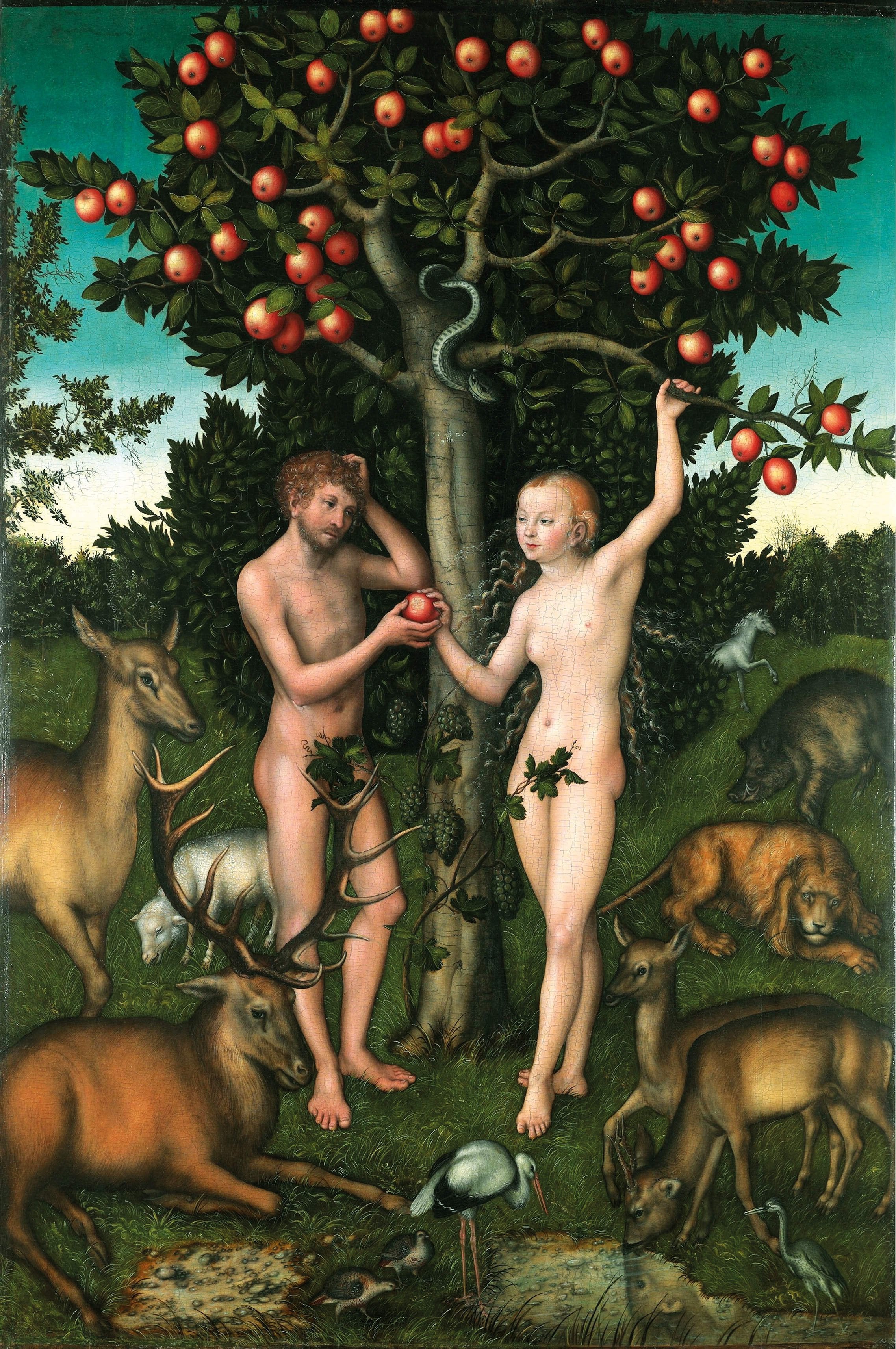
Adam and Eve put people (themselves) before God, blaming others for their own lack of righteousness: “The woman made me eat it,” whined Adam. “The serpent beguiled me, and I did eat,” replied Eve.

Ever since, the trajectory of mankind’s path may already have been determined.

Lord, forgive us and – through your spirit which abides in us – enable and equip us, please, to humble ourselves.

Bruce Joffe is publisher and creative director of Portugal Living Magazine. You can read the current issue and subscribe — at no charge! — online here: https://portugallivingmagazine.com/our-current-issue/

Processing…
Success! You're on the list.

Of Prophets and Poets

Much of what I like most about the King James Version is the beauty inherent to its prose. Whether Psalms, Proverbs, Peter and Paul, or Prophets, I almost always find the version’s way of saying things – even when (mostly) inaccurate—poetic. Which version of the 23rd psalm can compare with the beauty and eloquence of the King James?

My undergraduate education was at the University of Madrid, during the days when Francisco Franco reigned. The world was a frightful place with Vietnam, Watergate, civil rights marches and riots, assassinations of beloved leaders, Khrushchev banging his shoe on a table at the United Nations while threatening “We will bury you!” and campus crusades ending in pools of blood.

In Franco’s Spain, however, the armed civil guard stood sentry on every street … ready to shoot first and (not) ask questions later. Especially when it came to students—university students—who were considered radical rabble-rousers causing trouble.

Young and old, many of us took up the arts for solace—playing music, painting, writing—to quell the anguish in our souls.

Some 50 years ago, I worried these words out in Spanish:

O, mi dolorosa verdad que evade los ojos …

Te buscaba entre las espinas de la vida.

¿Es que has muerto en un siglo cortísimo?

O, que, ya vives,

pudriéndote cada dia?

Roughly translated, my words mourned about the search for a painful and elusive truth, asking if it had died in a short, bygone era … or whether it still lived, albeit diseased and decaying, every day.

I think of my Spanish poem often these days.

Somehow, it seems even more relevant now than then.

Processing…
Success! You're on the list.

Meninho

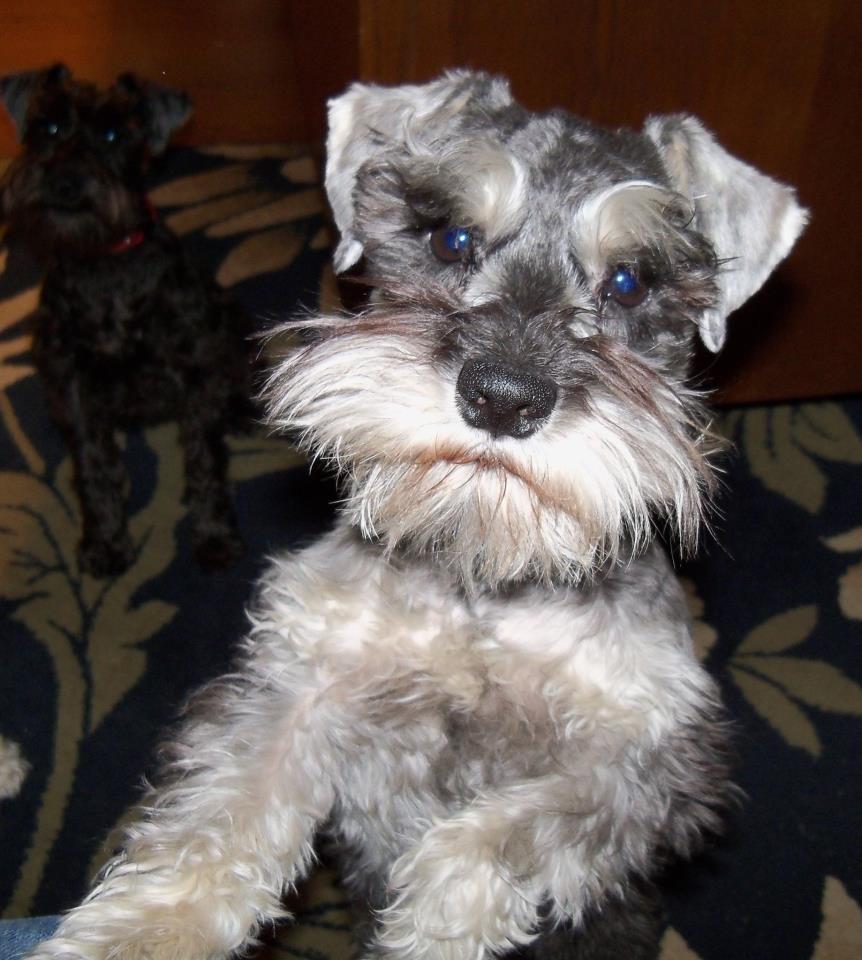
This is Meninho. We called him ninho (niño), for short.

Two months ago, Manny, our little boy schnauzer, died of liver failure. We were heart-broken. Bereaved. Grieving.

Nobody can ever replace Manny – his personality, love, and memories are too special – but, in time, the hole in our hearts can be healed through a new furry family member.

A friend informed us that her dogs recently had produced a litter. One was available. We went to her farm to meet and spend time with the puppies.

Meninho was one of seven. One died during birth. We just learned that the remaining six have developed Parvo. The last thing any new puppy owner wants to hear is a diagnosis of parvo. Parvo in puppies is a common disease with deadly consequences. Puppies ages six weeks to six months are the most susceptible. Meninho was six weeks old when we met him … we were to bring him home when he reached ten.

We were grief-stricken. Again.

Helping families to deal with the demise of a beloved pet was a major part of my ministry as chaplain at an animal rescue shelter in Northeast Wisconsin after retiring. Because they couldn’t understand, well-meaning people would ask, “Why does an animal rescue shelter need a chaplain?”

Current circumstances reminded me of the challenges, concerns, and considerations people experience with their pets throughout their too-short time with us.

Life would go on, for our family …

The best time to bring a new beating heart into your home after the demise of a beloved one was one of the struggles I tried to help people deal with during my time as a chaplain.

Others further explain why “pet-people chaplains” are vital:

● I probably spent more time consoling and counseling people upon the traumatic and heart-wrenching departure of a family member, albeit a four-legged one, than any other aspect of my ministry.

● A woman called the shelter to ask if there was someone she could talk to about a difficult choice regarding her nine-year-old cat. It wasn’t a life-or-death decision. Her cat was going blind. After its preliminary diagnosis and second opinions, the consensus was that the only hope to save the cat’s vision was at a specialized facility in Madison, the state capital. The procedure would cost about $5,000 … almost all the money she had in the world. Should she spend it on her cat? She made an appointment to speak with her pastor, whose response was, “Geez … it’s only a cat!” Alas, he just didn’t understand.

● People adopting pets and bringing new ones into their lives often want the pet to be blessed. Sure, some churches honor St. Francis (of Assisi), patron saint of animals and the environment, with an annual “blessing of the pets.” Up-close-and-personal, however, is something different entirely.

● Prayers over pets (sick or otherwise) and home visitations were frequently requested. Other times, disappointed and desperate, many wanted clergy to be there with them, holding their hands and hugging them closely, as they said “good-bye” to their family member departing for the rainbow bridge.

● Some deeply spiritual people wanted their houses blessed before (and after) pets entered and exited.

● Of course, many times were frequently spent visiting and playing and helping with the pets housed in the shelter.

Probably my most extraordinary moments as chaplain at an animal rescue shelter, however, were those spent in a variety of area churches, preaching about God’s love for all creatures great and small. The subject matter is rarely taught (or quickly passed over) in most seminaries and schools of theology.

Lions, leopards, bears (although no tigers), along with nearly 100 other animals, insects, and non-human creatures are mentioned throughout the Hebrew and Christian Testaments. And, while dogs figure prominently in several biblical passages, interestingly there is not a single mention of a domestic cat in the canon.

(You’ve heard it before: “What is dog spelled backwards?”)

What does the Bible say about animals?

In Genesis 9:3-4, God tells us that a person cannot cut off the limb of a living animal. In Exodus, the Ten Commandments remind us that we are supposed to treat animals with respect and care, particularly those who work our lands.

Psalm 147:9 shows us that God is concerned for all creation, including the animals: “He provides food for the cattle and for the young ravens when they call.” In Psalm 104:21, we see that “the lions roar for their prey and seek their food from God”; implied is that God feeds them. In Luke 12:6, Jesus says, “Are not five sparrows sold for two pennies? Yet not one of them is forgotten by God.”

And, who can forget these words from the 23rd Psalm, “The Lord is my shepherd …”

If God cares for creation and the animals, so should we.

In fact, it is God’s care for animals that probably explains our desire for pets.

We have inherited the part of God’s nature that cares for the animals. In the very beginning, we’re told, God blessed the people and commanded them, “Fill the earth and subdue it. Rule the fish of the sea and the birds of the air and over every living creature that moves on the ground” (Genesis 1:28).

When beginning my messages from the pulpit, I asked those in the pews if they remembered the story of Balaam and his donkey (Numbers 22:21-39).

After Balaam started punishing his devoted donkey for refusing to move, the animal was miraculously given the power to speak. It complained about Balaam’s treatment. Balaam saw an angel, who informed him that the donkey’s behavior was the only reason the angel did not kill Balaam. Balaam immediately repented, and was told to go on his way.

I reminded the congregation that, if God could speak through a jackass, God certainly could speak through me!

Disclaimer: I share these stories of our experiences not to complain or seek sympathy, but because we are North Americans acculturating to another country’s norms and expectations. Information in posts such as this aren’t found in tourist or relocation guides … nor asked about and answered in most Facebook groups. Hopefully, some will learn from my anecdotes and be better prepared for the grit and grist, the grain of living abroad.

Bruce is publisher and creative director of Portugal Living Magazine. Read the current online issue and subscribe to the magazine at no cost whatsoever: http://portugallivingmagazine.com/our-current-issue

The Serpent Was Right

Regardless of our current religious orientation, most of us are familiar with the Garden of Eden story … which begat the Christian concept of “original sin” and redemption through substitutionary atonement.

Christian religious traditions hold that the original sin has been passed down from Adam and Eve to all humanity. And that the only way to regain our right-standing with God is to accept Jesus as our savior, heaping all of our misdeeds and offenses upon him—the sacrificial scapegoat for us all.

But what, exactly, was the original sin? Disobedience? Doubt? Rebellion? Self-awareness? Self-centered egoism?

According to one chapter of the Bible, God warned our primogenitors, “… you must not eat from the tree of the knowledge of good and evil, for when you eat from it, you will certainly die” (Gen 2:17, NIV).

Apart from the fact that there’s a second account of this story in which, rather than die, God recognized their transgression and proclaimed their punishments—pain in childbirth and subordination to men for women, and, for men, relegation to an accursed ground with which they must toil and sweat for their existence (Gen 3:17-19, NIV)—we learn that Adam and Eve didn’t die for what they did; with 56 children, they are reckoned to have lived about 930 years before their demise.

Therefore, the serpent was right: neither Adam nor Eve died after eating the forbidden fruit.

Yet the crafty old snake was the voice of temptation, dressed up in an all-too-human question: “Did God really say (that)?”

Eve, in effect, replied: “Yes. Those were God’s rules.”

But what some think of as the devil in disguise—the serpent—persisted: “You will not certainly die … For God knows that when you eat from it your eyes will be opened and you will be like God, knowing good and evil” (Gen 3:4-5).

For most of the Judeo-Christian persuasion, “die” was symbolic, as in separation from our intimate connection to God, which evangelicals and other Christians will tell you can only be redeemed through being “born again” with Jesus … aka (metaphorically, of course), a resurrection.

So, let’s return to my original question: What, exactly, was the so-called original sin? Was it disobedience? Doubt the God really said something? Rebellion against the established rules? Self-awareness and/or its offspring, self-centered egoism?

I believe it was self-awareness and egoism.

What happened after Eve enjoyed the tasty fruit and cajoled Adam into trying it, too? They recognized that they were naked and donned fig leaves as garments. Their son, Abel, killed his brother, Cain, out of envy. Humanity sold its soul in a variety of Faustian deals and bargains.

Egoism is a “doctrine that individual self-interest is the actual motive of all conscious action; a doctrine that individual self-interest is the valid end of all actions,” along with “excessive concern for oneself with or without exaggerated feelings of self-importance,” according to Merriam-Webster.

Only by transcending our egoism can we truly understand and care about the welfare of others.

A Woman’s Place

Save me, please, from those teachings of the Apostle Paul insisting that women should be subservient and submissive to men, never teaching or being in positions of authority.

Malarky!

That’s not Jesus talking (Paul even admits that many of his words are his own, not Jesus’s) … nor is it even the Apostle Paul. We’re hearing from the old Pharisee Saul, whose upbringing – even to this day among the Orthodox Jewish community – taught him that women were lesser than men and, even during worship, must be seated on the sidelines, separated from the men.

Whenever I hear such foolishness about how a woman should dress, speak, walk, and look, I remind myself whence such poppycock derives and festers.

Women have a vital, integral, organic, and resourceful role in communities of faith—at least in the Scriptural stories, if not in Christian life as some know it today.

Let’s begin with the first woman mentioned in the Bible: Eve. Realizing her cunning, wit, and ability, the serpent asked her, “Did God really say …?” knowing that she could convince the dumbfounded Adam to do things her way.

One of my favorite heroes of the faith is Ruth the Moabite, who I often refer to when seeking to balance those spouting Paul’s opinions of “righteous” women.

“But Ruth replied, ‘Don’t urge me to leave you or to turn back from you. Where you go I will go, and where you stay I will stay. Your people will be my people and your God my God.’” (Ruth 1:16)

Of course, she was talking to her mother-in-law, Naomi, not to any particular men … but her words were to form the foundation of godly relationships between husbands and wives, men and women, people whose traditions are based on the same God.

The Hebrew Scriptures also speak of Deborah, the first and only female judge cited in the Bible … of Bathsheba, possibly one of the first women to be “trafficked” by the manipulations of King David … of Esther, personally responsible for saving her people while in exile … and of Sarah, mother of the Jewish nation. There are many more: Rachel, Rebekah, Hannah, Leah, Jochebed (the mother of Moses) and Miriam, his sister, Rahab, the unlikely ancestor of Jesus, and others—each a strong and vital woman whose life added much to the faith

The Christian Scriptures, as well, tell the tales of many women worth knowing and emulating, beginning with Mary, the mother of Jesus. Who serves as a better role model for motherhood than Mary, a woman unique in so many ways?

Other prominent women in the New Testament include the other two Marys: There’s Mary Magdalene who, after Jesus healed her, ventured alongside him in his ministry, bearing witness to his crucifixion, burial, and resurrection. We’re also introduced to Mary of Bethany, sister of Martha and Lazarus, who hosted Jesus in her home.

Elizabeth’s faithfulness is meant to draw our minds back to Sarah and the thousands of years during which Israel waited for the Messiah to come. Mary of Bethany’s sister, Martha, was rebuked by Jesus for putting her hospitality obligations above learning his words. Nonetheless, she was still a devoted disciple of Christ and desired deeply to know and love Jesus, doing everything in her power to dignify him as the unknown king. And Priscilla was a powerful church leader in the book of Acts.

This Mother’s Day, let’s pay homage to women and think of May 9th as Women’s Day, because a woman’s place is never behind or beneath men … but alongside them.

Why else would it be a rib, rather than a lower part of the body?

Pastor Bruce moderates the interfaith, nondenominational, spiritual congregation — People of Faith Online — which welcomes everyone, everywhere!

Processing…
Success! You're on the list.

Back from the Dead: Mister Manny’s Miracle

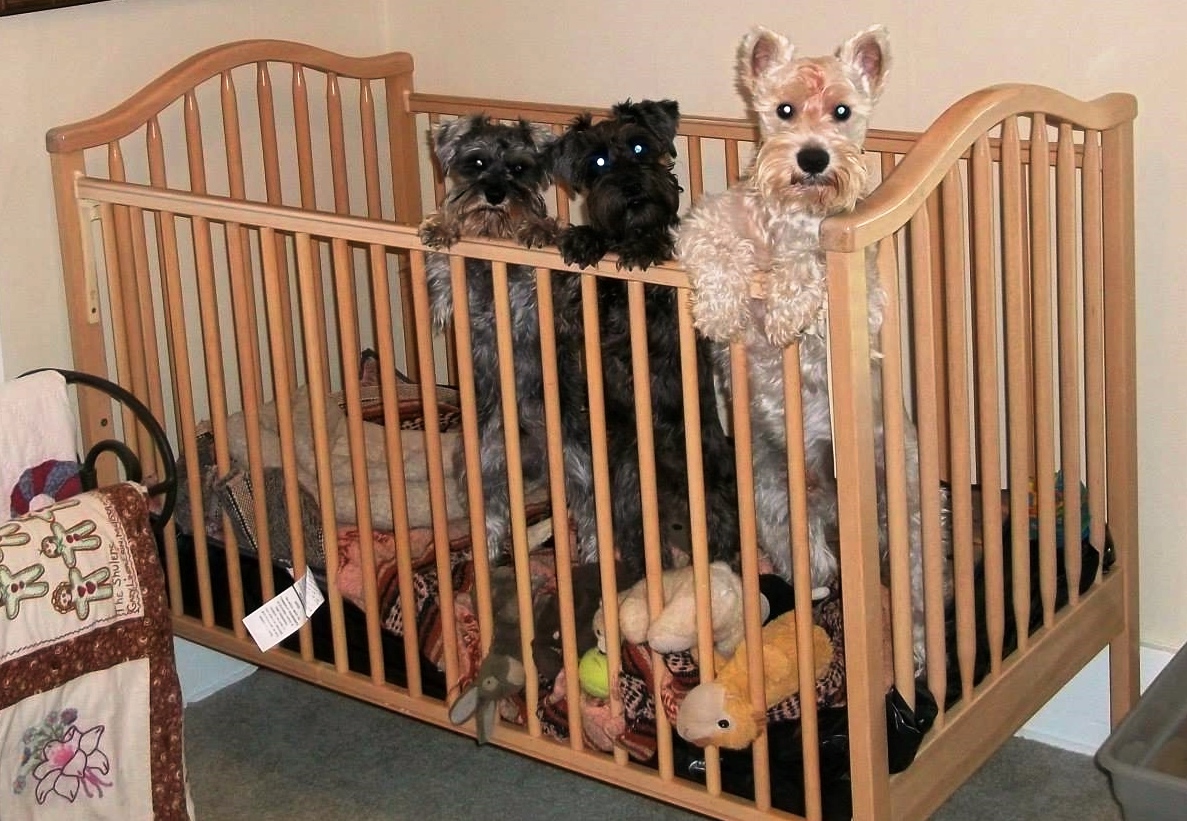
Manny, Sheba, and Jackson

Just about two months ago, we took our three Miniature Schnauzers — Jax (the white one), Sheba (the black one) and Manny (the gray one) — to the vet in Castelo Branco for their annual inoculations and rabies boosters.

We live in Portugal now, since relocating from the USA about four years ago.

Anyway …

When the doctor examined Mister Manny, as we call our little boy, she became very concerned: his eyes and mouth were yellow, indicating hepatitis of the liver. She took blood tests and ultrasounds, which confirmed her diagnosis. To us, she said, “Manny is very, very sick. The liver is one organ that can’t regenerate itself or be repaired.” Handing us six different prescriptions — some pills, others to be given orally by syringe orally — she told us Manny did not have much time left and that we should prepare ourselves.

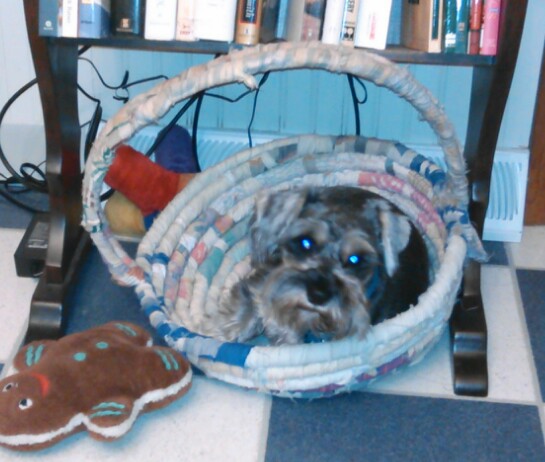
Mr. Manny

Over the next six weeks or so, Manny went from bad to worse: He didn’t eat. He drank lots of water. He was tired all the time. He couldn’t control himself. We went to our home in another area of Portugal, with our vet urging us to find a vet in the area quickly and to take Manny in. We did. This vet, too, told us that Manny was in very, very, poor condition and that the end was very near. By this point, the skin under his fur was beginning to turn yellow, too. After prescribing two more medications, she said, “You will know when it is time to take a different course of action.”

Needless to say, we were heartbroken. What we wanted and needed from the pragmatic vets was hope—something to hold onto. But they tell it as they see it here in Portugal.

All three of our dogs suffered from pancreatitis and had always been fed high-quality, low-fat foods. But this was different. Different and deadlier.

After the fourth visit following Manny’s initial diagnosis (and prognosis), his condition further deteriorated–despite the number of medications we fed to him. His sweet and outgoing spirit, along with all aspects of playfulness, were nowhere to be found.

We believed his time had come, after nine years.

Our little boy exhibited all the signs of end-stage liver failure. Hadn’t the veterinarian told us, “You will know when it’s time”?

Joana Rodrigues, his groomer and owner of 4Patas in Elvas, had come to love Manny and contacted us frequently to ask how he was doing. When we told Joana that we were planning to take Manny to the vet for euthanasia the next day … and then drive to Setúbal for cremation, she had another suggestion:

“The animal hospital in Portalegre should see Manny. How can one more opinion from another veterinarian hurt? If the vet agrees, the hospital can perform the euthanasia. They have an agreement with a crematorium in Lisbon to pick up the body for an individual incineration, returning the ashes to you in an urn.”

Portugal laws require a death certificate from the veterinarian and a “disposal” (of the body) form to be delivered to our local junta.

Despite our tears flowing like the Tagus River, we were quite impressed with the VetAl hospital facility and staff. Everyone — veterinarians, nurses, staff members — spoke English and were quite compassionate. After a few minutes, the veterinarian came out to the waiting room where she sat next to us, reviewing the treatment, medicines, and diagnoses Manny’s vets had provided.

“I will do as you wish,” she began. “But I must ask you if, first, we can keep Manny here in the hospital for three-four days. I understand everything his veterinarians have done … but they aren’t a hospital. We are. There are tests and procedures we can do here that they can’t. Will you allow us to try?”

Once again, our hearts skipped a beat. We drew upon the last bit of hope that we’d held in reserve and left Manny in the care of VetAl do Alto Alentejo.

Manny’s treatment consisted mainly of feeding him by IV and taking him off almost all the medications he’d been taking. And lots of prayer from many people attached to Manny.

“He’s doing much better,” the animal hospital reported to us by phone. “His swollen abdomen has gone down … he is eating, as well as drinking … he’s standing … and his excretory tract is functioning. You should come and see him.”

That we did.

Indeed, he was better. But still not the happy-go-lucky, active and spirited little schnauzer whom we’d adored for nine years now. The doctor told us that this was to be expected, as Manny was knocking at death’s door when we brought him there four days earlier. But he was obviously better … better than he was. Even if his little, misshapen body was bones and fur without flesh or fat.

Two days later, the veterinarians took new blood tests and compared the results with his earlier ones. Had the “bad” numbers gone down and the “good” ones up?

Manny continued to have elevated bilirubin and alkaline phosphatase values, but the doctor said that was quite normal at this stage of the disease. His Albumin and phosphorus levels, however, already were normalizing; his other vital levels were doing better, too. He no longer had a swollen belly, he seemed happy, and took strolls on the street led by hospital staff. And, unlike earlier, when we had to add fiber pellets to his food for solid stools, he was producing much better than he had in a while.

The hospital was very pleased with Manny’s progress.

We brought him home two weeks after we had taken him there to be given his last rites.

Honestly, we believed the vets at the animal hospital would tell us that Manny would never again be the same dog that he had been before his liver catastrophe. Nonetheless, he could survive and live a happy and peaceful life with us … although, for how long, we wouldn’t know.

The subject didn’t come up.

Instead, the vet went through the goodie bag prepared for our little boy containing his hospital records and laboratory tests, five different medicines (most different than the eight we’d been giving him earlier), and two cans of special low-fat, gastrointestinal food which we were to feed him – as much as he’d eat – twice daily.

Manny came home with two cans of food. He had developed an appetite–more during his afternoon feeding than the morning. Soon, we realized that we needed to get more … as quickly as possible. First, we went to Rockipets, our go-to source for specialty dog foods in Castelo Branco. They didn’t carry the brand, but could order it for us. Normally, the order would be delivered the next day. But this was Tuesday and Thursday was Corpus Christi, a national holiday. Everything would be closed and orders backed up. The delay could extend until the weekend–or later. We called our vet, who also was out of the food. “We only carry it by special order,” she said, promising to have it the following Monday when Manny was scheduled for his check-up and examination. Now, we were getting worried, as we heard the same story from every veterinarian we contacted in the Castelo Branco region. Out of desperation, we posted large pleas for information leading to the food on our two local Facebook groups. A good friend located four cans of it at her vet in Fundão, about 30 minutes away. We called to confirm and reserve the food, then jumped in the car and headed north on A23. Soon, we were back home with one large (400g) and three small (200g) cans, which lasted through the weekend.

Slowly but surely, little misshapen Mister Manny was returning to his former self. He followed us around, everywhere. He licked his big brother and sister, as they returned the love while they curled up together. He went out in the backyard to do his business, which was consistent and normal. He began talking to us again in that strange gargling voice, on its way to becoming louder and stronger. And with his historic “tap, tap, tap,” he’d use his paws plaintively, asking to be picked up and placed in our laps. Expressing some interest in his baskets of toys, he’d soon be shaking them ferociously and playing tug of war with the others.

People ask us, “How much did you spend on his health care?”

Truth be told, it must have amounted to about €1,500 (about US $1,850) … all things considered, since he had been diagnosed with a failing liver about four months ago. Much more expensive than human care, which is universal and subsidized by the government here. Still, if cost were the issue, we would have spent probably four times that amount in the USA. And, even if health care for pets isn’t covered in Portugal, it is tax-deductible. For us, however, providing the best possible health care – and hope – for our Miniature Schnauzer was worth whatever the price tag.

After all, Mister Manny went from being malignant to a miracle.

And, for that, we are indebted and grateful.

Whether the miracle lasts a month or years, the joy of having our lively little boy back with us again — after everything we’ve gone through — is well worth it.

Shared here are personal observations, experiences, and happenstance that actually occurred to us as we moved from the USA to begin a new life in Portugal and Spain. Collected and compiled in EXPAT: Leaving the USA for Good, the book is available in hardcover, paperback, and eBook editions from Amazon and most online booksellers.

Processing…
Success! You're on the list.