Feeling deceived by their party and a president who deserted them, Magats are furious and have begun to eat their own.
When such major GOP influencers as Marjorie Taylor Greene, Laura Loomer, Tucker Carlson, Matt Walsh, and Steve Bannon (among others) publicly express outrage against this administration’s actions, we know that something’s stewing and rotten inside.
Driving the most recent hellabaloo is Trump’s decision, announced by his defense (“war”) secretary, Pete Hegseth, that the USA would allow Qatar to build a military base in Idaho.
The move comes months after Trump accepted a luxury Boeing 747 from the Qatari government, which drew criticism from both Democrats and Republicans, including Loomer.
In an executive order, Trump also declared that the United States will regard any attack on Qatar’s territory, sovereignty or critical infrastructure “as a threat to the peace and security of the United States” itself. Quite notably, the language of the executive order closely resembles the security guarantee that the North Atlantic Treaty Organization (NATO) gives to member countries. (Qatar is not a NATO member).
MAGA feels betrayed.
Many conservative commentators questioned how the move is aligned with Trump’s “America First” agenda.
“There isn’t a single Trump supporter who supports allowing Qatar to have a military base on US soil,” argued Loomer. “I don’t know who told President Trump this was a good idea, but it has made people not want to vote. This is the type of thing I would expect from a President Ilhan Omar.”
Conservative commentator Amy Malek wrote in an X post: “Qatar has spent $100 billion buying influence in the U.S., and it’s paying off. I am in shock that Washington would approve a deal letting Qatar, Hamas’s #1 financier, open a Qatari Air Force facility on U.S. soil. Qatar bankrolls Hamas, ISIS, the Taliban, al-Nusra, and the Muslim Brotherhood. This isn’t ‘shared defense goals.’ It’s a shared delusion. We’re not building peace. We’re building a launchpad for the Islamic disaster.”
Conservative radio show host Mark Levin wrote in an X post: “I never dreamed of anything like this. We’ve not only agreed to go to war for Qatar but they’re now building an air force facility in our country. Shocking.”
Alexander Duncan, a Texas Republican Senate candidate, said in another X post: “Qatar is not an ally. Qatar is an Islamic State ruled by Sharia. Qatar has the same ultimate objective as the rest of Islam: to conquer the entire world until it is all under one Islamic State (Caliphate) ruled by Sharia.”
Trump himself earlier had condemned Qatar. In June 2017, Trump said Qatar “has historically been a funder of terrorism at a very high level” and supported a blockade against the country, led by Saudi Arabia and the UAE.
A Qatar military base in the USA is only the latest in a series of actions taken by this felon in the White House that defy the Constitution, breaking laws, conventions, and convictions long held sacred by this country.
This isn’t an America anyone voted for.
MAGA, Trump’s base, holds him contemptible for lying and breaking promises made during his campaign to release the entire Epstein file. Since then, however, he’s employed every evasive tactic–including ignoring and firing essential personnel who strongly advised him against pushing his appointed admins for grudge and retribution indictments against such notables as former FBI chief James Comey, New York Attorney General Letitia James, Fulton County (GA) District Attorney Fani Willis, former Trump National Security Advisor turned Trump critic John Bolton, and California Senator Adam Schiff.
Trump isn’t even hiding what he’s doing: the evidence is in his September 20 post addressed to Attorney General Pam Bondi which mentions Comey, James, and California Democratic Sen. Adam Schiff. “They impeached me twice, and indicted me (5 times!), OVER NOTHING. JUSTICE MUST BE SERVED, NOW!!!” Trump wrote.
MAGA isn’t alone in its anger against Trump & Company’s actions.
The vast majority of Americans, including Republicans and those who identify as strong supporters of President Donald Trump, want Congress to renew the enhanced tax credits for people who buy their health insurance from the Affordable Care Act Marketplace.
Holding health care for Americans hostage, Democrats, Independents, and several Republican members of Congress are aghast at what the government shutdown can do to the USA’s stability … financial and family-wise.
Trump’s response – laying off even more essential employees from “Democratic” programs, departments, and agencies – isn’t helping, especially when increasing numbers of Americans are having difficulty getting their already earned Social Security payments.
Tariffs forcing Americans and countries worldwide to pay more for essential goods and services are the province of Congress … not the Executive Branch. Yet Trump has stamped and stampeded his will on these taxes, driving up “kitchen table” matters like the cost of living, rather than lowering them as promised.
Seeing armed and masked military causing havoc in the streets of such major cities as Los Angeles, DC, Chicago, Portland, Memphis (with others targeted to come), is provoking outrage throughout the country and around the world. Innocent people, law-abiding immigrants, and USA citizens are caught up in the carnage caused by unidentified men rounding them up, taking them down, and deporting them to places unknown.
Their devil-may-acre attitude with all of its trappings is horrifying many, including clergy caught up in the web. A federal agent firing pepper balls at protesters outside the ICE processing center in the Chicago suburb of Broadview last month struck a praying pastor in the head. Said another protesting pastor, “It’s like the gates of hell crashing against the kingdom of heaven.”
That’s why millions of Americans protest daily, culminating on October 18th with thousands of “No Kings” marches (referred to as “Hate America” riots by prominent Republicans and their newscasters) across the country, the Atlantic, and around the world.
Along with many Democrats, Independents and a few on the other side of the aisle, I find the insolence and arrogance of Pam Bondi, Kash Patel, and RFK Jr. while testifying before congressional oversight committees revolting.
Bondi and Patel have politicized the USA’s Justice Department and FBI, while RFK Jr. has cut programs keeping Americans healthy, hearty, and hale.
Blackmail and intimidation are being used against the legal profession, educational institutions, government employees, our judicial system, and private citizens.
Increasingly, “insurrection” and “insurrectionists” are words used by this administration, preparing the nation for Martial Law.
Redistricting is held every ten years, following the official Census, not midterm for partisan favors initiated by the president and counter-balanced by states blue and red.
With lawmakers on a continuing hiatus, ignoring their roles and responsibilities as well as their constituents as dear leader assumes ever more control, “taxation without representation” is taking on a renewed meaning.
Millions of Americans are protesting daily, culminating on October 18th with thousands of “No Kings” marches (referred to as “Hate America” riots by prominent Republicans and their newscasters) across the country, the Atlantic, and around the world. Marches like these will continue over and again.
What else can we do to stop Trump’s march toward fanatical fascism?
Petition for impeachment hearings against not only Trump, but his entire team. The Constitution gives Congress the power to impeach federal officials: The President, Vice President and all civil Officers of the United States, shall be removed from Office on Impeachment for, and Conviction of, Treason, Bribery, or other high Crimes and Misdemeanors. (Article II, Section 4). They’re all guilty!
► By all and every means, protest.
► Join organizations and online groups whose causes and concerns align with yours. There’s strength in numbers!
► Thousands of lawsuits, including 20 brought by states and at least 190 active cases are challenging Trumpian actions. Support them.
► Demand an independent investigation into how Trump “won” (or stole) the 2024 election. Many people wiser than me believe Trump conspired with Putin and Musk (et al) to put Trump over the top.
► Refuse to pay federal taxes. Are your elected officials truly representing you?
► Begin now to support candidates of your choice for the 2026 midterm elections.
► Petition for impeachment hearings against not only Trump, but his entire team. The Constitution gives Congress the power to impeach federal officials: The President, Vice President and all civil Officers of the United States, shall be removed from Office on Impeachment for, and Conviction of, Treason, Bribery, or other high Crimes and Misdemeanors. (Article II, Section 4).
If the “Big Lie” purported by Donald Trump referred to his verifiable loss of the 2020 election, fact-checkers to his continuing series of reckless lies (“alternate realities,” as one of his first-termers called them) have counted hundreds — possibly thousands — of other lies … especially since he was elected to a second term.
But, perhaps, his election is an even a bigger lie?
“Donald Trump filled his first 100 days back in office with the same relentless lying and inaccuracy that was a hallmark of his first presidency and his 2016 and 2024 presidential campaigns,” stated CNN’s Daniel Dane, who listed 100 separate false claims from Trump since his inauguration on January 20, fact-checked concisely with hyperlinks to more information.
During his first term as the 45th President (2017–2021), The Washington Post’s Fact Checker team documented 30,573 false or misleading claims over four years, averaging about 21 per day. This number increased over time: roughly 6 claims per day in his first year, 16 in the second, 22 in the third, and 39 in the fourth, especially spiking around the 2020 election.
For his second term as the 47th President (starting January 20, 2025), CNN’s fact-check of Trump’s first 100 days (through April 2025) noted “relentless dishonesty” with at least 100 specific false claims identified, though they didn’t provide a daily average. NPR’s analysis of a single August 2024 news conference found 162 misstatements, exaggerations, or lies in 64 minutes, over 2 per minute. These snapshots suggest the pattern of frequent false claims has continued, though comprehensive data for the second term is still emerging.
PolitiFact, fact-checking Trump since 2011, reviewed 1,078 claims as of March 2025, rating about 77% as Mostly False, False, or Pants on Fire (their term for egregious falsehoods).
Trump’s falsehoods are unprecedented in scale and impact.
Critics note his repetition of false claims, like those about the 2020 election, exploits the “illusory truth effect,” where repeated exposure makes falsehoods seem believable, especially among supporters. Nonetheless, they’re still lies.
“During and between his terms as President of the United States, Donald Trump has made tens of thousands of false or misleading claims,” begins Wikipedia. “Fact-checkers at The Washington Post documented 30,573 false or misleading claims during his first presidential term, an average of 21 per day. The Toronto Star tallied 5,276 false claims from January 2017 to June 2019, an average of six per day. Commentators and fact-checkers have described Trump’s lying as unprecedented in American politics, and the consistency of falsehoods as a distinctive part of his business and political identities. Scholarly analysis of Trump’s X posts found significant evidence of an intent to deceive.”
So, it should come as no big shock that Trump is lying about his contribution to Jeffrey Epstein’s so-called Birthday Book. “Fake!” screamed Trump. And many of his Republican supporters on the Hill supported him, quibbling over the veracity of his signature.
They’ve got to be kidding!
This is no smoking gun. Rather, it’s not unlike Bill Clinton’s blue dress scandal. In November 1997, Monica Lewinsky told her confidant and supposed friend, Linda Tripp, that she had in her possession a blue Gap dress that still bore the semen stain that resulted from her administering oral sex to President Clinton in February of that year. In late July, 1998, Lewinsky turned the dress over to Kenneth Starr’s investigators after signing an immunity agreement. A blood sample was taken from Clinton on August 3, and on August 17, the FBI reported its conclusion that Clinton was the source of the semen on the dress “to a reasonable degree of scientific certainty.”
When news of the the existence of the dress surfaced in published reports in early August, politicians and commentators alike agreed that the blue dress proved Clinton lied when he denied a sexual relationship with Lewinsky. Senator Orrin Hatch (R-Utah) called the evidence “very critical.” Senator Arlen Spector (R-Pa) agreed that it would be “the most powerful kind of corroboration” of an affair. A George Washington law professor, Jonathan Turley, appearing on “Meet the Press” said of the semen stain: “No one will be able to spin him out of that.”
A US congressional panel has released a redacted copy of an alleged “birthday book” given to Jeffrey Epstein in 2003 celebrating his fiftieth birthday. The 238-page book contains messages and photos sent by many of Epstein’s friends, including a letter carrying a signature resembling US President Donald TrumpThe alleged entry from Trump contains a signed note outlined by a sketch of a woman’s body. The final line reads: “A pal is a wonderful thing. Happy birthday – and may every day be another wonderful secret.”
Trump denied ever writing the birthday note.
As for his doodles and signature in the book, he’s lying when claiming that they’re not his, as doubters and forensic experts already have expressed. The Wall Street Journal reports that the signature is consistent with Trump’s autographs in the past.
If not Trump’s, whose are they?
Why would someone — over 20 years ago — insert a fraudulent, forged greeting that echoed a younger Trump’s bawdy behavior and his clearly documented friendship with pal Epstein? What could be a possible motive? By whom? To what end?
It makes no sense whatsoever.
Except that Trump, once again, is lying.
Rather than a red herring, he’s been caught red-handed in a really big lie that may well cost him voters, even among his base.
Democrats on the House Oversight Committee also released a photo from the book showing Epstein holding a novelty check selling a “fully depreciated” woman to Trump for $22,500.
Ironically, Jeffrey Epstein reportedly had an oil painting of Bill Clinton conspicuously displayed in his Manhattan townhouse. The artwork by Petrina Ryan-Kleid shows the former US president draped over a chair in the Oval Office, dressed in a blue dress and red heels recalling his tryst with Monica Lewinsky.
In December 1998, the House impeached Clinton for obstruction of justice and perjury after Starr and his team brought forth documents showing, among other allegations, that the commander in chief had lied under oath about a relationship with former White House intern Monica Lewinsky.
Maybe this page from Epstein’s birthday book will turn out to be Trump’s semen-stained blue dress?
I may be a pastor, but I question the efficacy of intercessory prayer. Personally, I believe that prayer comforts the one praying more than it helps the intended beneficiary.
I don’t understand or respect why he was there, but I will light a candle for Corey Comperatore, the former fire chief killed at the Pennsylvania rally who spent his final moments diving down in front of his family, protecting them from the gunfire.
Remember when Jesus came upon a gang of zealots about to stone a woman for allegedly committing adultery? Each lay down his rocks when Jesus reminded them that the one among them without sin should be the first to throw a rock. One by one, they left … realizing that none of us is without indignities or indiscretions.
The man I’ve been asked to pray for — because his ear was pinged either by a bullet or a stray piece of glass — has used his bully pulpit to throw lots of rocks, warning the world about bloodshed if he doesn’t win. He’s called for chaos, using tear gas for his convenience to empty a park so he could have a photo op in front of a church with an upside-down Bible. He’s published his own Bible. He floated the idea of executing Joint Chiefs Chairman Mark Milley, inciting violence against the nation’s top general. He mocked the attack on Paul Pelosi. And he repeatedly has promised to weaponize the federal government by pursuing revenge, retaliation, and retribution against his political enemies.
Analyzing over 13,000 of his Truth Social posts from January 1, 2023 to April 1, 2024, media found that threatening political opponents has been a consistent fixation for him. Since the start of last year, he has issued direct or implied threats to use the powers of the federal government to target Joe Biden at least 25 times. He’s also threatened or suggested that the FBI and the Department of Justice should take action against senators, judges, members of Biden’s family and even non-governmental organizations. ABC News found 54 cases invoking his name in connection with violence, threats, alleged assaults. He declared New York Justice Juan Merchan a “highly conflicted” overseer of a “kangaroo court” and his supporters swiftly replied to his Truth Social post with a blitz of attacks on the judge. Some called for Merchan and other judges hearing cases against Trump to be killed.
As he was taken away from the rally and to a hospital, his campaign power brokers declared that the pictures of him punching the air with blood trickling down his face would become “iconic,” all too useful in painting him a strong man contrasted with his weak opponent. Such were their calculations during this photo opportunity. They will be especially useful motifs for the Republican Convention beginning today.
Indeed, the attempted assassination sparked a frenzy of online merchandise featuring pictures of the former president just after he was shot, with slogans such as “Bulletproof,” “Legends Never Die,” “Grazed but not Dazed,” and “Shooting Makes Me Stronger.”
Didn’t Jesus preach that we’re to love our enemies? Bless them that curse us? Do good to them that hate us? And pray for them who despitefully used and persecute us? (Matthew 5:43-44) Yes, he did. But he also warned that “blasphemy against the Holy Spirit will not be forgiven,” which I believe this man has committed.
Devout Jewish people traditionally throw food to the fish during their High Holidays — Rosh Hashanah and Yom Kippur — each year, as instructed by Ecclesiastes 11:1–“Send out your bread upon the waters, for after many days you will get it back” (NSRV), or this translation from the Complete Jewish Bible, “Send your resources out over the seas; eventually you will reap a return,” or this one from the Living Bible: “Give generously, for your gifts will return to you later.”
This verse about diligence is open to many interpretations.
But in the case of the former president, I believe that Ecclesiastes 11:1 was fulfilled this past Saturday night.
Pastor, professor, publisher, and journalist Bruce H. Joffe is an award-winning author of magazine features, academic research, journal articles, self-help manuals, and newspaper stories. His nine books deal with international (intercultural) living, progressive theology, gender studies, “social” politics, our vulnerabilities, marketing, and the media.
Processing…
Success! You're on the list.
Whoops! There was an error and we couldn't process your subscription. Please reload the page and try again.
From the International New York Times, these words give me cause for pause and fill me with fear:
“I watched the Biden-Trump debate alone in a Lisbon, Portugal, hotel room, and it made me weep. I cannot remember a more heartbreaking moment in American presidential campaign politics in my lifetime — precisely because of what it revealed: Joe Biden, a good man and a good president, has no business running for reelection. The Biden family and political team must gather quickly and have the hardest of conversations with the president, a conversation of love and clarity and resolve. To give America the greatest shot possible of deterring the Trump threat in November, the president has to come forward and declare that he will not be running for reelection and is releasing all of his delegates for the Democratic National Convention.”
Other international press reviews were equally sour on Biden:
Wall Street Journal–“In the first presidential debate of the 2024 campaign, President Biden gave the kind of delivery that Democrats feared, one that lacked vigor and combativeness. Trump, meanwhile, uncharacteristically was able to keep his composure in a 90-minute show that brimmed with insults and policy contrasts.”
Associated Press–Biden “just didn’t have the spark that we needed tonight,” Rosemarie DeAngelus, a Democrat from South Portland, Maine, said from her watch party at Broadway Bowl. Trump, she said, showed “more spunk or more vigor” even if, in her view, “he was telling a pack of lies.”
CBC–“How bad was it? It had the Democrats on post-debate panels asking if Biden will drop out.”
DW–“One of the biggest takeaways: The Democrats are in trouble. From the very start, Biden’s voice sounded brittle, which several campaign sources after the debate attributed to a cold. This would normally not be a huge deal, normally, it made 81-year-old Biden, whose age has been a major point of contention throughout the campaign, seem extra frail.”
Politico–“Europe’s press was stunned by Joe Biden’s “near-catastrophic” performance in the first U.S. presidential debate of 2024 in the early hours of Friday morning. The Continent’s leading websites splashed with scathing reactions and commentary about the showdown between Biden and former U.S. President Donald Trump, with many singling out Biden for criticism after a rocky display in which he struggled with detail and delivered halting lines.”
CNN–“If Joe Biden loses November’s election, history will record that it took just 10 minutes to destroy a presidency. It was clear a political disaster was about to unfold as soon as the 81-year-old commander in chief stiffly shuffled on stage in Atlanta to stand eight feet from ex-President Donald Trump at what may turn into the most fateful presidential debate in history.”
HuffPost–“Biden struggled to land any real blows himself. Democrats are sounding the alarm about the president’s performance. We knew the stakes of this debate were high — but the impact on November’s election is hard to understate.”
Hollywood Reporter–“The president has been locked away at Camp David engaging in strenuous preparations for the last week, but you wouldn’t know it from his rambling, unfocused performance. From the very beginning, he spoke too quickly, failing to form coherent sentences and frequently losing his train of thought. And why, oh why, did no one think of giving him a lozenge? He didn’t just have a frog in his throat — he had the entire amphibian kingdom.”
The Guardian (UK)–“Could there be a contested Democratic convention? How would that even work? Replacing the president may not be an option, they said, but many acknowledged Democrats are talking about it, spurred by Biden’s troubling debate performance.”
New York Times–“A halting debate performance by President Biden left Democratic strategists reeling, raising questions about his fitness to stay in the race. President Biden’s shaky … debate performance has Democrats talking about replacing him on the ticket.” Later, the NYT’s editorial board issued a call for Biden to step aside.
Bloomberg–“Joe Biden delivered an excruciating performance, at one point freezing mid-sentence, heightening fears about the 81-year-old president’s mental acuity. It also reminded the rest of the world what they’ll get if Trump wins in November.”
BBC–“Before Thursday evening, many Americans had expressed concerns about Joe Biden’s age and fitness for office. To say that this debate did not put those concerns to rest may be one of the greatest understatements of the year.”
Público (Portugal)–“Biden had a ‘disastrous’ debate against Trump and left Democrats in ‘panic.'”
Jornal de Noticias (Portugal)–“Biden’s shaky performance, especially at the beginning of the debate, has fueled concerns among many voters who fear an uncertain future with his reelection, sparking a new wave of calls among Democrats for the candidate to step down and make way for someone more capable of standing up to Trump at the polls. Despite playing the offensive role in his speeches, the current president appeared confused and lost his train of thought several times, mixing different topics in the same response and stopping for a few seconds while searching for the right word.”
Diário de Noticias (Portugal)–“US Vice President Kamala Harris emerged early Friday as a critical figure in the Democratic campaign, following Joe Biden’s disastrous performance in the first presidential debate with rival Donald Trump.”
Sky News (UK)–“Democrats are questioning whether Joe Biden should continue his re-election bid after a debate “disaster” against Donald Trump.”
Sueddeutsche Zeitung (Germany)–“The true losers of the first TV debate in the U.S. election campaigns are the Americans.”
Matt Kiser (WTF Happened Today)–“The first presidential debate between the two oldest candidates to ever seek the White House was an embarrassment for America – and a disaster for Biden.”
And this from No Labels–“No Labels saw our effort as a necessary insurance policy against the possibility that both major parties would put forth candidates most Americans don’t want—which is precisely what they have done. If there was one good thing about the presidential debate starting at 9 p.m., it’s that we didn’t have to subject our children to … whatever THAT was. Two men were arguing about their golf handicaps and struggling to make honest, coherent points about solutions for our country. You better believe Hamas terrorists, Russia and China were watching. This is why we tried to add a third choice for president to the ballot. Extreme forces took unprecedented and potentially unlawful action to stop us. Now we’re fighting back “
On June 14th last year (2023), I posted these words on this blog:
People may say (or tell pollsters) that they’ll be voting for Biden … but how many, instead, will stay home … or vote for third-party candidates in protest? Even voters who are “resigned” to the current candidates are looking — and hoping — for a lifeboat.
In this perfect storm, the damage has been done.
But, can it be rectified?
I will vote Democrat, regardless of the candidate. But, like those on The View and MSNBC (see links below), I feel only resignation about voting for Biden. No joy or excitement … as Trump is eliciting from his MAGA Repugs.
As my British friend living in Spain put it, “There is a school of thought that debate was scheduled early to ‘manufacture consent’ for Biden’s removal. The article simply represents the consent that has been manufactured.”
We need to nominate charismatic leaders — like Gavin Newsom (CA) or Roy Cooper (NC) and Gretchen Whitmer (MI) or Amy Klobuchar (MN), around whom people will rally … and vote!
Veteran journalist Bob Woodward declared Biden’s debate performance deplorable, egregious, the worst he’d ever witnessed. The Washington Post Associate Editor said, “We know WHAT happened.” But, “as journalists” reporting to the public, he demanded to know “HOW” and “WHY” it happened. Therein is the real story.
Why weren’t Biden’s spark plugs firing? Was it a matter of not enough rest and sleep? Stress overload? Something clinical, perhaps, and degenerative? Pharmaceutical? A focus on something else, something even more important happening elsewhere? When-how-why might it happen again?
For the sake of the country and its democracy, I am among those who believe Biden should step aside. If he does, his legacy will treat him well for everything he’s accomplished during his four years in office. If he doesn’t and Trump wins — with such razor-sharp margins, perhaps Trump has a better chance of doing so now, after this debate — Biden will be remembered for allowing Trump and his legions to destroy democracy … and the USA.
Pastor, professor, publisher, and journalist Bruce H. Joffe is an award-winning author of magazine features, academic research, journal articles, self-help manuals, and newspaper stories. His nine books deal with international (intercultural) living, progressive theology, gender studies, “social” politics, our vulnerabilities, marketing, and the media.
Processing…
Success! You're on the list.
Whoops! There was an error and we couldn't process your subscription. Please reload the page and try again.
Formal group photograph of the Supreme Court as it was been comprised on June 30, 2022 after Justice Ketanji Brown Jackson joined the Court. The Justices are posed in front of red velvet drapes and arranged by seniority, with five seated and four standing.
Seated from left are Justices Sonia Sotomayor, Clarence Thomas, Chief Justice John G. Roberts, Jr., and Justices Samuel A. Alito and Elena Kagan.
Standing from left are Justices Amy Coney Barrett, Neil M. Gorsuch, Brett M. Kavanaugh, and Ketanji Brown Jackson.
Credit: Fred Schilling, Collection of the Supreme Court of the United States
I am especially concerned about the growth and reach of the US Supreme Court (SCOTUS) into politics and other matters which the Founders had no intention for the Court to meddle. Unlike the balance of power allegorized by a troika, the merging and morphing of the USA’s three branches of government into an increasingly ultra-right orientation is dangerous to our civil rights and the Constitution. Especially when the highest court in the land is integrally involved.
Last week it was revealed that Justice Samuel Alito had, at two of his homes, flown flags associated with the “Stop the Steal” movement. The movement falsely asserts that the 2020 presidential election was stolen from Trump (by) Joe Biden, editorialized HuffPost Politics.
Barring other explanations, it would seem to be a clear conflict to the justice’s mandate to be — or at least appear — impartial and unbiased. Justices have certainly recused themselves from cases for less. But Alito has made no moves to suggest that he would bow out of the ruling on either relevant case, the newspaper continued.
And of course, this follows last year’s spate of stories suggesting that some justices had acted unethically, accepting lavish gifts and vacations from conservative influencers. Alito and Clarence Thomas, in particular, admitted to attending luxury vacations on billionaires’ dimes, which they defended by citing court disclosure guidelines that say personal hospitality from friends is permitted. Public disapproval prompted the high court to adopt new and clearer ethics guidelines — though they still lack an enforcement mechanism.
When put all together, HuffPost concluded, it’s hard to shake the feeling that the justices are now just doing what they please, secure in the knowledge that no one has the power, or the will, to enforce any consequences for them.
Can SCOTUS be stopped? Are there any limits to the powers it exercises? Can it, legally, be overruled?
Yes!
Here are some of the potential reins on the US Supreme Court:
> SCOTUS can reconsider and overturn previous rulings it has made, as in its recent Dobbs decision … and many others.
> When the Supreme Court rules on a constitutional issue, its decisions can be altered by the rarely used procedure of constitutional amendment or by a new ruling of the Court. However, when the Court interprets a statute, new legislative action can be taken.
> According to the League of Women Voters, with enough political will and a willing President, it is within Congress’ authority to limit the US Supreme Court’s power by restricting what type of appeals it can accept. Theoretically, Congress could therefore limit the Court’s ability to restrict or remove certain fundamental rights by preventing it from hearing cases about them in the first place.
> Given the unlikelihood of an admission of impropriety from any Supreme Court justice, a more extreme avenue available to lawmakers who would seek to hold them accountable for compromising the neutrality and legitimacy of the court: impeachment. Over the country’s history, 15 federal judges have been impeached, and eight removed from office; others resigned in the wake of scandal instead. So one thing, at least, is clear: Unlike for presidents, there is ample precedent for firing federal judges via impeachment. Article III states that these judges “hold their office during good behavior,” which means they have a lifetime appointment, except under very limited circumstances. Article III judges can be removed from office through impeachment by the House of Representatives and conviction by the Senate. The only Justice to be impeached was Justice Samuel Chase in 1805.
> The Constitution limits the Court to dealing with “Cases” and “Controversies.” John Jay, the first Chief Justice, clarified this restraint early in the Court’s history by declining to advise President George Washington on the constitutional implications of a proposed foreign policy decision. The Court does not give advisory opinions; rather, its function is limited only to deciding specific cases.
> Although the Court’s decisions cannot be appealed to any authority (as it is the final judicial arbiter in the United States on matters of federal law), the Court may consider appeals from the highest state courts or from federal appellate courts.
It is this last measure that most intrigues me. More than one newscaster’s panels have mentioned — merely mentioned, without going into any real detail — that it is within the power of a “coalition” of lower courts to question and arbitrate the roles played and decisions made by SCOTUS.
I, for one, would love to learn more about this!
The unique position of the Supreme Court stems, in large part, from the deep commitment of the American people to the Rule of Law and to constitutional government. The United States has demonstrated an unprecedented determination to preserve and protect its written Constitution, thereby providing the American “experiment in democracy” with the oldest written Constitution still in force.
Pastor, professor, publisher, and journalist Bruce H. Joffe is the award-winning author of magazine features, academic research, journal articles, self-help manuals, and newspaper bylines. His eight books deal with international (intercultural) living, interfaith theology, gender studies, “social” politics, marketing, and the media.
Processing…
Success! You're on the list.
Whoops! There was an error and we couldn't process your subscription. Please reload the page and try again.
As genocide takes its toll in accordance with verses in which we’re told, “You must purge the evil from among you,” the Bible is complicit in many of the wholesale massacres and slaughters we’ve seen in the modern-day world … in places like Haiti, India, Zimbabwe, Turkey, Uganda, Russia, Ukraine, Serbia, Nepal, Rwanda, Afghanistan, Lebanon, The Solomon Islands, Ethiopia, Bosnia, Bangladesh, Brazil, Indonesia, and Cambodia. And certainly, of course, in Israel and the Gaza Strip.
Nor can we forget the United States, whose history is filled with a lack of tolerance for those who are “different” from mainstream WASPs and whose support has contributed to the killing of many in lands near and far. Former USA President Donald J. Trump used the fascist terminology “vermin” to describe immigrants, as he shouted words then repeated by others, that immigrants are “poisoning the blood of our country.”
Organized murder, the deliberate killing of many people from a particular nation or ethnic group with the aim of destroying that nation or group is genocide.
Sadly, it’s all around us.
For progressives and literalists, I wonder how many of these human slaughters can be attributed to the words not of God but men—Moses and the Apostle Paul, in particular: “You must purge the evil from among you.”
First found in Deuteronomy, the fifth book of the Bible and the conclusion of the Pentateuch, Moses wrote these words in the form of a farewell address to the Israelites before they entered the promised land under Joshua’s leadership.
In Deuteronomy alone, “… you must purge the evil from among you” appears eight separate times … in 13:5, 17:7, 17:12, 19:19, 21:21, 22:21, 22:22, and 24:7. Later, Paul alludes to these verses but embellishes their word in I Corinthians 5:13, “But God will judge those outside. Remove he evil person from among you.”
Ironically, these words were turned inside-out, with Jewish people in their homeland and across their diaspora the victims.
As early as 605 BCE, Jews who lived in the Neo-Babylonian Empire were prosecuted and deported. Antisemitism was practiced by the governments of many empires (i.e., Roman) and the adherents of many religions (i.e., Christianity, Islam) and Jews were often used as scapegoats for tragedies and disasters—from the Inquisition and pogroms to the Holocaust, Hitler’s “final solution” for purging “the evil” he believed had infiltrated his Aryan nation, Jewish people have suffered unmercifully.
Now, the shoe is on the other foot as modern-day Israelites under the direction of Prime Minister Benjamin Netanyahu are deliberately killing Hamas in Gaza … along with thousand of innocent people—Palestinians, young and old. Not that their attacks weren’t provoked or justified when, last October 7th, a barrage of at least 3,000 rockets were launched against Israel.
Hamas fighters breached the Gaza–Israel barrier, attacking military bases and massacring civilians. The attackers killed 1,139 people: 695 Israeli civilians (including 36 children); 71 foreign nationals; and 373 members of the security forces. About 250 Israeli civilians and soldiers were taken as hostages to the Gaza Strip, including 30 children.
The attacks consequently started the expansive Israel–Hamas war.
Every time these genocides occur, the world insists “never again.” But the political, religious, and moral blind spots that allow these atrocities will persist until anti-religious doctrines are disputed and the lessons of history are learned.
“You shall purge the evil from among you.”
Indeed.
Pastor, professor, publisher, and journalist Bruce H. Joffe is the award-winning author of magazine features, academic research, journal articles, self-help manuals, and newspaper bylines. His nine books deal with international (intercultural) living, interfaith theology, gender studies, “social” politics, marketing, and the media.
Processing…
Success! You're on the list.
Whoops! There was an error and we couldn't process your subscription. Please reload the page and try again.
When even Portuguese officials complain publicly about the “broken system” and tell you that it’s “impossible” to schedule an appointment online, by phone, or in person — yet recommend that you show up at the local AIMA office and storm the gates — you know that the problem is dire and probably unfixable.
I’m referring, of course, to AIMA, SEF, and SIGA (they’re all culprits in the conspiracy) … and getting your residency visa renewed.
We’ve lived in Portugal for over six years now, arriving when D7 residency visas were issued for one year … renewed for two … and then renewed again for two, before one could get “permanent” residency (a misnomer, as it’s only good for five years) or even apply for citizenship, if so desired.
During our tenure here, residency changed from 1+2+2 to 2+3 and we were caught betwixt and between, as our last residency was for three years (not two) … requiring us to wait an extra year (totaling six) before applying to renew our residency.
HAH! If it weren’t so serious, the foibles, facts, and fables told about trying to get an appointment with SEF’s current iteration (AIMA) would be the stuff bureaucratic boondoggles are laughed about.
We had tried ourselves through SIGA, Portugal’s official scheduling “app” for all the country’s often overlapping agencies and entities. That led us down a rabbit hole since, when searching by agency, neither AIMA (nor SEF) appear … and, when searching by purpose or keyword (“residency renewal”), we’re taken to Registros where the only real option is to select renewal of citizen, not residency, cards. Once you enter the requested data, however, a pull-down menu magically appears … allowing you to indicate that the purpose of your appointment is specifically residency renewal. When we appeared at the designated place and time, we had to wait almost an hour, only to be told by quite frustrated clerks that, no, they couldn’t renew our residency there … we’d have to go to either Portalegre or Évora. It was then and there that we were told by the frustrated bureaucrats that the system was broken and nothing worked now as regards to renewing one’s residency.
Ultimately, we hired a lawyer (lawyers, we were told had better access to the system) to make an appointment for us. She did. Scheduled for 24 January 2024, officialemail notification showed that our residency renewals would be for two “cases” (i.e., people). The next day, nonetheless, we received a cancellation notice–no reason given. Later that day, another email arrived confirming a new date: 31 January, a week later than originally scheduled.
When we arrived and our number was called, the attendant insisted that only one of us — me — was on the “list.” And my spouse? “Reschedule!” we were told. We called our attorney while seated opposite our interrogator and she spoke directly to him. Back and forth, back and forth, they argued in Portuguese … him finally handing me the phone. “He could handle you both, if he wanted to,” she told me. “He doesn’t want to. So, you’ll be processed now and I will try to schedule another appointment for your partner.”
Again, that was on 31 January.
My better half still doesn’t have an appointment, although our residency expired several months ago. And, despite being told that I’d receive my new residency card within 60 days, it’s been 90 already … and I’m still waiting, my proof of processing and payment in hand.
Meanwhile, “The Portuguese Agency for Integration, Migrations and Asylum (AIMA) has said that it needs around one and a half years to resolve 350,000 pending residency applications filed by foreigners until 2025. (https://www.linkedin.com/…/portugal-wont-able-process…)
It will be 2025 before AIMA resolves the 350,000 pending residency applications? What about all the new visas being granted? Are they still good for four months only? How long will it take AIMA to get around to them?
Pastor, professor, publisher, and journalist Bruce H. Joffe is the award-winning author of magazine features, academic research, journal articles, self-help manuals, and newspaper bylines. His eight books deal with international (intercultural) living, interfaith theology, gender studies, “social” politics, marketing, and the media.
Processing…
Success! You're on the list.
Whoops! There was an error and we couldn't process your subscription. Please reload the page and try again.
Before getting into the nitty-gritty of this contentious quagmire, I must confess, upfront, that I have an opinion: I’d like to see more political parties active in U.S. elections … and a coalition style government, as in other “Western” nations.
Why can’t we have that in America?
Politics. Tradition. And scores of whirling dervishes.
What has gone so wrong with the two-party nominating process that voters again are facing yet another election in which the parties are producing candidates they don’t like? And they – especially independents – really don’t like these candidates.
Despite the divides catapulting the country into chaos, it’s presumed that Donald J. Trump will win the Republican nomination for President and that current President Joe Biden will be the presumptive candidate of the Democratic party.
“When U.S. voters go to the polls to elect a president in 2024, they may be confronted with more familiar names on the ballot than they are used to seeing,” predicts Rob Garver in a November 11, 2023 Voice of America (VOA) article, “as relatively high-profile third-party candidates seek to take advantage of a year in which the likely candidates of the two major parties are suffering from low favorability ratings.”
Adding kindling to the fire, early last October, AP News reporter Steve Peoples emphasized that, “The rise of outsider candidates is an acute reminder of the intense volatility – and uncertainty – that hangs over the 2024 presidential election. Biden and Trump are extraordinarily unpopular. They’re running as the nation grapples with dangerous political divisions, economic anxiety, and a deep desire for a new generation of leadership in Washington.
The emergence of potential third-party nominees – independent or bilateral – is, once again, creating fearmongering on the entrenched pollical landscape with the assumption that no candidate other than a Democrat of Republican can win the USA’s 2024 presidential election … and that independents do collateral damage by taking away votes from the existing two parties and their chosen disciples.
But this year is different. Because of Trump and Biden. Not only is their rematch something most Americans don’t want to go through again, but, apart from their rather limited “bases,” most electors will be voting against one or the other rather than for them. Razor thin margins in Greek chorus polls put either the former president or current one ahead … but not by much. The twice impeached, four times indicted former president is beset by legal problems that he’s turned on their heads to his advantage, while Biden’s baggage (like Trump’s) includes misplaced classified documents, along with awkward foreign dis/entanglements, discontent about his avid support for Israel, and family connections with indicted felons. And, of course, there’s the matter of their ages—they’re both old and allow little elbow room for emerging voices.
Where’s the outcry? The public outrage?
The climate is far different heading into this year’s elections, with many voters from both parties exhausted by years of turmoil and chaos in Washington.
Historically, our electorate has featured 40% voting for Democrats, 40% voting for Republicans, and 20% identifying as issues-based voters. Today, the situation has significantly worsened for the two major parties, as both have shed support from center-oriented voters who perceive both the right and the left as increasingly pandering to activists and the extremes of each party.
Recent polling data indicate a new split: 35% leaning Democrat, 35% leaning Republican, and a full 30% who are unaffiliated, issues-based voters. Close to a third of voters today are issue-driven voters looking for solutions to the nation’s problems. These voters may well determine the winner in 2024.
“These are unprecedented times,” says Benjamin Chavis, a former head of the NAACP who is now working with third party group No Labels. “Never before has such a large number of Americans expressed their concerns and expressed their views and their aspirations for more choices.”
Nonetheless, we’ve been numbed into complacency, believing that – somehow – this, too, will pass … and life will go on, Ob-La-Di, Ob-La-Da. It’s the venerable Alfred E. Neuman shrug-off, “What, me worry?”
But that’s no longer the case—not this time around.
The New Yorker
There’s no denying that voters want other choices in 2024. But neither party is delivering, and voter dissatisfaction is becoming increasingly obvious as people migrate to “independent” status. Exit polls in 2020 reaffirmed the trend toward nonpartisan self-identification, with 26% of the electorate calling themselves conservative Republican, 17% liberal Democrat, and 57% … something else.
These percentages signify that the majority of the electorate no longer considers themselves part of either party’s base. Frustrated, they’re dominated by unhappy voters. They see the country’s two parties ignoring their concerns and continuing to nominate presidential candidates they neither like nor want as their leaders.
Call it a Catch 22, if you will … or “check” between the competing mates.
“What’s first going on at this point is that about 60% of the American public does not want to see a Trump-Biden rerun,” said CBS News (Minnesota) reporter Esme Murphy, “and therefore are looking for other candidates.”
Facing a likely choice between Republican Donald Trump or Democrat Joe Biden, many Americans are desperate for younger, less divisive options.
The electoral system in the U.S. is a two-party one. Two parties dominate the political field in all three branches of government: legislative, executive, and judicial. These are the Republicans and the Democrats.
Political factions or parties began to form during the struggle over ratification of the federal Constitution of 1787. Friction increased as attention shifted from the creation of a new federal government to how powerful that federal government would be.
Followers of the two first political parties, the Federalists and the Democratic Republicans, were organized in loose alliances led by members of the social elite who served in Congress or the executive branch.
Party labels were very fluid at this time, but for the most part, supporters of Washington and Adams adopted the label Federalists, while the opposition, led by Thomas Jefferson, became known as Democratic Republicans.
While many third-party and independent candidates ran for office in the past, few received enough public recognition and even fewer received states’ electoral votes. Ross Perot, who ran as an independent, received 19 percent of the overall vote in 1992 but did not win a single electoral vote. Democrats blame Green Party nominee Jill Stein for spoiling Hillary Clinton’s would-be victory in 2016, when Stein got more votes in Michigan, Pennsylvania, and Wisconsin than Trump’s margin of victory. “In 2020, a shift of just 45,000 votes in Arizona, Georgia, and Wisconsin would have been enough to tilt the election from Biden to Trump,” claims AP News writer Jonathan J. Cooper.
When such candidates get electoral votes, racial tensions are often involved. George Wallace (who won 46 electoral votes in 1968) and Strom Thurmond (39 electoral votes in 1948) were Southerners who ran as staunch opponents of integrating black and white Americans and are the last two non-Republicans and non-Democrats to win electoral votes.
The only candidate not running under the banner of one of the two major parties to have a legitimate chance at winning a general election was Theodore Roosevelt.
With the assassination of William McKinley on September 14, 1901, Roosevelt became the 26th president of the United States. Elected to a full term in 1904, he declared that he considered it his second term and would not run again. Almost immediately, he regretted making this statement. Roosevelt would only be 51 years old when he left office, more than able to seek another term.
Nevertheless, determined not to go back on his word, Roosevelt hand-picked his Secretary of War and close friend, William Howard Taft, to succeed him as the Republican candidate in 1908. Taft was not the progressive candidate Roosevelt had hoped he would be. Taft’s first term performance would eventually convince Roosevelt to go back on his word and run for a third term as president in 1912.
On the evening of June 22, 1912, former President Theodore Roosevelt asked his supporters to leave the floor of the Republican National Convention in Chicago. Republican progressives reconvened in Chicago’s Orchestra Hall and endorsed the formation of a national progressive party.
According to Reuters, citing a Gallup poll, some 63% of U.S. adults today agree with the statement that the Republican and Democratic parties do “such a poor job” of representing the American people that “a third major party is needed.” That is up seven (7) percentage points from a year ago and the highest since Gallup first asked the question in 2003.
“Putting up a third-party candidate for president will be a much bigger challenge and, if history is any indication, probably a quixotic endeavor,” writes Michael Collins in USA Today. “No third-party candidate has ever come close to winning the presidency, but some sense that dissatisfaction with Biden and Trump could provide a viable path to victory in 2024.”
“Voters may be surprised at how many choices they actually have,” Kyle Kondik, a political analyst at the University of Virginia told NBC News. “It’s going to make polls even harder to figure out. It’s an added haze over the whole battlefield.”
Bernard Tamas, a political scientist at Valdosta State University who studies third party movements in the United States and the author of The Demise and Rebirth of American Third Parties told Politico, “There is a huge opening for third parties.”
No Labels claims to be born from the horrible divisiveness of our current politics. “In reality, it is the fully begotten child of Citizens United,” says Charles P. Pierce in Esquire magazine’s January 17, 2024, issue. “Mother Jones (magazine) ran through the roster of the people funding No Labels and found that it is thickly infested with bet-hedging plutocrats:
“Among the No Labels backers are donors who contributed millions of dollars to Republican causes, such as past GOP presidential candidates and super-PACS connected to Republican congressional leadership, and several who have poured money into the Democratic presidential campaigns of Barack Obama, Hillary Clinton, and Joe Biden. One donor provided a big chunk of political cash to Donald Trump. Generally, these No Labels supporters, who mostly made contributions of $5,600 to its 2024 project, appear to favor conservative candidates, though many have played both sides of the aisle, financing both Republican and Democratic politicians.”
No Labels has ties to moderates from both parties: Democratic Sen. Joe Manchin of West Virginia, former independent Sen. Joe Lieberman of Connecticut, former Republican Gov. Jon Huntsman of Utah, and Republican Gov. Larry Hogan of Maryland, as well as Benjamin Chavis, former executive director of the NAACP.
Concludes Pierce: “What is plain from all of this is that the country’s oligarchs are seeking a safe space in our politics where their interests are protected until all this unseemly uproar among the proles settles down again. They don’t really care what the country’s like when it does.”
No Labels party members skew younger. More than half are younger than 35 and just 5% are older than 65, according to Phoenix-based Democratic data analyst Sam Almy.
More than 15,000 people in Arizona have registered to join this new political party floating a possible bipartisan “unity ticket” against Joe Biden and Donald Trump.
While that’s less than the population of each of Arizona’s 40 largest cities, “it’s still a number big enough to tip the presidential election in a critical swing state,” insists Jonathan J. Cooper, who believes that “The very existence of the No Labels group is fanning Democratic anxiety about Trump’s chances against an incumbent president facing questions about his age and record.”
In 2024’s election, however, Trump is also considered an incumbent president.
Supporters of No Labels maintain that the political climate is far different heading into this year’s election, with voters in both parties exhausted by years of turmoil and chaos in Washington.
No Labels leaders vehemently deny that they’ll be a spoiler for Trump and say they’ll only proceed if their candidate has a path to victory. Further, the group says it would withdraw its ticket if it feels it’s in danger of putting the former president back in office again. What’s more, No Labels would pursue a third-party ticket only if voters remain dissatisfied with the Democratic and Republican nominees, indicated Ryan Clancy, the group’s chief strategist.
“Donald Trump should never again be president of the United States,” wrote Lieberman and Chavis in a recent op-ed. At the same time, “a growing commonsense majority” is exhausted “by the politics of grievance and victimhood. They seek unity and cooperation. And they believe our country can do so much better than the choices of the election we seem headed for in 2024.”
Perhaps. But the major challenge for all this year’s candidates is navigating the onerous rules put in place by Republicans and Democrats to keep others off the ballot and freeze them out of the debates.
“Maybe the real threat to democracy is the unwillingness of the two parties to acknowledge a broken process that leaves too many voters without ‘good choices’ and might just open the door to independent or third-party candidates,” longtime congressional Republican adviser David Winston proposes in his Roll Call essay.
A key lesson of the 2020 election is that the process for electing the U.S. president is open to abuse. In addition to Section 3 of the 14th Amendment, the 12th Amendment looms as a possible threat in 2024. Through a process known as a “contingent election,” it requires Congress to select the president and vice president if no one gets a majority in the Electoral College.
“With two candidates, an Electoral College tie is always possible. But if a third-party candidate can win any electors, the likelihood of a majority winner decreases substantially,” declare Beau Tremitiere and Aisha Woodward in their October 30, 2023, article published in Lawfare. Unlike other third-party efforts, the bipartisan “unity ticket” floated by No Labels “could plausibly win a state or two in 2024 and keep anyone from reaching 270 electors.”
In U.S. presidential elections, there is no requirement that the winner receive a majority of the vote. The winner is the individual who receives 270 or more votes in the Electoral College—a complex system under which the candidate who receives the most votes in each state is awarded that state’s electors, the number of whom is determined by the state’s population.
This means that not only can someone who receives less than 50% of the popular vote become president, but, under certain circumstances, a candidate can win the presidency despite losing the popular vote. This has happened several times in U.S. history, most recently when Donald Trump defeated Hillary Clinton in 2016.
No one can predict what would happen next, Tremitiere and Woodward shrug, because there is no federal law governing how a contingent election would be administered. The foreseeable outcomes range from destabilizing to calamitous.
“Unsettled legal and procedural questions permeate nearly every aspect of the process, and in today’s political environment, high-stakes legal disputes and constitutional hardball would be inevitable,” contend Tremitiere and Woodward. “Even if Congress could avoid a prolonged presidential vacancy, it might elevate to the White House a candidate who decisively lost at the ballot box and in the Electoral College.”
Today, a third-party ticket could trigger a contingent election simply by winning a small handful of electors, because the current electoral map “reliably delivers each major party a sizable and relatively equal number of electors, leaving only a small number of competitive races,” they say. As a result, the likelihood is reasonable that the leading candidate will barely exceed the majority threshold.
Larry Sabato of the University of Virginia’s Center for Politics, a highly respected election expert, identifies four toss-up states for the 2024 election: Georgia (16 electoral votes), Arizona (11), Wisconsin (10), and Nevada (6). That’s a total of 43 electoral votes. Other analysts include North Carolina (16 votes), Pennsylvania (19), and Michigan (15).
Sabato’s calculations assume that Democrats begin with 260 blue-state electoral votes. To Republicans, he allots 235 red-state votes. If the Republican candidate were to win both Georgia and Arizona, those 27 additional electoral votes would provide 262 to the Republican candidate.
If a strong third-party candidate were to win two of the remaining states, say Wisconsin and Nevada, he or she would have 16 electoral votes … leaving no candidate with the requisite number of electoral votes.
Could this example, or a similar scenario using other swing states, happen?
Let’s just say that it’s possible.
Historically, our electorate has found 40% voting for Democrats, 40% voting for Republicans, and 20% being unaffiliated, issues-based voters. But today, the situation has significantly worsened for the two major parties as they’ve shed support from center-oriented voters who perceive both the right and the left as increasingly pandering to activists and the extremes of each party.
Recent polling data indicate a new split: 35% leaning Democrat, 35% leaning Republican, and 30% who are unaffiliated, issues-based voters. Close to a third of today’s electorate are issue-driven voters seeking solutions to the nation’s problems. These voters may well determine the winner in 2024.
“If the universe of candidates is spinning things around, Biden is entirely in his own orbit,” alleges Hanna Trudo in The Hill (November 25,2023). “That is to say, the president is not really even acknowledging that there are forces working against him beyond the Republican primary field.”
Trudo notes that Biden is polling at historically low numbers, and voters in the states he needs to win – like Pennsylvania and Michigan and Arizona – are showing, in a handful of surveys, that they prefer Trump.
Last summer, after a reporter cited poll numbers suggesting just 26 percent of Democrats wanted him to be the nominee, the president rejected the idea that a large majority of his own party’s voters didn’t want him on the ballot in 2024.
“Read the polls, Jack!” Biden argued. “You guys are all the same. That poll showed that 92 percent of Democrats, if I ran, would vote for me.” Biden’s statement, however, was somewhat misleading: Ninety-two percent of Democrats said they would vote for Biden in a general election rematch with Trump, not that they wanted him to run. In fact, 2022 exit polls showed that two-thirds of USA voters didn’t want him to run for reelection.
Nevertheless, Joe Biden launched his re-election campaign with a video in which he said the country faces a pivotal moment in the 2024 vote. The 2024 “outsiders” likely won’t make it any easier for Biden. In fact, they’re actively challenging his core message on democracy, which the president’s team says is essentially on the ballot next fall as Trump and his supporters undermine the rule of law and integrity of the vote.
The Democratic Party will need convincing that Biden’s the best candidate they have against Trump. Polls show about half of Democrats want the party to nominate someone else—although many of those have said they will still vote for him. Because of Trump … not because of Biden’s record.
Following decades of public service working both sides of the aisle, Joe Biden has realized the dream of his lifetime: to be the USA’s president. But even if he were to win the 2024 election, he’d face formidable challenges with a potential GOP-dominated Congress and Supreme Court.
Within the Democratic party, concerns have grown over the president’s age (he’ll be 82 shortly after the 2024 election), his low approval ratings (he’s mired in the low 40s in job approval), ongoing political struggles, … and a series of stories examining whether Biden should run again and, if not, who might take his place.
News of classified documents found in his Delaware home have not helped in soothing these concerns. Nor has Republican finger-pointing at his son, Hunter, decrying a double standard against their own. Biden is having a hard time convincing Congress to increase funding for Russia’s war with Ukraine, as well as public uneasiness for his staunch support of Israel and Benjamin Netanyahu. The world outside of Washington, DC, is increasingly rallying around the Palestinians.
If Biden does not run, the 2024 Democratic primaries would become a much more open contest. There are several potential candidates:
• Kamala D. Harris would be the presumptive nominee. Biden’s announcement may raise some doubts about her. According to The Washington Post, “There have been questions about how voters might feel about that, given that her ascension to the top job is a more real prospect with Biden in his 80s, and she’s generally less popular than both Biden and recent vice presidents. Polls suggest she’s the nominal front-runner in a Biden-less race, albeit without anything approaching a convincing margin.
• Gretchen Whitmer Democrats have shown they’re interested in pragmatism by nominating Biden in 2020. It’s hard to see them doing worse than the well-regarded and liked female governor of a swing state (Michigan) who has won two campaigns there by about 10 points. Whitmer has said she wouldn’t run even in a Biden-less race, but it’s not difficult to see a huge recruiting effort emerging. Plenty will believe she is the answer.
• Amy Klobuchar The Minnesota senator is among those seen as quietly doing the things one would do to remain a part of the conversation in a post-Biden race. She makes sense as a stand-in for Biden and his more pragmatic brand of politics, but she might have competition for that lane with others.
• Pete Buttigieg The transportation secretary seemingly is aiming higher — whether in 2024 or 2028 — after passing on running for an open Senate seat in his adoptive home state of Michigan. While he finished fifth in 2020’s pledged delegates, it’s worth recalling that he just about won both of the first two states, Iowa and New Hampshire. His lack of appeal to minority voters is a major obstacle that must be dealt with—especially given his open sexual orientation. But he’s also the most established and capable national messenger on this list. And perhaps more people would give him a look now that he’s no longer just a 30-something mayor of a medium-size city. If elected, Buttigieg would be the youngest ever president and the first openly gay man to become president.
• Gavin Newsom Despite his protestations, the California governor is widely viewed as being among the most likely candidates to run if Biden falters. He’s gone to great lengths to build his national profile, while pushing his party toward a more in-your-face approach to taking on Republicans. It’s easy to see how that message might play well. Newsom is less disliked than Biden and Harris, but is still polling in the single digits—which may be explained by his slightly lower name recognition among voters. If Newsom enters the race for the Democratic nomination, his campaign strategies would need to be focused on raising his public profile across the nation.
“These points may be obvious but bear repeating: a great many voters are hurting and rightfully angry: about powerful corporations controlling their democracy and profiting off disease and poverty. About endless wars draining national coffers and maiming their kids. About stagnating wages and soaring costs. This is the world – inflamed on every level – that the two-party duopoly has knowingly created,” notes UK’s The Guardian newspaper.
No sitting president in modern American history has been primaried successfully, although intraparty challenges usually end up hurting the incumbent in the general election. If something happens to change Biden’s mind or circumstances in the months before the 2024 Democratic National Convention in Chicago, however, “then it’s open season,” Tampa-area Democrat Doris Carroll told The Wall Street Journal.
The ball is in the president’s court. If he decides not to run amid increased calls for him to step aside, the Democratic party certainly has options, and the primaries could shape up to become a highly competitive contest.
Sooner or later, Rachel Maddow, Joy Reid, or another commentator will put the pieces of this puzzle involving Israel, Iran, Hamas, and Donald Trump together.
A top-secret document that Trump discussed at a 2021 meeting at his New Jersey golf club was included in the 15 boxes returned to the National Archives in January of last year, according to a source familiar with the matter. But Trump denied it was real.
Trump was charged with retaining the classified document, described as a “presentation concerning military activity in a foreign country,” which CNN reported is Iran, as part of the superseding indictment. The Iran war plan document, however, stands out as the only one from the 15 boxes Trump initially returned – before any subpoena was issued or search was conducted – that has led to any criminal charge.
While a July 2021 meeting at Trump’s Bedminster golf club was described in the original indictment, prosecutors did not say at the time whether they had located the document Trump was allegedly showing. The new charge makes clear they have the document and believe the former president had it in his possession at the time of the meeting at which he discussed it with people not cleared to view classified material. An audio recording of the meeting first aired by CNN captures a moment when Trump seems to indicate that he is holding a secret Pentagon document with plans to attack Iran. “These are the papers,” Trump says in the recording.
The recording, obtained by CNN, includes new details from a conversation that is a critical piece of evidence in special counsel Jack Smith’s indictment of Trump over the mishandling of classified information. It includes a moment when Trump seems to indicate he was holding a secret Pentagon document with plans to attack Iran. The episode is one of two referenced in the indictment where prosecutors allege that Trump showed classified information to others who did not have security clearances, CNN reported.
The indictment says that Trump met on July 21, 2021, at his golf club in Bedminster, New Jersey, with “a writer and a publisher in connection with a then-forthcoming book,” referring to former Chief of Staff Mark Meadows’ book, “The Chief’s Chief.” Six days before the meeting, Susan Glasser of the New Yorkerpublished a story that detailed how Gen. Mark Milley, the chairman of the Joint Chiefs of Staff, was concerned Trump might attack Iran in the final days of his presidency. At the meeting in New Jersey, Trump told his guests that Milley wanted to attack Iran and, in fact, presented him with an attack plan.
Donald Trump disseminated top-secret information about his plans to attack Iran to people not authorized to see it.
As stated by the National Archives, “Top Secret” shall be applied to information, the unauthorized disclosure of which reasonably could be expected to cause exceptionally grave damage to the national security that the original classification authority is able to identify or describe,” a definition confirmed by the U.S. Senate Select Committee on Intelligence.
This wasn’t the only time Trump disclosed top-secret or classified information.
President Donald Trump discussed classified information during an Oval Office meeting on May 10, 2017, with the Russian Foreign Minister Sergey Lavrov and Russian Ambassador Sergey Kislyak. The information was provided by a U.S. ally and concerned a planned Islamic State (ISIL) operation, providing sufficient detail that the Russians could use to deduce the identity of the ally and the manner in which it was collected, according to current and former government officials. The meeting had been closed to the U.S. press, although a photographer from the Russian press was present. The disclosure was first reported in The Washington Post on May 15, 2017. White House staff initially denied the report, but the following day, Trump defended the disclosure, stating that he has the “absolute right” to “share” intelligence with Russia.
On March 31, 2023, Russian President Vladimir Putin approved a new Russian foreign policy concept that hailed the ongoing “formation of a more equitable multipolar world order,” War on the Rocks reported. “The concept highlighted Moscow’s intent to strengthen its ties with the non-West, in particular ‘developing full-scale and trusting cooperation’ with Iran and other states discontented with Western policies toward their countries. While the Russian-Iranian relationship has been strengthening for years, this showed that the alliance was deepening, especially as a result of the war in Ukraine.
“This partnership is not merely a transactional alliance of convenience,” the War on the Rocks article continued. “The two countries are first tied by a shared animosity with the ‘collective West,’ whose values and strategic objectives present, according to their perspective, a hostile ideological challenge that can endanger their social cohesion and political stability. Russia and Iran also share a common concern for regime survival. They both have faced internal upheaval and international sanctions that have led them to develop mirror narratives centered around resilience, self-sufficiency, and resistance. This has drawn the two states closer.”
The relationship between Russia and Iran, Trump disclosing top-secret (Pentagon) documents about Washington’s potential war on Iran, as well as sharing classified information with Russian officials about a planned USA Islamic State (ISIL) operation is established. What about Hamas? Where and how does it fit into all this political intrigue?
The Iranian role in the clearly well-planned and well-coordinated Hamas attack by land, air, and sea on Israel is the subject of much debate.
“Hamas and Iran are longtime allies. Did Tehran help with its attack on Israel?” asked CNN on October 10, 2023. “The level of planning that would have been required for such an assault (on Israel) prompted questions about whether Hamas could have done it alone – and if it had help, whether that could have come from its longtime backer in the region, Iran.”
Deputy national security adviser Jon Finer reiterated that the United States believes Iran is “broadly complicit” in Hamas attacks in Israel, but said the US does not have “direct information” linking these attacks to Iran at this time. “What we can be quite clear about is that Iran is broadly complicit in these attacks for having supporting Hamas going back decades,” Finer said during an appearance on ABC’s Good Morning America, pointing to weapons, training, and other financial support.
He continued, “What we don’t have is direct information that shows Iranian involvement in ordering or planning of the attacks that took place over the last couple of days. It’s something that we’re going to keep looking at closely.”
Yet Iran’s evolving relationship with Hamas and its Palestinian militant partners, the Islamic Jihad, is well documented, says CNN:
“The Palestinian Islamic Jihad – a Gaza-based militant group which is smaller than Hamas but a significant fighting force in the coastal enclave – has enjoyed a long and public alliance with Tehran.”
The same CNN article reports that, “Israel says Iran supports Hamas to the tune of some $100 million dollars a year. The US State Department in 2021 said that the group receives funding, weapons, and training from Iran, as well as some funds that are raised in Gulf Arab countries.”
A State Department report from 2020 found that Iran provided about $100 million annually to Palestinian terrorist groups, including Hamas.
Former US officials say there is little question that the massive stockpile of weapons used in Hamas’ attack was acquired and assembled with help from Iran. “Hamas didn’t build the guidance system and those missiles in Gaza,” said retired Gen. Frank McKenzie, former commander of US Central Command. “They got them from somewhere. And the technology assistance to put it together certainly came from Iran – where else would it have come from?”
• Kobi Michael, a senior researcher at the Tel Aviv-based Institute for National Security Studies (INSS), says he believes that Iran aims to create “a reality of war in order to exhaust Israeli society, in order to exhaust the Israel Defense Forces. Here is the common denominator between the Iran strategy and the Hamas strategy. Therefore, Iran is an asset for Hamas and Hamas is an asset for Iran,” says Michael.
• That Iran has supported Hamas financially by the provision of rockets and arms and by training is well known, asserts the Wilson Center. “Iran’s modus operandi in the Middle East has long been to avoid direct involvement but act through proxies—Hezbollah in Lebanon, Islamic Jihad and Hamas in Gaza, and militias in Iraq—to expand its influence and achieve its policy goals. The long-term planning that made last week’s Hamas attack possible strongly suggests an Iranian role.”
• In fact, an article in the Wall Street Journal quotes senior members of Hamas and Hezbollah, saying that Iranian security agents and representatives of the Revolutionary Guards were involved in the training and planning of the attack and that, in a meeting in Beirut, gave Hamas the go-ahead.
Former US President Donald Trump’s sharing classified intelligence with Russian officials in 2017 has come back into the spotlight amid a state of war in Israel after one of the deadliest attacks on the country by Hamas militants.
“Prominent American commentators hinted at Trump’s alleged role in intelligence-sharing with Russia as a potential reason why Hamas was able to dodge the Israeli intelligence network as it went on to launch one of its deadliest attacks on Israel in decades, catching Israelis off-guard, claims WION, an Indian English language news channel headquartered in Noida owned by the Essel Group and part of the Zee Media network of channels.
WION continues: “Thom Hartmann, author and political commentator, posted on X (formerly Twitter): ‘Hamas apparently knew how to get around Israel’s Iron Dome defenses. They probably learned this from Iran. Iran almost certainly got the information from Russia. And who gave it to Russia? Sure looks like it was Donald Trump, at the request of Putin.”
Was Donald Trump’s dissemination of top-secret classified information the smoking gun that will tie the current GOP front-runner to Hamas’ attack on Israel, as well as add fuel to the fire in both of Jack Smith’s criminal cases against the disgraced but petulant former president?
Surely, someone at MSNBC will investigate and connect the dots.
Processing…
Success! You're on the list.
Whoops! There was an error and we couldn't process your subscription. Please reload the page and try again.
“For the seventh year in a row, the immigrant population in Portugal has increased, totaling 752,252 in 2022,” writes Lara Silva in in Portugal.com. “According to the Immigration and Borders Service (SEF), there was an increase of 58,365 immigrants in comparison to the year prior (2021), an 8.3% increase.”
The largest growing immigrant populations in Portugal in 2022 were from Brazil and India. The Brazilian community remains the largest immigrant population in Portugal, with over 230,000 people, a 13% increase since 2021, according to Silva (and SEF). The Indian community also increased by 13% to around 34,000 residents, making it the fourth-largest immigrant population in Portugal.
According to SEF, the 10 largest immigrant populations in Portugal are:
Brazil (233,138)
United Kingdom (36,639)
Cape Verde (35,744)
India (34,232)
Italy (33,707)
Angola (30,417)
France (27,614)
Ukraine (26,898)
Romania (23,967)
Nepal (23,441)
Nowhere near that figure are (North) Americans–whether from the USA or Canada.
So, why are the Portuguese increasingly pointing fingers at Americans as the source of their malaise … unable to afford the costs of living in their own country?
Frankly, it’s a matter of politics, not pocketbook economics or immigration.
Brazilians are the most prevalent foreign nationality. The 239,744 resident Brazilians represent 2.29% of the total population. Other significant foreign communities (excluding naturalized citizens) are the ones from other countries of the Lusosphere. In 2023 there were 110,517 from PALOP countries (Equatorial Guinea, Guinea-Bissau, São Tomé and Principe, Angola, Mozambique, Cape Verde) as well as from Timor-Leste and Macau, corresponding to 1.06% of the total population. In addition, there is a thriving community of people from the Indian subcontinent (chiefly Indians and Nepalis) adding up to 86,698 people or 0.83% of total population. A number of EU citizens have also chosen Portugal as a destination, with the majority being part of the British, Italian, French, German, Spanish, Dutch, Belgian or Swedish communities. These communities are mostly composed of persons looking for quality of life and include an increasing number of pensioners.
Again, no mention of Americans.
It is important to acknowledge that Portugal has become a great destination for expats, digital nomads and international investors looking for a stable country to reside and invest. It is a safe country, with “comfortable” weather, stunning pristine beaches, and an effervescent cultural scene, making Portugal a hotspot for foreigners seeking a great place to emigrate. The friendly population, universal health coverage, free public schools system, and receptive policies, likewise, are elements that define Portugal as among the better destinations for a foreigner to live and grow roots. Even the language is not that a great barrier, since Portugal has one of the biggest English populations in Europe and offers a free translation service available through a simple phone call.
Because of the few Americans they’ve come across daily, many Portuguese people assumed that everyone who speaks English is British. Thanks to the USA’s massive media machine and social media, now almost everyone who speaks English is assumed to be American. Articles come out almost daily saying Americans are driving up housing prices, putting Portuguese people out of their homes. It’s beginning to feel as though (some) Portuguese people resent Americans and have stopped welcoming us to their country.
Truth be told, Portugal is being oversold.
Professionals are pumping up the rhetoric and joining the bandwagon of those selling Portugal. Grocers specializing in food products generally hard to find ship them to your doorstep. Therapists deal with post-expat syndrome and other unsettling behaviors. Lawyers cater to the big slice of business that comprises the market of people needing NIFs, bank accounts, and houses. Property agencies are a dime a dozen. Relocation experts promise to facilitate the transition. Packed tighter than sardines in a tin are webinars, blogs, vlogs, and YouTube channels catering to expats, immigrants, and foreigners. We have countless scores of people and groups teaching Portuguese in a variety of formats. Others arrange round-trip scouting trips to the destination(s) of client interest(s), as well as charter flights bringing people and their pets to Portugal. Customized trips and tours are at your disposal, as are money lenders and currency brokers. Portugal itself is subsidizing numerous public relations undertakings that lure people — tourists, travelers, and residents — to its land of the fado and saudade.
Yesterday, I posted an article on my personal Facebook feed about our budget and expenses here in Portugal. (We spend significantly less and have a greater quality of life than in the USA.) Immediately, I was attacked: “Enough! You should know better because you live here. Don’t encourage any more Americans to come here … you are making it impossible for the Portuguese people to live in their own country,” indignantly came a response in Portuguese. Angry, belligerent, and frustrated, she demanded that I remove my post. With nasty, condemning words, she pointed a finger personally at me for failures of a society.
I can understand her frustrations.
“There are probably all sorts of reasons to resent US citizens, starting with our last 50 or more years of foreign policy,” writes Barbara Grassey. “Reality TV is a good reason, too. The MAGA mentality is seen as naïve and offensive. Fortunately, Portuguese people mostly find the things we do odd, more than something that needs to be resented.”
Inflation and housing prices are going up everywhere.
Are Americans driving up the prices?
Americans may be more willing to pay higher prices for housing because their frame of reference is US housing prices. But there aren’t enough US citizens in Portugal to be the sole driver (or really any kind of driver) of higher housing prices.
Part of the problem is that wages are low here. Portuguese minimum wage is €887 per month or about $967–the lowest in western Europe. In Portugal’s larger, preferred, and coastal cities, the average rent for a one bedroom begins at €600 to €700–and more. One thousand euros seems closer to average. So yes, just like in the US, people making minimum wage or a little more cannot afford housing in areas where their families have lived for generations. That is bad and wrong, no matter what country you’re in. Jobs are in the cities; affordable housing is outside the cities. Americans coming in with remote jobs or retirement income are better able to afford these places, but even some of them are looking outside the cities due to the skyrocketing rents.
Will this housing problem be resolved? There are no quick and easy solutions, but the Portuguese government is making moves to help keep costs down.
Some of the housing upheaval has been caused by corporations buying up large numbers of apartments in major cities and tourist areas for Airbnb-type rentals. A new law put in place bans short term rentals (read: Airbnb) in residential buildings where people live permanently. An Airbnb host can make a lot more money with overpriced short term rentals than s/he can on an annual rental agreement. This new law should limit the number of Airbnbs and create more permanent housing for residents, which will hopefully stabilize rents and perhaps cut the ROI for overpriced units, making them a bad investment. While I don’t expect prices to go down, hopefully it will stall some of the huge price jumps and settle the market.
The Portuguese Golden Visa program also has changed its requirements to encourage investment outside of the popular cities where Portuguese are being priced out of housing. Minimum investment for a Golden Visa has been raised to €500,000 and, if you’re investing in residential real estate, you are restricted to buying in the interior of Portugal (not in popular coastal areas like Lisbon, Porto, and The Algarve) or Madeira and the Azores. The “record numbers” of US citizens receiving Golden Visas in 2021 was 102. Few Americans are arriving waving wads of cash and screwing the housing market.
Also to be considered is Portugal’s debt.
“While the troika (comprising the European Central Bank, the European Commission, and the International Monetary Fund) was determining Portugal’s fate, China was busy buying Portuguese companies,” charged writer Jochen Faget. “That trend has continued. Is the EU member on the road to economic and political dependence?”
“At one time the Portuguese power company Energias de Portugal (EDP) was a proud state- owned company with more than 25,000 employees. Soon it could be a lucrative corporation owned by the Chinese,” Faget predicts. China Three Gorges (CGT), a state owned power company which already owns a quarter of EDP, has made a takeover bid on the Lisbon Stock Exchange, intending to buy the remainder of the company’s stock.
It’s part of a ‘master plan’ with which the People’s Republic wants to take over key areas of the Portuguese economy, warn critics. The Portuguese government, on the other hand, says that the Chinese are just as welcome as any other foreign investors.
The chronically cash-strapped government of hard hit Portugal is pleased with the Chinese financial injections — especially since they helped the country at the western end of Europe through the tough troika (made up of the European Central Bank, the European Commission and the International Monetary Fund) period. The Chinese even stepped up during the crisis and bought — as no one else did — Portuguese government debt.
Today, the Portuguese insurance company Fidelidade belongs to the Chinese Fosun Group, just like the highly lucrative private clinic operator Luz Saude. Fosun also controls a quarter of the Millennium BCP Bank. Haitong bought the investment bank BESI for €379 million ($423 million at the time).The HNA Group became a junior partner at the airline TAP. The Portuguese power grid operator REN is now part of China’s State Grid International. In Sines, south of Lisbon, a barely used deep-sea port is being expanded by Chinese companies.
Chinese investment raised through golden visas totaled 433.7 million euros between 2020 and July 2023, with eight visas granted that month, according to SEF data, reports The Portugal News.
“The Chinese are investing mainly in finance, insurance and banking, as well as infrastructure,” said Ilidio Serodio, vice president of the Portuguese-Chinese Chamber of Commerce in the capital.
Meanwhile, a total of 78% of US companies anticipated new investments on Portuguese soil, according to the most recent Barometer of the American Chamber of Commerce in Portugal cited by The Portugal News in March 2022. “In a universe of around 1,000 American companies in Portuguese territory – which employ close to 50,000 workers – 75% believe their turnover will increase this year, while 25% predict that it will continue. Regarding investments, the trend is similar. A total of 78% of US companies anticipate new investments on national soil, with 19% not expecting to make any investments.”
Whether capitalism or communism, Portuguese nationals are less concerned about corporate buyouts and takeovers … unless they’re directly affected consequentially. Isn’t it easier to take umbrage at individuals collectively than at multi-national corporations?
As is unfortunately true in many nations worldwide — especially in western Europe — the growth of alt-right politics always requires a scapegoat for its purposes and propaganda:
Americans.
But let’s not forget that Americans, especially the USA, historically have been welcoming of Portuguese immigrants.
In 1957–58, the Capelinhos volcano erupted on the Azorean island of Faial, causing massive destruction from lava and smoke. In response, then Senators John F. Kennedy and John Pastore co-sponsored an Azorean Refugee Act. President Dwight Eisenhower signed the legislation in 1958, making 1,500 visas available to victims of the eruption. An extension was enabled in 1962, providing opportunities for even more Portuguese immigrants. According to the United States Census from 2000, there were 1,176,615 Portuguese-Americans, the majority being of Azorean descent.
This led to the passing of the 1965 Immigration Act, which stated if someone has legal or American relatives in the United States, they could serve as a sponsor and, therefore could be a legal alien. This act dramatically increased Portuguese immigration into the 1970s and 1980s. Today, a national organization — PALCUS — represents Portuguese-Americans.
By and large, we don’t want to be those “ugly Americans” of lore.
For the most part, Americans who move to Portugal tend to be respectful and sensitive. We don’t want to change Portugal. Someone who moves anywhere and starts a sentence with “Well, back home we did it like this …” is not going to be happy and will most likely leave.




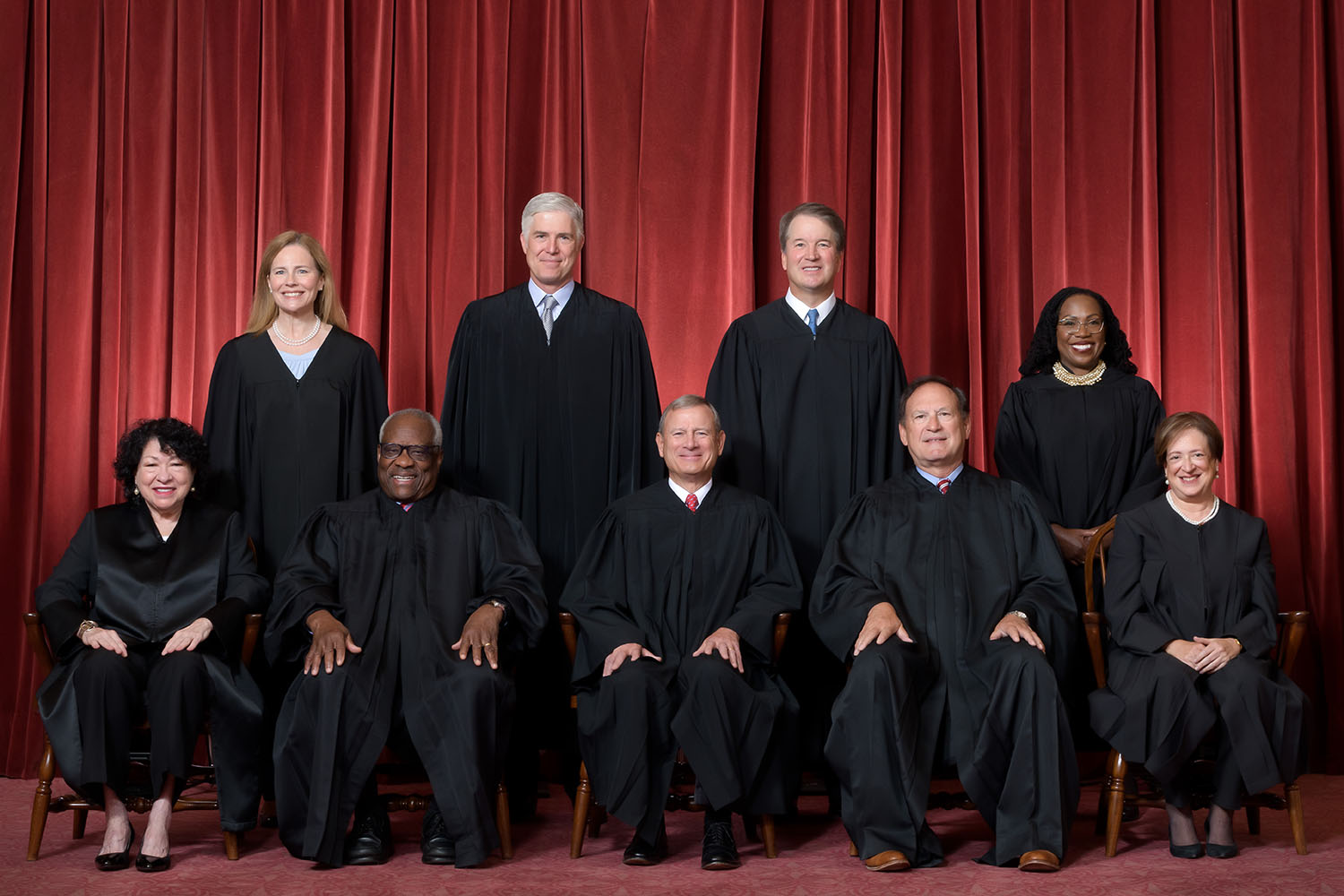






 "Exactly!"