Rule of Law v. Law of Rulers

Passed by Congress June 13, 1866, and ratified July 9, 1868, the 3rd section of the US Constitution’s 14th Amendment appears as unambiguous today as when it was written:

No person shall be a Senator or Representative in Congress, or elector of President and Vice-President, or hold any office, civil or military, under the United States, or under any State, who, having previously taken an oath, as a member of Congress, or as an officer of the United States, or as a member of any State legislature, or as an executive or judicial officer of any State, to support the Constitution of the United States, shall have engaged in insurrection or rebellion against the same, or given aid or comfort to the enemies thereof. But Congress may by a vote of two-thirds of each House, remove such disability.

Look carefully and reread the first (very long) sentence.

It makes no hint or mention that any elected official who has sworn to protect the Constitution of the United States must be criminally convicted of insurrection. Rather, the words state that those who “shall have engaged in insurrection or rebellion against the same, or given aid or comfort to the enemies thereof …”

Nonetheless, therein lies the crux of debate about what this means today.

Constitutional scholars – both academic and judicial – have researched and studied this clause dutifully, especially in recent years.

A law review article claiming that Donald Trump is automatically disqualified from holding elected office is getting attention in large part because it was written by two conservative, originalist law professors, William Baude and Michael Stokes Paulsen, who argue that Trump should be excluded from ballots for giving aid to an “insurrection or rebellion” in violation of Section 3 of the 14th Amendment.

The Washington Post questioned the validity of the scholars’ thesis: “… although Baude and Paulsen’s originalism is honest and conscientious, originalists outside of academia typically won’t apply their originalism if it leads to a result at odds with their conservatism. Second, there is precedent that contradicts their argument — precedent the scholars dismiss because they say it contradicts the original meaning of Section 3.”

When the 14th Amendment was drafted after the Civil War, the original meaning of Section 3 was that anyone who previously held public office and then rebelled against the US government should be automatically barred from office unless two-thirds of Congress made an exception. This constitutional provision is law and requires no further action by Congress to implement it, the article says. Courts can and should apply it, but we don’t need to wait for them to do so. Any government official, state or federal, whose duty it is to apply the Constitution must obey Section 3. It follows, the authors say, that the state officials who set the ballots for the primaries and general elections should exclude Trump. If he wants to fight that in court, he can. But there’s no need for the officials to await a judicial determination.

“To state this argument is to see why it won’t be followed by state officials,” argued the Washington Post in an opinion piece published on August 20, 2023. “Was the Jan. 6 attack on the Capitol an ‘insurrection’? Did Trump participate or give aid and comfort to the ‘enemies’ of the Constitution under Section 3? These are contentious questions of constitutional interpretation.”

From Trump’s second impeachment to his fourth criminal indictment and his very own words, I believe the answers to the Post’s questions are irrefutable:

Apart from the evidence, the case against Donald Trump engaging in insurrection is clear even by his own words.

According to CNN, Trump called for the termination of the Constitution to overturn the 2020 election and reinstate him to power in a continuation of his election denialism and pushing of fringe conspiracy theories:

“Do you throw the Presidential Election Results of 2020 OUT and declare the RIGHTFUL WINNER, or do you have a NEW ELECTION? A Massive Fraud of this type and magnitude allows for the termination of all rules, regulations, and articles, even those found in the Constitution,” Trump blasted in a post on his Truth Social network and accused “Big Tech” of working closely with Democrats. “Our great ‘Founders’ did not want, and would not condone, False & Fraudulent Elections!”

Trump falsely cited election fraud as a reason to terminate the Constitution, after Elon Musk released information about Twitter’s role in limiting access to a story about Hunter Biden, says Axios.

The irony, huh?

White House spokesman Andrew Bates said that Trump’s remarks are “anathema to the soul of our nation and should be universally condemned.”

“You cannot only love America when you win,” Bates declared. “The American Constitution is a sacrosanct document that for over 200 years has guaranteed that freedom and the rule of law prevail in our great country. The Constitution brings the American people together – regardless of party – and elected leaders swear to uphold it. It’s the ultimate monument to all of the Americans who have given their lives to defeat self-serving despots that abused their power and trampled on fundamental rights.”

Republican Rep. Liz Cheney of Wyoming, an outspoken Trump critic, denounced the former president’s Truth Social statement. Cheney, who served as vice chair of the House select committee investigating the January 6, 2021, attack on the US Capitol, tweeted that, “Donald Trump believes we should terminate ‘all rules, regulations and articles, even those found in the Constitution’ to overturn the 2020 election. That was his view on 1/6 and remains his view today. No honest person can now deny that Trump is an enemy of the Constitution.”

Trump expressed support for the rioters behind the deadly January 6, 2021, attack on the US Capitol, saying in a video played during a fundraiser that, “People have been treated unconstitutionally in my opinion and very, very unfairly, and we’re going to get to the bottom of it.” Further, in a September 2022 interview, Trump said he was “financially supporting” some January 6 defendants and promised he would issue pardons and a government apology to those being prosecuted if he were re-elected.

In the aftermath of the events of January 6, 2021, in and around the U.S. Capitol, there have been calls for accountability for those who participated, as well as for those who may have helped instigate it. The breach of the Capitol resulted in numerous injuries, multiple deaths, and significant property damage. It also delayed Congress’s constitutional duty of certifying electoral votes for President-elect Joseph Biden and caused Capitol Police and other law enforcement personnel to evacuate the Vice President and Members of Congress from the House and Senate floors to safer locations. Some observers, historians, and other commentators are wondering whether the Disqualification Clause of the Fourteenth Amendment might provide a mechanism to disqualify individuals who participated in or encouraged the siege, including former and sitting government officials, from holding office.

“Invocation of the Disqualification Clause raises a number of novel legal questions involving the activities that could trigger disqualification, the offices to which disqualification might apply, and the mechanisms to enforce disqualification,” reports the Congressional Research Service. “The clause has been seldom used, and the few times it has been used in the past mainly arose out of the Civil War—a very different context from the events of January 6. It is therefore unclear to what extent historical precedents provide useful guidance for its application to the events of January 6. This Legal Sidebar describes the Disqualification Clause, explains to whom it might apply and what activities could incur a bar on holding office, and discusses possible mechanisms to implement it.”

The same Congressional Research Service report states, “Section 3 of the Fourteenth Amendment does not expressly require a criminal conviction, and historically, one was not necessary” and indicates that, “Section 3 does not expressly provide a procedure for its implementation other than Section 5’s general authority of Congress “to enforce [the Fourteenth Amendment] by appropriate legislation.”

There might be multiple ways Congress could enforce the Disqualification Clause, including relying on federal criminal prosecution for insurrection and treason, allowing private civil enforcement through writs of quo warranto or other procedures, enacting legislation establishing general procedures for adjudicating disqualification under Section 3, or for identifying specific disqualified individuals, or measures by the House or Senate to exclude or expel individuals from their respective houses.

In the June 7, 2022 issue of Lawfare, Roger Parloff, a Washington, DC-based journalist who was the main legal correspondent at Fortune magazine for 12 years, writes: “It’s extremely likely that at least one of those election officials will find Trump disqualified under Section 3.” Parloff continues, “There is actually a disquietingly strong case at this point that Trump should be disqualified under Section 3 as a factual matter. I say ‘disquietingly’ because the prospect of seeing his name blocked from the ballot in at least some states — though certainly not in others — gives pause in terms of both the violence it might unleash among his followers and the chaos it could bring to the 2024 presidential election. Still, the prospect of his returning to power, notwithstanding all the evidence of his having incited the Capitol insurrection, is even more disquieting.

“The decisions about whether Trump’s name can appear on the presidential ballot will be made, in the first instance, by 51 different secretaries of state. It’s extremely likely that at least one of those election officials — perhaps quite a few — will find Trump disqualified under Section 3. And that will usher in a truly unprecedented and volatile situation,” concludes Parloff.

Mechanisms to implement Section 3 of the 14th Amendment purportedly involve the secretaries of state in each of the 50 states and “territories” where people vote in the USA. The secretaries of state must approve all candidates who appear on the ballot. A single “nay” can – and will – trigger a constitutional crisis, as the election cannot proceed without the approval of all eligible voters.

The case will immediately be presented to the U.S. Supreme Court for adjudication. With three Trump-appointed associate justices, SCOTUS is heavily conservative (6 to 3).

Unfortunately, the media – mainstream and “(un)social” – have paid but mere and passing attention to Article 3 of the 14th Amendment, preferring, instead, to cover the ever-widening web of intrigue surrounding Donald Trump and his supporters from before the 2020 election to today and beyond. In effect, it’s been a case of the spider (Trump) to the flies (the media).

Back in 1964, Canadian communication theorist Marshall McLuhan coined the “Medium is the message” phrase, contending that a message could be construed by any of three ways: (1) The content of the message, per se, could be construed as the message—i.e., it is what it is and says what it means; (2) The messenger, himself or herself, can personify the message incarnate—witness such charismatic personalities as Oprah Winfrey, Michelle and Barack Obama, Hitler, Winston Churchill, John F. Kennedy, and Donald Trump. What they’re saying is secondary to the people, themselves, who are saying it; and (3) The medium is the message in that what’s most important to a message being received and re/acted upon isn’t what’s being said or by whom, but where—on Fox News or MSNBC, on Rachel Madow or Tucker Carlson, in the New York Times or New York Post, on Facebook or Truth Social.

For Section 3 of the 14th Amendment to become the message even before the general election, it’s up to us to use all the media at our disposal: posts on Facebook, YouTube, Twitter, Instagram, LinkedIn, and others … letters written to the editors of the New York Times, Boston Globe, USA Today, Washington Post, Los Angeles Times, and our local newspapers … emails, faxes, and telephone messages sent to our legislators and justices … feedback and questions sent via the websites of cable news shows and anchors, streaming services, and radio speakers.

There’s a lot of rage in this country at a lot of things, so much so that newscaster Howard Beale’s cry in the 1976 film Network, “I’m as mad as hell and I’m not going to take this anymore!” has become a kind of national mantra.  

The Dow goes up. The Dow goes down. Today it’s up. Everybody is smiling. Everybody is happy. Great. Maybe I’m wrong. I don’t think I am, but maybe I am. I think people understand that with all of the spending and the uncertainty from government, we are far from standing on solid ground. But the media seem to be painting a picture of anyone who is worried enough to prepare for the future as crazy. Call them crazy. I’m crazy. You’re crazy. We’re all crazy together.

Bruce Joffe is publisher and creative director of Portugal Living Magazine.

Processing…
Success! You're on the list.

Happy July 4th …

What Independence Means to Me

Those who have followed my musings about the national elections which, already, have left the starting gate may recall that I was toying with the idea of third-party candidates.

I am well aware of the bleak history of those running against the Democrats and Republicans … especially in the cases of Gore v. Bush (2000) and Clinton v. Trump (2016). Without third-party contenders, election victories would easily have gone to Hilary Clinton and Al Gore.

For all the talk about why Donald Trump was elected president while losing the popular vote and how he could win again, one of the least discussed results of the 2016 election offers valuable lessons for Democrats.

An astounding 7.8 million voters cast their presidential ballots for someone other than Trump or Hillary Clinton. The two biggest third-party vote-getters were Libertarian nominee Gary Johnson (almost 4.5 million votes) and the Green Party’s Jill Stein (1.5 million voters). But others received almost another 1.9 million votes as well.

Their strong showing was due to the unpopularity of the two major-party nominees.

New?

If anything, lack of enthusiasm for both party candidates is even stronger today. People will be voting against rather than for: A vote for Biden will likely be a vote against Trump … and vice-versa.

Please, don’t misunderstand: When push comes to shove, the bottom line is simple: Joe Biden is a good man. Donald Trump is not. He’s a very, very bad man. But both are politicians playing to their bases, with difficulty attracting independent voters and suburban women who will probably decide the winners. And if push comes to shove, with Biden as the Democrats’ nominee v.Trump or any other Republican, I will vote for Joe Biden.

However …

Our electorate historically has had 40% voting for Democrats, 40% voting for Republicans, and 20% being unaffiliated, issues-based voters.  But today, the situation has significantly worsened for the two major parties as both have shed support from center-oriented voters who perceive both the right and the left as increasingly pandering to activists and the extremes of each party.

Recent polling data indicates a new split: 35% leaning Democrat, 35% leaning Republican, and a full 30% who are unaffiliated, issues-based voters.  Yes, close to a third of voters today are issue-driven voters looking for solutions to the nation’s problems. These voters may well determine the winner in 2024. What’s more, in another recent poll, close to half of American voters say they would consider backing a third-party candidate if President Biden and former President Trump head toward a rematch in 2024.

Nonetheless, I have changed my mind about supporting third-party candidates in the 2024 presidential election.

Why?

Because I think there’s a better option:

For the greater good of the USA and democracy, per se, I believe President Biden needs to complete his term, step aside, and defer to another candidate.

Not because of his age or health, which concerns many voters, and is a very legitimate concern. But because Americans need to shed these years of divisiveness – of which Joe Biden is part – and move on.

Last summer, after a reporter cited poll numbers suggesting just 26 percent of Democrats wanted him to be the nominee, the president rejected the idea that a large majority of his own party’s voters don’t want him on the ballot in 2024. “Read the polls, Jack!” Biden said. “You guys are all the same. That poll showed that 92 percent of Democrats, if I ran, would vote for me.” This statement, however, was somewhat misleading: Ninety-two percent of Democrats said they would vote for Biden in a general election rematch with Trump, not that they wanted him to run. In fact, 2022 exit polls showed that two-thirds of USA voters don’t want him to run for reelection.  

Nevertheless, Joe Biden launched his re-election campaign with a video in which he says the country faces a pivotal moment in the 2024 vote.

The Democratic Party, however, still needs convincing that he is the best candidate they have. Polls show about half of Democrats want the party to nominate someone else – although many of those have said they will still vote for him. Because of Trump … not because of Biden’s record.

Joe Biden has made it clear he intends to stand for re-election in 2024, but despite his fighting spirit, Biden’s intention may not necessarily hold up.

Within the Democratic party, concerns have grown over the president’s age (he’ll be 82 shortly after the 2024 election), his low approval ratings (he’s mired in the low 40s in job approval), and ongoing political struggles … and you get this: a series of stories examining whether Biden runs again and, if not, who might take his place.

Recent news of classified documents found in his Delaware home have certainly not helped in soothing these concerns. Nor did the dogged plea deals arranged with his son, Hunter.

If Biden does not run, the 2024 Democratic primaries would become a much more open contest. And there are several potential candidates:

Kamala D. Harris would be the presumptive nominee. Biden’s announcement may raise some doubts that Harris will be his running mate again in 2024. According to The Washington Post, “There have been questions about how voters might feel about that, given that her ascension to the top job is a more real prospect with Biden in his 80s, and she’s generally less popular than both Biden and recent vice presidents. Polls suggest she’s the nominal front-runner in a Biden-less race, but without anything approaching a convincing margin.

Gretchen Whitmer Democrats have shown they’re more interested in pragmatism, including by nominating Biden in 2020. And it’s hard to see them doing worse than the well-regarded and liked female governor of a swing state (Michigan) who has won two campaigns there by about 10 points. Whitmer has said she wouldn’t run even in a Biden-less race, but it’s not difficult to see a huge recruiting effort emerging. Plenty will believe she is the answer.

Amy Klobuchar The Minnesota senator is among those seen as quietly doing the things one would do to remain a part of the conversation in a post-Biden race. She makes sense as a stand-in for Biden and his more pragmatic brand of politics, but she might have competition for that lane with others.

Pete Buttigieg The transportation secretary is seemingly aiming higher — whether in 2024 or 2028 — after passing on running for an open Senate seat in his adoptive home state of Michigan. While he finished fifth in pledged delegates in 2020, it’s worth recalling that he just about won both of the first two states, Iowa and New Hampshire. His lack of appeal to minority voters is a major obstacle that must be dealt with—especially given his open sexual orientation. But he’s also the most established and capable national messenger on this list. And perhaps more people would give him a look now that he’s no longer just a 30-something mayor of a medium-size city. If elected, Buttigieg would be the youngest ever president and the first openly gay man to become president.

Gavin Newsom Despite his protestations, the California governor is widely viewed as being among the most likely candidates to run if Biden falters. He’s gone to great lengths to build his national profile in recent months, while pushing his party toward a more in-your-face approach to taking on Republicans. It’s easy to see how that message might play well. Newsom is less disliked than Biden and Harris, but is still polling in the single digits. But this may be explained by his slightly lower name recognition among voters. Data from the January Granite State Poll in New Hampshire shows that some voters felt they do not know enough about him to form an opinion yet. If Newsom enters the race for the Democratic nomination, his early campaign strategies would need to be focused on raising his public profile across the nation.

No sitting president in modern American history has been primaried successfully, although intraparty challenges usually end up hurting the incumbent in the general election. If something happens to change Biden’s mind or circumstances in the long months before the 2024 Democratic National Convention in Chicago, however, “then it’s open season,” Tampa-area Democrat Doris Carroll told The Wall Street Journal

Whether vice president or wild card favorite, no Democrat except Biden has formally declared an intention to run. The ball is in the president’s court. But if he decides not to run amid increased calls for him to step aside, the Democratic party certainly has options, and the primaries could shape up to become a highly competitive contest.

As they should be.

Processing…
Success! You're on the list.

Olvera’s Pride

Olvera, our getaway home in southern Spain for the past 18 years, has plenty to be proud about … not the least is its designation – honored by a Spanish postage stamp – as Spain’s “Best Rural Destination” in 2022. The town of 8,500 straddles the intersection of Cádiz, Sevilla, and Málaga provinces.

Outside its town hall fly the flags of Olvera, Cádiz, Spain … and a rainbow flag.

Now, I just learned another reason for Olvera to be proud: On June 23rd, it will be hosting a Gay Pride event for its residents and guests.

Spain is said to be the first European country and the second in the world with more LGBT+ people, according to a study by Ipsos, which holds a 4.2 out of 5-star rating on Trustpilot with over 45,695 customer reviews. Spain is designated as the third country in the world that most supports the right to equal marriage. And, like Portugal, Spain protects LGBT rights and validates the “diversity of the collective.” The survey also corroborates that Spain is a country in which there is majority support for proposed measures to improve the integration of trans people, a country that embraces “diversity, freedom, and LGBT+ pride … that advances by leaps and bounds without (a) brake.”

According to the survey, “Spain is where respondents are most likely to say they are gay or lesbian (6%), while Brazil and the Netherlands are where they are most likely to say they are bisexual (both 7%). Japan is the country they are least likely to identify as either gay or lesbian (less than 1%) and as bisexual (1%).”

The Iberian nations of Spain and Portugal are known for their inclusiveness.

Like Lisbon and Porto, Madrid and Barcelona have huge Gay Pride celebrations and marches each year. Events honoring LGBTQI+ people take place in other major Spanish cities, too: Sevilla, Córdoba, and Torremolinos … as well as such gay-renown destinations as Ibiza, Sitges, and Benidorm.

But Olvera?

One of the “pueblos blancos” in the province of Cádiz, Andalucía, Olvera has much to commend—including its positive attitude toward sexual minorities that are marginalized and condemned elsewhere.

Of late, think Uganda. In fact, 64 countries (nearly half in Africa, including Nigeria) have laws that criminalize homosexuality. In the USA, the political right is bound and determined to introduce legislation that eliminates or rescinds LGBT social and constitutional rights gained only after centuries of exclusion and damnation.

So, it behooves “queer” people to call attention to their history of cruelty, mistreatment, and entrapment, along with its contributions to civilization at large in countries like Spain and Portugal where gay rights are endorsed and supported.

We learned about the June 23rd event over lunch from two female friends, a kitchen designer and her retired spouse. They knew the date and location it was to take place – in a public square on the main street of town, directly opposite the Iglesia de la Victoria, one of Olvera’s pristine churches – but not the time.

I thought about the LGBT people we are acquainted with in Olvera who might be there:

> The beautiful young man with sometimes pink dyed hair who owns an upscale furniture shop and has won multiple awards for his interior designs—commercial, residential, and dressing the windows of local shops;

> The male couple who live down the block of our former house who enjoy a long-distance relationship, spending time together in Olvera, Australia, and elsewhere;

> The respected and educated man of magnificent color who lives, for now, in Olvera but spends each month working in London;

> The adorable waiter at our favorite restaurant who I’ve been innocently teasing and playfully flirting with for several years;

> The reclusive couple living two doors from ours but won’t speak to us, for whatever their reasons;

> The tall, dark, and steamy recent arrival from Venezuela whose eyes locked with mine momentarily;

> The lady in red who – rumor has it – enjoys her bread buttered on both sides;

> The British couple who lived here for several years, opening and closing a few businesses before returning to England … but continue to visit time and again;

> The colorful youngsters with ink covering their bodies and piercings from lip to nose. Maybe they are the “Q’s” in the increasingly complex jargon of LGBT syntax.

We Americans tend to be more priggish when it comes to carnal matters than the Mediterranean peoples. Sex is sex to them, nothing more and nothing less … without getting into issues of gender identity or sexual branding. They’re much more comfortable with themselves and their bodies. It’s not unusual for men to have slept with other men or women with women. Passion isn’t scrutinized or sanitized to subvert the prurient interest. The heat of the moment doesn’t result in being branded with a homophobic scarlet letter. Lust and sex between consenting adults are considered normal. It is what it is.

Pride, however, is all about identity … about standing tall in society without apologizing or denying who we are. If it’s a moment to be silly, too, so be it.

Gay Pride also satisfies something we seriously miss when living abroad: a sense of community … of people like us that transcends individuals and friendships, regardless of where we are on Kinsey’s scale and spectrum.

It’s also an occasion for friends and allies to stand together with us.

If we’ve learned anything from the Trump years and thereafter, it’s as Streisand sang: “People who need people are the luckiest people in the world. We’re children, needing other children. And yet letting a grown-up pride hide all the need inside, acting more like children than children.”

You bet we’ll be there at Olvera’s Gay Pride!

Bruce Joffe is publisher and creative director of Portugal Living Magazine. Follow the magazine daily at www.facebook.com/PortugalLivingMagazine. It’s free!

Processing…
Success! You're on the list.

Justice League of America

Article III, Section 1:

The judicial Power of the United States, shall be vested in one supreme Court, and in such inferior Courts as the Congress may from time to time ordain and establish. The Judges, both of the supreme and inferior Courts, shall hold their Offices during good Behaviour, and shall, at stated Times, receive for their Services, a Compensation, which shall not be diminished during their Continuance in Office.

The U.S. Constitution provides for a Judicial Branch including one supreme Court. It also appears to assume that the Supreme Court will include a Chief Justice, stipulating that the Chief Justice shall preside over any Presidential impeachment trial in the Senate. However, the Constitution is silent on other matters, such as the size and composition of the Supreme Court, the time and place for sitting, and the Court’s internal organization … leaving those questions to Congress.

In addition to setting the size of the Supreme Court, Congress also has determined the time and place of the Court’s sessions, as well as the salaries of its justices. Supreme Court decisions establish that the Exceptions Clause grants Congress broad power to regulate the Court’s appellate jurisdiction.

Annual pay per justice as of January 1, 2023, is $274,200 … except for the chief justice, who receives $286,700.By no means paltry sums.

The Supreme Court currently comprises nine justices: the Chief Justice of the United States and eight Associate Justices. The justices are nominated by the president and confirmed with the “advice and consent” of the United States Senate, per Article II of the United States Constitution.

Congress also has significant authority to determine what cases the Court has jurisdiction to hear. The Constitution only grants the Supreme Court original jurisdiction over the relatively narrow categories of Cases affecting Ambassadors, other public Ministers and Consuls, and those in which a State shall be Party.” In all the other Cases subject to federal jurisdiction, Article III grants the Court appellate Jurisdiction … with such Exceptions, and under such Regulations as Congress shall make.

According to the U.S. Senate Committee on the Judiciary, “Like all Federal judges, Supreme Court Justices serve lifetime appointments on the Court, in accordance with Article III of the United States Constitution.”

Show me, please, where it says that in the Constitution.

As with guns, words – i.e., “A well regulated Militia, being necessary to the security of a free State, the right of the people to keep and bear Arms, shall not be infringed” – have been taken out of their original (and implied) context and prostituted to assume other, subsequent meanings.

Take corruption, for instance.

Corruption may involve many activities including bribery, influence peddling and embezzlement. Political corruption occurs when an officeholder or other governmental employee acts with an official capacity for personal gain.

Which brings us to where we find ourselves today.

Supreme Court Justice Clarence Thomas is facing more questions about his finances, with a new report about thousands of dollars of income he’s reporting from a real estate firm with ties to his wife, Ginni Thomas. On his financial disclosure forms, Thomas reported rental income totaling hundreds of thousands of dollars from a firm called Ginger, Ltd., Partnership, The Washington Post reported.

That Nebraska firm no longer exists, having been closed 17 years ago.

The latest revelation about problems with Thomas’s legally-required financial disclosure forms raises questions about how seriously he took his obligation to disclosure his finances to the public. Public officials are required to fill out such forms to show if they have any conflict of interests between their personal finances and public duties.

Thomas is facing calls for an investigation and his resignation.

The supreme court justice claims he was advised that he did not have to disclose luxury trips paid for by GOP megadonor Harlan Crow because Crow and his wife are “personal friends,” said Thomas in his first statement on the matter.

Before then, conservative activist Ginni Thomas has “no memory” of what she discussed with her husband during the heat of the battle to overturn the 2020 presidential election, according to congressional testimony.

Ginni Thomas recalled “an emotional time” in which her mood was lifted by her husband and Mark Meadows, then Donald Trump’s chief of staff, a transcript of her deposition with the congressional committee investigating the January 6 attack on the US Capitol shows. Thomas has been a prominent backer of Trump’s lies that the 2020 presidential election was stolen from him.

At 74, her husband is the oldest and most conservative member of America’s highest court, which has played a crucial part in settling disputed elections.

Speaking of wives of the supreme court justices, two years after John Roberts‘s confirmation as the Supreme Court’s chief justice in 2005, his wife, Jane Sullivan Roberts, made a pivot: After a long and distinguished career as a lawyer, she refashioned herself as a legal recruiter, a matchmaker who pairs job-hunting lawyers up with corporations and firms.

Roberts told a friend that the change was motivated by a desire to avoid the appearance of conflicts of interest, given that her husband was the highest-ranking judge in the country. “There are many paths to the good life,” she said. “There are so many things to do if you’re open to change and opportunity.”

And life was indeed good for the Robertses, at least between 2007 and 2014.

During that eight-year stretch, according to internal records from her employer, Jane Roberts generated $10.3 million in commissions paid out by corporations and law firms for placing high-dollar lawyers with them.

That eye-popping figure comes from records in a whistle-blower complaint filed by a disgruntled former colleague of Roberts, who says that, as the spouse of the most powerful judge in the United States, the income she earns from law firms that practice before the Court should be subject to public scrutiny.

Brett Kavanaugh’s 2018 confirmation to the Supreme Court was embroiled in controversy when multiple women accused him of sexual assault. One of them, Christine Blasey Ford, testified before Congress about the alleged attempted rape she suffered at his hands in high school. The 2023 film Justice is a horrifying and infuriating inquiry into those claims, told largely by friends of Ford, lawyers and medical experts, and another of Kavanaugh’s alleged victims: Deborah Ramirez, a classmate of his at Yale.

Most damning of all, it features a never-heard-before audio recording made by one of Kavanaugh’s Yale colleagues—Partnership for Public Service president and CEO Max Stier—that not only corroborates Ramirez’s charges but suggests that Kavanaugh violated another unnamed woman as well.

As Democrats remember with still smouldering fury, when Mitch McConnell was majority leader, he refused to grant Merrick Garland–now Attorney General of the United States–even a token hearing after he was nominated to the Supreme Court by Barack Obama in March 2016 to fill the late Antonin Scalia’s seat. The day Garland was tapped, McConnell declared, “It is a president’s constitutional right to nominate a Supreme Court justice, and it is the Senate’s constitutional right to act as a check on a president and withhold its consent.”

Garland was never granted a hearing, a slap in the face to democracy and to America’s first black president.

Another supreme court justice, Samuel Alito said the decision he wrote removing the federal right to abortion made him and other US supreme court justices “targets of assassination” but denied claims he was responsible for its leak in draft form.

Alito wrote the ruling in Dobbs v Jackson, the Mississippi case that overturned Roe v Wade, which established the right to abortion in 1973. His draft ruling was leaked to Politico on 2 May last year, to uproar and protest nationwide. The final ruling was issued on 24 June.

A nearly $2 million sale of property co-owned by Supreme Court Justice Neil Gorsuch to a prominent law firm executive in 2017 is raising new questions about the lax ethics reporting requirements for Supreme Court justices.

Property records from Grand County, Colorado, show that the Walden Group LLC–a limited-liability company in which Gorsuch was a partner–sold a 40-acre property on the Colorado River to Brian Duffy, chief executive officer of the prominent law firm Greenberg Traurig. Duffy and his wife, Kari Duffy, paid $1.8 million for the property on May 12, 2017–just one month after Gorsuch was sworn in as an associate justice of the Supreme Court.

The financial disclosure report filed by Gorsuch for calendar year 2017 lists a sale by the Walden Group LLC for a profit of between $250,000 and $500,000. However, the section where a buyer should be listed is blank. It’s unclear if that’s a violation of ethics rules.

And, so, these questions and doubts beg to be settled by Justice League overseers.

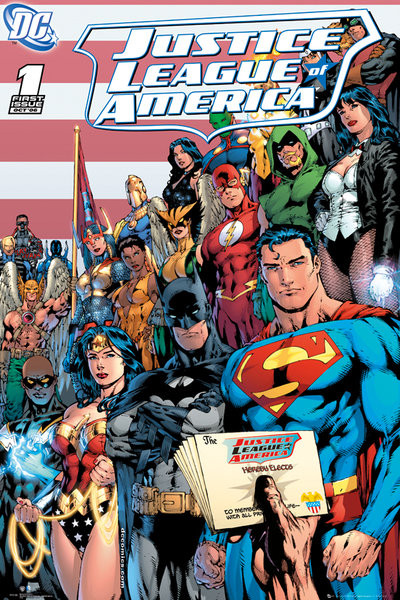
The Justice League is an all-star ensemble cast of established superhero characters from DC Comics’ portfolio. Although these superheroes usually operate independently, they assemble as a team to tackle especially formidable villains.

The cast of the Justice League usually features a few highly popular characters who have their own solo books, such as Superman, Batman, and Wonder Woman, alongside a number of lesser-known characters who benefit from the exposure. The Justice League was created to boost the profiles and sales of its characters through cross-promotion and helped to develop the DC Universe as a shared universe, as it is through teams like the Justice League that the characters regularly interact.

Beyond comic books, the Justice League has been adapted to several television shows, films, and video games included.

More recently, it has been shadowing the United States Supreme Court.

Editorial: Phone-y Magazines

Our options for reading entertainment and enjoyment grow fewer and farther between.


There’s always been competition: Look v. Life, Time v. Newsweek, People v. Us, The Saturday Evening Post v. Reader’s Digest, Ladies Home Journal v. Good Housekeeping, National Geographic v. Smithsonian, Playboy v. Penthouse, et al.


Yet only the strongest survived.


And even then, only after a fashion.


Gone, by and large, are in-depth stories and original narratives, replaced by “posts,” catchy photos with captions, and different spins on the same subject matter cluttering our lives.


Time – or our lack thereof – is one of the major thieves of being engaged in a magazine. Reader’s Digest realized that in its condensed versions of bigger magazine pieces. Heck, even Cliff Notes and Classics Illustrated understood that we had other things to do with our time than read long-time classics.


Magazines filled a niche, appealing to our special interests, creating communities of like-minded people who read what most interested them specifically—including the ads. Indeed, magazines were one of the first media to sell advertising targeting consumers by psychographics as well as by their demographics.


Few take the time today to appreciate the balancing act that comprise magazines.


Like newspapers and newsletters, they’re periodicals published at given intervals … most often weekly, monthly, or that frequency reserved for the realm of magazines: fortnightly.


But unlike their brethren, they weren’t designed to be all things to all people or to cover some subjects to many. Nor were they constrained by geographic boundaries or time-sensitive data. You could leave a good magazine on your bedside night stand or beside the bathroom throne, eager to thumb through its pages and pick up where you left off.


Newspapers came to us in sections – national and international, local, sports, entertainment, classified advertising – while magazines, like sandwiches, were divided among columns and departments, with features filling the well in between. For their part, newsletters were a mishmash of topical content condensed into four to 16 pages.


“All the news thats fit to print,” the slogan of the New York Times, is perhaps the most famous phrase in American journalism. Words dominated images, cramming as much information as possible onto the front page. And if an article didn’t fit in the space allotted, it “jumped” to a page farther on back. It took People magazine to rethink the anatomy — down to the fonts (sans serif “Helvetica” rather than more formal “Times”) and type faces — and using more expensive color photography only on the cover and paid advertising, with black and white the editorial mainstay.


Along came the Internet and challenged all that …


If newspapers, magazines, and newsletters wouldn’t give up the ghost to be swallowed and spit out in bits and bytes – numbers! — they could try, at least, to exist side-by-side boosting their namesakes. Especially if they (or parts of them) were free.


Search Engine Optimization (SEO), the process of maximizing the number of visitors to a particular website by ensuring that the site appears high on the list of results returned by search engines, taught Madison Avenue money managers that, “the key to getting more traffic lies in integrating content with search engine optimization and social media marketing.”


There it is, folks: Publishers want traffic and numbers rather than readers and loyal subscribers. No longer does it matter who reads an article, editorial, even comic strip, but how many people search for it and (best of all!) “click through,” scanning the first words.
Search engine optimization is the practice of optimizing web pages to increase a website’s visibility “organically” in the search engine result pages (SERPs).


SEO is completely different from search engine (paid) advertising. With paid advertising, you’re paying search engines like Google to show your website on the search result page. Instead, with SEO, you’re optimizing your website so it organically shows up on the first page of the search result. The number of visitors who come to your website through these search results is defined as organic traffic (because they found your website themselves).


Imagine that!


Portugal Living Magazine used Facebook advertising to increase its own numbers: reach (how many people saw the ad) and engagement (how many people clicked and responded to it). An ad reaching 3,402 people in our defined audience, for instance, reached 2,131 through a mobile app feed and 593 from an Instagram feed. The other 679 came from a slew of sources.


To promote our website, a more aggressive ad on Facebook reached 19,200 people: 211 engaged, 198 clicked on the link, and 13 reacted. Cost per click: €0.08. And where did they see the ad itself? Three-quarters (73%) or 12,888 viewed it via a mobile app, while slightly more than a quarter (27%) or 4,776 saw our ad on the right hand side of their desktop.


When three-fourths of the population see information on a mobile application compared to one-fourth who see it elsewhere, there’s no question that we are a mobile society. We depend on our mobiles not only to make calls and send messages or to get directions and seek answers to questions, but to read and watch on those miniscule screens. Witness the success of Amazon’s Kindle and other computerized “pads” especially designed for reading.


I’ll briefly share how that impacts a 100+ page magazine like Portugal Living Magazine next.

For now, let’s just say that magazines are migrating to websites, where they’re configured quite differently for readers, writers, publishers, and advertisers.


Bottom line?


The whole no longer is greater than the sum of its parts.


Bruce Joffe is publisher and creative director of Portugal Living Magazine.

Processing…
Success! You're on the list.

A Truly “Christian” Man

Former U.S. President Jimmy Carter waves to the congregation after teaching Sunday school at Maranatha Baptist Church in his hometown of Plains, Georgia on April 28, 2019. Carter has taught Sunday school at the church on a regular basis since leaving the White House in 1981, drawing hundreds of visitors who arrive hours before the 10:00 am lesson to get a seat and have a photograph taken with the former President and First Lady Rosalynn Carter. (Photo by Paul Hennessy/NurPhoto via Getty Images)

I was teaching journalism — specifically, a course entitled News Editing — at George Mason University in January 1981, when I could find no established precedents or protocols, no style guides or textbooks, to cite to my students about the layout dilemma.

On January 20, 1981, two distinctly remarkable, historic, front page news-making moments occurred simultaneously: After 444 days, Americans held hostage by Iran were released; and Ronald Reagan, a former actor and California governor, was inaugurated president of the USA. The hostages were formally released into United States custody just minutes after Reagan was sworn into office as the country’s 40th president on January 20, 1981.

How would or should newspaper editors handle the coverage, my students and I debated: Was one more important, more timely, more consequential than the other? Which story should be featured more prominently? There was no question that both stories demanded front page placement. But where on the page? Traditionally, newspapers place the most important stories at the top of the page; being on the right-hand side implied that a story was more important than others on the page. The Washington Post devoted its front page to these two stories, although one was placed “above the fold,” the other on the bottom half.

Guess which story took priority and preeminence?

Jimmy Carter was bedeviled by two behemoths during his single, four-year presidency.

On November 4, 1979, a group of militarized Iranian college students took over the U.S. Embassy in Tehran. Soon, 52 United States diplomats and citizens were held hostage. A diplomatic stand off ensued. Lasting 444 days, this terrorist act triggered the most profound crisis of the Carter presidency, as well as a personal ordeal for the president himself.

President Carter pursued a policy of restraint that put a higher value on the lives of the hostages than on American retaliatory power or protecting is own political future.

Allegations of conspiracy between Reagan’s presidential team with Iran until after the election to thwart Carter from pulling off an “October surprise” abounded. And thus began the changing of the guard–from partisan distinctions to ugly words and vicious divisions.

The other dragon that President Carter couldn’t slay was economics. Between high inflation and fixed mortgage rates hitting over 14%, it was also about the money … as it always is.

Jimmy Carter has always been a good man. Moreover, he’s been a good Christian man–not just in terms of religious etymology but in practical ways, too. He practiced the words preached by the itinerant Jewish rabbi from Nazareth.

In his Sermon on the Mount, Jesus explained what it looks like to live as his follower and to be part of God’s Kingdom. These passages from Matthew perhaps represent the major ideals of the Christian life.

They also reflect peanut farmer Jimmy Carter’s life and legacy.

• Blessed are the weak, for they shall inherit the earth.

• Blessed are the peacemakers, for they shall be called the “salt” of the earth.

• Blessed are those who hunger and thirst for righteousness, for they will be filled.

• Blessed are the merciful, for they will be shown mercy.

• Blessed are those who are persecuted because of righteousness, for theirs is the kingdom of heaven.

(About that thirst blessing above, let’s not forget that Jimmy was overshadowed by his younger brother, Billy, and the infamous Billy’s Beer. Indeed, the Georgia farmer brought a colorful cast of characters with him to Washington.)

At 98, Jimmy Carter is one of America’s most active former presidents. His efforts at peace-making, international negotiation, home construction for the impoverished (Habitat for Humanity), and the eradication of diseases in Africa earned him the world’s respect. Forty years after leaving office, he continued to remain an actor on the world stage and at home.

As president, his tireless efforts to bring Israel and Egypt together in a peace agreement during the 1978 negotiations at Camp David may be seen today as the most consequential contribution any U.S. president has made towards Israel’s security since its founding. The treaty earned the Israelis everything they so long had sought: a separate peace treaty that ended not only the state of war with their most threatening neighbor, but also the freedom to carry out other strategic and military objectives without concern for igniting a regional war.

Despite serving a single term, Jimmy Carter ranks as one of the most consequential U.S. presidents when it comes to environmentalism. He installed solar panels on the White House, urged Americans to turn down their thermostats while sporting a sweater, and pressured Congress into putting tens of millions of Alaskan acres off limits to developers.

In 1982, with his wife Rosalynn, he founded the Carter Center dedicated to the protection of human rights, promotion of democracy, and prevention of disease. His determination to promote the rights of women led him, in 1920, to sever ties with the Southern Baptist Convention after six decades, over its rejection of women in leadership positions. He explained his decision to quit the church in a 2009 article entitled “Losing my religion for equality,” which later went viral. “Women and girls have been discriminated against for too long in a twisted interpretation of the word of God,” he wrote in the article.

The Nobel Peace laureate and longtime human rights advocate campaigned to end violence and discrimination against women since leaving the White House in 1981, calling it the “human and civil rights struggle of the time.”

In an interview with the Atlanta Journal-Constitution, Carter said that Southern Baptist leaders reading the Bible out of context led to the adoption of increasingly “rigid” views. Defying the largest Protestant denomination in the United States whose leaders also voted to condemn homosexuality, abortion, pornography, and adultery, he stated, “In my opinion, this is a distortion of the meaning of Scripture … I personally feel the Bible says all people are equal in the eyes of God.” Carter continued as a deacon at the Baptist church in his hometown of Plains, Georgia, where he was a faithful Sunday school teacher drawing congregants and visitors alike to rub shoulders with this humble, heart-warming man.

Carter, 98, decided to spend his last days with his family, supported by palliative care rather than medical intervention.

We should nod our heads, hold hands together, and allow our hearts to embrace these words from the scriptures according to Jimmy Carter: “I have one life and one chance to make it count for something. My faith demands that I do whatever I can, wherever I am, whenever I can, for as long as I can, with whatever I have to try to make a difference.”

Journalism That Matters?

CNN Commercializes Its Beauties and Beasts

Even for those of us living in Portugal, there’s plenty of news available in English, especially via computer and “smart” TV.

Among the staples that come with our Internet packages are “news” channels Al Jezeera (Qatar), BBC (UK), Bloomberg (USA), CCTV and CGTN (China), CNN (USA), Euro News (EU), France 24, KBS World (Korea), Sky News (UK), i24 (Israel), NHK World (Japan), and TRT World (Turkey). All in English. Snippets from other news outlets can be accessed as well via their YouTube feeds.

Can you guess which channel uses the following slogans?

• “Facts First”

• “Journalism that Reflects the World We Live In”

• “Go There”

• “Capturing the Moment”

• “Journalism That Matters”

If you guessed CNN, good for you. (Or maybe not.) You may be viewing too much of this cable-sourced channel that uses these catchphrases as part of its “This Is CNN” branding campaign.

Surely, anyone who watches CNN has heard and seen one of its famous faces in a “I’m (name) … and THIS is CNN” promotion.

Pay attention to how they emphasize the “… and THIS” part of the sentence: dramatic, seductive, exclamatory, emphatically, defensively, declaratory, et al. Dr. Sanjay Gupta is, perhaps, the only one to say the word (this) nonchalantly, without shouting it out over his name or the other words.

While I tend to channel hop and surf to get different perspectives on the same happenings, I confess that I spend more time with CNN than with all the others combined. Because I’m American. Perhaps that’s why I’m so opinionated and annoyed at what used to be known as the Cable News Network.

I’ve gotten to know CNN’s people—their actions, voices, looks, and demeaner. Some of them drive me nuts; others deserve accolades and more airtime than they’re given.

Women, especially, are featured in the promotions.

Can any CNN-watcher hear the words “I am Nigerian by blood, British by birth, and American by residence,” without identifying CNN’s own Cleopatra—Zane Asher? She adds: “It is important that those same strands of inclusivity that flow through me are mirrored in the stories that we tell.”

Am I the only one a bit dismayed by the inclusive promotion with diminutive Lady Julia Chatterly’s hip gyrations in the continuous commercials for her First Move show?

CNN men should be roasted or toasted, too, when the shoe fits.

Wolf Blitzer, for instance, surely befits his name. I get nervous and edgy every time I’m in his situation room with breaking news.

Or the ubiquitous Richard Quest who’s hardly ever on his own primetime program anymore. How anyone can be so obnoxious, crude, rude, and in-your-face infuriates me. We all know people who don’t listen because they’re too busy getting their own next words ready. That’s Richard Quest. Maybe the network sees him as an asset, but, to me, he’s just an ass that turns me off whenever his gravelly pitch folk voice grinds. “On assignment” or traveling around his world of wonder, it’s good to see the stand-ins whose presentations are always better. It’s time to say “Good riddance” to Richard Quest and his hand-held ringer.

Actually, the one thing on CNN that bothers me more than that horrid man is watching gruesome images of the devastation in Turkey and Syria (or Ukraine) violated by that little box on the lower right hand of the screen updating the status of stock markets worldwide. Yeah, poor people are suffering but the wealthy merchants of gloom and doom can’t be left without their score cards.

It’s what Quest would call one of his “profitable moments.”

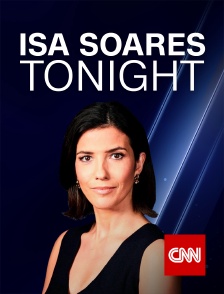
In other news, replacing Hana Gorami with Isa Soares was a brilliant move. While the former was repeatedly caught live and on-camera looking bored, fidgeting, or forgetting her lines, the latter is dynamic … whether on air or on the ground. And she’s Portuguese—fluent in her native language, English and Spanish as well.

Isn’t it time to retire the promo for Erin Burnett’s OutFront show? A “potential breakthrough in treating Corona virus,” and whether “all this spending” could lead to “a bigger economic crisis” are gone with the wind already. And that poor girl so delighted that a viewer paid her rent that month must have a year pre-paid by now. “Shut up,” she said. Yeah.

Meanwhile, girl-next-door Kaitlan Collins makes a better chatterer than Chief White House Correspondent, in my opinion. CNN must agree, as it’s have her a morning show shared with Poppy Harlow and Don Lemon (his honor now goes to Phil Mattingly, doing an excellent job in show biz now as the former Eddie Munster. Can he fit any more words into his broadcast bites? Only dashing Frederik Pleitgen seems able to speak so quickly yet coherently.

Back to Kaitlan: What threesome could be any cuter for an early morning chat fest than Kaitlan Collins, Poppy Harlow, and Don Lemon? Evidently, Poppy Harlow and Phil Mattingly, alongside meteorologist Derek Van Dam. Kaitlan Collins, “one of the top reporters and interviewers in the game,” according to CNN CEO Chris Licht, now hosts her own evening interview show, The Source. Really.

Poppy Harlow, Don Lemon and Kaitlin Collins, the new co-anchors of “CNN This Morning.”

Smart, sassy, and stunning with a mane of auburn hair is Bianca Nobile … but why play hide-and-seek with her or pair her with regal Max Foster as co-hosts on the catch-as-can CNN Newsroom? Never mind that he’s handsome and has his own share of good hair.

(Speaking of hair, does any man have more perfectly coiffed hair than John Berman? Ivan Watson’s got great hair, too. And what happened to cutie correspondent David Culter?)

One thing CNN is guilty of, as are most round-the-clock newscasts, is repetition. How many different hosts and reporters can tell the same story – Breaking News! Breaking News! Breaking News! – from different faces and voices? A really big story (Trump’s or Biden’s or Pence’s supposedly classified documents removed from the White House, Library of Congress, or National Archives) breaks. Now that we’ve been told about it, bring in the crowd to give their thoughts, implications, and guesses on the outcome.

Overdone after so many videoclips and playbacks with the has-been experts, it’s time for panel discussions. Honestly, I do enjoy the banter between and among Dana Bash, Abby Phillip, and Van Jones.

Cheers to the “second tier” of CNN anchors—those who fill in for the name “brands” without pomp and circumstance: Fredericka (Fred) Whitfield, Brianna Keilar, Pamela Brown, Jim Acosta, John King.

Clarissa Ward deserves an Emmy, Nobel, and/or Pulitzer prize for her documentary commercials, as well as for her sensitive, sensible, heroic work in Afghanistan and Turkey!

BREAKING NEWS …

When push comes, it’s good to remember that there’s more than one CNN in town. The new CNN Portugal (in Portuguese) can learn some important lessons from the intrusive tactics of its American counterpart.

We can, too …

Like, for instance, discovering the mother lode of MSNBC goodies (and others), both immediate and recent, in bite-size morsels trimmed without the fat on YouTube!

Bruce Joffe is publisher and creative director of Portugal Living Magazine.

Processing…
Success! You're on the list.

Masquerade

I found myself thinking about masks today.

Some people continue to wear them when out walking, shopping, even driving in their cars.

Most people no longer wear them, except where it’s obrigatorio–in pharmacies, health centers, and other such places.

Others should — but don’t — wear them. Like the waitress in the restaurant we ate at on Saturday. Her cough was continuous. Not the dry, hacking kind … nor the wet, sneezing kind that’s symptomatic of colds or the flu with phlegm. Hers was an incessant cough, like something scratching relentlessly at her throat. When she didn’t have anything in her hands — a plate of food, a pitcher of wine, a menu — she’d cough into her hands. Not once did she wash her hands while working or waiting on customers.

“Deves chevar uma máscara,” I told her in my best Portuguese while she stood over our table taking our order. Não, she shook her head. She’d have nothing to do with wearing a mask. Except for her father (maybe her husband?), nobody else was handling the food. And he was too busy moving ice cream around in the freezer to notice or be bothered about the need for good hygiene–especially around food.

Even during the height of the pandemic, most people in Portugal understood the need to wear masks to protect themselves as well as others. It didn’t require a government mandate (although one was issued), nor was it a matter of government interference, intervention, and/or disinformation. Certainly, there were those who believed in government conspiracies and refused to wear masks. But they were few and far between. The same could be said for Spain, where the protective face shields are called mascarillas instead of máscaras.

While there was some grumbling at times, mask-wearing never became the cause celébre provoking country-wide revolutions and demonstrations as has women not wearing face covering hijabs in Muslim countries–especially the Islamic Republic of Iran. Nor was mask wearing (or not) the divisive political issue at rallies and riots in the USA (and elsewhere).

Today when I see people wearing masks, I assume it’s because of common sense: people caring for themselves and others. Although their facial apparel makes them stand out in the crowds, I respect them for going against the grain and taking care.

Russ and I suffered through bad colds, or maybe the flu, for two weeks recently. When not bedridden or staying inside, we wore masks. In the supermarkets. In shops. On the streets.

As Covid restrictions and travel advisories become realities again, mainly because of China’s international travel while cases of this plague-like virus and its variants are surging, it’s well worth remembering that an ounce of prevention is worth a pound of cure.

When in doubt, wear a mask.

There’s no law requiring you to do so … but there’s no law saying you shouldn’t.

Bruce Joffe is publisher and creative director of Portugal Living Magazine, the thoughtful magazine for people everywhere with Portugal on their minds. To read current and past issues … and subscribe — free! — visit https://portugallivingmagazine.com.

Processing…
Success! You're on the list.

Judicial Review

Juneteenth is the oldest nationally celebrated commemoration of the ending of slavery in the United States. From its Galveston, Texas, origin in 1865, the observance of June 19th as the African American Emancipation Day has spread across the United States and beyond.

Juneteenth commemorates African American freedom and emphasizes education and achievement. It is a day, a week, and in some areas, a month marked with celebrations, guest speakers, picnics and family gatherings. It is a time for reflection and rejoicing, a time for assessment, self-improvement, and for planning the future. Its growing popularity signifies a level of maturity and dignity in America long overdue. In cities across the country, people of all races, nationalities and religions are joining hands to truthfully acknowledge a period in our history that shaped and continues to influence our society.

Yet it must also be a time of self-reflection and social responsibility.

Remember the story in the Book of Exodus? Time and again, despite disasters and disease, Pharaoh refused to “let my people go!” The Israelites were seeking more than liberty and freedom; they were clamoring for freedom from bondage.

In the wake of the nationwide protests against police brutality in 2020, the push for federal recognition of Juneteenth gained new momentum, and Congress quickly pushed through legislation in. On June 17, 2021, President Biden signed the bill into law, making Juneteenth the 11th holiday recognized by the federal government.

While celebrations in 2020 and 2021 were largely subdued by fear of contagion of the coronavirus pandemic, this year Juneteenth was observed by nationwide celebrations.

Could we do any less to honor the lives of George Floyd, Rodney King, Breonna Taylor, Ahmaud Arbery, Eric Garner, Michael Brown, Tamir Rice, Freddie Gray, Sandra Bland, Philandro Castle, and others? All African Americans offed by white police officers. Let’s not forget others, like Trayvon Martin, murdered by self-appointed racist vigilantes. Each was a human whose life was taken prematurely and unjustly by powerful foes and opportunists.

But, behind the scenes, a group of powerful people plotted to keep black and brown skinned people — mainly the poor and the marginalized in conservative, duplicitous states — the freedom from bondage they had suffered and worked so hard to achieve.

While Americans of color celebrated Juneteenth, the US Supreme Court handed down a bevy of decisions that will affect Americans across the country. But mostly black and brown Americans who, historically, have been the subjects of hatred, prejudice, social injustice, and inequality because certain people need to feel superior and deny the rights promised to all U.S. citizens by the country’s Declaration of Independence: “We hold these truths to be self-evident, that all men are created equal, that they are endowed by their Creator with certain unalienable Rights, that among these are Life, Liberty and the pursuit of Happiness.”

That’s never been the case for the poor and the marginalized, no matter how indigent they may be, as declared by the “justices” of the Supreme Court.

Recent rulings from the nation’s highest court range from topics such as gun rights to Miranda rights. The most notable ruling overturned Roe v. Wade and upended constitutional protections on abortion. In a 5-4 ruling, the Supreme Court, struck down the landmark 1973 Roe v. Wade decision that federally protected a woman’s right to have an abortion. The court’s ruling leaves abortion rights to be determined at the state level. Several GOP-led states moved immediately to enact statewide bans.

Guess which states and their demographics?

“Pro-life politics in the United States used to be mostly posturing and positioning, the taking of extreme rhetorical positions at no real-world cost,” writes David Frum in The Atlantic. “Republicans in red states could enact bills that burdened women who sought abortions, knowing that many voters shrugged off these statutes and counted on the courts to protect women’s rights. Now the highest court has abdicated its protective role, and those voters will have to either submit to their legislature’s burdens or replace the legislators.”

Comparing the history, sociology, and politics of Roe v. Wade to Prohibition in this country, Frum reflects that, “many of the men and women poised to cast Republican ballots in 2022 and 2024 to protest inflation and COVID-19 school closures may be surprised to discover that anti-abortion laws they had assumed were intended only to prohibit others also apply to them. They may be surprised to discover that they could unwittingly put out of business in vitro–fertilization clinics, because in vitro fertilization can involve intentionally destroying fertilized embryos. They may be surprised to discover that a miscarriage can lead to a police investigation. They may be surprised that their employer could face retaliation from lawmakers if it covers the costs of traveling out of state for an abortion. The concept of fetal personhood could, if made axiomatic, impose all kinds of government-enforced limits and restrictions on pregnant women.”

Frum’s conclusions, however, apply to rich, white, mainly Republican women.

I’m talking about the discrimination, harm, and deaths that surely will be borne by others. Because, at the same time people were commemorating Juneteenth, the US Supreme Court was adding insult to injury for them …

By hook or by crook, on TV and in the movies, almost all Americans have heard of the Miranda Rule. The Supreme Court now ruled that suspects may not sue officers who fail to inform them of their right to remain silent or to have a lawyer present. That means the failure to administer the warning will not expose a law enforcement officer to potential damages in a civil lawsuit. It will not affect, however, the exclusion of such evidence at a criminal trial.

Given the preponderance of media coverage focused on Roe v. Wade, you needed to Google this and other rulings made by SCOTUS before adjourning.

The Supreme Court also struck down a New York gun law enacted more than a century ago that placed restrictions on carrying a concealed handgun outside the home. Believe it or not, the Second Amendment refers to state militias–no longer active because we now have the National Guard, US Army, Navy, Marines, Airforce, and Coast Guard. The New York law in question was written when every male citizen was subject to being called into a militia and required to provide his own firearms, which otherwise must be kept inside his home. Justice Clarence Thomas wrote in his 6-3 majority opinion that the Constitution protects the right to carry a gun outside the home. His opinion changes the framework that lower courts will use going forward as they analyze other gun restrictions, such as weapons bans in California or the gun safety bill President Joe Biden signed into law after approval by both political parties and both houses of Congress.

Republican leaders of the North Carolina legislature could step in to defend the state’s voter ID law, even though the state’s attorney general, a Democrat, is already doing so, decreed the Supreme Court. The opinion will make it easier for other state officials to intervene (in some instances) in lawsuits when the state government is divided.

The Supreme Court also said that Maine cannot exclude religious schools from a tuition assistance program that allows parents to use vouchers to send their children either to public or private schools. The 6-3 ruling is the latest move by the conservative court to expand religious rights and bring more religion into public life, a trend bolstered by the addition to the bench of three of former President Donald Trump‘s nominees.

Remember: Current U.S. Attorney General Merrick Garland was denied even a hearing by Mitch McConnell and Senate Republicans when nominated to the bench by Barack Obama. Yet two U.S. presidents who lost the popular vote in recent elections — Donald Trump and George W. Bush — were responsible for loading the Court with four of its nine justices.

With their lifetime “super majority” on the bench , we now welcome to their club the Supreme Court of the United States and its (inj)ustice system.

Except for the utterly transparent and crystal clear plotting of former president Donald Trump exposed in minute detail by the Select Committee, the new normal has abdicated reality in favor of lies and deception spread by the executive and legislative branches of government.

It’s time to include the Supreme Court in their political posturing and pressure campaigns.

Justice Ruth Bader Ginsburg is probably rolling over in her grave.

Bruce Joffe is publisher and creative director of Portugal Living Magazine. You are invited to read our current and past issues on this page of its website. For those who prefer the feel of paper pages, paperback editions of the magazine are available at all Amazon sites.
Processing…
Success! You're on the list.