Photo by Michael Ciaglo/USA Today Network, via Reuters
Incredibly, at least least 110 people were shot and killed, with another 223 injured in 217 separate incidents over the last 72 hours in the USA.
Nearly every state has experienced gunfire.
Just weeks ago, I chronicled the massacres:
Eight people were killed and many more injured at a FedEx facility in Indianapolis, Indiana, a couple of days ago.
Actually, there have been at least 24 mass shootings over the past five years, according to a database compiled by the Violence Project.
Each new attack is a gruesome reminder of all that came before it:
On March 22, a gunman opened five at a grocery store in Boulder, Colorado, killing ten people, including a police officer. CNN reports that the Colorado attack was the seventh USA mass shooting massacre in seven days.
On March 16, eight people — including six women of Asian descent — were killed at spas in the Atlanta area. That same day, a shooting spree across five miles in Springfield, Missouri, left five people dead–including a police officer and the gunman. Also on March 16, five people preparing a vigil in Stockton, California, were victims of a drive-by shooting.
Four victims were taken to the hospital after a shooting in Gresham, Oregon, on March 18th. Five people were shot on Saturday, March 20, inside a Houston club. In a different part of Texas, eight people were shot by an unknown assailant in Dallas that day. Also on March 20, one person was killed and another five injured during a shooting at a party in Philadelphia.
These deaths are a predictable outcome of the USA´s lack of political will to make major changes in firearm legislation.
What’s worse, we’ve grown weary hearing — and seeing — these gruesome statistics.
Despite the pandemic, 2020 was the deadliest gun violence year in decades, according to the Washington Post. But we’re barely into the second quarter of 2021.
Gun control is a weapon of mass destruction among politicians — especially Republicans — who enjoy the largesse of the National Rifle Association, despite the NRA’s decades of deception, corruption, bribery, and fraud.
Hiding behind the Constitution’s Second Amendment that reads, “A well regulated Militia, being necessary to the security of a free State, the right of the people to keep and bear Arms, shall not be infringed,” gun enthusiasts and their congressional loyalists steadfastly refuse to deal with the destruction.
When will they realize that the only ¨militias” around these days are far-right extremist groups like the Proud Boys, Oath Keepers, and others that planed and participated in the January 6th attack and insurrection on the US Capitol?
Well regulated? Who’s kidding whom?
Come on, folks: How did we ever allow “open carry” laws to be legislated into existence?
When did we lose all sense and sensibility? Or civility? And sensitivity. Raw power at the end of a gun barrel is a consequence of the extremism grown rampant in America. Why talk and negotiate, when we can scream, threaten, and kill?
Studies and proposals to reduce gun violence include sensible actions which must be mandated and enforced by the government: Expand background checks; raise the age to buy guns; ban assault weapons; restrict the sale of “bump sticks” attached to semi-automatic weapons; and increase “red flag” laws that give courts more authority to confiscate weapons from people considered to be threats to themselves and others.
All boil down to one simple solution: reducing easy access to dangerous weapons through sober, sensible laws.
Because not only are guns used by madmen in massacres, but brutally, at times, by police.
Guns aren’t only political grenades, they hold each of us individually hostage.
As Phaedra Ellis-Lamkins, someone I never met, succinctly put it:
“I need to run some errands this morning. To ensure I arrive alive, I won’t take public transit (Oscar Grant). I removed all air fresheners from the vehicle and double-checked my registration status (Daunte Wright), and ensured my license plates were visible (Lt. Caron Nazario). I will be careful to follow all traffic rules (Philando Castille), signal every turn (Sandra Bland), keep the radio volume low (Jordan Davis), and won’t stop at a fast food chain for a meal (Rayshard Brooks). I’m too afraid to pray (Rev. Clementa C. Pickney) so I just hope the car won’t break down (Corey Jones).
“When you run errands today, be sure not to dance (Elijah McClain), stop to play in a park (Tamir Rice), patronize the local convenience store for snacks (Trayvon Martin), or walk around the neighborhood (Mike Brown). Once home, don’t stand in your backyard (Stephon Clark), eat ice cream on the couch (Botham Jean), or play any video games (Atatiana Jefferson).
“I guess I’ll watch a movie around 7:30pm, I won’t leave the house to go to Walmart (John Crawford) or to the gym (Tshyrand Oates) or on a jog (Ahmaud Arbery). I won’t even walk to see the birds (Christian Cooper). I’ll just sit and remember what a blessing it is to breathe (George Floyd) and I definitely won’t go to sleep (Breonna Taylor).”
The gunshots and murders of innocent people by shooters are being heard all around the world–including Portugal, one of the world’s three most peaceful countries., where I live.
Whenever the news covers yet another shooting in America, I can’t help but feel that my Portuguese neighbors — Spanish, too — look at me incredulously, seeking an explanation.
There is no explanation for these shots heard around the world.
But I am relieved that we live in Portugal.
Processing…
Success! You're on the list.
Whoops! There was an error and we couldn't process your subscription. Please reload the page and try again.
Back in the day, supermarkets didn’t sell bottled water.
Most of us got our water directly from the tap.
Water just wasn’t something people thought about buying from the grocery, anyway.
Those were the days, my friend, when milkmen (no women that I can recall) delivered fresh milk daily or every other day to those milk boxes — now sold as “antiques” and “collectibles” — next to our front doors. Similarly, Louie Armet delivered a case of seltzer water (carbonated or “tonic” water) to our house weekly. Soft drinks (soda or pop, depending where you lived) were sold in groceries. But that’s before we became health-conscious and learned that soda was bad for us, while, for the most part, milk and water were good.
Nonetheless, most beverages came either in glass containers (jars and bottles) or metal cans.
You paid a deposit on them at the check out and many a youngster earned extra cents (sense?) foraging, gathering, and returning this glass and aluminum in exchange for the deposits.
I don’t know when — exactly — it happened that plastic became the packaging of our lives … but I do vividly remember the black and white “Plastics Make It Possible” television commercials in which plastic was heralded as the scientific “miracle” that would improve our lives.
Think about it: just try to go an hour without touching something plastic.
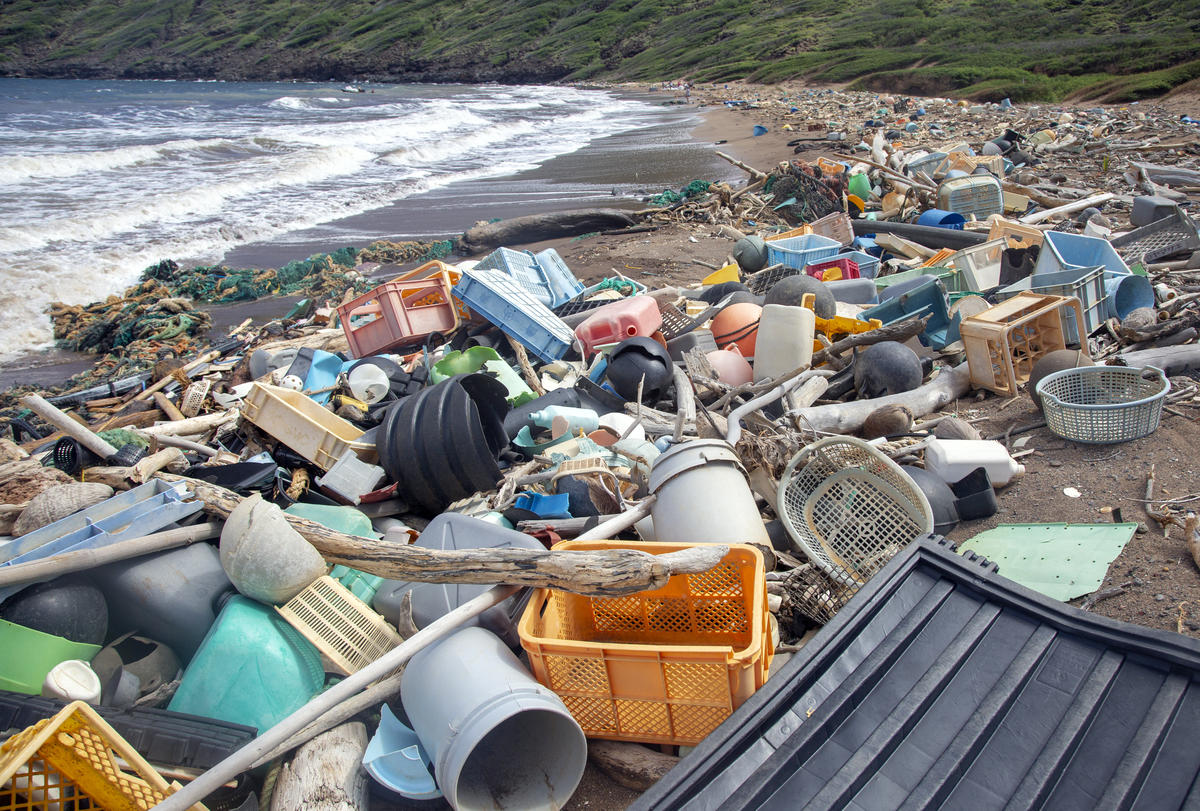
Greenpeace partnered with Protecting Kaho’olawe ‘Ohana (PKO) and Kaho’olawe Island Reserve Commission (KIRC) to do a beach cleanup and brand audit at Kanapou beach on Kaho’olawe Island, Hawaii.
Trash washed up on the beach.
The stuff is everywhere: from our toilet seats to the electronic devices we constantly use (sometimes, it’s safe to ass-u-me, while likely sitting on said toilet seat) are made of plastic. In fact, try as we might, there’s not much in our day-to-day lives that doesn’t contain plastic.
“I just want to say one word to you. Just one word … Plastics.”
Remember that line from The Graduate?
More recently, however, plastic has begun to bother me in its excess.
If these words weren’t about a former boss, they could aptly apply to plastic: “Some is good; more is better; too much is just enough.¨
Maybe for the producers, vendors, and plastic distributors, but definitely not for us and our world.
Why must water be sold in single-use plastic bottles? And those plastic bottles then wrapped in layers of plastic? And, again, as we check out, those plastics inside of plastic put in plastic bags?Why is there so much hard plastic packaging around razors, cds and dvds, tooth brushes and floss? Almost everything that now hangs from retail store shelves?
It’s bad enough trying to remove it to begin with … but, time and again, I cut myself and end up bleeding from the plastic shards.
But, I’m being self-centered here. There are communal and global reasons why we need to reduce our dependence on disposable plastic. Primarily because they’re not disposable!
Plastic, undoubtedly, has revolutionized society, introducing a huge amount of convenience and affordability, and allowing for the development of things like computers, cell phones and many modern medical devices.
But our obsession with it also comes at a steep cost. Although originally hailed as a miraculous innovation that could reduce a rapidly industrializing society’s reliance on scarce natural resources, plastic has also created a monumental environmental mess. Worldwide, more that 400 million tons of the stuff are churned out annually, generating a huge amount of waste of which less than 10 percent is recycled. The rest either ends up in landfills, where it will take an average of 500 years to decompose, or in waterways and oceans.
A study by a scientific working group at UC Santa Barbara’s National Center for Ecological Analysis and Synthesis (NCEAS), concluded that every year, eight million metric tons of plastic end up in our oceans. What is more concerning is that, according to the study, the cumulative input for 2025 would be nearly 20 times the eight million metric tons estimation.
One of the most concerning problems that our oceans are facing nowadays – if not the most important – is plastic pollution. Plastics are the cause of increasing ocean pollution, which in turn affects marine life and, consequently, humans as well.
Did you know:
Plastic causes many adverse effects in wildlife because chemicals include reproductive abnormalities and behavioral effects.
All sea turtle species, 45% of all species of marine mammals, and 21% of all species of sea birds have been affected by marine debris.
Plastics can absorb toxins from surrounding seawater, such as pesticides and those in the class of chemicals known as Persistent Organic Pollutants (POPs). They can also release harmful components.
Plastics can be ingested by many organisms. This can cause damage to their health.
The main cause for the increase in plastic production is the rise of plastic packaging.
The drilling of oil and processing into plastic releases harmful gas emissions into the environment including carbon monoxide, hydrogen sulfide, ozone, benzene, and methane (a greenhouse gas that causes a greater warming effect than carbon dioxide) according to the Plastic Pollution Coalition.
The Environmental Protection Agency or EPA estimated that five ounces of carbon dioxide are emitted for every ounce of Polyethylene Terephthalate produced (also known as PET – the plastic most commonly used to make water bottles).
What can we — you and me — do about all this plastic pollution?
The solutions are simple and can be applied by everyone, everywhere.
The best way we can all help is to reduce new litter entering the environment. This may sound naïve, but it is a fact. To do that, there are three Rs that can remind us to do this:
Reduce: Choose products with less packaging, or shops where you can refill your own container.
Reuse: Use reusable products.
Recycle: Separate items that can be recycled (i.e. plastic, paper, cardboard).
Short of lobbying for government intervention in plastic packaging, there’s lots we can do to reduce our individual plastic pollution footprint: Have three receptacles in your kitchen–one for recycling, one for compost and one for trash. Collect all your plastic trash for one week just to see how much you actually use. It may make you think twice about how much plastic you buy. Stop buying single use plastic bottles and fill a reusable bottle, instead. Notice how things are packaged and opt for items packaged in cardboard vs. plastic whenever possible, for example laundry detergent. Minimize your use of plastic bags. Keep reusable bags handy. Use a thermos for your morning cup of coffee and bring it with you to your local coffee shop. Don’t buy disposable razors. Swap out or minimize all those plastic food storage containers you’ve collected over the years, especially those without lids or bottoms. Use glass or metal containers. Buy from bulk bins. This doesn’t mean buying in bulk. Bring your own reusable cloth containers or bags. Stop using disposable plastic plates. Donate plastic household items or decor you don’t love or are no longer using. Don’t just throw them out.
Don’t just throw them out!
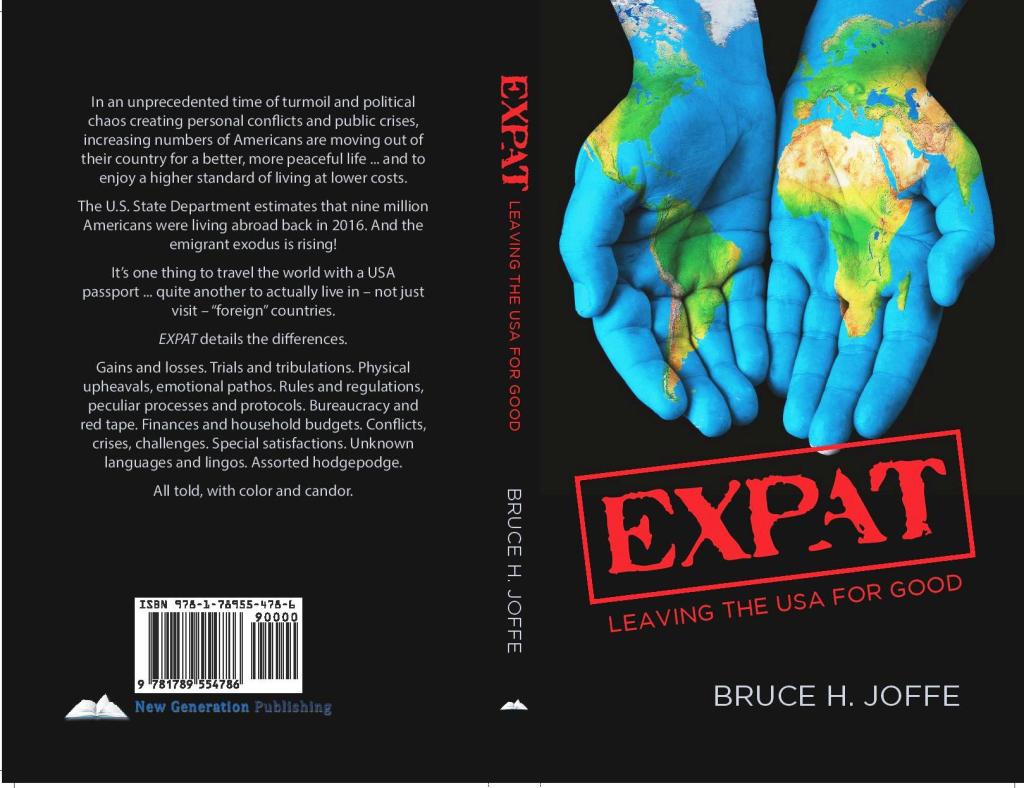
Shared here are personal observations, experiences, and happenstance that actually occurred to us as we moved from the USA to begin a new life in Portugal and Spain. Collected and compiled in EXPAT: Leaving the USA for Good, the book is available in hardcover, paperback, and eBook editions from Amazon and most online booksellers.
Processing…
Success! You're on the list.
Whoops! There was an error and we couldn't process your subscription. Please reload the page and try again.
“Para trás fica o Portugal rural, com as suas cidades e aldeias envelhecidas, onde prolifera o desemprego e o abandon das infraestruturas.”
Some startling statistics from (the bank) Montepio’s *magazine:
> In 2018, more than 40% of Portugal’s population lived in the Lisbon and Porto metropolitan areas—a trend which will continue to rise.
> To maintain its population, Portugal will need 50,000 new inhabitants per year—all the way through 2040.
> Cities and towns in the country’s interior – especially those close to the border – need at least 10,000 people per year over the next two decades to put a stop/hold to their population decline.
> 60% of Portugal’s people live within 25 kilometers of the coast.
The author asks: Can technology – including broadband digital access and telecommuting or working from home – reverse the cycle of rural exodus by building new, sustainable societies from the north to the south of interior Portugal?
Portugal’s Parliament
Vacating age-old villages isn’t an occurrence isolated to Portugal. In Spain, France, Italy and other countries, too, the same fate occurs: small and remote locations are left to decline, decay, and loss when young people leave seeking jobs and opportunities elsewhere, leaving only the elderly to cope with the dwindling resources that remain.
While many immigrants and expats enjoy the expansive lifestyle afforded by beaches and life’s little luxuries found in major municipalities and metropolises like Lisbon, Porto, Algarve, and even Coimbra – mirrored by comparable cities in Spain – others (perhaps even more of us) are attracted to the charm of Iberia’s interior villages and life off-the-grid on organic quintas, fincas, and farm land.
Through its “Work in the Interior” program launched February 3, 2020, Portugal’s government is offering financial incentives of up to €4,800 to anyone – workers and students, especially – who will help to repopulate the region. To encourage hiring, financial support will also be given to business and companies.Due to its popular “Golden Visa” program which encouraged foreigners to invest in Portuguese real estate, Lisbon, Porto, Algarve and other coastal cities have become too expensive for the Portuguese people. With all of the positive publicity about Portugal, buying property in these areas above others continues to be popular (even though the government recently revised and removed many of the program’s potential benefits).
Some, like the article’s author, propose that broadband digital will figure prominently in the regentrification of Portugal’s interior–by creating telecommuting jobs and work-from-home opportunities. Perhaps that might be a bright side to the current Covid-19 pandemic: Historically and traditionally, Portuguese companies have been hesitant to embrace new ways of working. Maybe now, their reluctance might be minimized after having experienced their labor force working off-site remotely and successfully.
Financial inducements and greater penetration of speedy and accessible broad bandwidth are but two of the tools being considered and implemented to bring back a flourishing interior. But there’s another, more integral and resourceful option that shouldn’t be overlooked … one that real estate and property agents are well familiar with: location, location, location.
Look no farther than Portugal’s next-door neighbor, Spain, whose capital is quite centrally located. Sure, there are plenty of places from north to south and east to west with large, self-sustaining municipalities and resort areas — notably Málaga, Valencia, Alicante, Bilbao, and Barcelona — but the interior regions — Sevilla, Granada, Córdoba, Burgos, Badajoz, Toledo, Salamanca — do equally well, supporting their nearby towns and villages.
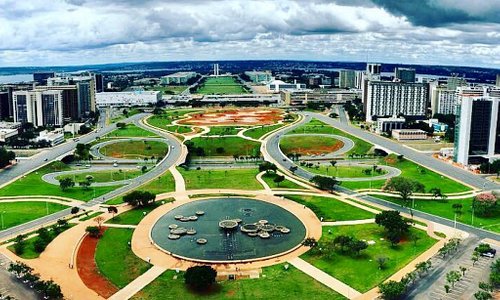
Brasilia
More to the point, consider Brazil. The largest Portuguese-speaking country in the world created a completely different solution: Founded on April 21, 1960 to serve as the country’s new national capital, Brasilia was planned to move the capital from Rio de Janeiro to a more central location atop the Brazilian highlands in Brazil’s central western region. With a unique status, Brasilia is an “administrative division,” rather than a legal municipality. The novel city’s accession as the new capital of the country prompted the development of an extensive interior region.
According to Brazil’s 1960 census, there were almost 140,000 residents in this new federal district. By 1970, this figure had grown to 537,000. By 2010, its population surpassed 2.5 million. Seeking public and private employment, Brazilians from all over the country migrated to Brasilia’s satellite cities, towns, and villages.
Why can’t Portugal consider doing something similar?
Leave Lisbon (and all its attractions) where it is, along with its problematic airport. People will still want to live there, as well as in its affluent outskirts like Cascais and Estoril. But reduce the congestion, pollution, and skyrocketing prices by moving the government and its operations elsewhere … to the country’s interior.
Many factors would need to be taken under consideration and the country’s core would compete for the privilege of hosting a new capital city in Portugal, boosting employment, infrastructure, and prosperity in the process.
Which of Portugal’s interior regions would best suit these purposes?
My own personal favorite, of course, would be Castelo Branco!
* “O digital pode salvar as cidades do interior?” Texto: Carlos Martinho. Inverno 2020 (#33)
Shared here are personal observations, experiences, and happenstance that actually occurred to us as we moved from the USA to begin a new life in Portugal and Spain. Collected and compiled in EXPAT: Leaving the USA for Good, the book is available in hardcover, paperback, and eBook editions from Amazon and most online booksellers.
Processing…
Success! You're on the list.
Whoops! There was an error and we couldn't process your subscription. Please reload the page and try again.
I ended the “should I or shouldn’t I?” tug-of-war with myself.
I decided to give up Medicare Part B.
After living three years in Spain and Portugal, first as expats and then immigrants, we began to question whether we’d do better by cancelling our “Part B” coverage which cost us $144 per month deducted from our Social Security payments and having more disposable income in our pockets. Sure, we knew that there’d be fines, fees, penalties, and interest if we wanted to rejoin Medicare Part B … but we have no intention of returning to the USA. At least not to live there. Here in Portugal, we have comprehensive, state-of-the-art health care provided both by our public coverage under the country’s universal National Health Service (SMS) supplemented by our excellent private insurance that runs us two thousand euros (€2,000) per year for the two of us–one 70, the other 57.
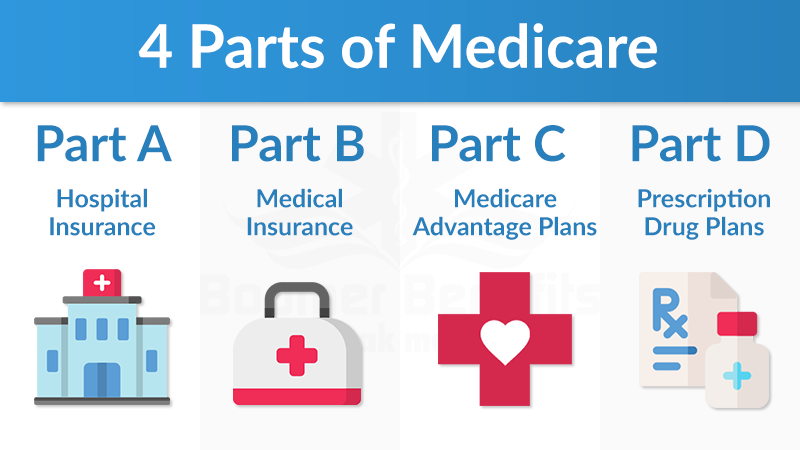
For those living in the USA, Medicare has formed the foundation of health care coverage for Americans age 65 and older. Here’s how it works:
A portion of Medicare coverage, Part A, is free for most Americans who worked in the U.S. and paid payroll taxes for many years. Part A is frequently considered “hospital insurance.” If you qualify for Social Security, you will qualify for Part A. You’re covered whether you want it or not, as long as you have more than 10 years (or 40 quarters) of Medicare-covered employment.
Part B, which many think of as traditional health insurance, isn’t free. You pay a monthly premium for Medicare Part B.
Part A generally covers medically necessary surgery and certain hospital costs; Part B may cover doctor visits while you’re an inpatient. Part B is a voluntary program which requires paying a monthly premium for all months of coverage.
Individuals entitled to Medicare Part A cannot voluntarily terminate their (free) Part A coverage. That’s not permitted by law. Generally, premium-free Part A ends only due to loss of Social Security “entitlement” … or death.
You can, however, voluntarily terminate your Medicare Part B.
Say you’re 65, no longer working, and don’t want to pay premiums for Part B Medicare insurance. That’s OK. But if you opt out, the costs will be higher if you want to get back in.
“In general, when you’re 65 or older, you should decline Part B only if you have group health insurance from an employer for whom you or your spouse is still actively working and that insurance is primary to Medicare (i.e., it pays before Medicare does),” says Social Security.
But what if you are an American immigrant, living outside the USA?
To “disenroll” from Part B, you’re required to fill out a form (CMS-1763) that – under most circumstances – must be completed either during a personal interview at a Social Security office or on the phone with a Social Security representative. For those of us living abroad, we must deal with it through our US embassy.
Social Security insists on an interview to make sure we know the consequences of dropping out of Part B — for example, that we may have to pay a late penalty if we should want to re-enroll in the program in the future.So, why did I decide to disengage myself from Medicare Part B?
Several reasons:
• Neither Medicare Part A nor B covers any health care costs incurred outside the USA. And we live in Portugal and Spain. In other words, we’re paying for nothing–especially because, given the circumstances, we have no plans to go back and live in the USA again.
• The standard monthly premium for Medicare Part B was $144.60 for 2020, up from $135.50 in 2019, which Medicare deducts from my Social Security check. That comes to $1,626 a year—for something I can’t or won’t use. The money will serve me better in my pocket than in the government’s deficit-ridden purse.
• But, most importantly, we found a better and more cost-effective option!
It’s called “travel insurance,” albeit a rather extraordinary plan:Offered by AFPOP through Medal (AFPOP’s insurance brokerage), it covers both me and my spouse for a year anywhere we go — including the USA – for up to 60 days per trip. It’s renewable, regardless of our age; there’s no age limit to enroll, nor higher costs the older you are … neither is there a limit on the number of trips we can take. Moreover, it’s international in scope—including, believe it or not, the USA!
Two plans are offered: Silver and Gold. We chose the Silver, which includes accidental death or permanent invalidity (100,000€), additional indemnity for severe loss (€25,000 for paraplegia, 50,000€ for tetraplegia), and indemnity for dependent children (€5,000 per child). We’ve got five million euros of third-party liability, repatriation, and extensive coverage for health care-related expenses: Medical expenses (10,000€ for sudden illness & 1,000,000€ for accident, which are more than enough here in Portugal) … hospitalization (full coverage, and we’re still covered by Medicare Part A in the USA) … urgent dental treatment … medical expenses in Portugal after returning, when due to an accident or illness occurring abroad … search & rescue … funeral expenses (up to 7,500€– in Portugal or elsewhere).
Also included: loss or theft of luggage (3,000€); luggage delay (750€); loss or theft of essential travel documents (2,000€); trip cancellation (€5,000); trip delay (37.50€ per hour); legal costs (15,000€); detention (5,000€); bail bond (50,000€); kidnap, ransom, and illegal detention (125,000€); political evacuation (10,000€).
Unfortunately, pre-existing “clinical” conditions and health problems aren’t covered. But, as we have none to speak of, that didn’t matter to us since the travel insurance isn only for medical issues we might encounter outside of Portugal (where we’re fully covered).
I don’t mean to come across as an advertising mouthpiece for this particular plan. But, do some homework and research: First, try to find 24/7/365 unlimited travel insurance plans with such comprehensive coverage and so few restrictions … rather than those for a single trip. Next, see if they’ll even sell you a policy if you’re older than 65. Finally, look at the price and what you get for your money.
Shared here are personal observations, experiences, and happenstance that actually occurred to us as we moved from the USA to begin a new life in Portugal and Spain. Collected and compiled in EXPAT: Leaving the USA for Good, the book is available in hardcover, paperback, and eBook editions from Amazon and most online booksellers.
Processing…
Success! You're on the list.
Whoops! There was an error and we couldn't process your subscription. Please reload the page and try again.
Across the United States – in Portland, Oregon; Seattle, Washington; Kenosha, Wisconsin; Louisville, Kentucky; Baltimore, Maryland; New York City and Rochester, NY; Minneapolis, MN; Philadelphia, PA; California, Colorado, and elsewhere nationwide – people are protesting, calling for fairness, equality, and justice.
Mainly, they’re peacefully protesting systemic inequalities: racism, economic injustice, government inaction or overreach, lock-ups and lock-downs.
They can’t pay their rent or mortgages, forced to choose between putting food on the table or medicine in the mouths of their loved ones. They’re agonizing over the toll Coronavirus is taking personally and professionally. And they are unleashing their anger and frustrations on others.
Between April and May 1st this year, protests against government-imposed lockdowns in response to the Covid-19 pandemic led to demonstrations in more than half of the “United” States. Shortly thereafter, on June 6th, half a million people turned out in nearly 550 places across the USA for Black Lives Matter protests.
Mass shootings hit a record high last year (2019), violent hate crimes are on the rise, and police brutality continues, prompting increased polarization and protests.
Police – local, state, the National Guard and even the Border Control – are called in, often exacerbating the problems. Violence follows and incites more violence, as hateful White House rhetoric spurs outcries against what the president calls his “law-and-order” platform. The result, however, has been increased antagonism and turf-minding. Apart from verbal incriminations, weapons include gunfire and bullets, tear gas and other chemicals, buildings burned, blazing tempers and imported vigiliantes, vehicles battered and overturned. Lately, more than 104 separate vehicles have been plowing through crowds and injuring protestors.
The bottom line is that people – often neighbors, long-time friends, even family and churches – are taking sides and triggering showdowns, sometimes violently, against each other and the powers-that-be. You’re either with me or against me, depending on who you are voting for.
American citizens are trying to prevent other American citizens from voting. Not just trying to intimidate them into not voting, but physically trying to prevent them from doing so!
It increasingly feels like America is reaching a boiling point, more raging bonfire than flash in the pan. Already beset by a national recession and a deadly pandemic now surpassing 200,000 deaths, this week has stoked new fires, including a Supreme Court battle to fill the Ruth Bader Ginsburg’s seat, Trump refusing to promise a peaceful transfer of power, mass protests after police officers faced no charges in the death of Breonna Taylor, and the swirling of literal fire tornadoes out West, while hurricane after hurricane pulverize our Gulf Coast . As American anger heats up, it’s incumbent that we bring a fresh lens to its origins and the core beliefs it threatens to topple, along with ways we can work together to douse the flames.
“Enough!” people are pleading, if not demanding. “Fix the problems!”
Trouble is, just as the financial gap between the haves and have-nots is widening, so, too, is the economic crisis. Many of the problems are difficult (if not impossible) to fix, because they’re so deeply rooted and systemic, driven by centuries of loot and looters, masters and slaves, carpetbaggers and indentured servants, inbred privilege and attitudes, government for the people becoming self-serving government, plebians and plutocrats, myriad moguls for whom more and much more are never, ever, enough.
Financial necessity has forced suburban populations to head for inner city food banks and health care clinics … creating a foggy, finite understanding of the implications inherent to why Black Lives Matter.
According to the Institute for Policy Studies, U.S. billionaires gained $565 billion additional dollars since March 18th. At the same time, surging unemployment has reached levels not seen since the Great Depression.
Experts say the top 10% of households own more than 84% of stocks … so a rising market helps people who already are among the wealthiest in the nation. Analysts attribute this widening wealth gap to the stock market, while meager consumers suffer the effects at their local groceries and supermarkets.
If we have never seen such economic instability since the Great Depression, we haven’t seen such social distancing since the Civil War. Or climate change and pollution so quickly creating environmental consequences and our planet’s ability to sustain life.
How can we look at what’s happening before our very eyes and not realize that we’re leading up to an even more deadly Civil War, if not already in the midst of one?
Worse, the riots are occurring all over the world.
At least sixteen countries — ranging from the UK and France to Australia, Brazil, Japan, Kenya, and South Africa — have seen major demonstrations over police violence against Black or minority populations and related issues, such as systemic racism and the legacies of colonial empires. In France and South Africa in particular, the pandemic has served to crystallize the problem of police brutality: authorities enforcing lockdown regulations have used force disproportionately against Black citizens.
But new protests are also breaking out for reasons other than police violence and racism. Some are rooted in how governments have responded to the pandemic. Among them, Brazil and Israel stand out. Ecuador, which faces one of the highest per-capita death rates from COVID-19 among developing nations, recently saw thousands protest the government’s decision to close some state-owned companies and cut public sector salaries, in an effort to close a gaping $12 billion budget deficit.
Citizens in Iraq have resumed protests over corruption, high unemployment, and the violent repression of protesters, with demonstrators in central and southern Iraq clamoring for the removal of governors who they deem to be corrupt. In Mali, tens of thousands have demanded the resignation of President Ibrahim Boubacar amid persistent intercommunal violence compounded by economic stagnation, a dearth of political reforms, and widespread government corruption. Saudia Arabian women have protested for fewer restrictions on their rights, even as Syrians protest the killing machine of their country’s leader and the Lebanese protest the lack of responsible leadership from their do-nothing government. The separatist movements provoke perennial protests in Spain, even as the second massive shutdown in its capital and biggest city because of Covid-19 stoke the fires of discontent.
Protests, by far the largest and most persistent in Belarus since independence from the Soviet Union in 1991, began Aug. 9th after an election that officials said gave President Alexander Lukashenko a sixth term in office. Opponents and poll workers say the results, in which Lukashenko was tallied with 80% support, were manipulated.
In some countries, governments have capitalized on the chaos of the pandemic to persecute critics, criminalize dissent, ban public demonstrations, and further concentrate political power. Consider China and Russia, for example.
How can society achieve the consensus it needs to function if everyone regards rivals as “Nazis,” “traitors” or “enemies of the people”?
“Trump, the torchbearer, has at times fueled racial tensions and stomped on his perceived enemies, citizens and institutions alike,” writes Nick Fouriezos, senior politics reporter for OZY, an international media and entertainment company launched in September 2013 by former CNN and MSNBC news anchor, journalist, and businessman Carlos Watson and Goldman Sachs alumnus Samir Rao. Ozy describes its mission as to help curious people see a broader and a bolder world.
“Some have become radicalized by the president’s behavior, meeting fire with fire — from erecting guillotines to accosting Senators to defending violent looters as collecting what society owes them,” Fouriezos continues. “Meanwhile, the American Fringes have continually hijacked the discourse, worming their ideas into some of America’s most revered institutions. The loss of civility playing out on the national stage has had ripple effects, reflected in an apparent uptick in nastiness nationwide, with ordinary citizens bickering over face masks in stores, trolling each other on social media and facing off over campaign signs next door. In a multiethnic, multicultural and increasingly crowded democracy, respecting commonality while acknowledging differences has been the surest way of moving forward — but it has become a casualty of rising American anger.”
If political tensions are bringing the USA to the brink of a second Civil War, is what’s happening around the globe a harbinger of something bigger?
Hopefully, cooler heads will prevail.
Stay tuned …
Shared here are personal observations, experiences, and happenstance that actually occurred to us as we moved from the USA to begin a new life in Portugal and Spain. Collected and compiled in EXPAT: Leaving the USA for Good, the book is available in hardcover, paperback, and eBook editions from Amazon and most online booksellers.
Processing…
Success! You're on the list.
Whoops! There was an error and we couldn't process your subscription. Please reload the page and try again.
Just ask the scientists. Or any legitimate fact-checker.
Those who deny the reality of climate change and global warming are the same foolish, mistaken people who claim that Coronavirus (Covid-19) is a hoax and refuse to wear masks or maintain social distances.
All of a sudden, climate change is here—up close and personal. We’re witnessing it with our own eyes. Who can deny the devastation ravaging the USA’s Pacific coast (and parts of the midwest) caused by “uncontrollable” forest fires?
“Bobcat” fire in California
Faster and more furious hurricanes threaten the Western hemisphere – even unprecedented back-to-back dynamos along the USA’s Gulf coast – while typhoons, monsoons, and tsunamis invoke nature’s wrath in the East. Already this year, we’ve run out of names for these tempests and will need to revert to the Greek alphabet.
Flash flooding is now commonplace, even as raging forest fires devour California, Oregon, Washington, and Colorado … as well as Spain and Portugal. Meanwhile, droughts of dry and parched land have come home to roost.
Earthquakes are occurring everywhere. Even in Spain and Portugal!
The Amazon is ablaze, while the Everglades are being turned into suburban housing. The sea is swallowing villages, eating away at shorelines, withering crops. And our oceans are bloated by unimaginable amounts of plastic, choking their marine inhabitants.
In effect, we’re losing our belts and suspenders, as Atlas shrugs and we drop our coverings: We’ve been warned!
“Concentrations of greenhouse gases in the Earth’s atmosphere are at record levels, and emissions that saw a temporary decline due to the pandemic are heading towards pre-COVID levels, while global temperatures continue to hit new highs,” according to a major new United Nations report.
“United in Science 2020,” released September 9th, highlights the increasing and irreversible impacts of climate change on glaciers, oceans, nature, economies … along with its cost on people across the globe; manifest more and more often through disasters such as record-breaking heatwaves, wildfires, droughts and floods.
Speaking at the launch of the report, UN Secretary-General António Guterres emphasized that there is “no time to delay” if the world is to slow the trend of the devastating impacts of climate change, and limit temperate rise to 1.5 degree-Celsius.
“Whether we are tackling a pandemic or the climate crisis, it is clear that we need science, solidarity, and decisive solutions,” said Guterres.
If there’s any hope for the planet’s survival, it won’t come from survivalists building bunkers and shelters to protect themselves from the doom and gloom … or from the Trumpers, for that matter … but from youngsters.
In 2019, Time magazine chose 16-year-old climate activist Greta Thunberg as its Person of the Year. The young lady had made a splash that year leading protests around the world, speaking at the United Nations, meeting with the Pope, and sparring with the president of the United States on Twitter.
Students protest, demanding global action on climate change as part of the “Fridays for Future” movement in Madrid. Youngsters in Spain are using social media to create groups aimed at pressuring politicians and civil society leaders
Here in Portugal, six youths have filed an “unprecedented” climate change lawsuit against almost all of Europe – 33 countries! — for failing to take adequate action on the crisis that they say threatens their human rights.
The case was filed on September 3 in the European Court of Human Rights in Strasbourg, France. It is the first climate case brought directly to this international court. Lawyers for the young plaintiffs will argue that European governments’ current plans for cutting greenhouse gas emissions are insufficient to prevent catastrophic climate change and therefore constitute human rights violations under the European Convention on Human Rights.
“If successful, the 33 countries would be legally bound, not only to ramp up emissions cuts, but also to tackle overseas contributions to climate change, including those of their multinational companies,” the charity Global Legal Action Network, which is providing legal support for the case, explained in a press release.
“It’ll start getting cooler, you just watch.”
That is what Donald Trump said during a televised summit in California focused on the catastrophic wildfires ripping through the state and other regions of the western United States. He claimed that “exploding trees” were the catalyst.
Trump—a notorious denier of climate science and the global consensus that human activity and fossil fuel emissions are driving planetary heating—has met his match in the youngsters who are so much smarter and wiser. My money (if I had any) would be on those kids!
Shared here are personal observations, experiences, and happenstance that actually occurred to us as we moved from the USA to begin a new life in Portugal and Spain. Collected and compiled in EXPAT: Leaving the USA for Good, the book is available in hardcover, paperback, and eBook editions from Amazon and most online booksellers.
Processing…
Success! You're on the list.
Whoops! There was an error and we couldn't process your subscription. Please reload the page and try again.
Two, 90-minute Netflix “documentaries” have knocked the wind out of my sails, leaving me ailing and wailing about the unfairness of it all … and that there’s little I can do to create constructive, creative, proactive change.
The Social Dilemma (highlighted and linked in an earlier post here) focuses on the giants of technology – Facebook, YouTube, Google, Instagram, LinkedIn, WhatsApp, and others – with former supervisory employees and critics of these companies sounding the alarm.
What began as helpful “tools” for our personal space and productivity have evolved into manipulative, psychotic platforms that know more about us than we do about ourselves … including how much time we spend looking at a given image, what we supposedly #Like or makes us #Angry (and other designated reactive emotions) … and that, instead of tools for creating personal products, we ourselves have become the product. Based upon our digital DNA, we are being sold – with “how-to-use us” instructions — to the commercial and political marketplace.
Two take-aways that struck me quite personally, which I can’t seem to shake, are that: (1) Each of us is fed distinctly different news, comments, posts, replies and reactions, and (dis)information based on the sum total of what this artificial intelligence knows about us; and (2) Because of these algorithms, we only are able to reach like-minded people in sync with our personal data. All of our posts with distilled information and links for fact-checking – designed to reach others with different views, opinions, and perspectives – hardly ever reach our intended audience.
The brazen abuse and manipulation by these social media are chilling, frightening, and but a harbinger of what’s yet to come.
Starring Meryl Streep, the other Netflix docudrama that blew me away is The Laundromat (linked below). This is the story of how the rich, indeed, are very different from the rest of us … using shell games and companies to cheat, steal, manipulate, and get away with murder. Literally.
In response to these two Netflix films (along with my own observations and personal experiences), I am making some deliberate changes to my online habits. First and foremost is distancing myself from the worst players.
Here’s what that means for my own use of Facebook, as well as the other social media giants … especially as they relate to maintaining my own sanity and balance:
• I will no longer postproactive positions about climate change (evidenced by the hottest weather ever on record, expanding forest fires that cannot be contained, fiercer and more frequent hurricanes devastating people and property, torrential rains and flash floods that take incredible tolls … typhoons and tsunamis, earthquakes that are shaking our very foundations, and the resulting pollution that is suffocating us). Because the climate change deniers believe what they do; nothing I can say will change their beliefs; and my posts probably won’t be reaching them, anyway.
• Similarly, I won’t be posting about dealing appropriately with Covid-19 (mask-wearing, social distancing, testing, avoiding large gatherings—especially indoor), for the same reasons. Not only has this pandemic been politicized, polarizing us yet further … but just as too many are climate change deniers, certain segments of the population are totally anti-vaccines.
• And, for the same reasons, I will no longer continue posting about Donald Trump, Trumpsters, and Trumpism. If his cultist fan club refuses to recognize and acknowledge the travesties he’s committing – and getting away with – in “real” time, right before their eyes, they are choosing to do so. My words and sources will neither engage nor convince them. “One who is wise is cautious and turns away from evil, but a fool is reckless and careless,” states Proverbs 14:16.
Other behavioral changes I will try my best to make vis-à-vis Facebook and other social media include:
• Not responding to “click-bait” suggestions of posts and people or groups which algorithms – based on my online behavior – recommend that I check out and consider.
• Limiting the number of #Likes I post. After a friend thanks me for wishing him or her a happy birthday, there’s no need for me to #Like that #Like! It’s far easier for Facebook to identify and quantify my emojis than to qualify any comments I may make.
• Refusing to allow myself to fall down the rabbit hole. How many times have I read something of interest, then clicked on its link, pouring through post after post feeding my concerns and insecurities, while venturing farther into the quicksand?
• Reviewing and refining my #Friends list. “Unfriending” someone seems so nasty and final; but I’m asking myself, “Who are these people? How do I know them? What kinds of interaction or communication have we engaged in since becoming #Friends?”
• Deleting some of the Pages and Groups I have joined or liked. Look at your personal information: How many groups did you join that you really no longer participate in … or Pages you liked because you’ve been asked (by a FB friend or the Page itself) to #Like it?
• Not giving any more personal or professional information to the social media. I don’t need to publish my cv or resume in my profile. (While I can delete some of the profile information I have already provided, the titans of social media already have saved everything I ever shared—despite my deletions.) I’ll be moving forward ever more cautiously.
• Disengaging from the social media by spending less time there and using it for more constructive purposes. Yes, there certainly are some definite positives about our use of the Internet to engage with others. But, let’s be honest: Haven’t we become “conditioned,” like Pavlov’s dogs, to respond to the sounds of online alerts, alarms, and attention-getters?
Shared here are personal observations, experiences, and happenstance that actually occurred to us as we moved from the USA to begin a new life in Portugal and Spain. Collected and compiled in EXPAT: Leaving the USA for Good, the book is available in hardcover, paperback, and eBook editions from Amazon and most online booksellers.
Processing…
Success! You're on the list.
Whoops! There was an error and we couldn't process your subscription. Please reload the page and try again.
Repeatedly, I’ve heard these words (^^^) used to describe the way we’re living now—especially the uncommon behavior(s) we’ve adapted to and adopted.
Trouble is, they’re neither new nor normal.
Despots, disasters, and debacles have a long history of turning our “standard operating procedures” into inappropriate behavior and questionable conduct.
It hit me the other day when I saw almost everyone in our immediate vicinity, as well as images beamed from across the globe, wearing facial masks–which is a good thing!
Except for those who refuse to wear them.
Because, like so many other matters, masks have become political statements of which side you’re on. Basically, it boils down to “You’re not the boss of me; you can’t tell me what to do” vs. “Please, people: it’s not about you, it’s about public health and the greater good.”
Yeah, right. Try convincing conspiracy theorists that their preferred sources of news and information are either confused, conflicted, or callously (and covertly) compromised in spreading their own versions of reality for certain reasons, ends, and purposes.
And all those alternative visions are producing a feeding frenzy for the media, where each and every tidbit is taken and shaken as utterly imperative “Breaking News!”
The media feasts on food for its fodder.
Talk about thickening plots …
Isn’t it weird that stock markets are soaring to their highest levels ever, when 30 million Americans aren’t working and can’t buy food for their families or pay for the roofs over their heads? Yeah, I know: they’re betting that the future will be better by far than the past. How many people are still collecting – or applying for –unemployment paychecks? Or scratching subsistence from food banks and the largesse of others? How is it that so few have so much, while so many have so little? Why is it that some people hate immigrants (who pay taxes), but not billionaires who don’t? Isn’t that, too, riddling the new normal?
When did it become about keeping folks out of the USA, rather than welcoming them in? “Give me your tired, your poor, your huddled masses yearning to breathe free” speaks not about the rich or the elite, but the wretched, despised, and despairing. Children separated, yanked, from their families and kept in cages like captive animals. Rather than bulding walls, we should be opening doors and creating sanctuaries.
Atlas shrugs and havoc reigns.
Has there always been so much selfishness and hatred blowing in the wind? Or, are we yet a generous and good-hearted people?
We’re used to political party put before principles. Now, however, we have angry pretenders preceding both parties and principles. Follow the leader, you know, no matter how crazy.
It’s happened before … when times weren’t “normal.”
If it isn’t politics and protests, then there’s the weather. Crazy, climate change weather with uncontainable fires, scorching heat, flash-flooding rainfalls, the Everglades drying up as the Amazon burns, earthquakes, more frequent hurricanes, monsoons, typhoons, tsunamis.
Our increasingly endangered wildlife bespeaks species disappearing while they’re hunted for personal pleasue and stolen for keepsakes. Meanwhile, we continue to dump toxic waste into waters already bloated by plastics and packaging.
Which is why some fault our overindulgences, lack of care to protect the environment, and continuing dependency – guns for gas – on non-renewable energy sources as the biggest and baddest “new normal” of all … except, of course, for the pandemic.
Corona virus. Covid-19. But not the “China” virus.
“COVID-19 has me obsessed with how close to death I am, at tables set up in the street, in roaring traffic, with only a flimsy plywood partition between me and a brutal, bloody finish,” posts an articulate friend online. “I just don’t sit in the avenues, only the cross streets; it’s safer …” Yeah, let’s hear it again for the new normal!
It’s not normal – neither new nor usual – for contradictory information to be flying around, with statistics and sound bites. Whether it is what it is or isn’t lacks definitive answers or a common denominator. That’s senseless and stupid. Not to mention confusing (I just did!).
Like sending children to school in the midst of this crisis. Or hanging out in bars. Or not nationally mandating mask-wearing and social-distancing. Or participating in round-em-up rallies. And who’s going to take the vaccine (when it’s available) and who’s not, after all?
“One pill makes you larger, and one pill makes you small …”
Nor is it normal for artificial intelligence, like Facebook, to know more about our personal lives than we, ourselves, do. Not only are the so-called “social” media collecting every last lick of our digital DNA, but they’re using the data to determine what we do and where we go from here … selling our most intimate “psychographics” to any and all bidders.
Endless squinting at tiny mobile screens when people gather, close enough to look deeply into each other’s eyes and share elbow-kisses. But they prefer immersion in their digital devices over face-to-face contact. It may not be new, but it sure ain’t normal.
There are some who contend we’re actually living in the realized visions of Animal Farm, Brave New World, The Handmaid’s Tale, Fahrenheit 451, Lord of the Flies. Whatever. To me, it feels like we’ve either stepped through the looking glass, down the rabbit’s hole, where Cheshire cats and “Off with their heads!” are the norm … or that we’re inhabiting Twilight Zone nightmares from which we can’t shake off the sandman’s dust.
Insanity.
But only if we truly accept this as “normal.”
Let’s face it: totally abnormal is what it is, instead.
Please don’t cry for me, America … or Portugal and Spain, for that matter. Let’s wail for our world and work together to fix it, returning us to a real sense and semblance of normal.
Shared here are personal observations, experiences, and happenstance that actually occurred to us as we moved from the USA to begin a new life in Portugal and Spain. Collected and compiled in EXPAT: Leaving the USA for Good, the book is available in hardcover, paperback, and eBook editions from Amazon and most online booksellers.
Processing…
Success! You're on the list.
Whoops! There was an error and we couldn't process your subscription. Please reload the page and try again.
The Bureaucracy Begins: Applying for a Long-Term EU Visa
Professor/pastor probing media, religion, gender, international living, and allied cultural norms.
These words inscribed on Facebook, LinkedIn, and other social media sites profile how I imagine myself.
So, there: now you know enough about me.
Reading between the lines, however, would inform you that we had moved around the USA quite a bit – living in New York, Virginia, Maryland, Wisconsin, Florida – as career changes and professional opportunities beckoned. Fluent in Spanish, I traveled throughout Mexico, South and Central America, as a liaison for international adoption agencies.
As mentioned, my better half and I had long considered living in another country and experiencing a different culture. Learning a new language to converse and communicate, we believed, was an admirable goal. Some people are so defensive of their own ways and means that their sense of identity and nationalism is threatened when other ways are engaged in and embraced.
With credentials from the University of Madrid, a vacation bolt in Andalucía, and a growing circle of friends there, Spain seemed a natural first choice for us. But the process of applying for and being granted retirement residency in Spain can be onerous and demanding at best, next to impossible at worst.
Many countries of the European Union are also part of what’s known as the “Schengen” zone. The same Schengen application form is used to apply for residency in any of its 22 EU nations. But the interpretations of myriad functional requirements often vary from country to country.
Take finances, for example.
All Schengen countries want to know that you have the financial means to provide adequately for yourself and your dependents, without being a burden on the country and its economy. All countries seek proof that you have the necessary wherewithal—albeit from Social Security, other pensions and annuities, investments and savings, bank accounts, even credit immediately available via “charge” cards.
Spain dictates specific annual earnings expected retirees must receive: “The minimum income required is 400% of the IPREM (Public Income Index) annually plus the required percentage per each additional family member.” At the time, that meant, for a retirement visa and residency in Spain, one was expected to receive no less than $2,500 per month or $30,000 a year. Add $7,500 more for each dependent. I’m told that now, for some reason, those amounts are slightly less.
Wow!
How many Spaniards – especially those living in small towns throughout the country – earn that kind of money? Very, very few! For a country where the cost of living is so relatively low, I maintain Spain is shooting itself in the foot by requiring such high income levels from prospective retirees who would likely support the economy by spending money on their homes, food, and lots of leisure time activities.
Consider Portugal, now: €14,000 annually is an approximated income you have to make to get a “D7” residency visa in Portugal. But it can change depending on the number of “dependents” (wife, children, etc.). That amount is basically considered 100% of the minimum wage (MW) required for the husband/or wife (the visa’s owner) + 50% of the MW for his wife/her husband. For each child, it’s 30% of the MW. Portugal’s 2018 monthly minimum wage was 580 euros … although in 2020 it’s almost 700 euros..
Unless it has changed, financial means or financial subsistence in Portugal doesn’t require proof of income, simply proof of access to funds. Savings, bank accounts, investment funds, etc., all count as money to which you have access.
“You can qualify for permanent residency in Portugal simply by showing a reliable minimum income of at least 1,100 euros per month,” U.S. News & World Report reported. “This program is not intended specifically for retirees and is open to anyone. You can apply and qualify at any age, and the income you show can be earned or passive.”
In other words, money in banks … savings and retirement accounts … investments … even a line of credit on your “charge” card will count towards meeting your financial means in Portugal, as long as you have access to the money. The same holds true in many other EU countries: Italy and France are particularly popular, among others.
The process of applying for the right to reside in a Schengen EU country includes completing and/or acquiring much time-consuming paperwork, lots of patience, and more money than might be imagined. Included among the documents (some only available for a fee) required to be submitted with the official visa application: Original passport, a copy of the passport, and another accepted form of identification (driver’s license, state ID, or voter’s registration card). Plus a copy of this. A notarized document explaining why you are requesting the visa … the purpose, place, and length of your stay (and any other reasons you need to explain). Proof of permanent retirement income from an official institution (social security and/or private source) to live without working. Proof of accommodation: either a lease or title deed of property you own. Proof of other sources of income or properties (if applicable). Proof of health insurance with full coverage, necessarily including repatriation coverage. Criminal History Information/Police Background Check, which must be verified by fingerprints. It cannot be older than three months from the application date. The certificate must be issued from either the State Department(s) of Justice from every state you’ve lived in during the past five years. This document must then be legalized with the Apostille of the Hague Convention by the corresponding Secretary of the State. Alternatively, FBI Records, issued by the U.S. Department of Justice and legalized with the Apostille of the Hague Convention by the U.S. Department of State in Washington, DC, are acceptable. (A local police background check will not be accepted; but you must also get a police record from the countries where you have lived during the last five years.) A recent doctor’s statement signed by the physician on the physician’s or medical center’s letterhead (not older than three months in) indicating that you have been examined and found free of any contagious diseases according to the International Health Regulation 2005. Married? Your spouse must submit the same documents as you, together with a marriage certificate (original, issued in the last six months, plus a photocopy). Minor children must also submit the same documents as the applicant, along with original birth certificates issued in the last twelve months … and a photocopy.
Quite a list, huh? But, that’s only the beginning!
For Spain, every document submitted must be translated into Spanish … and not just by anyone. Only “certified” translators identified – many of whom charge @ $40 per page to translate – are acceptable. Despite being fluent in Spanish and having taught the language for quite a few years, I wasn’t on the list and couldn’t do our own translations.
But, for us, the real sticking point was the annual retirement income requirement. We owned (without a mortgage) our home in Spain and could live quite comfortably in our small town on my monthly Social Security payments. Nonetheless, $1,700 per month supplemented by a $250 private annuity didn’t come close to the $2,500 Spain required. Especially not when factoring in my spousal dependent.
We could enjoy visiting Spain twice each year for up to 90 days per visit when separated by 180 days … but we couldn’t live there full-time.
Bem vindo, Portugal!
Processing…
Success! You're on the list.
Whoops! There was an error and we couldn't process your subscription. Please reload the page and try again.
Since my public school days, I’d seen a president assassinated, the murder of his assassin, and the capture of his assassin’s assassin … all reported by the media, often “live” on our black and white TVs.
Later, I saw that same president’s brother assassinated as he, too, campaigned to become our country’s number one man.
I’d seen a Democrat – from Texas yet! – inherit the presidency, but decide not to seek another term because we had become so deeply entrenched in a war triggering marches on Washington and uprisings at campuses across the country (where students were shot dead by “first responders”).
I’d seen a president and his vice-president, both disgraced by scandals, resign from the two highest offices in the land.
I’d seen our first “unelected” president, when a guy-next-door congressman – but not the Speaker of the House – succeeded his predecessors.
I’d seen a well-meaning peanut farmer from Georgia elected president, a decent and truly Christian man, relegated to the back burners of history … remembered more for his brother’s beer than his own accomplishments (which finally are being realized and accredited).
I’d seen a beloved, second-rate actor become president and be shot (along with others) in front of our televised eyes … and, yet, despite the outcry, no real gun controls were effected.
I’d seen a father and son each elected president—the first for a single term, the second for two;
I’d seen a president selected by a partisan Supreme Court when the votes were so close and the election errors so many that day after day, week after week, a “winner” still couldn’t be called.
I’d seen a likable boomer – one of my own generation – impeached while in office because of alleged improprieties dealing with questionable real estate transactions and this president’s penchant for women, including consensual sex with a young intern whose stained, blue dress immortalized the evidence of his infidelities.
I’d seen the first black man elected President of the United States, yet denied his rightful responsibilities during eight years of impasse with a do-nothing Congress.
And I’d seen the first woman nominated to be our country’s commander-in-chief … only to be trumped by a lying, cheating, tax-evading, bankrupt, conflicted con man who abused and took advantage of people, denouncing them daily with tweets, and promoting a helter-skelter agenda of favoritism to idle rich capitalists–he and his family first in line.
Authoritarian leaders had long come and gone, but the populist braggadocio of Trumpism spread far and wide … cultivating extremist attitudes off the far right growing in Portugal and Spain.
Flabbergasted, flustered, and furious, I began asking everyone who’d listen a series of “since when” questions.
# # # # #
Since when:
• Did the executive branch of our government become so authoritarian that the legislature cowers instead of confronting the mess (or rushes off to retire with its ill-begotten gains and lifetime pensions)?
• Did members of Congress become “leaders” of this country, rather than representatives of the people who elected them … as if we were mere pawns in some preconceived, haphazard game of high stakes chess or roller skating championships?
• Did it become all right for nepotism to be an acceptable way of governing this country, where non-credentialed family members wheel and deal with emissaries from foreign countries for personal gain right there on site in the White House?
• Did it become legitimate for subordinate staff and aides to claim “executive privilege” and refuse to testify before Congress and/or its designated special investigators?
• Did we become a people who cheer – whose religious leaders bless – malicious, slanderous, hateful, and divisive words of a toxic, laughing stock president and his henchmen?
• Did our country stand alone, apart from the rest of the world (especially our allies and trading partners), in such critical matters as climate change, first-strike warfare, trade wars and economic tariffs … all based on the nonsensical ramblings of one man whose ignorance is only surpassed by his ego and arrogance?
• Did we have such a revolving door of executive and administrative staff – ambassadors, advisers, agency heads, justice officials – coming and going … due, in large measure, to firings or their fear of being associated with criminals and/or criminal offenses?
• Did responsible statesmen so deliberately ignore and refuse to investigate multiple alleged crimes and charges of injustice against a lifetime judicial nominee, so as to effectively rush through the confirmation of a new justice with dubious standards and questionable morality? Especially when that judge will serve as jurist in a potential trial of high crimes and misdemeanors (including treason) committed by the man who nominated him?
• Did our principal international nemesis (Russia) become a country whose leaders and politics are coddled and colluded … or where independent “back channels” between the Kremlin and White House are surreptitiously planned by players from both regimes?
• Did our government cater exclusively to the richest 1% of the country, while denying the other 99% even scraps from the banquet table?
• Did the administration in power benefit and take so much in personal pursuits and paranoid pleasures … a country whose president spends one-third of his time playing golf, a third tweeting or watching TV, and another third grand-standing before his base?
• Did it become legal to ambush trillions of dollars in new debt a year for tax cuts to appease the already privileged and patrons … only to warn that Social Security, Medicare, and other government programs we were required to pay into must be minimized?
• Did our chief executive dedicate himself with such glee to so swiftly and unilaterally dismantling myriad social welfare and infrastructure programs that guided and protected our people, basically to strike his predecessor president?
• Did it become acceptable to acknowledge – without corrective measures – that more than two-thirds of what a president says are proven lies?
• Did money so effectively dictate the rules of the realm, rather than the voices and votes of the people?
• Did the legitimate, mainstream press – always considered the fourth pillar of government – degenerate into an “enemy of the people” … while hurried and bizarre social media platforms became the pedestals for fake news and alternative realities?
• Did we end becoming a melting pot of diversity, benefiting from the talents and hard work of immigrants seeking to contribute to a better life?
• Did democracy despair and break down in the USA?
# # # # #
Since when did all these heinous things happen in a country birthed by liberty, freedom, and justice for all?
Since November 2016, when Donald Trump was (s)elected president and commander-in-chief of this hitherto generous, gallant, compassionate country … although some will maintain that planning for much of this usurping had been long in the making—by a complicit Congress, curtailed court system, and conspiring officials, whose patrons pull their (purse) strings … to divert attention from their back room back-stabbing. And by too many people who should know better, but prefer to gloat in their deplorable despair and disdain.
We lived in a place and time where – by and large – our elected representatives are beholden to their patrons, rather than to their constituents. They answer to no one (except themselves and their keepers) and exempt themselves from the rules that they make.
We lived in a place and time where the disparity between the income of corporations and their executives is radically beyond the grasp of working people. And, yet, despite all the loot the rich have accumulated and stashed, it’s not enough.
So, our Congress was intent on denying the safety nets ordinary people depend on, while giving even more money to those hoarding what they already have.
We lived in a place and time where our legitimate mainstream media, hitherto the bastion of freedom and justice, had been summarily dismissed and replaced with alternative facts, truths, and realities. Yellow journalism and slanted nonsense were held above our responsible press.
We lived in a place and time where political gerrymandering had corrupted our Electoral College such that twice – twice! – within a generation, the people’s choices for president were overruled and citizens denied their right to vote.
We lived in a place and time where we were isolated from the rest of the world, often the brunt of its jokes. We were the only nation in the world not to sign on to global environmental protection agreements and accords. We vacated our promises to trade with, protect, and support other countries (which now question whether we can be trusted anymore).
We lived in a place and time where moneyed people against public education, investment people who caused our near financial collapse, opportunistic people who inflated the prices of critical medicines, energy executives who knew naught about diplomacy, hunting advocates, and people whose memories failed them on imperative legal matters, were now running the very government offices they had hijacked … but scientists and otherwise knowledgeable people were forbidden — ostrasized — for speaking truth to power.
We lived in a place and time where a destructive, conflicted, ignorant, narcissistic, self-serving, delusional, degenerate man believed that his own, private empire should benefit from the country’s public business. Because, he believed, he was above the law.
We lived in a place and time where some of us signed petitions, wrote letters to editors and our representatives, made calls, knocked on doors, used every technological advantage to speak our hearts and minds, march on occasion, gather for community and committee meetings … but our representatives declined to address us.
Indeed, we lived in a desperate place and time.
What kind of desperate measures, if any, should we personally be taking?
Each must do what we believe best, according to our own particular situations, strategies, and peculiar circumstances.
For us, the decision was to leave.
We will always consider ourselves American citizens, register and cast our votes in USA elections, care about the land where we were borne.
But to intake and inhale this poisonous venom, a contagious cancer that has spread across the United States and, through it, the world?
No!
Internalizing the strife, we were grief-stricken, mentally exhausted, spiritually drained, and physically disabled.
The time had come for us to move on …
We would emigrate from the USA and become immigrants in Europe.
Shared here are personal observations, experiences, and happenstance that actually occurred to us as we moved from the USA to begin a new life in Portugal and Spain. Collected and compiled in EXPAT: Leaving the USA for Good, the book is available in hardcover, paperback, and eBook editions from Amazon and most online booksellers.
Processing…
Success! You're on the list.
Whoops! There was an error and we couldn't process your subscription. Please reload the page and try again.








 "Exactly!"