Imagine it’s the 4th of July, Mardi Gras, or New Year’s Eve … only bigger. Because the festivities continue day after day–typically for four days or so.
There’s food and drink, people dancing in the streets. Musicians and merriment. DJ disco. Friends and family who now live elsewhere returning to their homeland and birthplaces to celebrate with drink, games of chance, special lottery tickets and prizes. Often, even a Mass (or two). Albeit in the village’s streets, backyards, taverns, cafés, and church yards, it’s loud, begins late (10:00 PM), and continues through the hours most people otherwise are sleeping soundly..
What are they celebrating?
Perhaps they’re paying homage to a particular saint. Remembering a day from their particular history. Or momentarily singing the praises of Portuguese life.
It’s that time of the year when we see — and hear — a different side of our Portuguese neighbors … as saudade takes a break in the back seat, giving way to saúde.
No matter how small the village — our little Lousa (not Lousã) has fewer than 500 residents — these summer festivals are big events. So big, that the population surges four-fold with people staying with relatives, at their family’s original dwellings despite their delipidated condition, at lodging facilities, even commuting between nearby villages not hosting their shindigs at the moment. It’s nearly impossible to find a parking spot, as vehicles of all vintages, shapes, and sizes double (and triple) park … or are simply left wherever.
Broken beer bottles, plastic cups, and cigarette butts awaken the mornings after to the garish light of another day too hot to deal with overflowing trash bins, as streets become sticky–drunk by grit, gristle, grease, and grime fried by the day’s scorching sun.
Yet these annual festivities are good for the soul and give evidence of a spirit eager to be freed. While it may seem as though we’ve wandered into the midst of a circus or carnival, other days and times are set aside for such events.
Pause …
Of course, people need time and space to recuperate and regain their wits about them; so late mornings and afternoons are set aside for life’s more mundane tasks. Including sleep. Half-hearted attempts are made to clean up the public areas littered beyond the local bins’ capacity. But much of the time is traditionally spent with family.
In some Portuguese towns and villages — including ours! — the highlight of the doings is saved for near the end: running of the bull(s), an event that involves people running in front of a bull (or small group of bulls) that have been set loose on sectioned-off streets.
Ours is that sectioned off street in Vila Boim, our home in the Alentejo, as the usually dormant bull ring is located at the end of our road.
I guess, like most everyone else on our street, we will need to move our cars.
And stay inside, watching the wild frenzy through our windows.
Portugal has a vibrant bullfighting tradition, but killing a bull is deemed tantamount to murder by some and was outlawed in 1928. The vast majority of Portugal’s population doesn’t watch, go to, or support bull fights. But bull runs are something else entirely. Especially in Sabugal and Terceira in the Azores Islands. I’m told that in Portugal, after the running, the bulls aren’t killed but get a few weeks off because of their bravery. Maybe that’s pure … errrr … bullsh*t, said to appease this American’s loathing of animal abuse.
“It’s not a show! It’s life, it’s partying, it’s adrenaline, it’s conviviality, they are roots that hold us tight to the land that saw us born and to which we return,” insists President Victor Proenca of the Municipality of Sabugal. “The gallantry ofthe riders, the courage of those who face the ‘proof bull,’ the public’s expectations with each new bull that comes out, the scoundrel who calls to the calf, the nostalgia of the party that ends in the unwinding… this is Capeia, land of passions, strong emotions and feelings that are repeated year after year.”
Bull runs are also the highlight of summer street festivals held in villages throughout Terceira, where the island is big on its bulls since they literally defended the Portuguese island from a Spanish invasion during the 16th century. When King Philip sent the Pedro Valdes to Terceira for a diplomatic takeover, its crew was met by 600 angry bulls and subsequently wiped out.
Here’s how writer Robin Esrock describes the bull running experience:
“For a moment, the huge Bull stops to weigh its options. There are people everywhere, taunting him, laughing, showing no respect whatsoever. There are rock walls, and wooden barricades, and more people on those walls and barricades, exuding a cacophony of celebration. Around the Bull’s neck is a thick rope, held many yards back to several men dressed in white. They’re supposed to condition his movement, but the Bull knows, and they know, it’s more of a nuisance than anything else. A nuisance like the young men who dare to step forward, threaten him with movement from jackets or blankets or hypnotically twirling red umbrellas. The impetuousness! To dare challenge such a beast, so strong and muscled that cows shudder their udders at the sight of him. A young man crosses the imaginary line and the Bull springs forward, horns primed, an unstoppable tank of nature. But the man sidesteps, deftly turning in a circle. Although the Bull is big and fast, it does not have power steering. They play this dangerous game, closely bonded, man and beast, until the man skips away safely to the applause of the crowd. The Bull pauses. He has choices. Should he charge into the crowd to send everyone scattering? Should he trample the man holding a notebook, with his baseball T-shirt and distinctly un-Portuguese appearance? Should he make an unexpected leap over a low wall where many others stand in mistaken safety? Should he turn back down the street toward the pen from which he came? The Bull turns its thick neck toward me, and I am frozen stiff. Reflected in the black orbs of its eyes, I see him weighing his options.”
Back in Vila Boim, as the annual festival wends its way to the end, one final event is scheduled. It’s the closing church service.
I contemplate the irony of bulls running down my street followed by a holy Mass–a communion commemorating the martyred body and blood of their Savior, Christ Jesus.
The next national holiday is the Assumption of Mary, marking the the Virgin Mary’s (supposed) bodily ascent to heaven at the end of her life. Assumption celebrations are accompanied by festivals, colorful street processions, fireworks, and pageantry. “Feasts” aren’t actually required, yet there is a longstanding tradition of blessing the summer harvest.
In 2022, Mary’s assumption is famously celebrated on 15 August.
Bruce Joffe is the publisher and creative director of Portugal Living Magazine, the magazine for people everywhere with Portugal on their minds. Read our current issue and subscribe — FREE of charge — to future ones at: https://portugallivingmagazine.com/our-current-issue
Processing…
Success! You're on the list.
Whoops! There was an error and we couldn't process your subscription. Please reload the page and try again.
We all have our stories to pass to posterity about how we’ve suffered because of bureaucrats and the systemic bureaucracy of Portugal (and Spain).
We’re still dangling through ours with the Autoridade Tributária e Aduaneira—aka The Tax Man (IRS), an arm of Finanças (Portugal’s financial system).
For us, nothing really had changed much when filing last year’s income declaration this year. Except for one important item: We’d sold our house and bought another.
Our new Portuguese tax accountant sort of assured us that there shouldn’t be a problem, as we handed over about 100 pages of official forms documenting what we’d paid and what we’d spent on the property.
Sort of assured us?
Let’s put it this way: She didn’t have definitive answers for what was and wasn’t deductible from our house repairs and improvements. “Not to worry,” she began while rifling through and assorting our documents. “A friend of the firm will help us decide which box to check.” Which box to check? “Not to worry. I will see him today or tomorrow,” she nodded. “But, not to worry. It doesn’t really matter, since you purchased another house — a new primary residence — between the two years before your sale and two years after it.”
Honestly, we weren’t very assured when we left her office on 18 April—she simply didn’t inspire confidence. “When will our taxes be ready?” I asked, as she escorted us to the door. “Two weeks, I imagine … but, no matter, because the taxes cannot be accepted by Finanças before June. Not to worry.”
When we met with her again to pick up our taxes, they still weren’t ready. She had yet to speak with the friend of the firm (who we later learned worked for Finanças), so she still didn’t know which box to check on the form.
I should have suspected that something was amiss, as she hadn’t replied to my initial four emails and two telephone calls to schedule an appointment. I had copied her manager on all our correspondence, and assumed he knew that I was getting impatient. Not just to schedule an appointment … but for the courtesy of a response. Am I the only one who believes that waiting two weeks to respond is unprofessional (at best) and negligent (at worst)—no matter what country we’re talking about? Portugal is no exception. At long last, we were scheduled to meet with her on Wednesday of the following week.
In the meantime—sometime between 18 April and 22 June—we had done some research with Google to learn what could be deducted from the sales price of the house to avoid any heavily-taxed capital gains. Commission paid to the property agency? Yes. The four inverter aircon units we had purchased including installation? No. The new kitchen cabinets upstairs and down? Yes. The pellet stove we purchased with installation? No. The electrical work we had contracted for to upgrade the wiring throughout the house to prevent overheating (and circuit breakers flipping)? Yes. The new refrigerators, ranges, sinks, toilets, and commodes? No. The four windows (with screens) and two doors that replaced single-pane glass ones surrounded by rusty metal frames? Yes. The big bar we bought for our gathering room which required two men and two days to assemble? No.
Bottom line: If it could be moved out of the house and taken elsewhere, it wasn’t deductible. If it was fixed to the house, it usually was. Goodbye nearly €8,000 worth of what we thought were irrefutable deductions.
Now you know why when looking at homes to buy (or rent) in Portugal, website photos may show a furnished and equipped property. But once you sign on the line, all that’s left there when you move in are a few bare light bulbs hanging from electrical cords.
Although the accountant was “pretty sure” which box to check on our return, she still wasn’t certain. The “friend of the firm at Finanças” hadn’t yet consulted with her. But “no problem,” our accountant promised. “If there is a mistake, Finanças will advise us.”
On 4 July (not a holiday in Portugal), our taxes were filed.
Then came a period of electronic fun and games with Finanças:
On 7 July at 07:56 AM, I was informed that my tax declaration had been received and considered “certa” (correct);
On 7 July at 07:48 PM, I was further informed that my tax declaration had been selected for analysis (“because of the expenses involved in the sale of the house,” presumed our accountant);
On 8 July at 15:58 PM, I was notified that “The expenses sent are not legible, but they do not seem to add up to the total mentioned in the declaration.” New, legible copies had to be delivered to Finanças;
On 11 July at 02:14PM, our relationship entered a new phrase as the email salutations now read “Caro/a contribuinte” (dear taxpayer), followed by my full name and fiscal number. The email message was a word-for-word repetition of the one received on 08/07 at 15:58 PM;
On 11 July at 07:21 AM, I received another email informing me that my declaration had been received and that it was correct;
On 15 July at 07:21 AM, I was informed that the declaration received the day before was considered correct;
On 15 July at 08:13, nonetheless, I was again told that “the discrepancy found in the declaration” had yet to be corrected;
On 15 July at 12:39 AM, I was notified that, “following the procedure for the settlement of the IRS statements, for the year 2021, your income statement was selected for analysis, so you will soon be sent, via CTT, a notification informing you of the situation(s) to be verified by the Tax and Customs Authority services, as well as the procedures to be adopted with a view to resolving the same. It is further informed that the referred situation is, since this date, already perfectly identified in your personal area of the Portal das Finanças website.” Whatever in the world that meant!
I tried contacting our accountant … but you know how that goes.
To further complicate matters, since I am married and filing jointly, my lawfully wedded spouse also received a personalized copy of each message. Although my own tax status in Portugal for 2021 may be resolved through the Finanças looking glass portal, his isn’t.
See, while I am retired and my Social Security payments and pension income aren’t taxed in Portugal because we have Non-Habitual Residency (NHR) status which exempts me from being taxed here on that income – and there’s a treaty in place between Portugal and the USA precluding double taxation – he continues to work remotely as an independent contractor for his former employer in the USA. Which means that he must pay both Social Security and income tax to Portugal.
Naturally, nothing is simple here.
He earns the same amount every month and sends his pay stubs promptly to another accountant, who files the Portuguese paperwork and tells him how much to submit to the proper authority in a timely manner.
Which he did/does.
Although each month’s earnings may be the same in US dollars, the amount in Portugal differs according to the (then current) exchange rates for euros. So, of course, the annual earnings shown on his 1099-MISC differ from the amount he’s already paid taxes on based upon euros and shown in his fiscal records.
It’s what Portugal’s IRS and Finanças consider a “discrepancy.”
Guess what that means in terms of us?
Bruce Joffe is publisher and creative director of Portugal Living Magazine. You are invited to read our current and past issues on this page of its website. For those who prefer the feel of paper pages, paperback editions of the magazine are available at all Amazon sites.
Processing…
Success! You're on the list.
Whoops! There was an error and we couldn't process your subscription. Please reload the page and try again.
Juneteenth is the oldest nationally celebrated commemoration of the ending of slavery in the United States. From its Galveston, Texas, origin in 1865, the observance of June 19th as the African American Emancipation Day has spread across the United States and beyond.
Juneteenth commemorates African American freedom and emphasizes education and achievement. It is a day, a week, and in some areas, a month marked with celebrations, guest speakers, picnics and family gatherings. It is a time for reflection and rejoicing, a time for assessment, self-improvement, and for planning the future. Its growing popularity signifies a level of maturity and dignity in America long overdue. In cities across the country, people of all races, nationalities and religions are joining hands to truthfully acknowledge a period in our history that shaped and continues to influence our society.
Yet it must also be a time of self-reflection and social responsibility.
Remember the story in the Book of Exodus? Time and again, despite disasters and disease, Pharaoh refused to “let my people go!” The Israelites were seeking more than liberty and freedom; they were clamoring for freedom from bondage.
In the wake of the nationwide protests against police brutality in 2020, the push for federal recognition of Juneteenth gained new momentum, and Congress quickly pushed through legislation in. On June 17, 2021, President Biden signed the bill into law, making Juneteenth the 11th holiday recognized by the federal government.
While celebrations in 2020 and 2021 were largely subdued by fear of contagion of the coronavirus pandemic, this year Juneteenth was observed by nationwide celebrations.
Could we do any less to honor the lives of George Floyd, Rodney King, Breonna Taylor, Ahmaud Arbery, Eric Garner, Michael Brown, Tamir Rice, Freddie Gray, Sandra Bland, Philandro Castle, and others? All African Americans offed by white police officers. Let’s not forget others, like Trayvon Martin, murdered by self-appointed racist vigilantes. Each was a human whose life was taken prematurely and unjustly by powerful foes and opportunists.
But, behind the scenes, a group of powerful people plotted to keep black and brown skinned people — mainly the poor and the marginalized in conservative, duplicitous states — the freedom from bondage they had suffered and worked so hard to achieve.
While Americans of color celebrated Juneteenth, the US Supreme Court handed down a bevy of decisions that will affect Americans across the country. But mostly black and brown Americans who, historically, have been the subjects of hatred, prejudice, social injustice, and inequality because certain people need to feel superior and deny the rights promised to all U.S. citizens by the country’s Declaration of Independence: “We hold these truths to be self-evident, that all men are created equal, that they are endowed by their Creator with certain unalienable Rights, that among these are Life, Liberty and the pursuit of Happiness.”
That’s never been the case for the poor and the marginalized, no matter how indigent they may be, as declared by the “justices” of the Supreme Court.
Recent rulings from the nation’s highest court range from topics such as gun rights to Miranda rights. The most notable ruling overturned Roe v. Wade and upended constitutional protections on abortion. In a 5-4 ruling, the Supreme Court, struck down the landmark 1973 Roe v. Wade decision that federally protected a woman’s right to have an abortion. The court’s ruling leaves abortion rights to be determined at the state level. Several GOP-led states moved immediately to enact statewide bans.
Guess which states and their demographics?
“Pro-life politics in the United States used to be mostly posturing and positioning, the taking of extreme rhetorical positions at no real-world cost,” writes David Frum in The Atlantic. “Republicans in red states could enact bills that burdened women who sought abortions, knowing that many voters shrugged off these statutes and counted on the courts to protect women’s rights. Now the highest court has abdicated its protective role, and those voters will have to either submit to their legislature’s burdens or replace the legislators.”
Comparing the history, sociology, and politics of Roe v. Wade to Prohibition in this country, Frum reflects that, “many of the men and women poised to cast Republican ballots in 2022 and 2024 to protest inflation and COVID-19 school closures may be surprised to discover that anti-abortion laws they had assumed were intended only to prohibit others also apply to them. They may be surprised to discover that they could unwittingly put out of business in vitro–fertilization clinics, because in vitro fertilization can involve intentionally destroying fertilized embryos. They may be surprised to discover that a miscarriage can lead to a police investigation. They may be surprised that their employer could face retaliation from lawmakers if it covers the costs of traveling out of state for an abortion. The concept of fetal personhood could, if made axiomatic, impose all kinds of government-enforced limits and restrictions on pregnant women.”
Frum’s conclusions, however, apply to rich, white, mainly Republican women.
I’m talking about the discrimination, harm, and deaths that surely will be borne by others. Because, at the same time people were commemorating Juneteenth, the US Supreme Court was adding insult to injury for them …
By hook or by crook, on TV and in the movies, almost all Americans have heard of the Miranda Rule. The Supreme Court now ruled that suspects may not sue officers who fail to inform them of their right to remain silent or to have a lawyer present. That means the failure to administer the warning will not expose a law enforcement officer to potential damages in a civil lawsuit. It will not affect, however, the exclusion of such evidence at a criminal trial.
Given the preponderance of media coverage focused on Roe v. Wade, you needed to Google this and other rulings made by SCOTUS before adjourning.
The Supreme Court also struck down a New York gun law enacted more than a century ago that placed restrictions on carrying a concealed handgun outside the home. Believe it or not, the Second Amendment refers to state militias–no longer active because we now have the National Guard, US Army, Navy, Marines, Airforce, and Coast Guard. The New York law in question was written when every male citizen was subject to being called into a militia and required to provide his own firearms, which otherwise must be kept inside his home. Justice Clarence Thomas wrote in his 6-3 majority opinion that the Constitution protects the right to carry a gun outside the home. His opinion changes the framework that lower courts will use going forward as they analyze other gun restrictions, such as weapons bans in California or the gun safety bill President Joe Biden signed into law after approval by both political parties and both houses of Congress.
Republican leaders of the North Carolina legislature could step in to defend the state’s voter ID law, even though the state’s attorney general, a Democrat, is already doing so, decreed the Supreme Court. The opinion will make it easier for other state officials to intervene (in some instances) in lawsuits when the state government is divided.
The Supreme Court also said that Maine cannot exclude religious schools from a tuition assistance program that allows parents to use vouchers to send their children either to public or private schools. The 6-3 ruling is the latest move by the conservative court to expand religious rights and bring more religion into public life, a trend bolstered by the addition to the bench of three of former President Donald Trump‘s nominees.
Remember: Current U.S. Attorney General Merrick Garland was denied even a hearing by Mitch McConnell and Senate Republicans when nominated to the bench by Barack Obama. Yet two U.S. presidents who lost the popular vote in recent elections — Donald Trump and George W. Bush — were responsible for loading the Court with four of its nine justices.
With their lifetime “super majority” on the bench , we now welcome to their club the Supreme Court of the United States and its (inj)ustice system.
Except for the utterly transparent and crystal clear plotting of former president Donald Trump exposed in minute detail by the Select Committee, the new normal has abdicated reality in favor of lies and deception spread by the executive and legislative branches of government.
It’s time to include the Supreme Court in their political posturing and pressure campaigns.
Justice Ruth Bader Ginsburg is probably rolling over in her grave.
Bruce Joffe is publisher and creative director of Portugal Living Magazine. You are invited to read our current and past issues on this page of its website. For those who prefer the feel of paper pages, paperback editions of the magazine are available at all Amazon sites.
Processing…
Success! You're on the list.
Whoops! There was an error and we couldn't process your subscription. Please reload the page and try again.
Even before the international pandemic which set people against governments and governments against people, 2019 proved to be a pivotal year of critical political incidents and innuendo.
“On the American continent, it seemed easy to understand (Jair) Bolsonaro and (Donald) Trump’s electoral success,” postulated Luís Gouveia Junior in a 5 March 2021 editorial published by DemocraciaAbierta, a global platform that publishes Spanish, Portuguese, and English voices which influence debates on democracy, justice, citizen participation and human rights.
“Brazil and the USA both faced undeniable problems, and the two candidates provided simple, if racist and undemocratic answers. Bolsonaro was a strongman who proposed to crack down on the violence and crime that plagues Rio de Janeiro. Trump was a voice for the part of his country that blamed immigrants for taking their jobs.”
Yet, how does that explain André Ventura in Portugal?
“On the face of it, says Gouveia, “the social context would suggest that there’s little potential for a far-Right surge. Roma people, who are targeted by André Ventura’s rhetoric, represent less than 0.5% of the country’s population.”
The question, then, is how does Ventura manage to make his pitch under such adverse conditions?
“One possible explanation–that the far Right presents itself as the only anti-system voice and appeals to voters who are disillusioned with the system–brings the examples of Brazil, the USA, and Portugal together,” Gouveia proposes. “The anti-system argument is not new, with authors such as Boaventura de Sousa Santos having discussed it at length within the Portuguese context. What is interesting, however, is that the anti-system discourse alone seems to be enough for the far-Right to gain political ground.”
# # # # #
Over the summer of 2019, Mamadou Ba, the head of an anti-racist organization in Lisbon, received a letter. “Our goal is to kill every foreigner and anti-fascist–and you are among our targets,” it read. A few weeks later, it was followed by a message telling him to leave Portugal or let his family face the consequences. That message was accompanied by a bullet casing.
Mamadou Ba, an anti-racism activist, received emails threatening his family [Courtesy of Mamadou Ba]
Ba’s experience is “one of a growing number of racist incidents perpetrated across Portugal that have led the European Network Against Racism (ENAR) to call for an urgent institutional response,” reported UK’s The Guardian newspaper, which lists additional anecdotes and evidence of racism and growth of the far right in Portugal:
After forgetting her child’s bus pass, a black woman and her daughter were assaulted because they didn’t have a bus ticket. Angolan-Portuguese Claudia Simoes was kicked by a policeman and placed in a chokehold outside a bus station in front of her daughter. Later, two Brazilian women were attacked by the police outside a Cape-Verdean club, and in the same month, Porto football player Moussa Marega, born in Mali, abandoned a game after fans shouted racial slurs.
Portuguese far-right Chega party leader André Ventura holds a banner reading “Portugal is not racist” during a Lisbon demonstration. Photograph: Patrícia de Melo Moreira/AFP/Getty
A worse attack took place when black actor Bruno Candé was murdered after a man shot him four times in what ENAR described as “an explicitly racially motivated crime.”
In early 2019, police officers in Lisbon, called to intervene on an issue between two residents in the Bairro da Jamaica neighborhood, were captured on video beating and pushing several residents. The following day, young Black Portuguese held a demonstration against police brutality. Police forces intervened and responded by firing rubber bullets. This then sparked accusations of institutional racism within police forces.
“In recent months, there has been a very concerning rise in far-right racist attacks in Portugal, confirming that the hate messages are fueling more aggressive tactics that target human rights defenders from racial minorities,” the organization (ENAR) said.
Endorsed by 16 members of the European Parliament and 72 civil social organizations in a letter condemning recent cases of police brutality and racist attacks, the European Network Against Racism also sought action from authorities.
Ba, who heads the NGO SOS Racismo, agreed: “There has been an obvious escalation in violence – a clear result of the growth of far-right terrorism in Portugal over the past few years.”
In 2019, the Portuguese Commission for Equality and Against Discrimination received 436 complaints regarding cases of racism, an increase of 26% over 2018.
Despite the growing number of discrimination complaints, hardly any resulted in a conviction. Between 2014 and 2018, the number of convictions for “crimes of discrimination and incitement to hate and violence … is less than three,” according to police statistics provided to the Guardian.
Government data, however, claim that crime in Portugal has decreased steadily by 20% over the past 12 years.
On 17 December 2021, however, rights groups and politicians in Portugal condemned images that allegedly showed police officers abusing and torturing migrant workers and said those responsible must be punished.
Protesters hold a banner reading ‘Down with Racist Violence, Justice for Claudia Simoes,’ referring to a woman assaulted by police during a demonstration against racism and fascism in Lisbon in solidarity with the Black Lives Matter movement on June 6, 2020. Source: AFP via Getty Images
The incidents took place in 2019 in the municipality of Odemira, known for its fruit and vegetable greenhouses that rely mainly on migrant labor from Southeast Asia to operate.
The prosecutor’s office said seven police officers in Odemira had been accused of 33 crimes against migrants. The GNR said in a statement that it was aware of the incidents and “promptly reported them” to the public prosecutor office.
Two of the seven officers had already been suspended, it said. Three of the officers were repeat offenders.
The GNR (National Republican Guard) officers are charged with a total of 33 crimes against immigrants, mostly from Bangladesh, Nepal, and Pakistan.
To make matters worse, video evidence, filmed by the accused and broadcast by CNN Portugal and local broadcaster TVI, suggests a group of military police officers engaged in the random harassment of migrants.
“Behavior of this nature is absolutely unacceptable,” said Prime Minister Antonio Costa.
In March 2021, Dunja Mijatovic, the Council of Europe Commissioner for Human Rights, called on Portuguese authorities to address the increasing level of racism more resolutely in the country, as well as to take additional steps to prevent and combat violence against women and domestic violence.
The Commissioner remains concerned about the rise of racially motivated hate crimes and hate speech—especially targeting Roma, people of African descent, and those perceived as foreigners. She recommends implementing a comprehensive action plan against racism and discrimination, urging the authorities to condemn all instances of hate speech and insist that politicians firmly and publicly refrain from using or tolerating racist rhetoric.
Evidently, the Commissioner’s voice carried some weight. Portugal said it will review its anti-racism laws, including those concerning fines and sanctions, the government announced in its National Plan to Combat Racism and Discrimination 2021-2025.
The government committed to “assess the possible revision of the legislation on combating discrimination and hate speech … in the scope of administrative offenses.” The government also announced its goal of “strengthening the system of sanctions for misdemeanors, viewing the framework of fines and sanctioned conducts.”
Article 240 of the criminal code will also be revised in light of the international instruments that bind Portugal “to accommodate all the prohibited discriminations,” Sofia Branco reported in an article released by Lusa, Portugal’s national news service.
Nonetheless, a former TV commentator whose penchant for provocation won her fame and notoriety in Portugal by describing calls for racial justice “traitorous,” and referring to Black Portuguese people by an old-fashioned word that translates to something like “Negro.” Susana García ran for mayor of Amadora, a city adjacent to Lisbon with one of the largest Black populations in Portugal.
Says Nicholas Casey in a 26 September (2021) New York Times piece, “Ms. Garcia’s high profile and her combative persona mean she has tapped into a question far larger than who should be mayor: Namely, how a former colonial power like Portugal should deal with today’s debates about racial justice.”
Ultimately, Garcia lost the mayoral race–handily–to socialist Carla Tavares.
Yet a former prime minister, judges, top bankers, business chiefs and football club presidents have all been ensnared in corruption scandals. But with their cases still mired in a sluggish legal system, “perceived flaws in the fight against graft have become a pressing political issue,” the Financial Times recently reported.
And with this being one of the primary fields where populists prey, given the fact that government has not dealt effectively with the problem, it is expected (at press time) that the extreme right will gain from it in the upcoming legislative election on January 30th. Portugal’s legal system’s handling of white-collar crime has come to fuel greater discontent.
With every new case of corruption in Portugal becoming another “nail in the coffin of democracy,” at least those nails get driven at a turtle’s pace … just like the legal justice systems themselves.
Meanwhile, the white nationalist movement is spreading.
On 8 December 2021, The Working Group of Experts on People of African Descent, established in 2002 by the then Commission on Human Rights, noted with concern “the prevalence of systemic racism and racially-motivated violence and ill-treatment, racial profiling, abuse of authority, frequent police brutality towards people of African descent.”
Members of the Working Group visited Lisbon, Setubal, and Porto to gain first-hand knowledge of racism, racial discrimination, Afrophobia, xenophobia, and related intolerance affecting people of African descent in Portugal.
Their statement concluded: “Portuguese identity continues to be defined by its colonial past, as well as enslavement and the trade and trafficking of Africans, and racial equality efforts have not confronted the importance of a broad-based renegotiation of Portuguese identity.”
Racism. Hatred. White supremacy. Police brutality. Extremism. Prejudice. Discrimination. All are symptomatic of the so-called “alt-right” gaining strength in Spain and Portugal.
# # # # #
We left the USA for Portugal and Spain in March 2017 because of the alt-right’s growth. Disgusted by the politics, the police brutality, the discriminatory treatment of Black people, the anti-Semitic swastikas, the finger-pointing and curses hissed at LGBTs, the misogynistic attitudes towards women, the marginalization of minorities, the brutal caging and deportation of immigrants, and the overall worship of capitalism, we sold our home … packed our bags … said good-by … and emigrated from the United States to Portugal and Spain.
For 15 years, we had owned a vacation bolt in a small Spanish town (Olvera) in Andalucía, where we spent a number of weeks every year getting a foothold as expats in a foreign country. We decided to make our permanent residence in Portugal, however, so we could keep one foot in Spain and the other in Portugal.
Our status changed from expats to immigrants.
It’s been about four years now since we began dividing the days of our lives between Portugal and Spain. Throughout that time, we never have had cause to suspect or doubt the progressive attitudes in Iberia. For us, ultra-conservative-instigated hate crimes were a thing of the past.
Until recently.
Religious discrimination and hate crimes are on the rise in Spain, pushed by rhetoric from far-right political movements. The country’s interior ministry sounded the alarm in its most recent report, which revealed a 120 percent increase in incidents connected to crimes of religious intolerance in 2017, with 103 cases registered compared to 47 the previous year. Elsewhere in Iberia, police from Portugal’s National Anti-Terrorism Unit arrested 20 ultra-nationalists in an operation that involved searches across the country as part of an investigation into attempted murder and other hate crimes.
“Portuguese police officers told to remove racist tattoos within six months amid concerns over rising far-right,” asserted a headline in TheIndependent, a UK newspaper. The ban refers to “racist, extremist or violence-promoting symbols, words or drawings” and also covers earrings, bracelets and rings, Portugal’s police force said in a statement.
Police gave no estimate for how many officers might be affected by the ban, which coincides, according to the Independent, with increasing racist violence in the country.
After moments of disbelief, I couldn’t help but wonder why the government had targeted the racist tattoos of these Portuguese police rather than the racism under their skins.
Amid fears over the country’s far-right movement, protesters demonstrated in June 2020 against racism and fascism in Portugal.
Portuguese far-right Chega party leader André Ventura holds a banner reading “Portugal is not racist” during a Lisbon demonstration. Photograph: Patrícia de Melo Moreira/AFP/Getty
In a 2018 report, the Council of Europe, a European human rights organization, referred to numerous grave accusations of racist violence against Portuguese police, while complaints to the country’s anti-discrimination commission rose by a quarter in 2019.
“The move comes after Marcelo Rebelo de Sousa, Portugal’s president, declared that there would be ‘zero tolerance’ of racism in the country, as authorities launched an investigation over a number of email threats allegedly sent by a far-right group,” according to a news report. “The threats targeted several people, including two black lawmakers who were told to leave the country and threatened with murder.”
In early September, the Cameroonian philosopher Achille Mbembe and American intellectual Cornel West joined dozens of activists and academics around the world in signing an open letter calling for solidarity with the Black movement in Portugal, demanding accountability and concrete change to transform the “reality of structural racism and its manifestation in police brutality, racist violence and racial harassment in Portugal,” wrote Beatriz Ramaldo da Silva in a September 2020 article for Aljazeera.
Turns out that Portugal has become a target of alt-right ideology.
Boaventura de Sousa Santos, professor of sociology and director emeritus of the Centre for Social Studies at the University of Coimbra, frames the rise of Portugal’s far right within the context of wider global movement:
“There has always been a far-right base as is the case in Spain, Italy, Greece–the far-right was in power for 50 years in Portugal–and this basis never disappeared.”
Far-right internationalism is turning Portugal into a strategic target. “Clear illustrations of such signs include the recent attempt, by some intellectuals, to play the card of racial hatred in order to test existing divisions both on the right and the left and thereby influence the political agenda, the international meeting of far-right parties in Lisbon in August, and the strike called by the newly created National Union of Dangerous Goods Drivers, to take place at the same time as the Lisbon meeting,” claimed openDemocracy, a self-described “independent global media organization.”
# # # # #
Is Portugal so important as to deserve such strategic attention?
Yes.
Portugal is vitally important because, from the point of view of the international far-Right, it is the weak link through which radical renegades can carry out their attack on the European Union.
People like to imagine Spain as a liberal paradise with sun, sea, and sangría, but its racism continues to be an open secret, according to the Olive Press. With approximately one million Black people living in Spain, that represents about 2% of the population–much lower than the 13-14% of African Americans in the USA. While chances of seeing acts of racism are less and fewer in Spain, entrenched racism is still very real.
In a June 2020 article, the English language Spanish newspaper noted that:
• Every Christmas, locals around the country use black face as they dress up as King Balthazar for the Three Kings Parade, a tradition that goes back to 1885;
Black FaceImage:La Sexta
• In 2017, a Black British stage actor was refused entry to a Málaga nightclub. A worker at the club later told the Olive Press that it had a “no Blacks” policy;
• “Convinced he was a terrorist,” a Spanish Guardia Civil officer killed an innocent Moroccan man in 2019, veering him off the road and shooting him eleven times as he fled on foot. Sentence for his crime was reduced;
• A Honduras woman selling sweets on the beaches of the Costa del Sol was allegedly strangled and dragged along the floor by police, who told her that she “was not human”;
• Increasingly worrisome is the flagrant racism that continues to be shown by young people in Spain, particularly in the world of football (soccer), where racial slurs are printed on the back of jerseys worn by members of immigrant teams.
Football Image: The Olive Press
It’s impossible for white people to know how gut-wrenching such discrimination feels, but it means that we must rally around and support the likes of Black Lives Matter and similar movements fighting for justice in the USA and, equally important, around the world.
“So, while we may not be in the US, don’t disregard the fight (against racism) as an American problem,” the Olive Press urged. “Tragically, both in Spain and around the world, the fight to end racism will not be over anytime soon.”
# # # # #
Same-sex marriages have been allowed in Portugal since 2010 and offer equal rights to the couple regarding property, taxes, and inheritance … since 2016, married couples of the same sex can adopt and foster children. (Spain legalized same-sex marriage in 2005, along with its adoption rights.)
People often ask us about homophobia: do we feel it or are we aware of it in either Spain or Portugal. Not really, I’d respond. Except for an elderly (90+) woman talking to her equally old, widowed neighbor in Portugal using the term “maricón” simply because she didn’t know any better.
Others, however, have had different experiences.
Attacks by the far-right Vox party on lesbian, gay, bisexual and transgender (LGBT) rights are testing years of political consensus on the issue in Spain, which, in 2005, became the third country in the world to allow same-sex marriage. Vox pledged to curtail gay pride parades, heaped ridicule on diversity lessons it wants to scrap in schools and even has drawn parallels between homosexuality and bestiality.
Since the 2005 approval of the same-sex marriage bill by the parties of Spain’s left, center-left, and center-right, even the mainly conservative People’s Party (PP), which vehemently opposed it, has changed tack, helping to defend and approve various bills in defense of LGBT rights. Some of its politicians have come out as gay and married their partners.
Yet, in October 2020, homophobic “slogans” were painted on rainbow benches in Spain’s Costa del Sol.
“Be Gone, Gays!”Image: The Olive Press
Bigots in Pilar de la Honrada, a city-town-district of Alicante, smeared ugly graffiti on rainbow-colored benches installed by Pilar’s council to celebrate June’s World Pride Day as an acknowledgement of local LGBTQ residents. Two of the benches were emblazoned with the words “Gays, Get Out.”
“We will … fight this type of violent behavior with the goal of continuing to build a society that is more tolerant of diversity,” said a statement issued by Pilar’s council, as the benches were restored to their original rainbow state.
ILGA-Europe, an LGBTQ advocacy group, released its annual Rainbow Europe Country Ranking, funded by the European Union, which ranks 49 European countries from most to least LGBTQ-friendly. The ranking is based on how the laws and policies of each country affect the lives of LGBTQ people and uses a number of indicators, including nondiscrimination policies, hate speech laws, and asylum rights to create its list.
Of Europe’s ten most LGBTQ-friendly countries, according to ILGA-Europe’s 2021 ranking, Portugal and Spain rank fourth and eighth, respectively.
Lisbon Gay Pride, officially known as Arraial Lisboa Pride, is the largest LGBTQ event in Portugal (followed by Porto’s). It’s an important event that aims to shine a light on the various issues of injustice that still affect the LGBTQ community. A much loved and celebrated event, it attracts huge crowds each year–with over 70,000 visitors attending in 2018.
Lisbon Gay Pride Image: ILGA
That said, in a 22 November 2021 article in the daily Journal de Noticias entitled “LGBT Community More Discriminated in the Workplace,” Zulay Costa reported, “Those who deviate from the conventional norms in terms of gender identity and sexual orientation have added difficulties in accessing the labor market and are even more subject to job insecurity.”
The findings are contained in the Council of Europe’s study on diversity in the workplace.
“Candidates who are openly gay are 1.5 times less likely to be asked for an interview, and lesbians are offered a salary 6% lower than heterosexual women. There are cases of insults, harassment, threats, attacks, jokes, and prejudice,” according to the study.
Data from the Fundamental Rights Agency reveal that in 2019, in Portugal, 20% felt discriminated against at work, with the European average being 21%. And Costa’s article goes on to say, “L’Autre Cercie (a French organization working for the inclusion of LGBTQ+ people in the work world) points out that 25% of LGBTQ+ people have suffered at least one attack in their workplace. The situation of transgender people is the most worrying: 43% report having suffered discrimination in their professional life in the last two years, 13% more than lesbian, gay, or bisexual people.”
# # # # #
Attempting to atone for a 500-year-old sin, both Spain and Portugal are offering citizenship to Sephardic Jews whose families were expelled in the 15th century. Historians debate the exact number of Jews expelled; some estimate 40,000, others say 100,000 or more.
Yet Portugal’s government found itself reconsidering the plan to change its “law of return” for Jewish people. The ruling party of Portugal stepped back from an attempt to severely limit applications for citizenship from descendants of Sephardic Jews, a threatened move that Jewish leaders and organizations had charged was anti-Semitic. Members of the Socialist Party submitted a draft amendment to change the 2015 law that grants citizenship to people who can prove they are descended from Jews whose families fled the Iberian Peninsula following the Inquisition, a 15th-century campaign of anti-Semitic persecution in Portugal and Spain.
Under the proposed change, beginning in 2022, only people who had lived in Portugal for two years would be eligible for citizenship. This change would have sharply restricted the number of people who could apply. Currently, there are no requirements for applicants to live in Portugal or learn the language. Experts brought by the Socialist Party testified that within 100 years, a few thousand returning Jews could swell to 250,000 people and pose a demographic threat to Portugal’s identity.
“I felt like I was in a room in the inquisition in Lisbon and they were asking me to prove my Judaism,” said Leon Amiras, a lawyer in Israel who works closely with the Porto Jewish community on applications for citizenship. Although he was not present at the hearing, his personal family story was mentioned. “Suddenly these two members of parliament are testing me and trying to figure out if I’m ‘Jewish enough,’ [to deserve citizenship],” he recalled, as reported by the Times of Israel.
In 2020, Portuguese cartoon artist Vasco Gargalo was criticized for creating an antisemitic political cartoon published in the weekly news magazine Sábado. Media reports were disseminated showing Gargalo’s cartoon, which depicted former Israeli Prime Minister Benjamin Netanyahu wearing an armband like that of the Nazis, but with a Star of David rather than a swastika on it.
Meanwhile, Spain’s foreign minister condemned a carnival parade featuring gun-toting Nazis and lines of dancing Jewish victims a day after Israel’s ambassador expressed outrage over the spectacle. The display, which also featured a parade float designed like a gas chamber, was the second such incident in the same week, after a Belgian town earned a stiff rebuke from the European Commission.
Photo Credit: YouTube screenshot via JTA
It feels different now, say immigration lawyers and others who work in the cottage industry of Jews permanently crossing borders. Much of the drive to leave has to do with the prospect of Donald Trump winning reelection in 2024, following a chaotic “Big Lie” post-election period in which he and others continue to dispute the results of the 2020 vote. American Jews, lawyers and advocates say, are chilled by a climate of rising extremism and anti-Semitism, stoked, or condoned by the former president.
The history of bigots linking disease and depressing news with Jews, immigrants, people of color, or other minorities is a long and ugly one. The Holocaust teaches us that in times of instability and fear, people who didn’t previously express or tolerate racist views may find them less offensive … or even appealing.
In one of his most famous sermons, “Loving Your Enemies,” Dr. Martin Luther King preached: “Returning hate for hate multiplies hate, adding deeper darkness to a night already devoid of stars. Darkness cannot drive out darkness; only light can do that. Hate cannot drive out hate; only love can do that.”
Hatred and evil, unfortunately, are part of the human condition. Once we shine a light on them, however, they tend to scurry like rats. Thankfully, the incidents mentioned in this article are few and far between. Whether in Portugal or Spain—they’re exceptions, rather than the rule.
Have you ever entertained the thought of retiring to some romantic place and opening a bed and breakfast there?
We have.
Nothing fancy, mind you; just a comfortable, offbeat place where weary workers or disheartened folks – single or couples – can relax and find some charm (or curiosities) and respite, off the beaten track.
For us, that means Portugal and southern Spain.
In these days of AirBnB, almost anyone can open a bed and breakfast. Anywhere. Even if you only have one “guest” bedroom to spare … or a sofa-sleeper in your living room!
Not long ago, we spent several days at a bed and breakfast outside a substantial suburb at the fringes of a major Iberian provincial capital. The chaps who own the place obviously love it and lavish cook-and-clean duties diligently on it daily. They’ve invested a lot of time, funds, and creativity in establishing an attractive b&b.
But it can be the little things – sometimes overlooked by people thinking they can create an idyllic bed and breakfast – that make all the difference between a memorable experience and one that won’t be repeated anytime soon.
As many people are hoping to move away from the USA or the UK or anywhere else and open a B&B in Spain or Portugal, here are a few observations and considerations for building the better bed and breakfast (The BBB):
• Warmth—Beyond the comeliness and hospitality of a bed and breakfast is the mere matter of its comfort factor. As in temperature. Nobody enjoys staying in a bone-chilling room when it’s raining and nasty cold outside. If heating is provided by a single source (i.e., the warm setting of an air conditioner), consider back-ups. Even a portable electric heater can turn an unpleasant environment into a more comfortable one. Conversely, an air conditioner is an essential cost of doing business when inviting people to stay during warmer times.
• Beds—Some people prefer to sleep au naturel. So, sleeping in a bed covered only by a nice duvet cover over a heavy blanket or comforter may be okay; but top (and bottom) sheets are better. After all, do you really want guests to wonder whose skin had caressed the comforter before they did? And, of course, provide comfortable mattresses.
• Breakfast—Juice, fruits, cereals and yogurt, eggs, tortillas, toast, an assortment of charcuterie, and coffee (or tea) are delicious. Tasty and fulfilling. The first day (and maybe the second). But lacking distinction in this all-too-important meal, day after day, can become tiresome and ritualistic. There’s truth to the adage that, “variety is the spice of life.”
• Lighting and Electrical—By all means, have enough. Some is good … more is better … too much is just enough! Many of us like to read in bed. A light – even a clip-one to the headboard – is essential. Who wants to get up to turn off the overhead light(s) just when we’re ready to close our eyes and fall asleep, because there aren’t any lamps on the nightstands on the side of the bed? Then, too, some of us travel with quite a few contrivances: computers, laptops, devices, irons, whatever. Outlets providing 110/220-AC/DC are essential!
• Slipping and Sliding—Having suffered a broken a leg (and currently saddled with five pins around my ankle and a titanium rod in my shin), I have no desire whatsoever to repeat the experience. So, please – please! – consider your flooring … especially in the bathrooms. Shiny surfaces (aka “glazed” tiles) may look wonderful, but they can become sheets of ice when wet feet come in contact with them. Especially when trying to reach for that towel at the other end of the bathroom! How much safer and simpler are those tacky plastic mats for inside the bathtub, a rug and a utilitarian hook close to the shower for hanging the towel! Similarly, you may have gorgeous marble staircases … or ceramic or tile. Remember that they can be slippery. We’ve heard more than one sad story about a top-of-the-line b&b where a guest accidentally slipped down the steps.
• Hot H20—Honestly, is anything worse than running out of hot water when you’re in the middle of taking a shower or about to begin shaving? Fortunately, today’s technology can provide hot water, continuously, courtesy of relatively inexpensive, on-demand water heaters. If you’re thinking of turning your place into a b&b, please be sure your guests don’t get a cold shoulder without continuous running hot water.
• Computers—They may be called “laptops,” but sitting in bed with a computer on your lap is awkward at best and doesn’t work (at worst). Better bed and breakfasts provide a desk (and chair) where one can work online conveniently and comfortably.
• Je ne sais quoi–When push comes to shove, it’s the congeniality, the ambience, the undefinable yet unmistakable personality of your place that guests will remember and why they’ll come back again and/or recommend your hideaway to others. Those teeth-gritting exercises in being pleasant to people arriving four or five hours before check-in time … the tasty treat or homemade snack … the continued cleanliness of your rooms and gathering spaces distinguish you from the downtown hotels and near-to-the-airport facilities.
Each of these little comforts and conveniences add up to a BBB: a Better Bed & Breakfast!
Bruce Joffe is publisher and creative director of Portugal Living Magazine. You are invited to read our current and past issues on this page of its website. For those who prefer the feel of paper pages, paperback editions of the magazine are available at all Amazon sites.
Processing…
Success! You're on the list.
Whoops! There was an error and we couldn't process your subscription. Please reload the page and try again.
We just returned from a two-week vacation at the property we’ve owned in southern Spain (Olvera) for nearly 15 years. Since leaving the USA in 2018, our primary residence has been in Portugal, divided between two properties –one in the central area (Castelo Branco) and the other near the Badajoz border of Portugal and Spain (Elvas). We’ve been legal/fiscal residents of Portugal for nearly five years–since the inauguration of Donald Trump. The pied a terre in Spain continues to be our vacation home.
When we were tourists traveling once or twice a year from the USA to Spain, we considered our “vacation bolt” the be-all-and-end-all of places we wanted to be. Now, because of our exposure to Portugal, we’re having second thoughts.
People often ask, “Why do you have property in both Spain and Portugal?” “Which country do you like better?” “What are some of the differences between the two?” “Which one is more or less expensive, all things considered?” “Why Portugal, not Spain?” (and vice-versa).
You can type any of those questions into Google and come up with a host of objective, credible answers. But I doubt that you’ll find much about the subtle differences between living in Spain and/or Portugal online. After all this time, we’ve only recently been able to pinpoint some of the subtle differences that impact and affect us.
Based on our observations and experiences in two comparable, interior towns — Olvera in the Spanish province of Cádiz and Alcains in the Castelo Branco district of Portugal — here are some of our impressions about one country and the other …
Spain caters to our spirit, Portugal to the soul. The first conjures up the Spanish word salido (outgoing, extroverted, uninhibited), while the latter is better described by its sorrowful saudade (longing, yearning, loss).
Think about how Spanish flamenco and Portuguese fado make you feel. Therein lie the differences — emotional, at least — between the two Iberian countries.
Too metaphorical and transcendental a description? Consider these for more specifics:
• Portugal may have bad drivers, but Spain has poor roads–not just in their physical condition, but in their safety zones. Highways and major roadways in both countries feature signage indicating that a single car distance between you and another signals danger, and that greater safety is achieved by maintaining two. But Portugal is very careful about the areas where you’re permitted to pass other vehicles … especially from the lane of oncoming traffic. Not so in Spain. It’s sheer terror trying to pass another vehicle in those short lengths of roadway before a curve or an incline blocks your vision of what’s coming at you ahead.
• While both countries are Roman Catholic, in name if not in practice, nearly all stores — including supermarkets and shopping malls — are closed Sundays in Spain, while remaining open in Portugal.
• Maybe you’re too young to remember John’s Bargain stores (which morphed into Big Lots), where closeouts and budget prices lured penny-pinching shoppers. Now we have Walmart and “warehouse” operations like Costco. Due to its major investments in Portugal, China is favored with many tax-exempt businesses. Every city and town in Portugal sports hole-in-the-wall and mega Chinese shops which are beginning to take root in Spain, as well. But in southern Spain, Andalucía especially, it’s the Moorish markets that lead in the whatever-you-need, something-for-everyone business. And while it’s an eye-opener to see just how many products we import from China, the truth is that few bargains are to be found in either the Chinese or Moorish markets.
• Along with supermarkets, shops, and weekly markets, both countries also allow vehicles to deliver bread, fish, and assorted sundries to homes. Although each typically follows the same routes, stops, and times, you can hear them coming by a series of short “toot-toots” in Portugal, whereas wheeled merchants in Spain can deafen you with their loud, long, insistent horns blaring. Honking is more habitual in Spain than in Portugal, where stopping to unload groceries, neglecting to move the instant a traffic light turns green, letting someone out, or having a word with a pedestrian is more allowable and less the cause of impatience and maddening disruptions requiring immediate retorts by holding down on the horn.
• The languages of both countries have quirky differences. In Spain, it’s the lisp and in Portugal it’s kind of like a shhhhhhhhhhhhhhhhh or, sometimes, a gargling sound. Ultimately, Spanish is easier to understand than Portuguese, whose pronunciation is much more difficult. Nonetheless, Spanish grammar and verb conjugation require far more expertise (and experience) than Portuguese.
• Perhaps it’s where we go and travel, but to our ears, English is spoken more frequently by the Portuguese than the Spanish. Maybe that’s because it’s not considered a “foreign” language (i.e., Spanish, French, Italian, Latin, etc.) in Portugal, but rather an integral part of every student’s curriculum from elementary school upwards.
• Taxes tend to be lower in Spain (where the ubiquitous IVA or sales tax is 21% v. Portugal’s 23%), except when it comes to buying property: Spain just reduced (for a limited time?) its transfer tax from 8% to 7% of the sales price plus an additional 1% in stamp fees. In Portugal, however, if your principal residence costs less than €100,000, you’ll pay just 0.8% in transfer taxes plus 1% in stamp fees. Do the arithmetic: On a €50,000 home purchase, you’ll pay €4,000 in Spanish transfer taxes and stamp fees compared to Portugal, where you’ll be assessed €900. That’s quite a difference there! Nonetheless, in addition to IVA, Portugal imposes a road tax initially and in perpetuity on any vehicle that you buy.
• Spain is five times larger than Portugal with lots more coastline, yet Portugal has historic majesties and jaw-dropping topography, as well as its charm.
• The density of buildings – a bunch of two, three, and four-level houses set atop and/or encircling one or more others – gives a sense of claustrophobia, of living in a maze, in towns like ours in Spain. Are the streets really narrower there, or is it just how we’re made to feel? Portugal’s streets in towns like Alcains aren’t much wider (apparently), but there just doesn’t appear to be as many buildings or cars crammed into the space. Whether it’s a measure of driving skill or the impossibly steep streets for parking, almost every car — old and new — has dents, scratches, bangs, and fender-benders which the folks in Olvera affectionately refer to as “Olvera kisses.” Somehow, for whatever the reason, Portuguese cars are found to be in far better condition.
• People in both countries participate in the “café” culture, sipping and gossiping daily. Yet they’ll probably be drinking coffee in Portugal, whereas wine is the preferred choice in Spain. Both beverages cost about the same.
• By and large, Spain has its tapas, extremely low-cost, smaller portion dishes with fixings (bread, olives, pretzels, potato chips, cheese, etc.) to share with others or enjoy by yourself. Two people, each partaking two separate tapas plus two wines or beers, will pay around €15 for a satisfying meal. Add an appetizer (entrada) or dessert, and you’re looking at a 20€ tab. Water and soft drinks are more expensive than beer or wines in Spain and Portugal. Both countries offer their Platos/Pratos de(l)/do día. Maybe it’s the butchering, but we much prefer the taste and the chew of Spanish meats and sauces.
• In terms of bread and desserts, Portugal wins, hands down. Spanish breads and rolls are dry and tasteless, while they’re a many splendored thing in Portugal. Yes, Spain does have its churros (which many believe the Portuguese have improved upon), but Portugal’s pasteis de natas are a classic creamy custard tart that’s incomparable in its own right.
• Garbage collection and recycling is handled very differently in Olvera and Alcains. In our Spanish town, every sort of refuse – glass wine bottles, plastic water bottles, metal cans of tuna and shaving cream, along with the usual kitchen and bath waste – are often put into the same plastic bag and hung outside one’s house, where it’s picked up by the bin men (not women) every single day (including Sundays and holidays). Few recycling “centers” are conveniently located to where many of us live. In Portugal, recycling is encouraged with billboard signage and online memes … and good deals are available on sets of home-based recycling bins. Trash isn’t picked up at your property, but at clusters of red, yellow, and green recycling bins next to plain-old-garbage receptacles within walking distance, where we deposit them.
I began this narrative with a musical headline–from Phantom of the Opera. I close here with another musical allusion, this one from Mary Wells:
“Well, I’ve got two lovers and I ain’t ashamed … two lovers and I love them both the same.”
Bruce Joffe is publisher and creative director of Portugal Living Magazine. You are invited to read our current and past issues on this page of its website. For those who prefer the feel of paper pages, paperback editions of the magazine are available at all Amazon sites.
Processing…
Success! You're on the list.
Whoops! There was an error and we couldn't process your subscription. Please reload the page and try again.
“The Internet started as a bastion for free expression,” a former Reddit C.E.O. wrote. These days, “the trolls are winning.” Illustration by Javier Jaén.
It would appear that we are surrounded — swallowed — by lies, untruths, distortions, and alternative realities or interpretations and understandings. Lies come in all shapes and sizes … spread from pulpits, political podiums, and public squares. I’ve selected three here which must be turned on their heads, despite how gigantic and rampant they are.
The Big Lie:
Donald Trump won the USA’s 2020 presidential election; Democrats, dilettantes, and demons conspired to deny and deprive him of office.
The Bigger Lie:
The best defense against bad people with guns is good people with guns.
The Biggest Lie:
The US Constitution guarantees the right of all citizens to have and use guns.
Trump did not win the 2020 election. Umpteen challenges, court cases, recounts, and eye-witness testimonies show quite the contrary: He lost. But he used every tool — from lies to blackmail, conspiracy and terrorism to rile up his followers … which, ultimately, led to the Great Insurrection. On January 6, 2021, a mob of Trump supporter attacked the Capitol Building in Washington, D.C., seeking to overturn his defeat by disrupting the joint session of Congress assembled to count electoral votes that would formalize President-elect Joe Biden‘s victory. Yet this heinous moment of American history wasn’t yet over … in fact, Trumpism has been spreading by Trumpsters intent on destroying democracy.
There’s no need for gun control in the USA? Bullshit. The lie propagated by the National Rifle Association advocating for additional guns, not fewer, has become the mantra of the country’s Republican party fed by egregious sums of financial contributions and favors to their campaigns by the NRA. Even as massacres and killings — of children! — continue to rise, politicians blame (other) people rather than the weapons of mass destruction. The height of hypocrisy was only recently reached when politicians like Donald Trump, Ted Cruz, and Texas Governor Greg Abbott addressed the NRA’s recent annual convention in Texas in the same state and time that a gunman killed 19 school children and two teachers at an elementary school.
“The rate of gun ownership hasn’t changed. And yet acts of evil like we saw this week are on the rise,” Texas Sen. Ted Cruz told crowds at the National Rifle Association’s convention in Houston. Cruz’s claim about stagnant gun ownership (which is factually misleading), is among the trove of inaccurate claims made by GOP officials at the NRA’s annual gathering, making clear that the string of mass shootings in recent weeks has not influenced their pro-gun convictions. On the other side of the world, much as I cringe and cry at loss of lives and homeland during Putin’s war against Ukraine, I can’t help but shudder at the billions of dollars in assembly line armaments sent continuously by the USA to Ukraine. (In the long run, I believe, it will be the sanctions against Russia by a steadfast European community of nations and the Russian people clamoring for change that will be the determining factors for Putin and his enablers’ defeat.)
And the Constitutional basis for bearing arms? I’m neither a historian nor a Constitutional scholar, but I cannot understand how these words upon which rest vigilante injustice and bloodshed aplenty have been interpreted and blessed by the government–executive, legislative, and judicial branches alike.
Second Amendment to the Constitution:
A well regulated Militia, being necessary to the security of a free State, the right of the people to keep and bear Arms, shall not be infringed.
For decades, the US has been locked in a reckoning over the breadth of the language in this amendment protecting the right to keep and bear arms. But in recent months, national attention has instead shifted to the lesser-considered subject of its first clause: “A well regulated Militia …”
Armed self-described militia members have shown up with growing frequency this summer to racial justice protests held in the wake of the deaths of George Floyd and Breonna Taylor at the hands of police. Their appearance, usually carrying rifles and dressed in military-style gear, has ratcheted up the tension at demonstrations and the risk of confrontation. Militia groups also attended gun rights rallies and demonstrations protesting coronavirus lockdown measures. Militia groups have, for years, argued that their actions are constitutionally protected. But legal analysts say the Constitution does not protect private military groups that are unconnected to or outside the authority of the government. In fact, all 50 states prohibit and restrict private militia groups and militia activity with several different kinds of laws as well as provisions included in most state constitutions.
If militias can be defined and defended these ways, is there any doubt that legislators and courts will accede to “pro-life” group demands to do away with abortion, denying women control over their own bodies? Or that same-sex marriage and adoptions will be redacted (at best) or overturned (at worst)? And that even issues concerning data privacy will be applied?
This is an unprecedented time we live in. We are living through climate change, a pandemic on pause, and an international conflict that has the potential to turn global. People around the world are struggling with conflicts and atrocities, at times due to the American military’s involvement, while hundreds more are dealing with increasingly dangerous heat waves as a result of the climate crisis. Still, others are trying to face the consequences of the pandemic, including the devastation left behind due to the loss of lives and the increasing financial insecurity that continues to widen the inequality gap between the struggling and the affluent. War in Ukraine wages on with what seems like no end in sight, while the Pentagon discusses options of US involvement in the fight against Russia.
This regression of rights in the democratic nation which has claimed countlessly throughout history to “spread democracy into the world” seems beyond ironic and hypocritical.
Although an ordained pastor, I’m certainly no Bible literalist. But when the same words are repeated nine separate times in one book (Deuteronomy) of Hebrew Testament Law and echoed at least once in the Christian Testament (I Corinthians 5:13), it’s time to take note:
You must purge the evil from among you.
I doubt that any of us disagrees about the importance of ridding ourselves and our society of evil; the problem arises because of our different values, beliefs, and interpretations of what constitutes “evil.”
In terms of the nine commands in Deuteronomy to remove evil, such “evils” are said to include liars (false witnesses); children who are stubborn, rebellious, gluttons and drunkards; idolaters; kidnapping and human trafficking; purity, unity, and promiscuity; showing contempt for judges and priests; prophets and dreamers advocating rebellion against God; and God’s so-called jealousy.
Moreover, Deuteronomy 17 describes three apparently disconnected aspects of justice:
How to handle an allegation of idolatry. (Verses 2-7)
How to handle a case that is too difficult for the local court. (Verses 8-13)
How to ensure a king remains humble and accountable to God. (Verses 18-20)
I say “apparently” because they are connected by more than the overall theme of justice. For example, the sequence illustrates the roles and responsibilities of various members of the nation as their relative authority increases. The picture begins with individuals, moves to the community, then to the nation, and finally to the king.
You must purge the evil from among you.
Bruce Joffe is publisher and creative director of Portugal Living Magazine. You can read the current issue and subscribe, free of charge, to the magazine on its website: https://portugallivingmagazine.com/our-current-issue/
Processing…
Success! You're on the list.
Whoops! There was an error and we couldn't process your subscription. Please reload the page and try again.
Feeding my three miniature schnauzers their morning meal, the youngest one goes through the same ritual every day: While gulping food from his bowl, he invariably misses one kibble that falls to the floor. He stops what he’s doing and searches for that kibble before casting an eye at all the chow still in his bowl waiting to be eaten. He ignores the bowl, however, until he’s swallowed that one errant nugget.
As he went through his routine this morning, for some reason the parable about the “lost” sheep came to mind. I couldn’t shake it all day. Like so many of the parables Jesus tells, I believe there’s more than one take-away or meaning to this one.
Conventional wisdom has it that even one silly sheep out of a hundred is important to the good shepherd, who leaves the 99 in search of the one. We all will be saved!
Doesn’t that make you feel good? That none of us “sinners” will be abandoned until we’ve all been brought back into the fold. That God so loved the world that …
But, wait a minute.
Aren’t we making some assumptions about this parable? That the shepherd is good and the sheep isn’t? That the 99 were respectful, while the one may have been resentful? That the one responsible for the incident was the sheep, not the shepherd?
Perhaps this parable is also about responsibility?
The Parable of the Lost Sheep appears in the Gospels of Matthew (18:12–14) and Luke (15:3–7). It is about a shepherd who leaves his flock of ninety-nine sheep to find the one which is “lost.”
Lost? Who is lost and who is responsible for the loss?
In the Gospel of Luke, the parable is as follows.
He told them this parable. “Which of you men, if you had one hundred sheep, and lost one of them, wouldn’t leave the ninety-nine in the wilderness, and go after the one that was lost, until he found it? When he has found it, he carries it on his shoulders, rejoicing. When he comes home, he calls together his friends, his family and his neighbors, saying to them, ‘Rejoice with me, for I have found my sheep which was lost!’ I tell you that even so there will be more joy in heaven over one sinner who repents, than over ninety-nine righteous people who need no repentance” (World English Bible).
It’s interesting that, in Luke’s Gospel, the one responsible for the sheep being lost is the shepherd, who wasn’t keeping watch when the sheep happened to wander off somewhere. Look how the verse is translated by different biblical versions:
(NIV) “Suppose one of you has a hundred sheep and loses one of them. Doesn’t he leave the ninety-nine in the open country and go after the lost sheep until he finds it?”
(NAS) “What man among you, if he has a hundred sheep and has lost one of them, does not leave the ninety-nine in the open pasture and go after the one which is lost until he finds it?”
(Complete Jewish Bible) “If one of you has a hundred sheep and loses one of them, doesn’t he leave the other ninety-nine in the desert and go after the lost one until he finds it?
(KJV) What man of you, having a hundred sheep, if he lose one of them, doth not leave the ninety and nine in the wilderness, and go after that which is lost, until he find it?”
(MSG) “Suppose one of you had a hundred sheep and lost one. Wouldn’t you leave the ninety-nine in the wilderness and go after the lost one until you found it?”
(Living) So Jesus used this illustration: “If you had a hundred sheep and one of them strayed away and was lost in the wilderness, wouldn’t you leave the ninety-nine others to go and search for the lost one until you found it?”
Only the Living Bible translates the verse such that the sheep had strayed and was lost, until the shepherd sought and found it. The other verses put a more mercantile twist to the story: The shepherd was responsible for the care and welfare of 100 sheep. Maybe he was napping or day-dreaming; perhaps one shepherd wasn’t enough to watch over 100 sheep. Nonetheless, one of the sheep was gone—leaving only 99 accounted for.
Perhaps that “lost” sheep was of critical importance to the flock—a leader, innovator, “heretic,” visionary, prophet whose role is essential to all the others? We assume that the errant sheep had wandered off … but what if that sheep had left to escape? Who’s at fault here: the shepherd or the sheep? In every single translation, the man has lost the sheep (i.e., the fault is his), rather than the sheep has gone astray (the sheep’s fault).
Remember the Napoleon character in George Orwell’s Animal Farm?
Sheep symbolize the masses. A clever and designing leader can easily lead them anywhere. Their numbers count in getting things done, but they never want to know the reason for any change. They are content to do what the leaders want them to.
Napoleon was quick to realize that they could be of great use to him in his struggle to attain supreme power. He therefore pays attention to their education, and teaches them to repeat the slogan “Four legs good, two legs bad.”
Another animal on the farm, Snowball, is addressing a meeting. This interrupts the meeting at crucial stage and Snowball fails to control his audience. When Napoleon expels Snowball and announces that there will be no Sunday meeting in future, four of the pigs voice their protest. At that, Napoleon’s dogs begin to growl and the sheep start bleating “Four legs good, two legs bad.”
The sheep are part of the massive propaganda machine that Stalin set up as he came to power in Russia, and they’re also the people who were swayed by that same propaganda. Instead of thinking for themselves, they just repeat slogans over and over.
The sheep represent the duped citizens of a totalitarian state.
In the New International Version, the words of Matthew’s Gospel tell the story a bit differently … such that the sheep caused the problem by leaving the flock:
(KJV) “How think ye? if a man have an hundred sheep, and one of them be gone astray, doth he not leave the ninety and nine, and goeth into the mountains, and seeketh that which is gone astray?”
(NIV) “What do you think? If a man owns a hundred sheep, and one of them wanders away, will he not leave the ninety-nine on the hills and go to look for the one that wandered off.”
(NAS) “What do you think? If any man has a hundred sheep, and one of them has gone astray, does he not leave the ninety-nine on the mountains and go and search for the one that is straying.”
(Complete Jewish) “What’s your opinion? What will somebody do who has a hundred sheep, and one of them wanders away? Won’t he leave the ninety-nine on the hillsides and go off to find the stray?”
It’s a matter of responsibility—individual and collective.
Atlas Shrugged, a 1957 novel by Ayn Rand was her fourth and final novel; it was also her longest, and the one she considered to be her magnum opus in the realm of fiction writing. Rand described the theme of Atlas Shrugged as “the role of man’s mind in existence.” The book explores a number of philosophical themes from which Rand would subsequently develop her Objectivism philosophy: reason, individualism, capitalism, and depicts what Rand saw as the failures of governmental coercion.
The book depicts a dystopian United States in which private businesses suffer under increasingly burdensome laws and regulations. Railroad executive Dagny Taggart and her lover, steel magnate Hank Rearden, struggle against “looters” who want to exploit their productivity. Dagny and Hank discover that a mysterious figure called John Galt is persuading other business leaders to abandon their companies and disappear as a strike of productive individuals against the looters. The novel ends with the strikers planning to build a new capitalist society based on Galt’s philosophy.
In Atlas Shrugged, she shows that without the independent mind, our society would collapse into primitive savagery. Atlas Shrugged is an impassioned defense of the freedom of mankind’s mind. But to understand the author’s sense of urgency, we must have an idea of the context in which the book was written.
Rand called her philosophy “Objectivism,” describing its essence as “the concept of man as a heroic being, with his own happiness as the moral purpose of his life, with productive achievement as his noblest activity, and reason as his only absolute.” The world is best served, she believed, when individuals act entirely in their own rational self-interest. In other words, when they act selfishly.
This, of course, is contrary to the basic tenets of Christianity and most other faiths based on living out the Golden Rule.
The “absolute,” when taken together, is that we truly do need each other. It is both through community and leadership that we survive. With leadership without community, we have Putin’s aggression against his neighbor and brother. With community without leadership, we are lost and without direction.
When referring to “The Book,” most Christians are talking about the Bible. For Jews, it’s the Talmud. Muslims generally assume it’s the Qur’an. Those who belong to the Church of the Latter-Day Saints reference the Book of Mormon.
But here in Portugal, whether mentioned with reverence or threatened as restitution, the holy “Book” of judgment is the Livro de Reclamações(Complaints Book), “a legally enshrined instrument of citizenship,” according to its website.
Not only is the Book accessible for use online (www.livroreclamacoes.pt), but, by law, it must be available upon request by any consumer in every Portuguese shop and business.
The closest those in the USA come to this instrument of justice is the BBB (Better Business Bureau); to the best of my knowledge, however, there’s no real equivalent of Portugal’s Book or the USA’s consumer rights group in the UK. Yes, there is Trading Standards and Citizen’s Advice (which offer consumer advice). For businesses, the closest equivalent is probably a professional trade association or another membership body. There are also supplier directories such as MemberWise and great.gov.uk.
But none are as awesome and powerful as oLivro de Reclamações.
Every legitimate business must have one of these books.
If a shop refuses to give you the book, call the police (112). Seriously! Each business entity can be liable for fines from €3,500 to €30,000 for refusing to let a customer complain, because it is deemed “concealment of fraudulent practice.” The police actually have the power to close the establishment. If the police do intervene, there is a minimum fine of €15,000 euros. The threat of calling the police is often enough.
The book, itself, is A4 sized, and also available online.
Every business category has a designated Competent Authority which oversees and regulates its practice. If there is no singular government agency for it, the default regulator is the Ministry of Justice. The power of this book is that if you feel you have a valid reason for an official complaint, you are encouraged to write in the book.
Moreover, each business must also display the Complaints Book poster visibly — either in the shop window or at the payment counter – that displays the business entity’s legal name and identifies which authority governs its business practices.
Since July 2017, according to its website, some 357,684 suppliers of goods and registered service providers have been regulated by the Book; 625,084 claims have been made; 23,365 requests for information have been received; 3,801 entries of satisfaction and praise were contributed; 1,800 suggestions made; 35 regulatory entities and/or registered inspectors reviewed the complaints; and user satisfaction is rated as 3.2 out of four possible stars. In terms of activity, these are the top ten industries or services and their number of complaints in the book—online or in print:
1: Internet Providers/Electronic Communications Services (209,040)
2: Postal Network and Services (103,060)
3: Electricity (49,498)
4: Appliances, electrical and electronic equipment sales and assembly (25,358)
9: Informatics, Computers & Related Devices (9,507)
10: Department Stores, Large Retailers & Hypermarkets (9,374)
The Complaints Book is bilingual (Portuguese/English) but can be completed in whatever language you want. If it is not one of the major European languages (Portuguese, English, French, Spanish, Italian, Dutch, German), you may need to indicate that fact somewhere on the form, so that authorities can find someone to translate it for them.
You will need to provide your personal details and contact details if you wish to receive notification on the progress of your complaint. You need not be a resident of Portugal to use the Complaints Book—with a valid reason, anyone can write in it. If you write in the book itself, a staff member must also sign the form to witness your claim.
There is space for a business to write whatever defense against the claim it may have. They can write whatever they want … the business Regulator will arbitrate the issue at hand.
Carbon paper is used to triplicate the sheet you write on. One copy is retained by you, one by the business establishment, and the final copy is sent to the Regulator within five working days. The Regulator then has ten 10 working days to uphold your complaint and compel the business to redress your issues.
Naturally, a business manager will plead to resolve the issue before or while you write in the Book. If you do find yourself in a situation where s/he has resolved the matter with you, you will need to cross off your complaint (two diagonal lines across the page) and write “complaint cancelled” or “reclamação anulada.”
Personally, I have used the Livro de Reclamações twice in the four-going-on-five years that we’ve lived here:
● I purchased a barbecue grill at a major retailer “superstore.” Nowhere – not in the window, by the cashier’s line, on the sales slip, or even near the lavatories — was the store’s return policy shown. When I tried to return the grill – box unopened, receipt in hand – two days later, the service attendant and then the manager offered to let me buy other stuff in the store and credit the amount of my earlier purchase to the bill then and there. Or, I could be issued a credit voucher for that amount … good for 30 days. Trouble is, we were just visiting friends in the area and had no plans to return anytime that soon. My issue wasn’t that the story wouldn’t give me a refund or credit my debit card; my primary complaint was that nowhere in the store was its returns and refunds policy posted.
Within two weeks of filing my complaint, I heard back from the competent authorities. Bottom line: “The store, in good faith, attempted to resolve the refund (problem) according to its policies.” I, however, was unwilling to accept those policies without proof. Case closed.
● My second use of the Book happened just recently. We were planning to buy a new car, which were few and far between. Depending on the model, color, and equipment, it would take anywhere from four months to a year for the car to be delivered once ordered. After discussing our options with nearly a dozen dealerships across Portugal (and one in Spain), we were now negotiating with two different dealers in two different districts. Dealer one’s order sheet showed that it would have the car and color we wanted, hopefully, six months later. He emailed us a “propuesta” (proposal) showing the car’s description, its cost, Portugal’s 23% “sales” tax (IVA), road tax, dealer preparation, administrative costs, and transportation charges, as well as the amount they would give us in trade for our current car.
“If you want it, I advise you to send a deposit of €3,234.17 immediately,” he said. “You can come in anytime to complete the paperwork and sign the contract.” The next morning, however, we heard from the second dealer two, who had been trying to confirm a car on order with his manager—who wasn’t around (until after we sent more than three thousand euros to the first dealer). The second’s offer was much better: Though comparably equipped, his was a limited edition, the top model in the line. Plus, he offered us €250 more for our trade-in, while his administrative, dealer preparation, and transportation costs were €250 less. Our total cost savings would be $500—for a superior model that would be delivered a month earlier that the other. Confirming with our lawyer that we could back out (with a full refund) as we hadn’t signed a contract, we went to the dealership to explain the circumstances surrounding our change of mind. Obviously, the salesman wasn’t happy and tried to talk us out of our decision. But we were firm.
“When can we expect a refund of the €3,234.17 we sent you?” I asked.
“We have a girl who comes in once each month – on the 17th, I believe – to do the accounting and pay all our bills and obligations,” he replied.
“That’s three weeks from now,” I countered, “and you’ve already had our money for a week. I paid you immediately upon your request and expect our money refunded and in our bank account by the end of this business week,” I insisted.
He shrugged and suggested we go home and send him an email explaining why we weren’t going ahead with his offer, which he would show to his boss and see if payment could be expedited. Following two more weeks of waiting, we decided to use the Complaints Book. (It’s yet too early to tell how they’ll respond.)
My point here is simple: The Complaints Book is a very powerful instrument provided for your protection. It can be used in almost all measures of life with justification, though consumers must also play their part to not abuse the system.
As long as you remember that this is Portugal … and don’t become too impatient!
Bruce Joffe is publisher and creative director of Portugal Living Magazine, the country’s only full spectrum, English language magazine for those considering relocation, newcomers, and long-time residents. Read our current issue and order your free — no cost! — subscription via this link: https://portugallivingmagazine.com/our-current-issue/
Processing…
Success! You're on the list.
Whoops! There was an error and we couldn't process your subscription. Please reload the page and try again.
There aren’t enough boots on the ground, planes in the air, boats afloat, or heavy artillery for Ukraine to combat and defeat Putin’s War.
Not enough water is causing draughts in too many places, just as a scarcity of food are keeping too many people thirsty and hungry.
Climate crises are creating more hurricanes, floods, typhoons, mudslides, ice melts, and earthquakes than the earth can handle.
The Israelis and Palestinians are at it again, India and Pakistan continue their disputes, and tribal feuds around the world are doing away with entire populations.
Covid is still rising, ebbing, and hovering like the flu, without enough masks, vaccines, doctors and nurses to staff hospitals and treatment centers.
The soaring cost of housing has increased rents in Portugal by 25% and house prices by 65% over the last ten years.
And new cars are almost nowhere to be found.
According to a report by CNN Portugal, the government hopes to gain a further €59 million with the Vehicle Tax (ISV), which is paid when you buy a new car. But the market has a different perspective from the government.
Because there are several factors that negatively influence the car-buying sector.
Starting with the semiconductor crisis, which is “far from being resolved,” thus limiting supply. Then there is the impact of the war in Ukraine, as exemplified by the “Ukrainian factories that stopped due to the shortage of cabling.” Raw materials are in short supply. Finally, the uncertainty generated by fuel prices may also delay the decision of many Portuguese people to buy a new car.
“Reduce the taxes to reasonable levels, sales may increase and might very well result in higher tax revenues,” commented one reader of the story published by The Portugal News from which the above paragraphs are quoted. Said another, “With ridiculously high vehicle taxes, accelerating inflation, rapidly rising fuel costs, very high vehicle prices, low wages and low wage increases, why would anyone try to help the government coffers?”
Hyundai’s Santa Fe model starts at €58,950 (US $63,750) and the median price of a Kia is €36,000 (US $39,000)–neither including IVA (23%), road taxes (between US $250 and $500 or more), transportation and administrative expenses including matriculation costs (upwards of €1,000). That’s not cheap for “entry-level” cars. How much do they cost now in the USA?
Inflation is back, with too much funny money chasing after not enough goods and services that people need to live and economies to survive.
It’s said that confession is good for the soul, so here goes mine:
We decided to buy a new car—all things considered, probably the worse time to do so.
Nonetheless, I can’t have what we want or need … at least not now.
Because it just ain’t available!
“It” is a 2022 Dacia Duster, requiring about 10,000 euros out-of-pocket after adding in IVA (23%), Portugal road tax (about €375), transportation, dealer preparation, matriculation, and administrative costs (€1,150) … less whatever they’ll give me for my humble, hard-working minivan.
First it was the supply chain, now it’s the lack of “raw materials” needed to build the car, combined with mobility difficulties of transporting such relatively large heavyweights manufactured in the eastern part of the EU to the west.
Yeah, if you want one of those upscale vehicles costing > €50,000 or more, you may be able to get a Peugeot, Renault, Mercedes, BMW, Audi, or Volvo – let alone cherry pick the top of the line on some of these pristine brands selling easily for €100K, €150K, €195K … and more.
How do they afford it, I wonder, in one of the poorest per capita countries in the European Union? (I’m told by banker friends, people who ought to know, that most of these high-priced ego-boosters are leased, not purchased. Still, paying upwards of €500 per month on time seems like doing time when it comes down to it.)
Mark my words: we’ve already experienced a huge hike – 30% or more – in the cost of used cars. Once new vehicles begin trickling through the supposedly barrier-less countries comprising the European Union, we’re going to see a major jump in new car prices, as well.
To be sure, so that we’re clear: Vehicles are, perhaps, the only major commodity not included in the free movement of trade across national boundaries. They’re subject to taxes, import fees, regulations, and retrofitting between one country and another (or several).
“So, why don’t you just buy a decent used car?” you may ask. “After all, unlike elsewhere (i.e., the USA), they’re generally covered by two-year guarantees imposed on dealerships by government mandate.”
Yeah, well …
First: previously-owned cars with low mileage in good condition at fair and reasonable prices are few and far between. Second: That “guarantee” requires you to return a car needing repairs – by hook or by crook or by tow truck – to the dealer you purchased it from, regardless of the distance. Insurance companies usually won’t pay for long-distance towing costs and who knows how or with whose parts the dealer will meet that obligation? Third: my grandmother, in her wisdom, warned me, “Never buy a used car. Why inherit someone else’s problems? Better to purchase a lower-cost new car than a fancy frock covering who-knows-what blemishes?”
We learned that the hard way after buying two used cars from dealers and “stands” during our first six months living in Portugal.
Hence, we decided to buy a Dacia Duster. Good reviews. Great history. Ample space for passengers and baggage. And all the extras – air conditioning, push buttons to open or close windows and doors, plenty of headroom and space for your knees as legs, comfortable and reasonably attractive. All for less than €22,000 ($24,000)—including IVA, road taxes, and all those assorted fees.
Trouble is, none are to be found. Nowhere in Portugal.
“We are living in a time of real car shortage,” said Nuno, one of the dealer reps I spoke to (in Portuguese–the quote is translated to English). “In addition to production delays, there is now a lack of raw material, which leads to a lack of vehicles for delivery. Finding a Duster like this is a real find, as I have no forecast to receive another of these vehicle.”
The dealers (who have access to exactly what cars are here and where in in the country) are estimating six months to a year, maybe even longer, from the time you order a car until it’s delivered.
Which brings us to supply-and-demand economics and the inability to cut corners or negotiate a better deal.
These are things to know before buying a vehicle here:
● You can’t go out and kick the tires of cars on the lot.
● That’s because there aren’t really any “lots,” except for used vehicles.
● Those cars you see in front of or surrounding car dealerships either already have been sold, are “service” cars and used trade-ins for sale, or belong to employees or customers.
● In Portugal, there are no taxes when you buy an used car – you’ll only pay the registration fee (about 55€/65€, online/offline). There are no state, province, or regional taxes, either.
● More often than not, new car dealers don’t hang onto their trade-ins. Usually, they’re quickly wholesaled to Portugal’s used car trade.
● Trade-in values are exceptionally low. We were offered €3,800 for a car that typically retails between €11,500 and €15,000 on the used car stands. Truth be told, though, we accepted €7,500 for our car from the dealer who ultimately sold us the Dacia.
● Unlike the USA and (maybe) some other countries with huge inventories of new vehicles in different colors and with a variety of options just waiting to go on sale – especially right before the next year’s models arrive – typically, only one car of a given make or model is in a Portuguese showroom. Dealers are required to hold onto these “tester” or viaturas de serviço (“service” or “courtesy” cars) for at least four months become they can sell them.
● Most new cars are ordered by the customer, not selected from available inventory, and customized to his or her specs. Then begins the interminable wait from order to delivery.
● Prices are set by the manufacturers, not the dealers, so there’s often very little room to negotiate. Dealers have only a little leeway in their “administrative” costs and how much they’ll give for your trade-in. So, ultimately, the search for a dealership to buy from has more to do with how much it will give you for your car than what they’ll charge you for theirs.
● Unlike nearly everything else in Portugal (and Spain), the advertised price of new vehicles doesn’t include sales tax–IVA (23% in Portugal, 21% in Spain). That’s a hefty chunk of change–about a quarter of the designated sales price must be added onto the vehicle’s price to cover the costs of IVA and Portugal’s road tax.
● “Matriculation” (i.e., ownership as evidenced by your license plates or tags) in Portugal is visible on license plates—which stay with the cars, regardless of how many times those cars change hands. With your matriculation number, dealers already know a lot about your vehicle, even before inspecting it.
● If you decide to purchase a “service” car from a dealer, remember that it will already have been registered and you will be considered the second owner–even if the car has only 500 kms. This may or may not matter to you, but it will affect the vehicle’s value if and when you decide to sell or trade it in later on.
● Due to the uncertainty of when new cars will arrive, dealers are hesitant to quote prices on trade-ins. After all, how many miles (kilometers) may actually be on your odometer six months … eight … a year or more after you place an order? Surely, the value of your old car decreases as the wait for your new one increases.
● The car of your dreams can take six months to a year (or more) from the time that you order it until the keys are in your hand.
Across the border in (Badajoz) Spain — just 15 minutes from our house in Elvas — there’s also a paucity of new cars to be had. But the prices for identical vehicles are substantially lower there. Why? For one thing, there’s IVA: Spain’s 21% sales tax can make a lesser dent in the cost of a car. Then, too, Spain doesn’t have the “road tax” Portugal imposes. Deduct another €250-€500 (or more). In addition, manufacturers “package” their options differently. What already comes in the base price of a new car purchased in Spain may be option(s) in Portugal. Our Duster in Spain would come with everything included, except metallized paint.
Bottom line: The same car in Spain would cost us €1,700 (US $1,850) less than in Portugal.
Why not buy the car in Spain, then, you may wonder. Lots of reasons! For one, Spanish car dealers can only sell you a car if you have proof of residence (a property owned or rented) in Spain and an NIE–Spain’s fiscal number equivalent to Portugal’s NIF. Since we’ve owned a pied-a-terre in Andalucía for over 15 years, we qualify. The challenge, though, is getting the car legally across the border and driving it daily.
Portugal prohibits that.
Technically, in Portugal one can own and drive a car with another country’s license plates for no more than half a year (183 days–consecutive or not). During that time, you can expect to be pulled over by the police and GNR, asking to see all your documents–both yours and the car’s. “How long have you been driving this car in Portugal?” they’ll ask. “Why do you have residencia and a driver’s license issued by Portugal?” You better get those answers right or you’ll be subject to very expensive fines and lots of embarrassment. Don’t forget, too, that no insurer will provide the required coverage for cars matriculated in another country. And review all the “accessories” — like flashlights, first aid kits, and paperwork — required to be at your fingertips under Portuguese law.
Why not buy the car in Spain and then register it in Portugal? That will work … if you’re willing to be double-taxed: Spain’s 21% + Portugal’s 23% + Portugal’s road tax. But first, you’ll need to go through all the red tape and inspections of importing the car (which, technically, is what you’re doing).
Since border towns are so close to each other, perhaps the dealer will be willing to register the car you bought from him in Spain with the financial and tax authorities in Portugal, simply if you pay Portugal’s additional IVA and road taxes?
Nope.
But, what if I buy and pay for the car from the dealer in Spain and take all the paperwork showing my bill of sale and documentation to ownership to Portugal? Maybe I can register the car directly in Portugal myself?
No way, José.
I might not be particularly patient, but I am persistent using the Internet for all it’s worth in my search for a new Dacia Duster in any of the available colors except orange.
P.S. I just heard back from two dealers: Nuno will have what we want, but in a gas-powered version, next month. It’s one of his service cars. Total price, all inclusive: €20,990. The same Friday, I heard from another dealer who is expecting a new car sometime soon. How soon? Who really knows? This is Portugal. But he promised to call me on Monday with whatever information — ETA, color, options, price, etc. — and an “offer” approved by his manager. I’m still waiting for that call …
Bruce Joffe is publisher and creative director of Portugal Living Magazine. Read the current issue online and subscribe to the magazine free of charge via this link: https://portugallivingmagazine.com/our-current-issue
Processing…
Success! You're on the list.
Whoops! There was an error and we couldn't process your subscription. Please reload the page and try again.
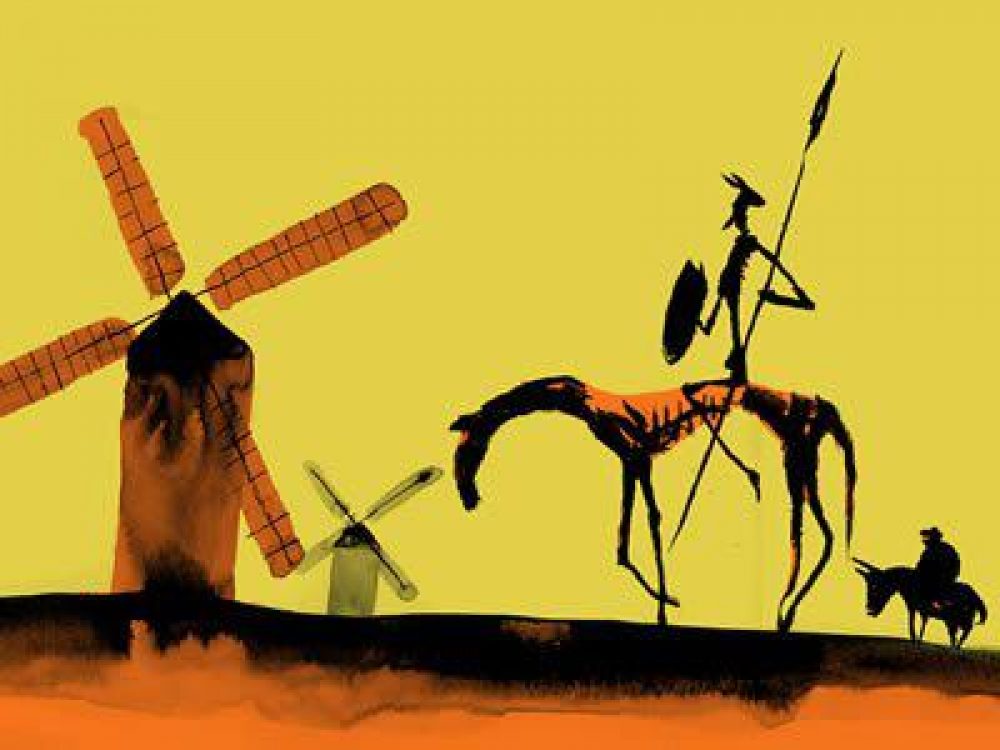









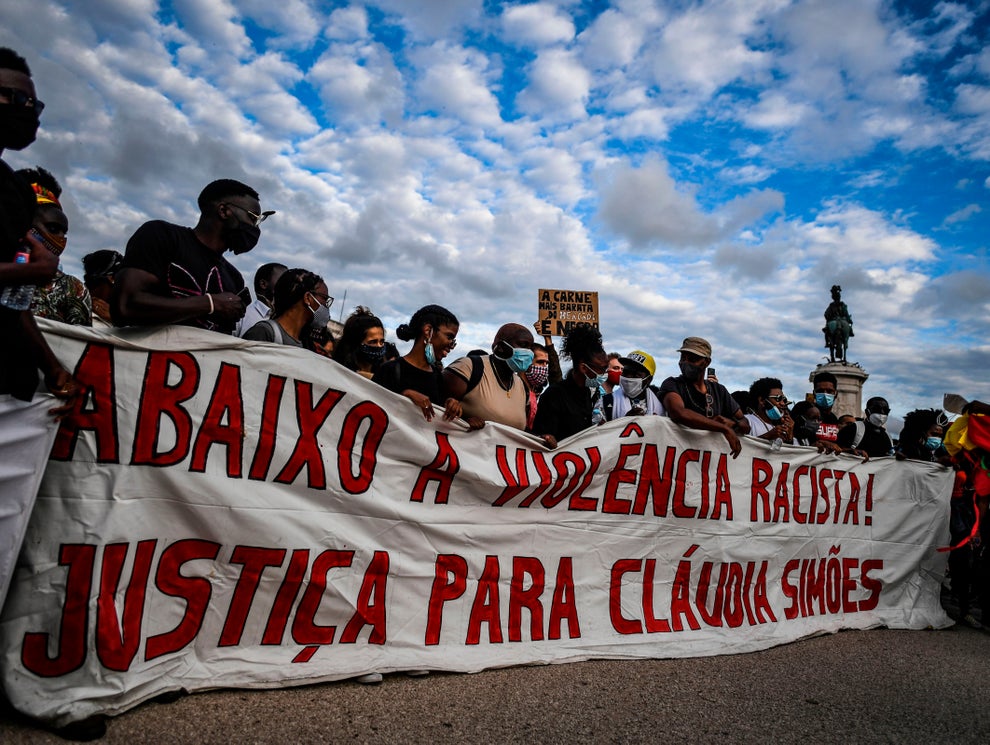
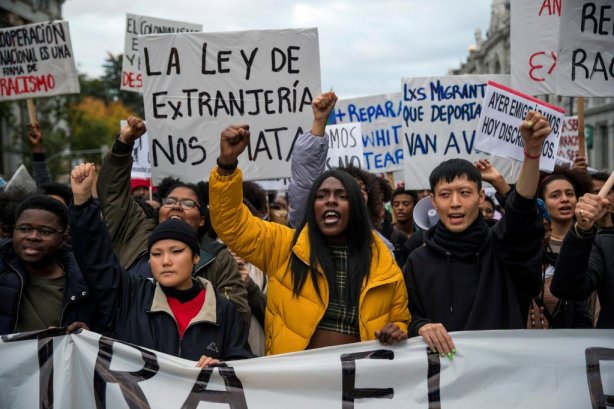
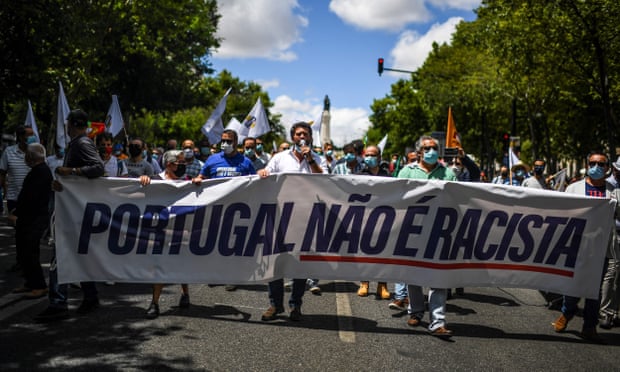

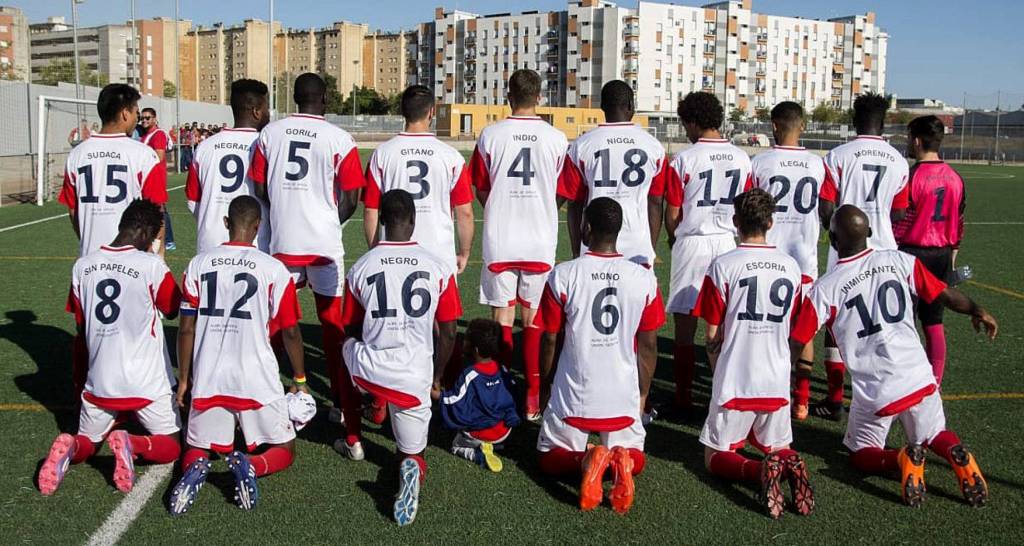







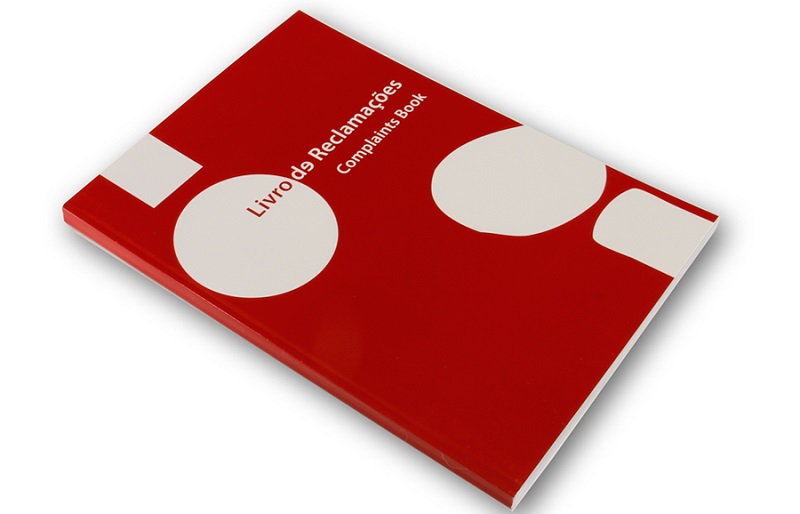

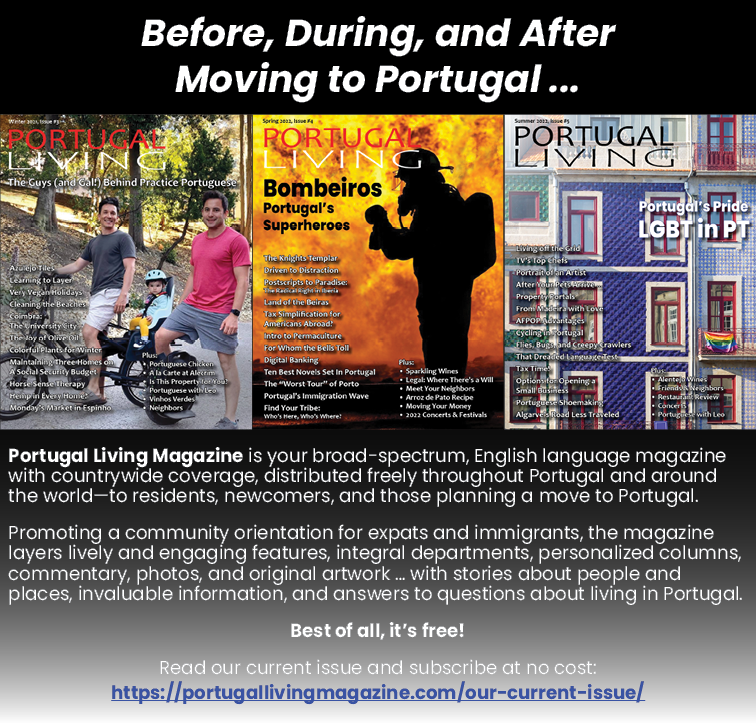
 "Exactly!"