Rise and Shine

Sometimes I feel like Jacob, wrestling with an angel of God.

Especially when I can’t grasp an unqualified answer that satisfies me; I continue plunging on, like Jacob, whose name was changed to Israel because he demonstrated that he was willing to let God prevail in his life. In response, God then promised Israel that all the blessings pronounced upon Abraham would be his.

Remember the story?

Jacob got up in the middle of the night and took his wives, eleven children, and everything he owned across to the other side of the Jabbok River for safety. Afterwards, Jacob went back and spent the rest of the night alone.

A man came and fought with Jacob until just before daybreak. When the man saw that he could not win, he struck Jacob on the hip and threw it out of joint. They kept wrestling until the man said, “Let go of me! It’s almost daylight.”

“You can’t go until you bless me,” Jacob replied.

The man asked, “What is your name?”

“Jacob,” he answered.

The man said, “From now on, your name will no longer be Jacob. You will be called Israel, because you have wrestled with God and with men, and you have won.”

Jacob said, “Now tell me your name.”

“Don’t you know who I am?” he asked. And he blessed Jacob.

Jacob said, “I have seen God face to face, and I am still alive.” So he named the place Peniel. The sun was coming up as Jacob was leaving Peniel. He was limping because he had been struck on the hip, and the muscle on his hip joint had been injured. That’s why even today the people of Israel don’t eat the hip muscle of any animal.

The Lord never told Jacob his name.

There’s plenty of questions I have for Him, but I know He’s not ready (or, maybe, it’s me) to tell me my name or my story.

Take Easter, for instance. There are those who swear that unless you confess the bodily resurrection – that, after being dead for three days, Jesus rose to live again – the Christian faith means nothing. It’s all based on that singular miracle that God raised Jesus from the dead.

Did God?

Who knows? I certainly don’t. But neither did the people who spent their time walking and talking with Jesus. Did he really die? Why didn’t those people walking on the road recognize him? Was Mary really the first to see him? Then ran to share the good news with the other disciples? And what about Thomas, the one we refer to as “doubting?”

So many theories have historically buzzed that Jesus never died. That it all was part of a Passover plot. That there was no resurrection—at least not in bodily form. That it’s all meant to be a metaphor or a basis for building the faith. That the primary Gospel left out the resurrection, while the latter ones added and embellished it.

On the other hand, we also read about Jesus raising Lazarus from the dead to new life. And Elijah, who stretched himself three times upon the widow’s son … “And the Lord heard the voice of Elijah; and the soul of the child came into him again, and he revived” (1 Kings 17:21-22).

Not that it matters.

Our beliefs shouldn’t be “eithers” or “ors,” fact vs. faith, allegorical and/or historical.

Truth be told, most people hang onto their religions for one of two reasons: They’re afraid to die and cease existing as they know it. Or, they’ve been clobbered with verses to avoid sins-or-else-hell and enticed by angelic choirs, streets paved with gold, and celestial reunions with their loved ones.

Apart from certain curiosities and circuitous circumstances, I’ve yet to meet anyone who has died and returned to talk about what it’s like on the other side of the paradise we’re hell-bent on destroying.

That’s where Easter comes in …

The Easter questions comprise our belief that hope springs eternal.

It’s not about faith. Nor love. Nor tradition. Nor creeds and confessions. Neither is it about recognizing a masterful act to validate our experience and what we believe.

Instead, it’s about our determination to persevere, hoping that our hearts and what we hold most dear will prevail. Against tyrants like Vladimir Putin. Oligarchs and capitalists who create a special kind of autocracy that absolves them of any resolve to repent and be merciful. Or democracies gone bad when the greed factor turns to prejudice and hate, special interests and injustice.

Whether I know, instinctively, that the Son of Man was or wasn’t killed and did or didn’t rise again to life, isn’t that important to me. That he was martyred, however, was … as it beckons me to his words and ways, deeds and indeeds. I want to know his story. And do my best to follow his path.

“How does us appreciating spring help the people of Ukraine?” asked Facebook friend Anne Lamott. “If we believe in chaos theory, and the butterfly effect, that the flapping of a Monarch’s wings near my home can lead to a weather change in Tokyo, then maybe noticing beauty — flapping our wings with amazement — changes things in ways we cannot begin to imagine. It means goodness is quantum. Even to help the small world helps. Even prayer, which seems to do nothing. Everything is connected.”

At my age, I ache. So, as I rise each morning to new days full of promise and potential, I am thankful. I’m still alive and kicking. As I follow the news and see trends – the ups and downs of the stock market, the urgent desire to help others against all odds, the Covid crisis taking a back seat to other “Breaking News!” of the moment, the small advances that dedicated scientists and philanthropists are making against the behemoth that is climate change, even the blessings that progressive theologians have brought to enliven the hitherto hold fundamentalists and literalist bondage to the Bible “just as God wrote it” – my faith surges and is restored … bit by bit.

When it comes down to it, that’s what Easter is really about and gives reason to rejoice: Hope restored.

“I will celebrate that I have shelter and friends and warm socks and feet to put in them, and that God or Gus found a way to turn the madness and shame of my addiction into grace, I’ll shake my head with wonder, which I do more and more as I age, at all the beauty that is left and all that still works after so much has been taken away,” Anne Lamott concludes.

It’s rising and shining beyond all the grit and grief … and I say hallelujah to that. Because, like Jacob, we too have been blessed!

Bruce Joffe is publisher and creative of Portugal Living Magazine. You can read the magazine’s current issue and subscribe — at no cost! — via this link:
https://portugallivingmagazine.com/our-current-issue/

Processing…
Success! You're on the list.

Illegitimate, Illegal and Condemnable:

Portugal Decries Russia’s War with Ukraine

Let’s be clear: In the early hours of 24 February, Russia launched a wide-ranging attack on Ukraine, hitting cities and civilians with airstrikes and shelling. As a result, thousands of innocent people piled into trains and cars to flee the unprovoked aggression, while Russian tanks and troops continued to roll across the border launching a “full-scale war” that could rewrite the geopolitical order of the region.  

At the request of the Ukrainian authorities, Portugal agreed to provide military equipment such as vests, helmets, night vision goggles, grenades and ammunition of different calibers, complete portable radios, analogue repeaters and G3 automatic rifles.

Speaking at a televised news conference, Portuguese Prime Minister António Costa said that the country would be sending 175 military reinforcements to help Ukrainian soldiers on the ground secure their borders as this “is a war against the freedom of self-determination of a democratic country and therefore it is also a war against … democracy.”

“It’s been reported that close to 1,800 additional Portuguese military could be mobilized to take part in NATO’s dissuasive mission within allied countries on Ukraine’s borders. The soldiers will be made up of contingents from all three arms of the military (Air Force, Navy and Army),” reported the Portuguese Journal American. “In a second phase, another 472 military could be dispatched, along with 36 tactical vehicles and two Naval war ships.”

In addition, the United States has been reinforcing its use of Portugal’s Lajes military air base on Terceira island in the Azores, including storage and maintenance of munitions and explosives.

Ukrainians in Portugal, the second-largest foreign community in Portugal, are living in fear for their family and friends back home.

Citizens, residents, and expats of one of the world’s most peaceful nations expressed their frustration and anger, decrying Russian President Putin’s decimation of the world order.

Outside the Russian embassy in Lisbon, thousands of demonstrators held signs and waved flags to protest the Russian invasion and Portugal’s solidarity with the Ukrainian people. Additional protests in Porto and Algarve called for military support from European countries to Ukraine, as well as urged the Portuguese to not purchase products from Russia.

“Portugal supports Ukraine, which is defending itself against an unjustified, illegal, and unacceptable invasion,” Defense Minister João Cravinho tweeted.

On behalf of Portugal, Foreign Minister Augusto Santos Silva also expressed his solidarity with Ukraine and condemnation of Moscow:

“We have to be prepared for all scenarios. I am sorry to say it, but I cannot say anything else: today we have to work with all scenarios on the table because what is happening is that Putin’s action is not only exceeding his words, but Putin’s action at every moment is also exceeding the maximum that we had foreseen as possible …”

Santos Silva remarked that “whatever the objective” of the Russian offensive, “it is illegitimate, it is illegal, and it is condemnable,” describing it as “the biggest security crisis that Europe has gone through since World War II.”

Prime Minister Antonio Costa condemned the Russian invasion, adding that any Ukrainians who have family, friends, and acquaintances in Portugal are welcome in Portugal. Instructions to facilitate visas to those feeling the Russian invasion were given to embassies in Ukraine, as well as neighboring countries. The Portuguese Embassy in Ukraine urged Portuguese citizens in Ukraine to leave through European Union borders, particularly enroute to Romania or Moldova.

“While refugees are usually allowed in Portugal through a case-by-case analysis of the danger each applicant faces, the government acknowledged that all refugees from Ukraine are facing dangerous conditions,” wrote Lara Silva in Portugal.com. “The only reason someone might be denied asylum is if they have committed crimes against humanity or serious crimes, according to the Minister of Internal Administration and Justice, Francisca Van Dunem.” 

Unclear whether any changes will be made to the Portugal Golden Visa, “the war in Ukraine is likely to affect Portugal’s state budget for 2022,” Silva predicted. The Prime Minister, however, said it was too early to assess whether this is the case; some Portuguese economists, however, have stated that it will – directly and indirectly – impact the state budget:

“Oil and natural gas prices will continue to skyrocket, as Russia is one of the main energy suppliers to European countries. GDP is also likely to decrease in Portugal and there could be increased military spending attributed to the budget, depending on the course of the conflict.”

The Foreigners and Border Service previously announced that it would stop the Golden Visa scheme for Russian citizens. In addition, Foreign Minister Augusto Santos Silva stressed that more Russian citizens inn Portugal would be subject to sanctions.

“SEF has suspended the appreciation of any dossier of candidacy for authorization of residency through investment, commonly known as golden visas, for Russian citizens,” he pointed out.

In addition, Santos Silva stressed that the scheme was also suspended for citizens from Belarus.

According to Portugal’s Immigration and Border Service (SEF) data, investment from citizens from Russia brought a total of €277.8 million to Portugal’s economy in the nine years since the program was created.

With a view to receiving refugees from Ukraine, Portugal’s government recently published in the Diário da República the amendment to an ordinance that regulates the regime for granting temporary protection to refugees. In a press conference after an extraordinary Council of Ministers, the Minister of Social Security announced that Ukrainians who arrive in Portuguese territory “are guaranteed to stay regular,” being immediately assigned a user number of the National Health Service, Social Security number, and Tax Identification Number (NIF).

The official also announced that the Institute for Employment and Vocational Training (IEFP) has created a “task-force” “to accompany people in a personalized way and manage to find ways of real integration,” through accommodation and a platform where companies will be able to upload job offers.

According to the Minister of Justice and Internal Administration Francisca Van Dunem as quoted by CNN Portugal’s Barbara Cruz, the regime will have an initial duration of one year, renewable for two periods of six months “provided that conditions are maintained that prevent people from returning” to Ukraine.

Although no one in the West is quite sure what Putin’s intentions are, a weakening or breakup of the European Union is suspected of being one of his primary goals, says Len Port, a journalist and author based in the Algarve who writes for the Portugal Resident.

“Fortunately for Portugal, unlike much of the rest of Europe, it is not dependent on natural gas supplies from Russia, which it is feared the Kremlin might be using as a weapon in the current stalemate. Portugal’s gas originates in Algeria, Nigeria, and the US,” Port wrote on 26 January.

Nonetheless, Portugal has concerns even though it is the most distant EU country from Ukraine and, thus, perhaps the least vulnerable should dialogue fail. It is situated more than 3,000 km west of Ukraine. In past years, top Russian warships have passed along Portugal’s coast, at times as close as 26 nautical miles from the Algarve’s shores.

“As distant as it is, defence minister João Gomes Cravinho told his 26 EU counterparts at a meeting … in Brest, France, that he was delighted with the ‘absolute refusal’ by all EU member states to give in to Russia’s attempts to divide the Union by threatening Ukraine,” Port added.

“It’s clear that Russia’s attitudes seek to divide–divide the Europeans and divide the Europeans from the North American,” claimed the defense minister. He described it as “a very worrying situation that must be dealt with firmly, with a clear purpose, and in unity among all Europeans.”

The President of Ukraine, Volodymyr Zelensky, thanked his Portuguese counterpart, Marcelo Rebelo de Sousa, for the support Portugal has provided to Ukraine.

Zelensky said on Twitter that he spoke to Marcelo Rebelo de Sousa, whom he thanked for the closure of Portuguese airspace to Russian planes, Portugal’s support in excluding Russia from the Swift international interbank platform, and for “concrete defence assistance.”

The Ukrainian head of state called the President of the Republic, who reiterated Portugal’s “strong condemnation” of the Russian invasion of Ukraine and “solidarity support for the courageous Ukrainian resistance,” according to a note published in official website of the Portuguese Presidency.

Portugal also aims to accelerate its energy transition and increase the proportion of renewable sources by 20 percentage points to 80 per cent of its electricity output by 2026, four years earlier than previously planned, a transition that is being accelerated after Russia’s invasion of Ukraine,” according to a 2 April report by Reuters.

Unlike central European countries, Portugal does not depend on Russian natural gas pipelines, as it mainly imports liquefied natural gas from Nigeria and the USA, not importing Russian crude since 2020.Committed to become carbon-neutral by 2050, Portugal currently gets 60 per cent of its electricity from renewable sources—one of the largest proportions of green energy in Europe.

Elsewhere, Pope Francis prayed for peace in Ukraine in a ceremony that harkened back to a century-old apocalyptic prophecy about peace and Russia sparked by purported visions of the Virgin Mary to three peasant children in Fatima, Portugal, in 1917.

The pontiff invited faithful from around the world to join him in the prayer, which opened with Francis entering St. Peter’s Basilica before an estimated 3,500 people and concluded with him sitting alone before a statue of the Madonna. There, he solemnly asked forgiveness that humanity had forgotten the lessons learned from the tragedies of the last century, the sacrifice of the millions who fell in two World Wars,” noted Nicole Winfield for the Associated Press.

“Free us from war, protect our world from the menace of nuclear weapons,” the pope prayed.

The service was Francis’ latest effort to rally prayers for an end to the war while keeping open options for dialogue with the Russian Orthodox Church and its influential leader, Patriarch Kirill. “Francis has yet to publicly condemn Russia by name for its invasion, though his denunciations of the war in Ukraine have grown increasingly outraged,” observed Winfield.

Bruce Joffe is publisher and creative director of Portugal Living Magazine. Read the magazine’s current issue online and subscribe at no cost via this link:
https://portugallivingmagazine.com/our-current-issue/
Processing…
Success! You're on the list.

A Seat at the Table for Elijah?

For many of the same reasons that Christians celebrate Easter – being released from bondage into freedom – Jewish people traditionally celebrate Passover as a series of observations passed down from generation to generation. It’s a holy day to recall how God saved his called people from plagues and the death of their first-borne sons, the latter by painting the lintels framing their doorways with the blood of sacrificial sheep so that the angel of death “passed over” their homes while the Egyptians suffered an entirely different fate.

One of the central themes of Passover is telling the story of oppression and the journey to liberation.

“Let my people go!” Moses repeatedly pleaded with Pharaoh.

And finally, with the death of his own first-borne son, the story goes that Pharaoh relented. Miracles of the water parting so the Jewish people could walk safely through while, later, as Egyptians had second thoughts and pursued the Israelites through that same water, it gathered back together and drowned the Egyptians hunting their hostages. Even the matzoh – the unleavened bread – is part of the Passover story, reminding us of the haste in which the Hebrews fled (with not even enough time for their bread to rise).

While we may understand that spiritual maturity means accepting that life is the integration of the bitter and the sweet, the matzoh sandwich also reminds us that we live our lives “in-between.” We hang in the balance, alive, but not immortal, sandwiched between a fragile, limited, carnal self and our eternal Divine DNA.

For both faiths, Easter and Passover have the same significance: remembering our freedom from bondage. We gather together, observe certain rituals, and share a communal meal while passing down these remarkable legends.

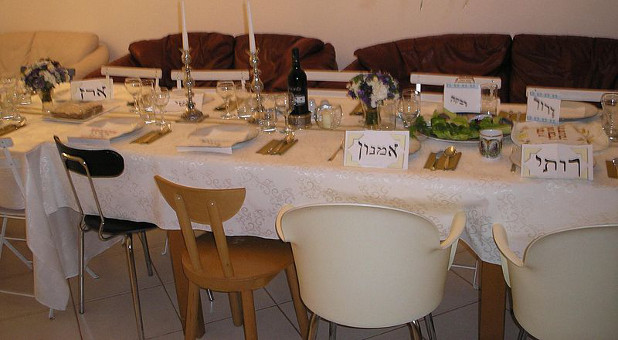
For Christians, Easter Sunday is preceded by Palm Sunday which, in turn, is preceded by days of Lent, preparing ourselves for worship in church. Often, there are processions (especially in predominantly Roman Catholic countries) with banners, floats, and flowers. For Jews, however, Passover is a home-based, solemn festivity, worshiped around the family table … with a very interesting tradition: one of the chairs is always left empty.

It’s Elijah’s.

Jewish tradition teaches that Elijah the prophet will be the harbinger of the coming of the Messiah and the world’s redemption. It is a chair of hope. Elijah’s cup, in Judaism, the fifth ceremonial cup of wine poured during the family (seder) dinner on Passover is left untouched in honour of Elijah, who, according to belief, will arrive one day as an unknown guest to herald the advent of the Messiah. His presence signals the messianic era: a time of redemption, peace, and spiritual bliss. The full cup ―one for the future ― remains untouched to honor and offer hospitality to Elijah when he ultimately appears. Symbolically, he is also welcomed when families open their doors during the Passover Seder.

During the last generation, however, Elijah’s chair and cup have been taken.

By cell phones and digital devices.

How ironic that holidays which are supposed to lead us by faith from bondage and oppression to freedom and peace have been usurped by humans putting their faith on hold should they be beckoned by a telephone call, Facebook message, or Instagram photo.

Each year, the chairs around our table are filled with different individuals who join together to retell, once again, the story of our enslavement and redemption. The Passover seder is more than a history lesson, for each of us is instructed to see ourselves as if we had personally been freed from Egypt. It must become our own story, told in the context of our family’s generations and community. We add new layers as each new year’s experience melds with the memories of the past.

Some years are painfully different. A beloved family member or friend has died during the past year. A country has been destroyed, whether by politics, war, and division. There is an empty chair – Elijah’s – at the table. How can we go through the same rituals when life has been so drastically altered? What if we begin to cry at the seder table? What if everyone is so afraid of pain and grief that they ignore the empty chair? Are we even allowed to bring our sadness to the seder, which seems like it should be a happy occasion? Sometimes death changes family/social relations, also the empty chair at the table.

How do we find meaning in the holidays now?

With God’s grace, hopefully beyond our fleeting “new normals.”

Bruce Joffe is publisher and creative director of Portugal Living Magazine. You can read the current issue and subscribe — at no cost! — by clicking on this link:

Processing…
Success! You're on the list.

Parable, Extended

Whoever has ears, let them hear:

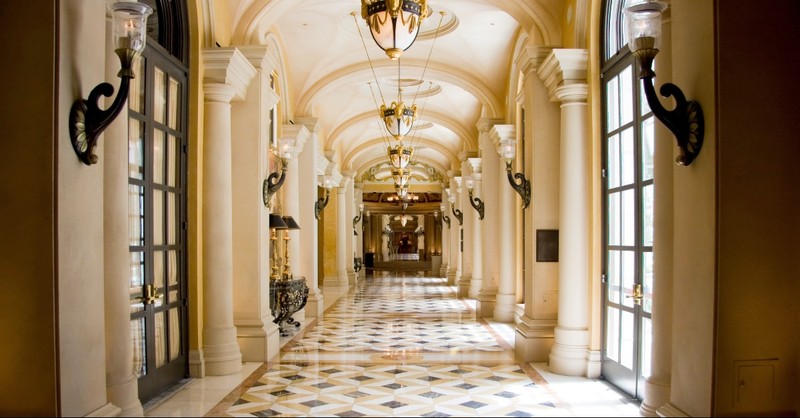
The Kingdom of God beckons like a splendid real estate listing for a sprawling property still under construction. But, instead of a firm or non-negotiable asking price, its Multiple Listing Service (MLS) description states, “All offers considered.”

From near and far, many people looking for a new place to live decide to visit this extraordinary place. Some are newcomers to the neighborhood, while others are old-timers who have lived here much of their lives but, for one reason or another, have decided that the time now has come to change their residence.  Although a number of those interested in the property are first-timers entering the market, more than a few are quite experienced with making monthly mortgage payments including the PITI: principal, interest, taxes, and insurance.

Approaching the entrance to the building, a sign has been tacked to the front door:  “Open. All are welcome here. Please come in, make yourselves at home, and look around our habitat.”

Inside, it’s a marvel to behold.

Off the entry way referred to by the broker’s brochure as the “Gathering Room” leads a meandering corridor with rooms on the left and to the right. People introduce themselves, hang up their outerwear, and laugh about such a remarkable property on which they have been encouraged to make an offer. 

All offers considered. Really? What is expected and how much is enough?

The Great Room beyond the Gathering Room is filled with extraordinary antiques and lovely old keepsakes. The scent of wax from candles and on heavily polished wooden seating areas permeates the air as clusters of people “ooh” and “aah” over the leaded stained glass windows which filter prisms of light. They bow before vintage figurines or larger statues, murmuring softly and reverently. By the look in their eyes and peaceful demeanor, some people appear to be touched by a ghost or holy spirit amid all the hallowed icons amassed here.

Adjoining this room of antiquities is another room—not quite so old, yet classic and traditional. Here, the people cloistered seem a bit more reserved as they pay homage to the place in a pristine and orderly fashion.  They all know the specific reply to each statement or comment made, as everyone echoes the proper response promptly and with great precision. Though, to some, this seems somewhat stifled and/or silly, the appointed words and common traditions underscore a sense and sensibility resulting in a bond enrapturing quite a few people in the semblance of hearing a holy, holy, holy celestial choir.

Several visitors to the property are held spellbound by these two rooms and find themselves passing back and forth between them. In some ways, both rooms are similar although, quite naturally, certain folks are more beholden to the antiques and heirlooms while others are bound to their more customary rites and rituals.

The formal rooms continue to unfold as we step into the Library. Silently, one of the men seated around one of several large tables looks up as we enter and points to his lips, making the “Shhhhhhhhh!” sign that we are not to speak while here. If the other two rooms we had been through were warmed by the touch of flesh through handshakes, a squeeze to the shoulder, or pat on the back, this room seems fundamentally cold and foreboding. Those seated at the tables here have their eyes glued resolutely to the pages in front of them. Their fingers follow the words on each page with Talmudic scrutiny, parsing laws and prohibitions. Every so often, someone nods in affirmation with the book or glances up at the ceiling as though the Holy One can be found ensconced there. While a few linger here acknowledging whatever truths (evidently) cause the readers to follow in thanksgiving and submission, others are very eager to move on.

Passing a series of Dormitories whose doors are slightly ajar, we peek inside. Time blurs in these bedrooms where we expect peaceful people to be sleeping. Instead, they are silently meditating on some noble truths, softly chanting their mantras, or stretching contemplatively in yoga positions—reaching reflexively toward a higher moral principle, perspective, or purpose.

Next, we approach the grand Fellowship Hall where people seem to enjoy getting together. Music plays as we smile back at those grinning our way; yet something seems amiss—odd and out of sorts. A measured “all for one and one for all” aura appears like icing to a cake—except there is no cake and the sugar is really saccharine. Squinting for a closer look, we notice close cliques and distinct separations among the people present. What’s more, apparently they’re oblivious to anyone outside of their room. Despite the frivolous camaraderie, some people evidence a heavenly joy, as if being together in a general store surrounded with all its goods.

To the left of the Fellowship Hall in an open-concept Family Room, people are listening to a lecture that follows a movie shown here earlier. No rules or regulations are enforced here, just respect for each person’s uniqueness and a hallelujah chorus of diversity, social justice, and emancipation proclamation. The emphasis here is on leaving the room a better place than how you found it.

We cannot help but put hands over our ears for all the hooting and hollering coming from down the hall. In this room, people are shouting and clapping, dancing and singing with words that don’t make any sense (to us).  As quickly as someone stands and utters a string of unknown sounds, another interrupts, prophesying praises and/or condemnations. There is neither rhyme nor reason, and, despite people lying jubilantly helter-skelter across the floor, a sense of mystical satisfaction seems to permeate the activity here. Who can say that, miraculously, they aren’t swept up in some sort of spiritual ecstasy? 

You can see the light at the end of the tunnel, so to speak, as only a few rooms are left before the backyard door which is wide open.

The next room our group comes across – those who haven’t stayed behind in one of those rooms we’ve already been through – has a bright, neon sign above its portal flashing: “Bonus Room!” But the door to this room is closed and locked. We knock and the door opens from the inside. “You have to pay – spend your money as well as time – in this room,” a voice intones.  “How much?” a member of our group asks. “That depends on what you want,” quickly comes the reply. “You need to sow seeds in order to reap a harvest.”

We are allowed to peek into the room without crossing the threshold. Truth be told, the room looks more like a bank or investment firm, with people standing as best they can – some holding tightly onto canes, the blind being led by guides gripping their hands, and others waiting impatiently as nervous tics ravage their faces – all awaiting their turn at the convenience counter.

“Do you have faith? Do you trust God? Do you believe God’s Word? Will you confess and claim it? Are you willing to put God to the test and prove that you’ve been promised health, wealth, and happiness?” asks the well-dressed proprietor behind the window grills. “Yes! Yes!! Yes!!!” cries each person approaching.

“Then, plant a seed.  Put a deposit, a down payment, on the riches in store for you,” the hawker urges, as people peel off $50, $100, and $500 bills … or more.

Shocked as we are at the nature of these “covenant” transactions, it’s amazing how some of those believers are being blessed in the process of their dealing!

Two rooms remain for us to see in this cathedral of a house.

One, we decide to bypass as it seems too reminiscent of the Family Room. This one, though, is named the “Play Room,” and it’s obvious why: Entertainment is the focus here. There are video games and sound stages with bands blasting contemporary gospel music (variety shows and theatrical performances), with plenty of young, exuberant faces eager to soak it all in. Keurig coffee makers and bagels with cream cheese are set out as snacks here. At the end of their time in this spacious room, people hug and say, “See you next week,” as they leave the room and go merrily on their ways. Yes, they have given a dollar or several during the collection and were reminded to be back a week following.

And, in between? That’s their time, to do with as they please.

The Kitchen, warm and welcoming, is full of joyful volunteers who charitably cook and clean up after themselves to feed those hungry and/or homeless. It’s truly amazing how the pantry here is never empty—each time groceries are removed and divided among the guests, the food multiplies so that even more can be served. A banner strung over the serving area subtly reminds folks that, “Joy shared is doubled. Sorrow shared is halved.”

Strangely, the last room before our exit is quite stark and quiet. People here sit in a circle on simple chairs, without the grandiose décor found elsewhere on our tour. Nobody speaks or acknowledges us as we look in; they continue in a reverie of prayer and contemplation. There is no coffee hour or refreshments here, no glad-handing or promises of prosperity, just a solemn serenity begging for peace.

Tired as we are from previewing this property, we need, at least, to take a quick look around the outside. We are standing in front of an open door that looks out on a back yard stretching as far as the heavens. People continuously coming and going from this expanse of nature are both kind and helpful to those they know or don’t know, as they bend beneath the weight of carrying another’s burdens. Here, they lay down parts, parcels, and packets of their lives for others to take while picking up pieces of wood and kindling to fuel the fires of friendship. Children and animals romp together as sunshine and rain nourish the ground, rendering it friendly and fertile.

“So, what do you think of my parents’ house?” inquires the heir and agent apparent, suddenly standing there among us.  “My family’s house has many rooms. Didn’t I already tell you that?”

We all agree—in principle, at least.

“Can I prepare a place – a room – for you here?” he asks, offering each of us our choice of no-money-down, obligation-free reservations.

It seems too good to be true to us wayfarers, as there’s faith abounding here for everyone to live together harmoniously—despite whatever our differences.

Bidding adieu, we remember the words in the property’s listing:

“All offers considered.” Yes, all offers truly are considered by the householders. This house is called The Gospel, it’s fully furnished, and the ageless rock of its cornerstone is grace.

Nothing in Common (Anymore)

A couple of months ago, I received a private message from a Facebook friend who had stayed with us for a few days about four years ago, when we first moved to Portugal.

I had almost forgotten how much he got on our nerves back then, despite being a rather friendly, outgoing, boisterous American.

How best to explain how we felt around him? Try this, especially if you remember vinyl records and their players: Since moving to Portugal, our lives have been running at a comfortable 33 RPM; after spending a couple of hours with him, we rotated faster and faster, spinning at 78 RPM.

Anyway, he was returning to Portugal to reconnoiter places he hadn’t been to in planning his eventual relocation here, and wanted to see us and stay with us again.

But we had downsized and our home was too small for someone with such an oversize personality … along with me, my spouse and our three Miniature Schnauzers.

So, I tried to explain (gently) the situation in messages flying back and forth through cyberspace between us.

“I promise not to get in your way,” he wrote in a hodge-podge of upper and lower case letters, with — let’s call them typos — when I actually suspected they were spelling errors and a lack of care (speed was of the essence) that many of us take when writing emails, sending messages, and posting online. “I can crash on your couch, no worries!” he continued.

“No,” I replied. “That just won’t work. But we’ll be happy to find you a hotel or B&B nearby.” There are a couple of really charming small hotels we’ve stayed at right in central, downtown Castelo Branco. But he wanted to stay closer to us.

The offer wasn’t mentioned as he signed off and logged out, telling me that he’d be in touch when the date of his travel approached. I received one email when he landed in Porto from Amsterdam, informing us that he’d come visit us in Castelo Branco either on Wednesday evening or Thursday afternoon. A second email arrived Wednesday afternoon, saying that he was taking the “scenic” route and should be at our place by 18h00 (6 PM).

“Have you made reservations somewhere?” I replied, before informing my partner that we’d be having company for dinner. “No, not yet,” he answered, asking if I could find him either a low-cost hotel or B&B in our town. I knew there were no hotels (yet) in Alcains; so, I researched AirBnB and other sites listing home-style lodging. There were two right here in Alcains that appeared to be clean, comfortable, easily accessible, and reasonably priced (US $49 per night). I sent him links to the properties, along with a “pin” to our house.

A new message from him suddenly appeared: “I’m here!”

Though not particularly tall, he loomed large in our Portuguese doorway, casting shadows from the street light overhead. Reaching in to shake hands, he switched to bear hugs while our dogs tried to sneak past us and out the front door.

“Come on in and have a seat,” I greeted him, pointing to the sofa with chaise in our hobbit house living room. “Can I get you some wine?”

Over the course of the next three hours — including a homemade meatloaf dinner with corn, mashed potatoes, gravy, and biscuits on the side — we learned reasons why we had nothing in common beyond Facebook friendship as he rapidly told us too much about his life:

• This was his seventh trip in four years to Portugal. Two were with his wife. This and four other visits, he had come around to scout areas and properties.

• His plan was to move to and retire in Portugal … four and a half years from now. He expected to live off the rental income generated by two houses he owned in the USA. The four-plus years took into account his wife’s time required before retiring from her job with the state’s government. He still had no idea where in Portugal they wanted to live (except that it had to be considerably cooler in the summers than where we are), but envisioned renting, not buying, for six-months to one-year intervals. Then, they’d move somewhere else. For this he needed to make seven trips four and a half years before being able to move here?

• Not only didn’t he wear a mask in the street (still advised by Portuguese law) or asked if we’d prefer to put them on in our tight dwelling, but he stated, matter-of-factly, that neither he nor his wife had been vaccinated (“Except for my mother taking me for a polio shot when I was a kid, I’ve never been vaccinated for anything–not even the flu.”). Both of them had come down with Covid (“the worst … very painful … aspirin and Ibuprofin only made it worse … still,I went to the gym almost every afternoon to work out, because it made me feel better … until I crashed, later each night.”). My dander was rising: He had had Covid, wasn’t vaccinated, didn’t wear a mask, and was in our faces–literally! Not particularly up on travel conditions and restrictions, I wondered how he had been able to fly from the USA to the Netherlands and onto Portugal, given his history. No idea.

• Although he had booked a room for the night, texting while driving high in the Serra da Estrella mountains, he hadn’t bothered to pull off the road and check the owner’s check-in times and requirements. It wasn’t until nearly 11PM (23h) that we suggested he make the call. Speaking in English to his mobile device, it recorded his voice and saved it as text … which he then used Google Translate to create a Portuguese message that he sent to his host. “No problem,” he recounted, assuredly, saying that the proprietor only wanted to know how soon he’d be arriving there. Russ and I looked at each other and jointly declared, “Within 15 minutes.” We still had to clean up, wash all the dishes, and deal with the dogs, before retiring for the evening ourselves.

“Thank you, gentlemen, for a terrific evening,” he said as he was leaving. “What are your plans for tomorrow … and the day after. I finished the northern part of my journey early, so I’m not in any rush to move on.”

“We’re working!” my partner and I echoed in unison.

“Well, at least you have to let me take you to lunch tomorrow,” he said while re-lacing his shoes by the door. “Just pick a place and send me the link. What time’s good for you two? How about one o’clock?”

We nodded numbly.

Three private messages on Facebook: (1) a thumbs up when we sent him the name and location of the restaurant where we’d meet for lunch; (2) a “sorry, running a bit late …” just as we locked up the house and headed to our car; and (3) “never mind, all is good, I’ll be there at one.” He arrived at 1:25. No big deal. It’s Portugal and we were enjoying glasses of wine.

Translating the nine items offered at the cafeteria-snack bar-restaurant from Portuguese to English, we ordered. Rather, I did. Russ can understand some Portuguese when spoken; but he’d rather that someone else speak it. Our luncheon companion had a hard enough time asking for “mais pão,” after grabbing and grubbing most of the bread in the basket.

Again, the subject came up about our plans for the rest of the day (and the day after).

From there, the final nails of our “friendship” coffin were driven:

• He had voted for Trump (“he’s a businessman, not politician”) in 2016; in 2020, he didn’t vote. For anyone. Blind to the monsters #45 had created, he was right in pointing out the divisiveness spreading around the world, but wrong, I believe, in the reasons.

• The television in the restaurant was showing a caravan of Portuguese ambulances, fire trucks, and other red vehicles headed to support Ukraine. Which opened another can of worms. He didn’t know — or understand — the differences between NATO and the European Union, believing it was up to the European Union to take up arms for Ukraine, not the USA.

• Nor did he understand how impeachment works in the government of the United States, insisting over and again that Trump hadn’t been impeached. Neither once nor twice. Because, he maintained, that when the Senate didn’t ratify or concur with the House’s indictment, it effectively erased those impeachments from the record. “No, that’s not how it works,” I explained. Once impeached, always impeached. It doesn’t go away–regardless of how the Senate votes. His impeachments will always be recognized.” Flabbergasted, he asked, “So that means Clinton also was impeached?” Yes it does.

Russ and I glanced at each other, kicking each other’s shins not to get further entangled.

Anyway, it was about closing time for the restaurant and we were the last ones left seated, as the owners cleaned tables and picked up chairs, sweeping beneath them before placing them on top of the tables. Catching the owner’s eye, I mouthed, “A conta, por favor.” Within minutes, a handwritten receipt showing €27.50 was handed to me (after all, I was the one who spoke Portuguese and did the ordering). Our acquaintance pulled an American Express card out of his wallet and handed it to the proprietor, who shook his head and pointed to a sign taped to the wall: cash only, no plastic cards. Honestly, I hadn’t known. I pulled thirty euros out of my wallet, gritting my teeth in the process. “I would use the ATM and get cash,” offered our (now former) Facebook friend, “but I’m having trouble with my PIN.” Determined to let me know that he wanted to make good on his promise to pay for our lunch, he asked me whether he could pay in British pounds. He had £25 in his wallet. “Doubtful,” I said. Russ thought he’d have to go to the airport to exchange them for euros, while I thought one of the local banks might accept the currency and hand him euros in the process. Whatever.

As we left and said our goodbyes to each other, I could tell that Russ was really annoyed.

“How many times has he been to Portugal? Seven? How do you come to Portugal without euros and only one credit card that’s not working? How did he buy all the junk food that he’s been eating in the car? How many pit stops and mini-mercados accept credit cards, let alone American Express? You can be Facebook friends with him, if you want,” Russ said. “But I’m unfriending him as soon as we get home. My hands are still shaking from the past 18 hours!”

What more could I say? I felt the same way. Catching his hand under the umbrella as we walked the three or four blocks to where we’d parked our car, my heart overflowed with love and gratitude for my partner who always put others first. How fortunate — blessed! — I have been to live with him for 30 years and move to Portugal together.

“I love you,” I said. “I love you, too,” he replied.

It’s good to know that we still have so much in common.

Circumstantial Heroes

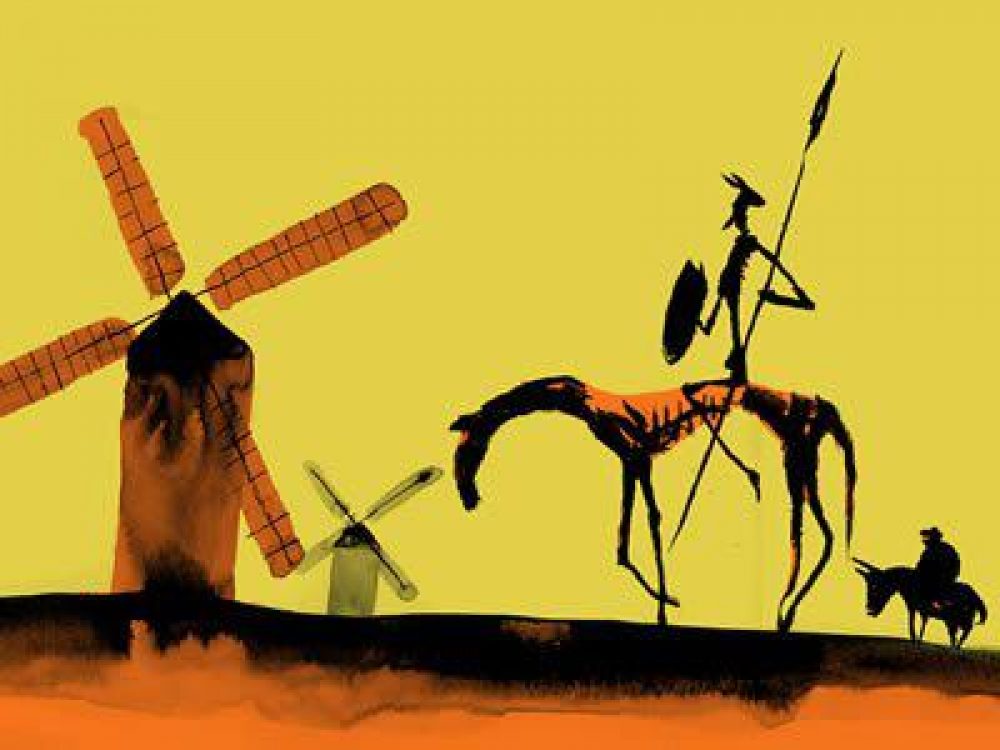
The picaresque novel (Spanish: picaresca, from pícaro, for “rogue” or “rascal”) is a type of prose fiction that depicts the adventures of a roguish, but appealing hero, usually of lower social class, who lives by his wits in a corrupt society.

Most picaresque novels incorporate defining characteristics: satire, comedy, sarcasm, acerbic social criticism, first-person narration with an autobiographical ease of telling; an outsider protagonist-seeker on an episodic and often daunting quest for renewal or justice.

The Pickwick Papers (Charles Dickens), Huckleberry Finn (Mark Twain), Confessions of Felix Krull (Thomas Mann), and Dead Souls (Nikolay Gogol) are classic examples of the genre.

So, too, is Miguel de Cervantes’ epic Don Quijote (Quixote), which parodied the popular books of chivalry then in vogue.

After being dismissed as another picaresque novel of its time, scholars and readers concluded that the book was a lot more than that … probing the vagaries of reality and illusion. Where the visionary man of la Mancha saw giants to be toppled and a lovely damsel in distress, his loyal companion, Sancho Panza, was more pragmatic: the giants were simply windmills and the object of Quijote’s affection was merely a sturdy, lackluster peasant girl.

Despite Sancho Panza’s common sense and no-nonsense approach to their travels and life with his meandering master, we find ourselves rooting for Don Quijote and his impossible dreams.

Perhaps it’s human nature – of civilized people, at least – to cheer for the underdog … but seldom does the victim actually reach heroic proportions.

Sometimes, though, it happens.

In a biblical story, the diminutive David slays a seemingly invincible Goliath, saving the Israelites from the Philistines, who flee the battlefield.

Elsewhere in the media, ever-suffering good girl Jane the Virgin at once mocked the sudsy Spanish telenovelas so beloved by many Latinos and Hispanics … as her tales of woe evolved into the quintessential soap opera. We liked her, loved her, and cried when we believed she lived happily ever as the series concluded following 100 episodes.

Because of her diary, dear, sweet, innocent Anne Frank’s surreptitious life (and death) made her a hero to millions upon millions of school children throughout the years.

In a world dominated by systems, bureaucracies, and belligerent players with politics for the rich, we hunger and thirst for mere mortal heroes … as is the case now with Ukrainian President Volodymyr Zelensky and all his people, staunchly defending their motherland against a despot intent on annihilating them.

Ironic though it may be, before becoming his country’s president, the Jewish Volodymyr Zelensky had been a comedian who starred in a TV series in which he portrayed Ukraine’s president.

Servant of the People, the satirical series that launched Zelensky’s political career, follows a teacher (Zelensky) who unexpectedly becomes president after a rant against corruption goes viral on social media. The show ran for three seasons and ended when Zelensky decided to run for president of Ukraine in 2019 under the banner of a new political party … also called Servant of the People.

He’s known as president, actor, showman, voice of ‘Paddington’ and a mean pianist, but friends close to Ukraine’s leader say the fighter we see today is the real deal.

Despite the demolition, US Secretary of State Anthony Blinken told CNN’s Wolf Blitzer that there would be an independent Ukraine “a lot longer than there’s going to be a Vladimir Putin,” as the Russian leader continued his unprovoked invasion of the country. “One way or the other, Ukraine will be there and, at some point, Putin won’t.”

Blinken’s comments came as new satellite images showed widespread destruction across Ukraine.

Whether or not Volodymyr Zelensky is ultimately named Time’s “Person of the Year,” he’s my hero here and now.

I hope that he inspires you, too.

Bruce Joffe is publisher and creative director of Portugal Living Magazine. You can read the magazine’s current issue — and subscribe, free of charge — at https://portugallivingmagazine.com/our-current-issue/.

Processing…
Success! You're on the list.

Brinkmanship

“… World War Three”

One can’t tune into a newscast or read a journalist report about the situation in Ukraine growing more deadly daily, without hearing these three words mentioned—usually in the context of why NATO (and the USA) cannot risk the wrath of Putin by participating in a “no fly” zone over Ukraine air space.

The assumption is that the Russian leader will interpret any involvement or interference in his war as aggressive, escalating the stakes to nuclear levels.

Obviously, none of us wants to die or be crippled by chemical and/or biological warfare, a nuclear conflagration, or a despot czar laying siege to all that we value and hold sacred.

How well I remember the nail-biting, nerve-frazzling “Take shelter!” drills in public schools during the Cuban missile crisis of the early 1960s.

Many of us believed that the world was about to end.

But, despite Kruschchev’s rhetoric and shoe-banging tantrums that “We will bury you!” we stood our ground. And our naval fleet refused to budge, as brinkmanship brought us to the edge of nuclear annihilation.

Earlier, in response to Hitler’s heinous war crimes and the massacre and mutilation of six million Jewish people, the words “Never again!” echoed around the globe. Never again would the world – governments, religions, businesses – stand by and not get involved as the Holocaust took place around and among the nations of Europe.

How quickly we forget …

Maybe, though, we’ll remember Barry McGuire’s words from this 1965 ballad:

Don’t you understand what I’m trying to say?
Can’t you feel the fear that I’m feeling today?
If the button is pushed, there’s no running away
There’ll be no one to save with the world in a grave
Take a look around you boy, it’s bound to scare you, boy

But you tell me over and over and over again, my friend
Ah, you don’t believe we’re on the eve of destruction

Reporters, generals, and analysts are quick to remind us of the 2014 siege of Ukraine by the Russians:

Russia formally incorporated Crimea as two Russian federal subjects—the Republic of Crimea and the federal city of Sevastopol on 18 March 2014. Following the annexation, Russia escalated its military presence on the peninsula and leveraged nuclear threats to solidify the new status quo on the ground.

But the same experts neglect to tell earlier “russification” of the Ukraine efforts.

In the “Manifesto to the Ukrainian People with an Ultimatum to the Central Rada,” drafted by Lenin, Trotsky and Stalin, the Bolshevik leaders made a paradoxical statement simultaneously recognizing the right of the Ukrainian people to self-determination and denying it in the name of the revolution.

Lacking strength in Ukraine, Lenin sent Russian military units to Kyiv. In January 1918, troops began their advance and, in early February, seized the capital of the Ukrainian People’s Republic by firing 15,000 artillery units on the city. After seizing the city, Russian troops shot people on the streets of Kyiv for using the Ukrainian language.

Today, Russia once again is devouring Ukraine as the world watches and takes humanitarian actions, supplying the country with back door armaments and ammunition. Still, despite its good intentions, NATO nations refuse to put boots on the ground, planes in the air, or their own borders at risk.

For fear of Putin’s retribution.

We’re back, again, at the infamous Cuban missile crisis … although, this time, we’re not soloists: We’re with NATO now. And we’re not the only “super power” (i.e., equipped with a nuclear arsenal) involved. France has the bomb, as does the United Kingdom. So, too, does Israel—even though, despite location, it’s not a member of the North American Treaty Organization. Will China risk its revolutionary status by supporting Russia, or will its leaders prefer a more cautious approach, enabling China to partake in the plunders?

Even historically “neutral” countries like Portugal, Switzerland, and Norway realize the stakes and are quick to open their doors to refugees with one hand, while sending troops and weaponry to the fringes of the battle zones.

Have we lost our honor, our way of life, our values, over the past 60 years since our brigade faced off against Russia in our own backyard? Are the world’s other billionaires afraid of stepping on the toes of the oligarchs and setting off nuclear missiles?

One of those multiple retired generals who serves as an adviser and consultant to CNN made a powerful point the other day: Russia isn’t the only one capable of seizing the world–not through its nuclear intimidation, but through the power of shutting us off to its energy supplies. Think about the leaders of Saudi Arabia and Venezuela, for instance. Autocrats like Putin! Or, for that matter, countries intent on nuclear arms races – like North Korea and Iran – that must be confronted and subdued.

Is Vladimir Putin willing to escalate his war beyond conventional troops, armor, and artillery? Is he so bloodthirsty that, isolated, he’s determined not to capitulate … to continue invading other lands and reaping the spoils of war … despite the determination and concentration of power aligned against him?

Sanctions certainly have their place and can work to disarm Russia economically—down the road. But for now, the powers-that-be allowing Putin to have his way either aren’t concerned about their own welfare or are blinded to the reality of brothers killing brothers through Russian propaganda and disinformation.

Watching the “Breaking News! Breaking News!” battle hymn of the republic, I believe that we must take a gamble and prove our muster and muscle against the Putins of the world.

Damned if you do, damned – even more – if you don’t.

Bruce Joffe is publisher and creative director of Portugal Living Magazine. You can read the current issue and subscribe — free, no charge! — at https://portugallivingmagazine.com/our-current-issue/.

Processing…
Success! You're on the list.

Born Again?

Like so much else in the Bible and the important matters that Jesus talks about, being “born again” may be a metaphor … though a metaphor that is essential to the Christian testament, indeed to the Christian experience.

If I were creating a college curriculum for Christians, I might call my foundational course “Christianity 101: Being Born Again.”

Unfortunately, the term has been given a bad rap and held hostage by evangelical, fundamentalist and conservative Christians; so we tend to cringe a bit, preferring to stay away from talking about it.

But we need to.

Conservative Christians have had a near monopoly on what many people refer to as “born again language” and culture … populated by terms like fallen, sinner, altar calls, and saved … to reciting a string of words as a given formula.  You know what I’m talking about:

 Heavenly Father, have mercy on me, a sinner. I believe in you and that your word is true. I believe that Jesus Christ is the Son of the living God and that he died on the cross so that I may now have forgiveness for my sins and eternal life. I know that without you in my heart my life is meaningless.”  Next, we add a bunch of our particular brand of dogma and doctrine.  And then we say: “I give you my life and ask you to take full control from this moment on; I pray this in the name of Jesus Christ.”

In Charismatic and Pentecostal circles, being born again is further complicated to mean receiving the gifts of the Spirit … especially as evidenced by speaking in tongues, if not being “slain in the Spirit.”

In addition, most of us have known at least one person who was born again in a remarkably unattractive way—practicing a rigid kind of religious righteousness, judgmentalism, and imposing strict boundaries between an “in-group” of acceptable Christians and all others.

I remember some of the churches I attended in my earlier years as a Christian, where certain places of worship were referred to positively, passionately, as “believing” churches, while most mainstream churches were summarily dismissed as not valid to be called Christian.

And yet, there is something special about being born again. 

Rightly understood, being born again is a fulfilling and comprehensive notion, one that we – and all – need to reclaim.

The theme of the story about Nicodemus and Jesus from the third chapter of John’s gospel is rich in metaphor and symbolism.  We’ll focus on verses 3-7 because they explain why being born again or born anew is so vitally important:

“In reply, Jesus declared, ‘I tell you the truth, no one can see the kingdom of God unless he is born again … no one can enter the kingdom of God unless he is born of water and the Spirit.  Flesh gives birth to flesh, but the Spirit gives birth to spirit.  You should not be surprised at my saying, ‘You must be born again.’”

The idea of being born again of the Spirit is not new, nor did it end with these words of Jesus. One of my own personal favorites is the prophecy found in Jeremiah 31:

31 “The days are coming,” declares the LORD, “when I will make a new covenant with the people of Israel and with the people of Judah … 33 “This is the covenant I will make with the people of Israel after that time,” declares the LORD. “I will put my law in their minds and write it on their hearts. I will be their God, and they will be my people. 34 No longer will they teach their neighbor, or say to one another, ‘Know the LORD,’ because they will all know me, from the least of them to the greatest,” declares the LORD. “For I will forgive their wickedness and will remember their sins no more.”

 Later, in I Peter 1:3, we read:

Blessed be the LORD God who has invited us to be born again to a living hope through the resurrection of Jesus Christ.”

But, let’s return to Nicodemus: a Pharisee who had dedicated his life to keeping the rules and regulations of the Old Covenant, a man totally committed to serving God in the only ways that seemed right to him.

Not only was Nicodemus a Pharisee, he was also a member of the Sanhedrin, the ruling body or supreme court of the Jews at the time.

So, what on earth was someone like Nicodemus doing coming to Jesus?  Was he out to trap Jesus into saying something controversial?  Was he gathering evidence? 

No, I don’t think so …

Nicodemus came in the dark, looking for light.  There’s one of our metaphors!  He starts the conversation with a compliment:  “Teacher,” he says to Jesus, “we all know that God has sent you to teach us.  Your miraculous signs are proof enough that God is with you.”

But Jesus brushes aside the compliment to get to the heart of his message: It’s not external signs that are important, he tells Nicodemus; it’s what happens inside a person’s heart … and that has to be such a profound change that it can only be described as being “born again.”

These two Greek words can be translated three different ways.  And they have been, in different translations of the Bible where, in some versions, the words are “born again,” in others, “born anew,” and yet in others, “born from above.”  What’s more, all three are valid!  It’s one of those concepts that can’t be contained accurately in English and retain its full meaning.

What is its full meaning?  The words mean a radical and complete change … it can mean “again,” in the sense of a second or third or fourth time … and it can mean “from above,” and therefore from God.

When we try to bring all these meanings together, to get a sense of what Jesus was trying to say to Nicodemus, we essentially have Jesus saying that there is a fundamental change that happens to someone who experiences and enters into the Kingdom of God.  Something happens deep inside, in the soul, in the heart of that person, which can only be described as being reborn … and there’s nothing of self in this because it comes from the grace and power of God.

Like all of us, Nicodemus was a man who saw the need for change – and wanted to change – but he couldn’t change himself.  It’s a problem that has plagued humanity from the earliest pages of the Bible.  Nicodemus came to Jesus knowing that there was something lacking in his life. Jesus saw the root of the problem and told him what was needed.  It was too radical for Nicodemus, so he clutched at straws: “I just don’t understand how it works,” he seems to say.

Here Jesus does what he often does: He takes pictures from everyday life and uses them to open people’s eyes to the truth.  I’ve referred to pictures like this, before, as metaphors.

“See the wind,” Jesus says to Nicodemus.  “You’ve seen trees flattened by it, or leaves blown by its gusts. You may not understand the physics of what you see, but the effects are plain to see.  It’s like that with the Spirit, too. You may not know how it works, but the effects are plain to see in lives that have been changed.”

Today, Jesus may have referred to television, a computer, or the Internet instead of the wind. Do most of us know how they work?  Probably not.  Do we understand the technology behind their incredible power?  No, we don’t.  But that doesn’t matter … because the effects of what television, computers, and the Internet do are so obvious.

We may not understand the full implications of Jesus’ words when he talks about flesh giving birth to flesh and the Spirit giving birth to spirit … but we can see the effect of this spiritual rebirth in the lives of Christians who have experienced it!

One commentator explained it this way: “The unanswerable argument for Christianity is the Christian life.”  A changed lifeA life focused from the inside out rather than the outside in.

Children instinctively accept their relationship to God because they haven’t been conditioned by society’s rules, norms, and expectations.  As we grow conditioned to seek popularity, achievement, affluence, authority, in the world, we’re increasingly controlled by society, living from the outside in rather than by the Spirit of God from the inside out.  We’re increasingly separated from God as our self-concern, our self-preoccupation, intensifies. It’s what I think of as “the fall.”

Jesus concludes his conversation with Nicodemus with a warning: “I’ve tried to make things simple for you to understand,” says Jesus.  “I’ve spoken to you of earthly things and you do not believe; how, then, will you believe if I speak of heavenly things?  If you can’t see what I’m getting at from your everyday life, how in the world are you ever going to understand the deeper, spiritual things?”

Alas, Nicodemus just doesn’t get it. He’s a literalist. “How can anyone be born after having grown old?  Can one enter a second time into the mother’s womb and be born?” 

Nicodemus is still clueless.

The point of this classic text is clear: What Nicodemus needs is a spiritual rebirth, an internal rebirth, a personal transformation.  It’s what we all need.  Because, at the heart of the Gospel, is the mystery of God’s compelling grace, love, and redemption. 

There’s a very serious message here, I believe, for us:  Faith isn’t something you can understand by discussion, argument, reading or listening to sermons … it’s something that has to be experienced. 

To be born again, born anew, or born from above aren’t alien concepts that belong to the “happy-clappy” brigade of Pentecostals.  No, no, no!  This is fundamental change, a metamorphosis, a continuing transformation in our lives, a constant reformation of dying to the self that the world tells us we are, and being resurrected into the spiritual person that God has created us to be: in relationship to our Creator and all of creation. 

To be born again means dying to an old way of being and being born into a new way of being … dying to an old identity and being born into a new one centered in the sacred.

It’s a process, not a formula … a continuing cycle that we need to go through again and again, rather than saying the words of the “Sinner’s Prayer” and being done with it.

Being born again is the road of return from our spiritual exile, the way to recover our true selves, the path to beginning to live our lives God’s way rather than ours, the exodus from our individual and collective selfishness to the freedom from that bondage.

Most importantly, being born again is intentional; although we can’t make it happen, we can help it along.  That’s why so many sermons about being born again often end with an altar call, an invitation to realize our limitations, turn from our evil ways, and to ask God to take over by acknowledging Jesus as the way we want to live.

No, I’m not going to do that.  But I am going to ask you to bow your heads as I end this message with a prayer:

Our God and Creator, all the riches of life in your Kingdom are ours if we will but open up our lives, our hearts, our minds, and our souls to the new life that you would have us live. Open our hearts to the need for renewal and rebirth. 

Processing…
Success! You're on the list.

Brotherly Betrayals

What is it about brothers that we can learn from those familiar Bible stories?

● Cain and Abel showed us anger and resentment, blood on our hands;

● Jacob and Esau foretold greed and deception, taking what’s not ours;

● Joseph’s brothers sold him into servitude among strangers because of jealousy and bitterness;

● Abraham and Lot enlightened us to the value of land, the potential of negotiation, the importance of hospitality, and the dangers of looking back.

And, now, we have Russia’s aggression, war, and genocide against Ukraine: Gog and Magog?

Our first instinct is to cry out, “God, help us!” But God, thus far, hasn’t intervened. Maybe later, perhaps. Let’s remember that God gave us freewill and self-determination, a choice between good and evil.

You know what we chose.

Adam and Eve put people (themselves) before God, blaming others for their own lack of righteousness: “The woman made me eat it,” whined Adam. “The serpent beguiled me, and I did eat,” replied Eve.

Ever since, the trajectory of mankind’s path may already have been determined.

Lord, forgive us and – through your spirit which abides in us – enable and equip us, please, to humble ourselves.

Bruce Joffe is publisher and creative director of Portugal Living Magazine. You can read the current issue and subscribe — at no charge! — online here: https://portugallivingmagazine.com/our-current-issue/

Processing…
Success! You're on the list.

Between a Rock and a Hard Place

It’s those seemingly little frustrations while living in Portugal or Spain that can make you angry and disgruntled, wanting or needing to rant.

Like going to the dentist.

I’m not referring to being treated by the dentist, which sometimes can be painful, but the whole series of complex procedures involved. Especially if you have dental insurance.

It had been a while since we’d had our teeth and gums cleaned, and wanted to check that off our bucket list. Cleaner teeth are easier to wrap your tongue around and actually feel smoother after brushing.

Our dentist, mind you, is great … it’s the bureaucracy, finger-pointing, and “not my responsibility” attitude involved. Plus, of course, all the time waiting.

Step #1—We log on to our insurance company’s network of affiliated providers, choosing “Dental” rather than “Medical,” “Well Being,” or “Hospitals” from the options. With the pull-down menus, we select our province, district, concelho, and specialty (general dentistry).

Step #2—We’re delighted to find that the clinic where our medical doctor practices tops of the list of three area providers that accept our insurance.

Step #3—Appointments are made, rescheduled, rescheduled again, and rescheduled once more. Internal matters at the clinic, you know.

Step #4—We show up on time (the scheduled hour, not the Portuguese one), check in with the receptionist, fill out a couple of forms, and wait for about 45 minutes before I’m called – the first patient in a full waiting room – into the dentist’s office. My partner will have to wait.

Step #5—The dentist and I exchange small talk as I’m seated in the curvy horror chair with all those awful attachments. Turns out, he’s just recently relocated to Portugal from Cuba. I feel somewhat better, knowing that, whatever else may be wrong in Cuba, its health care is known to be outstanding. The receptionist is role-playing dental assistant now, getting everything ready for the dentist (and me). She speaks Portuguese, not English or Spanish; the dentist can speak Portuguese, but prefers talking to me in Spanish. Throughout my 15-minute cleaning, he speaks Spanish into my right ear, while she speaks Portuguese into my left. Apart from all the head movements and rotations required, my head is spinning from trying to sort the two languages spoken simultaneously into my orifices. The cleaning completed, I’m told to rinse out my mouth with the water in the paper cup held by one of the chair’s many tentacles. I’m escorted back to the waiting room. It’s my partner’s turn now.

Step #6—As Russ undergoes an intensely long cleaning, I attempt to deal with a very flustered man seated in the receptionist chair, trying to find and/or organize records and documents scattered all around him. I hand him my insurance card, telling him to save us both time by billing of our cleanings so we can leave as soon as Russ is finished. After pecking at the computer, he pulls out binders full of papers and folders full of files. Nowhere can he find what he’s looking for. He picks up the phone and uses the intercom button to summon the receptionist (aka dental assistant) up front. Speaking a mile a minute in rapid-fire Portuguese, she returns to the dentist as the man behind the desk turns to me. “We don’t accept this insurance,” he says. Fortunately, I have printed out the dentists covered by our insurance plan, pointing out the clinic at the top of the list. He shakes his head, obviously at his wit’s end. “I’m sorry,” he shrugs in Portuguese. I hand him my Portuguese debit card and pay the 80 euros — @ 40€ per cleaning – figuring I’ll take the matter up with my insurance representative. Russ comes up front saying, “The dentist can’t do a full cleaning … my teeth are too tartared. We’ve got to come back.” We leave and head home.

Step #7—As soon as we’re home, I send an email to my insurance representative, explaining what had happened and asking him to, please, deal with it for us. Knowing all too well that it would be a while before receiving a response, I take care of some business and then return to the clinic the next day with Russ. He is seen by the dentist immediately.

Step #8—Half an hour later, Russ is back in the reception area. Turns out he has had more than a dental cleaning, but a tooth extraction as well. I don’t bring up the matter of insurance with the receptionist (last night’s dental assistant); I just hand her our debit card . At this point, I have three invoices and three receipts documenting my payments. We’ve paid €120 out of pocket to the clinic.

Step #9—Back home, I look to see if my insurance rep has responded. He hasn’t. I scan copies of the dental invoices and receipts, attaching them to the earlier message I had sent. I await his reply, I repeat.

Step #10—He replies, stating that the dental clinic is, indeed, a member of the insurance provider’s network. He attaches a file from the clinic showing all the insurance coverages it accepts. Ours isn’t there; but the rep says that our insurance company is part of another insurance company which is listed. “You will need to resolve this with the clinic,” he says, matter-of-factly. “The problem is with them, not with us.”

Step #11—We return the next morning to the clinic, assuming that – with insurance documents in hand – everything will be easy-peasy and we’ll be refunded our payments on the spot. Yeah, right. According to the very sweet receptionist, maybe four or five years ago, with a different dentist, the clinic accepted the “other” insurance (the one our insurance company alluded to) … but certainly not – ever! – ours. Who knew that insurance follows the doctor (or dentist), not the clinic? I hand her the email from my insurance agent and ask if she would be so kind as to call him while I stand there. She does, arguing with him over the phone for about twenty minutes. Smiling at me, she then says everything has been taken care of and that I should have a nice afternoon. “So, who is going to reimburse me the €120 I paid?” I ask her. “You’ll have to talk to your insurance agent about that,” she replies.

Step #12—Home again, I check my emails once more. Still no response from my insurance agent. I send him a new email asking him how this can be resolved: I’m between a rock and a hard place, out €120 because the dental clinic insists it’s not affiliated with my insurance provider and my insurance agent claims that it is. Really pissed at this point, I end my email reminding the agent that the signature line of his email shows his title as “Client Customer Service” and that customer service means more than paying bills and processing payments.

Step #13—Not much later, I receive the agent’s response: “Thank you for your email. Regarding the insurance company’s dental obligations, our agreement with the dental clinic is done through the company I mentioned,” he begins. “According to the clinic’s website, they have an agreement for dental treatments with that company—see the clinic’s insurance agreements on its website. As you can easily confirm, we provided you the same information that is mentioned in ours and the clinic´s records … which is that the clinic belongs to our dental network.”

God grant me the serenity to accept the things I cannot change, courage to change the things I can, and wisdom to know the difference.

##End of Rant##

Bruce Joffe is publisher and creative director of Portugal Living Magazine. You can read the current issue and subscribe, without cost, online: https://portugallivingmagazine.com/our-current-issue/

Processing…
Success! You're on the list.