What If It Were Portugal?

MANUEL DE ALMEIDA/LUSA

Oliver Alexander, a Danish businessman working in a beachfront apartment in southern Portugal, is watching war play out more than 2,000 miles away in something like real time.

With Twitter on his computer and Telegram on his phone, a flood of videos allow him to identify Russian tanks rolling over Ukrainian bridges and Russian helicopter gunships blasting away at a Ukrainian airport.

Yet for all the visuals surging across the Internet, Alexander is unsure whether they are helping most people understand events in far-off battlefields. The intensity and immediacy of social media are creating a new kind of fog of war, in which information and disinformation are continuously entangled with each other—clarifying and confusing in almost equal measure.

Alexander has become an expert at seeing the often-subtle differences between Russian and Ukrainian tanks and weaponry. He’s learned to identify key Ukrainian landmarks. Most of all, he’s learned to study the latest videos for clues to what’s happening on the ground, while ignoring the written or spoken commentary he says is often misleading.

–Craig Timberg and Drew Harwell, The Washington Post

In a protest against Russian President Vladimir Putin, the Association of Ukrainians in Portugal organized a demonstration in three key points of the country: Lisbon, Porto, and Vilamoura. In Lisbon, about 100 people voiced their anger and called for an end to the conflict in Ukraine and a return to peace.

“Our Ukrainian brethren here in Portugal objected to Putin’s aggression against Ukraine – a peaceful, democratic, sovereign nation – and, in front of the Russian Embassy in Lisbon, objected to the increased threats their homeland has been suffering at the hand of the ruthless tyrant next door.”

Spanish and Portuguese officials called for Europe to co-operate more closely on managing energy supplies after major producer Russia’s invasion of Ukraine heightened fears of disruption, noted The Globe and Mail (UK) newspaper.

“Unlike many European countries, which, in total, relies on Russia for 40 percent of its gas, neither country on the Iberian Peninsula counts Russia among its main providers.”

Portuguese Prime Minister Antonio Costa said that the Portuguese deep-water port of Sines – the closest European port to the United States – has the “infrastructure to host and export natural gas to Europe.” Costa told those attending a news conference that this would allow for energy imports from the United States and Africa.

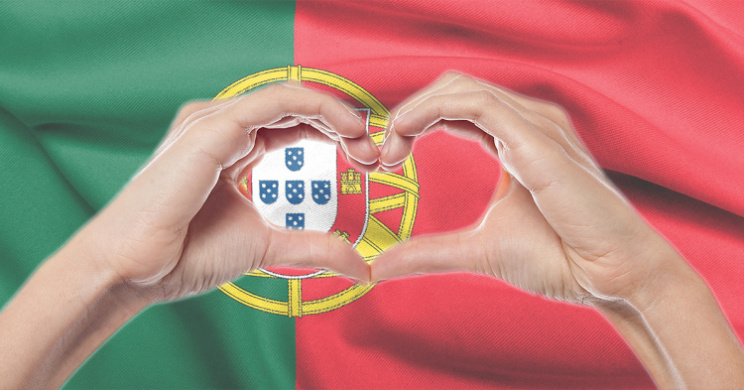
Like Ukraine, Portugal is a peaceful, progressive, and democratic nation. While it doesn’t share a border with Russian (or anywhere close), Portugal’s strategic position as the westernmost country in Europe, whose coastline abuts the Atlantic Ocean, makes it a strategic target for the Russian expansionist who wants to rule over the world.

The uncertainty over the sense in perpetuating dependency on the Russian gas that flows into Europe will ultimately return focus on the long-held American dream of shipping endless container loads of liquified natural gas (LGN) into Europe through the Alentejo coastal town of Sines. The USA’s ambassador to Portugal during the Trump regime was intent on forging this deal: a pipeline running from Sines into Spain, over the Pyrenees into France.

“Global dependence upon oil, gas, and coal is not only accelerating environmental catastrophe,” commented George A. Polisner in response to a Portugal Living Magazine Facebook post. “It transforms wealth to criminals, racketeers, and those who profit from planetary harm.”

Portugal presents itself as an international technology center open to foreign investment. Located at the southwestern tip of Europe, the diminutive nation is a strategic crossroads to Africa and the Americas, featuring a great quality of life, excellent infrastructure, and high levels of security, political stability, and sustainability.

Is it any wonder, then, that more than 550 German companies operate in Portugal, where they find a well-educated, multi-lingual workforce of problem-solvers with an appetite for innovation in engineering and research?

Unless otherwise contradicted, Portugal currently represents no threat to Russia, nothing more than, perhaps, a thorn in Putin’s side:

• According to Spokesperson Ned Price, USA Deputy Secretary of State Wendy Sherman spoke with Portuguese MFA Political Director Rui Vinhas. Sherman and Vinahs condemned Russia’s “premeditated, unprovoked, and unjustified attack” against Ukraine in violation of international law. They underscored their commitment to imposing – together with like-minded partners – swift, coordinated, and severe costs for Russia’s actions. The Secretary and Ambassador agreed on the urgent need for all members of the international community to condemn this attack in the strongest possible terms, to stand shoulder-to-shoulder with Ukraine, and to raise their voices against “blatant rejection of the fundamental principles of international peace and security.”

• Former member of the European Parliament Ana Gomes asked the Portuguese government to sanction Roman Abramovich and withdraw his Portuguese citizenship. “Gomes published several tweets on the pretext of golden visas granted to Russian citizens in Portugal, reported The Portugal News. She tweeted: “We wait for @antoniocostapm to publish a list of ALL #VistosGold beneficiaries and resident family members so that we can be sure that we are not giving national and European protection to more mafiosi, kleptocrats, oligarchs, etc.”

• Russia says that Portugal has extradited Stepan Furman, a “notorious criminal figure,” to Moscow for being a “thief-in-law,” the highest title in the criminal world’s hierarchy in the former Soviet Union, alleges North.Realities. According to the Russian Interior Ministry, the probe against the 58-year-old Furman, known among criminal groups as Stepan Murmansky, was launched in 2019 right after being a “thief-in-law” was criminalized in Russia that year. The ministry said that Portugal was the first European nation that had extradited a criminal wanted in Russia on the simple charge of holding the title. The U.S. Treasury Department’s Office of Foreign Assets Contral (OFAC) describes the thieves-in-law as a “Eurasian crime syndicate that has been linked to a long list of illicit activity across the globe,” saying that the syndicate poses a threat to the United States and its allies.

Russia and Portugal established diplomatic relations in the last quarter of the 18th century. Since that time, they experienced natural periods of rise and fall. Russia and Portugal are not comparable on many parameters: size of territory, population and workforce, the volume of economy, etc. In its turn, the Portuguese nation also can boast of considerable achievements.

Political or ideological considerations have always dominated in bilateral relations, which, for a long time, have prevented building cooperation in accordance with strategic interests.

The membership of Portugal in NATO and accession to the European Communities in 1986 obliged Lisbon to form its relations with Moscow in line with overall negotiation processes of these international associations and with an eye on the partners’ position.

In certain periods, this fact made it difficult to engage in a constructive dialogue, forcing both sides to see each other through the prism of global confrontation between two hostile social and political systems.

At the same time, there has never been acute, intractable disagreements or open conflicts between the two countries. High-level visits and the ruling elites’ interest degree were of great importance for the development of the bilateral relations. In this respect, the period of 1990s and 2000s belonged to the most fruitful. The legal base of cooperation was expanded, important treaties were signed, an exchange of the heads of state visits took place during this time. However, in years following the global financial and economic crisis, Russia–Portugal political relations stalled, later hampered by the consequences of the Ukrainian crisis and the sanctions war. 

N. Yakovleva (2017)
World Economy and International Relations (Monthly Journal of IMEMO)
(Founded by the Russian Academy of Sciences. IMEMO is a non-profit organization which acts within the Charter of the Russian Academy of Sciences.)

Bruce Joffe is publisher and creative director of Portugal Living Magazine, the country’s only English language, full-spectrum magazine. Read our current issue and subscribe — for free! — at: https://portugallivingmagazine.com/our-current-issue/

Processing…
Success! You're on the list.

War and Peace in the Global Village

Photo: Militarytimes.com

Back in 1964, Canadian educator and communication theorist Marshall McLuhan coined an expression to forever be associated with his name:

“The medium is the message.”

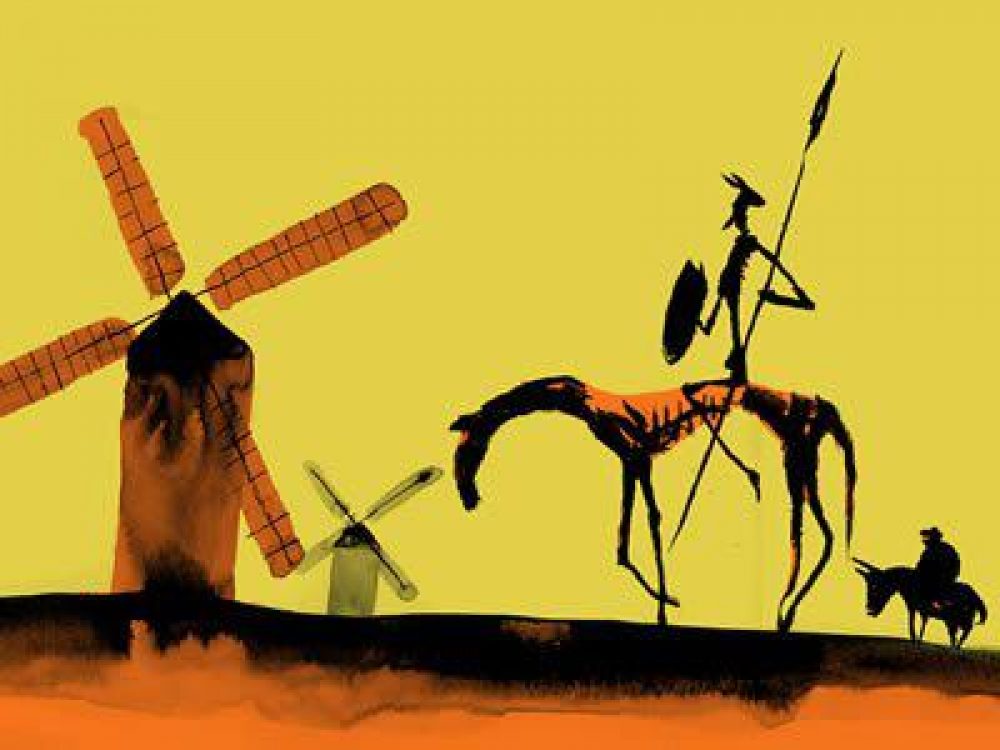
McLuhan maintained that the forms and methods (the “media”) used to communicate information have a significant impact on the messages they deliver. He argued that modern electronic communications would have far-reaching sociological, aesthetic, and philosophical consequences, to the point of actually altering the ways in which we expose, experience, and exploit the world.

Yet, the medium is the message cannot stand alone; it must be understood as part of a communication paradigm.

In its simplest form, “communication” is what happens when a sender (or source) delivers a message to a receiver. The plot thickens, however, when two essential ingredients – encoding and decoding – are added to the recipe, each of which has a tremendous impact on the flavor and taste of the message.

To communicate such that a message is understood, reacted to, and action taken (or not), that message must move from being an idea to a message by translating or “encoding” what the sender is thinking into words and images sent to the receiver.  For his or her part, the receiver must “decode” or decipher the message to be understood.

It’s quite complex when the sender’s assumed meaning of words, images, and actions aren’t the same as the receiver’s. Think about the differences between connotation and denotation. Or, for that matter, the challenge of translating words and expressions from one language to another. Though we might use words which are technically correct according to our culture, background, and experience, they may come across as something entirely different to another person in a different time, place, and/or society.

For instance, the Bible. Or the Constitution of the United States.

Experts are relied upon to adjudge the current meaning of words and phrases used back when these documents were created. We cannot assume that their meaning is stagnant or unchanging from then to now, there to here.

It is here that Marshall McLuhan’s theories must stand the test of time.

McLuhan focuses on the role, purpose, and meaning of the message itself—one of the three components of communication—downplaying the other two.

According to McLuhan, a “message” may comprise one of three elements:

The person or people involved. Think of Jesus, Hitler, Stalin, Churchill, Oprah, Franco, Trump, FDR, JFK, MLK, Fidel Castro, the Queen. For the Portuguese, especially, Amalia Rodrigues … who embodied the essence of fado which, in turn, defined the people she sang about—and others similarly aligned. It doesn’t matter what they were saying or how and where, as such people (and others) were the word or message incarnate.

The medium. Newspapers, magazines, radio, television, blogs, the Internet. CNN or Fox News. The New York Times and The Daily News. Google, Facebook, Snapchat, Instagram, Twitter, TikTok, YouTube, LinkedIn. McLuhan believed that real communication occurred by neither the persons involved nor the composition of the message. It all depends on the medium involved, he held. Fox News fans will eagerly dispute what’s being said on CNN or MSNBC, just as vice-versa is valid. Those who rely on the New York Times or Washington Post aren’t receptive to the same information if brought to them by the New York Post, The Sun, or tacky tabloids. What Rachel Maddow or Tucker Carlson and Sean Hannity report is acknowledged or dismissed, depending on their fans. Misinformation, disinformation, and malinformation further cloud a medium’s message, which is why so many have abandoned the mainstream media in favor of the players, platforms, and banners that cater to their own viewpoints. Welcome to the world of pandering podcasts and YouTube channels.

The message. Forget about the people and the medium, say some. They’re but extensions at best, complications at worst. The message is the message. Period. End of story. Except, as those in marketing have known forever, it’s not about trains but transportation. It’s not about clothing, but how we feel. It’s not about perfume or cologne, but allure. Most of the money spent on creating and delivering messages boils down to human wants and needs, no matter how healthy and humane or dismal and depressing: Lust. Greed. Gluttony. Fear. Thrift. Anger. Hatred. Love. Compassion. Comprehension. Prejudice. Greed. Gluttony. Selfishness. Strength. Weakness. Nationalism. Tribalism. Territorialism. Imperialism. Capitalism. Democracy. Socialism. Communism. And the list goes on …

Which brings us to today.

Today’s big issue is focused on Ukraine. What’s the intrinsic message? The people: Putin and Biden, basically. The media: Breaking news, breaking news, breaking news. (Turn down the noise and clutter, please!) The overt messages: A nation’s sovereignty must be sacrosanct and never allowed to be invaded; or, perilous forces are getting too close for comfort and we have every right to self-preservation.

Take any issue and ask yourselves what’s the overt – and covert – messages implied: Climate change. Equal rights. Black lives (Asian, Jewish, Muslim, Women’s, LGBT, et al) matter. Poverty. Human trafficking. Police brutality. Social injustice. Fiscal policy. Party politics. Pandemics. Whatever …

It’s enough to make one’s head spin and stomach churn.

That’s one of the aspects so meaningful to our lives here in Portugal and Spain. We’re able to go about our daily lives, dealing with the bureaucracy and tuning out the noise and news. Sure, we can access them through television, high-speed Internet, and mobile devices. But why? Whether on a patch of land or village row house and café on the town square, we’ve adjusted ourselves to a less complex life in a simple but satisfying country.

Perhaps we’re fools, feeling safe(r) and more secure. So what? After all, there’s always amanhã and mañana.

Walter Cronkite, the kindly father of TV newscasting, used to lament that his biggest challenge was to determine what wouldn’t air on his nightly, 30-minute newscasts. Because, back in the day, if it wasn’t part of Uncle Walt’s message, it wasn’t news or worth worrying about.

And, that’s the way it was … and ought to be again.

Processing…
Success! You're on the list.

Bruce Joffe is publisher and creative director of Portugal Living Magazine. You can read its current issue and subscribe — for free! — online: https://portugallivingmagazine.com/our-current-issue/

Shoo, Fly

They’re back.

Already.

And it’s still only early spring.

Maybe they never really left?

I’m talking about flies, gnats, buzzy buggers, and hovering hoodwinks. Not to mention ‘squitos, dive-bombers, and flying ants.

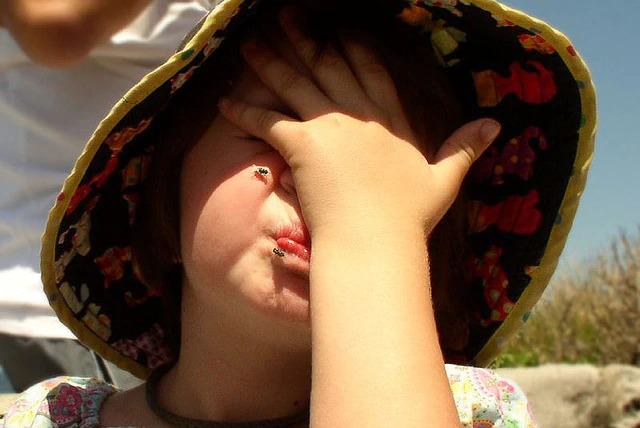
They land on our food, swim in our drinks, nest down our drainpipes, lodge in our eyes, sing trebling love songs in our ears.

And no matter how we try, we can’t get rid of them.

Invest what you will in window fly screens, swatters, battery-operated boomerangs, electric gizmos or gadgets that zap them, hang sticky strips that grab and hold them, or buy old-fashioned “natural” aerosols that claim to remove them in an environmentally friendly way.

The only sure-fire way to get rid of them – one at a time – is to have someone as talented as my partner, Russ, around. (Except, perhaps for David and his Goliath slingshot, I’ve yet to meet anyone else who can precisely target flies with rubber bands, hit them with bullseye precision, and watch them drop. One of these days I am going to shoot a video of his perfect aim and conquests, then post it on YouTube or submit the vid to America’s Got Talent.)

Like cockroaches and rodents, the swarming wings of insect brigades — or even an errant fly out of season — refuse to surrender. Ever notice how the bigger (older?) ones don’t have the get-up-and-go of the smaller, swaggering, bolder ones? The latter always seem to get away, staying around to tease us again and again. Their fatter friends are easier to smash as they languish lazily on a windowpane, drawer, or refrigerator door.

Heaven help us when those invasive Asian tiger mosquitos descend!

Of all the places we lived before Portugal and Spain, only West Virginia came close to the number of flying demons and little lady bugs – Japanese beetles – that committed collective hari-kari on the inside tracks of our sliding doors. What a stink, sweeping them up or emptying the vacuum cleaner bags. Mountain folk wisdom was to hang a clear plastic bag full of water on your entry door. That would keep them out. Curiously, it often did.

But not here in Iberia, where they’re everywhere we want to be. Basically, our choices boil down to being oblivious and ignoring them, as the natives do (even when the darned nasties are crawling all over their skin). Aren’t you tempted, honestly, to reach out and smack that litter bugger crawling up and down the cheeks of the person sitting opposite you, his or her tearful sweat creating swimming pools for flies?

If you can’t – or won’t – learn to live with them, you’ll need to live without them. You know what that means …

In my role as a public relations executive, one of our accounts was a homeopathic bug spray company that promised to do away with the bugs harmlessly and recycle them back into the earth. Their packaging and cans were idyllic—using pastel colors and lyrical wording to make shoppers feel less guilty about destroying the predators. But, despite all good intentions, customers weren’t buying it. My job was to find out why. We used focus groups. Here’s what we learned: When it comes to killing these stealthy pests, people bypass the pretty cans in grocery store aisles and head for the skull and crossbones, instead.

RAID: KILLS BUGS DEAD!

That’s the message most consumers like me want to hear.

Because bugs make themselves at home with us (not contributing to the mortgage or rent) in our kitchens and dining rooms, or – worse – our bedrooms and bathrooms. Can there be anything more annoying than sitting down to take a wiz or do a #2 … only to discover that you’ve got insatiable company in the loo? Or, for that matter, more satisfying than smashing their innards out with a magazine, newspaper, advertising flyer, or paperback book in hand before taking care of your business?

Except for a mention, I’m not planning to discuss the flying bombasts that cling for dear life to our car grilles, mirrors, bumpers, and painted surfaces. Florida calls them “love bugs,” probably because they love to hug and kiss these objects of our desire … leaving their residues behind to clog the namesake lattices and bumpers of our vehicles and ruin the luster of extra-cost metallic paints with their kindred clusters.

Shoo Fly, Don’t Bother Me is *a minstrel show song from the 1860s that has remained popular since that time. It was sung by soldiers during the Spanish–American War of 1898, when flies and the yellow fever mosquito were a serious enemy.

I’ve got news for *Wikipedia: they still are.

Whether in Portugal or Spain, this American is tempted to scream these words in his war against the flying, hovering whizzes from hell, marauders that would make me their prey:

Shoo fly, don’t bother me!!!

Bruce Joffe is Publisher and Creative Director of Portugal Living Magazine. You can read the magazine’s current issue online and subscribe at no charge:  https://portugallivingmagazine.com/our-current-issue/

Processing…
Success! You're on the list.

Welcome to Portugal Living Magazine

With the steady increase of Americans and other English-speakers in Portugal, it became evident — while living in the country’s interior — that news and commentary was focused on one region (the Algarve) with nods to Lisbon and Porto … and presuming that all English-speakers here are British.

Something more than fragmented Facebook groups and online “expat” forums was needed to cover stories of interest throughout all areas of Portugal to people residing here or in the process of relocating to Portugal … from the UK, USA, Canada, Australia, Ireland, Belgium, South Africa, and other English language countries.

That’s why we created Portugal Living Magazine.

Layering a variety of engaging features, integrated departments, continuing columns, commentary, photos, and original artwork, Portugal Living Magazine presents a wide variety of stories about people and places, invaluable information, and answers to questions about living happily in Portugal.


Offering free digital subscriptions and promoting a national community orientation for expats and immigrants, Portugal Living Magazine took root and flourished. In addition to growing issues from 48 to 70 pages, the magazine hosts this popular Facebook Page, a website, and a new YouTube channel.

Different in content and purposes than Facebook groups and online forums, Portugal Living Magazine is delivered directly to subscriber email inboxes. Our Facebook Page is updated daily with dozens of news stories and a wealth of irresistible pictures, while our website includes everything from current and future issues to blog posts, linked resources, and advertising or sponsorship information. Our YouTube channel with original content premieres 1 February.


Read our current issue and subscribe at no cost–for all future one. Complete past issues are also posted on our website, as is a peek at upcoming issues. Some of the best blog posts about Portugal living are conveniently grouped on our website. Adverting data and details, links grouped categorically to indispensable resources from our sponsors and supporters, and complete contact information for reaching us are all on Portugal Living Magazine’s website.

Our continuing commitment is to provide free subscriptions to everyone who wants to read Portugal Living Magazine, with advertising covering the publishing costs of production and distribution. Alas, we’re not there yet. Deficit spending has been funded from the pockets of our founder.

We’ve created ways that you can help: Our Patreon page encourages donors to contribute one, three, or eight euros monthly. Prefer to make a one-time gift? Deposit it directly to our bank account at this IBAN: PT50.0036.0136.99100034067.63.

Felicidades from our team to you and your loved ones!

Upcoming

Bruce H. Joffe
Publisher/Creative Director

Processing…
Success! You're on the list.

Of Prophets and Poets

Much of what I like most about the King James Version is the beauty inherent to its prose. Whether Psalms, Proverbs, Peter and Paul, or Prophets, I almost always find the version’s way of saying things – even when (mostly) inaccurate—poetic. Which version of the 23rd psalm can compare with the beauty and eloquence of the King James?

My undergraduate education was at the University of Madrid, during the days when Francisco Franco reigned. The world was a frightful place with Vietnam, Watergate, civil rights marches and riots, assassinations of beloved leaders, Khrushchev banging his shoe on a table at the United Nations while threatening “We will bury you!” and campus crusades ending in pools of blood.

In Franco’s Spain, however, the armed civil guard stood sentry on every street … ready to shoot first and (not) ask questions later. Especially when it came to students—university students—who were considered radical rabble-rousers causing trouble.

Young and old, many of us took up the arts for solace—playing music, painting, writing—to quell the anguish in our souls.

Some 50 years ago, I worried these words out in Spanish:

O, mi dolorosa verdad que evade los ojos …

Te buscaba entre las espinas de la vida.

¿Es que has muerto en un siglo cortísimo?

O, que, ya vives,

pudriéndote cada dia?

Roughly translated, my words mourned about the search for a painful and elusive truth, asking if it had died in a short, bygone era … or whether it still lived, albeit diseased and decaying, every day.

I think of my Spanish poem often these days.

Somehow, it seems even more relevant now than then.

Processing…
Success! You're on the list.

Algorithmea

I wish I could find a doctor to treat – and fix – my algorithmea in the same way s/he deals with my allergies and arthritis.

Here in Portugal and Spain, that usually means a medical consult followed by lab tests, more consults, and meds.

If only it were so easy dealing with the algorithms causing my algorithmea!

Like the “Bogie Man” and “El Coco,” they’re invisible (to me, at least), yet have taken hold of my life. Sarting with Facebook:

I realize that every single bit of data about my personal profile – age, income, locations, friends, preferences, politics, education, what I like (or don’t) and follow – is mixed and mingled by Facebook’s manipulations. So, whatever I see on my feed is custom-tailored for me. And, perish the thought that I click on a “sponsored” link! Within minutes, I’m deluged with ads for similar services or products that last for days. Sometimes after a hiatus, they return to haunt me again.

The good news, I guess, is that I’m only receiving promotional messages which, supposedly, will interest me, instead of other junk scattered through the great commercial diaspora.

(The bad news, of course, is that I’m not interested. If I want to buy something or learn more about it, chances are that I’ll be more responsive to my own Google searches than anything that Facebook sends my way.)

Which brings up another symptom of my algorithmea:

I am absolutely certain that these pillars of the Internet’s most powerful platforms collude somewhere in back rooms filled with smoke and mirrors, shaking hands and hand-me-downs of yours truly.

What makes me suspect this conspiracy of complicity against little, old me? Simple! No matter which “social” medium – Amazon, YouTube, LinkedIn or even so-called customer service websites that supposedly provide price comparisons and reviews for whatever I want in my geographical area, they’re almost instantly followed, cloak-and-dagger, by successive posts on Facebook. Heck, even weather channel sites are involved. Whenever I check on the forecasts, wouldn’t you know it that appropriate clothing and accessories for the climate crises appear, ipso facto, on my Facebook feed.

Amazon is just as bad. It keeps records and reminds me of what I bought (when), acknowledging my (good) tastes and encouraging me to reorder. And if I don’t want to, because I’m looking for something else? Presto: Amazon provides slews of suggestions. Next visit, it anticipates my needs and wants, recommending that I take a look-see at the products it recommends. To think, this bazaar, the whole enchilada, started as an online bookstore!

Netflix knows what I like to watch on the screen and is always there – even when the action is paused for a potty break – to recommend others it presumes I will like. Gee, how I miss my school librarian who got to know me and my favorites (genres, authors, styles) before doling out book recommendations.

Maybe it all started with radio?

Pandora, a subscription-based music streaming service owned by Sirius XM Holdings, was founded in 2000 (as Savage Beast Technologies) focusing on recommendations based on the “Music Genome Project” — a means of classifying individual songs by musical traits. The service originally launched in the consumer market as an Internet radio service, which would generate personalized channels based on these traits and songs liked by the user. In 2017, the service launched Pandora Premium, an on-demand version of the service more in line with its competitors: Spotify,YouTube Music, AccuRadio, and a bunch of others that allow you to choose a constant stream of music based on your favorite singers, styles or genres, or even topics.

Let’s say I want to hear Christmas music. Even “Jingle Bells,” despite its huge number of versions and singers. All fine and good. Of course, my one or two cringe-worthy crooners play repeatedly, over and again. Is there a way I can further fine tune my settings so that I get Christmas music including Jingle Bells—except for when performed by Singer X (and Y and Z)?

It’s not just online that I’m plagued by algorithmea.

Consider my car. In addition to telling me when my fuel or tire pressure is running low, it also warns me when it thinks I should up-shift, slow down, correct course, and/or if I’m getting too close to something behind (or before) me. It decides when to turn on my windshield wipers — even if there’s no rain or condensation – and fog lights. I have no desire whatsoever for a self-parking (or -driving) car. Lord, have mercy!

Nor do I want a refrigerator that probes the condition of its contents and informs me of what foods are rotten and should be tossed. Or, somehow, knows what I’m running low on and creates a shopping list for me—complete with suggested menus.

Please don’t misunderstand: I do appreciate, even value, some features of certain “smart” appliances. For instance, my washing machine and dryer. It’s good to know that they’ll compensate for the weight of my load and adjust water levels, spin speeds, and drying time as needed.

“I think; therefore I am” was the end of the search Descartes conducted for a statement that could not be doubted. He found that he could not doubt that he himself existed, as he was the one doing the doubting in the first place. In Latin (the language in which Descartes wrote), the phrase is “Cogito, ergo sum.”

Nowadays, I no longer need to think, as algorithms crunch my data, analyze the findings, and direct my paths accordingly.

“I input, therefore I am output” may be our new mantra.

Processing…
Success! You're on the list.

Getting to Know the Portuguese:

Some Observations about the People

No country’s population can summarily be described or branded by words—regardless how precise or generalized the terminology. Only by engaging and interacting directly with people do you get to know them, observing how they behave in given situations. And so it is with the Portuguese, a people long associated with a sentiment (saudade) and a song (fado). Yet the Portuguese are smart, motivated, progressive, eco-friendly, compassionate people.

Many Portuguese have a better handle on English than we do on their language. In school, they’re required to study English not as a “foreign” language, but as part of their core curriculum. With certain people, I’ve learned that it’s best to engage with them as they prefer – in English – rather than to insist on practicing our Portuguese.

By no means am I an expert – neither sociologist, anthropologist, nor psychologist – but, in some offbeat ways, I have come to understand a handful of habits and willful ways of these western Iberia inhabitants.

While scientific reasoning objects to reaching collective conclusions about a people based on the experiences of one person from another country, perhaps such indigenous “tendencies” might be better ascribed as cultural. We can better understand Portuguese behavior – and react accordingly – if we are aware of cultural norms and traits.

Our initial encounters with Portuguese people took place online: Facebook. I received a message from the son of the woman we purchased our property from in Lousa — a village of about 550 in Castelo Branco that gets confused with Lousã in Coimbra — informing me that it had been raining quite hard for over a week and, now, the wind had pushed open one of the doors on our second floor balcony. Who knows how or why it happened, but the point was to get that door firmly closed asap. We put out an emergency call for help to members of several local Facebook groups we’d joined–using Google Translate, of course. Shortly thereafter, we heard via Messenger that a man and woman from the village had taken a ladder and toolbox to our house. The soaked wet senhor climbed up onto our balcony and succeeded in securing the door. Unfortunately, trying to leave, he discovered that the front door had been locked from the inside. No key was found. So, he went back to the second floor living room and let himself out, securing the errant door behind him before retreating down those slippery ladder steps.

Alex and Olga are among our closest friends in Portugal now.

While friendly and caring, the Portuguese are essentially private people. They’ll make you feel welcome by bringing baskets of fruits and vegetables from their gardens, ironically, they will never intrude. It’s highly unlikely that they’ll even step inside your house, no matter how long you are neighbors. Knocking on the door and conversing outside is one thing … but coming inside is quite another. It’s just not done.

This isn’t the case only with “foreigners”; it’s how the Portuguese treat each other. Of course, they get together for meals and camaraderie, but such festivities usually take place in a café or eating establishment—not in their homes.

Like many of us, Portuguese people are “caught up in the moment” and totally focused on whomever they’re dealing with or speaking to, often keeping us waiting for their attention. Go into any supermarket and you’ll see workers talking to customers (or other workers). They won’t even make eye contact with you until they’re finished with their current interlocutor. Curiously, however, there are some Portuguese who will disregard etiquette and break into line or interrupt a conversation.

Supermarkets bring up food and another interesting aspect of Portuguese customs: their time in restaurants. Unlike the USA (and elsewhere?) where – miraculously! – everything takes the same amount of time to prepare and cook so that everyone at the table is served simultaneously, dishes in Portugal are brought out helter-skelter, independently. You can be finished your meal before your tablemates get theirs. A classic case of eating alone, together. Good thing that wine is so cheap and bread plentiful!

Food and meals are taken quite seriously in Portugal—at least as regards their times allotted. Lunch time, especially, is revered. No matter what they are doing, it stops between 13h and 15h (1:00-3:00) or 13h30 and 15h30 (1:30-3:30). After all, we need a half-hour to get where we’re eating and another 30 minutes to return. Those 60 minutes sandwiched in between are necessary to be served and eat with gusto (gosto). To savor and digest the food slowly, with beer or some wine.

Our expectations don’t always jive with the Portuguese’s when it comes to work being contracted. They will perform their jobs meticulously … but if it’s not in the job description or contract, the Portuguese don’t believe it’s necessarily their responsibility.

Example? We had the electric wiring throughout our house upgraded, which necessitated the installation of a new circuit box, as called for in our contract. After days banging and chiseling out the old cement surrounding our antiquated panel to accommodate the space required for the (larger) new one, the circuit box was installed. But all the plaster and dust settling everywhere following the wall surgery? Not their problem. Nor was the awkward frame of new, off-white plaster which stood out like the proverbial sore thumb needing rendering and painting to match the beige wall. Another time, Portuguese workers installing new windows and doors in our house (accidentally) cut the door bell wires. Our problem to fix it, not theirs. They’re installers, not electricians.

Of course, many Portuguese tradesmen and contractors clean up after themselves and go the extra mile in their work. Point is, don’t take it for granted or expect it to be done. We’ve learned that old ounce of prevention is more than worth a pound of cure by spelling out our expectations precisely when negotiating contracts and agreements.

Whether forgetful, negligent, or devil-may-care, some Portuguese people take days to answer an email … if they respond at all. Immediacy just isn’t that important. Promptness or priority isn’t often the issue; it’s just that the Portuguese often don’t see any reason or need for responding. To their credit, sometimes we foreigners don’t know when enough is enough: I send a digital greeting card to family or friends. They reply, thanking me for the card and thinking of them. I reply with a thumbs-up or smile emoticon. They feel obliged to respond in kind. And, so it goes …

On the road, the Portuguese may be daredevil (or slowpoke) drivers, but they actually stop at pedestrian crossings, yielding way to people. It’s a lesson in civility (and safety) that many of us should take more seriously.

Like Covid, the Coruna virus.

It says something special and relevant about the people of Portugal that the country has one of the world’s highest vaccination rates. So far, Portugal has administered at least 19,476,353 doses of COVID vaccines. Assuming every person needs two doses, that’s enough to have vaccinated about 94.8% of the country’s population–with booster shots not far behind. People wear masks and follow directives issued by the state’s national health department. Not only do they care about themselves, they’re concerned about others.

Often considered the “Canadians of Europe,” there’s one thing capable of angering the Portuguese: They don’t appreciate being compared to the Spanish.

And, why should they?

All nationalities have quirks and idiosyncrasies that set them apart; that’s part of the charm of the people and the place. After the initial culture shock, you’re sure to find the Portuguese welcoming and wonderful people!

Bruce is publisher and creative director of Portugal Living Magazine.

Processing…
Success! You're on the list.

Auld Lang Syne

Historians call it “the song that nobody knows.” And yet we’ve all tried to sing it. There are scores of Christmas songs, but New Year’s  just has the one: Auld Lang Syne.

“Auld lang syne” is the title and key phrase of a 1788 Scottish poem by Robert (Rabbie) Burns. The phrase literally translates to “old long since” and basically means “days gone by.” Or, as Merriam-Webster puts it, “the good old times.” The original five-verse version of the poem essentially gets people singing, “let’s drink to days gone by,” an appropriate toast for the New Year. 

As Scots immigrated around the world, they took the song with them. Eventually, North American English speakers translated Burns’ dialect into the common lyrics we know today, made famous in part by Guy Lombardo and his Royal Canadians band, who performed the song on New Year’s Eve from 1929 until about 1977. It’s his version that plays after the ball drops in Times Square every year. 

Auld Lang Syne, along with making New Year’s “resolutions,” is a tradition recognized – if not practiced – all around the world.

I’ve given up on making New Year’s resolutions, which I don’t really keep (for long, anyway). Instead, I use this time of the year for reflection and meditation: the good and the bad, things I’ve done and haven’t, where—and who—I am now at this time, in this place.

It’s been four years since we left the USA and moved to Portugal, dividing our time between two cozy homes … one in Castelo Branco, the other in Elvas. We also have an even smaller vacation bolt — which we purchased 15 years ago — in one of the “pueblos blancos” of Andalucía (southern Spain), where we head twice each year for three weeks at a time … plus quick getaways whenever.

Any regrets? No, not really. Except for the major stuff, like exploding empires and an imploding world. I can’t honestly say we’re “glad” that we left the USA, although I can unequivocally state we’re glad to be here, not there. Watching the republic, this lauded experiment in democracy, knowingly unravel before our eyes is among life’s saddest spectacles … along with reactive (not proactive) efforts to confront the immeasurable havoc wreaked by record-breaking hurricanes, flooding, draughts, heat waves and chills, tornadoes and earthquakes, and unquenchable fires.

Nor the mind-boggling numbers affected by the Corona virus.

Looking back isn’t easy; but looking ahead is even harder. While we video chat every Sunday with my son, his amazing wife, and our (almost) two-year-old granddaughter, who knows if, when, or where we’ll ever get to hug them in person. They live just outside of Dallas, Texas, surrounded by tightly knit in-laws and we are resolute about not returning to the USA … especially to a state that’s become a litmus in limiting voting rights, where a woman’s right to decide what happens to her own body is relentlessly restricted by handmaiden tattletales, and wiping the slate clean of books parents (especially) dislike has become a cause célèbre for librarians everywhere.

No, no, we won’t go.

Unfortunately, neither will our children and grandchild come to visit us in Portugal. It’s not an issue of money (we’d be delighted to pay their expenses) but more a matter of disruption and complications for them—especially in terms of work, family, and business.

We understand; they do, too. Not that we like it — nor do they — but there are more than principles and challenges involved.

Selfish we can be, but hypocrites not. Honestly, how could we go and turn a blind eye, ignoring life-altering evils for the sake of our personal satisfaction and contrivance?

Unlike a number of immigrants, we choose to live more of a typical Portuguese life than do others who emigrate. For some, that means living in “expat” communities surrounded by others like themselves—with all the bells and whistles, notions and novelties, they enjoy … all without learning the language or hobnobbing with the natives. They love that they get more for their money here.

Others, whom I refer to as “quintassentials,” are here for a simpler and healthier life, living on and off the land … with renewable energy and wholesome produce that sustains them without upsetting Mother Nature. They love that the cost of living is much lower here.

They’re not the same, you know, in terms of the bottom line: getting more for your money v. spending less on life’s essentials.

For us, however, we’re betwixt and between, neither there nor here. While we live in typical row houses in typical towns and villages populated by Portuguese speakers, we’re still — in many ways — different from the natives …

Take language, for instance. No matter how much vocabulary we master or practice we pursue, we’ll never speak like they do.

Blame it on our pronunciation. Or the fact that most Portuguese have a better handle on English than we do on their language. In school, they’re required to study English not as a “foreign” language, but as part of their core curriculum. With certain people, I’ve learned that it’s best to engage with them as they prefer – in English – rather than to insist on practicing our Portuguese.

Still, we can communicate. Ask lots of questions and reply to them. Complain. Deal with contractors and repairs. Joke and poke fun at our lopsided Portuguese.

Other matters – usually financial – also separate us, both from other immigrants and our neighborhood Portuguese. It’s our background. And our money.

We keep ourselves warm in the winters and cool in the summers with inverter aircon units, several of them in each house. Our neighbors might have one. Maybe. We’ve equipped our homes with furnishings and appliances that few Portuguese find reasons to need. Although using these gadgets and gizmos costs more in electric bills than our elderly neighbors receive in their monthly state pensions, we condone and rationalize it: after paying between $300 and $500 (or more) per month in the USA for electricity, we’re spending far less – €125-€150 during the five or six months of peak usage — in Portugal. Yeah, we tried using our kitchen fireplace and installed a pellet stove on the bedroom level … but the cost of the firewood and pellets added at least €60 per month to our budget.

Yet we feel a bit awkward and uneasy around our neighbors, who hear the almost constant hum of our plugged-in existence.

The past couple of years have been times of change and upheaval—both personally and globally. Climate crises hit as the world suffered through draught, fires, flooding, hurricanes, tornadoes, cyclones, earthquakes, and abuse by humankind. Social upheavals, like most malignancies, took no prisoners. From nations united, we became societies divided. Covid, the first “pandemic” most of us experienced, took the lives of too many … even as it was added to the arsenal of politics and propaganda.

Like lots of our friends, colleagues, and acquaintances, we learned that our “dream house” in Lousa, Castelo Branco, Portugal wasn’t (really), when the doctor told us that we couldn’t continue living there: Going up and down the 37 steps dozens of times daily between our street-level kitchen and upper-level bedroom was crippling my 72-year-old bones. And those charming cobble stone streets meandering throughout our quaint village became slippery and dangerous for someone without balance or sure-footedness (me) when walking the three dogs several times every day.

“It would be best for you to live in a single-level residence,” the doctor insisted … ideally one with a backyard (quintal) for the dogs.

Easier said than done.

We looked everywhere in Lousa, asking our Portuguese friends and neighbors for help in finding a proper residence. No luck. Everything needed too much work or was overpriced and still needed work.

After living there for three years, we had learned what we could deal with in a property … and what we couldn’t. As mentioned, it needed to be a single story. With a (small) attached backyard. In a nice neighborhood. We didn’t want to be on the main street anymore—too much noise, especially with all the church processions and festas. Preferably, the bedroom would be in the middle of the house, not facing the street. The rooms and divisions had to be of adequate size. And, of course, it had to be within our budget.

We found what we were looking for in Alcains, the next municipality over, and moved up the municipal hierarchy from village to town.

Meanwhile, much to our distress, we had been grappling with a case of liver failure in our littlest family member, Manny, our nine-year-old Miniature Schnauzer with a heart that melted ours. Despite all the tests, medications, veterinary consults, and hospitalizations, he passed across the rainbow bridge comfortably, in my lap.

We spent three months mourning and grieving our loss. But the heart is a lonely being, and we ached to fill the void Manny had left in our hearts. Nobody could ever replace him … but our newest furry family member, Toto, is an endearing ball of fluff whose unique personality has enchanted and endeared us to him.

Loss can also mean giving up, in the sense of losing something.

Learning that as EU residents, we didn’t need a separate bank account in Spain for our bills and taxes there, we closed our CaixaBank account – which, as “nonresidents,” cost us €35 every three months, compared to the €3.50 we paid in Portugal – and transferred all direct debits from Spain to our Portuguese account. One of the benefits of no trade barriers among the EU nations!

In the process of exercising creativity by birthing and balancing Portugal Living Magazine – a broad spectrum, English language magazine that covers all of Portugal, not just the Algarve – I was forced to learn how to tweet and post on Instagram. If only I could give up Facebook! But, what’s the alternative?

Life goes on, ooblah-di, ooblah-da …

With all its pathos and saudade, we continue to be in awe of Portugal, our small democratic nation, thinking of it as that “little engine that could.” Portugal administered at least 19,137,482 doses of COVID vaccines so far, enough to have vaccinated about 93.2% of the country’s population with two doses. Most of us already have had our third (booster) shots.

Where else can you find such determination in anti-Covid regulations that prevent crowds from congregating than a country that declares there shall be no retail “sales” between 26 December and 9 January? How many shop windows does one pass devoid of any “SALE!” signs? Or stores that haven’t removed marked-down merchandise from their full-price inventory?

The words of the song ring true:

Should auld acquaintance be forgot
And never brought to mind?
Should auld acquaintance be forgot
And days of auld lang syne?

For auld lang syne, my dear
For auld lang syne
We’ll tak a cup o’ kindness yet
For days of auld lang syne.

Now, por favor, let’s drink!

Processing…
Success! You're on the list.

Hate from Back Home

Sesame Street characters, athletes and other celebrities, politicians, health care professionals, bots, government spokespeople, misfits and the marginalized, and ordinary, regular people share this in common: They’re victims or perpetrators of prejudice, hatred, lies, and deliberate misinformation.

Like Covid, malice and fear-mongering know no borders. Those of us who tried to escape the lunacy by moving to another country have learned history’s quintessential lesson: no matter how far we go, there’s no place to hide. Especially when complacency and discord blind us from recognizing the foes and fears that follow us.

Part of dealing with the challenges of our new lives abroad is coping with unresolved tensions we may have thought we’d left behind.

Or the insidiousness sprouting in hitherto peaceful places, as natives are infected by an onslaught of newcomers with nasty habits and not-so-hidden hubris.

While most of us were supported in our decision to relocate abroad, some of the people we know and don’t know – families, friends, even strangers – take issue with us for leaving the homeland. Their reasons are varied, but essentially boil down to certain considerations:

Loss and Estrangement. Family and friends, especially, are disappointed that we’ll no longer be as accessible to them as we had been. They’re right! Despite connecting on social media, person-to-person audiovisual chats, phone calls, and occasional trips back to visit, our lives, thoughts, and activities increasingly are focused on our current – not former – environment. Sometimes, the emotions and logistics of planning visits are complicated, causing consternation and conflicts. Although some expats and immigrants have no second thoughts about returning to the country they left, others are so repulsed (and scared!) by the emotional climate and turmoil of their homeland that they ‘d rather not set foot there again. Trying to explain our resistance is an ongoing process.

Situational Complications. While many of those closest to us would love to join us and live abroad, they can’t, due to reasons ranging from family commitments or entanglements to employment, education, health issues, etc. Their motivations and tugs-of-war with significant others in their own spheres aren’t as imperative as are ours. Genuinely happy about our decision to leave for greener pastures (cost of living, health care, safety and security, etc.) elsewhere, there’s a wee bit of apprehension and jealousy that we’re doing something they can’t. These scenarios are rife with opportunities for misunderstanding and/or miscommunication that can threaten the status of even the most well-meaning relationships.

My Country Right or Wrong “Love it or leave it” may have been replaced by “stay and defend our rights” in the face of intolerable autocratic abuses, but the passions embodied by such catch phrases can be strong and and offensive. Other citizens can’t always understand how we do make our voices heard and votes count from abroad by contributing our time, talents, and resources to people and organizations we believe can make things better “over there.” We write letters to the editors of newspapers, magazines, websites, and blogs. We send emails and faxes to elected “representatives,” informing them of our perspectives regarding matters of consequence. Posting, commenting, responding, and sharing diplomatically on the “social” media, we join and participate in expat groups that represent our interests … maybe even marching and rallying to show our solidarity with others who believe as we do. We’re involved “back home” as registered overseas voters, encouraging others – wherever they live – to register and vote.

Divisive Politics Arrogance and intimidation – the sincere belief that “we’re right and you’re not” – cannot be constrained by borders. These tears in the fabric of our social conscience and affiliated responsibilities have broken the ties that bound families and friends … regardless if an international move was involved or at issue. As we learn the language and culture of our new country and, in the process, become more involved in its welfare, we become aware that the politics of division – especially as fostered by the alt-right – permeate peoples everywhere. For now, however, despite the ticks and pricks of ultra-conservatives, the freedoms and benefits we enjoy in left-of-center countries appear to be strong and pervasive. Yet here, too, we must be vigilant and persevere.

Belligerence and Retribution Throughout history, there always have been haters, people who resent others for whatever their reasons. But the access to unfettered podiums in Internet town squares reaching millions, and ability to hide behind social media’s anonymity – or, increasingly, not to – have given rise to attacks from people whose lives revolve around chaos, supremacy, conflict, and their crippling effects. They are resentful, hawkish (even if “Christian”), and waver between autocracy, anarchy, and annihilation. Hitherto fringe elements of civilized society, they are intent on making their way into the mainstream. Some are byproducts of others who seek to spread lies, misinformation, and other tactics designed to bring down democracy … even as others are real, repugnant, and reprehensible whisperers whose malevolent behavior creates havoc.

These aren’t the pleasant thoughts we want to dwell on as we plan and proceed with our international relocation; yet they are troubling concerns that – sooner or later – we will face in some shape or form, going hand-in-hand with the “new normal” that’s undermined civics and ethics and most everything that these words connote.

Be aware. Be polite. Be prepared.

Bruce Joffe is publisher and creative director of Portugal Living Magazine.

Processing…
Success! You're on the list.

Meninho

This is Meninho. We called him ninho (niño), for short.

Two months ago, Manny, our little boy schnauzer, died of liver failure. We were heart-broken. Bereaved. Grieving.

Nobody can ever replace Manny – his personality, love, and memories are too special – but, in time, the hole in our hearts can be healed through a new furry family member.

A friend informed us that her dogs recently had produced a litter. One was available. We went to her farm to meet and spend time with the puppies.

Meninho was one of seven. One died during birth. We just learned that the remaining six have developed Parvo. The last thing any new puppy owner wants to hear is a diagnosis of parvo. Parvo in puppies is a common disease with deadly consequences. Puppies ages six weeks to six months are the most susceptible. Meninho was six weeks old when we met him … we were to bring him home when he reached ten.

We were grief-stricken. Again.

Helping families to deal with the demise of a beloved pet was a major part of my ministry as chaplain at an animal rescue shelter in Northeast Wisconsin after retiring. Because they couldn’t understand, well-meaning people would ask, “Why does an animal rescue shelter need a chaplain?”

Current circumstances reminded me of the challenges, concerns, and considerations people experience with their pets throughout their too-short time with us.

Life would go on, for our family …

The best time to bring a new beating heart into your home after the demise of a beloved one was one of the struggles I tried to help people deal with during my time as a chaplain.

Others further explain why “pet-people chaplains” are vital:

● I probably spent more time consoling and counseling people upon the traumatic and heart-wrenching departure of a family member, albeit a four-legged one, than any other aspect of my ministry.

● A woman called the shelter to ask if there was someone she could talk to about a difficult choice regarding her nine-year-old cat. It wasn’t a life-or-death decision. Her cat was going blind. After its preliminary diagnosis and second opinions, the consensus was that the only hope to save the cat’s vision was at a specialized facility in Madison, the state capital. The procedure would cost about $5,000 … almost all the money she had in the world. Should she spend it on her cat? She made an appointment to speak with her pastor, whose response was, “Geez … it’s only a cat!” Alas, he just didn’t understand.

● People adopting pets and bringing new ones into their lives often want the pet to be blessed. Sure, some churches honor St. Francis (of Assisi), patron saint of animals and the environment, with an annual “blessing of the pets.” Up-close-and-personal, however, is something different entirely.

● Prayers over pets (sick or otherwise) and home visitations were frequently requested. Other times, disappointed and desperate, many wanted clergy to be there with them, holding their hands and hugging them closely, as they said “good-bye” to their family member departing for the rainbow bridge.

● Some deeply spiritual people wanted their houses blessed before (and after) pets entered and exited.

● Of course, many times were frequently spent visiting and playing and helping with the pets housed in the shelter.

Probably my most extraordinary moments as chaplain at an animal rescue shelter, however, were those spent in a variety of area churches, preaching about God’s love for all creatures great and small. The subject matter is rarely taught (or quickly passed over) in most seminaries and schools of theology.

Lions, leopards, bears (although no tigers), along with nearly 100 other animals, insects, and non-human creatures are mentioned throughout the Hebrew and Christian Testaments. And, while dogs figure prominently in several biblical passages, interestingly there is not a single mention of a domestic cat in the canon.

(You’ve heard it before: “What is dog spelled backwards?”)

What does the Bible say about animals?

In Genesis 9:3-4, God tells us that a person cannot cut off the limb of a living animal. In Exodus, the Ten Commandments remind us that we are supposed to treat animals with respect and care, particularly those who work our lands.

Psalm 147:9 shows us that God is concerned for all creation, including the animals: “He provides food for the cattle and for the young ravens when they call.” In Psalm 104:21, we see that “the lions roar for their prey and seek their food from God”; implied is that God feeds them. In Luke 12:6, Jesus says, “Are not five sparrows sold for two pennies? Yet not one of them is forgotten by God.”

And, who can forget these words from the 23rd Psalm, “The Lord is my shepherd …”

If God cares for creation and the animals, so should we.

In fact, it is God’s care for animals that probably explains our desire for pets.

We have inherited the part of God’s nature that cares for the animals. In the very beginning, we’re told, God blessed the people and commanded them, “Fill the earth and subdue it. Rule the fish of the sea and the birds of the air and over every living creature that moves on the ground” (Genesis 1:28).

When beginning my messages from the pulpit, I asked those in the pews if they remembered the story of Balaam and his donkey (Numbers 22:21-39).

After Balaam started punishing his devoted donkey for refusing to move, the animal was miraculously given the power to speak. It complained about Balaam’s treatment. Balaam saw an angel, who informed him that the donkey’s behavior was the only reason the angel did not kill Balaam. Balaam immediately repented, and was told to go on his way.

I reminded the congregation that, if God could speak through a jackass, God certainly could speak through me!

Disclaimer: I share these stories of our experiences not to complain or seek sympathy, but because we are North Americans acculturating to another country’s norms and expectations. Information in posts such as this aren’t found in tourist or relocation guides … nor asked about and answered in most Facebook groups. Hopefully, some will learn from my anecdotes and be better prepared for the grit and grist, the grain of living abroad.

Bruce is publisher and creative director of Portugal Living Magazine. Read the current online issue and subscribe to the magazine at no cost whatsoever: http://portugallivingmagazine.com/our-current-issue