Food for Thought

It’s said that in these parts of the Alentejo, the best porco preto (“black pork”) is served in a town named Arronches, not far from Portalegre. We’ve come to love the sweet and savory taste of this pork … when well prepared. If not, it’s just another Portuguese dish.

Arronches is about 45 minutes from our home in Vila Boim, Elvas. We’ve passed by the place when visiting friends who live in the nearby village of Assumar; but we’ve never been to Arronches.

Today we went.

During this time of the year, many villages, towns, and cities in Portugal hold their own special ferias–holiday fairs. Somewhere online I’d seen that Arronches would be celebrating this weekend.

“Want to go?” I asked Russ earlier this week.

“Sure!” he replied. “Let’s see if we can finally find a good restaurant to try the porco preto.”

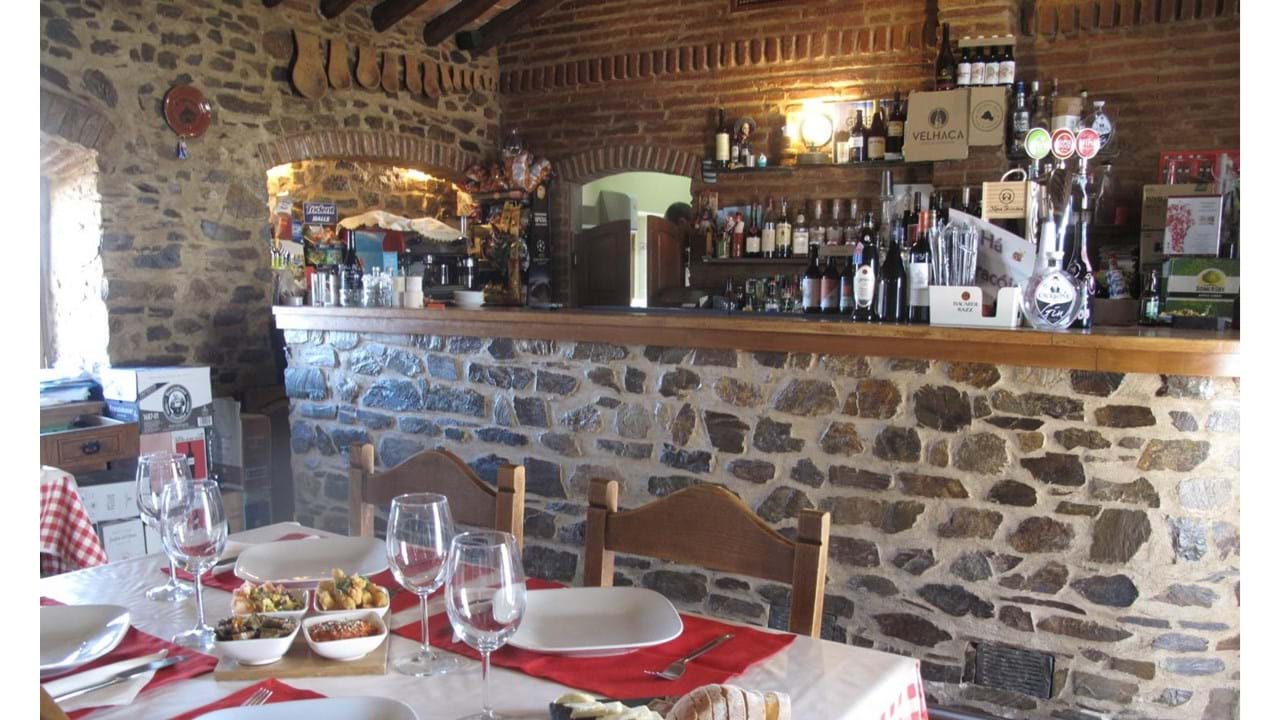
I searched on TripAdvisor and a bunch of other sites dedicated to recommending restaurants. On every single one of them, A Cabana (The Cabin) came up as #1 … with hundreds of 5★ and far fewer 4★ reviews. Its atmosphere was described as “romantic” (we found it charming and adorable) with prices ranging from € (Facebook) to €€-€€€ (TripAdvisor). Based on our tab, I’d say TripAdvisor is more accurate. In a way, the digs reminded me of a restaurant with the same name (The Cabin) on the outskirts of Sturgeon Bay, WI.
A Cabana doesn’t have its own website, but it does have a Facebook page. On Thursday, I messaged them to make a reservation for the two of us at 1:30 PM (13:30) on Saturday. We figured that would give us enough time to visit the fair and then eat a hearty meal early enough. Within five minutes — I kid you not! — I had a response: “combinado!” (confirmed).

Unless you’re an expat or immigrant living in Portugal, you can’t understand how unusual (even rare!) it is to receive a reply to one’s email or message here. The Portuguese tend to ignore them. You’re better off telephoning or stopping by.

Two thumbs up for A Cabana!

We arrived in Arronches at about 11:45 (AM), only to find ourselves lost in space. GPS and Google Maps were no help. Russ thought that the fair would be held in the “campo” (countryside), while I distinctly remember reading something about it being held in a pavilion. Before going around the bends another time, I asked Russ to pull off so that I could ask a local for information.

“Isn’t today a holiday in Arronches? Where can we find the fair grounds?” I asked a gentle giant of a man with a beard who nodded “yes” and pointed down the road … “Just continue going down this street until you come to he,” he said.

Russ turned to me before driving down the street to tell me, “He looks familiar. I think he might be the chef at A Cabana.”

Driving downhill, we finally approached the site. Amazing–there was plenty of parking! Very unusual in Portugal … especially when something of general interest is happening.

We soon understood why:

The only activity occurring at the fairgrounds when we arrived was a sheep competition. Nothing else. Not even the dozens of stalls selling food and souvenirs were open, let alone live music. It all would begin later that evening.

“What do you want to do?” Russ asked me.

“Let’s go to the restaurant and see if they’ll take us earlier,” I suggested. “That way, we can get an earlier start on doing some shopping we’d planned at E LeClerc, along with filling the car with GPL (liquefied gas) and washing it.

A bunch of people of all ages were already queuing up outside the restaurant, whose front door was open but nobody was inside. I approached the owner-chef-waiter — who, indeed, was the helpful man who’d given us directions earlier! — and asked if we could change our reservation to now rather than later. “Of course,” he said, pointing to the first of four tables for four. Behind them, in a row against the back wall, all of the tables were pulled together to accommodate 22 people … including those waiting outside, and then some.

“We understand that you make the best porco preto in town,” I told him while we both were standing in front of the chalk board where the menu was written.

He smiled broadly and recommended both the “secretos” (secrets) plate for €20 and the “plumas” (feathers) dish for €23. We ordered one of each, which came with salads and the best fried potatoes (“crisps,” per our British friends) we’d had in a while–super thin yet crispy, without any soggy orphans left behind. To go with our food, I had (two) glasses of tinto wine and Russ had (two) steins of beer.

It suddenly occurred to me that the maitre d was responding to my questions in Spanish, not Portuguese, although I was doing my best to speak coherent Portuguese. ¿No é portugues? (aren’t you Portuguese?) I asked him. “Sim, claro” (Yes, of course), he replied. “Then, why are you talking Spanish to me?” I asked in Portuguese. “I thought you were Spanish, he grinned.” It must have been my accent, One lesson I’ve learned since living in this western part of Iberia is always to speak Portuguese … to never initiate a conversation in Spanish, assuming the Portuguese understand it.

Anyway, everything was delicious!

The food, the service, the atmosphere were all extraordinary. (We personally preferred the plumas — cut thickly, parts cooked medium, others medium-rare to perfection — over the secretos.)

Of special note to us — who spend two months in Portugal and one month in Spain — was how relatively quiet and civilized the table of 22 behind us was. In Spain, you’d never be able to hear yourself think with that many people clustered together.

Our bill came to less than sixty euros. Although I tend to cringe when food here in Portugal costs that much, I reminded myself that we’d be gone from the USA for six years already. Who knew how much a meal like this would cost in a place like Sturgeon Bay?

Probably lots more.

Whatever …

It was well worth it!

P.S. If you plan to eat at A Cabina, remember to bring cash. The restaurant doesn’t accept plastic — credit or debit cards — although it does honor MB Way.

Pastor, professor, publisher, and journalist Bruce H. Joffe is an award-winning author of magazine features, academic research, journal articles, self-help manuals, and newspaper stories. His nine books deal with international (intercultural) living, progressive theology, gender studies, “social” politics, our vulnerabilities, marketing, and the media. 

Processing…
Success! You're on the list.

The System Is Broken

When even Portuguese officials complain publicly about the “broken system” and tell you that it’s “impossible” to schedule an appointment online, by phone, or in person — yet recommend that you show up at the local AIMA office and storm the gates — you know that the problem is dire and probably unfixable.

I’m referring, of course, to AIMA, SEF, and SIGA (they’re all culprits in the conspiracy) … and getting your residency visa renewed.

We’ve lived in Portugal for over six years now, arriving when D7 residency visas were issued for one year … renewed for two … and then renewed again for two, before one could get “permanent” residency (a misnomer, as it’s only good for five years) or even apply for citizenship, if so desired.

During our tenure here, residency changed from 1+2+2 to 2+3 and we were caught betwixt and between, as our last residency was for three years (not two) … requiring us to wait an extra year (totaling six) before applying to renew our residency.

HAH! If it weren’t so serious, the foibles, facts, and fables told about trying to get an appointment with SEF’s current iteration (AIMA) would be the stuff bureaucratic boondoggles are laughed about.

We had tried ourselves through SIGA, Portugal’s official scheduling “app” for all the country’s often overlapping agencies and entities. That led us down a rabbit hole since, when searching by agency, neither AIMA (nor SEF) appear … and, when searching by purpose or keyword (“residency renewal”), we’re taken to Registros where the only real option is to select renewal of citizen, not residency, cards. Once you enter the requested data, however, a pull-down menu magically appears … allowing you to indicate that the purpose of your appointment is specifically residency renewal. When we appeared at the designated place and time, we had to wait almost an hour, only to be told by quite frustrated clerks that, no, they couldn’t renew our residency there … we’d have to go to either Portalegre or Évora. It was then and there that we were told by the frustrated bureaucrats that the system was broken and nothing worked now as regards to renewing one’s residency.

Ultimately, we hired a lawyer (lawyers, we were told had better access to the system) to make an appointment for us. She did. Scheduled for 24 January 2024, officialemail notification showed that our residency renewals would be for two “cases” (i.e., people). The next day, nonetheless, we received a cancellation notice–no reason given. Later that day, another email arrived confirming a new date: 31 January, a week later than originally scheduled.

When we arrived and our number was called, the attendant insisted that only one of us — me — was on the “list.” And my spouse? “Reschedule!” we were told. We called our attorney while seated opposite our interrogator and she spoke directly to him. Back and forth, back and forth, they argued in Portuguese … him finally handing me the phone. “He could handle you both, if he wanted to,” she told me. “He doesn’t want to. So, you’ll be processed now and I will try to schedule another appointment for your partner.”

Again, that was on 31 January.

My better half still doesn’t have an appointment, although our residency expired several months ago. And, despite being told that I’d receive my new residency card within 60 days, it’s been 90 already … and I’m still waiting, my proof of processing and payment in hand.

Is it any wonder that people are protesting, demonstrating in front of AIMA’s headquarters in Lisbon? (https://www.theportugalnews.com/…/immigrants-to…/88011)

Meanwhile, “The Portuguese Agency for Integration, Migrations and Asylum (AIMA) has said that it needs around one and a half years to resolve 350,000 pending residency applications filed by foreigners until 2025. (https://www.linkedin.com/…/portugal-wont-able-process…)

It will be 2025 before AIMA resolves the 350,000 pending residency applications? What about all the new visas being granted? Are they still good for four months only? How long will it take AIMA to get around to them?

May be a graphic of text that says "aSaS CROWN ROWN AIMA A A The Agency for Integration, Migrations, and Asylum wwww. aima.gov.pt Renewal appointments already open on SIGA WWW.CROWNPORTUGALEU Welcome"

Pastor, professor, publisher, and journalist Bruce H. Joffe is the award-winning author of magazine features, academic research, journal articles, self-help manuals, and newspaper bylines. His eight books deal with international (intercultural) living, interfaith theology, gender studies, “social” politics, marketing, and the media.

Processing…
Success! You're on the list.

Dear Dacia

You’ve Come a Long Way, Baby!

Dear Dacia,

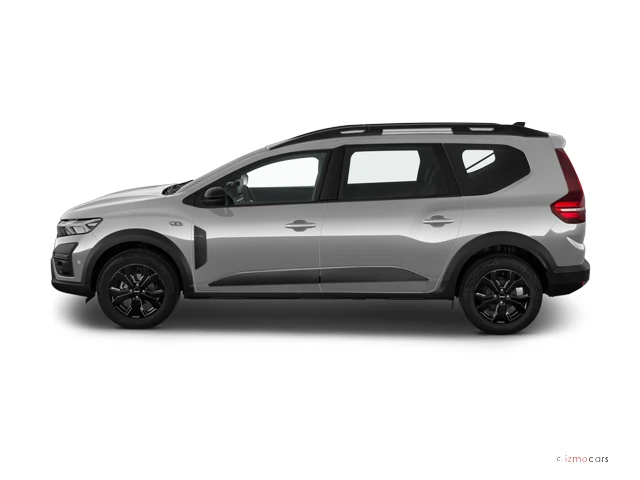
I want you to know how much we appreciate our new (2024) Dacia Jogger Extreme+. It’s everything you promised—and more.

New cars cost lots of money in Portugal. Especially when augmented by the country’s 23% sales (IVA) tax, the annual IUC (Imposto Único de Circulação) road tax ranging from €158.31 to €512.33 for gasoline-powered cars, Portugal’s initial ISV (Imposto Sobre Veículos) when a car first gets a license plate (matrícula) here, and “administrative” fees costing between €1,000 and €1,500. Unlike the USA, buyers are also expected to pay the dealership for a new vehicle’s transportation costs. Add a few hundred euros more for that.

Altogether, these costs add up to a sizable sum!

As of June 2023, used cars cost an average of 23,750 euros in the Portuguese market. Three years earlier (2020), the average price for a new car was 32,483€.

While some makes and models here are available elsewhere, others are specific to the EU … and some of their options are specific to Portugal.

Like Dacia.

Pity that more Americans aren’t aware of the brand.

Our first exposure to Dacia occurred when we emigrated from northern Wisconsin in the USA to the Alentejo region of Portugal over six years ago. Since then, we’ve seen plenty of Dacias on the streets and the motorways:

> The utilitarian, all-electric Spring, Portugal’s lowest EV in weight and cost;

> The best-selling Sandero, starting at €12,500;

> The popular Duster, a sturdy SUV that effectively put Dacia on the map;

> The jaunty Jogger, a seven-seater with cargo capacity so massive that Dacia sells a full-size (“matrimonial”) bed which fits in the back. Sleek and sexy in its latest “generation,” the Jogger – like all Dacias – is priced low enough to compete handily against those look-alike toads on the road.

Dacia’s affordability is a result of such factors as simplified design, shared components, lean production, and strategic manufacturing locations. This cost-efficient approach allows Dacia to cater to budget-conscious consumers seeking the most for their money. Faithful to its values –simplicity, spaciousness, robustness, and price –Dacia’s growing commercial success comes from its focus on practicality and affordability. With admirable resilience, Dacia documents a modest depreciation rate of 2.41%. These cars hold their value.

Eighteen months ago, we bought a new Dacia Duster Extreme for €21,500 and liked almost everything about it. Especially its bi-fuel motor. The car has a 50-liter tank for gasoline and a second, 40-liter tank for LPG (liquified petroleum gas) that costs half that of gasoline or diesel yet delivers the same power and mileage per liter. With fuel costing the U.S. equivalent of $7.50 to $8.00 per gallon in Portugal, the savings realized with LPG are formidable and felt with every fill-up.

Recognized as a low carbon alternative fuel, LPG emits significantly fewer carbon dioxide (CO2) emissions compared to conventional fossil fuels like coal, oil, and gasoline. It also emits almost no black carbon, arguably the second biggest contributor to global warming. As a clean-burning fuel, LPG helps mitigate the effects of climate change by discharging 12% CO2 less than oil and up to 20% less than gasoline.

As we got to know our Duster better, the more we realized that the Jogger would be a better fit for us—literally. The Duster is 23.2 cm shorter and 4.9 cm lower than the Jogger, with 11% less cargo space.

We travel back and forth frequently between homes in Portugal and Spain, carrying “stuff” large and small. Luggage (boot) space in the Jogger Extreme maxes out at 1,808 liters by folding and snapping the third rows seats into the backs of the second, and then tumbling the second row forward to its fully horizontal position. This gives us a load of two meters (6.5 feet) long and just over one meter (about a yard) wide. Building on this interior storage space are lots of nooks, crannies, compartments, a glove box, and door bins, as well as the Jogger’s modular roof bars. Pull-up, fold-down trays on the rear of the front seats can be useful, especially with children aboard.

With 19,000 km on our odometer, we traded in the 2022 Duster for €18,500 against the €24,000 price of our 2024 Jogger Extreme+. Unlike the USA, where new cars typically lose one-third their value when driven off the dealer’s lot, the Duster depreciated only €3,000.

Included in our “Plus” (+) package are two of three available options: Nav Pack with 8-inch touchscreen navigation; DAB radio; smartphone replication; Bluetooth®; Western Europe Cartography; and three years of updates on maps and navigation. The other option? Comfort Pack which includes blind spot alert; front parking assistance system; assisted automatic parking brake; automatic air conditioning; semi-elevated center console with armrest and storage space; height-adjustable driver’s seat; and tables in the back of the front seats. Had we wanted to wait and order the car for delivery months later, we could have paid €200 more for heated front seats. The two rear rows in all Jogger models come with “theatre” seating in which each row is a bit higher than the one in front for enhanced passenger visibility.

The Jogger shares much of its guts with the Duster, so we were already familiar with the car’s systems and sounds. Once getting grip on its gears, the six speed manual transmission shifts seamlessly, up or down. Suspension is quite comfortable, as struts provide a ride between sporty (hard) and squishy (soft). In addition to its integral navigation (GPS) system which also alerts us to radar, the vehicle’s sensors – amplified by a rear-view camera – chime different warnings when we’re coming close to objects ahead, behind, and on the sides. The 2024 Jogger also greets us with a second or two of musical beats, the beginning of a song, when we open its doors and get seated.

With a turning diameter of 11.7 meters, the FWD car handles nimbly, its steering neither too loose nor too tight. Technical specs include total length: 454.7 cm; exterior width with mirrors: 200.7 cm; exterior height: 167.4 cm; wheelbase:289.8 cm; ground clearance: 20 cm; weight: 1,251 kg. Cargo volume ranges from 607 to 1,819 liters. Maximum speed is 183 km/h. By pressing the ECO button, the vehicle’s throttle response is adjusted and the function of some ancillary feature, such as air conditioning, is reduced.

Inside, the cabin is spacious and inviting, its instrumentation – buttons and dials – well-placed and positioned. Hard plastics, long the bane of Dacia design, have given way to a plusher, posher look and feel. Ergonomically comfortable, the seats, front ones especially, help to make longer drives more pleasurable.

Other niceties about the Jogger Extreme+ package are that it comes with:

• Electric exterior mirrors with demisting system

• Keyless entry and engine start

• Advanced Emergency Braking System [AEBS]

• Driver Fatigue and Attention Alert [DDAW]

• Traffic Sign Recognition with Speed Alert [ISA]

• Centralized door locking with remote control

• Automatic door locking in progress

• Light and rain sensors

• Lane Keeping Assistance [LKA]

• ECO Mode

• Leather steering wheel

• USB ports

• Over-tinted side and rear windows

• LED daytime running lights, LED dipped headlights, and fog lights

Not bad for such an economical car!

With a total power output of 140hp, the car clocks an acceleration time from zero to 100 km/h in 10.1 seconds and low emissions of 112g/km of CO2. According to official fuel economy figures, it can return up to 47 miles per gallon using petrol.

More good news about the Jogger:

Starting at €29,400, it’s available as a full hybrid with a rather unique way of charging its battery. Rather than plugging into electric outlets, the Jogger revitalizes its power source while driving—primarily when stopping (and going). This technology, which combines two electric motors and a combustion engine, does not need to be plugged in. With Jogger HYBRID 140, everything is simple: the battery recharges itself when you decelerate and brake.

Alas, there’s also some bad news about Dacia’s 2024 Jogger:

It lost marks for its lack of “active” safety equipment: When tested, the vehicle didn’t offer lane-keep assist (it does now!), pedestrian detection (ours beeps whenever someone is detected too close to the car), or seatbelt warnings for the rearmost row. These omissions – two of the three have been resolved – saw the Jogger clock up the equivalent of two stars for vulnerable road users, and just one star in the safety assist category. (The overall NCAP rating is dictated by the lowest score in any individual category, hence that one-star result for the Jogger.) Note, however, that it returned the equivalent of a four-star rating for adult occupant crash protection, and three stars for child occupants.

Rather respectable scores!

In my opinion, a car so cleverly conceived and assembled deserves better than vinyl cut out letters identifying the model on its lower rear panel.

For three consecutive years, the most popular new car sold in Portugal has been the Peugeot 2008—priced at €26,185 including IVA. After Peugeot, however, Dacia was the best-selling make in Portugal, with 1,337 Dacias sold to Peugeot’s 1,429 in September 2023. Ironically, for a relatively poor country like Portugal, Mercedes (1,267) and BMW (1,237) were the third and fourth favored brands, respectively, during that month and year. Other top sellers included Renault, Citroën, the Fiat 500, Seat, and Skoda from the Czech Republic.

Previously the bargain basement brand for Renault’s tired old platforms and retired parts, Dacia has come into its own as a robust and enviable entity which some say is surprisingly upbeat and sexy. Especially given its costs.

Dacia, you may be #2 now in Portugal, but remember the advertising campaign Avis car rental company ran against Hertz in the early 1960s: “We’re number two. We try harder.”

The rest, as they say, is history … and the future for Dacia.

Best wishes,

Bruce

Pastor, professor, publisher, and journalist Bruce H. Joffe is the award-winning author of magazine features, academic research, journal articles, self-help manuals, and newspaper bylines. His eight books deal with international (intercultural) living, interfaith theology, gender studies, “social” politics, marketing, and the media.

Processing…
Success! You're on the list.

Franchised Foods

Racing down the motorway at 120 k/h, their billboards beckon with familiar logos: McDonald’s, Burger King, KFC, Popeye’s, Pizza Hut, Taco Bell … with Dominos inching its way onto the turf.

In 2023, about 3,500 fast food franchises operate in Iberia. Surprisingly, perhaps, #2 Burger King in the USA is #1 in Portugal and Spain, with a total of 834 outlets in both countries–184 in the former, 650 in the later. For its part, MacDonald’s has a total of 775 franchises (580 Spain/195 Portugal). Rounding out the top three is Pizza Hut, with 829 “restaurants” (727/102). Not to be forgotten are the other three multinational companies: Dominos with 430 (370/60), KFC with 295 (249/46), and Taco Bell with 158 (142/16).

It’s enough to make your stomach rumble.

To be fair, many of these multinational operations are owned and operated by the Spanish and Portuguese, who also have their own fast food franchises that follow a similar mold.

Unlike the leisurely paced, hole in the wall, family-run places whose personalities we’ve come to cherish, the brand-name places are devoid of charm, character, and chat–except for mobile devices. The only thing positive that really can be said about them is they’re predictable in conformity, sameness, and — perhaps — nostalgic comfort. And, perhaps, that they deliver fast food faster if not better. After all, theirs are assembly line products.

Two Saturdays before Christmas, we were heading back from Spain to Portugal, stopping at Sevilla’s Costco en route to stock up on some necessities. We usually do our shopping first and then, before leaving, buy pepperoni pizza for lunch and chicken bakes to take with for dinner that night. The warehouse was a madhouse. Eyeing the six queues of humanity enmassed to order, pay, and take their food to no vacant tables, we estimated it would take at least an hour or more to buy and eat our food … assuming there were empty tables to be found. No way, José, was the food worth the wait. We chose, instead, to find someplace else to eat. We’d seen several signs pointing to this one or that.

Sure enough, a MacDonald’s, Burger King, and KFC all were nearby. We decided to eat at the Colonel’s where you order at a kiosk, computerized courtesy of AI: Choose your meal. Identify your fries (chips). Add toppings and garnishes. Opt for pre-packaged condiments. Select a beverage. Decide on a “compliment” (dessert). Confirm that everything is correct. Go back and make changes to your menu. Then tap “Order Complete.” All the details — and price — of your order are shown on the screen. Naturally, payment is made by debit or credit card. The plastic cards are waved over the reader, neither inserted nor swiped for a bit of intimacy. Out ejects a paper ribbon with your order and number. You notice that €0.01 has been added to your bill for a “single-use plastic” you’ve purchased. Is the charge for the bottle of water or the (plastic) cup?

Next, keep your eye on the screen over the service counter where digital numbers, like those found in government offices and health care facilities, are shown either as “in preparation” or “ready.” Your number flashes and you pick up your order, grabbing some napkins from the counter. The soft drinks (bad enough when bottled) are dispensed through machines mixing the syrup and carbonated water in front of your eyes. Are those colors and composition correct? Given its ingredients and how it’s prepared, the food itself is edible, even tasty … at least then and there.

In a nod to sustainability, gone are any plastic utensils. (At least the Iberian chains — The Good Burger, 100 Montaditos, Pomodoro, etc. — have the hospitality to provide tiny wooden forks … or toothpicks.) Who really wants to pick up fries with one’s fingers, after dipping them in squeezed out sauce?

Leaving, everything is properly disposed of, separating “organic” (food residue) from paper and plastics (i.e., water bottles) before ditching the remaining substances into designated refuse bins.

Maybe that’s the real drawback to these ubiquitous food franchises.

They’re dispensable.

/Bruce H. Joffe.

Processing…
Success! You're on the list.