Unknown's avatar

About Pastor Bruce

Communications professor, church pastor, publisher, and journalist Bruce H. Joffe is an award-winning author of magazine features, academic research, journal articles, self-help manuals, and newspaper by-liners. An American from the USA who emigrated to Portugal and Spain in 2017, his books deal with international (intercultural) living, communication, language, interfaith theology, travel, LGBTQ+ gender studies, anxiety and depression, “social” politics, marketing, and the media.

Supermarket Sweepstakes: Grocery Shopping in Iberia

Since we all don’t live on “quintas” and grow our own food, or belong to co-ops where we share that food with others (who share theirs with us), we are among those who purchase our food – along with personal products and household supplies – at local shops, grocery stores, and super/markets.

In Spain, every town of any size has at least one major supermarket (in addition to specialty shops: fruit and vegetable stands, butchers, bakers and bread shops, fish mongers, corner markets inserted between “bazaars,” delicacy shops that we’d call delicatessens or delis in the USA … although their foodstuffs are totally different).

Olvera, our hometown in southern Spain, has two: Dia (Distribuidora Internacional de Alimentación) which is known by its Minipreço (“Low price”) brand name in Portugal … and Mercadona, a larger, full-service supermarket with everything departmentalized under one roof, and an annoying jingle that gets under your skin, erupting when one showers, shaves, drives, or otherwise isn’t thinking about grocery shopping.

Few Portuguese villages have such supermarkets. Instead, the “corner” market is where one shops when you run out of something essential or forgot to buy it while at a city-sized supermarket. And when you want fresh rolls or bread baked that day (two lunch rolls are €0.32). Or when you want to shoot the breeze, brushing up on your Portuguese with neighbors who are also there buying a thing or two.

But for major shopping excursions and expeditions here, most head to Castelo Branco’s industrial zone, where no fewer than five major supermarket chains have staked out territory alongside warehouse-size specialty stores selling breads, cheeses, fruits, and everything your pets and animals could possibly need (Agriloja).

We do our food and supply shopping weekly at these super/markets, visiting one or more frequently. Often back-to-back, on the same day.

While all of these mega-markets sell the same things (more-or-less), we’ve developed preferences for this place and that, according to the specific objects of our desire.

I suspect that what follows will promptly provoke passionate debate and dissension but, hopefully, discussion and dialogue as well … as we share our secret appetites and pleasures for where we consider certain “bests” in the food chain(s) can be bought and found.

If empirical research is to be believed, first among equals is Auchan (aka previously as Jumbo), the anchor store at one of our two major malls here in Castelo Branco.

According to DECO, Portugal’s largest (nonprofit) consumer association that’s been accorded “public utility” status, after analyzing almost 600 supermarkets in 70 countries, Jumbo was found to have the lowest prices of all large chain stores—especially in central Portugal. Further, the consumer watchdog’s research highlighted that Jumbo’s prices tend to be best across-the-board in terms of both fresh and frozen products, groceries, personal care, and household products.

The study found that “Jumbo was top of the table when it comes to cheap prices,” as reported the English online weekly Portugal News. “It was the number one choice for many shoppers in areas including Aveiro, Coimbra, Leiria, Lisbon, Setúbal, and Viseu.”

I can understand that: we relate Jumbo/Auchan to the ubiquitous discount Walmart Supercenters spread throughout the USA.

To realistically reflect the shopping tendencies of Portuguese families, Deco’s research put together a “hamper” comprising 243 products: 38% were a store’s own-brand products and 62% were branded.

We shop regularly at Auchan and, while we find that it’s the greatest numerator and common denominator in terms of one-stop shopping, we aren’t always thrilled with our purchases. To be fair, Auchan is the only place that carries our preferred Noir dark chocolate; and its own mouthwash – at one-third the cost – comes closest to the world’s leading brands in terms of swig and bang for the buck. Auchan seems to have a larger, consistent selection of “international” foods, and is the only place we’ve yet found for Ricotta cheese to make lasagna.

Trailing a close second to Auchan/Jumbo in Deco’s ratings is Continente, where “prices are, on average, two percent more expensive than Jumbo.”

While we sometimes do our weekly shopping at the Continente mini-mall outside Castelo Branco’s industrial zone, we’re not that impressed. Except on some of the special deals offered – like tables and chairs – in front of the store itself. This particular Continente appears to have very narrow aisles and rows, compounded by the number of shopping carts left unattended while customers head for items located in other aisles. We find the largest selection of paper goods at Continente (especially boxed tissues), and it’s the only place nearby where big people who like and use it can buy Johnson & Johnson’s baby powder.

On the other side of the industrial zone is our other major mall, where Pingo Doce (“Sweet Drop”) supermarket serves as its anchor store. Contrary to Deco’s research – which found Pingo’s prices, on average, six percent higher than Jumbo’s – we think much of the inventory at Pingo costs less. Do we do our major shopping there? No. But we do, especially, appreciate Pingo Doce’s pre-prepared, ready-to-eat servings from its café bar and (when available), its chicken and/or tuna spread submarine sandwiches. Hey, can you even buy the fixings of these tasty foot-longers for just €1.79 … let alone, spend time fixing them?

Largely due to “the prices of their fresh fruits and vegetables” and meat and fish supplied by external companies, and “therefore higher prices,” Deco’s survey found Intermarché, Minipreço, and Lidl to be the most expensive supermarkets.

But we believe that depends on what you’re looking to buy and spend.

Take Lidl, for instance.

Nowhere else – not at Jumbo, Continente, Pingo Doce, Minipreço, or Intermarché – could we find such a vast variety of freshly-baked breads and bread products (like the “misto” croissants of ham and cheese, or the chorizo-filled rolls), cooked on premises and put out, piping hot, while you’re standing there. At lower prices than anywhere else. We think the cuts of meat at Lidl are butchered and cut closer to “American-style” than anywhere else.

At Lidl, I can buy “real” orange juice from the freezer case, similar to Tropicana and Florida’s Natural brands back in the USA. Elsewhere, the orange juice is made from concentrate, sold in boxes or containers displayed on the shelves, and tastes more like Tang orange drink than real juice (zumo). The store’s “Diez” cosmetics, groceries, and other products give the competition a marathon for our money.

What’s more, shopping at Lidl is like going on a treasure hunt: you’ll never know what you’ll find – clothing to small appliances, hardware to DVDs and CDs – in its bin aisles. It’s the closest we’ve come to finding close-outs carried by the likes of TJ Maxx, Tuesday Morning, or Big Lots here today, gone tomorrow, in Castelo Branco.

So much for plugging Lidl … except to say that we truly dislike shopping there. Every Lidl we’ve been to feels cramped, dirty, and takes forever to check out (as there’s usually only one, maybe two cashier lines open). During these times of pandemic pandemonium, it appears that other grocery chains take greater care in social distancing (at least on the conveyer belts) and sanitizing the credit card terminals than does Lidl.

The only Aldi we’ve been to, Portalegre’s, in many ways is similar to Lidl. According to what we’ve been told, it’s the only place where real sour cream is readily accessible!

Contrary to Deco’s claims, we’ve found the best buys and lowest prices on certain items – store-brand cleaning products and supplies, even wines at times – at Minipreço, directly opposite Continente. It’s not a place to wander up and down the aisles. You can’t. But to run in and pick up certain cheaply-priced items, Minipreço can’t be beat.

(Unless, of course, Auchan, Continente, or Lidl have those items on sale.)

And then there’s Intermarché, part of the Minipreço and Lidl troika.

I’m here to tell you that, yes, it is higher priced! And that you’d better be careful when buying items promoted as “on sale” as, all too often, what rings up at the register is the regular, not sales, price of items. Quite a few times, we have had to point out the disparity to the cashier, showing her the product’s price as listed in its weekly sales flyer.

Yet, ironically, we spend more of our time and money at Intermarché than at all of the other supermarkets.

One reason is its location: Yes, there’s an Intermarché (attached to its sibling, BricoMarché) in Castelo Branco’s industrial zone. But the one in Alcains is much closer to us and it’s far more convenient to run out for something we “need” (or forgot) when the destination is ten minutes, not thirty, away.

Results of Deco’s recent research were released in early June 2018. Two types of consumers were profiled in the study: those who spend €150 a month on shopping, and those whose monthly shopping costs up to €400. “Those who spend more also save more,” it concluded.

Russ and I do spend more than €400 each month on our supermarket shopping, so we should have saved enough to be able to enjoy eating out at one of the area’s fine dining establishments.

Not now, of course. But sometime later.

Shared here are personal observations, experiences, and happenstance that actually occurred to us as we moved from the USA to begin a new life in Portugal and Spain. Collected and compiled in EXPAT: Leaving the USA for Good, the book is available in hardcover, paperback, and eBook editions from Amazon and most online booksellers.

Processing…
Success! You're on the list.

Expat, Immigrant, Fugitive, Refugee

I was wrong.

A subject of white privilege, I liked the sound of “expat” much better than “immigrant.” One had panache, cachet, a spirited sense of ennui and adventure; the other conjured up black and white images of poor, huddled masses needing to be purified in the melting pot purée.

When we first arrived from the USA to retire in Portugal and Spain, I self-identified as an expat … assuming it meant nothing more (or less) than an American abroad living in another country for an extended period of time.

From time to time, I was challenged and corrected on my presumption: “Expats are here for a time or a purpose—a couple of months or years, studying or traveling or working. But, they then return home.”

Immigrants, on the other hand, have no plans for returning whence they came: they’re looking forward rather than backward, their feet firmly planted and taking root in another country.

A classic case of denotation v. connotation: it’s all about innuendo and intention!

Travel isn’t just about the destination (immigrants and refugees). Getting away is a way of life for millions of people who take breaks for self-indulgence, employment opportunities, cultural enrichment, education, and other pursuits (expats).

Personally, we had no intention of returning to the USA when we finally left early in 2017. Retirement and our future now depend on how the European Union (Schengen Area) treats us, not the capricious whims or executive orders and authoritarian decrees resulting from the [s]election of Donald Trump & Company.

What began as a knife cut to our soul soon led to ever more blood-letting—a lethal wound to our morals, values, and democracy. Reading the handwriting on the wall, we fled for our lives.

Fugitives!

Under Trump and the GOP, the United States had become a rogue nation, perhaps the world’s most powerful country to possess a massive arsenal of weapons of mass destruction commanded by a delusional despot who flaunts his favoritism, white nationalism, personal profiteering, and cruel inhumanity towards others.

Even before Trump, the United States had long been involved in violating others. In Korea. Vietnam. Chile. Libya. Iraq. Afghanistan. Syria. Venezuela. Cuba. Haiti. Panama. Nicaragua. Iran. And elsewhere, when the USA believed regime change to be in its best interests.

The path to “greatness” included savage treatment and banishment of Native Americans; ownership of other people as personal property; denigrating migrant workers who its landowners depended for hard work; establishing internment camps for people with slanted eyes; and, more recently, isolating immigrants from their families—deporting many, while caging children in abominable conditions.

One of the world’s three top carbon-producing countries, the USA’s involvement with the Paris Climate Agreement was rescinded by Trump, while a do-nothing-but-placate-patronage Congress allowed the USA to withdraw from the United Nations Human Rights Council … its commitments to NATO … the nuclear agreement negotiated with Iran … the World Health Organization … and its Intermediate-Range Nuclear Forces Treaty with Russia.

Meanwhile, through tariffs, sanctions, and boycotts, Trump & Company wreaked havoc with international currencies and global economics. Although the stock market continues to be artificially stimulated by Federal Reserve appointees, the country racked up its largest deficit ever. Unemployment has broken all-time records. Health has taken a backseat to business, whether or not as usual, with profits more important than people.

Dividing the country and decimating its heritage has a questionable president turning his personal paranoia into public policy. Trump and his cohorts in cahoots prosper, as unqualified money-makers come and go through the executive branch’s revolving door … while vital positions remain vacant because of political carnage and lack of loyalty discords.

Manipulating the resources and personnel of the U.S. government, Donald Trump has proven himself to be an accelerating existential threat to the rest of the world and the planet we inhabit. Especially in his irresponsible handling of the international Covid-19 pandemic.

Beyond the World Bank and the Bill and Melinda Gates Foundation, wealthy individuals like Lisbon-based Madonna (committing one million euros to the cause), world leaders – from the European Union, as well as non-EU countries Britain, Norway, Saudi Arabia, Japan, Canada, South Africa, and dozens of other countries – joined the virtual event, pledging $8 billion to research, manufacture, and distribute a possible vaccine and treatment to protect us from the Covid-19 virus.

But not the United States of America, whose muzzling of people with expertise and shunning rejection of global efforts to conquer the virus have alienated it further and farther from the rest of the world, while creating chaos and confusion from the federal level … leaving states and localities to stitch together a mish-mash of conflicting priorities which, ultimately, boil down to wealth vs. health.

“Chronic ills – a corrupt political class, a sclerotic bureaucracy, a heartless economy, a divided and distracted public – had gone untreated for years. We had learned to live, uncomfortably, with the symptoms,” writes George Packer in June’s issue of The Atlantic.

Violence, hatred, and malice are the chalice of communion among fanatics and their fans, flaming the fires of discontent.

Emboldened by the tone and tenor of tweets from the bully pulpit, the ugly American is – once again – rearing its head … with increasing violence, attacks, and confrontations against minorities and the marginalized: Immigrants. Black and brown skinned people. LGBT individuals and communities. Jews. Muslims. Asian-Americans. People who speak different languages. In other words, the “others.”
But the world no longer will stand by, shaking its head and wagging tongues, as Atlas shrugs and walks away carelessly.

New models on how to reopen European travel have no room for American tourists in the foreseeable future. The European Union’s “Europe Needs a Break” guidelines recommend replacing travel bans with what it’s calling “targeted restrictions” based on contagion levels.

International travelers from the USA and other countries that haven’t upheld safety standards on par with Europe’s won’t be allowed into the EU anytime soon for anything but essential reasons.

We’re not tourists, but are glad that we left the USA when we did.

Rather than expat or immigrant, we now see ourselves as refugees.

A refugee is someone who, due to a well-founded fear of persecution, war or violence, feels forced to flee his or her homeland. To qualify as a refugee, a person must have solid grounds of a “well-founded fear” that they are facing real danger. Moreover, refugees should fear oppression, hostility, and/or violence so badly that it forces them to leave their country of origin and seek sanctuary elsewhere.

Elsewhere for us is Portugal. And Spain.

Shared here are personal observations, experiences, and happenstance that actually occurred to us as we moved from the USA to begin a new life in Portugal and Spain. Collected and compiled in EXPAT: Leaving the USA for Good, the book is available in hardcover, paperback, and eBook editions from Amazon and most online booksellers.

Processing…
Success! You're on the list.

Facebook Fadeout

Is Facebook taking a t/r/oll on you? Does it make you feel drained and angry, anxious and frustrated? Are its comforting factors – connecting with new and former friends, and participating in groups of people with like-minded interests – increasingly offset by a sense of opportunistic wariness and caution related to all those cookies it has collected about your online behavior?

Photo credit: JOEL SAGET/AFP/Getty Images


Facebook already knows my ways and means too well.

It has collected more than 5,000 “data points” on me. With not-so-subtle reminders, this hypnotic encourages me to compile and curate my favorite photos and moments, as it suggests groups, pages, and products which should be of interest to me, while it determines those memories I mustn’t forget. Especially birthdays and events, which it urges me to acknowledge and/or attend … along with the dates that others became my Facebook friends.

Facebook taps and whispers to me about posts other people, places, or “prophets” have published of which I should take notice. It reminds me when I have neglected to respond to someone or something. It pokes me with posts I’ve ignored and videos I should see on Facebook Watch, even as it decides whose thoughts or opinions I should especially consider.

That’s only the beginning …

Increasingly, Facebook is controlling our lives — both online and off — with its rules and regulations and unwarranted intrusions into our personal lives … aggregating data about us … and selling it to anyone (and everyone) who seeks to target us with promotions and unsolicited messages.

In addition to foreign intervention online, Donald Trump’s 2016 campaign used groups such as Cambridge Analytica to target voters. Potently criticized by investigative journalist Carole Cadwalladr, Cambridge Analytica used “furtively garnered Facebook data” to shape messages or “hack the minds” of American voters, as Christopher Wyle, a former employee who now has turned against the company, put it.

But, apart from profiteering, I tremble to think about potential sinister purposes and motives behind all this seduction.

My personal data and digital footprints are mine to share—not Facebook’s. And, although it’s probably already too late, I am going to take steps to monitor and minimize its influence on me.

What finally brought me to the end of my rope?

Facebook’s latest initiative:

“We limit how often you can post, comment or do other things in a given amount of time in order to help protect the community from spam. You can try again later.”

This message from Facebook appeared after I tried to update and keep the energy flowing on groups that I administer or moderate.

” … try again later”? It’s already been four days — four friggin’days! — since Facebook allowed me to post or participate in any of the more than a dozen diverse groups which I founded, cultivate, mediate, administer, and oversee!

Facebook is Pandora’s Box.

We think we’re without options or alternatives since, by finances and fiat, Facebook has become our lingua franca, force-feeding us what it has determined that we want and/or need.

But that’s no longer true anymore: there are alternatives to Facebook … it’s our own lethargy, convenience, and comfort with the status quo that cause us to hesitate about going where “no one (we know) has gone before—to take the road not taken onto a comparable yet competitive social medium platform.

Facebook demands, commands, and controls too much of our lives — our time and energy — using us rather than us using it. In fact and indeed, Facebook has grown too big for its britches!

Monopolies, especially Facebook, can be dangerous to all of us. Which is why, I believe, competition is essential—especially among the social media platforms.

The elderly (me!), especially, are enamored of Facebook’s ability to link friends new and old around the globe, while purporting to report what’s newsworthy near and far. It’s convenient and comfortable for us geezers, even when Facebook changed, added, or deleted stuff without informing us or explaining the changes and how to cope with them.

I am sick of being beholden to artificial intelligence for dictating the terms and the tempo, all while claiming to click and cajole!

The Wizard of Oz Facebook isn’t; it’s nowhere near that benevolent.

Processing…
Success! You're on the list.


Rooftop Experiences

Infrequently do we think about the roofs atop of our buildings.

When purchasing a property, we may have their roofs inspected for leaks and other potential problems . We curse them for their wear and tear–and the rotten expense of replacing them periodically. Some of us mutter under our breath when we must climb a ladder to adorn them with timely ornamentation.

Roofs can make for great metaphors. But what about their sheer grit and beauty, the plumage of their composition?

In Portugal, like Spain, you can’t help but notice the rooftops. Everywhere, they’re as distinctive and colorful as a patchwork quilt sewn by the souls of seamstresses.

Unlike the pasty composite shingle, formidable slate, enduring metal, and flexible rubber roofs covering up most American properties, the multi-color brick and terracotta tiles atop homes of every stripe and size here in Iberia are characteristically appealing.

Indeed, they’re integral to the landscape.

Perched on the steep, stepped grade of the countryside, we look down and across at the rooftops here from our vantage points on the balconies and terraces that are part and parcel of inter-connected buildings.

Roofs are their own crowning glory, telling tales out of school about the wear-and-tear they’ve experienced over the years. By the climate. Invading armies. And their genealogies.

Especially in areas dating back to Moorish times, these colorful wrappers can be windows into the souls of the people and their places. So, we feel for the feeble roofs remaining as vestiges of neighborhood “ruinas,” reminding us of better times … while waiting for these distressed properties to be purchased and reconstructed (top-down).

I’m reminded of what some refer to as “mountaintop experiences,” those times and places when we feel truly connected to the universal, the integral, the almighty and eternal.

Have you ever climbed to the top of a mountain – or taken an elevator to the top floor of a skyscraper – and then looked down at the view below? Each offers an experience similar to peering at rooftops: Whether you are at the top a mountain or up on the roof, the world beyond looks very different.

Most of the time, life looms pretty large before me … filling my personal screen of attention.

But from the perspective of a roof here in a Portuguese town or a Spanish village, life seems smaller—not inconsequential–but smaller, simply part of what’s going on in the world around us.

That’s rather humbling, all things considered.

Photo Credit: Luís Francisco Fotografía

Shared here are personal observations, experiences, and happenstance that actually occurred to us as we moved from the USA to begin a new life in Portugal and Spain. Collected and compiled in EXPAT: Leaving the USA for Good, the book is available in hardcover, paperback, and eBook editions from Amazon and most online booksellers.

Processing…
Success! You're on the list.

The Best of Both Worlds

It’s no secret that we discovered Portugal through Spain.

For fifteen years or so, we’ve owned vacation bolts in Olvera, one of the small “pueblos blancos” dotting Andalucía, not far from Ronda, where the provinces of Málaga, Sevilla, and Cádiz collide.

When we decided to emigrate and live our lives in Iberia, naturally we first thought about applying for long-term Spanish residence visas.

However, rather than welcoming our interest and desire to live within its borders, Spain put up roadblocks and obstacles to apply for the visas. After trying to deal with its Chicago consulate, we finally decided that “enough is enough” and considered our options and alternatives.

Friends and neighbors in Wisconsin who moved to Portugal a year before we did advised us, “You really should consider Portugal!”

So, we did.

In the process, we learned a lot about Schengen nation visas (most of the European Union comprises the Schengen zone) and the differences between how one country evaluates immigration visas sought by non-EU nationals and how such requests are handled by other countries.

It’s all in the interpretation.

Basically, the components of your visa request – an official Schengen application, FBI background check, confirmed housing, birth certificates and marriage licenses, financial wherewithal, health insurance, etc. – are the same, regardless of which country you’re applying to for a visa.

Spain, however, has decided that every page of the documentation you’re submitting must be translated into Spanish … and only by a $40-per-page translator on its officially-approved list. (Portugal doesn’t.) Spain interprets “financial wherewithal” to mean that an applicant must meet a minimum annual income threshold that the government has set and specific additional amounts for each designated dependent, as verified by Social Security and/or pension income. (Portugal doesn’t.) Spain may grant you a retirement visa, but require that neither you nor your dependents work—“sin fines lucrativos.” (Portugal doesn’t.)

I could continue, but you get the point.

We were made to feel that Portugal wanted us to come and live there; Spain demurred and imposed a lengthy list of criteria and conditions.

So, imagine our surprise when we learned from the Spanish consulates in Lisbon and Porto that simply by going to their offices with our USA passports and Portuguese residency cards (and, presumably, other papers), we could be granted non-lucrative residency status in Spain. Rather easily. Evidently, there’s agreement among Schengen countries that, if one grants you residency, it can be transferred to another.

If we wanted, it appears that we could move to Spain and legally live there now full-time. Wasn’t that what we had wanted all along?

After Portugal granted our residency visas and first residence permits, we took some time to get settled. About six months later, we went for a month’s vacation (and some housework) to our place in Spain.

The differences between the two countries were striking.

While Spain and Portugal can both soothe the soul and lift one’s spirit, there’s a certain calm and sense of tranquility – a sweet sorrow – that permeates Portugal. There’s also a kindred serenity to Portugal, a balm that’s conveyed through the least likely of sources: its language!

Despite Slavic-like pronunciation, Portuguese has a softer “shhhhh…” sound than lisping Spanish. It’s as if Spanish words were blended, like French, with a sprinkling of something foreign and strangely exotic.

I doubt I will ever master Portuguese or be comfortably conversant in the language, since I stumble over my Spanish mentality. No matter how I try to understand the rules and logic behind Portuguese, I can’t. With rhyme yet without reason, the language makes no sense to me.

But I’ll keep trying and working on it.

Because, without realizing how or when it happened, we’d put down roots in Portugal. And language is one of its strongest supports.

Much as we love the place and its people, Spain has always been our home away from home—and it will continue to be … only more often and longer now, thanks to our Portuguese residency.

Maintaining our residence status requires us to spend at least 183 days within a 12-month period in Portugal. Conversely, we can be outside the country for 177 days during this period … a heck of a lot more than the 90 days allowed for USA passport holders to stay in Schengen zone countries.

Yet, who’s counting?

Shared here are personal observations, experiences, and happenstance that actually occurred to us as we moved from the USA to begin a new life in Portugal and Spain. Collected and compiled in EXPAT: Leaving the USA for Good, the book is available in hardcover, paperback, and eBook editions from Amazon and most online booksellers.

Processing…
Success! You're on the list.

Remembrances of Things Past: Moments of Hope in the Madness

Remember that scene from the 1976 movie Network, when news anchor Howard Beale (Peter Finch) cried, “We know things are bad — worse than bad. They’re crazy. It’s like everything everywhere is going crazy, so we don’t go out anymore. We sit in the house, and slowly the world we are living in is getting smaller, and all we say is: ‘Please, at least leave us alone in our living rooms. Let me have my toaster and my TV and my steel-belted radials and I won’t say anything. Just leave us alone.’ Well, I’m not gonna leave you alone. I want you to get MAD! I don’t know what to do about the depression and the inflation and the Russians and the crime in the street. All I know is that first, you’ve got to get mad! You’ve got to say: ‘I’m a human being, goddammit! My life has value!’ So, I want you to get up right now and go to the window, open it, and stick your head out, and yell: I’M AS MAD AS HELL, AND I’M NOT GOING TO TAKE THIS ANYMORE!”?

The murder of George Floyd by the foot of a Minneapolis cop while his buddies stood by nonchalantly gives rise to similar feelings of shock, grief, and anger … provoking our collective conscience, triggering marches and protests across the country and around the world.

Say some of their names: George Floyd. Rodney King. Breonna Taylor. Ahmaud Arbery. Eric Garner. Michael Brown. Tamir Rice. Freddie Gray. Sandra Bland. Philandro Castle. All African-Americans offed by white police officers. Let’s not forget others, like Trayvon Martin, murdered by self-appointed racist vigilantes. Each was a human whose life was taken prematurely and unjustly by powers-that-be.

Remember Rev. Al Sharpton’s words at Floyd’s funeral – “I can’t breathe” and “get your knee off our necks” – which painted a plaintive picture of the systemic racism, police brutality, cover-ups, and injustice suffered by Floyd, black people … and other American minorities?

George Floyd personifies the plight of black people in the USA. But he also reflects the oppression of all scapegoats, underdogs and social outcasts: Native Americans and indigenous people. Immigrants. Hispanics and Asians. Women. Jews and Muslims. LGBT persons. The poor, homeless, hungry, infirm, widows and orphans, even “middle-class” Americans unable to afford basic health care or better educate their children.

A pandemic has killed more than 110,000 people in three months in the USA. The economy is in recession, with tens of millions out of work. Protests against racial injustice in policing have broken out in hundreds of cities and towns across the country, with some provoking outrageous acts of police brutality and the risk of contributing to a resurgence of the coronavirus. At the center of the maelstrom is an incompetent, capricious, malicious president who cares about nothing but acting tough, protecting himself, and dividing the country.

Yesterday (June 9), Trump tweeted, “Buffalo protestor shoved by Police could be an ANTIFA provocateur. 75 year old Martin Gugino was pushed away after appearing to scan police communications in order to black out the equipment. I watched, he fell harder than was pushed. Was aiming scanner. Could be a set up?”

A set-up? Trump doesn’t know the meaning of “provocateur,” let alone how to spell it correctly. Whoever helped him write this conspiratorial message was determined to cast suspicion on a senior citizen we saw violently treated, head bleeding, and left fallen on the street. And then some …

When Trump’s guardian gatekeepers used weapons of warfare to clear the street by Lafayette Park of peaceful protestors for a photo op – just after he’d pontificated in the Rose Garden about weak governors and mayors needing to do away with demonstrators and “dominate” the streets – a few respected leaders had seen, heard, and experienced enough.

It was then, perhaps, that marches and moments became a movement—a referendum on Trump’s administration, Republican senators, and the soul of a nation:

• Colin Powell, former Secretary of State under President George W. Bush, announced that the president “has drifted away” from the Constitution and that he “lies all the time.”

• Trump’s own top military brass –Secretary of Defense Mark Eper and Mark Milley, Chair of the Joint Chiefs of Staff – spoke up and out, knowing well their Trumpian consequences.

• The defense secretary insisted military personnel “be used as a matter of last resort and only in the most urgent and dire of situations.”

• Milley, the nation’s top general and most senior military officer, reminded his soldiers of the rights of their fellow citizens to free assembly, adding: “We all committed our lives to the idea that is America–we will stay true to that oath and the American people.”

• But it was Trump’s former secretary of defense, James Mattis, whose rebuke cut deepest: “Donald Trump is the first president in my lifetime who does not try to unite the American people,” said Mattis. “Instead, he tries to divide us … We know that we are better than the abuse of executive authority that we witnessed in Lafayette Square. We must reject and hold accountable those in office who would make a mockery of our Constitution.”

The president wanted to fire Defense Secretary Mark Esper for not supporting his idea to use active-duty troops to quell protests; meanwhile, Trump Jr’s hunting trip in Mongolia last year cost American taxpayers nearly $77,000 in Secret Service costs alone.

Trump has gone too far, crossing the threshold of our national breaking point, publicly cursing those who (hitherto) had protected and shielded him—like his first former chief of staff, John Kelly, who said “I agree” with Mattis about Trump: “We need to look harder at who we elect.”

It was an “emperor-has-no-clothes” moment that prompted Senator Lisa Murkowski (Alaska) to admit she was considering not voting for Trump and suggest that other Senate Republicans felt the same way.

Remember Watergate?

The impeachment process against Richard Nixon began in the U.S. House of Representatives on October 30, 1973, following a series of high-level resignations and firings widely referred to as the “Saturday Night Massacre.” On May 9, formal impeachment hearings began, culminating July 27–30, 1974, when the Democratic-led Judiciary Committee approved three articles of impeachment, charging the president with obstruction of justice in attempting to impede the investigation; abuse of power by using the office of the presidency to unlawfully use federal agencies to violate the constitutional rights of citizens and interfere with lawful investigations; and Contempt of Congress by refusing to comply with congressional subpoenas.

Sound familiar?

Republican congressional leaders met with Nixon, informing him that his impeachment and removal were all but certain. Thereupon, he resigned the presidency on August 9, 1974, before the full House could vote on the articles of impeachment.

In the case of the United States v. Donald Trump, however, the full House voted to impeach him. In fact and indeed, he was impeached.

While lamenting white supremacy, police brutality, and a system that denigrates black Americans like George Floyd, demonstrations are “moments” of national consensus, in effect, about the role Trump has played and his culpability in inciting human rights violations.

Let’s hope that a number of senators will recognize and repent of their wrong-doing and complicity by remaining silent. Maybe they’ll, too, take a walk to the White House and bring an end to this dreadful mess.

Remember Martha Mitchell, the wife of U.S. Attorney General John Mitchell under President Nixon, who became a controversial figure with her outspoken comments about the government during the Watergate scandal? Nixon selected her husband to head the Committee to Re-Elect the President (CREEP) for his 1972 campaign. During the campaign, however, Martha Mitchell began complaining to the media that the campaign had engaged in “dirty tricks” to win the election.

Remember A Warning, last year’s Washington tell-it titled book? Written by “Anonymous,” who’s still a top White House insider, the candid 2019 exposé of the Trump administration authored by someone described as a “senior Trump administration official” was a sensational follow-up to an anonymous op-ed piece the NY Times published in September 2018. Many inside and out of government have played guessing games, trying to identify the author.

My own hunch? Kellyanne Conway.

The mother of four married to anti-Trump activist attorney George Conway, a conservative co-founder of the Liberty Foundation seeking to bring Trump to justice, she can’t be as dumb as she comes across; hopefully, there’s more sense and sensibility – patriotism – to her than meets the eye.

Remember, more recently, when Twitter began fact-checking and flagging Trump’s tweets for false, misleading, and/or potentially violence-provoking content … while also providing links to more objective and factual information?

These remembrances of things past prompt some conclusions:

“Black Lives Matter” must be more than a catch phrase to which we give lip service. Yet it hasn’t – nowhere nearly enough! – and now requires assertive declaration, assessing people beyond the color of their skin, where they come from, or their lingo and language.

For me, the people’s uprising is a beginning, a beacon of hope.

Actually, a glimmer to hold onto that hope still springs eternal!

http://www.youtube.com/watch?v=ZwMVMbmQBug


Shared here are personal observations, experiences, and happenstance that actually occurred to us as we moved from the USA to begin a new life in Portugal and Spain. Collected and compiled in EXPAT: Leaving the USA for Good, the book is available in hardcover, paperback, and eBook editions from Amazon and most online booksellers.

Processing…
Success! You're on the list.

Of Human Bondage

What is it about mankind that causes us to exert our superiority by forcing others into servitude, slavery, bondage … to inhabit a lesser, parasitic, symbiotic status?

After watching Netflix’s documentary, Jeffrey Epstein: Filthy Rich, I felt wretched.

Wretched. Disgusted. Ashamed. Despondent. Dirty. Guilty.

Not just because of this arrogant man who considered himself privileged and entitled; but, because of the entitlement that’s engendered part and parcel of our heritage and history.

The four-episode miniseries chronicled an arrogant, egotistical, self-serving man without any moral compass, who – through money, manipulation, and blackmail – became a billionaire with all the trappings that designation implies: rich, powerful, connected colleagues and “pals,” who enabled and empowered his human trafficking of underage girls—hundreds of them in Palm Beach, New York, his private Virgin island, Paris and Spain … catering to the most base and primal human degradations through a network of the rich, famous, and powerful around the globe.

What began with disgust for such a loathsome man, quickly gained traction with the personal involvement and of other well-known figures, all of whom denied any wrongdoing whatsoever.

Why did Bill Clinton lie about being hosted by Epstein, when eyewitness accounts placed him on Epstein´s private island, as well as plenty of free trips on Epstein´s private jet(s)? Why did Prince Andrew maintain he had “no recollection” of intimacy with at least one adolescent girl younger than his own daughters, when rumors of his predatory sexual appetites had been circulating for years? And Donald Trump: who among us would expect anything other than lies and denials, claiming he´d had nothing to do with Epstein for “more than 15 years,” when the record clearly shows otherwise?

But this is bigger and more important than a story about one man, his accomplices, and victims—it’s the history of us all, taking and maltreating that which isn’t ours: body snatching and sharing.

It’s all about human trafficking.

“Human trafficking is the trade of humans for the purpose of forced labor, sexual slavery, or commercial sexual exploitation for the trafficker or others,” states Wikipedia.

It’s as old as the battles for superiority between Adam and Eve, Cain and Abel, Abraham and Sarah, Isaac and Esau, Peter and Paul, Joseph and his brothers—who sold him for twenty shekels of silver to the Ishmaelites, who took him to Egypt and into servitude.

Remember the anecdote about Moses being told from a burning bush to go before Pharaoh and insist that he let those who had emigrated to Egypt at the beckoning of Joseph – but later were held in bondage, enslaved to do the ruler’s bidding – to “let my people go!”? Read all about it in Exodus, the second book of the Bible.”

From “In the beginning …” to its last “Amen,” the Bible is filled with episodes of social injustices—including killing men, raping women, abusing children, and carrying them off to foreign lands.

“To the victor go the spoils.”

That could have been the “vicar,” as well.

How many people were tortured, persecuted, killed, and enslaved during the Crusades and the Christian Inquisition? Yet, to this day, our hymnals are filled with rousing renditions of “Onward, Christian Soldiers,” “Lift High the Cross,” and “Battle Hymn of the Republic.”

How many youngsters have been sexually abused by pedophile priests, while the institutional hierarchy closed its eyes and ears? Don’t think just the Catholic church at fault. Almost daily, we learn of hypocritical evangelicals grandstanding on social media and broadcasts against the “heinous sin of homosexuality,” while they’re pandering to their own libidos on sites like “Grindr.”

Until they´re caught …

Wherever there’s warfare, human bondage and trafficking are sure to follow. History is replete with such accounts.

From its earliest days, USA colonists confiscated the land of Native Americans, banishing them to ghettos referred to as “reservations.” Slavery, our national sin, was followed by lynchings, rapes, and denial of rights to people of color—who continue to be treated unfairly and unequally. The Brits are complicit in slave-trading, too.

Which is why, indeed, “Black lives (must) matter!”

Elsewhere, European and international elite politicians, judges, and celebrities are alleged pedophiles who buy children from a “child supermarket” disguised as an orphanage in Portugal.

“Portugal is a pedophiles’ paradise,” said Pedro Namora, a Casa Pia orphan who witnessed 11 rapes on fellow orphans and now a lawyer campaigning on behalf of the Casa Pia victims. “If all the names come out, this will be an earthquake in Portugal. There is a massive, sophisticated network at play here–stretching from the government to the judiciary and the police.”

“The network is enormous and extremely powerful. There are magistrates, ambassadors, police, politicians–all have procured children from Casa Pia. It is extremely difficult to break this down. These people cover for each other because if one is arrested, they all are arrested. They don’t want anyone to know.”

Human trafficking also includes treating people inhumanely … as in the garment “sweat shops” where many perished, or in coal country where many miners contract, suffer, and die from “black lung disease.” Unions played an important advocacy role.

Immigrants who used to be welcomed to our melting pot are now eschewed and spit out, their children separated from them at the border and held hostage in crates and unsafe, unsanitary conditions. Only if we “need” them to trample down the grapes of wrath or do work few Americans are willing to do, are they abided.

Nations rising against each other, corrupt institutions, atrocities in the name of religion, powerful people and corporate criminals with big bucks used to buy and sell other people – especially women and children – as something that’s owned (property or chattel), traded, and abused are fountainheads for human misery and trafficking.

But human trafficking also hits much closer to home.

A friend in an industrial city north of Chicago co-founded and serves as executive director of Fight to End Exploitation, whose purpose is to end human trafficking in Wisconsin. Formerly known as the Racine Coalition Against Human Trafficking, it is a “network of local resources collaborating to increase communication among providers, identify gaps in services for victims, and prevent conditions that foster human trafficking in Wisconsin.”

No, we´re not in Kansas anymore.

Nor can we make believe this barbaric activity doesn’t exist.

Processing…
Success! You're on the list.

Closet Christians? Come Out with Full Conviction!

There’s a church located in one of the largest cities in the country, both in terms of geographic size and population.  A coastal area with beautiful, sandy beaches and a treasure trove of history close-by, there are those who consider it “chic” and “hip,” a rather cosmopolitan city, even with its small-town roots and flavor.  Some say it’s a special place, with its strategic seaport and major highway to other places that runs right through it.

Chicago on the banks of Lake Michigan?  Portland, Maine?  Jacksonville, Miami, or Ft. Lauderdale, Florida?  Long Island, New York?

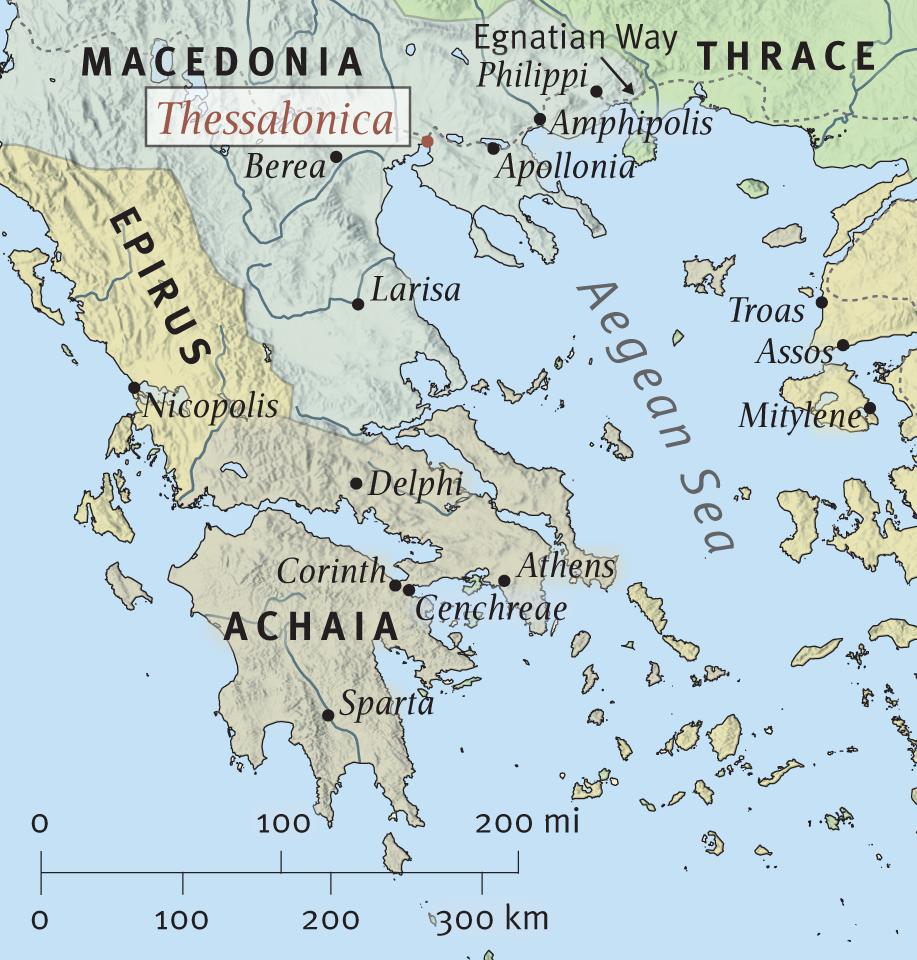
Thessalonia-MapNo, not quite.  But we can find quite a few parallels between these American cities and Thessalonia, one of the few New Testament cities that still is around today … as well as between the church at Thessalonia and some of our churches here and now.

Each are worthy of praise and thanksgiving to God.  That’s exactly what Paul was doing – celebrating the church – in his epistles to the people at the church of Thessalonia.

And there are other parallels worth noting, too, between the places where we live and Thessalonia.

Comparable to many U.S. cities and suburbs, it had a mixture of wealthy people, a small middle class, and then a large majority of poor people like us: slaves to the system that surrounds us.

There was tension and turmoil in Thessalonia.  Rampant crime.  Graffiti, obscene and objectionable words and images could be found on the walls of buildings.  Murder was commonplace and divorce frequent.  And, depending on whose standards were the measuring stick, morality, at best, was questionable.

Sound familiar?

Uh-huh: Very much like where we live!

Yet in the self-serving sea of crime-ridden culture was the Thessalonian church, a little island to the glory of God.

I like to think the same can be said about some of our churches.  No doubt it pleases God that diverse bodies of Christ come together to worship, pray, and praise the glory of our loving Creator. 

Another profound parallel for me … perhaps the most critical and striking one in terms of similarities, is that the Thessalonian church was a new and different kind of church, made up of new and different people

Thessalonia-New and Gay ChurchesJust as Thessalonia was the first church whose congregation essentially comprised non-Jewish people, many of our open, progressive, inclusive, and affirming churches among the first churches in their neighborhoods ministering to LGBT people and their fair-minded, open-hearted allies.

What makes our churches and that one in Thessalonia so special? Let’s take a quick look and discern what we can from I Thessalonians 1:1-10:

During his second missionary journey, after picking up Timothy along the way, the Apostle Paul arrived with Silas in Thessalonia in 48 or 49 AD.  They left about a year later. In the midst of trials and tribulations, persecution and hostility, Paul writes his letters to this church which he’s obviously very fond of, while still living in Corinth.

(Much of the history of the Apostle Paul’s missionary trip to Thessalonia is found in Acts 17.)

In I Thessalonians, Paul launches into what might be the longest section of thanksgiving found anywhere in the entire New Testament.  He is absolutely pumped about the church in Thessalonia. Although he is obviously quite pleased with this church, there’s another reason I suspect that he spends so much time expressing his thanks: the members of this church lack confidence in their personal salvation.

Thessalonia-Salvation InsecuritiesFor me, that’s another parallel between the Thessalonian church and today’s churches that minister to LGBT people.  As a pastor who’s listened to the doubts and concerns of more than a few of you, I know there’s still some hesitation, a lingering doubt, about whether God really does love and accept you “despite” your sexual orientation … just as you are.

With all my heart, I believe that God does!

For his part, the Apostle Paul spends time affirming those in the church of Thessalonia. 

In verses 2-3 here he writes, “We give thanks to God always for all of you, making mention of you in our prayers, constantly bearing in mind the work of faith and labor of love and steadfastness of hope in our Lord Jesus Christ in the presence of our God and Father.”

Don’t you just love it?  I don’t know about you, but three little words – faith, hope, and love – literally jumped right out at me, recalling that beautiful passage so many people are fond of from I Corinthians 13: “And now these three remain: faith, hope and love.  But the greatest of these is love.”

Despite their differences – they’re mostly Gentiles rather than Jews – Paul is confident that the Thessalonians are loved and accepted by God, just as I am equally confident that the same can be said of you, my LGBT brothers and sisters in Christ. 

Like the church at Thessalonia, our own churches still aren’t really typical of many churches today.  Nevertheless, I believe that these churches represent God’s ideal—the type of church God wants every church to become: wonderful places to be!

The Thessalonians became a living example to other believers, we’re told in verse 7.  In other words, it’s not enough to just live our lives among other welcoming, inclusive, and affirming Christians … in isolation.  Sometimes, we’re called to be more direct in using and channeling our influence with others.

For most people to believe in God, or to believe in God anew — especially people within the LGBT community — the personal touch is needed.  That means we need to be forthcoming about what we believe, sharing our faith with full conviction that we are truly loved by God and that our God is worthy of all praise!

Too many LGBT people have turned away — or been turned away — from church and, in the process, find themselves turned off to the God that created them and continues to love them unconditionally.

Hurt, bigotry, judgmentalism, condemnation and rejection from much of the religious establishment indeed are what brought many of us to new and different kinds of churches focused on love.

It’s up to us now to be goodwill ambassadors of Christ from churches like ours … to share the good news, sensitively and sensibly, with our brothers and sisters.

After all, isn’t that what affirming our “Pride” is really all about?

Thessalonia-Another-Christian-Who-Happens-to-be-Gay-Rainbow-Pride-CrossIt’s not enough to be “closet Christians” who come to church and worship for an hour or so among ourselves on Sundays.  We’re expected to tell others the gospel truth about God’s love for them … inviting them to experience this amazing grace and spiritual connection for themselves.

And, yes, it is difficult to talk to others about something so sensitive and personal as religion. 

That much we share with our straight friends in churches across the spectrum. 

It’s much easier to hand someone a brochure, point them to a Website, or ask the pastor to intercede by conducting a cold call.

For us, especially – for you and for me – it’s even harder to talk about the God we believe loves us … much less admit that we do go to church.  It’s not unlike coming out of the closet again … something many of us already did in terms of our sexuality and now are being pressed to do about our spirituality.

Still, we’re called to speak with full conviction, aware that God has given us a very special mission field to which few are called and even fewer choose to go.

People saw a change in those who worshiped at Thessalonia.  They had become better people – more loving, compassionate, giving, and thankful – because of their faith and their beliefs. 

We all know what happens when people are branded as being different: they’re talked about … and lots of people talked up the church at Thessalonia, telling others about the amazing things that were happening there. 

Thessalonia-Your Faith Is Known EverywhereThe history of the Thessalonian church is a story about what can happen when everything goes right, the way God wants it to be: Paul and his team quickly planted a vibrant and healthy church that reached out to others, touching and turning many lives around for the better.

My own hope is that we can be churches like the one at Thessalonia, places people want to be … because God is here among us, helping and healing and loving and blessing and making us a community of believers to praise.

Processing…
Success! You're on the list.

Elizabeth’s Disgrace: An Affirming Mother’s Day Story for All of Us!

Elizabeth‘s story tends to be eclipsed by Mary’s, since it’s hard not to focus on the virgin birth. But the barren Elizabeth has a miraculous birth as well, finding herself pregnant well beyond the time to have children.

ImageRemember Elizabeth?  Mary’s cousin whom she visited while pregnant with Jesus?  Despite living pious and faithful lives, Elizabeth and her husband, Zechariah, couldn’t produce a child.  Then, almost too late in life (like Sarah before her), an angel told Elizabeth she would bear a son who would become known as John the Baptist.  Incredulous, Zechariah lost his ability to speak; Elizabeth’s child, yet in her womb, jumped with joy when Mary visited … recognizing the Lord, even before birth.

Barren means more than just infertile; it means unproductive, unfruitful, dull, empty, devoid, lacking, bereft.

At one time or another – maybe even many times! – we, like Elizabeth, can feel barren and unproductive … empty … lacking … bereft.  Sometimes, God has reasons for not answering our prayers—or not answering them when or how we want them to be answered. Being human, it’s hard to wait … and wait … and wait … for our prayers to be answered. 

So, I could tell you to do like Elizabeth: Go about your daily life and business, loving all the people God has placed in your life, while never giving up your faith or hope.

That would have been a fine and fitting ending to this story.

But the more I read about Elizabeth, the more I find myself riveted on her words of redemption, in Luke 1:25:

“The Lord has done this for me … he has shown his favor and taken away my disgrace among the people.”

Elizabeth did nothing wrong.  In fact, we’re told that she did everything right.  Right from the beginning, we learn she was “blameless” in front of the Lord.

Yet her society judged her to be shameful, disgraceful, lacking in God’s grace … as if there were something wrong with her, or that it was her fault she hadn’t conceived and given birth to any children as expected.

Because we don’t exactly conform to society’s norms and expectations, don’t we feel that way sometimes, too

“Do I deserve this, because of who I am?” we ask ourselves.  “Why was I created this way?  What should I do now to feel better about myself … and not so barren or empty?”

When I began to come to grips with my own gender identity and sexuality, I already knew that I didn’t make myself this way … nor did I believe that my environment or other people caused me to become the person I am.  I regretted that I wasn’t like everyone else: It certainly wasn’t easy to make believe, hide in the closet, and try to deny the person I was meant to be.

Yet because some in our society deemed it wrong, shameful, disgraceful, with an ugly stigma attached to it, I – like Elizabeth — felt barren … empty … unfaithful … and void.

I remember going to a “Coming Out Group” led by a Christian man named Paul.  “But … how do you reconcile being gay with all those ‘clobber verses’ in the Bible?” I asked him.

ImageHe smiled, oh-so-sweetly, and told me that the God he worshiped loved him … just as he is … and that – no matter what other people might tell me or what could be taken out of context from the Scriptures – it’s really all about grace.

Amazing grace!

It’s got nothing to do with what we do or don’t do that earns us God’s love and our salvation. 

It’s not about rules, regulations, and restrictions that lead to heavenly rewards or rejection.

Nope, it’s all about grace.  Even now, I’m still coming to understand and accept the depths of this profound truth.

Being loved by someone whom I deeply love in return helped me to feel somewhat better about myself … yet I still can feel alone, if not so lonely anymore.

It wasn’t until I met God more intimately – not someone else’s idea of God – and spent time in God’s company that I began to truly feel better about being myself … and not quite so empty. 

God’s grace and my belief that God purposefully created me to be exactly the person I am has turned my life around—blessing me and making me barren no more.  Actually, I have “given birth” to a part of God’s Kingdom in my own personal way.

ImageListen carefully, again, my friends, to the redeeming words of Elizabeth as found in Luke 1:25: 

 “The Lord has done this for me … he has shown his favor … and taken away my disgrace among the people.”

Each and all of us should affirm these very words now as applying to us, as well! 

Processing…
Success! You're on the list.

Church Brands

Marketing experts will tell you that, in business, “branding” refers to what makes your products or services so special … and what sets them apart from the competition.

be uncommonChurches also offer services … they compete for business (members) … and promote a unique, extraordinary product.

We call that product, “God.”

In fact, godliness is our byproduct, evidenced by the changes we experience as we grow in grace and increasingly exhibit the fruits of the spirit sown and cultivated in communities of faith.

Churches come in all different shapes, sizes, and … brands: Baptist, Episcopal, Methodist, Roman Catholic, Pentecostal, Lutheran … the biggest and most powerful one, your corner community church, churches that speak in tongues and churches that don’t … churches that believe we’ll be raptured before the great revelation and other churches that maintain Christians will be still here to suffer along with everyone else … there are churches that worship on Saturday, the Sabbath, and those that worship on Sunday, the Lord’s Day. 

So, I can’t help but wonder whether the God that all these churches worship is the same One as mine.

For me, it’s important to understand my own brand of faith and to purposefully live it, because it reinforces who I am and what I believe … as well as what attracts others to, come, follow me.

HRC JesusWhich is something we’re all called to do as disciples of Jesus, isn’t it? 

Come, follow me! 

(No, not me … but Jesus!)

So, when I was called to pastor a church in Jacksonville, Florida, it was crucial that I understand what it believes and stands for … to identify its brand.

 “A Rainbow Spiritual Community,” the sign outside the church said.  That I understood.  Yeah – wink, wink – I got it!  We know about rainbows and pride parades, unicorns and drag queens.

But, “Innovative Ministry in Service to God,” the church’s vision statement … imprinted on letterhead, envelopes, business cards and brochures?  What did that mean?  Sounds great on paper; but what do you do with it?

Churches where LGBT people are welcome use “code” words that speak to their audience.  People know what words like “welcoming,” “inclusive,” and “affirming” really mean.

Saying you’re a welcoming, inclusive, and affirming congregation means more than just repeating these three words and using them as a slogan or mantra.  It means that you’ve got to embrace and abide in those words which name qualities of God’s goodness and justice that, as Christians, we’re expected to live. 

Welcoming, inclusive, and affirming are vital signposts of the Way of Jesus and the way we are called to be.

I Corinthians 13How many churches claim in their advertising and on their signs outside, “Everyone welcome here!”?  Yeah, right!  Everyone welcome, except …. you, and you, and you.  Fill in the blanks. It’s not too hard to figure who’s not really welcome and why.

Remember Sodom and Gomorrah?  No, it wasn’t a sin of same-sex attraction.  In fact, it wasn’t about attraction at all.  Quite the opposite.  It was about rage and rape, about taking advantage, a lack of hospitality to others.  Especially strangers.  The people of Sodom and Gomorrah weren’t welcoming; in fact, they were totally clueless of the angels in their midst.

That’s why Jesus warns of a worse judgment for those who don’t show hospitality to his followers, when he dispatches us to share the Good News:  “If anyone will not welcome you or listen to your words, shake the dust off your feet when you leave that home or town. I tell you the truth, it will be more bearable for Sodom and Gomorrah on the day of judgment than for that town,” he says in Matthew 10:14-15.

Welcoming churches are spiritual communities that show love and kindness, compassion, friendship and hospitality, to those that they know … and to those that they don’t.  People at such churches can actually feel the touch of God’s love tugging at their hearts when they greet each other, pray together, and share the peace of the Lord through word and deed. 

 Next on our branding list is “inclusive.”

a place at the tableAn inclusive church beckons all to come in and be part of its communion.  Oh, I know that calling a church “inclusive” is a not-too-subtle euphemism, a clue that it accepts LGBT people.  That’s how it should be.  But it also should be so much more!

Black and white, old and young, single and married, mentally handicapped and physically challenged, afflicted by all sorts of illness, demons, and distress, people who speak Spanish and English or Pig Latin, those with willing spirits but weaker flesh – whosoever! – an inclusive church should be the mortar that binds us together and to God.

Look at Jesus: Who did he hang around with?  Certainly not the religious zealots presumed to be the “good guys.”  Nope.  He could be found with prostitutes and charlatans, tax collectors and publicans, a Roman centurion who loved his male servant, in every sense of the word.  When push came to shove, Jesus called people rejected by others to come and be with him.

For me, that’s a major difference between the Old Covenant and the New: The Hebrew Testament was exclusive; its long list of rules and regulations was designed to keep out all but a few.  Those allowed in were to be a nation of priests, a light to the nations.  Except that they weren’t.  Instead, they worshiped idols and were so self-centered that they put themselves first … even before God … time and again.

All that changes in the New Covenant, where everyone – good and bad and in between – is invited to the wedding banquet to celebrate the marriage blessing between Creator and creation. 

Whosoever believes.” 

That’s all it takes to be invited to feast at the tabernacle of faith and welcomed into the Kingdom of God.

But we continue to build fences, keeping people out simply because they don’t believe this or won’t accept that.

How silly is that … and, oh, such a shame!

God wants us all to be one: “Echad,” that composite unity, is like a cluster of grapes or one team with many players.  The Hebrew scriptures cry out and testify, “Hear, O Israel, the LORD is our God … the LORD alone!”

Fences around AgapeStill, we prefer to worship around our differences, the creeds and dogma and doctrines that separate us … rather than those things that, as Luke put it, we so assuredly believe among us.

Is that so wrong, such a bad thing, to want to have a special relationship – a covenant, if you will – with certain people in given places along God’s way?  No, not in and of itself.  But, when it excludes people from participating and treats some as better, more holy and righteous than others, then it’s exclusive and contrary to God’s will, I believe. 

Asked which of the commandments is the greatest and most important, Jesus was quick to reply: “Love the Lord your God with all of your heart, and with all of your mind, and with all of your might.”  And then, in the same breath, he tacked on this addendum: “Love your neighbors as you, yourselves, would be loved.”  It was at that point in Luke’s Gospel, Luke 10, that Jesus shares the parable of the Good Samaritan.  We’ve all heard it, I hope, and we all know what it means: that even those people we don’t particularly care for or would rather not be around should be treated with dignity and considered our neighbors!

Which brings me to the final word in this holy trinity of words reflecting qualities I believe God would brand our hearts to be: affirming.

Lots of churches claim to be inclusive and welcoming.  And I don’t doubt their sincerity.  But it’s one thing to invite people into your building, letting them sit in the pews.  That doesn’t mean, though, that the churches are supportive and positive about you, asserting and expressing their commitment to you as a truly beloved child of God.

Just as you are.

More than recognizing that we exist and acknowledging that we’re people with feelings, thoughts and, perhaps, something to contribute, affirming churches actually endorse us as made in God’s image and worthy to be celebrated in all that we do!

jesus on a tree-crossAffirming means saying “yes” rather than “no” … looking for the positive, instead of the negative … lifting up, not tearing down … accepting not rejecting … believing rather than denying or condemning … seeking and approving the good over the bad. 

After each act of creation, what does God say? “It is good!”

It’s there in the Scriptures, friends.  We only need to look for it, focusing on the good news in the message instead of the bad.  Remember what the Apostle Paul said about love? 

That it doesn’t dishonor others and isn’t self-serving … but rejoices with the truth.  Patient and kind, love doesn’t boast and isn’t proud.  It always protects, trusts, hopes, perseveres.  In a word, therefore, love is always affirming!

In my humble opinion, there’s way too much bad theology out there, misguided Christianity that nails Jesus to the cross and crucifies him repeatedly, instead concentrating on the more powerful message affirmed by a risen Lord. 

The world may have said “no” to Jesus when it rejected and crucified him … but God Almighty said “yes,” resurrecting him – and us! – to newness of life.  Now, it’s up to us to spread the good news of God’s everlasting and unconditional love!

Showing hospitality comes from the heart … it’s the desire of our soul to be welcoming, loving and compassionate to others.  To affirm the goodness of God and God’s amazing creation.

To be inclusive is to be just and to put justice into practice.  It’s a matter of the mind, deciding that we’re not going to show preference for one over another.

 So, give somebody a helping hand.  A heartfelt hug or embrace goes far to demonstrate fellowship (fillyship?) and friendship.  Reaching out and shaking hands is symbolic of greeting someone and using our body language to say, “howdy!”  Even putting your hand in your pocket and reaching down deep to provide for God’s Kingdom is a matter of might, of physical effort.

Every one of us is created in God’s image … but, over the years, through socialization and worldly influences, we have lost our God-connection and ceased to act as God would have us do.

Love, compassion and forgiveness can be abstract concepts that we talk about, yet don’t do enough or put into practice.

But by living welcoming, inclusive, and affirming lives, we become more loving, compassionate, and forgiving people transformed into God’s body and image.

Unfortunately, human nature is such that – even in churches – it’s easy to be seduced and fall into the trap of saying “Stay away!” or “Keep out!” rather than, “Come join us; we’ll make room at the table for you” … it’s more comfortable to form cliques and circles around those we know best and longest, instead of venturing outside our comfort zone to get to know a stranger better … we find ourselves more likely to shout, “No, you can’t!” than to echo, “Yes, of course, we can!”

Welcoming.  Inclusive.  Affirming.

Or:  Alien.  Self-centered.  Denying.

Which three word sets brand your church?  Which words brand the church of Jesus Christ?

Processing…
Success! You're on the list.