O Número Contribuente?

Americans are issued Social Security Numbers in the USA which are used to identify them—from taxpayer to pensioner.

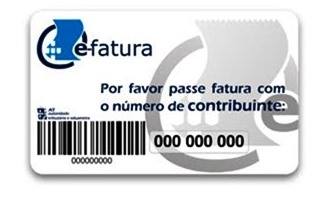
Other countries assign their citizens (and residents) a variety of numbers. In Portugal, for example, in addition to a social security number, many of us also have a separate health care number, driver’s license number, and – of course – the ubiquitous “fiscal” (or taxpayer) number, technically known as our NIF but more popularly referred to as the número contribuente.

Every time we go shopping, we’re queried “Contribuinte?” by the cashier.

Merchants are required to ask if want to provide your “número contribuinte” for that purchase … although you aren’t required to give it. But, if you do, it’s recorded and reported to the tax office.

Will providing your NIFs for Lidl or Continente purchases affect your tax bill in Portugal?

It could!

Part of the reason behind tracking money spent and received is to thwart the “underground economy” and its financial transactions. But, thanks to giving our número contribuente, our own tax records display deductions we can take on our income taxes. And we’re entered in lottery-like “drawings” held regularly by Finanças and the tax office.

(Unless you pay income taxes here, however, you can’t claim these deductions. If you do pay taxes here, some “costs” are reclaimable.)

In welcoming us to their country, we want Portugal to know that we are investing in it, too, by purchasing from its businesses.

So, although not required or requested, when I head to SEF to renew my residencia, I’ll also be handing over a printout of the spending I’ve done here … attributed to my número contribuente!

Shared here are personal observations, experiences, and happenstance that actually occurred to us as we moved from the USA to begin a new life in Portugal and Spain. Collected and compiled in EXPAT: Leaving the USA for Good, the book is available in hardcover, paperback, and eBook editions from Amazon and most online booksellers.

Processing…
Success! You're on the list.

Moving Out, Moving On

What do you do when your doctor decides you cannot go up and down the 37 stairs (a dozen times daily) in your house anymore? Especially with your three dogs—which you walk twice around the village: once with the two little ones and, again, with the bigger boy? And, further, that the aches and pains in your back and your bones are unable to withstand the uneven cobble stones paving your streets because of the stresses and strains they put on you—especially when walking your dogs around your beloved village four times each day?

You don’t have 37 steps? Or three dogs? And your streets are paved with asphalt, not cobble stone, you say? Or you live on a quinta?

No matter.

Consider this scenario, one quite familiar to Americans seeking to move abroad to Portugal (and Spain). One of the indispensable requirements of obtaining a residency visa is documenting that you have a dwelling … at least for your first six months here.

You can rent or buy.

Though some opt for renting, knowing they will have to relocate when their lease is up, it’s a sensible choice—especially if you have few household items and worldly goods to transport. You’ll have a chance to live up close and personal and understand the lay of the land as you explore other neighborhoods, nearby towns and villages and cities, or (perhaps) elsewhere entirely in the country.

Your choice.

You have six months to travel and explore, gambling that, for whatever reason – a community of friends already living there, proximity to the coast and its Atlantic beaches, charm of the place that tugs at your heartstrings and beckons, a perfect plot to put down roots and live off the land instead of the grid – the time will provide opportunities so that you don’t have to rush to judgment about where you’ll live.

Others, like us, however, prefer to buy—submitting a property deed with our visa application, rather than a rental contract.

With all the moves we’ve made already, packing the mementos and monuments of our 25+ years together for a transatlantic shipment would be our last herculean undertaking before the Atlas in us shrugged.

Buying in a “foreign” country requires a different type of fortitude. For instance, you need to envision – even fantasize – the lay of the land where you want to be: Urban, suburban, or rural? Village, town, or city? On the coast, in the center, or along the border? Single-family detached house, “row” home, duplex, apartment, condo, or land enough to grow (maybe even sell) your edibles and comestibles? New build or resale, renovation or ruin to rebuild from scratch?

Along with such demographic factors, you’ll also want to weigh in with the “psychographics.” Close your eyes and picture your perfect place. What does it look like? More important, how does it feel to you? For the sake of seclusion are you opting for less in terms of Internet and telecommunications options—especially if you’ll be working online? If dogs are already part of your furry family (or will be), will you be comfortable in a home without any land, requiring you to walk and pick up after them, regardless of the weather … which can be day upon day and weeks at a time of continuous rain or brutal, scorching sun where it can be 100 degrees or more in the shade throughout the summer? Do you have special health issues or concerns which will dictate medical availability and accessibility?

And what many of us forget to take into account is our age: Will what seems reasonable, doable, and accommodating now feel or be just as easy to cope with down the road five, ten, twenty years hence?

In our case, we didn’t know if Russ would be able to continue working remotely. Would his close-knit Door County performing arts company consent to him not working under their thumb? Would they be willing to contract communications and marketing – as well as attendance, virtually, at staff meetings – from a time zone six hours later?

We didn’t know when we began planning our move; yet, discretion being the greater part of valor, we concluded that we’d best assume that we’d be “freelancers,” with new income flowing from the USA except for Social Security.

Along with a relatively modest budget, that was a reality which dictated many of our choices and criteria where to look and live in Portugal.

Eyes closed, we envisioned our new home set in an idyllic village with cobble stone streets and a picturesque church whose bells would mark the tempo of our daily lives. Our home would be easily accessible by car to shopping, dining, and entertainment. After ten years of flying to our vacation bolt in southern Spain, it would also be within an easy driving distance. Importantly, too, it had to be approved for commercial use, as we planned to open our “Tapas Americanas” to produce income.

All told, we made three round-trips between the USA and Portugal in search of the “right” property, searching for places between Coimbra and Castelo Branco that met our needs … and wants. We scheduled one of our trips to coincide with a Pure Portugal seminar on buying and building, losing one possibly perfect property close to Miranda do Corvo because it sold before we could make an offer; we bypassed another property after learning at the seminar that a “build,” enclosed on three sides by a mountain, would be difficult to maintain because of the moisture and constant battle against damp and mold.

Towards the end of our second tour, we found a house that ticked off all of our boxes. In a village just 15 minutes outside of Castelo Branco, it was postcard picturesque. On the street level, it had housed a café before the owner’s husband died and she put the property for sale—including the lower-level café, a courtyard, and large kitchen.

Above, rose two more levels. On the first was a huge living room, two smaller rooms (formerly bedrooms, but offices for us), and a separate wing above the downstairs kitchen with a large guest quarters and en suite that not only would provide privacy, but could be used as an AirBnB rental. The top floor featured a master bedroom with walk-in closet and separate en suite, an adjacent multi-purpose room with a second (service) kitchen, and a huge covered terrace. The house also included a large attic with ample room for storage.

The drawbacks? After being vacant for several years, the elements had taken their toll on the premises which needed repairs, mold remediation, and painting … not to mention an entirely new kitchen constructed downstairs. Those 37 steps would be our daily exercise. And, although the café was zoned “commercial,” the landlady had allowed its license to lapse. To be granted a new license would require bringing the café up to current code—at least €10,000 in construction costs to make it handicapped accessible, more mobile and modern.

Not that it mattered, anymore …

Russ’ employers wanted him to keep working for them. This was well before Covid closures and work restrictions; they were willing, at least, to give it a try. Fortunately, everything worked well. Not only did it prepare the organization for the new realities of work caused by the pandemic, but it also prepared the way for other employees and contractors to work remotely as well.

We fixed up and improved the house, using the former café as our gathering area for friendly get-togethers. Walking the streets with our dogs, we got to know our neighbors. Because few in this provincial village spoke English, our conversational skills grew beyond “Bom Dia” and “Obrigado.” These good-hearted yet private people knocked on our door, bringing baskets with fruits and vegetables from their gardens or quintas. We came to enjoy the local holidays and festivities, even as we respected the solemn processions of locals paying their last respects to those dearly departed. Living on the main street brought life’s realities and rituals to our windows, balcony, and front door.

With each chime of the church bells, I grew older … crossing that milestone from sixties to seventies, from an energetic “senior citizen” to an “elderly” fussbudget. Limbs broken 20 years earlier sent me not-so-gentle reminders with increasing frequency. New ills, aches, and allergies began to trouble me. Never particularly patient to begin with, I increasingly identified with grumpy old men filled with frustrations, feeling (felling) my physical limitations and life passing me by.

When a series of gastrointestinal problems and my first bout with sciatica brought me to hospitals, laboratories, pharmacies, and clinics, my physician insisted that pharmaceuticals could just do so much to help; some major changes must now be made in our lives.

“You cannot continue to climb up and down all those stairs,” she stated, “especially with the dogs. And the uneven cobble stones in the streets aren’t helping, as the dogs pull you going after a dog or cat.”

“So, what are you saying; what do you suggest?” I asked, presuming her forthcoming answer.

“You must move!” she informed me. “Find a one-level home with a backyard, a quintal. Maybe a bungalow. You will see how much better you will begin to feel.”

Move? Again? After all that planning? From a village that had welcomed and embraced us: Newcomers! Over the last ten years or so, the local population had been halved—from 1,200 to 600.

I had adjusted and adapted my life in retirement to one of active involvement. Since moving to Lousa, I had one book published and was working on a new one. I wrote regularly for The American Magazine (UK) and The Portugal News. I created and administer several popular Facebook groups—one for “Portalegre People” (where our other home was located); another for “LGBTQ+ People and Friends in Portugal”; and a third, “American Expats & Friends in Portugal and Spain,” for expats, immigrants, the curious, and wannabes. Most important, however, was the progressive, interfaith congregation I pastored for hurting and spiritually hungry “People of Faith Online.” And, most recently, we launched Portugal Living Magazine, an English language magazine that covers the entire country, connecting people throughout … as well as those seeking to relocate.

Move? At this point, I needed to think of it not as moving out, but moving on. Nonetheless, it’s not as easy as one might think.

Stay tuned …

Shared here are personal observations, experiences, and happenstance that actually occurred to us as we moved from the USA to begin a new life in Portugal and Spain. Collected and compiled in EXPAT: Leaving the USA for Good, the book is available in hardcover, paperback, and eBook editions from Amazon and most online booksellers.

Processing…
Success! You're on the list.

Buyers, Beware (Renters, Too)!

Technically, Portugal’s mainland is divided into 18 districts (distritos) formerly referred to as provinces; 278 municipalities (concelhos); 159 cities (cidades); 533 towns (vilas); and 2,882 civil parishes (freguesias). Countless “unofficial” villages like ours add to these numbers.

Unless you know someone with boots on the ground, speak the language well enough to be treated like a local, or are lucky by happenchance to be in the right place at the right time, finding an acceptable place to live means turning to “property agents” to help and guide you.

The property representation enterprise differs from country to country within the European Union, and is altogether different from what we have experienced back in the States.

Beginning online … where most people start their property searches. Property portals Kyero, Idealista, Custo Justo, Olx, and Milanuncios are good places to look, along with Facebook groups like Pure Portugal.

Then, if we use the handy form online to request more information or a showing, we have every right (if not reason) to expect a representative will contact us … if not today or tomorrow, sooner than later. No?

Often, multiple agencies will list the same property … but with different (and, sometimes, conflicting) information. Whether the property is connected to municipal water and sewer mains (and/or has wells and a septic tank or field) … if the water is heated by “bottled” gas, gas lines, or electricity … the condition and construction of the windows, doors, and roof … which appliances and what furniture shown in the pictures are included in the price … all of this matters to us and makes a difference regarding those properties that interest us.

Pictures are worth thousands of words. The more (current) pictures posted of a property, the more (or less) attractive it will appear. Pictures of any land included with the property are nice, but – by and large – we’ll want to see the inside of properties where we may live.

Yes, we’ll be noticing those cracks in the walls, the missing tiles on the floors, the damp mold on the ceiling, the condition of the roof and its wood, cement, or metal beams. Why shouldn’t we?

Most properties in Portugal and Spain have their own peculiar quirks, as there are few (if any) real building codes required … especially in the smaller towns and villages. With steps of different heights and widths, and slight little step-downs or -ups between rooms, mobility can be a major accommodation factor. Even those of us without wheelchairs have tripped, slipped, or bumped into something all-too-often. It’s part of the idiosyncratic “character” of these curious properties.

While “location, location, location” and its condition are factors in determining a property’s price, all too often, “time is of the essence” for us. Our time is limited when we’ve come to the country, primarily, to find a property.

So, after viewing a property, ask your property agent get back to you quickly with answers to your questions, reassurances about your concerns, and any helpful information that they can provide.

“The real estate market in Portugal offers the luxurious, the good, the average, and the mediocre … with prices adjusted to the condition of the property,” asserts one local, “depending on what you are looking for, where you’re looking, and your available budget.

”That’s why proper property representation is vital.

Or, as our British friends would say, “bloody brilliant!”

Shared here are personal observations, experiences, and happenstance that actually occurred to us as we moved from the USA to begin a new life in Portugal and Spain. Collected and compiled in EXPAT: Leaving the USA for Good, the book is available in hardcover, paperback, and eBook editions from Amazon and most online booksellers.

Processing…
Success! You're on the list.

Refuse, reuse, and reduce plastic!

Back in the day, supermarkets didn’t sell bottled water.

Most of us got our water directly from the tap.

Water just wasn’t something people thought about buying from the grocery, anyway.

Those were the days, my friend, when milkmen (no women that I can recall) delivered fresh milk daily or every other day to those milk boxes — now sold as “antiques” and “collectibles” — next to our front doors. Similarly, Louie Armet delivered a case of seltzer water (carbonated or “tonic” water) to our house weekly. Soft drinks (soda or pop, depending where you lived) were sold in groceries. But that’s before we became health-conscious and learned that soda was bad for us, while, for the most part, milk and water were good.

Nonetheless, most beverages came either in glass containers (jars and bottles) or metal cans.

You paid a deposit on them at the check out and many a youngster earned extra cents (sense?) foraging, gathering, and returning this glass and aluminum in exchange for the deposits.

I don’t know when — exactly — it happened that plastic became the packaging of our lives … but I do vividly remember the black and white “Plastics Make It Possible” television commercials in which plastic was heralded as the scientific “miracle” that would improve our lives.

Think about it: just try to go an hour without touching something plastic.

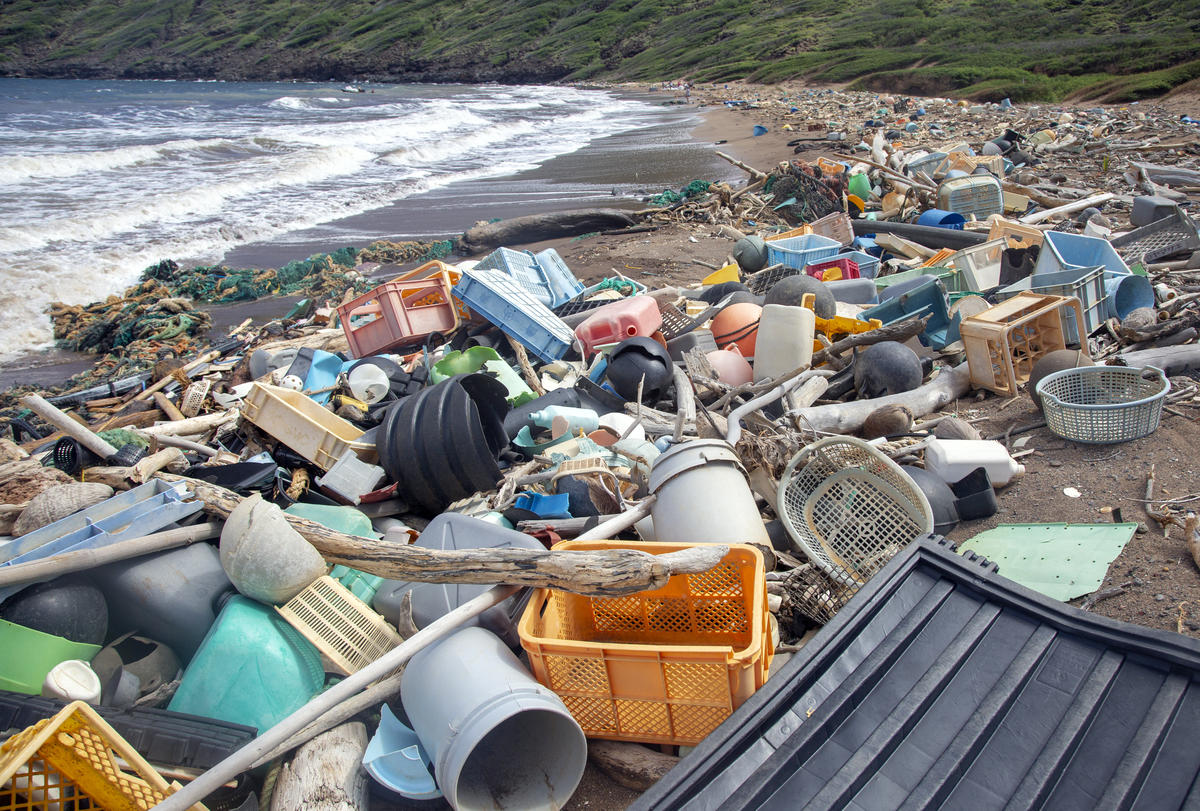
Greenpeace partnered with Protecting Kaho’olawe ‘Ohana (PKO) and Kaho’olawe Island Reserve Commission (KIRC) to do a beach cleanup and brand audit at Kanapou beach on Kaho’olawe Island, Hawaii. Trash washed up on the beach.

The stuff is everywhere: from our toilet seats to the electronic devices we constantly use (sometimes, it’s safe to ass-u-me, while likely sitting on said toilet seat) are made of plastic. In fact, try as we might, there’s not much in our day-to-day lives that doesn’t contain plastic.

“I just want to say one word to you. Just one word … Plastics.”

Remember that line from The Graduate?

More recently, however, plastic has begun to bother me in its excess.

If these words weren’t about a former boss, they could aptly apply to plastic: “Some is good; more is better; too much is just enough.¨

Maybe for the producers, vendors, and plastic distributors, but definitely not for us and our world.

Why must water be sold in single-use plastic bottles? And those plastic bottles then wrapped in layers of plastic? And, again, as we check out, those plastics inside of plastic put in plastic bags?Why is there so much hard plastic packaging around razors, cds and dvds, tooth brushes and floss? Almost everything that now hangs from retail store shelves?

It’s bad enough trying to remove it to begin with … but, time and again, I cut myself and end up bleeding from the plastic shards.

But, I’m being self-centered here. There are communal and global reasons why we need to reduce our dependence on disposable plastic. Primarily because they’re not disposable!

Plastic, undoubtedly, has revolutionized society, introducing a huge amount of convenience and affordability, and allowing for the development of things like computers, cell phones and many modern medical devices.

But our obsession with it also comes at a steep cost. Although originally hailed as a miraculous innovation that could reduce a rapidly industrializing society’s reliance on scarce natural resources, plastic has also created a monumental environmental mess. Worldwide, more that 400 million tons of the stuff are churned out annually, generating a huge amount of waste of which less than 10 percent is recycled. The rest either ends up in landfills, where it will take an average of 500 years to decompose, or in waterways and oceans. 

A study by a scientific working group at UC Santa Barbara’s National Center for Ecological Analysis and Synthesis (NCEAS), concluded that every year, eight million metric tons of plastic end up in our oceans. What is more concerning is that, according to the study, the cumulative input for 2025 would be nearly 20 times the eight million metric tons estimation.

One of the most concerning problems that our oceans are facing nowadays – if not the most important – is plastic pollution. Plastics are the cause of increasing ocean pollution, which in turn affects marine life and, consequently, humans as well.

Did you know:

  • Plastic causes many adverse effects in wildlife because chemicals include reproductive abnormalities and behavioral effects.
  • All sea turtle species, 45% of all species of marine mammals, and 21% of all species of sea birds have been affected by marine debris.
  • Plastics can absorb toxins from surrounding seawater, such as pesticides and those in the class of chemicals known as Persistent Organic Pollutants (POPs). They can also release harmful components.
  • Plastics can be ingested by many organisms. This can cause damage to their health.
  • The main cause for the increase in plastic production is the rise of plastic packaging.
  • The drilling of oil and processing into plastic releases harmful gas emissions into the environment including carbon monoxide, hydrogen sulfide, ozone, benzene, and methane (a greenhouse gas that causes a greater warming effect than carbon dioxide) according to the Plastic Pollution Coalition.
  • The Environmental Protection Agency or EPA estimated that five ounces of carbon dioxide are emitted for every ounce of Polyethylene Terephthalate produced (also known as PET – the plastic most commonly used to make water bottles).

What can we — you and me — do about all this plastic pollution?

The solutions are simple and can be applied by everyone, everywhere.

The best way we can all help is to reduce new litter entering the environment. This may sound naïve, but it is a fact. To do that, there are three Rs that can remind us to do this:

  • Reduce: Choose products with less packaging, or shops where you can refill your own container.
  • Reuse: Use reusable products.
  • Recycle: Separate items that can be recycled (i.e. plastic, paper, cardboard).

Short of lobbying for government intervention in plastic packaging, there’s lots we can do to reduce our individual plastic pollution footprint: Have three receptacles in your kitchen–one for recycling, one for compost and one for trash. Collect all your plastic trash for one week just to see how much you actually use. It may make you think twice about how much plastic you buy. Stop buying single use plastic bottles and fill a reusable bottle, instead. Notice how things are packaged and opt for items packaged in cardboard vs. plastic whenever possible, for example laundry detergent. Minimize your use of plastic bags. Keep reusable bags handy. Use a thermos for your morning cup of coffee and bring it with you to your local coffee shop. Don’t buy disposable razors. Swap out or minimize all those plastic food storage containers you’ve collected over the years, especially those without lids or bottoms. Use glass or metal containers. Buy from bulk bins. This doesn’t mean buying in bulk. Bring your own reusable cloth containers or bags. Stop using disposable plastic plates. Donate plastic household items or decor you don’t love or are no longer using. Don’t just throw them out.

Don’t just throw them out!

Shared here are personal observations, experiences, and happenstance that actually occurred to us as we moved from the USA to begin a new life in Portugal and Spain. Collected and compiled in EXPAT: Leaving the USA for Good, the book is available in hardcover, paperback, and eBook editions from Amazon and most online booksellers.

Processing…
Success! You're on the list.

Fado & Flamenco: Evocative and Provocative

A picture may be worth a thousand words, but nothing expresses the soul of a people quite like their music. Perhaps nowhere does this resonate so clearly as with the Portuguese fado and the Spanish flamenco. Those seeking to familiarize themselves with the unique character and personality of Spain v. Portugal need only wrap themselves in these two existential music genres.

Even if you don’t know a word of either language and haven’t studied its culture, you can still experience it profoundly as you listen – no, engage – with the primal emotions aroused by the music.

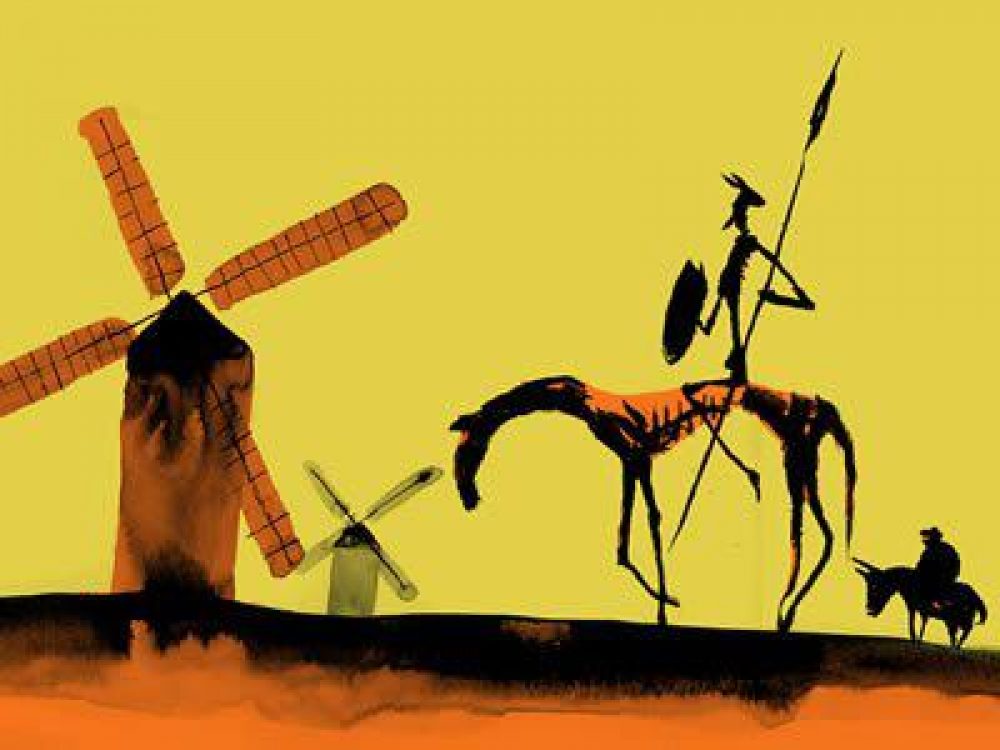
Spain is quixotic, teasing and tempestuous, outgoing and flirtatious. Portugal, on the other hand, is sadly melancholic, holding tenuously onto a yearning sense of nostalgia.

Fado is traditional folk music, a form of Portuguese singing that is often associated with pubs, cafés, and restaurants. This music originated in Portugal around the 1820s, although it is thought to have much earlier roots. Fado is known for its profound expressiveness and melancholy. A musician – often a woman — will sing about the hard realities of daily life, balancing resignation and hopefulness that a resolution to its torments can still occur.

Best described with the Portuguese word saudade, an impenetrable word which encompasses more than “longing” and stands for a feeling of loss, fado was brought to mainstream music by Amália Rodrigues (1920-1999), known as the Rainha do Fado (Queen of Fado). Acknowledged throughout the world, Amalia’s charisma, extraordinary timbre of voice, and beauty made her an acclaimed artist. She became one of the most important personalities for the genre and the main inspiration for contemporary and modern fado.

I first heard Amália Rodrigues in my elementary Portuguese classroom, singing one of her best-known fados through a downloaded file on a decrepit laptop computer. Nonetheless, I was enthralled. Much as I’ve come to enjoy other fado singers and songs, nothing will ever compare for me to “Uma Casa Portuguesa” as she delivered it:
 www.youtube.com/watch?v=RU-Z0SiQKgU

The only non-Portuguese singer I am aware of whose music – especially her song La Llorona — comes close to the Portuguese saudade inherent to fado is Chavela Vargas, a  Costa Rica-born Mexican singer known especially for her rendition of Mexican rancheras, although she is also recognized for her contribution to other genres of popular Latin American music. Hailed for her haunting performances, she was a muse to such figures as Pedro Almodóvar and called la voz áspera de la ternura, “the rough voice of tenderness.”

Here is Chavela singing La Llorona (The Weeping Woman):
www.youtube.com/watch?v=tP2R-kqtkJo

If the Portuguese fado is evocative, Spain’s flamenco is provocative.

Sultry and seductive, flamenco brings together distinctive chirping, cooing, “come hither” voices with dance and instrumentals (mostly guitar) responsive to the speakeasy Spanish spirit. Flamenco features the call and response known as jaleo, a form of bravado involving hand clapping, foot stomping, and audiences’ encouraging shouts. clapping, finger snapping, and foot stomping.

Though somewhat mysterious, the roots of flamenco seem to lie in the Roma (gypsy) migration from Rajasthan in northwest India to Spain, between the 9th and 14th centuries. These migrants brought with them musical instruments – tambourines, bells, and wooden castanets – as well as an extensive repertoire of songs and dances to Spain, where they encountered the rich cultures of Sephardic Jews and the Moors. Their centuries-long cultural intermingling produced the unique art form known as flamenco.

In the U.S. and elsewhere, flamenco is a pervasive Spanish national identity marker. For proof of its pop culture currency, look no further than Toy Story 3: Buzz Lightyear is mistakenly reset in “Spanish mode,” and becomes a passionate Spanish flamenco dancer.

Indeed, the world outside Spain often stereotypes the country as inhabited by flamenco dancers, singers, and guitar players so “passionate” that they have little time to engage in the day-to-day world of the mediocre and mundane.

Much like our soap operas (telenovelas in Spanish).

Flamenco performance was once ostracized, considered a vulgar and pornographic spectacle. Over the years, many Spaniards considered flamenco a scourge of their nation, deploring it as an entertainment that lulled the masses into disorientation, hampering Spain’s progress toward modernity. Flamenco’s shifting fortunes show how Spain’s complex national identity continues to evolve to this day, where it is widely enjoyed as performance art.

This brief clip hardly does justice to the flamenco genre, where a single song can go on – with audience participation – for hours:

www.youtube.com/watch?v=XNhfV_53W7A

Spain and Portugal.
Flamenco and Fado.
Spirit and Soul.
Yin and Yang.
Salido and Saudade.

Shared here are personal observations, experiences, and happenstance that actually occurred to us as we moved from the USA to begin a new life in Portugal and Spain. Collected and compiled in EXPAT: Leaving the USA for Good, the book is available in hardcover, paperback, and eBook editions from Amazon and most online booksellers.

Processing…
Success! You're on the list.

Mother Nature’s Teardrops

I’m depressed …

Because of this relentless, obstinate, continuous rain.

Today marks the tenth consecutive day that rain – mist, fog, drizzle, downpours – is omnipresent across the Iberia peninsula … hovering intransigent, dismal, and unmoving.

The damp is everywhere, manifest in mold and mildew seeping through our walls. Swollen doorknobs and jambs pregnant with moisture protrude, disabling the opening and closure of doors, even as legs and arms broken decades ago remind us that they’re still hurting. Walls without windows to open (even in this weather) are wet. Clothing refuses to dry; umbrellas become the rite of passage.

Anyone who believes that the rain in Spain “stays mainly in the plain” obviously hasn’t been here in a while. Including the weather forecasters: wrong, wrong, wrong, wrong, day after day! The rain is everywhere, crossing closed borders between Portugal and Spain.

Alas, whether vestige or herald, brief glimmers of sunlight hardly hint of days filled with cheery sunshine and overall brightness.

Perhaps it’s a government conspiracy, forcing us to stay inside, alone with our families, as the sun flees from new, more contagious variants of the virus?

More probably, it’s just the weather, whither here or there. After all, doesn’t everyone complain about the weather? Everywhere? It’s far better than complaining about people or politics! I’m beginning to feel sorry for the cows and sheep in the meadows, with nowhere to run or hide from these bloody torrential buckets and lingering, lackluster leftovers that won’t lift. With heavy heart, I hurt for those who are ailing (physically, mentally, or emotionally).

And me?

I just want to curl up and wait for it all to end: Covid. Unreasonable politics. Fearsome fulcrums of flooding, earthquakes, foolhardiness the world over.

But I can’t; I’m a pastor. It’s my responsibility to minister, lifting the downtrodden with words which belay belief. Not today, though. Instead, I will count my blessings:

• I have a roof (in fact, several) over my head.

• For a 72-year-old, I enjoy relatively good health.

• I love and am loved.

• There’s food in our fridge and freezer, even if we can’t go out to eat. In the pantry, there’s food for our furry family, too.

• We can stay busy – even entertained – at home. There are people to talk to, messages to share, films to watch, books to read, writing to ponder, floors and furniture to clean, food to be prepared, repairs to be made, problems to be fixed, dogs to fed and walked.

Which brings us outside as toys, yet again, of the weather.

Let’s think of Mother Nature crying, shedding tears for how we have hurt her. Let’s be grateful for all that we have, instead of what we’re wanting. Let’s appreciate the beauty cast even in the gray. Let’s hope, once again, that tomorrow will be better. Let’s promise to do one thing – whatever – to make it a bit brighter.

A wise man once said, “Blessed are those who mourn, for they will be comforted,” to which he added, “Blessed are the meek, for they will inherit the earth.”

Days of drizzle, countless clouds, nightfalls of rain.

Blessed be!

Shared here are personal observations, experiences, and happenstance that actually occurred to us as we moved from the USA to begin a new life in Portugal and Spain. Collected and compiled in EXPAT: Leaving the USA for Good, the book is available in hardcover, paperback, and eBook editions from Amazon and most online booksellers.

Processing…
Success! You're on the list.

Health Care Providers


Reminiscing about our first three years living in Portugal after relocating from the USA, I remember when we went to see a doctor for the first time.


No, nothing was wrong; our health, thankfully, was fine. But we had just about exhausted our medicines and needed to renew and refill our prescriptions.
Which meant a visit to the doctor.

Consulting friends and acquaintances associated with us through the local online expat groups, a variety of suggestions and referrals were offered. Basically, they came down to these two:


(1) Find an English-speaking “private” doctor through our insurance plan, pay for his/her time and services (“quite reasonable,” we were told), and leave with the needed prescriptions to take to our local farmácia; or


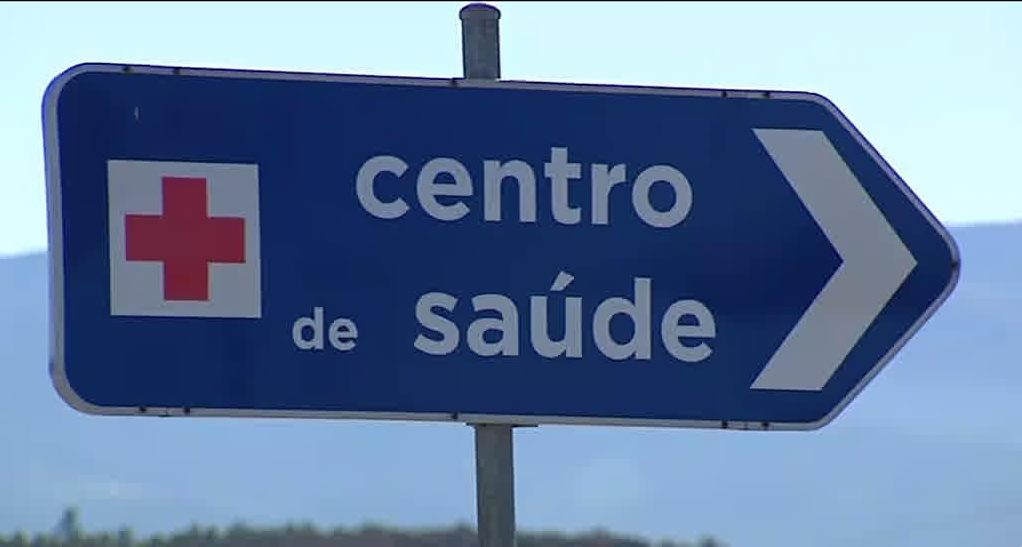
(2) Begin using the Portuguese health system by visiting our town’s “Centro de Saúde,” where our primary physician would be located, and explain that we would pay directly for the services we needed now.


Of course, everything would rely on Google Translate, since the number of Portuguese words we knew – and could pronounce – back then only had expanded from five to nearly ten. Plus, we are Americans who, unlike our EU brethren that arrive in another Schengen nation with health cards and coverage from their homelands, we only had emergency medical coverage through our travel insurance. And, although we had been here for a month already with residency visas affixed to our passports, it would be another 20 days until our SEF appointment, when (hopefully!) our residency visa and required paperwork would provide us with proper permits—at least for a year or two, to begin with. This residency, in turn, would enable us to register for the needed number to avail ourselves of the low-cost Portuguese health care system … even if we were to pay out of pocket or be covered by our private health care insurance.


Since I was retired and not earning income from either the USA or Portugal, I didn’t need to register, first, at the Castelo Branco Social Security office before requesting my health care number; later, Russ would learn, that – since he was working remotely with USA-based clients – he should have registered at Social Security and, then, sought his health care number.


We decided to take our chances, first, and visit our village health center. Armed with a print out of the Google-translated document explaining (in Portuguese) who we are and why we were there – along with our NIF documents, passports and visas, medical records, and empty prescription pill bottles – I ventured a try during a day and time the sign posted on its door said the health center would be open.


Only a nurse was there that day.


Using her best ten words of English interspersed with Portuguese, which I responded to with my only ten words of Portuguese interspersed with Spanish, I understood that she was telling me to come back the following Tuesday, after 10:00 AM, when the doctor would be there.


Unfortunately, the following Tuesday was one of those holidays to which the Portuguese people are entitled and they take quite seriously. So, of course, the health center was closed.


Attempting again two weeks later, we entered the health center to find a raucous group: people of all ages and medical conditions standing in the entry way or sitting in the waiting room, expecting to be seen by the doctor or nurse. The administrative assistant had taken a break to get some coffee from a café down the road a bit; we’d have to wait to talk with her before we could proceed any further.


Despite our introductory letter translated into Google’s best Brazilian Portuguese, the keeper of the files and records was at a total loss as to what to do and how to process us … after all, we didn’t have those specific numbers her computer program required to grant us access to the sanctum sanctorum. After discussing our situation with other patients waiting to register for the doctor (or nurse), she picked up the phone and dialed someone somewhere … raising her voice with each question she asked and every answer she gave.

After hearing her say, “Tá bem, tá bem, obrigada, obrigada, ciao,” she turned to me and managed to explain that we needed to go to the regional medical center in Alcains – about a 15-minute drive – at 15:00 and ask for Sandra, who had been made aware of our circumstances.


Sandra knew exactly who we were and why we were there. But figuring out which boxes to tick and how to input our personal information was a challenge that required 40 minutes and the help of three other people seated with her in the reception area. Finally, the printer spat out two pieces of paper from which she cut off the bottoms, stamped each with a seal, and signed them. “That will be nine euros,” she said, about US $10, “€4.50 each for the doctor’s consultation.”


She also gave us forms whose many boxes were populated with numbers now.


“The next time,” she explained, “You will go to your own health center in Lousa and show them these papers. They will now have the information they need to serve you there.”

“Muito obrigados!” we replied, effusive in our gratitude.


The doctor, who had been sitting there throughout the entire episode, motioned us to follow her back to her office. Seated behind her desk, she entered some information into a computer and gathered each of our medicines needing refills. Click, click, click. Out from the printer came official forms containing our prescriptions … along with the maximum amount we could be charged for each.


We left the Alcains medical center and headed for the pharmacy.


All told, we had prescriptions for 20 mg Cectoconazol (30 g) cream with three refills; fifty-six, 20 mg Omeprazol capsules (sold over-the-counter without a prescription in the USA), also with three refills; 120, 1 mg Alprazolam (generic Xanax) pills sold in “blister” packs, requiring a new prescription to refill; a blister pack of 60, 15 mg Meloxicam pills; and another blister pack of 60 pills combining two separate prescriptions – 20 mgs + 15 mgs of Olmesartan medoxomilo + Hidroclororotiazida (one for high blood pressure, the other a diuretic) — also with three refills.


The combined cost for all these 13 boxes of medicines, some of which will last us for six months?


Fifty-one euros.


Less than US $60.00.


And that’s without insurance, co-payments, or deductibles.


The same supply of pharmaceuticals – even with Medicare or health insurance – would easily cost us hundreds of dollars more (at least) in the USA. Because Portugal and Spain subsidize their health care, taking a major burden of their people: citizens and residents.


Believe it or not, the same Portuguese prescriptions cost even less in Spain!

Exceptional, low-cost health care is yet another reason why we do so love Iberia.


It’s patience that we still need to develop.

Shared here are personal observations, experiences, and happenstance that actually occurred to us as we moved from the USA to begin a new life in Portugal and Spain. Collected and compiled in EXPAT: Leaving the USA for Good, the book is available in hardcover, paperback, and eBook editions from Amazon and most online booksellers.

Processing…
Success! You're on the list.

January, First: Second Time

Since 2020 has been such a bummer, with restrictions on movements and gatherings continuing today into 2021, we aren’t able to host our annual Open House get-together with family, friends, and neighbors. So, I will make do by reminiscing — and sharing — last year’s “festa” and hoping that this new year will be a time of recovery for all!

Feliz ano novo.

The day dawned delightful during my early morning walk with the dogs, providing Portugal’s blue and bright skies amid a string of belle weather days. Already the sun was beginning to rise earlier … with the roosters advancing their “wake-up” calls, while the town’s bells never missed a beat.

With the help of Facebook to prod people with props and reminders, we had decided to continue our annual tradition of celebrating the New Year with an open house. Last year, we combined the open house with a house-warming, as it was our first, full year of living in Portugal (and Spain), and we’d finally finished furnishing and making needed improvements.

An open house wasn’t that difficult to describe to those who spoke Portuguese: we explained that we invited guests to visit, at their convenience, between certain times … “stay as long or as little as you can,” we clarified. A house-warming, however? It simply didn’t translate.

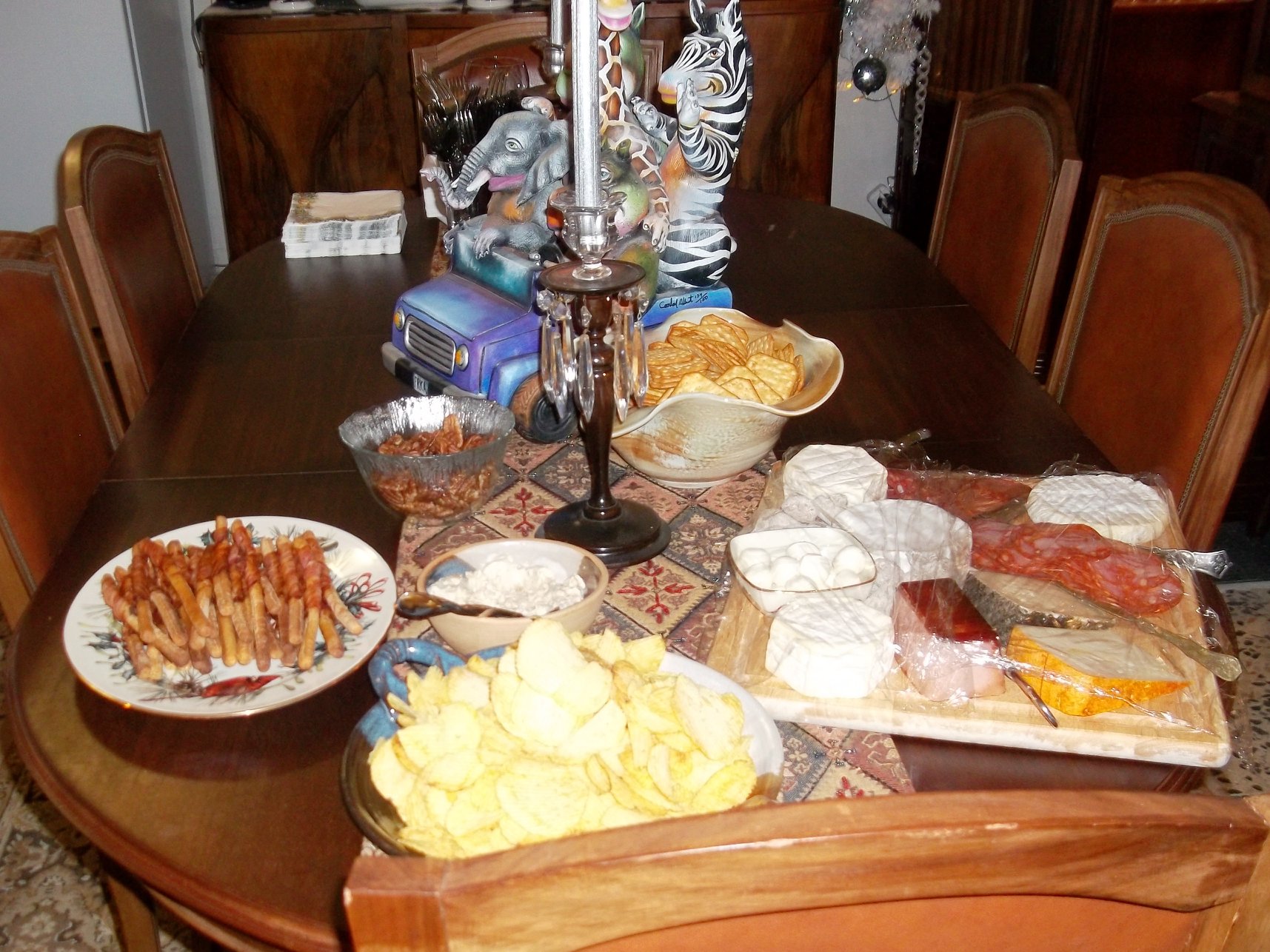
Along with wines and beers, a variety of cheeses and appetizers are joining our fulsome-food buffet: Pisto, a vegetarian dish I’d learned to prepare from my grandmother in Spain more than 50 years ago (though I’m told the Portuguese people are familiar with it, too); the quintessential American mac-and-cheese, embellished by Russ but done Martha Stewart’s way; a new twist on my annual pot of beans and franks—beans and chourizo; meatballs served in a special, Piri-Piri sauce; and a heaping bowl of home-made Potato Salad. Plus all the little “side dishes” and samplers, of course.

Together, they offer an aromatic stew of smells, coalescing to greet our guests: friends, old and new.Side by side, the crockpots seem like similes – or metaphors? – for our lives: One, a humble slow cooker with but three basic settings (high, medium, low) purchased from Lidl for 20 euros; the other an oversize, state-of-the-art gizmo with settings and options galore.

Kind of hokey, huh?

Apart from four of us from the USA, most of those coming had moved to Portugal from elsewhere, becoming friends (first) online or meeting at gatherings with friends of other friends. Altogether, about two dozen are expected.

Our Portuguese friends and neighbors were grateful for the invitation, but felt some hesitation – perhaps reticence – about entering houses other than their own to share food and festivities. These bountiful and gracious people, often poor in pocket but rich in heart and spirit, would knock on our door, dropping off baskets of vegetables and fruits from their family quintas throughout the year.

No longer are we those “strange Americans” living among them … by now, they had adopted us. We’ve become their strange Americans!

Despite my limited language skills last year, I felt confident enough to do the honors by introducing friends and neighbors in Portuguese:

• Ele é o nosso amigo/Ela é a nossa amiga (He/she is our friend);
• Eles são os nossos amigos (They’re our friends);
• Ela é a nossa vizinha (She is our neighbor);
• Eles são os nossos vizinhos (They are our neighbors); and even
• Ela é a dona do mercado na esquina (She owns the market on the corner).

This year, my vocabulary and ability to use it have expanded.

Since January 1, 2019, we have dealt with Portuguese contractors on home repairs and remodeling. We’ve traveled and got lost around the roundabouts—asking directions and, finally, finding our way. Processing down the street with our neighbors, we mourned the passing of people we knew, and participated in our village’s ferias by placing flower petals along the street. We made purchases – major and minor – and financial decisions, dealing with salespeople and bankers. We suffered medical exams with doctors and staff who didn’t speak English, answering their questions as best we could. And we responded to the dictates of government bureaucracy, as well as those of big business: Freguesias, Cámaras, Centros da Saúde, Segurança Social, IMT, SEF, NHS, MEO, EDP. We began weekly Portuguese for Foreigners classes, applying our lessons about contractions (no, na, nos, nas) to others: do, da, das, dos; pelo, pela, pelos, pelas. While sitting on the “throne,” we read Portuguese advertisements of all shapes and sizes, newspaper stories and obituaries, and children’s books. We figured out the meanings of various signs lit on the motorways

.Last year, we could ask and answer simple questions; now, we are able to ask natives to speak more slowly—to repeat or explain what we don’t understand. Nonetheless, we can engage in limited conversations and dialogues … even if our accents still are awful and it’s all in the present tense. Our Portuguese pronunciation often falters, but we have learned to say “shkola” (escola), “shkreetorio” (escritorio), and “shkadera” (escadera), although we’re still at a loss about blending the end of some words with the beginning of others.

We have even begun to punctuate our conversations with typical pause phrases in Portuguese: “tá bem,” “pois, pois,” “pronto,” “é que …?” as well as to interject common rejoinders: “Tudo bem?” and “Não faz mal,” especially.

Language like this from our Portuguese textbook no longer is quite so intimidating: O Fernando é elecricista e trabalha por conta própia. Ele é casado e tem tres filhos. Os filhos são ainda muito jovens e por isso não andam na escola. A mulher do Fernando, a Ines, fica em casa com os meninos e prepara o jantar para o Fernando. Ele não almoça em casa, porque mora longe. Ele apanha o autocarro e chega a casa sempre cansado.

Still, there are many challenges ahead!

Our New Year’s resolutions include learning to correctly respond to the divisions of the day, so we know when it’s proper to say “Bom dia,” “Boa tarde,” or “Boa noite.”

Apparently, during mornings – until lunch – it’s “bom dia” … but, after eating lunch (13H-14H for the Portuguese), it becomes “boa tarde.” As for evening, there’s still some disagreement over whether “boa noite” is best said after eating dinner (jantar) … or after the skies turn dark and stars can be seen. And, what does one say – if anything – following that curious extra meal of the day: “lanche”?

Another resolution is to memorize our fiscal numbers (os números contribuientes), although our “números utentes” already are a forgotten cause.

We are so thankful for all of you, people who understand … people who care and share … people who love to live and live to love … people who follow those impossible dreams.

This is what the good life is about.

Good people. Good times. Good places. Good feelings.

Feeling good, knowing that you’re in a good place now.

We are. And we hope you are, too.

Happy New Year!

Shared here are personal observations, experiences, and happenstance that actually occurred to us as we moved from the USA to begin a new life in Portugal and Spain. Collected and compiled in EXPAT: Leaving the USA for Good, the book is available in hardcover, paperback, and eBook editions from Amazon and most online booksellers.

Processing…
Success! You're on the list.

Reality Check Observations

From the daily and mundane to more complex matters that we tend to take for granted, the ways people in one country do things often differ quite a bit from how they’re done in another.

Take banking, for instance.

Checks are virtually unheard of here in Portugal and Spain. Instead, one does almost everything through “Multibanco” machines that do much more than disperse cash from your account, or allow you to move money from one account to another within the same bank.

You can pay bills and/or transfer money to other people, businesses, and government agencies … regardless of their bank. And those recurring charges—like your electric, water, car payment, insurance, and telecommunication bills? They’re billed to and paid directly by the bank, without you needing to lift a finger. Forgotten your personal IBAN number? You can obtain it — as well as a history of your transactions, withdrawals and money deposited — electronically through your home computer or mobile device and, of course, the Multibanco!

Driving is another activity that’s quite different on this side of the pond than the other. No, I’m not referring to which side of the road we drive on or where your vehicle’s steering wheel and pedals are located. It’s much more complicated than that.

Consider speeding …People where we live in Portugal tend to be either speed demons or slow pokes. They’ll tailgate your butt before pulling away and leap-frogging several vehicles to get ahead of you (even if you’re driving over the posted speed limit) … or they’ll drive you bonkers because of their motorcycle-cum-cars with sewing machine engines that slow everyone down, since they just can’t get up to and maintain speed.

Keeping up with (if not ahead of) traffic is the name of the game here. And, whether or not you’re driving fast “enough,” there are always those who want to drive faster. So, move onto those special “laggard lanes” on the right, where available, and allow others to pass you!

Speed “bumps” are serious here, big and high, rather than the puny strips usually found in the USA. Then there are those “rumble strips,” urging you to slow down—especially when approaching a stop or yield sign. And, each time you enter a village on a paved, country road, heed the “Velocidad Controlada” signs. Exceed the designated speed limit and you’ll automatically trigger a red traffic light. Those striped lines where passengers have the right-of-way to cross the street? They do! And roundabouts (???!!!) Personally, I loathe them; but many swear by them—no matter how convoluted or complex. Give me a good, old-fashioned red, green, and yellow traffic light any day—blinking or not!

Without rhyme or reason, and in no logical order, here are some other curious or odd observations we’ve noticed while living in Portugal and Spain, which make living here quite different than back in the colonies:

• Coin-chained supermarket carts cut down the clutter and damage caused by shopping carts abandoned, helter-skelter, in parking lots.

• I’m not particularly a fan of “soft” drinks or soda “pop.” But, every so often I do crave a Coke or Pepsi. Sugar (not artificial sweeteners) is used here. Likewise, I’ve yet to pick up a bottle or can of almost any condiment and found the equivalent of “High Fructose Corn Syrup” listed as an ingredient. Someone told me that such preservatives are prohibited here. If so, good for us!

And forget about meals eaten at “American times.” Restaurants don’t even open here for dinner before 7:00 PM … and few tables are taken earlier than 20:00.

• Food and drink beg mentioning the sensitive topic of tipping. In the USA, where restaurant workers and other service providers frequently earn less than the minimum wage, tipping is appreciated and practiced – especially for superior service – typically to the tune of 15%-20% of the bill. (Some restaurants now automatically add a “courtesy charge” gratuity to your tab.) While certainly appreciated, tipping isn’t expected or necessarily proffered in the smaller towns of Spain and Portugal. Most people we know who do tip, will leave one euro or fifty cents for a €20-25 bill. Still, the workers are surprised … and genuinely grateful.

• Vehicle license plates (“tags”) stay with the car in Portugal and don’t change with each new owner. Look at the plate: you’ll know the month and year when a vehicle was first registered and put on the road.

• Used cars come with an obligatory full year warranty in Portugal, rather than 30-60 days of “power train” coverage. But, there’s more paperwork required before you drive a car off the dealer’s lot: among other things, you’d best bring acceptable documentation attesting that there’s adequate insurance coverage in effect on said vehicle.

• Pets need to wear seat belts when out in the car, driving with their families. It’s the law here. We’re not talking about those improbable imitations of baby car seats adapted to dogs (or cats), but a leash that attaches to your pet’s collar on one end and gets inserted to the seat belt buckle/clasp on the other. There’s plenty of leeway for the dogs to sit, stand, lie down, even roll over … but they can’t jump out the car window or bolt from a door that accidentally opens. Rather not tether them using these pet seat belts? Then, you’ll need to transport them in appropriate pet carriers.

• People, by and large, tend to treat their pets (especially dogs) differently in Portugal and Spain than do Americans. It’s not that they don’t love them or consider them part of their families, it’s just that the psychology – between both people and pets – differs from what we’ve been used to in the USA. We’re those “Americanos lo/u/cos” who treat their pets like surrogate children and walk their dogs on leashes, picking up after them and depositing their litter in refuse receptacle bins. Most small town Portuguese and Spaniards open the door and let their dogs (and cats) out to roam the streets and take care of their business. After all, it’s their business … not theirs.

• Expanding into more personal hygiene, at the risk of being offensive, it behooves me to mention bidets and toilets. Most Americans know what bidets are, even if we find them somewhat redundant. All I will say is, “Try it, you’ll like it.” As regards the even more sensitive subject of toilets, let’s just say that the paper here isn’t what Charmin has led us to expect. Few small towns and villages here have plumbing that can accommodate anything other than human waste, which means that tampons, tissues, paper towels, and even toilet paper must be disposed of alternatively (and appropriately).

• Houses shouldn’t be money pits—so, people, not houses, are heated and cooled. Outside the USA, fuel and petrol-based products cost more. Why heat or cool an entire house, when we’re occupying only certain rooms or areas? Unlike the USA, where whole houses often are “air conditioned” — heated or cooled — including rooms and spaces that aren’t in use or occupied, Europeans use “inverter” units in separate rooms. When sleeping, the bedroom aircon is turned on. Feeling cold while entertaining company? Only wood burners, pellet stoves, or space heaters in the kitchen, dining area, and/or gathering space need to be operating, while the rest of the house isn’t consuming energy. No need to keep a tank heated–just heat the water when/if you need it. Gas-powered water heaters provide an unending stream of hot water (until the gas tank runs dry, usually at the most awkward and uncomfortable moments).

• Mediterranean Europeans – those from Portugal, Spain, and Italy especially – enjoy their long lunch “hours.” They wouldn’t think of working on vacation days or many “ferias” and holidays celebrated throughout the year. Often, they don’t begin work before 10:00 AM and pace themselves according to their internal dictates and physical needs, rather than external schedules and time clocks.

• Is Portugal alone among the Romance languages in the way it counts and designates days? Spanish, French, and Italian all have similar words for Monday (Lunes, Lundi, Lunedi) through Saturday (Sábado, Samedi, Sabato) and Sunday (Domingo, Dimanche, Domenica) … but, when it comes to Portuguese, except for the weekend, the days of the week are determined by when they fall in terms of Sunday as the first day of the week and market days: Segunda-feria (Monday), Terça (Tuesday), Sexta-feria (Friday). It’s too confusing for me to keep count!

• I’d be doing us all a disservice if not mentioning the need to come to grips with international weights and measures. With my trusted tape measure, I can deal with centimeters vs. inches. But I always go online to convert kilos to pounds and kilometers to miles. Forget about converting temperatures between Celsius vs. Farenheit. Nobody will ever convince me that an infernal 118ºF isn’t hotter than 48ºC … or that 0ºC isn’t colder than its 32ºF equivalent!

Obviously, these are just my personal observations … and some may be skewed or faulty. Nonetheless, Russ and I believe ourselves better off now because of these differences that teach us to value the customs of one country – and its culture – even when compared to another.

Maybe you have observed other comparative distinctions between life as an expat here and your prior experiences elsewhere. Please, share them so that others can be better prepared to appreciate the value of our diverse ways and means.

Shared here are personal observations, experiences, and happenstance that actually occurred to us as we moved from the USA to begin a new life in Portugal and Spain. Collected and compiled in EXPAT: Leaving the USA for Good, the book is available in hardcover, paperback, and eBook editions from Amazon and most online booksellers.

Processing…
Success! You're on the list.

Days of Summer Past

It’s just about six o’clock Friday afternoon in our village, and it appears that everyone is out in the street.

After a relatively mild and overcast day, the sun suddenly is bright and burning off the sticky skies.That is rather unusual here in Portugal, whose weather tends to feel more like a sauna than a steam bath during the summer season … and cold, dreary, overcast skies with rain in the winter.

Little old ladies wearing their black widow’s weeds move slowly, some clutching canes and others with walkers, heading towards the church. There are services tonight, not to be missed, although the widows let me know that church services are held every day here.

Seated on the wall which encircles the church, elderly men, solitary yet together, form a ring. They won’t go inside. For them, it seems far safer to comment on their world, to cuss and complain about whatever, than to seek shelter or solace in the sanctuary.

Others, too, sit outside, in front of their houses, where it’s cooler in the shadows cast by houses so closely facing theirs. Men use handkerchiefs or rags to wipe sweat from their brows, while the women – some of them, at least – fan themselves, slowly but surely, with advertising circulars.

People are arriving home from work, with far too many vessels clogging and clotting the capillaries doing the work of major arteries on our tight little “main” street. They’re impatient.

Already, they’ve been held up by a tractor inching slowly, cobble by stone, down the road, as a shepherd and two dogs herd some sheep along the way. Then, there’s a truck, blocking traffic, as it stops to unload groceries at the corner market.

Once the sheep and the truck and the tractor are out of the way, some drivers speed down the little road as if it’s the Grand Prix, cell phones held up in one hand and cigarettes dangling from the other. Several mostly older men, with their wives as passengers, steadfastly refuse to press the accelerator and go any faster; why risk losing control, when they’ll get there soon enough?

The smell of diesel fumes is intoxicating, anyway.

Ironically, unlike other places filled with anxious people squeezing too many vehicles into hold-your-breath spaces, nobody honks a horn.

It’s just not the way things are done here.

Just about now, the bus pulls up to the periphery of town, discharging a stream of people who’d left early this morning to work in the big city. They, too, crowd the street, trekking tiredly towards their homes.

But, first, they must stop for coffee.

Vehicles – cars, trucks, vans, tractors, and trailers – jockey for position to park three deep by coffee shops on streets where founders and planners hardly envisioned vehicles when building such towns and villages. Maybe they didn’t consider the implications of getting around in a place with three coffee shops, but not a single place to eat here in Lousa. So, vehicles are unattended momentarily, motors still running, while their occupants dash off for their evening coffee fixes.

Meanwhile, the young folks – old enough to drive Mercedes-Benzes and BMWs, souped-up Fiats, Renaults, Citroens and Peugeots … and roaring motos, especially – are eager to escape, to get out of town and go elsewhere. Somewhere. Anywhere but here.

Right about when things seem to be less hectic, disaster unexpectedly strikes: a truck too big for our street and driven too fast, lops off the balcony of a nearby house. Concrete and balustrades topple heavily onto the street. Everything halts, as the momentary shock and silence quickly yield to a collective gasp that grips and takes hold in the village.

Suddenly, everyone is drawn, like a dragnet to the magnet, flies to a spider’s net. People stand around, beers (not coffee) in hand, some puffing on cigarettes, opining on what happened.

No, it wasn’t a “hit-and-run” … the driver, head hung sheepishly, is there among the crowd, too, looking up to the missing terrace and around to the scrapes along the side of his truck and its missing mirror. He shakes his head in amazement.

Somebody hands him a beer.

Slowly, as the sun sets, people disperse and quiet returns to our village, except behind the closed doors and fly curtains. It’s cool now. People are inside, watching television with the volume turned up too loud. The church bells peal.

It’s Friday night in the village.

Tomorrow, the days of counting – segunda, terça, quarta, quinta, sexta-feira – will be over for now and days with real names, Saturday and Sunday, will have begun.

Welcome to the weekend.

Bom fin de semana!

Shared here are personal observations, experiences, and happenstance that actually occurred to us as we moved from the USA to begin a new life in Portugal and Spain. Collected and compiled in EXPAT: Leaving the USA for Good, the book is available in hardcover, paperback, and eBook editions from Amazon and most online booksellers.

Processing…
Success! You're on the list.