I may be a pastor, but I question the efficacy of intercessory prayer. Personally, I believe that prayer comforts the one praying more than it helps the intended beneficiary.
I don’t understand or respect why he was there, but I will light a candle for Corey Comperatore, the former fire chief killed at the Pennsylvania rally who spent his final moments diving down in front of his family, protecting them from the gunfire.
Remember when Jesus came upon a gang of zealots about to stone a woman for allegedly committing adultery? Each lay down his rocks when Jesus reminded them that the one among them without sin should be the first to throw a rock. One by one, they left … realizing that none of us is without indignities or indiscretions.
The man I’ve been asked to pray for — because his ear was pinged either by a bullet or a stray piece of glass — has used his bully pulpit to throw lots of rocks, warning the world about bloodshed if he doesn’t win. He’s called for chaos, using tear gas for his convenience to empty a park so he could have a photo op in front of a church with an upside-down Bible. He’s published his own Bible. He floated the idea of executing Joint Chiefs Chairman Mark Milley, inciting violence against the nation’s top general. He mocked the attack on Paul Pelosi. And he repeatedly has promised to weaponize the federal government by pursuing revenge, retaliation, and retribution against his political enemies.
Analyzing over 13,000 of his Truth Social posts from January 1, 2023 to April 1, 2024, media found that threatening political opponents has been a consistent fixation for him. Since the start of last year, he has issued direct or implied threats to use the powers of the federal government to target Joe Biden at least 25 times. He’s also threatened or suggested that the FBI and the Department of Justice should take action against senators, judges, members of Biden’s family and even non-governmental organizations. ABC News found 54 cases invoking his name in connection with violence, threats, alleged assaults. He declared New York Justice Juan Merchan a “highly conflicted” overseer of a “kangaroo court” and his supporters swiftly replied to his Truth Social post with a blitz of attacks on the judge. Some called for Merchan and other judges hearing cases against Trump to be killed.
As he was taken away from the rally and to a hospital, his campaign power brokers declared that the pictures of him punching the air with blood trickling down his face would become “iconic,” all too useful in painting him a strong man contrasted with his weak opponent. Such were their calculations during this photo opportunity. They will be especially useful motifs for the Republican Convention beginning today.
Indeed, the attempted assassination sparked a frenzy of online merchandise featuring pictures of the former president just after he was shot, with slogans such as “Bulletproof,” “Legends Never Die,” “Grazed but not Dazed,” and “Shooting Makes Me Stronger.”
Didn’t Jesus preach that we’re to love our enemies? Bless them that curse us? Do good to them that hate us? And pray for them who despitefully used and persecute us? (Matthew 5:43-44) Yes, he did. But he also warned that “blasphemy against the Holy Spirit will not be forgiven,” which I believe this man has committed.
Devout Jewish people traditionally throw food to the fish during their High Holidays — Rosh Hashanah and Yom Kippur — each year, as instructed by Ecclesiastes 11:1–“Send out your bread upon the waters, for after many days you will get it back” (NSRV), or this translation from the Complete Jewish Bible, “Send your resources out over the seas; eventually you will reap a return,” or this one from the Living Bible: “Give generously, for your gifts will return to you later.”
This verse about diligence is open to many interpretations.
But in the case of the former president, I believe that Ecclesiastes 11:1 was fulfilled this past Saturday night.
Pastor, professor, publisher, and journalist Bruce H. Joffe is an award-winning author of magazine features, academic research, journal articles, self-help manuals, and newspaper stories. His nine books deal with international (intercultural) living, progressive theology, gender studies, “social” politics, our vulnerabilities, marketing, and the media.
Processing…
Success! You're on the list.
Whoops! There was an error and we couldn't process your subscription. Please reload the page and try again.
As genocide takes its toll in accordance with verses in which we’re told, “You must purge the evil from among you,” the Bible is complicit in many of the wholesale massacres and slaughters we’ve seen in the modern-day world … in places like Haiti, India, Zimbabwe, Turkey, Uganda, Russia, Ukraine, Serbia, Nepal, Rwanda, Afghanistan, Lebanon, The Solomon Islands, Ethiopia, Bosnia, Bangladesh, Brazil, Indonesia, and Cambodia. And certainly, of course, in Israel and the Gaza Strip.
Nor can we forget the United States, whose history is filled with a lack of tolerance for those who are “different” from mainstream WASPs and whose support has contributed to the killing of many in lands near and far. Former USA President Donald J. Trump used the fascist terminology “vermin” to describe immigrants, as he shouted words then repeated by others, that immigrants are “poisoning the blood of our country.”
Organized murder, the deliberate killing of many people from a particular nation or ethnic group with the aim of destroying that nation or group is genocide.
Sadly, it’s all around us.
For progressives and literalists, I wonder how many of these human slaughters can be attributed to the words not of God but men—Moses and the Apostle Paul, in particular: “You must purge the evil from among you.”
First found in Deuteronomy, the fifth book of the Bible and the conclusion of the Pentateuch, Moses wrote these words in the form of a farewell address to the Israelites before they entered the promised land under Joshua’s leadership.
In Deuteronomy alone, “… you must purge the evil from among you” appears eight separate times … in 13:5, 17:7, 17:12, 19:19, 21:21, 22:21, 22:22, and 24:7. Later, Paul alludes to these verses but embellishes their word in I Corinthians 5:13, “But God will judge those outside. Remove he evil person from among you.”
Ironically, these words were turned inside-out, with Jewish people in their homeland and across their diaspora the victims.
As early as 605 BCE, Jews who lived in the Neo-Babylonian Empire were prosecuted and deported. Antisemitism was practiced by the governments of many empires (i.e., Roman) and the adherents of many religions (i.e., Christianity, Islam) and Jews were often used as scapegoats for tragedies and disasters—from the Inquisition and pogroms to the Holocaust, Hitler’s “final solution” for purging “the evil” he believed had infiltrated his Aryan nation, Jewish people have suffered unmercifully.
Now, the shoe is on the other foot as modern-day Israelites under the direction of Prime Minister Benjamin Netanyahu are deliberately killing Hamas in Gaza … along with thousand of innocent people—Palestinians, young and old. Not that their attacks weren’t provoked or justified when, last October 7th, a barrage of at least 3,000 rockets were launched against Israel.
Hamas fighters breached the Gaza–Israel barrier, attacking military bases and massacring civilians. The attackers killed 1,139 people: 695 Israeli civilians (including 36 children); 71 foreign nationals; and 373 members of the security forces. About 250 Israeli civilians and soldiers were taken as hostages to the Gaza Strip, including 30 children.
The attacks consequently started the expansive Israel–Hamas war.
Every time these genocides occur, the world insists “never again.” But the political, religious, and moral blind spots that allow these atrocities will persist until anti-religious doctrines are disputed and the lessons of history are learned.
“You shall purge the evil from among you.”
Indeed.
Pastor, professor, publisher, and journalist Bruce H. Joffe is the award-winning author of magazine features, academic research, journal articles, self-help manuals, and newspaper bylines. His nine books deal with international (intercultural) living, interfaith theology, gender studies, “social” politics, marketing, and the media.
Processing…
Success! You're on the list.
Whoops! There was an error and we couldn't process your subscription. Please reload the page and try again.
Recently, a member of my spiritual community contacted me privately, seeking my advice. Married for years in a committed and loving relationship, he now found himself attracted to and caring about another. Is that a sin, he wanted to know, and what should(n’t) he do about it? The plot thickened because all three people involved were of the same sex. My interlocutor found himself increasingly thinking about the other. Although “nothing” had happened between the two, he was suffering pangs of guilt. What could I say to him? How could I help?
Takeaways:
• Biblical adultery is restricted to a man having sexual relations with another man’s wife. It occurs only within the confines and context of marriage.
• Jesus addresses adultery specifically as a matter between a man and a woman.
• “Sin” is open to many interpretations, understandings, and translations.
• Adam was the first of many Bible men to have more than one wife.
• The Bible appears to support “polygyny” (one man, two or more women in marriage), but not “polyandry” (one woman, two or more men in marriage).
• Although the Hebrew scriptures describe numerous examples of polygamy among God’s devotees, most Christian groups have historically rejected the practice.
• Polygamy is illegal and criminalized in every country in North and South America, including all 50 U.S. states. However, in February 2020, the Utah House and Senate reduced the punishment for consensual polygamy, which had previously been classified as a felony, to roughly equivalent to a traffic ticket.
Starting with the Seventh Commandment – “You shall not commit adultery” (Exodus 20:14) – the Bible is implicit in its condemnation of adultery. Later, in Leviticus 20:10, punishment for being involved in adultery was mandated: “If a man commits adultery with another man’s wife — with the wife of his neighbor — both the adulterer and the adulteress are to be put to death.”
Notice, please, that adultery in this passage is restricted to a man having sexual relations (or whatever constituted “adultery” back then) with another man’s wife.
According to Easton’s Bible Dictionary, the simple meaning of adultery is marital infidelity. An adulterer is a man who has illicit intercourse with a married or a betrothed woman, and such a woman is an adulteress.
And what did Jesus say about adultery?
John 8:3-11 (NIV) tells this story: The teachers of the law and the Pharisees brought in a woman caught in adultery. They made her stand before the group and said to Jesus, “Teacher, this woman was caught in the act of adultery. In the Law Moses commanded us to stone such women. Now what do you say?” They were using this question as a trap, in order to have a basis for accusing him. But Jesus bent down and started to write on the ground with his finger. When they kept on questioning him, he straightened up and said to them, “Let any one of you who is without sin be the first to throw a stone at her.” Again he stooped down and wrote on the ground. At this, those who heard began to go away one at a time, the older ones first, until only Jesus was left, with the woman still standing there. Jesus straightened up and asked her, “Woman, where are they? Has no one condemned you?” “No one, sir,” she said. “Then neither do I condemn you,” Jesus declared, “Go now and leave your life of sin.”
What, I wonder, was Jesus writing on the ground?
Elsewhere, in Matthew 5:27-28, Jesus says, “You have heard that it was said, ‘You shall not commit adultery.’ But I tell you that anyone who looks at a woman lustfully has already committed adultery with her in his heart.”
Jesus, too, addresses adultery here as specifically a matter between a man and a woman. What about same-sex adultery, as my congregant had asked?
I don’t know about you but, for me, denying physical attraction to someone is one of those beatitudes that is easier to preach about than to practice. Like loving those who hate you. Not resisting an evil person. Praying for those who persecute you. Turning the other cheek. Loaning money to those who ask. Being perfect. And walking that extra mile.
All take a spirit and soul bigger than mine.
My own shortcomings reminded me not to rush to judgment when responding to the questions I had been asked. After all, didn’t I look beyond the literal when it comes to the larger and/or metaphorical meaning of the scriptures? What conclusions would I reach, I wondered, if I scratched beneath the surface of these verses about marriage and marital fidelity?
First, I needed to wrestle with the idea of sin. What is sin and to be sinful?
The dictionary offers two definitions: (1) an immoral act considered to be a transgression against divine law, and (2) to offend against (God, a person, or a principle).The Encyclopedia Britannica says that sin is a moral evil as considered from a religious standpoint. In Judaism and Christianity, sin is regarded as the deliberate and purposeful violation of the will of God. Elsewhere, sin is called “a corrupted state of human nature in which the self is estranged from God.” In the Old Testament, the word for sin is “khata,” meaning “to fail” or “to miss the goal.”
According to the Torah, the standard noun for sin is ḥeṭ (verb: hata), meaning to “miss the mark” or “sin.” The word avon is often translated as “iniquity”, i.e. a sin done out of moral failing. The word pesha, or “trespasss,” means a sin done out of rebelliousness. The word resha refers to an act committed with wicked intent.
How did Jesus work around sin?
In John 8:34, he tells the unbelieving Pharisees, “Truly, truly, I say to you, everyone who commits sin is the slave of sin.”
Paul, as usual, is conflicted:
“I do not understand what I do. For what I want to do I do not do, but what I hate I do. And if I do what I do not want to do, I agree that the law is good. As it is, it is no longer I myself who do it, but it is sin living in me. For I know that good itself does not dwell in me, that is, in my sinful nature. For I have the desire to do what is good, but I cannot carry it out. For I do not do the good I want to do, but the evil I do not want to do—this I keep on doing. Now if I do what I do not want to do, it is no longer I who do it, but it is sin living in me that does it.” (Romans 7:15-20)
The Bible seems to indicate that there are degrees of sin—that some are more detestable to God than others (Deuteronomy 25:16; Proverbs 6:16-19). However, when it comes to the “eternal consequences of sin,” all are the same. Every sin, every act of rebellion, leads to condemnation and eternal death (Romans 6:23), Paul insists.
As always, I look beneath and beyond the words written in a different time to people whose culture was different than ours, and then transcribed from oral traditions, redacted, and translated from one dialect to other languages. Similarly, I’m hesitant to accept the Apostle Paul’s edicts as gospel, or to explain one dubious scripture by citing another.
Consider, for example, this egregious assessment of marriage rites and rituals proposed by Paul – aka Saul the Pharisee – who, to the best of our knowledge, hadn’t been in any relationship with a woman, let alone married to one:
“Wives, submit to your own husbands, as to the Lord. For the husband is the head of the wife even as Christ is the head of the church, his body, and is himself its Savior. Now as the church submits to Christ, so also wives should submit in everything to their husbands. Husbands, love your wives, as Christ loved the church and gave himself up for her, that he might sanctify her, having cleansed her by the washing of water with the word, so that he might present the church to himself in splendor, without spot or wrinkle or any such thing, that she might be holy and without blemish.” (Ephesians 5:22–27)
Similarly, I take with a large grain of salt Paul’s further pronouncements on marriage in 1 Corinthians 7:2–5:
“But because of the temptation to sexual immorality, each man should have his own wife and each woman her own husband. The husband should give to his wife her conjugal rights, and likewise the wife to her husband. For the wife does not have authority over her own body, but the husband does. Likewise the husband does not have authority over his own body, but the wife does. Do not deprive one another, except perhaps by agreement for a limited time, that you may devote yourselves to prayer; but then come together again, so that Satan may not tempt you because of your lack of self-control.”
Curiously, apart from Paul, the Bible has very little to say about the specifics of marriage and adultery, per se, although they’re inherent to civil and ecclesiastical dictates. When searching the scriptures and religious traditions about marriage and marital infidelity, we open a Pandora’s box of conflicting facts and folklore … especially when adding polyamorous relationships to the equation.
God, many believe, designed marriage as the place for the expression of human sexuality. Sex within marriage has both relational and spiritual benefits. It also has the practical benefit of reducing the temptation to engage in sex outside of marriage.
Sometimes … but not always.
Research from the past two decades shows that between 20 and 25 percent of married men cheat and between 10 and 15 percent of married women cheat, according to Professor Nicholas Wolfinger, a professor of family and consumer studies at the University of Utah.
Written by Nathaniel Hawthorne, The Scarlet Letter is a dark romantic story about a woman and her minister who had an affair and are punished by Puritan society.
The institutional church believes adultery, divorce, remarriage after divorce, marriage without the intent to transmit life, polygamy, incest, child abuse, free union, and trial marriage are sins against the dignity of marriage:
“As first described in Genesis and later affirmed by Jesus, marriage is a covenantal relationship between a man and a woman. This lifelong, sexually exclusive relationship brings children into the world and thus sustains the stewardship of the earth. Biblical marriage — marked by faithfulness, sacrificial love, and joy — displays the relationship between God and his people,” posits the National Association of Evangelicals.
Matthew quotes Jesus as saying: “It was also said, ‘Whoever divorces his wife, except on the grounds of porneia (sexual immorality), makes her an adulteress; and whoever marries a divorced woman commits adultery.” (Matthew 5:31-32).
Of this I am certain: According to the Bible, adultery only occurs within the confines and context of marriage. Far less sure, however, were Bible “givens” that I had overlooked or not fully comprehended because they made me uneasy based on today’s social norms.
Polygamy, for instance …
In the Bible, it is written of Adam that, “Then the LORD God said, ‘It is not good that the man should be alone; I will make him a helper fit for him.’” (Genesis 2:18). In this instance, help meet means a help that is meet (proper) for Adam, and the term has since been transformed into helpmeet, or helpmate.
God, it follows, brings to Adam all the livestock, birds, and beasts of the field. None of these, however, proves to be “fit for” the man. “Fit for him” or “matching him” (ESV footnote), scholars maintain, is not the same as “like him,” providing a plausible reason that God didn’t bring Adam another man.
“Two are better than one, because they have a good reward for their toil. For if they fall, one will lift up his fellow. But woe to him who is alone when he falls and has not another to lift him up!” we’re told in Ecclesiastes 4:9-10. The wise person works side by side with another, enjoying a good reward and finding help in times of need.
In Genesis 2:23–24 we read that, “Then the man said, ‘This at last is bone of my bones and flesh of my flesh; she shall be called Woman, because she was taken out of Man.”
Notice that it is Adam, not God, who is speaking. And remember that there is more than one creation story! Christians try to use Adam and Eve as a prototype for how all marriages should be. The problem is that the ancient Hebrews did not interpret the story of Adam and Eve in this manner.
For instance, how many wives did Adam have? According to some sources, he had two. Although not mentioned directly in the Bible, according to Jewish lore, Lilith, Adam’s first wife, explains the two contradictory versions of Creation within the book of Genesis.
One of the rabbinic folklore books, the medieval Alphabet of ben Sirach, gives an alternate version of the story of Adam and Eve. In this version, God decides it is bad for Adam to be alone, so he makes a woman named Lilith. Lilith and Adam have an argument about their sexual relations, and Lilith leaves Adam.
Unlike Eve, who we’re told was made from one of Adam’s ribs, and who agreed to be subservient to Adam, Lilith was made from the same clay as Adam, as his equal, and she refused to be obedient to Adam … which is why she was ejected from the Garden of Eden. In other words, Lilith was a very modern woman, a feminist’s woman, and the authors of the Bible chose to leave her out, setting Adam along another path, the path of the Patriarchy.
Adam was the first of many to have more than one wife or concubine. The list includes such notable patriarchs and kings as Esau (Gen 26:34; 28:6-9), Jacob (Gen 29:15-28), Elkanah (1 Samuel 1:1-8), David (1 Samuel 25:39-44; 2 Samuel 3:2-5; 5:13-16), and Solomon (1 Kings 11:1-3).
Abraham had a second wife, Hagar, who played an important role as his wife and mother of Ishmael. As such, she is an essential figure within Judaism, Christianity, and Islam. In Genesis 16, she is introduced as an Egyptian slave woman who belongs to Abraham’s wife, Sarah.
Jacob ended up having four wives out of whom came the tribes of Israel. Hannah was a baron wife out of a plural marriage; King David had several, and his son, Solomon had 700 wives and many concubines—including the Queen of Sheba! The only wife of King Solomon known by her personal name was Naamah, the Ammonite princess, mother of Rehoboam, heir to the throne.
“King Solomon, however, loved many foreign women besides Pharaoh’s daughter—Moabites, Ammonites, Edomites, Sidonians and Hittites. They were from nations about which the Lord had told the Israelites, ‘You must not intermarry with them, because they will surely turn your hearts after their gods.’ Nevertheless, Solomon held fast to them in love. He had seven hundred wives of royal birth and three hundred concubines, and his wives led him astray.” (I Kings 11: 1-3)
Miriam and Aaron were jealous because Moses had two wives and more of his attention would be taken by the newly married woman. (Numbers 12:1-10)
This is what God said to David after he cheated on his wives with Bathsheba: “I gave you your master’s house and your master’s wives into your keeping, and gave you the house of Israel and Judah. And if that had been too little, I also would have given you much more!” (1 Sam. 12:8)
Although some Christians argue that polygamy is a sin because it’s adultery. the Bible appears to support “polygyny” (one man, two or more women in marriage), but not “polyandry.” Women could have only one husband, and certainly no male concubines. Women who had sex with a man other than their legal husband were considered adulteresses, and those men were thought of as illegally robbing her husband of his possession: his wife.
“I first started to question what I was being taught at Bible college when I was in my 1&2 Samuel class, and the teacher kept saying that polygamy is a sin. I raised my hand and asked where in the Bible it said that specifically. He didn’t have an answer so he said he would ask the director of the Bible college and get back to me,” a classmate of mine in seminary said. “So, next class I raised my hand again and asked if he had an answer. He flatly said, ‘nowhere in the Bible does it say that polygamy is a sin; but it is not recommended because it can detract from a person’s focus on God.’ And then he said, ‘It’s also currently illegal in this country and God calls us to follow the laws of the land.’ Then he changed the topic. The more I thought about it, the more I realized modern Christians were trying to insert their own biased views on monogamy into the Scriptures.”
The debate focuses almost exclusively on polygyny (one man having more than one wife) and not polyandry (one woman having more than one husband), as polyandry is specifically outlawed by the Hebrew Bible’s laws of adultery, which narrowly define adultery as the practice of polyandry by or with an already married (or betrothed) female.
Ashkenazi and Sephardic rabbis passed decrees in the Middle Ages forbidding polygamy and the law in Israel, which is mostly secular in any case, does not recognize or permit it. With the founding of the modern State of Israel, a number of Yemenite Jewish men immigrated with their multiple wives. The government allowed them to keep the wives they brought with them but did not allow them to take on additional wives. This was done out of compassion for the wives, who were already dependent on their husbands.
Technically, polygamy is still allowed in Judaism (since it is allowed in the Torah), but if a man wants to take on a second wife, he needs to have a petition allowing him to do this signed by 100 rabbis. In principle, this should be done only under dire circumstances. The best example I heard is that of a man whose wife is institutionalized due to a severe mental illness. Since Jewish law forbids divorce under these circumstances, the man could be allowed to take on a second wife. Note that in such a case he would no longer be living with the first wife. The Orthodox rabbi who explained this said that it should apply only in the case of a young couple, especially when the man is responsible for raising his children. It should not be used for an older man whose wife develops Alzheimers late in life.
Judaism has never allowed a woman to have two husbands simultaneously.
Although the Hebrew scriptures describe numerous examples of polygamy among devotees to God, most Christian groups have historically rejected the practice and upheld monogamy alone as normative. Nevertheless, some Christian groups in different periods have practiced, or currently do practice, polygamy. Some Christians actively debate whether the New Testament or Christian ethics allows or forbids polygamy, and there are several Christian views on the “Old Covenant.”
The debate focuses almost exclusively on polygyny (one man having more than one wife) and not polyandry (one woman having more than one husband), as polyandry is specifically outlawed by the Hebrew Bible’s laws of adultery, which narrowly define adultery as the practice of polyandry by or with an already married (or betrothed) female.
Mormon men can lawfully have only one wife. The practice of polygamy, the marriage of more than one woman to the same man, was practiced by Church members from the 1830s until the early 1900s.
Marriage is a sacred institution in Islam with very important objectives. In most cases, the objective is achieved through monogamy. In certain situations, however, a man is allowed to marry more than one wife, with the condition that he treats his wives with justice and takes the decision with Taqwa or “God Consciousness.” Verse 3 of Surah 4 An-Nisa (Women) declares that a man may marry up to four women under specific (and debated) circumstances. In observance of this text, many Muslim countries allow a man to have up to four wives. However, many also require the man to state whether he plans to be monogamous or polygamous as part of the marriage agreement with his first wife, and if she disallows it, he cannot marry another wife while married to her. Polyandry, in which a wife has multiple husbands, is still strictly prohibited.
The idea that Islam allows polygamy so that men could pursue lust and as an excuse to fulfill sensual desires is a far cry from what the religion seeks to achieve.
Time and again, the question of polygamy in Islam is raised as a grave issue and a big hurdle to any serious discussions about the faith. The general idea is to ask: How can Islam claim that there is gender equality when it allows men to marry up to four wives? If men can have multiple wives, why are women also not allowed to marry more than one husband?
Research from the past two decades shows that between 20 and 25 percent of married men cheat and between 10 and 15 percent of married women cheat, according to Professor Nicholas Wolfinger, a professor of family and consumer studies at the University of Utah.
Most countries that criminalize adultery are those where the dominant religion is Islam, and several sub-Saharan African Christian-majority countries, but there are some notable exceptions to this rule, namely the Philippines and 17 U.S. states (as well as Puerto Rico). State laws typically define adultery as vaginal intercourse only. Therefore, two people seen kissing, groping, or engaged in oral sex, may not meet a state’s legal definition of adultery.
In the USA, laws vary from state to state. Although rarely prosecuted, adultery is still on the statute books and penalty may vary from a fine of few dollars to even life sentence. But in the US military, it is an impending court-martial crime.
State laws typically define adultery as vaginal intercourse only. Therefore, two people seen kissing, groping, or engaged in oral sex may not meet a state’s legal definition of adultery.
The legal status of polygamy varies from country to country, with each nation outlawing, accepting, or encouraging polygamy. In those countries that accept or encourage polygamy, polygyny is most common. In countries where only monogamous marriage is legally valid, de facto polygamy is typically allowed if adultery is not illegal. In regions such as these, in which polygamy is outlawed but tolerated, additional spouses after the first are not legally recognized.
With the exception of the Solomon Islands, polygamous marriages are not recognized in Europe and Oceania. In India, Malaysia, the Philippines, and Singapore, the governments recognize polygamous marriages, but only for Muslims. In Australia, polygamous marriage is outlawed, but polygamous relationships are common within some indigenous Australian communities. In Indonesia, polygamy is legal in some areas, such as in Bali, Papua, and West Papua. Balinese Hinduism allows for polygamy, which has been practiced for centuries by the Balinese and Papuans. Protests to outlaw polygamy and polygamous marriages occurred in 2008 in Indonesia but did not result in legislative changes.
In some African countries, polygamy is illegal under civil law but still allowed through customary law, in which acts that have traditionally been accepted by a particular culture are considered legally permissible. This arguably confusing loophole results in two types of marriages: “civil” marriages and “customary” or “religious” marriages, and enables countries such as Liberia, Malawi, and Sierra Leone to allow and even support polygamous marriages without officially recognizing them.
Another unusual loophole is that many Muslim countries will recognize polygamous marriages as long as the husband, before marrying his first wife, informs her that he intends to add additional future wives … and she consents. If the first wife does not consent, the husband is not allowed to marry additional wives as long as he is married to her.
Some countries that have outlawed polygamy may still recognize polygamous marriages from other countries. For example, Sweden recognizes polygamous marriages performed abroad. Switzerland outlawed polygamy, but polygamous marriages conducted in another country are handled on a case-by-case basis. Australia recognizes polygamous marriages formed in other countries only under certain circumstances.
While illuminating, my studies didn’t reveal any “Abracadabra!” words I could share with my congregant to assuage his feelings of guilt and remorse. Maybe I should have cited this scripture: “Confess your sins to one another and pray for one another, that you may be healed” (James 5:16). Although our relationship with God is personal, it’s not private. What we do in our personal lives affects others.
Ultimately the best I could do was to repeat two hackneyed euphemisms: “To thine own self be true” and “Let your conscience be your guide.”
From Hamlet, not the Bible, to thine own self be true means that we should be true to our principles and who we are. It’s a way of saying that we should stick to our principles, not assimilate, and do what we believe. It is beautifully phrased, and invokes ideas with positive connotations: truth, self-ownership, individuality.
There is something right about our need to follow our heart, to pursue our goals in an unwavering fashion, and to remain committed to those ideas we believe in. We should never be someone who betrays ourselves to impress or win over other people. Nor should we give up easily or quickly on those things we believe deep in our heart. So, we are right to whisper to ourselves “to thine own self be true.”
Jiminy Cricket offered Pinocchio this advice: “Always let your conscience be your guide.”
I always have a goal in mind when I counsel others: to get them to the point where they know the right thing to do before being faced with an ethical dilemma. It’s our inner conscience that drives us to act one way or another, informed by moral values and a desire to do the right thing … not because of any personal gain, but because we believe it’s the right thing to do.
Ultimately, that’s what I told him.
Pastor, professor, publisher, and journalist Bruce H. Joffe is the award-winning author of magazine features, academic research, journal articles, self-help manuals, and newspaper bylines. His eight books deal with international (intercultural) living, interfaith theology, gender studies, “social” politics, marketing, and the media.
Processing…
Success! You're on the list.
Whoops! There was an error and we couldn't process your subscription. Please reload the page and try again.
Today is a national holiday in Portugal. In Spain, as well.
For the most part, businesses are closed, and people aren’t working. Back in the USA, we’d refer to these special days as “bank holidays.”
Here in Iberia, today’s honor belongs to the Feast of the Immaculate Conception, which recognizes the Roman Catholic belief of the Virgin Mary’s immaculate conception (preserved from “original sin”) in her mother’s womb and is considered the first official day of Christmas celebrations for many people.
Others, however, look to “Black Friday” (no translation needed) as the true beginning of their holiday season.
In countries where Catholicism is the national religion, today is considered a “holy day of obligation,” religious feast days on which Catholics must attend mass and refrain from unnecessary work.
Do they?
Some do, especially older folks; others don’t, preferring to sleep in, enjoying a day with their families while catching up on household chores or taking day trips together.
Of Portugal’s 13 annual legal holidays, seven – more than half – are religious. In addition to Feast of the Immaculate Conception, there’s Good Friday (April), Easter (April), Corpus Christi (June), Assumption of Mary (August), All Saints’ Day (November), and Christmas Day (December) in 2023.
Spain has ten national holidays of which seven – 70% — are also based on religious observances: Today’s Feast of the Immaculate Conception, Christmas Day, Epiphany, Maundy Thursday, Good Friday, Easter, Assumption of Mary, and All Saints’ Day.
Add to these the regional holidays devoted to a given area’s particular saint.
While the vast majority (81%) of today’s Portuguese identify as Roman Catholic, most consider themselves “non-practicing.” And, according to the Spanish Center for Sociological Research, 52% of the Spanish self-identify as Catholic … with 35.2% defining themselves as non-practicing, while 16.8% see themselves as practicing their religion.
For many Spanish and Portuguese people, national and cultural identity is often linked to Catholicism rather than purely a religious affiliation.
Certainly, everyone appreciates the time off of work as designated by the state.
Rather than be obligated by religious holy days that no longer are the fabric of their lives, perhaps it’s time to be more flexible … allowing people to determine their own personal, meaningful holidays?
Processing…
Success! You're on the list.
Whoops! There was an error and we couldn't process your subscription. Please reload the page and try again.
If you’re like me, you’ve been seeing increasing media coverage of the climate crisis – including pollution – resulting in death and devastation among creation. How many species have succumbed and died—some by natural evolution, others killed by our wanton ways?
I remember a Bible verse from the Psalms (24:1-2), “The earth is the Lord′s, and everything in it, the world, and all who live in it; for he founded it upon the seas and established it upon the waters.”
Yesterday, the camera chronicled the sudden demise of coral which, in the circle and interconnections of life, protects fish, algae, and our shorelines from the ravages of weather. Coral cannot live in heated waters which recently have risen by more than 1.5 degrees and register 92.5F degrees currently around the Florida Keys.
As often happens, my mind wandered … until stopping at the story of Noah’s Ark.
I could be wrong (especially if we take into account the water turning into blood and the hail, among the ten plagues of Egypt, and the parting of the Red Sea), but I suspect that in the chronicle of Noah’s Ark, we find the first example of climate change and crisis. Remember? According to the story, it suddenly rained 40 days and 40 nights. Noah, his family, and animals entered the Ark on the day flooding began. It lasted 40 days and nights. The waters rose and all creatures, except those aboard, were destroyed.
In this account, Noah labored faithfully to build an Ark, ultimately saving not only his own family, but humanity itself and all land animals from extinction during the flood which God supposedly created after regretting that the world was full of sin.
After 40 days (and nights), the Creator was appeased. Noah sent out a dove, which returned with an olive branch indicating the presence, again, of land. And the Holy One made a promise – a covenant – in which he resets and renews the blessings of creation, reaffirming God’s image in humanity and the work of dominion. “Never again will all life be cut off by the waters of a flood; never again will there be a flood to destroy the earth. I have set my rainbow in the clouds, and it will be the sign of the covenant between me and the earth,” we are told by the author of Genesis 9:11 and 13.
Let’s not miss a vital point here …
Why are we told the Creator caused the flood?
Allegedly, because the world was full of sin.
This seems to be a theme in both books of the Bible, starting with Deuteronomy, whose core is the covenant that binds Yahweh and Israel by oaths of fidelity and obedience: God will give Israel blessings of land, fertility, and prosperity so long as it is faithful to God’s teaching; disobedience will lead to curses and punishment.
Remember: these blessings and curses are specific to Israel.
In Deuteronomy we’re told, “You must purge the evil from among you” (17:7). Several verses later (19:15-20), we are warned again: “Thus you shall purge the evil from among you. The rest will hear and be afraid, and will never again do such an evil thing among you (19). Thus you shall not show pity: life for life, eye for eye, tooth for tooth, hand for hand, foot for foot (20-21).
Despite its Hebrew reference to Israel, the idea of purging evil reportedly continues in the Greek testament with Paul the Apostle – aka Saul of Tarsus, a Pharisee – reiterating, “God will judge those outside. Expel the wicked person from among you” (5:13).
Throughout all his presumed writings, however, Paul’s focus is purging what he saw as the “evils” inside of us, our “sinful” nature … although his Christianity ultimately led to the Inquisition, Crusades, and evangelical bullying. In the Hebrew scriptures, it’s the “other” and outsiders – peoples who worship foreign gods and idols – whom a jealous and zealous god used the Israelites to avenge.
Today, purging evil is paramount in subduing and saving ourselves from the climate crisis which threatens to destroy our world and ourselves. We must deal with the effects of a poisoned environment of our own making.
According to the United Nations, results of our changing environment already include intense droughts, water scarcity, severe fires, rising sea levels, tragic flooding, polar ice melting, catastrophic storms, volcanic eruptions and emissions, seismic earthquakes, shifts in plant blooming times, and declining biodiversity. The heat is getting more intolerable; floods and mudslides are destroying people and property; hurricanes and typhoons are coming at us faster and more furiously; air quality indices show how difficult it is to breathe; winter and summer seasons are starting earlier and lasting longer.
Our beliefs will have little to sustain us if we don’t purge these evils from among us.
The judicial Power of the United States, shall be vested in one supreme Court, and in such inferior Courts as the Congress may from time to time ordain and establish. The Judges, both of the supreme and inferior Courts, shall hold their Offices during good Behaviour, and shall, at stated Times, receive for their Services, a Compensation, which shall not be diminished during their Continuance in Office.
The U.S. Constitution provides for a Judicial Branch including one supreme Court. It also appears to assume that the Supreme Court will include a Chief Justice, stipulating that the Chief Justice shall preside over any Presidential impeachment trial in the Senate. However, the Constitution is silent on other matters, such as the size and composition of the Supreme Court, the time and place for sitting, and the Court’s internal organization … leaving those questions to Congress.
In addition to setting the size of the Supreme Court, Congress also has determined the time and place of the Court’s sessions, as well as the salaries of its justices. Supreme Court decisions establish that the Exceptions Clause grants Congress broad power to regulate the Court’s appellate jurisdiction.
Annual pay per justice as of January 1, 2023, is $274,200 … except for the chief justice, who receives $286,700.By no means paltry sums.
The Supreme Court currently comprises nine justices: the Chief Justice of the United States and eight Associate Justices. The justices are nominated by the president and confirmed with the “advice and consent” of the United States Senate, per Article II of the United States Constitution.
Congress also has significant authority to determine what cases the Court has jurisdiction to hear. The Constitution only grants the Supreme Court original jurisdiction over the relatively narrow categories of Cases affecting Ambassadors, other public Ministers and Consuls, and those in which a State shall be Party.” In all the other Cases subject to federal jurisdiction, Article III grants the Court appellate Jurisdiction … with such Exceptions, and under such Regulations as Congress shall make.
Show me, please, where it says that in the Constitution.
As with guns, words – i.e., “A well regulated Militia, being necessary to the security of a free State, the right of the people to keep and bear Arms, shall not be infringed” – have been taken out of their original (and implied) context and prostituted to assume other, subsequent meanings.
Take corruption, for instance.
Corruption may involve many activities including bribery, influence peddling and embezzlement. Political corruption occurs when an officeholder or other governmental employee acts with an official capacity for personal gain.
Which brings us to where we find ourselves today.
Supreme Court Justice Clarence Thomas is facing more questions about his finances, with a new report about thousands of dollars of income he’s reporting from a real estate firm with ties to his wife, Ginni Thomas. On his financial disclosure forms, Thomas reported rental income totaling hundreds of thousands of dollars from a firm called Ginger, Ltd., Partnership, The Washington Post reported.
That Nebraska firm no longer exists, having been closed 17 years ago.
Thomas is facing calls for an investigation and his resignation.
The supreme court justice claims he was advised that he did not have to disclose luxury trips paid for by GOP megadonor Harlan Crow because Crow and his wife are “personal friends,” said Thomas in his first statement on the matter.
Before then, conservative activist Ginni Thomas has “no memory” of what she discussed with her husband during the heat of the battle to overturn the 2020 presidential election, according to congressional testimony.
Ginni Thomas recalled “an emotional time” in which her mood was lifted by her husband and Mark Meadows, then Donald Trump’s chief of staff, a transcript of her deposition with the congressional committee investigating the January 6 attack on the US Capitol shows. Thomas has been a prominent backer of Trump’s lies that the 2020 presidential election was stolen from him.
At 74, her husband is the oldest and most conservative member of America’s highest court, which has played a crucial part in settling disputed elections.
Speaking of wives of the supreme court justices, two years after John Roberts‘s confirmation as the Supreme Court’s chief justice in 2005, his wife, Jane Sullivan Roberts, made a pivot: After a long and distinguished career as a lawyer, she refashioned herself as a legal recruiter, a matchmaker who pairs job-hunting lawyers up with corporations and firms.
Roberts told a friend that the change was motivated by a desire to avoid the appearance of conflicts of interest, given that her husband was the highest-ranking judge in the country. “There are many paths to the good life,” she said. “There are so many things to do if you’re open to change and opportunity.”
And life was indeed good for the Robertses, at least between 2007 and 2014.
During that eight-year stretch, according to internal records from her employer, Jane Roberts generated $10.3 million in commissions paid out by corporations and law firms for placing high-dollar lawyers with them.
That eye-popping figure comes from records in a whistle-blower complaint filed by a disgruntled former colleague of Roberts, who says that, as the spouse of the most powerful judge in the United States, the income she earns from law firms that practice before the Court should be subject to public scrutiny.
Most damning of all, it features a never-heard-before audio recording made by one of Kavanaugh’s Yale colleagues—Partnership for Public Service president and CEO Max Stier—that not only corroborates Ramirez’s charges but suggests that Kavanaugh violated another unnamed woman as well.
As Democrats remember with still smouldering fury, when Mitch McConnell was majority leader, he refused to grant Merrick Garland–now Attorney General of the United States–even a token hearing after he was nominated to the Supreme Court by Barack Obama in March 2016 to fill the late Antonin Scalia’s seat. The day Garland was tapped, McConnell declared, “It is a president’s constitutional right to nominate a Supreme Court justice, and it is the Senate’s constitutional right to act as a check on a president and withhold its consent.”
Garland was never granted a hearing, a slap in the face to democracy and to America’s first black president.
Another supreme court justice, Samuel Alitosaid the decision he wrote removing the federal right to abortion made him and other US supreme court justices “targets of assassination” but denied claims he was responsible for its leak in draft form.
Alito wrote the ruling in Dobbs v Jackson, the Mississippi case that overturned Roe v Wade, which established the right to abortion in 1973. His draft ruling was leaked to Politico on 2 May last year, to uproar and protest nationwide. The final ruling was issued on 24 June.
A nearly $2 million sale of property co-owned by Supreme Court Justice Neil Gorsuchto a prominent law firm executive in 2017 is raising new questions about the lax ethics reporting requirements for Supreme Court justices.
Property records from Grand County, Colorado, show that the Walden Group LLC–a limited-liability company in which Gorsuch was a partner–sold a 40-acre property on the Colorado River to Brian Duffy, chief executive officer of the prominent law firm Greenberg Traurig. Duffy and his wife, Kari Duffy, paid $1.8 million for the property on May 12, 2017–just one month after Gorsuch was sworn in as an associate justice of the Supreme Court.
The financial disclosure report filed by Gorsuch for calendar year 2017 lists a sale by the Walden Group LLC for a profit of between $250,000 and $500,000. However, the section where a buyer should be listed is blank. It’s unclear if that’s a violation of ethics rules.
And, so, these questions and doubts beg to be settled by Justice League overseers.
The Justice League is an all-star ensemble cast of established superhero characters from DC Comics’ portfolio. Although these superheroes usually operate independently, they assemble as a team to tackle especially formidable villains.
The cast of the Justice League usually features a few highly popular characters who have their own solo books, such as Superman, Batman, and Wonder Woman, alongside a number of lesser-known characters who benefit from the exposure. The Justice League was created to boost the profiles and sales of its characters through cross-promotion and helped to develop the DC Universe as a shared universe, as it is through teams like the Justice League that the characters regularly interact.
Beyond comic books, the Justice League has been adapted to several television shows, films, and video games included.
More recently, it has been shadowing the United States Supreme Court.
Former U.S. President Jimmy Carter waves to the congregation after teaching Sunday school at Maranatha Baptist Church in his hometown of Plains, Georgia on April 28, 2019. Carter has taught Sunday school at the church on a regular basis since leaving the White House in 1981, drawing hundreds of visitors who arrive hours before the 10:00 am lesson to get a seat and have a photograph taken with the former President and First Lady Rosalynn Carter. (Photo by Paul Hennessy/NurPhoto via Getty Images)
Iwas teaching journalism — specifically, a course entitled News Editing — at George Mason University in January 1981, when I could find no established precedents or protocols, no style guides or textbooks, to cite to my students about the layout dilemma.
On January 20, 1981, two distinctly remarkable, historic, front page news-making moments occurred simultaneously: After 444 days, Americans held hostage by Iran were released; and Ronald Reagan, a former actor and California governor, was inaugurated president of the USA. The hostages were formally released into United States custody just minutes after Reagan was sworn into office as the country’s 40th president on January 20, 1981.
How would or should newspaper editors handle the coverage, my students and I debated: Was one more important, more timely, more consequential than the other? Which story should be featured more prominently? There was no question that both stories demanded front page placement. But where on the page? Traditionally, newspapers place the most important stories at the top of the page; being on the right-hand side implied that a story was more important than others on the page. The Washington Post devoted its front page to these two stories, although one was placed “above the fold,” the other on the bottom half.
Guess which story took priority and preeminence?
Jimmy Carter was bedeviled by two behemoths during his single, four-year presidency.
On November 4, 1979, a group of militarized Iranian college students took over the U.S. Embassy in Tehran. Soon, 52 United States diplomats and citizens were held hostage. A diplomatic stand off ensued. Lasting 444 days, this terrorist act triggered the most profound crisis of the Carter presidency, as well as a personal ordeal for the president himself.
President Carter pursued a policy of restraint that put a higher value on the lives of the hostages than on American retaliatory power or protecting is own political future.
Allegations of conspiracy between Reagan’s presidential team with Iran until after the election to thwart Carter from pulling off an “October surprise” abounded. And thus began the changing of the guard–from partisan distinctions to ugly words and vicious divisions.
The other dragon that President Carter couldn’t slay was economics. Between high inflation and fixed mortgage rates hitting over 14%, it was also about the money … as it always is.
Jimmy Carter has always been a good man. Moreover, he’s been a good Christian man–not just in terms of religious etymology but in practical ways, too. He practiced the words preached by the itinerant Jewish rabbi from Nazareth.
In his Sermon on the Mount, Jesus explained what it looks like to live as his follower and to be part of God’s Kingdom. These passages from Matthew perhaps represent the major ideals of the Christian life.
They also reflect peanut farmer Jimmy Carter’s life and legacy.
• Blessed are the weak, for they shall inherit the earth.
• Blessed are the peacemakers, for they shall be called the “salt” of the earth.
• Blessed are those who hunger and thirst for righteousness, for they will be filled.
• Blessed are the merciful, for they will be shown mercy.
• Blessed are those who are persecuted because of righteousness, for theirs is the kingdom of heaven.
(About that thirst blessing above, let’s not forget that Jimmy was overshadowed by his younger brother, Billy, and the infamous Billy’s Beer. Indeed, the Georgia farmer brought a colorful cast of characters with him to Washington.)
At 98, Jimmy Carter is one of America’s most active former presidents. His efforts at peace-making, international negotiation, home construction for the impoverished (Habitat for Humanity), and the eradication of diseases in Africa earned him the world’s respect. Forty years after leaving office, he continued to remain an actor on the world stage and at home.
As president, his tireless efforts to bring Israel and Egypt together in a peace agreement during the 1978 negotiations at Camp David may be seen today as the most consequential contribution any U.S. president has made towards Israel’s security since its founding. The treaty earned the Israelis everything they so long had sought: a separate peace treaty that ended not only the state of war with their most threatening neighbor, but also the freedom to carry out other strategic and military objectives without concern for igniting a regional war.
Despite serving a single term, Jimmy Carter ranks as one of the most consequential U.S. presidents when it comes to environmentalism. He installed solar panels on the White House, urged Americans to turn down their thermostats while sporting a sweater, and pressured Congress into putting tens of millions of Alaskan acres off limits to developers.
In 1982, with his wife Rosalynn, he founded the Carter Center dedicated to the protection of human rights, promotion of democracy, and prevention of disease. His determination to promote the rights of women led him, in 1920, to sever ties with the Southern Baptist Convention after six decades, over its rejection of women in leadership positions. He explained his decision to quit the church in a 2009 article entitled “Losing my religion for equality,” which later went viral. “Women and girls have been discriminated against for too long in a twisted interpretation of the word of God,” he wrote in the article.
The Nobel Peace laureate and longtime human rights advocate campaigned to end violence and discrimination against women since leaving the White House in 1981, calling it the “human and civil rights struggle of the time.”
In an interview with the Atlanta Journal-Constitution, Carter said that Southern Baptist leaders reading the Bible out of context led to the adoption of increasingly “rigid” views. Defying the largest Protestant denomination in the United States whose leaders also voted to condemn homosexuality, abortion, pornography, and adultery, he stated, “In my opinion, this is a distortion of the meaning of Scripture … I personally feel the Bible says all people are equal in the eyes of God.” Carter continued as a deacon at the Baptist church in his hometown of Plains, Georgia, where he was a faithful Sunday school teacher drawing congregants and visitors alike to rub shoulders with this humble, heart-warming man.
Carter, 98, decided to spend his last days with his family, supported by palliative care rather than medical intervention.
We should nod our heads, hold hands together, and allow our hearts to embrace these words from the scriptures according to Jimmy Carter: “I have one life and one chance to make it count for something. My faith demands that I do whatever I can, wherever I am, whenever I can, for as long as I can, with whatever I have to try to make a difference.”
Normally, I don’t like to talk about politics. Or politics and religion. Or politics, religion, and the “end times.”
Because I don’t consider myself to be a prophet. Nor a learned rabbi. Nor even a madman.
But, as John Pavlovitz would put it, there’s stuff that needs to be said.
The verse in the Bible about “For then there will be great distress, unequaled from the beginning of the world until now—and never to be equaled again” (Matthew 24:21) has been sticking to my ribs.
How can it not be, with all the devastation and deceit we’re seeing daily—which some call the “new normal.” All of a sudden, it seems, plagues … the ability to use computers and artificial intelligence to control our lives … the anger of Mother Nature, increasingly hurling floods, draughts, seemingly endless heat waves, landslides, and unquenchable fires … and the barometer of international currency exchanges are conspiring with geopolitics to bring us war, famine, homelessness, helplessness, poverty, disease, prejudice, and hatred.
For me, these are signs of the times. The end times. Which, along with these dreadful gasps of a world spinning and sinning ingloriously away from salvation, ushers in an anti-Christ—the polar opposite and ultimate enemy of the Messiah in every way.
Let me stop here for a moment.
We are a people who have become numb and blind witnesses to what is occurring right before our very eyes. “Oh, people have always thought they were living in the end times,” theologians and people in the pews will nay-say. “We’ve lived through conditions like these before … and we will again,” they say.
But, have we? Really?
Never before have so many apocalyptic arcs aligned simultaneously.
Take the anti-Christ, for example.
I know who he is—and so do you. Not just deductively by the logic of our minds … but in our heart of hearts that truly senses such things and separates spirits from souls.
Even before they were spoken of in the Hebrew Testament’s Daniel all the way through the Greek Testament’s Book of Revelation, scholars agree that the Bible – whether or not you believe it – indicates a tumultuous series of events that will happen upon the anti-Christ’s arrival:
According to Christian tradition, he will reign terribly in the period prior to the Last Judgment.
The Christian conception of Antichrist was derived from Jewish traditions, particularly The Book of Daniel in the Hebrew Bible. Written about 167 BCE, it foretold the coming of a final persecutor who would “speak great words against the most High and wear out the saints of the most High, and think to change times and laws” (7:25).
The Antichrist will grow up in obscurity and begin his open “ministry” at age 30, gaining followers by giving signs and performing wonders.
Antichrist’s triumphant reign will last for three and a half years. Like Christ, Antichrist will come to Jerusalem, but, as the Messiah’s antithesis, he will be enthusiastically hailed and revered by the Jews. During his reign he will “rebuild the Temple and sit on the throne of Solomon” in a sacrilegious and hideous perversion of priesthood and just kingship. He will convert the rulers of the earth to his cause and persecute Christians.
Here’s how the Antichrist will unveil his true self as he rises to power:
He will exalt himself.
He will heed his inner voice above others.
He will be hostile toward the true God.
He will exalt human logic above faith.
He will prosper for a season and be loved.
He will think of himself as greater than God.
He will become increasingly lawless.
He will honor military power above faith.
He will love wealth.
He will hoard precious things.
He will become a man of war.
He will wage war on all people of faith.
He will force Israel to ratify a treaty.
He will divide Israel and Jerusalem.
Who do we know that acts that way? Who has been that abusive, acrimonious, adulterous? Who has said he could “commit murder on Fifth Avenue” and get away with it? Who has manipulated nations and leaders? Who has done everything possible to enrich himself from the spoils of others? Who has presided over a “deal” uniting Israel with Arab nations, while separating Jerusalem from the rest of Israel by moving his embassy? Who has withdrawn his nation from peace accords and climate agreements? Who has instigated riots, revolts, and – ultimately – murder? Who has taken and hidden top secret documents for his own objectives? Who has swindled his subjects out of money and means? Who speaks mumbo-jumbo from both sides of his mouth? Who has desecrated God in a publicity stunt, holding a Bible upside down in front of the National Cathedral? Who has leisurely spent more time on the golf course than in the course of his duties? Who has sworn on the Bible and taken an oath to uphold his duties and the laws of his land … but, then, deliberately ridiculed, mocked, and ruled to desecrate them? Who has been powerful enough to develop a cult of worshipful fans and followers that follow him faithfully, the truth be damned? Who has usurped the balance of powers such that he can continue to get away with murder, casting evil over all that believe in him?
You know who I’m talking about.
Will we let this devil without disguise get away with dividing good, well-meaning people who’ve lost control to contain him? Will we wait for a whole bunch of debatable apologetics — a rapture, four horsemen from the east, a Savior appearing in the sky?
Watch for the mark of the beast, my friends.
Processing…
Success! You're on the list.
Whoops! There was an error and we couldn't process your subscription. Please reload the page and try again.
Imagine it’s the 4th of July, Mardi Gras, or New Year’s Eve … only bigger. Because the festivities continue day after day–typically for four days or so.
There’s food and drink, people dancing in the streets. Musicians and merriment. DJ disco. Friends and family who now live elsewhere returning to their homeland and birthplaces to celebrate with drink, games of chance, special lottery tickets and prizes. Often, even a Mass (or two). Albeit in the village’s streets, backyards, taverns, cafés, and church yards, it’s loud, begins late (10:00 PM), and continues through the hours most people otherwise are sleeping soundly..
What are they celebrating?
Perhaps they’re paying homage to a particular saint. Remembering a day from their particular history. Or momentarily singing the praises of Portuguese life.
It’s that time of the year when we see — and hear — a different side of our Portuguese neighbors … as saudade takes a break in the back seat, giving way to saúde.
No matter how small the village — our little Lousa (not Lousã) has fewer than 500 residents — these summer festivals are big events. So big, that the population surges four-fold with people staying with relatives, at their family’s original dwellings despite their delipidated condition, at lodging facilities, even commuting between nearby villages not hosting their shindigs at the moment. It’s nearly impossible to find a parking spot, as vehicles of all vintages, shapes, and sizes double (and triple) park … or are simply left wherever.
Broken beer bottles, plastic cups, and cigarette butts awaken the mornings after to the garish light of another day too hot to deal with overflowing trash bins, as streets become sticky–drunk by grit, gristle, grease, and grime fried by the day’s scorching sun.
Yet these annual festivities are good for the soul and give evidence of a spirit eager to be freed. While it may seem as though we’ve wandered into the midst of a circus or carnival, other days and times are set aside for such events.
Pause …
Of course, people need time and space to recuperate and regain their wits about them; so late mornings and afternoons are set aside for life’s more mundane tasks. Including sleep. Half-hearted attempts are made to clean up the public areas littered beyond the local bins’ capacity. But much of the time is traditionally spent with family.
In some Portuguese towns and villages — including ours! — the highlight of the doings is saved for near the end: running of the bull(s), an event that involves people running in front of a bull (or small group of bulls) that have been set loose on sectioned-off streets.
Ours is that sectioned off street in Vila Boim, our home in the Alentejo, as the usually dormant bull ring is located at the end of our road.
I guess, like most everyone else on our street, we will need to move our cars.
And stay inside, watching the wild frenzy through our windows.
Portugal has a vibrant bullfighting tradition, but killing a bull is deemed tantamount to murder by some and was outlawed in 1928. The vast majority of Portugal’s population doesn’t watch, go to, or support bull fights. But bull runs are something else entirely. Especially in Sabugal and Terceira in the Azores Islands. I’m told that in Portugal, after the running, the bulls aren’t killed but get a few weeks off because of their bravery. Maybe that’s pure … errrr … bullsh*t, said to appease this American’s loathing of animal abuse.
“It’s not a show! It’s life, it’s partying, it’s adrenaline, it’s conviviality, they are roots that hold us tight to the land that saw us born and to which we return,” insists President Victor Proenca of the Municipality of Sabugal. “The gallantry ofthe riders, the courage of those who face the ‘proof bull,’ the public’s expectations with each new bull that comes out, the scoundrel who calls to the calf, the nostalgia of the party that ends in the unwinding… this is Capeia, land of passions, strong emotions and feelings that are repeated year after year.”
Bull runs are also the highlight of summer street festivals held in villages throughout Terceira, where the island is big on its bulls since they literally defended the Portuguese island from a Spanish invasion during the 16th century. When King Philip sent the Pedro Valdes to Terceira for a diplomatic takeover, its crew was met by 600 angry bulls and subsequently wiped out.
Here’s how writer Robin Esrock describes the bull running experience:
“For a moment, the huge Bull stops to weigh its options. There are people everywhere, taunting him, laughing, showing no respect whatsoever. There are rock walls, and wooden barricades, and more people on those walls and barricades, exuding a cacophony of celebration. Around the Bull’s neck is a thick rope, held many yards back to several men dressed in white. They’re supposed to condition his movement, but the Bull knows, and they know, it’s more of a nuisance than anything else. A nuisance like the young men who dare to step forward, threaten him with movement from jackets or blankets or hypnotically twirling red umbrellas. The impetuousness! To dare challenge such a beast, so strong and muscled that cows shudder their udders at the sight of him. A young man crosses the imaginary line and the Bull springs forward, horns primed, an unstoppable tank of nature. But the man sidesteps, deftly turning in a circle. Although the Bull is big and fast, it does not have power steering. They play this dangerous game, closely bonded, man and beast, until the man skips away safely to the applause of the crowd. The Bull pauses. He has choices. Should he charge into the crowd to send everyone scattering? Should he trample the man holding a notebook, with his baseball T-shirt and distinctly un-Portuguese appearance? Should he make an unexpected leap over a low wall where many others stand in mistaken safety? Should he turn back down the street toward the pen from which he came? The Bull turns its thick neck toward me, and I am frozen stiff. Reflected in the black orbs of its eyes, I see him weighing his options.”
Back in Vila Boim, as the annual festival wends its way to the end, one final event is scheduled. It’s the closing church service.
I contemplate the irony of bulls running down my street followed by a holy Mass–a communion commemorating the martyred body and blood of their Savior, Christ Jesus.
The next national holiday is the Assumption of Mary, marking the the Virgin Mary’s (supposed) bodily ascent to heaven at the end of her life. Assumption celebrations are accompanied by festivals, colorful street processions, fireworks, and pageantry. “Feasts” aren’t actually required, yet there is a longstanding tradition of blessing the summer harvest.
In 2022, Mary’s assumption is famously celebrated on 15 August.
Bruce Joffe is the publisher and creative director of Portugal Living Magazine, the magazine for people everywhere with Portugal on their minds. Read our current issue and subscribe — FREE of charge — to future ones at: https://portugallivingmagazine.com/our-current-issue
Processing…
Success! You're on the list.
Whoops! There was an error and we couldn't process your subscription. Please reload the page and try again.
Juneteenth is the oldest nationally celebrated commemoration of the ending of slavery in the United States. From its Galveston, Texas, origin in 1865, the observance of June 19th as the African American Emancipation Day has spread across the United States and beyond.
Juneteenth commemorates African American freedom and emphasizes education and achievement. It is a day, a week, and in some areas, a month marked with celebrations, guest speakers, picnics and family gatherings. It is a time for reflection and rejoicing, a time for assessment, self-improvement, and for planning the future. Its growing popularity signifies a level of maturity and dignity in America long overdue. In cities across the country, people of all races, nationalities and religions are joining hands to truthfully acknowledge a period in our history that shaped and continues to influence our society.
Yet it must also be a time of self-reflection and social responsibility.
Remember the story in the Book of Exodus? Time and again, despite disasters and disease, Pharaoh refused to “let my people go!” The Israelites were seeking more than liberty and freedom; they were clamoring for freedom from bondage.
In the wake of the nationwide protests against police brutality in 2020, the push for federal recognition of Juneteenth gained new momentum, and Congress quickly pushed through legislation in. On June 17, 2021, President Biden signed the bill into law, making Juneteenth the 11th holiday recognized by the federal government.
While celebrations in 2020 and 2021 were largely subdued by fear of contagion of the coronavirus pandemic, this year Juneteenth was observed by nationwide celebrations.
Could we do any less to honor the lives of George Floyd, Rodney King, Breonna Taylor, Ahmaud Arbery, Eric Garner, Michael Brown, Tamir Rice, Freddie Gray, Sandra Bland, Philandro Castle, and others? All African Americans offed by white police officers. Let’s not forget others, like Trayvon Martin, murdered by self-appointed racist vigilantes. Each was a human whose life was taken prematurely and unjustly by powerful foes and opportunists.
But, behind the scenes, a group of powerful people plotted to keep black and brown skinned people — mainly the poor and the marginalized in conservative, duplicitous states — the freedom from bondage they had suffered and worked so hard to achieve.
While Americans of color celebrated Juneteenth, the US Supreme Court handed down a bevy of decisions that will affect Americans across the country. But mostly black and brown Americans who, historically, have been the subjects of hatred, prejudice, social injustice, and inequality because certain people need to feel superior and deny the rights promised to all U.S. citizens by the country’s Declaration of Independence: “We hold these truths to be self-evident, that all men are created equal, that they are endowed by their Creator with certain unalienable Rights, that among these are Life, Liberty and the pursuit of Happiness.”
That’s never been the case for the poor and the marginalized, no matter how indigent they may be, as declared by the “justices” of the Supreme Court.
Recent rulings from the nation’s highest court range from topics such as gun rights to Miranda rights. The most notable ruling overturned Roe v. Wade and upended constitutional protections on abortion. In a 5-4 ruling, the Supreme Court, struck down the landmark 1973 Roe v. Wade decision that federally protected a woman’s right to have an abortion. The court’s ruling leaves abortion rights to be determined at the state level. Several GOP-led states moved immediately to enact statewide bans.
Guess which states and their demographics?
“Pro-life politics in the United States used to be mostly posturing and positioning, the taking of extreme rhetorical positions at no real-world cost,” writes David Frum in The Atlantic. “Republicans in red states could enact bills that burdened women who sought abortions, knowing that many voters shrugged off these statutes and counted on the courts to protect women’s rights. Now the highest court has abdicated its protective role, and those voters will have to either submit to their legislature’s burdens or replace the legislators.”
Comparing the history, sociology, and politics of Roe v. Wade to Prohibition in this country, Frum reflects that, “many of the men and women poised to cast Republican ballots in 2022 and 2024 to protest inflation and COVID-19 school closures may be surprised to discover that anti-abortion laws they had assumed were intended only to prohibit others also apply to them. They may be surprised to discover that they could unwittingly put out of business in vitro–fertilization clinics, because in vitro fertilization can involve intentionally destroying fertilized embryos. They may be surprised to discover that a miscarriage can lead to a police investigation. They may be surprised that their employer could face retaliation from lawmakers if it covers the costs of traveling out of state for an abortion. The concept of fetal personhood could, if made axiomatic, impose all kinds of government-enforced limits and restrictions on pregnant women.”
Frum’s conclusions, however, apply to rich, white, mainly Republican women.
I’m talking about the discrimination, harm, and deaths that surely will be borne by others. Because, at the same time people were commemorating Juneteenth, the US Supreme Court was adding insult to injury for them …
By hook or by crook, on TV and in the movies, almost all Americans have heard of the Miranda Rule. The Supreme Court now ruled that suspects may not sue officers who fail to inform them of their right to remain silent or to have a lawyer present. That means the failure to administer the warning will not expose a law enforcement officer to potential damages in a civil lawsuit. It will not affect, however, the exclusion of such evidence at a criminal trial.
Given the preponderance of media coverage focused on Roe v. Wade, you needed to Google this and other rulings made by SCOTUS before adjourning.
The Supreme Court also struck down a New York gun law enacted more than a century ago that placed restrictions on carrying a concealed handgun outside the home. Believe it or not, the Second Amendment refers to state militias–no longer active because we now have the National Guard, US Army, Navy, Marines, Airforce, and Coast Guard. The New York law in question was written when every male citizen was subject to being called into a militia and required to provide his own firearms, which otherwise must be kept inside his home. Justice Clarence Thomas wrote in his 6-3 majority opinion that the Constitution protects the right to carry a gun outside the home. His opinion changes the framework that lower courts will use going forward as they analyze other gun restrictions, such as weapons bans in California or the gun safety bill President Joe Biden signed into law after approval by both political parties and both houses of Congress.
Republican leaders of the North Carolina legislature could step in to defend the state’s voter ID law, even though the state’s attorney general, a Democrat, is already doing so, decreed the Supreme Court. The opinion will make it easier for other state officials to intervene (in some instances) in lawsuits when the state government is divided.
The Supreme Court also said that Maine cannot exclude religious schools from a tuition assistance program that allows parents to use vouchers to send their children either to public or private schools. The 6-3 ruling is the latest move by the conservative court to expand religious rights and bring more religion into public life, a trend bolstered by the addition to the bench of three of former President Donald Trump‘s nominees.
Remember: Current U.S. Attorney General Merrick Garland was denied even a hearing by Mitch McConnell and Senate Republicans when nominated to the bench by Barack Obama. Yet two U.S. presidents who lost the popular vote in recent elections — Donald Trump and George W. Bush — were responsible for loading the Court with four of its nine justices.
With their lifetime “super majority” on the bench , we now welcome to their club the Supreme Court of the United States and its (inj)ustice system.
Except for the utterly transparent and crystal clear plotting of former president Donald Trump exposed in minute detail by the Select Committee, the new normal has abdicated reality in favor of lies and deception spread by the executive and legislative branches of government.
It’s time to include the Supreme Court in their political posturing and pressure campaigns.
Justice Ruth Bader Ginsburg is probably rolling over in her grave.
Bruce Joffe is publisher and creative director of Portugal Living Magazine. You are invited to read our current and past issues on this page of its website. For those who prefer the feel of paper pages, paperback editions of the magazine are available at all Amazon sites.
Processing…
Success! You're on the list.
Whoops! There was an error and we couldn't process your subscription. Please reload the page and try again.
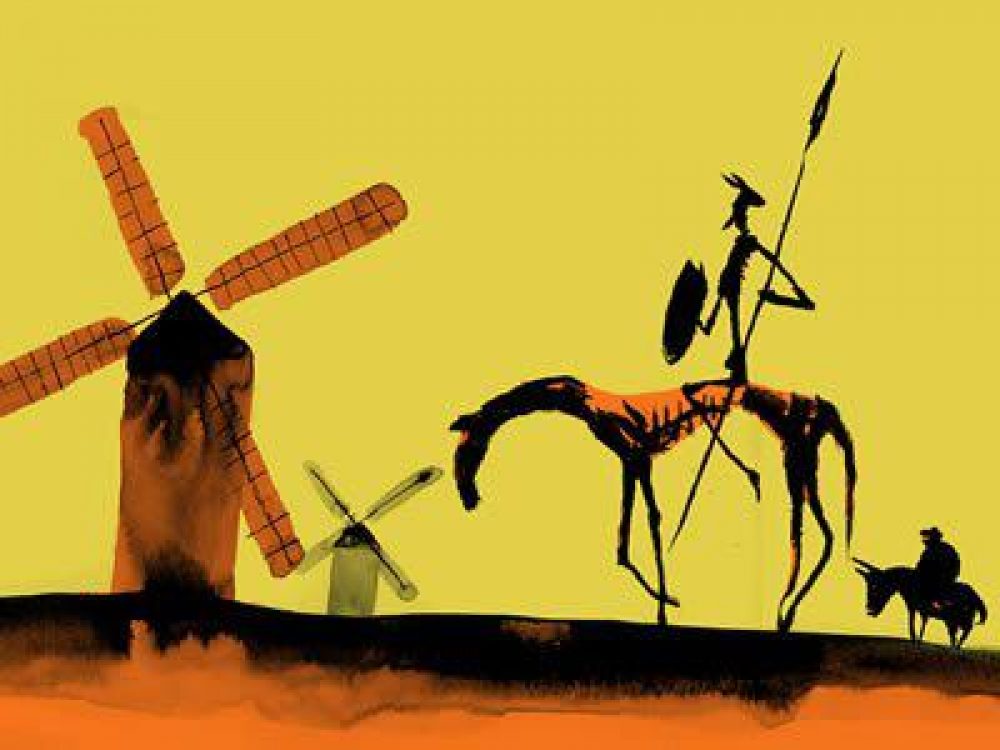



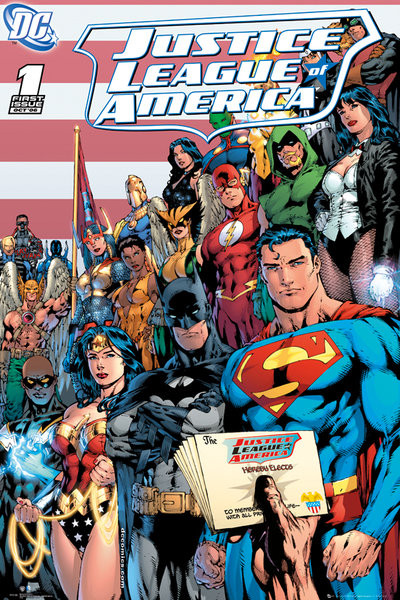







 "Exactly!"