Sunday Sermon: The Cracked Pot

Reminiscent of the parable about the sower of seeds, the focus in this story is on the water and the vessel rather than the seeds. We learn that, to be fertile, not only must the ground be good and prepared to receive the seeds, but it needs to be nurtured and cultivated, as well. No matter our cracks, faults, or flaws, we all can produce beautiful “flowers” and bountiful “crops.”

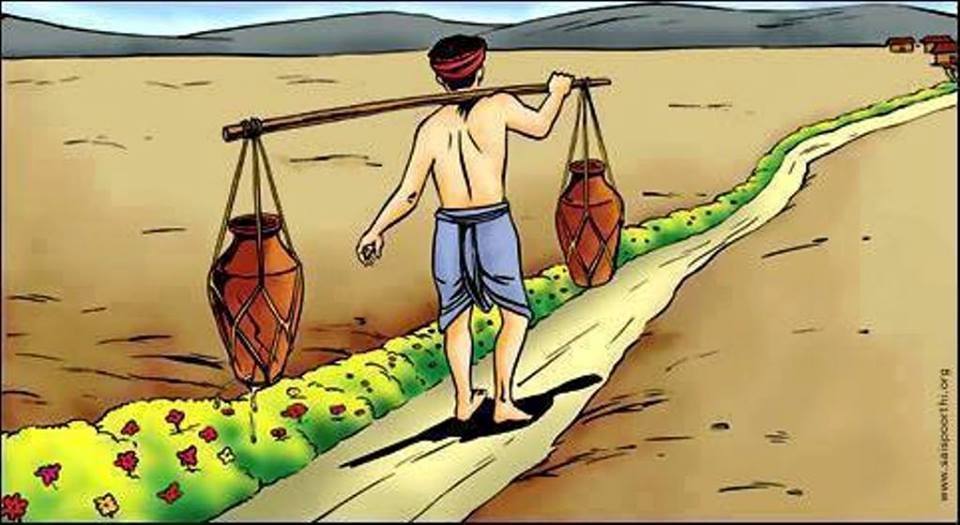
“An elderly Chinese man had two large pots, each hung on the ends of a pole which he carried across his neck.

“One of the pots had a crack in it while the other pot was perfect and always delivered a full portion of water. At the end of the long walk from the stream to the house, the cracked pot arrived only half full.

“For a full two years this went on daily, with the man bringing home only one and a half pots of water.

“Of course, the perfect pot was proud of its accomplishments. But the poor cracked pot was ashamed of its own imperfection, and miserable that it could only do half of what it had been made to do. After 2 years of what it perceived to be bitter failure, it spoke to the man one day by the stream.

“I am ashamed of myself, because this crack in my side causes water to leak out all the way back to your house.”

“The old man smiled, “Did you notice that there are flowers on your side of the path, but not on the other pot’s side? That’s because I have always known about your flaw, so I planted flower seeds on your side of the path, and every day while we walk back, you water them. For two years I have been able to pick these beautiful flowers to decorate the table. Without you being just the way you are, there would not be this beauty to grace the house.”

“Each of us has our own unique flaw(s). But it’s the cracks and flaws we each have that make our lives together so interesting and rewarding. You’ve just got to take each person for what they are and look for the good in them.

“So, to all of my crackpot friends, have a great day and remember to smell the flowers on your side of the path!”

*******************************************************************************************

Without a prescribed religious service or liturgy, People of Faith Online Congregation has no creeds, confessions, or collections … no pulpits, pews, or processionals … no altar calls, prosperity preaching, damnation-orientation, celestial choirs, books that we worship, or “holier-than-thou” critics.

Instead, we’re a home-based, nondenominational online congregation that’s spiritual rather than religious, organic over organizational, personal beyond institutional, here-and-now oriented instead of hereafter.

From Portugal and Spain, we gather online to consider and celebrate the sacred journeys of our lives. All are welcomed, appreciated, and affirmed … no matter where in the world you are located!

Whether you’ve attended church (but feel alienated), or if you’d enjoy meeting other wayfarers seeking this type of progressive spiritual experience, please join us and other progressive people of faith. Here’s the link to our group on Facebook:

www.facebook.com/groups/FaithCommunityOnline

Processing…
Success! You're on the list.

What Do You Call It?

The Portuguese have a word for it.

English really doesn’t.

You can’t define it; to truly understand its meaning, you’ve got to experience it.

It’s different than depression, distress, disillusionment, discouragement, despair. It’s wistful and wishing for the way things were … and ought to be … but aren’t anymore.

Although “melancholy” probably is its closest cousin in English, it’s much more than that: a longing, yearning, aching void.

It’s the heart swelling up and crying out inside. It’s a lump in the throat … anxiety attacks … a feeling of foreboding … brooding … bleeding internally … unable to heal the hurt.

It’s a slow burn about the utter unfairness of it all … coupled with an irresolute resolve to go on and make it through yet another day–despite the turmoil, trespasses, and travails along the way.

It’s caring so much and coping so continuously that we’re overwhelmed and exhausted, unable to do much more than sigh as we watch the world go by(e).

It’s abject and deject, anguish and agony, feeling victimized and caught up in an elusive web of betrayal beyond our control.

It’s something for which, elsewhere at another time, they’d prescribe mind-numbing drugs, psychotherapy sessions, and therapeutic confinement.

It’s sort of like the Yiddish word “Rachmones,” whose translations – mercy, compassion, empathy, understanding – don’t come close to what we actually feel when recognizing the trait in a kindred spirit: Namaste.

It’s a voice heard in Ramah, weeping and great mourning, Rachel weeping for her children and refusing to be comforted, because they are no more.

It’s hiding in Anne Frank’s attic, knowing full well what the future holds.

Yet, it is part of the song and dance that are our lives.

The Portuguese sensitize these doldrums and call them “Saudade.”

For me, it’s a dark cloud hovering over us as I await what’s beyond … looking away and staying inside without precious connection to others … hoping it will pass sometime soon.

I feel like a psalmist, pleading with the Almighty to allow me to be joyful, yet unable to understand how and why we’ve become such drained and divided fragments of our fabric.

Then I remember that verse: “ … weeping may remain for a night, but joy comes in the morning.”

So be it.

Shared here are personal observations, experiences, and happenstance that actually occurred to us as we moved from the USA to begin a new life in Portugal and Spain. Collected and compiled in EXPAT: Leaving the USA for Good, the book is available in hardcover, paperback, and eBook editions from Amazon and most online booksellers.

Processing…
Success! You're on the list.

Sermon: WWJD About the LGBT

Driving across town, I passed a corner church near my credit union. A banner on the side of its lawn had “WWJD About the LGBT?” printed on it, inviting all to come and hear the pastor preach.

Curious, I listened to what he had to say.

To sum up his message: Christians should be on the same team–especially those attending his church. All humanity sins and has been separated from God, except for Jesus (who IS God and who wrote the Bible). Don’t doubt that the Bible speaks the authoritative voice of belief. And, while some of the clobber passages in Leviticus no longer apply anymore since Jesus dismissed them, other verses (Old Testament and New) refer to eternal “lifestyle laws” like alcoholism, gambling, promiscuity, men laying with men and/or women with women.

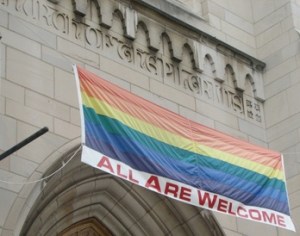
“If you are LGBT, I want you to come to this church!” the pastor urged at the tail end of his sixty minutes. “I want you to get to know us! I want you to come week after week! I want you to get to know the Bible and Jesus! I want you to feel at home and welcomed here, not judged!”

Hmmmmmmm …..

“BUT,” the pastor emphasized, “you can’t be a member of this church. We’ll ask you not to take communion or to participate with us financially. These are things we do as Christians here, as the church … but that doesn’t mean we hate you!”

Yeah, I’d sure feel comfortable at that church. (Not!)

Worship of the mean, old, imaginary, monster God in the sky that millions have feared for millennia hasn’t produced the best life experience or society possible on earth … or even close to it.

I suspect we can do better.

As can God!

Processing…
Success! You're on the list.

Channeling Andy Rooney: Breaking Bad for the Greater Good

I’m going to get some flak-back on this post … because I believe that good manners are preferable to bad.

Common courtesy and proper protocols transcend cultures and/or countries. No matter where you are or what language you speak, correct conduct is always appropriate and appreciated.

Why, then, do some people ignore “etiquette,” alienating, antagonizing, or offending others? Is it deliberate or incidental?


As a child, weren’t you taught to cover your mouth when you cough and your nose when you sneeze—especially in public?

Queuing at the supermarket or grocery store, I am shocked by how many people cough or sneeze without covering their faces while standing over food. And by people who work in restaurants, where they cough or sneeze – without covering up – when dispensing beverages or handling food!

It’s a matter of respecting personal places and private spaces.

Whether breaking into line out of turn, cutting someone off on the road, denying right of way to pedestrians at cross walks, or invading those sacrosanct spaces immediately surrounding us, it’s self-serving behavior rather than observing conventions for the greater good.

Some people shower or bathe regularly. Others don’t. Some brush their teeth and practice good personal hygiene. Others don’t. Some people apply deodorant. Others don’t. Some smoke. Others don’t. Some people douse themselves in perfume or cologne. Others don’t.

Whether you do or don’t is your choice. But, please, be considerate of mine.

The same can be said of our pets: If you have dogs and cats, especially, please pick up after them and dispose of their waste. Simply opening the door to let pets roam the streets, do their business outside, and then return home is irresponsible. Your home may be clean, but who wants to step in feces … or have our dogs contaminated by it? Sickening to see and worse to smell, it’s a public health hazard.

Driving aggressively, carelessly, and/or inconsiderately also violates the rules of acceptable behavior. Recklessly speeding down the narrow streets of our villages – especially with a cigarette in one hand and cell phone in the other – makes it harder to stop and control a vehicle if/when something unexpected or unforeseen should be presented. On the other hand, we’ve been taught to drive in the right lane and use the left only for passing. So, why stay in the left lane driving 60 kms/h in a 90 kms/h zone? I’m told there’s no specific law here against tailgating (despite all the warning signs); but please stay off my butt. Planning to exit the roundabout or roadway? Again, you need to be where you belong … rather than drifting across in front of us and nearly causing an accident. That little lever (usually) attached to the left side of your steering wheel? It’s called a directional signal for a purpose: to alert others of the direction you’ll be taking or changing. Use it! And, granted that some parking spaces are smaller or tighter than others—even in public shopping centers. But, that doesn’t give anyone the right to park haphazardly … taking up two or more spots, leaving none for others.

Courtesy extends beyond these spaces, streets, and roadways. It also includes online behavior. Just because you’re virtually anonymous doesn’t entitle you to act aggressively, ugly, snarky and/or petulant. What pleasure do some people derive from being so snooty, anyway?

Finally, here’s a nod to professional responsibility: If you want my business, practice good public relations. Return phone calls or reply to my emails promptly. Show up when you say you will. Charge me what we’ve agreed to. I’ll be appreciative and likely to do repeat business with you, as well as to refer others to your products and services.

Finding fault is distasteful.

Yet being selfish, indignant, and malicious have become increasingly in vogue and accepted … especially when spotlighted daily by the revolting conduct and shameful language of our leaders.

Nonetheless, antagonism and rudeness never are really successful. Except when it comes to breeding. They poison a healthy environment and turn prevailing positive attitudes hostile and rotten.

So, let’s do what we can to make this world better for all!

Shared here are personal observations, experiences, and happenstance that actually occurred to us as we moved from the USA to begin a new life in Portugal and Spain. Collected and compiled in EXPAT: Leaving the USA for Good, the book is available in hardcover, paperback, and eBook editions from Amazon and most online booksellers.

Processing…
Success! You're on the list.

Cornelius the Centurion

In Acts 10:34-43, Peter announces that God’s amazing grace is on the move, breaking down traditional boundaries (and barriers) between the Jews and the nations (gentiles).

Through his encounter with Cornelius, Peter comes to realize that “God shows no partiality” … but in every nation (albeit geographical, cultural, or social), anyone who fears God and does what is right is accepted by God.

WOW:  God shows no partiality!

Think about how that statement challenges and undermines our tendency to confine God to the comfortable categories of our own “religion” or religious beliefs.

Consider Cornelius:Why might God have chosen him and his household to be the first gentile converts to Christianity?

From Scriptural accounts, we know that he’s a centurion, a notable leader of Roman soldiers.  He’s described as “God-fearing,” someone who loves the Lord, prays regularly, and helps the poor.  We’re told that he even built a synagogue for the Jews.  We even know that he lives in Caesaria, was part of the Italian regiment, and that his entire “household” – kinfolk, friends, and servants – worshiped God.

Given the time, place, and Cornelius’s position, this was truly radical!

Even more radical, though, is that I believe Cornelius is the same man referred to either as “a centurion” or “the centurion” whom we’ve met elsewhere in the Gospels.

In Matthew and Luke, we’re told that, at the crucifixion of Jesus, “When the centurion and others keeping watch over Jesus saw … what took place, they were filled with awe and said, ‘Truly this was the Son of God!’” (Matthew 27:54).  Luke (23:47) adds, “When the centurion saw what had taken place, he praised God and said, ‘Certainly this man was innocent!’”

I suspect this centurion was Cornelius, paying his last respects to the extraordinary man and teacher who earlier had healed his servant.

Frankly, I believe that the centurion we’re introduced to in Matthew and Luke was Cornelius.  Remember the story about the centurion who sought Jesus to heal his servant “who was dear to him”?

Let’s take a look:

<< Luke 7 >>
World English Bible
  1 After he had finished speaking in the hearing of the people, he entered into Capernaum. 2 A certain centurion’s servant, who was dear to him, was sick and at the point of death. 3 When he heard about Jesus, he sent to him elders of the Jews, asking him to come and save his servant. 4 When they came to Jesus, they begged him earnestly, saying, “He is worthy for you to do this for him, 5 for he loves our nation, and he built our synagogue for us.” 6 Jesus went with them. When he was now not far from the house, the centurion sent friends to him, saying to him, “Lord, don’t trouble yourself, for I am not worthy for you to come under my roof. 7 Therefore I didn’t even think myself worthy to come to you; but say the word, and my servant will be healed. 8 For I also am a man placed under authority, having under myself soldiers. I tell this one, ‘Go!’ and he goes; and to another, ‘Come!’ and he comes; and to my servant, ‘Do this,’ and he does it.” 9 When Jesus heard these things, he marveled at him, and turned and said to the multitude who followed him, “I tell you, I have not found such great faith, no, not in Israel.” 10 Those who were sent, returning to the house, found that the servant who had been sick was well.

The story as told in Matthew’s Gospel is pretty much the same … except that the centurion, himself, personally approaches Jesus rather than sending others on his behalf.

In either case, many people – including Bible scholars who have analyzed the words “dear to him” in this passage – believe there was a very special relationship, a deep, loving relationship, between the centurion and his servant.  And I believe it was this special love that touched Jesus’ heart and motivated him to reach out and heal the man’s servant. 

(Not to mention, accept the relationship between the centurion and his servant!)

If you were an exalted soldier of rank and power, respected by your own people, would you beseech help from a wandering rabbi of a foreign religion for a mere servant of yours?  Would you forsake your own god or gods and humble yourself in front of the supposedly ignorant natives who were your subjects, just to cure someone who worked for you?

Not likely!  Not if you were a Roman Centurion.  You would not, could not, risk the ridicule … even if you were in love with another man, as was often the custom among Roman men such as this at the time.

As the centurion made his way toward Jesus, I’m sure he was concerned that Jesus, like other Jewish rabbis, would condemn his “dear” relationship.  But he probably decided that if Jesus was able to heal his lover, he was also able to see through any lies or deception.

In response to the centurion’s love and his honesty, Jesus said without reservation: “Then I will come and heal him.” 

The centurion replied there is no need, that Jesus’ word was sufficient.

Instead of Jesus saying, “he is healed … go and sin no more,” as he did to the adulterous woman, he said, “I have not found faith this great anywhere in Israel,” and held Cornelius up as a man of real faith.

It’s apparent to me that the Lord was already working in Cornelius’ life, preparing him for the events which would occur to him and his household in Acts chapter ten.

Rather than debate and explain those “clobber verses” we so often hear, I claim this Scriptural account as an affirming one.

For centuries, the church has insisted that loving, homosexual people are nowhere to be found in the Bible and, certainly, never presented in a positive light.  Many Christians refuse to believe that God would include a positive story about a manly centurion who loves another person of the same sex.

I believe that our Creator is doing a new thing today … revealing another dimension to what it means to be loved and accepted by God.

A wild and winsome force, God’s love still can win over the hearts of centurions like Cornelius.  It says, “Bah-humbug” to the conventional categories of who’s deemed “in” and who’s cast “out.”  It eats with sinners, washes the feet of ordinary men, associates with prostitutes and other people of ill repute, and upholds loving one’s enemies as a commanding new norm.

Processing…
Success! You're on the list.

Sunday Sermon, 02/08/2020

Confronting Our Core Beliefs:
How We Feel When Presented with New Ideas

http://theoatmeal.com/comics/believe

Processing…
Success! You're on the list.

Sunday Sermon: 26/07/2020

‘How much are you selling the eggs for?’ the rich woman asked.

The old seller replied, ‘Twenty-five cents an egg, Madam.’

The old seller replied, ‘Come take them at the price you want. Maybe, this is a good beginning because I have not been able to sell even a single egg today.’

She said to him, ‘I will take 6 eggs for $1.25 or I will leave.’

She took the eggs and walked away feeling she had won. She got into her fancy car and went to a posh restaurant with her friend. There, she and her friend, ordered whatever they liked. They ate a little and left a lot of what they ordered. Then she went to pay the bill: $45.00 She gave $50.00 and told the owner of the restaurant to keep the change.

This incident might have been not unusual for the restaurant owner, but very painful to the poor egg seller.

The point is:

Why do we always need to show that we have the power when we buy from the needy? And why are we generous to those who don’t need our generosity?

I once read somewhere:

‘My father used to buy simple goods from poor people at rather high prices, even though he did not need them. Sometimes he even paid extra for them. I was curious about this and asked him why he did this? My father replied, “It is a charity wrapped with dignity, my child”.’

ººººººººººººººººººººººººººººººººººººººººººººººººººººººººººººººººººººººººº

Without a prescribed religious service or liturgy, People of Faith Online Congregation has no creeds, confessions, or collections … no pulpits, pews, or processionals … no altar calls, prosperity preaching, damnation-orientation, celestial choirs, books that we worship, or “holier-than-thou” critics.

Instead, we’re a home-based, nondenominational online congregation that’s spiritual rather than religious, organic over organizational, personal beyond institutional, here-and-now oriented instead of hereafter.

From Portugal and Spain, we gather online to consider and celebrate the sacred journeys of our lives. All are welcomed, appreciated, and affirmed … no matter where in the world you are located!

Whether you’ve attended church (but feel alienated), or if you’d enjoy meeting other wayfarers seeking this type of progressive spiritual experience, please join us and other progressive people of faith. Here’s the link to our group on Facebook:

www.facebook.com/groups/FaithCommunityOnline

Processing…
Success! You're on the list.

Of Human Bondage

What is it about mankind that causes us to exert our superiority by forcing others into servitude, slavery, bondage … to inhabit a lesser, parasitic, symbiotic status?

After watching Netflix’s documentary, Jeffrey Epstein: Filthy Rich, I felt wretched.

Wretched. Disgusted. Ashamed. Despondent. Dirty. Guilty.

Not just because of this arrogant man who considered himself privileged and entitled; but, because of the entitlement that’s engendered part and parcel of our heritage and history.

The four-episode miniseries chronicled an arrogant, egotistical, self-serving man without any moral compass, who – through money, manipulation, and blackmail – became a billionaire with all the trappings that designation implies: rich, powerful, connected colleagues and “pals,” who enabled and empowered his human trafficking of underage girls—hundreds of them in Palm Beach, New York, his private Virgin island, Paris and Spain … catering to the most base and primal human degradations through a network of the rich, famous, and powerful around the globe.

What began with disgust for such a loathsome man, quickly gained traction with the personal involvement and of other well-known figures, all of whom denied any wrongdoing whatsoever.

Why did Bill Clinton lie about being hosted by Epstein, when eyewitness accounts placed him on Epstein´s private island, as well as plenty of free trips on Epstein´s private jet(s)? Why did Prince Andrew maintain he had “no recollection” of intimacy with at least one adolescent girl younger than his own daughters, when rumors of his predatory sexual appetites had been circulating for years? And Donald Trump: who among us would expect anything other than lies and denials, claiming he´d had nothing to do with Epstein for “more than 15 years,” when the record clearly shows otherwise?

But this is bigger and more important than a story about one man, his accomplices, and victims—it’s the history of us all, taking and maltreating that which isn’t ours: body snatching and sharing.

It’s all about human trafficking.

“Human trafficking is the trade of humans for the purpose of forced labor, sexual slavery, or commercial sexual exploitation for the trafficker or others,” states Wikipedia.

It’s as old as the battles for superiority between Adam and Eve, Cain and Abel, Abraham and Sarah, Isaac and Esau, Peter and Paul, Joseph and his brothers—who sold him for twenty shekels of silver to the Ishmaelites, who took him to Egypt and into servitude.

Remember the anecdote about Moses being told from a burning bush to go before Pharaoh and insist that he let those who had emigrated to Egypt at the beckoning of Joseph – but later were held in bondage, enslaved to do the ruler’s bidding – to “let my people go!”? Read all about it in Exodus, the second book of the Bible.”

From “In the beginning …” to its last “Amen,” the Bible is filled with episodes of social injustices—including killing men, raping women, abusing children, and carrying them off to foreign lands.

“To the victor go the spoils.”

That could have been the “vicar,” as well.

How many people were tortured, persecuted, killed, and enslaved during the Crusades and the Christian Inquisition? Yet, to this day, our hymnals are filled with rousing renditions of “Onward, Christian Soldiers,” “Lift High the Cross,” and “Battle Hymn of the Republic.”

How many youngsters have been sexually abused by pedophile priests, while the institutional hierarchy closed its eyes and ears? Don’t think just the Catholic church at fault. Almost daily, we learn of hypocritical evangelicals grandstanding on social media and broadcasts against the “heinous sin of homosexuality,” while they’re pandering to their own libidos on sites like “Grindr.”

Until they´re caught …

Wherever there’s warfare, human bondage and trafficking are sure to follow. History is replete with such accounts.

From its earliest days, USA colonists confiscated the land of Native Americans, banishing them to ghettos referred to as “reservations.” Slavery, our national sin, was followed by lynchings, rapes, and denial of rights to people of color—who continue to be treated unfairly and unequally. The Brits are complicit in slave-trading, too.

Which is why, indeed, “Black lives (must) matter!”

Elsewhere, European and international elite politicians, judges, and celebrities are alleged pedophiles who buy children from a “child supermarket” disguised as an orphanage in Portugal.

“Portugal is a pedophiles’ paradise,” said Pedro Namora, a Casa Pia orphan who witnessed 11 rapes on fellow orphans and now a lawyer campaigning on behalf of the Casa Pia victims. “If all the names come out, this will be an earthquake in Portugal. There is a massive, sophisticated network at play here–stretching from the government to the judiciary and the police.”

“The network is enormous and extremely powerful. There are magistrates, ambassadors, police, politicians–all have procured children from Casa Pia. It is extremely difficult to break this down. These people cover for each other because if one is arrested, they all are arrested. They don’t want anyone to know.”

Human trafficking also includes treating people inhumanely … as in the garment “sweat shops” where many perished, or in coal country where many miners contract, suffer, and die from “black lung disease.” Unions played an important advocacy role.

Immigrants who used to be welcomed to our melting pot are now eschewed and spit out, their children separated from them at the border and held hostage in crates and unsafe, unsanitary conditions. Only if we “need” them to trample down the grapes of wrath or do work few Americans are willing to do, are they abided.

Nations rising against each other, corrupt institutions, atrocities in the name of religion, powerful people and corporate criminals with big bucks used to buy and sell other people – especially women and children – as something that’s owned (property or chattel), traded, and abused are fountainheads for human misery and trafficking.

But human trafficking also hits much closer to home.

A friend in an industrial city north of Chicago co-founded and serves as executive director of Fight to End Exploitation, whose purpose is to end human trafficking in Wisconsin. Formerly known as the Racine Coalition Against Human Trafficking, it is a “network of local resources collaborating to increase communication among providers, identify gaps in services for victims, and prevent conditions that foster human trafficking in Wisconsin.”

No, we´re not in Kansas anymore.

Nor can we make believe this barbaric activity doesn’t exist.

Processing…
Success! You're on the list.

Closet Christians? Come Out with Full Conviction!

There’s a church located in one of the largest cities in the country, both in terms of geographic size and population.  A coastal area with beautiful, sandy beaches and a treasure trove of history close-by, there are those who consider it “chic” and “hip,” a rather cosmopolitan city, even with its small-town roots and flavor.  Some say it’s a special place, with its strategic seaport and major highway to other places that runs right through it.

Chicago on the banks of Lake Michigan?  Portland, Maine?  Jacksonville, Miami, or Ft. Lauderdale, Florida?  Long Island, New York?

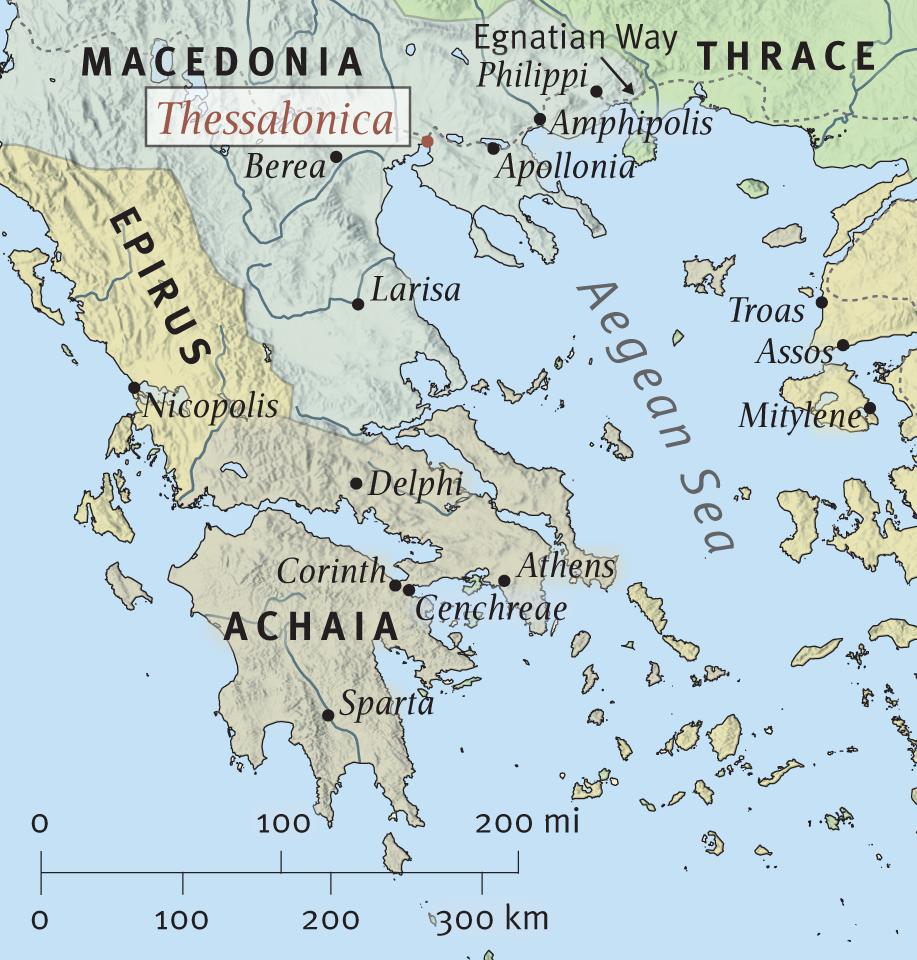
Thessalonia-MapNo, not quite.  But we can find quite a few parallels between these American cities and Thessalonia, one of the few New Testament cities that still is around today … as well as between the church at Thessalonia and some of our churches here and now.

Each are worthy of praise and thanksgiving to God.  That’s exactly what Paul was doing – celebrating the church – in his epistles to the people at the church of Thessalonia.

And there are other parallels worth noting, too, between the places where we live and Thessalonia.

Comparable to many U.S. cities and suburbs, it had a mixture of wealthy people, a small middle class, and then a large majority of poor people like us: slaves to the system that surrounds us.

There was tension and turmoil in Thessalonia.  Rampant crime.  Graffiti, obscene and objectionable words and images could be found on the walls of buildings.  Murder was commonplace and divorce frequent.  And, depending on whose standards were the measuring stick, morality, at best, was questionable.

Sound familiar?

Uh-huh: Very much like where we live!

Yet in the self-serving sea of crime-ridden culture was the Thessalonian church, a little island to the glory of God.

I like to think the same can be said about some of our churches.  No doubt it pleases God that diverse bodies of Christ come together to worship, pray, and praise the glory of our loving Creator. 

Another profound parallel for me … perhaps the most critical and striking one in terms of similarities, is that the Thessalonian church was a new and different kind of church, made up of new and different people

Thessalonia-New and Gay ChurchesJust as Thessalonia was the first church whose congregation essentially comprised non-Jewish people, many of our open, progressive, inclusive, and affirming churches among the first churches in their neighborhoods ministering to LGBT people and their fair-minded, open-hearted allies.

What makes our churches and that one in Thessalonia so special? Let’s take a quick look and discern what we can from I Thessalonians 1:1-10:

During his second missionary journey, after picking up Timothy along the way, the Apostle Paul arrived with Silas in Thessalonia in 48 or 49 AD.  They left about a year later. In the midst of trials and tribulations, persecution and hostility, Paul writes his letters to this church which he’s obviously very fond of, while still living in Corinth.

(Much of the history of the Apostle Paul’s missionary trip to Thessalonia is found in Acts 17.)

In I Thessalonians, Paul launches into what might be the longest section of thanksgiving found anywhere in the entire New Testament.  He is absolutely pumped about the church in Thessalonia. Although he is obviously quite pleased with this church, there’s another reason I suspect that he spends so much time expressing his thanks: the members of this church lack confidence in their personal salvation.

Thessalonia-Salvation InsecuritiesFor me, that’s another parallel between the Thessalonian church and today’s churches that minister to LGBT people.  As a pastor who’s listened to the doubts and concerns of more than a few of you, I know there’s still some hesitation, a lingering doubt, about whether God really does love and accept you “despite” your sexual orientation … just as you are.

With all my heart, I believe that God does!

For his part, the Apostle Paul spends time affirming those in the church of Thessalonia. 

In verses 2-3 here he writes, “We give thanks to God always for all of you, making mention of you in our prayers, constantly bearing in mind the work of faith and labor of love and steadfastness of hope in our Lord Jesus Christ in the presence of our God and Father.”

Don’t you just love it?  I don’t know about you, but three little words – faith, hope, and love – literally jumped right out at me, recalling that beautiful passage so many people are fond of from I Corinthians 13: “And now these three remain: faith, hope and love.  But the greatest of these is love.”

Despite their differences – they’re mostly Gentiles rather than Jews – Paul is confident that the Thessalonians are loved and accepted by God, just as I am equally confident that the same can be said of you, my LGBT brothers and sisters in Christ. 

Like the church at Thessalonia, our own churches still aren’t really typical of many churches today.  Nevertheless, I believe that these churches represent God’s ideal—the type of church God wants every church to become: wonderful places to be!

The Thessalonians became a living example to other believers, we’re told in verse 7.  In other words, it’s not enough to just live our lives among other welcoming, inclusive, and affirming Christians … in isolation.  Sometimes, we’re called to be more direct in using and channeling our influence with others.

For most people to believe in God, or to believe in God anew — especially people within the LGBT community — the personal touch is needed.  That means we need to be forthcoming about what we believe, sharing our faith with full conviction that we are truly loved by God and that our God is worthy of all praise!

Too many LGBT people have turned away — or been turned away — from church and, in the process, find themselves turned off to the God that created them and continues to love them unconditionally.

Hurt, bigotry, judgmentalism, condemnation and rejection from much of the religious establishment indeed are what brought many of us to new and different kinds of churches focused on love.

It’s up to us now to be goodwill ambassadors of Christ from churches like ours … to share the good news, sensitively and sensibly, with our brothers and sisters.

After all, isn’t that what affirming our “Pride” is really all about?

Thessalonia-Another-Christian-Who-Happens-to-be-Gay-Rainbow-Pride-CrossIt’s not enough to be “closet Christians” who come to church and worship for an hour or so among ourselves on Sundays.  We’re expected to tell others the gospel truth about God’s love for them … inviting them to experience this amazing grace and spiritual connection for themselves.

And, yes, it is difficult to talk to others about something so sensitive and personal as religion. 

That much we share with our straight friends in churches across the spectrum. 

It’s much easier to hand someone a brochure, point them to a Website, or ask the pastor to intercede by conducting a cold call.

For us, especially – for you and for me – it’s even harder to talk about the God we believe loves us … much less admit that we do go to church.  It’s not unlike coming out of the closet again … something many of us already did in terms of our sexuality and now are being pressed to do about our spirituality.

Still, we’re called to speak with full conviction, aware that God has given us a very special mission field to which few are called and even fewer choose to go.

People saw a change in those who worshiped at Thessalonia.  They had become better people – more loving, compassionate, giving, and thankful – because of their faith and their beliefs. 

We all know what happens when people are branded as being different: they’re talked about … and lots of people talked up the church at Thessalonia, telling others about the amazing things that were happening there. 

Thessalonia-Your Faith Is Known EverywhereThe history of the Thessalonian church is a story about what can happen when everything goes right, the way God wants it to be: Paul and his team quickly planted a vibrant and healthy church that reached out to others, touching and turning many lives around for the better.

My own hope is that we can be churches like the one at Thessalonia, places people want to be … because God is here among us, helping and healing and loving and blessing and making us a community of believers to praise.

Processing…
Success! You're on the list.

Elizabeth’s Disgrace: An Affirming Mother’s Day Story for All of Us!

Elizabeth‘s story tends to be eclipsed by Mary’s, since it’s hard not to focus on the virgin birth. But the barren Elizabeth has a miraculous birth as well, finding herself pregnant well beyond the time to have children.

ImageRemember Elizabeth?  Mary’s cousin whom she visited while pregnant with Jesus?  Despite living pious and faithful lives, Elizabeth and her husband, Zechariah, couldn’t produce a child.  Then, almost too late in life (like Sarah before her), an angel told Elizabeth she would bear a son who would become known as John the Baptist.  Incredulous, Zechariah lost his ability to speak; Elizabeth’s child, yet in her womb, jumped with joy when Mary visited … recognizing the Lord, even before birth.

Barren means more than just infertile; it means unproductive, unfruitful, dull, empty, devoid, lacking, bereft.

At one time or another – maybe even many times! – we, like Elizabeth, can feel barren and unproductive … empty … lacking … bereft.  Sometimes, God has reasons for not answering our prayers—or not answering them when or how we want them to be answered. Being human, it’s hard to wait … and wait … and wait … for our prayers to be answered. 

So, I could tell you to do like Elizabeth: Go about your daily life and business, loving all the people God has placed in your life, while never giving up your faith or hope.

That would have been a fine and fitting ending to this story.

But the more I read about Elizabeth, the more I find myself riveted on her words of redemption, in Luke 1:25:

“The Lord has done this for me … he has shown his favor and taken away my disgrace among the people.”

Elizabeth did nothing wrong.  In fact, we’re told that she did everything right.  Right from the beginning, we learn she was “blameless” in front of the Lord.

Yet her society judged her to be shameful, disgraceful, lacking in God’s grace … as if there were something wrong with her, or that it was her fault she hadn’t conceived and given birth to any children as expected.

Because we don’t exactly conform to society’s norms and expectations, don’t we feel that way sometimes, too

“Do I deserve this, because of who I am?” we ask ourselves.  “Why was I created this way?  What should I do now to feel better about myself … and not so barren or empty?”

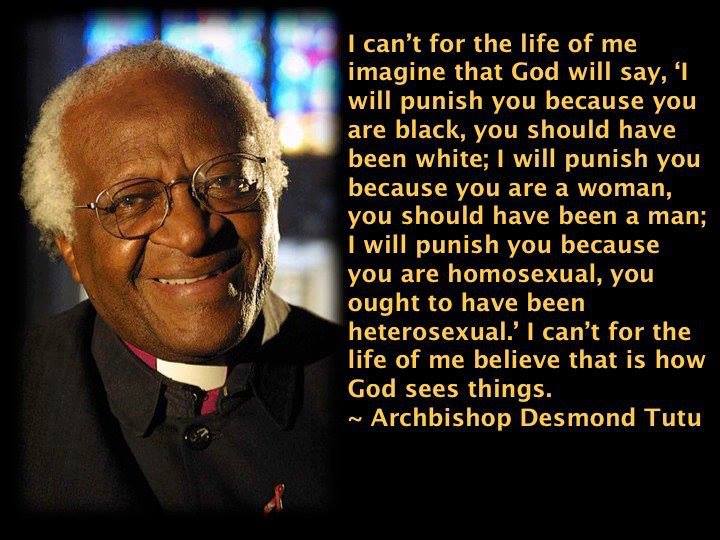
When I began to come to grips with my own gender identity and sexuality, I already knew that I didn’t make myself this way … nor did I believe that my environment or other people caused me to become the person I am.  I regretted that I wasn’t like everyone else: It certainly wasn’t easy to make believe, hide in the closet, and try to deny the person I was meant to be.

Yet because some in our society deemed it wrong, shameful, disgraceful, with an ugly stigma attached to it, I – like Elizabeth — felt barren … empty … unfaithful … and void.

I remember going to a “Coming Out Group” led by a Christian man named Paul.  “But … how do you reconcile being gay with all those ‘clobber verses’ in the Bible?” I asked him.

ImageHe smiled, oh-so-sweetly, and told me that the God he worshiped loved him … just as he is … and that – no matter what other people might tell me or what could be taken out of context from the Scriptures – it’s really all about grace.

Amazing grace!

It’s got nothing to do with what we do or don’t do that earns us God’s love and our salvation. 

It’s not about rules, regulations, and restrictions that lead to heavenly rewards or rejection.

Nope, it’s all about grace.  Even now, I’m still coming to understand and accept the depths of this profound truth.

Being loved by someone whom I deeply love in return helped me to feel somewhat better about myself … yet I still can feel alone, if not so lonely anymore.

It wasn’t until I met God more intimately – not someone else’s idea of God – and spent time in God’s company that I began to truly feel better about being myself … and not quite so empty. 

God’s grace and my belief that God purposefully created me to be exactly the person I am has turned my life around—blessing me and making me barren no more.  Actually, I have “given birth” to a part of God’s Kingdom in my own personal way.

ImageListen carefully, again, my friends, to the redeeming words of Elizabeth as found in Luke 1:25: 

 “The Lord has done this for me … he has shown his favor … and taken away my disgrace among the people.”

Each and all of us should affirm these very words now as applying to us, as well! 

Processing…
Success! You're on the list.