A Capital Solution?

“Para trás fica o Portugal rural, com as suas cidades e aldeias envelhecidas, onde prolifera o desemprego e o abandon das infraestruturas.”

Some startling statistics from (the bank) Montepio’s *magazine:

> In 2018, more than 40% of Portugal’s population lived in the Lisbon and Porto metropolitan areas—a trend which will continue to rise.

> To maintain its population, Portugal will need 50,000 new inhabitants per year—all the way through 2040.

> Cities and towns in the country’s interior – especially those close to the border – need at least 10,000 people per year over the next two decades to put a stop/hold to their population decline.

> 60% of Portugal’s people live within 25 kilometers of the coast.

The author asks: Can technology – including broadband digital access and telecommuting or working from home – reverse the cycle of rural exodus by building new, sustainable societies from the north to the south of interior Portugal?

Portugal’s Parliament

Vacating age-old villages isn’t an occurrence isolated to Portugal. In Spain, France, Italy and other countries, too, the same fate occurs: small and remote locations are left to decline, decay, and loss when young people leave seeking jobs and opportunities elsewhere, leaving only the elderly to cope with the dwindling resources that remain.

While many immigrants and expats enjoy the expansive lifestyle afforded by beaches and life’s little luxuries found in major municipalities and metropolises like Lisbon, Porto, Algarve, and even Coimbra – mirrored by comparable cities in Spain – others (perhaps even more of us) are attracted to the charm of Iberia’s interior villages and life off-the-grid on organic quintas, fincas, and farm land.

Through its “Work in the Interior” program launched February 3, 2020, Portugal’s government is offering financial incentives of up to €4,800 to anyone – workers and students, especially – who will help to repopulate the region. To encourage hiring, financial support will also be given to business and companies.Due to its popular “Golden Visa” program which encouraged foreigners to invest in Portuguese real estate, Lisbon, Porto, Algarve and other coastal cities have become too expensive for the Portuguese people. With all of the positive publicity about Portugal, buying property in these areas above others continues to be popular (even though the government recently revised and removed many of the program’s potential benefits).

Some, like the article’s author, propose that broadband digital will figure prominently in the regentrification of Portugal’s interior–by creating telecommuting jobs and work-from-home opportunities. Perhaps that might be a bright side to the current Covid-19 pandemic: Historically and traditionally, Portuguese companies have been hesitant to embrace new ways of working. Maybe now, their reluctance might be minimized after having experienced their labor force working off-site remotely and successfully.

Financial inducements and greater penetration of speedy and accessible broad bandwidth are but two of the tools being considered and implemented to bring back a flourishing interior. But there’s another, more integral and resourceful option that shouldn’t be overlooked … one that real estate and property agents are well familiar with: location, location, location.

Look no farther than Portugal’s next-door neighbor, Spain, whose capital is quite centrally located. Sure, there are plenty of places from north to south and east to west with large, self-sustaining municipalities and resort areas — notably Málaga, Valencia, Alicante, Bilbao, and Barcelona — but the interior regions — Sevilla, Granada, Córdoba, Burgos, Badajoz, Toledo, Salamanca — do equally well, supporting their nearby towns and villages.

Brasilia

More to the point, consider Brazil. The largest Portuguese-speaking country in the world created a completely different solution: Founded on April 21, 1960 to serve as the country’s new national capital, Brasilia was planned to move the capital from Rio de Janeiro to a more central location atop the Brazilian highlands in Brazil’s central western region. With a unique status, Brasilia is an “administrative division,” rather than a legal municipality. The novel city’s accession as the new capital of the country prompted the development of an extensive interior region.

According to Brazil’s 1960 census, there were almost 140,000 residents in this new federal district. By 1970, this figure had grown to 537,000. By 2010, its population surpassed 2.5 million. Seeking public and private employment, Brazilians from all over the country migrated to Brasilia’s satellite cities, towns, and villages.

Why can’t Portugal consider doing something similar?

Leave Lisbon (and all its attractions) where it is, along with its problematic airport. People will still want to live there, as well as in its affluent outskirts like Cascais and Estoril. But reduce the congestion, pollution, and skyrocketing prices by moving the government and its operations elsewhere … to the country’s interior.

Many factors would need to be taken under consideration and the country’s core would compete for the privilege of hosting a new capital city in Portugal, boosting employment, infrastructure, and prosperity in the process.

Which of Portugal’s interior regions would best suit these purposes?

My own personal favorite, of course, would be Castelo Branco!

* “O digital pode salvar as cidades do interior?” Texto: Carlos Martinho. Inverno 2020 (#33)

Shared here are personal observations, experiences, and happenstance that actually occurred to us as we moved from the USA to begin a new life in Portugal and Spain. Collected and compiled in EXPAT: Leaving the USA for Good, the book is available in hardcover, paperback, and eBook editions from Amazon and most online booksellers.

Processing…
Success! You're on the list.

For Whom the Bells Toll

The rhythm of life in the villages of Portugal and Spain’s small towns is measured more appropriately by “ding-dongs” than “tick-tocks.”


That’s because church bells – not timepieces sans striking mechanisms or apps on digital devices – effectively (and efficiently) call us to come and go, awake and sleep, to accommodate time … with chimes whose claims remain diligent reminders in the background of our lives.


After a lifetime living near the deafening roar of airport jets taking off and landing; the blaring alarms of late night and early morning trains approaching crossings closed by mechanical arms; and the deeply mournful bass horns of ships passing in the night harbor, we sought a simpler life with sounds that relax and reassure, rather than jolt or jar.

Our favored vision of an idyllic retirement was marked by two indelible images: meandering cobble stone streets for walks and wandering. And church bells nearby, easing our todays into tomorrows with yesterdays’ bygones … periodicity to their perennial peals.


Peals before swine?


The church bells at our village’s central plaza echo the pulse of the people, their ebb and flow, undertaking life’s daily tasks and rituals. They summon morning strollers and diesel drivers; elderly men that sit on the church walls to jawbone about this and that; women who rise and shine to stop and shop for necessities at the local market; and youngsters going to or coming from school.


The bells ring four times right before each hour to alert us that the full hour count(down) is forthcoming. They toll once at 15 minutes after the hour, twice on the half hour, and thrice every 45 minutes past the hour. At sunrise and sunset, they peal serially: three times three. To alert the village of urgent news and “special events” – the beginning and end of Sunday services, the baptism of a new life or a cadence for the dearly departed – the bells ring rapidly, continuously.


Minutes apart, earlier or later, bells of the other churches in our village momentarily repeat the offbeat chant.


Elsewhere, church bells play a major musical intermezzo at 7:30 and 18:30 each day, calling the faithful to prayer. Some swear that their own village bells play Clementine, an American folk tune, albeit with medieval disco vibes.


It’s said that, originally, the bells rang to let workers in the fields know they had a few minutes to begin work, break for lunch, and finish … ringing a couple of minutes before the hour to let them know it was nearly time. And that there were different timbres so, when out on the land, you recognized which of the bells to listen for—yours.


In some places now, the bells don’t ring between 22:00 and 5:00.But not here in Lousa. They’ve become biorhythms, conditioning us to sleep through their nocturnal and diurnal tirades.


Based on a sermon by John Donne, For Whom the Bell Tolls is the title of Ernest Hemingway’s 1940 novel about the 1930s Spanish Civil War. The phrase refers to church bells that are rung when a person dies.


Donne says that, because we are all part of mankind, any person’s death is a loss to all: “Any man’s death diminishes me because I am involved in mankind, and therefore never send to know for whom the bell tolls; it tolls for thee.”


Hemingway suggests that we should not be curious as to for whom the bell is tolling—it’s tolling for us all!


Ding-dong. Ding-dong. Ding-dong.

Shared here are personal observations, experiences, and happenstance that actually occurred to us as we moved from the USA to begin a new life in Portugal and Spain. Collected and compiled in EXPAT: Leaving the USA for Good, the book is available in hardcover, paperback, and eBook editions from Amazon and most online booksellers.

Processing…
Success! You're on the list.

Day Tripping

Among Portugal’s extraordinary pleasures are its amazing panoramas, extraordinary places, and breathtaking vistas that can be enjoyed in a day trip.

From Algarve to Nazaré, people along the coast head to the Atlantic for a change of pace and a respite on the beach.

On the other side of the country, closer to its Iberian border, others cross into Spain along spiraling roads, with little villages dotting the way. Suddenly, we’re in another country … with different foods, related culture, and a somewhat “sister” language.

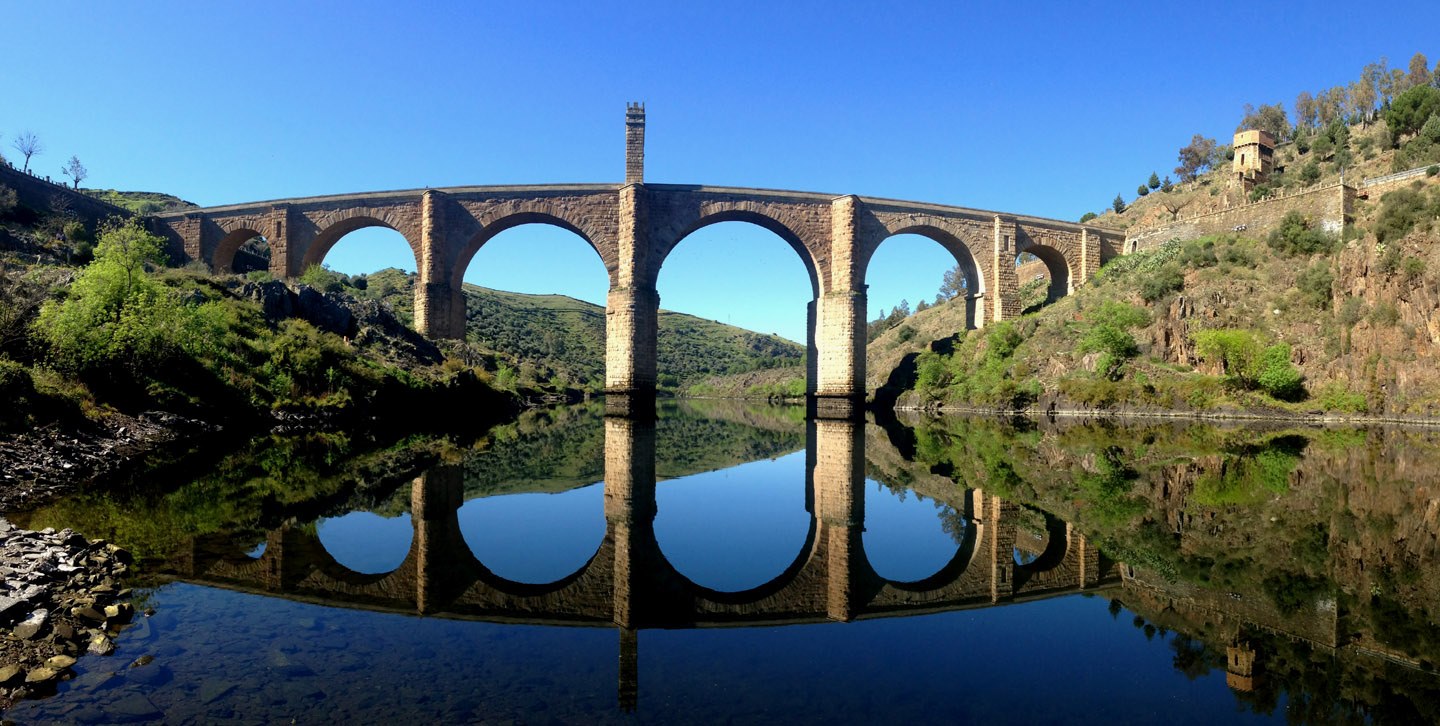
We typically travel into Spain on Sundays through Idanha a Nova and Segura, crossing a Roman bridge and aqueduct to enter Spain several kilometers before Alcántara. Apart from a few restaurants, a tourist trap or two, mini-mercado, and pharmacy, there’s not much else at this border town. For that, you’ll need to drive another 40 kms or so.

The food, however, is quite good at the area’s three restaurants: Kantara (the most expensive), Kantara Al Saif, and Gundin (our favorite). Gundin’s €11.00 Menu del Día provides the best gazpacho I’ve ever enjoyed. Except for the bread (Spain doesn’t come close to Portugal’s bread), the other two dishes are also quite tasty.

This time, though, we headed farther north – through Penamacor – to visit Valverde del Fresno for its Thursday market. The town is 16 kms from the Portugal border which, in turn, is 16 kms from Penamacor.

While we looked forward to a Spanish meal, we were on a special mission this trip: shopping for stuff at prices cheaper than in Portugal.

Textiles!

The irony is that thick, plush, absorbent, 100% cotton towels tagged with “Made in Portugal” labels cost half the price in Spain. Same for linens—from sheet sets to table cloths and coverlets.

That’s the good news. The bad?

Regardless of mattress size – including “king” and “queen” – Spanish sheet sets contain only three pieces: a top sheet, bottom sheet, and pillow case—each almost the same size. For some reason unbeknown to us (or any salespeople), the Spaniards have humongous pillows—measuring almost 200 cms across! We, however, have two pillows … each about 75 cms wide.

So, despite the higher cost, we buy our sheets and pillow cases in Portugal, where the larger size sets come standard with two matching pillow cases. (And, no, the label doesn’t say “Made in Spain.”)

Our favorite place to shop for such textile goods is the Monday market in Fundão. It’s massive! In fact, our next expat get-together will be a trip to Fundão’s Monday market, followed by a fixed-price (€9.95) buffet lunch at the city’s Principe da Beira hotel.

Anyway, I’ve digressed …

Fait accompli: We purchased our towels and took time to poke about the town, which is bigger and much more typically Spanish than Alcántara. We’d forgotten that it’s an hour later in Spain than Portugal, so most of the shops were closing … and restaurants were filling.

Tapas. We wanted tapas!

In Olvera, our Spanish hometown, as in most of Andalucía – southern Spain – menus offer meals in three sizes: tapas, media (half) ración, and a full dish (ración). Not here in Extremadura! Patrons and wait staff at restaurant after restaurant explained to us that tapas weren’t available … but complimentary “pinchos” were served with the drinks.

In southern Spain, pinchos are a type of tapa—they’re anything served on a skewer. Here to the north, in Extremadura, pinchos refer to a small, tasty dish provided gratis that accompanies your beverage.

We ate at Restaurante Casa Laura. With 120 “excellent” TripAdvisor reviews – four times more than the closest competition – we soon understood why: the food is to die for there. We began with some beer accompanied by a small dish of pinchos, potatoes mixed with egg and pieces of chorizo in a carmel sauce. Yum-mo! The cool gazpacho soup was good (enough), followed by meatballs in a thick and rich tomato sauce for me and cod (bacalao) with nary a single bone for Russ. The pièce de résistance, however, was dessert: dreamy-creamy cheesecake.

Total tab for our lunch, including tip, was twenty-seven euros (€27), somewhat pricier than what we’ve paid in Alcántara. But well worth it! Everyone working at the restaurant was super friendly and all made a point of stopping by our table to be sure we were satisfied.

Heading back across the windy roads surrounded by a lush, distinctly parceled landscape, it occurred to us how different the topography of Spain is in some ways from Portugal’s.

The two countries are close enough to be kissing cousins, but remnants of historical bitterness and jealousies remain between them. That’s truly a shame, since they’re so convenient and complementary.

It’s good to see Portuguese people visiting Spain … and vice-versa.

Throughout the Castelo Branco district’s tantalizing come-hithers, we’ve come across many Spanish tourists taking day trips into Portugal.

Turnabout is surely fair play for us to sightsee and go shopping in Spain!

Shared here are personal observations, experiences, and happenstance that actually occurred to us as we moved from the USA to begin a new life in Portugal and Spain. Collected and compiled in EXPAT: Leaving the USA for Good, the book is available in hardcover, paperback, and eBook editions from Amazon and most online booksellers.
Processing…
Success! You're on the list.

A Belíssima

Whether expat or immigrant – however you see yourself as an English-speaking “foreigner” in a new country and culture – you’re fortunate if you have a local, native friend (or more). Not necessarily a neighbor. Nor a merchant, contractor, or service provider.

I’m referring to someone who truly cares for and about you, looking out for your welfare and “sponsoring” you, without ulterior motives or a hidden agenda. A person who enjoys spending time with you and is helpful when it comes to navigating the ins and outs of the country’s ways and means. He or she is happy to assist in your assimilation, as well as to help with the intricacies of a new language and its usage. Such a friend shares meals, coffee, wine or beer when you’re out together … and may actually feel comfortable passing the threshold of your house to join you in the kitchen, dining room, and the sala.

Sounds simple and convenient, easy enough to arrange?

Think again.

Despite their inherent goodness and welcoming nature, the Portuguese and the Spanish tend to be rather private people. A “bom dia” and “buenas tardes” shared while walking in the street or a passing wave from the car are appropriate as neighbors; but associations more intimate than acquaintances need time to cultivate, which isn’t easy when coming from a different culture and speaking another language. As anywhere, they often are the province of longtime companions.

We have been truly fortunate – blessed, if you will – to have developed and cultivated a friendship with two very special Portuguese people: Olga and Alex: our advisers, advocates and personal ambassadors.

Outgoing and personable, Olga “friended” us on Facebook while we lived in the USA, before moving to her village in Portugal. She’d heard we had planned to open a snack bar, “Tapas Americanas,” in Lousa and shared that information liberally with her village.

Our Facebook page soon had plenty of attention.

It was on this Facebook page that Olga contacted us to inform us that contractors working on our house had inadvertently left the outside doors of our living room unlatched. With heavy winds and rains, there was danger of more than water damage.“But we are here in the USA now, thousands of miles away,” I groaned. “What can we possibly do?”

Olga went into action, sending an “SOS” to everyone in our new town. More than a few people offered to help, but it was Alex (according to Facebook, she’s “in a relationship” with him), who did the dirty work … driving over with a large ladder, climbing onto the balcony buttressing the living room doors, entering the room and securing the doors. Olga messaged us his every step, letting us know in the end that our front door was locked from the inside and Alex couldn’t get out. He had to leave as he came in, off the balcony and down the ladder, shutting the doors tightly behind him.

An artist in every sense of the word, Olga was born in the small village next to ours, but spent part of her childhood in Paris, where she learned French. Returning to Portugal, her family settled in the village where we now live. As with many of her contemporaries who live close to the Spanish border, Olga learned Spanish by watching the TV.

“We had two stations, channels, here in Portugal,” she explains. “With antennas, we could watch more than 40 from Spain: cooking shows, telenovelas (soaps), game shows, and movies made in other countries but then dubbed in Spanish. That’s how we learned to speak and understand Spanish!”

Realizing the shortcomings and awkwardness of Google Translate’s (Brazilian) Portuguese, I communicated with Olga in Spanish and body language, augmented by my expanding Portuguese vocabulary … grateful for her positivism and patience with my pronunciation.

“Veeeeeeeeeee … nyo,” she’d say, holding up a glass of tinto and biting gently on her lower lip, correcting my Spanish tendency to pronounce it “Bean-o” (of course she’ll insist that she said “viiiiiiiii … nyo”).

“Peace and love,” she maintains. “Live and let live,” best summarize her religious views. No longer a practicing Catholic, she still enjoys the intrinsic beauty of some of its rituals, pageants and processions.

Olga loves the heat and dislikes air conditioning … rain, in its season, is just fine with her. As are all creatures great and small—from bees to bulls and everything in between. She embraces life whole-heartedly and loves all living things—even insects and rodents.

“Sou como sou …”I am what I am, she admits. Dozens of previously homeless dogs and cats call her quinta home, along with a gang of geese.

“Salt of the earth,” we say in English about unpretentious people to whom goodness is natural. Olga and Alex personify these qualities.

As Alex does the cooking and Olga the dishes, I wouldn’t be surprised, though, to learn that someone’s goose had been cooked for dinner.

“I hate those geese,” says Alex, complaining about their honking noise and nasty attitude towards him. “They bite!”

He’s the one who first dubbed her “A Bellísima,” a tongue-in-cheek term of endearment used much the way we Americans affectionately call someone a “princess.” Loosely translated, it means “The Truly Beautiful One.”

And that she is!

Olga works for the government, in another cámara (not ours) where she makes the hour-long drive each way daily. She earns 730 euros per month, slightly more than the minimum wage, even though she’s earned a promotion and worked there since nineteen-years-old.

“O governo congelou as nossas carreiras desde que entrámos em crise,” she explains, noting that the government had frozen salaries since the financial “crisis” (in 2008)… until recently.

“After all the accounting, I was left with another five euros—a fortune,” she laughs. “I don’t even know where to spend all that money!”

Knowing her, it will probably be donated to an animal welfare group.

Or, to another cause about which she is devoted.

I hope each of you has a special “bellísima” in your life!

Shared here are personal observations, experiences, and happenstance that actually occurred to us as we moved from the USA to begin a new life in Portugal and Spain. Collected and compiled in EXPAT: Leaving the USA for Good, the book is available in hardcover, paperback, and eBook editions from Amazon and most online booksellers.

Processing…
Success! You're on the list.

The Rain in Spain (& Portugal)

“The rain in Spain stays mainly in the plain.”

Don’t you believe it, regardless of what Eliza Doolittle may have drilled into your head in My Fair Lady.

Lots of rain in Spain – as in Portugal – falls all over the place.

Especially, wherever we happen to be.

For those new to Iberia, the rain takes some getting used to (as does the sun). Because of their grit and wherewithal, they’re quite different from what we’d experienced in the USA.

We’ve lived in places from Northeast Wisconsin (Sturgeon Bay-Door County) to the First Coast of Southeast Florida (Jacksonville), and have dealt with nasty weather—both bitterly cold and infernally hot.

But, it’s different here in Spain and Portugal.

On the west side of the pond, we were accustomed to rainy days throughout the year, regardless of the season. Spring, summer, fall, and winter … each had periods of rain awash with sunny skies. Here, however, on the pond’s eastern front, there’s a rainy “season” and a blazingly hot one.

Both are extreme and extensive.

Day after day, for weeks on end, we’ll see little or no sign of rain during the sunny season in Spain and Portugal. Contrarily, during their time, we have dismal gray skies and lingering rain that never seems to end.

I respect the rain, especially in places where we live off the land’s produce. And who doesn’t? So, I’m not really complaining. But, hey, if we can’t groan about the weather, what else can’t we gripe about?

The rain, itself, is of a different sort; it has its own shelf life here. Rain cycles incessantly from cold, bone-chilling downpours to storms, showers, and/or drizzles … then, rinse and repeat: again and again and again. Even without extended exposure to it, you feel as if pneumonia is more than presumed. Duvet-diving weather, it requires an air conditioner inverter turned on to its “heat” settings, a wood burner or pellet stove, and an electric blanket (upper or lower) plugged into service.

Lower?

Yep: in Portugal, our favorite electrodomésticos stores sell electric blankets that wrap around the mattress beneath us, instead of heating the top blanket which we pull over ourselves.

The weather is fickle and you never know when it will spike ten degrees or drop twenty during a 24-hour period. So, be sure to pack accordingly. Plan to layer. One day I wear a T-shirt; the next a long-sleeve shirt; the day after that, a T-shirt underneath a long-sleeve shirt; and, following that, a sweater over a long sleeve shirt and T-shirt.

Summers are hot, scorchingly so. We’re talking about temperatures rising to and then hovering in the high 90s (F)/40s (C) range … in the shade (if you can find any) … for weeks, even months, on end.

That’s why we have siestas|sestas here–although the Portuguese will tell you that they really don’t have sestas … just long lunches.

Not (just) to relax, but to escape the ravages of the weather.

We don’t have central heating or air conditioning in our village homes and town houses. Fireplaces and wood burners, gas or electric heaters, keep us warm, room by room. Venture away from climate-controlled spaces, however, and put your hand on the walls.They’re wet … dripping cold-hearted sweat!

And, woe is me if the flame on our gas-fired water heater should go out because of the rain or wind that often accompanies this intoxicated weather. Especially during winter’s drafts.

We just replaced old, single pane glass, wood-framed windows and bedroom balcony doors with new ones of textured duplex glass, framed by vinyl and aluminum. Next on our bucket list, we bought and installedl a new water heater which, currently, is strategically located on the terrace right outside our bathroom. Thankfully, we’ve replaced our old water heater in Portugal with a new electric one.

“O gás é para cozinhar, mas apenas elétrico para aquecer a água,” the lady who owns our corner mini-marked insisted. (Gas is for cooking; to heat water, only electric will do.)

She’s right! Not only don’t we run out of hot water at the most inopportune moments anymore, but our energy bills have been reduced substantially. Between cooking and heating water, we’d been going through about three propane canisters per month in Portugal, where they cost at least ten euros more per canister than the same ones in Spain. Plus, our added electric charges for heating water electrically are less than we’d been paying for three monthly propane canisters–especially since we put them on timers!

Another tip: Don’t forget to put one or more “draft dodgers” on the list for those exterior doors under which creep currents of air (hot and cold). Houses in Portuguese villages and Spanish towns usually have been built out of concrete and cement, with no insulation, and at odd angles. Rare is the door that meets the ground squarely.

Mother Nature has issues here, even as she we does in the USA. Hurricanes. Wildfires. Floods. Earthquakes. They’re all increasing in frequency and intensity, looming larger and lasting longer. During October last year, Portugal was smacked by a rare Atlantic hurricane – the most powerful to hit the country since 1842 – which made landfall near Lisbon and then took a beeline directly to our home in Castelo Branco, close to the Spanish border.

Spain has been deluged by flooding that turns creeks into mighty rivers, carrying away heavy vehicles and causing landslides along the way. Areas of seismic activity have produced jolts of earthquakes too close for comfort to our little place in the sun.

In Portugal, we hadn’t yet recovered from the encroaching forest fires, when 800 people — Portuguese activists, surfers, fishers, youths and supporters from around the world — came together at Cova do Vapor beach outside Lisbon, where the Tagus River meets the Atlantic, to protest the country’s plans for offshore oil drilling and inland fracking.

Still, there’s something quaint and comforting about dealing with the weather in old-fashioned ways: locals providing for neighbors in any ways possible, fanning themselves with papers, and moving to the lower levels of their homes (where it’s cooler) in the heat. Lighting fires and bundling up to keep warm in the winter. Shrugging off the weather by remembering that, after all, tomorrow is another day.

Shared here are personal observations, experiences, and happenstance that actually occurred to us as we moved from the USA to begin a new life in Portugal and Spain. Collected and compiled in EXPAT: Leaving the USA for Good, the book is available in hardcover, paperback, and eBook editions from Amazon and most online booksellers.

Processing…
Success! You're on the list.

Date Night Duos

I vividly remember our first date night since moving to Portugal.

Of course, this was before Covid-19 intruded on our lives–creating lockdowns and curfews, masks and social distancing. We’ve yet to see if the virus has killed the cinema.

Still, oh, the delicious irony of it all that night:

Together with a (Portuguese) couple watching a top-rated, first-run, American-produced movie based on a Swedish pop group, comfortably seated in a climate-controlled cinema in Portugal … listening to dialogue and music in English, while watching subtitles roll by in Portuguese … and understanding enough of the two languages to consider the accuracy and quality of the translation. Without missing a beat!

But, first, enjoying food from a variety of vendors.

It’s called “Cinema + Jantar” here at the Allegro shopping mall in Castelo Branco. Between Sunday and Thursday, it costs only nine euros per person for the movie and the meal. That’s just about US $10.

Throughout Portugal, restaurants and cinemas in shopping centers are teaming up to offer special deals like this.

It’s a win-win for all!

Where and when can one “normally” see a newly released movie in the USA for less than ten dollars (except for specific senior citizen show times and/or intervals when the theater is otherwise vacant)?

Whoever wrote the advertising copy for this film-and-fest could have worked at my public relations and marketing firm:

“Onde alguns ouvem Cinema e Jantar, outros ouvem encontro romántico, saída com os amigos, ou tempo a sós. A verdade é que ninguém quer ser a pessoa com a barriga a dar horas no momento mais tenso do filme.”

Rough translation: “Where some like the idea of a Movie and a Meal, others are enticed by a romantic encounter, going out with friends, or spending quality time by oneself. The truth is, no one wants to be the one with the grumbling tummy at the most inopportune moments of the film.”

(What’s isn’t mentioned is theseven-minute intermission during the film when you can get something to eat or take care of business, whatever it is …)

Regarding the sponsors:

Four different restaurants – each with great food – have had prime roles in the dining experience: a pizza parlor, barbecue den, hamburger haven, and “piglet border” (leitão beirão)—which is why we never should fully trust Google to handle our translations correctly. At each eating place, choose a main course, side dish, and a beverage.

Between us, we enjoyed some of the best burgers in town, pork bbq sandwiches, and a pretty darned good pizza loaded with lots of fixings. The sides – hand-cup potato chips – weren’t the greatest, but none of us were disappointed with our beer or wine … until our female friend gave me that evening’s Portuguese lesson, correcting my pronunciation of the word for wine (vinho):

“It’s VEE-N-YO,” she demonstrated, upper teeth deliberately touching her lower lip, to correct my hitherto Spanish pronunciation of the word (vino): “BEE-NO,” lips vibrating, but teeth never touching the lip.

Back to the show:

We saw Mama Mia II (Here We Go Again), which was wonderful … despite my frustration that nobody (except me) stood up to sway and swing and clap along with the music. The Portuguese, at least those attending that performance of the show, were much more constrained and sedate—although an elderly couple sitting opposite us sort of-kind of waved their arms in the air.

Showcasing a vintage Cher and Meryl Streep, the prequel-sequel movie ended with us in joyful tears, a moment blissful grace.

Words from the sponsors?

“Let yourself be swept away by the flavors and the plot.”

Climax and conclusion:

“There are happy endings that cost only € 9.”

Exit, stage left. And roll the credits …

Shared here are personal observations, experiences, and happenstance that actually occurred to us as we moved from the USA to begin a new life in Portugal and Spain. Collected and compiled in EXPAT: Leaving the USA for Good, the book is available in hardcover, paperback, and eBook editions from Amazon and most online booksellers.

Processing…
Success! You're on the list.

Cashing Out of Medicare

I finally did it.

I ended the “should I or shouldn’t I?” tug-of-war with myself.

I decided to give up Medicare Part B.

After living three years in Spain and Portugal, first as expats and then immigrants, we began to question whether we’d do better by cancelling our “Part B” coverage which cost us $144 per month deducted from our Social Security payments and having more disposable income in our pockets. Sure, we knew that there’d be fines, fees, penalties, and interest if we wanted to rejoin Medicare Part B … but we have no intention of returning to the USA. At least not to live there. Here in Portugal, we have comprehensive, state-of-the-art health care provided both by our public coverage under the country’s universal National Health Service (SMS) supplemented by our excellent private insurance that runs us two thousand euros (€2,000) per year for the two of us–one 70, the other 57.

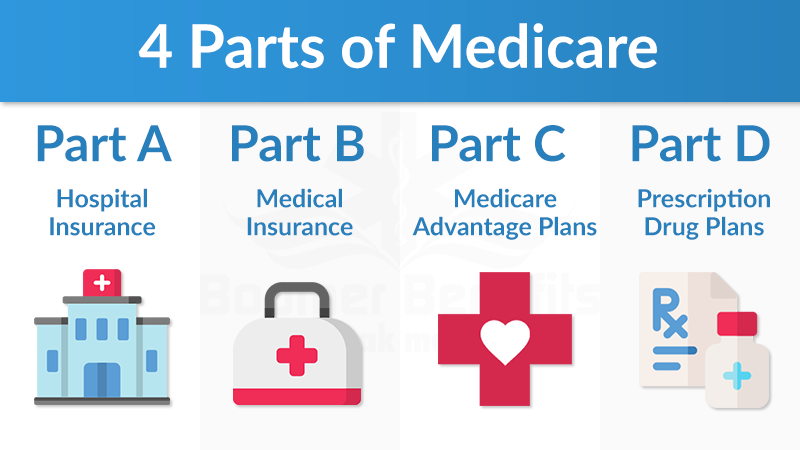
For those living in the USA, Medicare has formed the foundation of health care coverage for Americans age 65 and older. Here’s how it works:

A portion of Medicare coverage, Part A, is free for most Americans who worked in the U.S. and paid payroll taxes for many years. Part A is frequently considered “hospital insurance.” If you qualify for Social Security, you will qualify for Part A. You’re covered whether you want it or not, as long as you have more than 10 years (or 40 quarters) of Medicare-covered employment.

Part B, which many think of as traditional health insurance, isn’t free. You pay a monthly premium for Medicare Part B.

Part A generally covers medically necessary surgery and certain hospital costs; Part B may cover doctor visits while you’re an inpatient. Part B is a voluntary program which requires paying a monthly premium for all months of coverage.

Individuals entitled to Medicare Part A cannot voluntarily terminate their (free) Part A coverage. That’s not permitted by law. Generally, premium-free Part A ends only due to loss of Social Security “entitlement” … or death.

You can, however, voluntarily terminate your Medicare Part B.

Say you’re 65, no longer working, and don’t want to pay premiums for Part B Medicare insurance. That’s OK. But if you opt out, the costs will be higher if you want to get back in.

“In general, when you’re 65 or older, you should decline Part B only if you have group health insurance from an employer for whom you or your spouse is still actively working and that insurance is primary to Medicare (i.e., it pays before Medicare does),” says Social Security.

But what if you are an American immigrant, living outside the USA?

To “disenroll” from Part B, you’re required to fill out a form (CMS-1763) that – under most circumstances – must be completed either during a personal interview at a Social Security office or on the phone with a Social Security representative. For those of us living abroad, we must deal with it through our US embassy.

Social Security insists on an interview to make sure we know the consequences of dropping out of Part B — for example, that we may have to pay a late penalty if we should want to re-enroll in the program in the future.So, why did I decide to disengage myself from Medicare Part B?

Several reasons:

• Neither Medicare Part A nor B covers any health care costs incurred outside the USA. And we live in Portugal and Spain. In other words, we’re paying for nothing–especially because, given the circumstances, we have no plans to go back and live in the USA again.

• The standard monthly premium for Medicare Part B was $144.60 for 2020, up from $135.50 in 2019, which Medicare deducts from my Social Security check. That comes to $1,626 a year—for something I can’t or won’t use. The money will serve me better in my pocket than in the government’s deficit-ridden purse.

• But, most importantly, we found a better and more cost-effective option!

It’s called “travel insurance,” albeit a rather extraordinary plan:Offered by AFPOP through Medal (AFPOP’s insurance brokerage), it covers both me and my spouse for a year anywhere we go — including the USA – for up to 60 days per trip. It’s renewable, regardless of our age; there’s no age limit to enroll, nor higher costs the older you are … neither is there a limit on the number of trips we can take. Moreover, it’s international in scope—including, believe it or not, the USA!

Two plans are offered: Silver and Gold. We chose the Silver, which includes accidental death or permanent invalidity (100,000€), additional indemnity for severe loss (€25,000 for paraplegia, 50,000€ for tetraplegia), and indemnity for dependent children (€5,000 per child). We’ve got five million euros of third-party liability, repatriation, and extensive coverage for health care-related expenses: Medical expenses (10,000€ for sudden illness & 1,000,000€ for accident, which are more than enough here in Portugal) … hospitalization (full coverage, and we’re still covered by Medicare Part A in the USA) … urgent dental treatment … medical expenses in Portugal after returning, when due to an accident or illness occurring abroad … search & rescue … funeral expenses (up to 7,500€– in Portugal or elsewhere).

Also included: loss or theft of luggage (3,000€); luggage delay (750€); loss or theft of essential travel documents (2,000€); trip cancellation (€5,000); trip delay (37.50€ per hour); legal costs (15,000€); detention (5,000€); bail bond (50,000€); kidnap, ransom, and illegal detention (125,000€); political evacuation (10,000€).

Unfortunately, pre-existing “clinical” conditions and health problems aren’t covered. But, as we have none to speak of, that didn’t matter to us since the travel insurance isn only for medical issues we might encounter outside of Portugal (where we’re fully covered).

I don’t mean to come across as an advertising mouthpiece for this particular plan. But, do some homework and research: First, try to find 24/7/365 unlimited travel insurance plans with such comprehensive coverage and so few restrictions … rather than those for a single trip. Next, see if they’ll even sell you a policy if you’re older than 65. Finally, look at the price and what you get for your money.

Complete details about this insurance plan – ideal for people like us, who travel quite often (to Spain) – are available online: http://www.medal.pt/…/produt…/membros-afpop/afpop-viagem

The best part of all is its cost!

We’re paying €351.64 per year for the two of us (the more expensive Gold Plan, with some higher benefit amounts, would cost €552.57).

Converted to US dollars, that equals about $400 or so at today’s currency exchange rates.

Now, compare that to the $1,626 I’d be paying for Medicare Part B this year.

And therein you have the bottom line.

*Complete details about this insurance plan – ideal for people like us, who travel quite often (to Spain) – are available online: http://www.medal.pt/…/produt…/membros-afpop/afpop-viagem

Shared here are personal observations, experiences, and happenstance that actually occurred to us as we moved from the USA to begin a new life in Portugal and Spain. Collected and compiled in EXPAT: Leaving the USA for Good, the book is available in hardcover, paperback, and eBook editions from Amazon and most online booksellers.

Processing…
Success! You're on the list.

Ten Must-Take Items to Pack before Leaving the USA for Iberia

Relocating from the United States to the European Union? Especially Spain or Portugal?

Then consider the items listed below as invaluable traveling companions.

Much back-and-forth already has been written about whether to ship furniture, cars, appliances, artwork, keepsakes, and even clothing from one continent to the other. Ultimately, that’s a personal choice you’ll have to make yourself.

But, bear this in mind:

Once you decide to ship this piece of furniture or that collection of vinyl records, this set of family heirloom dinnerware or (only) all that artwork, their shipping cost can be less to rent an entire 8 X 8 X 20 container than to divvy your stuff, sharing someone else’s container. All things considered, it costs about five thousand dollars ($5,000) to ship that container from the USA to the EU. Prices do fluctuate, so it might cost a bit less … or a bit more.

Nonetheless, that’s not the purpose of my message here. If you want more information about international shipping, please read about our experiences in my post, “A Moving Experience.”

What I want to share with you, instead, are a list of ten little items that you may never have thought about or considered when planning what to pack for your bon voyage. Yet each can make a big difference to your lifestyle once you get here. Why bring them? Because, either they’re not available (i.e., readily accessible) here. Or, the price you’d pay for them is well beyond their prices in Yankeeville. So, sooner or later, you’ll find yourself asking people you know who are traveling this way, west to east, to bring back some of this and a little of that.

Ready to scribble some notes? Here’s my list.

(1) Eye drops like Visine, ClearEyes, “Artificial Tears” or similar store brands for red, dry, and/or tired eyes. Ask for them at a local pharmacy (items like eye drops and aspirin are only sold in pharmacies here) and you’ll, no doubt, be given the local version of “Restasis,” which is prescribed for dry eyes, although no prescription is needed here for it. A drop (or two) in each eye produces an oily-like feeling that brings discomfort, rather than relief. Return to the pharmacy with the last bottle you brought from home and you’ll likely be greeted with a shake of the head by the pharmacist. Such miracle medicinals for allergies, tired, or over-stressed eyes aren’t available in Spain or Portugal. So, be sure to bring a few with you!

(2) Low-dose aspirin. You know that 81 mg or so “baby aspirin” that your doctor will likely recommend you take daily If you’ve had a heart attack or stroke–or have a high risk of one (unless you have a serious allergy or history of bleeding)? A small container of 120 or more sells at most USA pharmacies for under two dollars. In Spain or Portugal, however, you’ll pay the same price and more for a 30-day supply.

(3) Crushed red pepper and/or Tabasco sauce. Some like it hot! I’m one of them. Yet no amount of Piri-Piri can compare with those red hot pepper flakes or that patented flavor that heats up your cooking (and works great in Bloody Marys, as well)!

(4) Duplicate of your state driver’s license. In Portugal and Spain, you’re required to turn in your state driver’s license when exchanging it for one in your new country of residence. In other words, you lose your USA driver’s license. But, what happens when (or if) you return to the states for a visit, vacation, or emergency? You’ll face quite a hassle, as your Spanish or Portuguese license isn’t recognized. Best bet is to contact your state’s motor vehicle department (DMV) well before departing and request a duplicate copy. Just say you lost yours. Or whatever. Then, when you turn over your state driver’s license for a new one in Iberia, you’ll still have a copy or your original one.

(5) Authorized copy of your birth certificate. Of all the legal, apostilled documents we made sure to bring with us (plus made plenty of paper and digitized copies), somehow we forgot to bring our birth certificates. After all, it was never asked for when we applied for our immigration visas … when we appeared at SEF for our residency docs … when we went to Finanças for our NIFs and NHRs … or when we spent the better part of a day at IMT transferring our driver licenses. Who would have thought that Social Security would require a birth certificate? When registering with this service — at least in Portugal — you’re asked to provide (and prove!) your parents’ names, whether living or deceased. A birth certificate (yours) is suggested. If you think there’s a lot of bureaucracy in Portugal and Spain, try requesting and obtaining an apostilled copy of your birth certificate from abroad!

(6) Plastic lids for cans. Granted, you can always use aluminum foil or plastic wrap. But they’re just not the same as those ubiquitous, multi-color plastic lids that “seal in the freshness” of food once you’ve opened the can. Good luck trying to find any in Spain or Portugal. Not even the all-purpose Chinese bazaars (Portugal) or Moroccan markets (Spain) carry them. Bring three or four with you.

(7) List of all the medicines and prescriptions you take. This is an item for your to-do list. Sit down with all of the medicines — prescribed and over-the-counter — that you take. Copy their “generic” (chemical) names, dosage, and instructions for taking them. Not only will your doctor(s) in Spain or Portugal want to know this information as part of your medical and health history, but pharmacists unfamiliar with what something is named or branded in the USA can determine what the appropriate equivalent is here.

(8) English language computer keyboard. Whether connected to a desktop or laptop computer, the keyboards sold in Portugal and Spain have different characters, along with the standard QWERTY keys we’re accustomed to. Sometimes, they’re located in diffeent places; other times, a single key is the source for producing three or more different characters, not just upper and lower case. Sure, you can configure the computer’s system so that the keyboard acts as an English language one; what you see on the keyboard, however, can vary dramatically from what you get on your screen. Regardless of the computer (or pad), it will respond effortlessly to an English language keyboard.

(9) Genuine “Sharpies.” The markers sold here just don’t compare for clarity and precision; few, if any, are “permanent.” If you’re labeling a freezer back with its contents identified and dated, for instance, only a Sharpie won’t smear. For those Sharpie afficionados out there, pick up a pack and pack it in your m/purse, laptop carrying case, or luggage.

(10) “Liquid Nails.” Wimpy facsimiles are available, but none work nearly as well. When fixing a broken ceramic pot, affixing a knob to a door, or holding something firmly for a long time, there’s nothing like this product for strength and durability. The real McCoy is extremely hard to find in Spain and Portugal–even online, where not even Amazon sells it.

Dividing our time between Portugal and Spain after living full-time for three years in Europe, these are the curiosities and, perhaps, oddities that we wish we’d have brought with us.

Maybe you have others … items we’ve overlooked? Please share your list with us!

Shared here are personal observations, experiences, and happenstance that actually occurred to us as we moved from the USA to begin a new life in Portugal and Spain. Collected and compiled in EXPAT: Leaving the USA for Good, the book is available in hardcover, paperback, and eBook editions from Amazon and most online booksellers.
Processing…
Success! You're on the list.

Driving Bureaucracy

I believe a bureaucrat at the Institute for Mobility and Transport (IMT) here – elsewhere known as the Department of Motor Vehicles – just did me a favor. An uber one, at that!

DMVs anywhere aren’t anyone’s favorite government agency, but the bureaucracies residents must deal with in Spain and Portugal – IMT (driver licenses and motor vehicles), Finanças (Taxes), SEF (Immigration), and EDP (the utility company), especially – have been attributed as being challenging > frustrating > irritating > next-to-impossible.

That wasn’t the case for us here in Castelo Branco. Staff at these offices have been considerate, cooperative, and pleasant. Anyway, here’s the story:

We’ve been very careful about observing all of Portugal’s requirements — particularly for non-EU nationals residing here – in terms of documentation and deadlines. Especially regarding the IMT. This is a country that only recently changed its rules about transferring one’s driver’s license from your country of origin to a Portuguese one … without adequately announcing the changes and spreading the word.

Formerly, new residents of specific non-EU nationalities had six months from the date they received official residency to trade in their existing licenses issued elsewhere for new ones from Portugal. The new law now limits that time to just 90 days, with serious consequences if you miss that deadline: driving school lessons followed by written and driving tests dealing with laws, practices, competencies, and the mechanics of how vehicles operate.

To exchange an American driver’s license for a Portuguese one, you must meet all of the “regular” requirements – a completed application form, proof of residency, your current driving license, passport, NIF, and a fee – along with an apostilled driving record from your last state of residence, plus a physician’s certificate that you are fit to drive.

We provided everything required by the Instituto da Mobilidade e dos Transportes (IMT) and, within two weeks, received our official license cards in the mail. In the interim, since our USA driver licenses had to be surrendered, we were given paper documentation to certify our legality to drive here.

All was well, we assumed … until I tried to rent a car.

“I am sorry,” the car rental agent apologized. “But I cannot rent you a car. You haven’t been driving long enough—only since last year.”

What? I’d obtained my driver’s license on my 17th birthday in New York and, by now, had now driven continuously for about 50 years … with licenses from New York, Maryland, Virginia, Florida, and Wisconsin!

“Please forgive me,” I responded. “But I don’t understand.”

The amiable chap pointed to a line on the rear side of my new driver license which indicated that my license was first issued last year.“How is that possible?” I asked.

He shrugged off the mistake and suggested I take it up with the IMT … someone, somewhere, at IMT had erred when copying the information I’d presented into the computer.

Fortunately, I had retained a copy of my official Wisconsin driving record in PDF format and peered at it on my computer screen before printing it out. There it was, in black and white: I began driving in Wisconsin on March 9, 2008. Maybe not 50 years of driving experience, but certainly at least ten!

I revisited IMT to point out the error and ask for my license to be corrected. And, while there, I also asked about renewing my driver license before March 9, the day before my 70th birthday, when Portugal required new evidence of my fitness to continue driving.

Older drivers in Portugal need to undergo medical and psychological examinations when renewing their driver licenses at ages 50, 60, 65, and 70 … drivers older than 70 are subject to a revalidation test. My doctor told me not to worry: there was no need for him to provide the medical certification until January, just two months before my 70th birthday. But I was concerned; I wanted IMT’s confirmation of that.

By law, one’s Portuguese driving license expires at 70 years of age; so, when you reach 70, you need to renew it if you want to continue driving. You then need to renew it every two years. Renewal can be done up to six months prior to the license expiring.

I took a Portuguese friend with me to speak on my behalf, as it was early into our residency in the country and I had a ways to go with my language proficiency. The lady who waited on us was flustered but friendly. While I feared the copy of my Wisconsin driving license showing the date I began driving there wouldn’t be accepted because it didn’t have an apostille (my only apostilled copy was turned in, along with my license, during my initial visit to the IMT), it wasn’t a problem.

The only problem was the printer, which refused to cooperate. Spending half an hour checking for paper jams, removing and shaking the laser cartridge a number of times, turning the machine off and on again, my IMT representative was getting impatient. The office manager was summoned. He, too, couldn’t get the printer to work; but, he called for a replacement … which arrived within half an hour.

Meanwhile, my Portuguese-speaking friend explained my concerns about renewing my license within the required time frame to the IMT lady. She looked at the expiration date and did some mental calculations: No problem, she said. We were within the six-month window and she could renew my license then and there, on the spot, without me having to return to IMT later. And, based on the documents I’d already supplied about four months earlier, she’d renew it for two more years without any new certifications—medical or otherwise.

Moral of the story: It’s easy to groan and bemoan the system.

Likewise, we need to give credit where, when, and to whom due.

So, thank you, my Portuguese guardian angels!

Shared here are personal observations, experiences, and happenstance that actually occurred to us as we moved from the USA to begin a new life in Portugal and Spain. Collected and compiled in EXPAT: Leaving the USA for Good, the book is available in hardcover, paperback, and eBook editions from Amazon and most online booksellers.

Processing…
Success! You're on the list.

Protesting the Status (Quo)

Across the United States – in Portland, Oregon; Seattle, Washington; Kenosha, Wisconsin; Louisville, Kentucky; Baltimore, Maryland; New York City and Rochester, NY; Minneapolis, MN; Philadelphia, PA; California, Colorado, and elsewhere nationwide – people are protesting, calling for fairness, equality, and justice.

Mainly, they’re peacefully protesting systemic inequalities: racism, economic injustice, government inaction or overreach, lock-ups and lock-downs.

They can’t pay their rent or mortgages, forced to choose between putting food on the table or medicine in the mouths of their loved ones. They’re agonizing over the toll Coronavirus is taking personally and professionally. And they are unleashing their anger and frustrations on others.

Between April and May 1st this year, protests against government-imposed lockdowns in response to the Covid-19 pandemic led to demonstrations in more than half of the “United” States. Shortly thereafter, on June 6th, half a million people turned out in nearly 550 places across the USA for Black Lives Matter protests.

Mass shootings hit a record high last year (2019), violent hate crimes are on the rise, and police brutality continues, prompting increased polarization and protests.

Police – local, state, the National Guard and even the Border Control – are called in, often exacerbating the problems. Violence follows and incites more violence, as hateful White House rhetoric spurs outcries against what the president calls his “law-and-order” platform. The result, however, has been increased antagonism and turf-minding. Apart from verbal incriminations, weapons include gunfire and bullets, tear gas and other chemicals, buildings burned, blazing tempers and imported vigiliantes, vehicles battered and overturned. Lately, more than 104 separate vehicles have been plowing through crowds and injuring protestors.

The bottom line is that people – often neighbors, long-time friends, even family and churches – are taking sides and triggering showdowns, sometimes violently, against each other and the powers-that-be. You’re either with me or against me, depending on who you are voting for.

American citizens are trying to prevent other American citizens from voting. Not just trying to intimidate them into not voting, but physically trying to prevent them from doing so!

It increasingly feels like America is reaching a boiling point, more raging bonfire than flash in the pan. Already beset by a national recession and a deadly pandemic now surpassing 200,000 deaths, this week has stoked new fires, including a Supreme Court battle to fill the Ruth Bader Ginsburg’s seat, Trump refusing to promise a peaceful transfer of power, mass protests after police officers faced no charges in the death of Breonna Taylor, and the swirling of literal fire tornadoes out West, while hurricane after hurricane pulverize our Gulf Coast . As American anger heats up, it’s incumbent that we bring a fresh lens to its origins and the core beliefs it threatens to topple, along with ways we can work together to douse the flames.

“Enough!” people are pleading, if not demanding. “Fix the problems!”

Trouble is, just as the financial gap between the haves and have-nots is widening, so, too, is the economic crisis. Many of the problems are difficult (if not impossible) to fix, because they’re so deeply rooted and systemic, driven by centuries of loot and looters, masters and slaves, carpetbaggers and indentured servants, inbred privilege and attitudes, government for the people becoming self-serving government, plebians and plutocrats, myriad moguls for whom more and much more are never, ever, enough.

Financial necessity has forced suburban populations to head for inner city food banks and health care clinics … creating a foggy, finite understanding of the implications inherent to why Black Lives Matter.

According to the Institute for Policy Studies, U.S. billionaires gained $565 billion additional dollars since March 18th. At the same time, surging unemployment has reached levels not seen since the Great Depression.

Experts say the top 10% of households own more than 84% of stocks … so a rising market helps people who already are among the wealthiest in the nation. Analysts attribute this widening wealth gap to the stock market, while meager consumers suffer the effects at their local groceries and supermarkets.

If we have never seen such economic instability since the Great Depression, we haven’t seen such social distancing since the Civil War. Or climate change and pollution so quickly creating environmental consequences and our planet’s ability to sustain life.

How can we look at what’s happening before our very eyes and not realize that we’re leading up to an even more deadly Civil War, if not already in the midst of one?

Worse, the riots are occurring all over the world.

At least sixteen countries — ranging from the UK and France to Australia, Brazil, Japan, Kenya, and South Africa — have seen major demonstrations over police violence against Black or minority populations and related issues, such as systemic racism and the legacies of colonial empires. In France and South Africa in particular, the pandemic has served to crystallize the problem of police brutality: authorities enforcing lockdown regulations have used force disproportionately against Black citizens.

But new protests are also breaking out for reasons other than police violence and racism. Some are rooted in how governments have responded to the pandemic. Among them, Brazil and Israel stand out. Ecuador, which faces one of the highest per-capita death rates from COVID-19 among developing nations, recently saw thousands protest the government’s decision to close some state-owned companies and cut public sector salaries, in an effort to close a gaping $12 billion budget deficit.

Citizens in Iraq have resumed protests over corruption, high unemployment, and the violent repression of protesters, with demonstrators in central and southern Iraq clamoring for the removal of governors who they deem to be corrupt. In Mali, tens of thousands have demanded the resignation of President Ibrahim Boubacar amid persistent intercommunal violence compounded by economic stagnation, a dearth of political reforms, and widespread government corruption. Saudia Arabian women have protested for fewer restrictions on their rights, even as Syrians protest the killing machine of their country’s leader and the Lebanese protest the lack of responsible leadership from their do-nothing government. The separatist movements provoke perennial protests in Spain, even as the second massive shutdown in its capital and biggest city because of Covid-19 stoke the fires of discontent.

Protests, by far the largest and most persistent in Belarus since independence from the Soviet Union in 1991, began Aug. 9th after an election that officials said gave President Alexander Lukashenko a sixth term in office. Opponents and poll workers say the results, in which Lukashenko was tallied with 80% support, were manipulated.

In some countries, governments have capitalized on the chaos of the pandemic to persecute critics, criminalize dissent, ban public demonstrations, and further concentrate political power. Consider China and Russia, for example.

How can society achieve the consensus it needs to function if everyone regards rivals as “Nazis,” “traitors” or “enemies of the people”?

“Trump, the torchbearer, has at times fueled racial tensions and stomped on his perceived enemies, citizens and institutions alike,” writes Nick Fouriezos, senior politics reporter for OZY, an international media and entertainment company launched in September 2013 by former CNN and MSNBC news anchor, journalist, and businessman Carlos Watson and Goldman Sachs alumnus Samir Rao. Ozy describes its mission as to help curious people see a broader and a bolder world.

“Some have become radicalized by the president’s behavior, meeting fire with fire — from erecting guillotines to accosting Senators to defending violent looters as collecting what society owes them,” Fouriezos continues. “Meanwhile, the American Fringes have continually hijacked the discourse, worming their ideas into some of America’s most revered institutions. The loss of civility playing out on the national stage has had ripple effects, reflected in an apparent uptick in nastiness nationwide, with ordinary citizens bickering over face masks in stores, trolling each other on social media and facing off over campaign signs next door. In a multiethnic, multicultural and increasingly crowded democracy, respecting commonality while acknowledging differences has been the surest way of moving forward — but it has become a casualty of rising American anger.”

If political tensions are bringing the USA to the brink of a second Civil War, is what’s happening around the globe a harbinger of something bigger?

Hopefully, cooler heads will prevail.

Stay tuned …

Shared here are personal observations, experiences, and happenstance that actually occurred to us as we moved from the USA to begin a new life in Portugal and Spain. Collected and compiled in EXPAT: Leaving the USA for Good, the book is available in hardcover, paperback, and eBook editions from Amazon and most online booksellers.

Processing…
Success! You're on the list.