Date Night Duos

I vividly remember our first date night since moving to Portugal.

Of course, this was before Covid-19 intruded on our lives–creating lockdowns and curfews, masks and social distancing. We’ve yet to see if the virus has killed the cinema.

Still, oh, the delicious irony of it all that night:

Together with a (Portuguese) couple watching a top-rated, first-run, American-produced movie based on a Swedish pop group, comfortably seated in a climate-controlled cinema in Portugal … listening to dialogue and music in English, while watching subtitles roll by in Portuguese … and understanding enough of the two languages to consider the accuracy and quality of the translation. Without missing a beat!

But, first, enjoying food from a variety of vendors.

It’s called “Cinema + Jantar” here at the Allegro shopping mall in Castelo Branco. Between Sunday and Thursday, it costs only nine euros per person for the movie and the meal. That’s just about US $10.

Throughout Portugal, restaurants and cinemas in shopping centers are teaming up to offer special deals like this.

It’s a win-win for all!

Where and when can one “normally” see a newly released movie in the USA for less than ten dollars (except for specific senior citizen show times and/or intervals when the theater is otherwise vacant)?

Whoever wrote the advertising copy for this film-and-fest could have worked at my public relations and marketing firm:

“Onde alguns ouvem Cinema e Jantar, outros ouvem encontro romántico, saída com os amigos, ou tempo a sós. A verdade é que ninguém quer ser a pessoa com a barriga a dar horas no momento mais tenso do filme.”

Rough translation: “Where some like the idea of a Movie and a Meal, others are enticed by a romantic encounter, going out with friends, or spending quality time by oneself. The truth is, no one wants to be the one with the grumbling tummy at the most inopportune moments of the film.”

(What’s isn’t mentioned is theseven-minute intermission during the film when you can get something to eat or take care of business, whatever it is …)

Regarding the sponsors:

Four different restaurants – each with great food – have had prime roles in the dining experience: a pizza parlor, barbecue den, hamburger haven, and “piglet border” (leitão beirão)—which is why we never should fully trust Google to handle our translations correctly. At each eating place, choose a main course, side dish, and a beverage.

Between us, we enjoyed some of the best burgers in town, pork bbq sandwiches, and a pretty darned good pizza loaded with lots of fixings. The sides – hand-cup potato chips – weren’t the greatest, but none of us were disappointed with our beer or wine … until our female friend gave me that evening’s Portuguese lesson, correcting my pronunciation of the word for wine (vinho):

“It’s VEE-N-YO,” she demonstrated, upper teeth deliberately touching her lower lip, to correct my hitherto Spanish pronunciation of the word (vino): “BEE-NO,” lips vibrating, but teeth never touching the lip.

Back to the show:

We saw Mama Mia II (Here We Go Again), which was wonderful … despite my frustration that nobody (except me) stood up to sway and swing and clap along with the music. The Portuguese, at least those attending that performance of the show, were much more constrained and sedate—although an elderly couple sitting opposite us sort of-kind of waved their arms in the air.

Showcasing a vintage Cher and Meryl Streep, the prequel-sequel movie ended with us in joyful tears, a moment blissful grace.

Words from the sponsors?

“Let yourself be swept away by the flavors and the plot.”

Climax and conclusion:

“There are happy endings that cost only € 9.”

Exit, stage left. And roll the credits …

Shared here are personal observations, experiences, and happenstance that actually occurred to us as we moved from the USA to begin a new life in Portugal and Spain. Collected and compiled in EXPAT: Leaving the USA for Good, the book is available in hardcover, paperback, and eBook editions from Amazon and most online booksellers.

Processing…
Success! You're on the list.

Ten Must-Take Items to Pack before Leaving the USA for Iberia

Relocating from the United States to the European Union? Especially Spain or Portugal?

Then consider the items listed below as invaluable traveling companions.

Much back-and-forth already has been written about whether to ship furniture, cars, appliances, artwork, keepsakes, and even clothing from one continent to the other. Ultimately, that’s a personal choice you’ll have to make yourself.

But, bear this in mind:

Once you decide to ship this piece of furniture or that collection of vinyl records, this set of family heirloom dinnerware or (only) all that artwork, their shipping cost can be less to rent an entire 8 X 8 X 20 container than to divvy your stuff, sharing someone else’s container. All things considered, it costs about five thousand dollars ($5,000) to ship that container from the USA to the EU. Prices do fluctuate, so it might cost a bit less … or a bit more.

Nonetheless, that’s not the purpose of my message here. If you want more information about international shipping, please read about our experiences in my post, “A Moving Experience.”

What I want to share with you, instead, are a list of ten little items that you may never have thought about or considered when planning what to pack for your bon voyage. Yet each can make a big difference to your lifestyle once you get here. Why bring them? Because, either they’re not available (i.e., readily accessible) here. Or, the price you’d pay for them is well beyond their prices in Yankeeville. So, sooner or later, you’ll find yourself asking people you know who are traveling this way, west to east, to bring back some of this and a little of that.

Ready to scribble some notes? Here’s my list.

(1) Eye drops like Visine, ClearEyes, “Artificial Tears” or similar store brands for red, dry, and/or tired eyes. Ask for them at a local pharmacy (items like eye drops and aspirin are only sold in pharmacies here) and you’ll, no doubt, be given the local version of “Restasis,” which is prescribed for dry eyes, although no prescription is needed here for it. A drop (or two) in each eye produces an oily-like feeling that brings discomfort, rather than relief. Return to the pharmacy with the last bottle you brought from home and you’ll likely be greeted with a shake of the head by the pharmacist. Such miracle medicinals for allergies, tired, or over-stressed eyes aren’t available in Spain or Portugal. So, be sure to bring a few with you!

(2) Low-dose aspirin. You know that 81 mg or so “baby aspirin” that your doctor will likely recommend you take daily If you’ve had a heart attack or stroke–or have a high risk of one (unless you have a serious allergy or history of bleeding)? A small container of 120 or more sells at most USA pharmacies for under two dollars. In Spain or Portugal, however, you’ll pay the same price and more for a 30-day supply.

(3) Crushed red pepper and/or Tabasco sauce. Some like it hot! I’m one of them. Yet no amount of Piri-Piri can compare with those red hot pepper flakes or that patented flavor that heats up your cooking (and works great in Bloody Marys, as well)!

(4) Duplicate of your state driver’s license. In Portugal and Spain, you’re required to turn in your state driver’s license when exchanging it for one in your new country of residence. In other words, you lose your USA driver’s license. But, what happens when (or if) you return to the states for a visit, vacation, or emergency? You’ll face quite a hassle, as your Spanish or Portuguese license isn’t recognized. Best bet is to contact your state’s motor vehicle department (DMV) well before departing and request a duplicate copy. Just say you lost yours. Or whatever. Then, when you turn over your state driver’s license for a new one in Iberia, you’ll still have a copy or your original one.

(5) Authorized copy of your birth certificate. Of all the legal, apostilled documents we made sure to bring with us (plus made plenty of paper and digitized copies), somehow we forgot to bring our birth certificates. After all, it was never asked for when we applied for our immigration visas … when we appeared at SEF for our residency docs … when we went to Finanças for our NIFs and NHRs … or when we spent the better part of a day at IMT transferring our driver licenses. Who would have thought that Social Security would require a birth certificate? When registering with this service — at least in Portugal — you’re asked to provide (and prove!) your parents’ names, whether living or deceased. A birth certificate (yours) is suggested. If you think there’s a lot of bureaucracy in Portugal and Spain, try requesting and obtaining an apostilled copy of your birth certificate from abroad!

(6) Plastic lids for cans. Granted, you can always use aluminum foil or plastic wrap. But they’re just not the same as those ubiquitous, multi-color plastic lids that “seal in the freshness” of food once you’ve opened the can. Good luck trying to find any in Spain or Portugal. Not even the all-purpose Chinese bazaars (Portugal) or Moroccan markets (Spain) carry them. Bring three or four with you.

(7) List of all the medicines and prescriptions you take. This is an item for your to-do list. Sit down with all of the medicines — prescribed and over-the-counter — that you take. Copy their “generic” (chemical) names, dosage, and instructions for taking them. Not only will your doctor(s) in Spain or Portugal want to know this information as part of your medical and health history, but pharmacists unfamiliar with what something is named or branded in the USA can determine what the appropriate equivalent is here.

(8) English language computer keyboard. Whether connected to a desktop or laptop computer, the keyboards sold in Portugal and Spain have different characters, along with the standard QWERTY keys we’re accustomed to. Sometimes, they’re located in diffeent places; other times, a single key is the source for producing three or more different characters, not just upper and lower case. Sure, you can configure the computer’s system so that the keyboard acts as an English language one; what you see on the keyboard, however, can vary dramatically from what you get on your screen. Regardless of the computer (or pad), it will respond effortlessly to an English language keyboard.

(9) Genuine “Sharpies.” The markers sold here just don’t compare for clarity and precision; few, if any, are “permanent.” If you’re labeling a freezer back with its contents identified and dated, for instance, only a Sharpie won’t smear. For those Sharpie afficionados out there, pick up a pack and pack it in your m/purse, laptop carrying case, or luggage.

(10) “Liquid Nails.” Wimpy facsimiles are available, but none work nearly as well. When fixing a broken ceramic pot, affixing a knob to a door, or holding something firmly for a long time, there’s nothing like this product for strength and durability. The real McCoy is extremely hard to find in Spain and Portugal–even online, where not even Amazon sells it.

Dividing our time between Portugal and Spain after living full-time for three years in Europe, these are the curiosities and, perhaps, oddities that we wish we’d have brought with us.

Maybe you have others … items we’ve overlooked? Please share your list with us!

Shared here are personal observations, experiences, and happenstance that actually occurred to us as we moved from the USA to begin a new life in Portugal and Spain. Collected and compiled in EXPAT: Leaving the USA for Good, the book is available in hardcover, paperback, and eBook editions from Amazon and most online booksellers.

Processing…
Success! You're on the list.

Protesting the Status (Quo)

Across the United States – in Portland, Oregon; Seattle, Washington; Kenosha, Wisconsin; Louisville, Kentucky; Baltimore, Maryland; New York City and Rochester, NY; Minneapolis, MN; Philadelphia, PA; California, Colorado, and elsewhere nationwide – people are protesting, calling for fairness, equality, and justice.

Mainly, they’re peacefully protesting systemic inequalities: racism, economic injustice, government inaction or overreach, lock-ups and lock-downs.

They can’t pay their rent or mortgages, forced to choose between putting food on the table or medicine in the mouths of their loved ones. They’re agonizing over the toll Coronavirus is taking personally and professionally. And they are unleashing their anger and frustrations on others.

Between April and May 1st this year, protests against government-imposed lockdowns in response to the Covid-19 pandemic led to demonstrations in more than half of the “United” States. Shortly thereafter, on June 6th, half a million people turned out in nearly 550 places across the USA for Black Lives Matter protests.

Mass shootings hit a record high last year (2019), violent hate crimes are on the rise, and police brutality continues, prompting increased polarization and protests.

Police – local, state, the National Guard and even the Border Control – are called in, often exacerbating the problems. Violence follows and incites more violence, as hateful White House rhetoric spurs outcries against what the president calls his “law-and-order” platform. The result, however, has been increased antagonism and turf-minding. Apart from verbal incriminations, weapons include gunfire and bullets, tear gas and other chemicals, buildings burned, blazing tempers and imported vigiliantes, vehicles battered and overturned. Lately, more than 104 separate vehicles have been plowing through crowds and injuring protestors.

The bottom line is that people – often neighbors, long-time friends, even family and churches – are taking sides and triggering showdowns, sometimes violently, against each other and the powers-that-be. You’re either with me or against me, depending on who you are voting for.

American citizens are trying to prevent other American citizens from voting. Not just trying to intimidate them into not voting, but physically trying to prevent them from doing so!

It increasingly feels like America is reaching a boiling point, more raging bonfire than flash in the pan. Already beset by a national recession and a deadly pandemic now surpassing 200,000 deaths, this week has stoked new fires, including a Supreme Court battle to fill the Ruth Bader Ginsburg’s seat, Trump refusing to promise a peaceful transfer of power, mass protests after police officers faced no charges in the death of Breonna Taylor, and the swirling of literal fire tornadoes out West, while hurricane after hurricane pulverize our Gulf Coast . As American anger heats up, it’s incumbent that we bring a fresh lens to its origins and the core beliefs it threatens to topple, along with ways we can work together to douse the flames.

“Enough!” people are pleading, if not demanding. “Fix the problems!”

Trouble is, just as the financial gap between the haves and have-nots is widening, so, too, is the economic crisis. Many of the problems are difficult (if not impossible) to fix, because they’re so deeply rooted and systemic, driven by centuries of loot and looters, masters and slaves, carpetbaggers and indentured servants, inbred privilege and attitudes, government for the people becoming self-serving government, plebians and plutocrats, myriad moguls for whom more and much more are never, ever, enough.

Financial necessity has forced suburban populations to head for inner city food banks and health care clinics … creating a foggy, finite understanding of the implications inherent to why Black Lives Matter.

According to the Institute for Policy Studies, U.S. billionaires gained $565 billion additional dollars since March 18th. At the same time, surging unemployment has reached levels not seen since the Great Depression.

Experts say the top 10% of households own more than 84% of stocks … so a rising market helps people who already are among the wealthiest in the nation. Analysts attribute this widening wealth gap to the stock market, while meager consumers suffer the effects at their local groceries and supermarkets.

If we have never seen such economic instability since the Great Depression, we haven’t seen such social distancing since the Civil War. Or climate change and pollution so quickly creating environmental consequences and our planet’s ability to sustain life.

How can we look at what’s happening before our very eyes and not realize that we’re leading up to an even more deadly Civil War, if not already in the midst of one?

Worse, the riots are occurring all over the world.

At least sixteen countries — ranging from the UK and France to Australia, Brazil, Japan, Kenya, and South Africa — have seen major demonstrations over police violence against Black or minority populations and related issues, such as systemic racism and the legacies of colonial empires. In France and South Africa in particular, the pandemic has served to crystallize the problem of police brutality: authorities enforcing lockdown regulations have used force disproportionately against Black citizens.

But new protests are also breaking out for reasons other than police violence and racism. Some are rooted in how governments have responded to the pandemic. Among them, Brazil and Israel stand out. Ecuador, which faces one of the highest per-capita death rates from COVID-19 among developing nations, recently saw thousands protest the government’s decision to close some state-owned companies and cut public sector salaries, in an effort to close a gaping $12 billion budget deficit.

Citizens in Iraq have resumed protests over corruption, high unemployment, and the violent repression of protesters, with demonstrators in central and southern Iraq clamoring for the removal of governors who they deem to be corrupt. In Mali, tens of thousands have demanded the resignation of President Ibrahim Boubacar amid persistent intercommunal violence compounded by economic stagnation, a dearth of political reforms, and widespread government corruption. Saudia Arabian women have protested for fewer restrictions on their rights, even as Syrians protest the killing machine of their country’s leader and the Lebanese protest the lack of responsible leadership from their do-nothing government. The separatist movements provoke perennial protests in Spain, even as the second massive shutdown in its capital and biggest city because of Covid-19 stoke the fires of discontent.

Protests, by far the largest and most persistent in Belarus since independence from the Soviet Union in 1991, began Aug. 9th after an election that officials said gave President Alexander Lukashenko a sixth term in office. Opponents and poll workers say the results, in which Lukashenko was tallied with 80% support, were manipulated.

In some countries, governments have capitalized on the chaos of the pandemic to persecute critics, criminalize dissent, ban public demonstrations, and further concentrate political power. Consider China and Russia, for example.

How can society achieve the consensus it needs to function if everyone regards rivals as “Nazis,” “traitors” or “enemies of the people”?

“Trump, the torchbearer, has at times fueled racial tensions and stomped on his perceived enemies, citizens and institutions alike,” writes Nick Fouriezos, senior politics reporter for OZY, an international media and entertainment company launched in September 2013 by former CNN and MSNBC news anchor, journalist, and businessman Carlos Watson and Goldman Sachs alumnus Samir Rao. Ozy describes its mission as to help curious people see a broader and a bolder world.

“Some have become radicalized by the president’s behavior, meeting fire with fire — from erecting guillotines to accosting Senators to defending violent looters as collecting what society owes them,” Fouriezos continues. “Meanwhile, the American Fringes have continually hijacked the discourse, worming their ideas into some of America’s most revered institutions. The loss of civility playing out on the national stage has had ripple effects, reflected in an apparent uptick in nastiness nationwide, with ordinary citizens bickering over face masks in stores, trolling each other on social media and facing off over campaign signs next door. In a multiethnic, multicultural and increasingly crowded democracy, respecting commonality while acknowledging differences has been the surest way of moving forward — but it has become a casualty of rising American anger.”

If political tensions are bringing the USA to the brink of a second Civil War, is what’s happening around the globe a harbinger of something bigger?

Hopefully, cooler heads will prevail.

Stay tuned …

Shared here are personal observations, experiences, and happenstance that actually occurred to us as we moved from the USA to begin a new life in Portugal and Spain. Collected and compiled in EXPAT: Leaving the USA for Good, the book is available in hardcover, paperback, and eBook editions from Amazon and most online booksellers.

Processing…
Success! You're on the list.

Around the Margins: Property Contrasts in Portugal & Spain

In March 2017, Russ and I sold our modest home in Sturgeon Bay, Wisconsin, and walked away from the house and the USA with $135,000 in proceeds.

We invested the money in two Portuguese properties: one in a small village about 15 minutes outside of Castelo Branco … and the other – 18 months later – in a small village outside of Elvas in the Portalegre district, deliberately near the Spanish border at Badajoz.

(Almost fifteen years earlier, we had purchased a vacation bolt in one of the towns that dot inland Andalucía.)

While “privileged” in the absolute sense of the word, by no means were we rich, entitled, upper-class, or even upwardly mobile. One of us was about to retire on monthly Social Security payments of less than $2,000; the other earned about $1,000 per month as an independent contractor working remotely for a nonprofit organization. Yet, all three properties were purchased, renovated, updated and upgraded, then furnished (where needed) … with cash.

Takeaways from the above are that we believe in the value of real estate investments (at least here and now in Portugal and Spain); we prefer native villages, where learning to speak and understand other languages are de rigueur, rather than more “fashionable” and trendy places surrounded by other expats and immigrants whose language of choice is English; and that it’s definitely possible to purchase perfectly proper property in Portugal and Spain at remarkably low prices. Brilliant!

Each of our homes in Portugal is a study in contrasts, and quite different from our place in Spain.

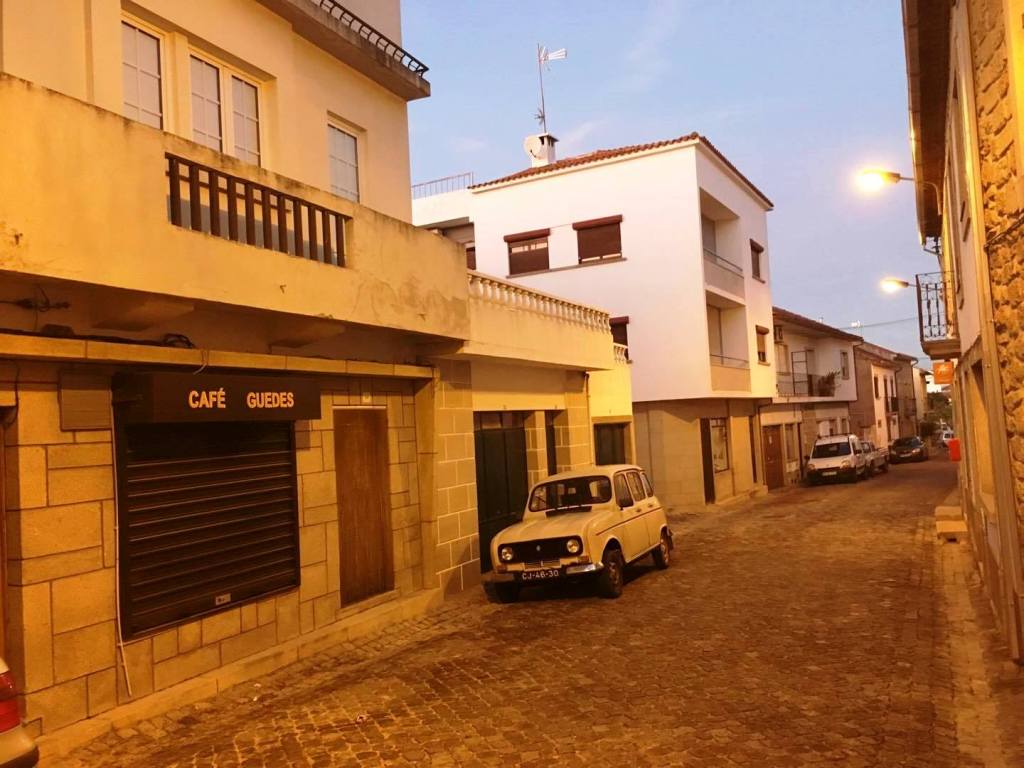
With some 150m2 spread among three floors separated by a stairwell containing 37 steps, our first Portuguese purchase is in Lousa, a village of some 600 souls adjoined by its partnered “parish” (freguesía), within 20 kilometers of the big city: Castelo Branco. Sited on Rua Nossa Senhora Dos Altos Céus – the main street in town – it’s always amazing how vehicles large and small move in both directions, traversing such narrow confines, with cars and trucks parked on one side.

One of our first neighbors told me (in Portuguese) that people in the village wondered what would possess two American men to move to such a “nondescript” yet typical village in the central core of the country. I tried to explain to her that, perhaps it was the increasingly dark Americanisms devouring the USA that motivated us to move to a place with a slower pace, peaceful coexistence, and tangible tranquility.

Lousa has all the charm one could want in a homestead. Its cobblestone streets, standard blueprint church (igreja matriz) with bells that signal appointed times of our rotes and rituals exude an aura that is truly Portugal. Like every village, it reveres several saints, although paying homage to Nossa Senhora Dos Altos Céus during an annual, four-day festival.

Bespoken are the health care center, primary school, multi-sport playground, senior day care facility, “casa de cultura,” and meeting space for the “junta de freguesía.”

Not quite so obvious, however, are Lousa’s charm and character … a place where everyone knows who you are, if not your name. What the town is missing, however, are retail shops and eateries, whether snack bar or restaurant. With two, sometimes three, cafés and two facing mini-markets along the main street, all of the action passes by our house (which, earlier, had housed the village’s most popular café—where lottery tickets were sold).

Our third-floor bedroom has four large windows overlooking the street; so, everything from funeral processions to passing sheep and achingly old diesel engines crunching up the cobbled stones looms loud, up close and (a bit too) personal.

Remember those 37 steps mentioned at the top of this tale? With three dogs but without a backyard, they need to be four times every day (eight separate outings, as only two can be walked at a time). Going up and down that staircase certainly takes a physical toll!  

We do love the property, though.

The former café with its two separate restrooms (the men’s has a working urinal!) has been our gathering space, where we welcome friends and neighbors for food and drink. Behind it is a small patio, off of which is our kitchen and family room combination, where we cook, eat, and relax with our critters and Netflix. Above the kitchen, in that separate wing, is a secluded guest suite with private bathroom. Also on this first floor (as numbered in Portugal and Spain), albeit in the main part of the house, are our offices and an expansive living room. Up 18 steps from the landing is our own bedroom suite featuring an adjoining breakfast room and sleeping areas for the dogs, the master bedroom, walk-in closet, and another full bath. There’s quite a large, covered terrace comprising space for doing laundry, grilling, eating, and socializing. Atop the building is an attic with concrete floor under a new, insulated roof providing plenty of storage space.

All things considered – purchase price; major repairs to walls and floors; a new roof; upgrading the electricity throughout; new appliances: water heaters, four inverter aircon units, washer, dryer, three refrigerators, electric range and oven; and new cabinetry built to spec in the upper and lower kitchens – we spent about US $70,000 (slightly more than €50,000 at the current exchange rate).  Furniture and furnishings (artwork!) were shipped over from the USA.

We had thought about selling this property, as walking the dogs during the incredibly hot and nasty rainy seasons is a royal pain, encumbered by all those stairs. But how could we leave a place that had adopted us, where we’re integral strands in the fabric of the gentry, surrounded by immigrant friends from nearby towns and villages? We couldn’t.

Until we had no choice.

Our other Portuguese property is located in what’s known as the “high” Alentejo: Vila Boim is a village of 1,200, five kilometers outside of Elvas – a UNESCO World Heritage site – which, in turn, is just about 10 kilometers from Badajoz, Spain. Around the corner and up the street are several snack bars, cafés, and an upscale restaurant, along with a bank, pharmacy, and mini-market. Our streets here are paved in asphalt, rather than cobble-stoned.

If our former place in Lousa is spacious and plentiful, this property is cute and cozy. The bungalow style, single-story structure has one large bedroom, one full bath, a spacious dining room, intimate living room, brand new galley-style kitchen, and an office … all under roof housed in a tidy 55m2. The bonus “room” is a small, bricked backyard (quintal), where our dogs can take care of their business, and a substantial storage shed. My own, special bonus is a dishwasher in the kitchen (although Russ prefers the side-by-side “American” style refrigerator and freezer). From soup to nuts, we purchased and primed this property for carefree, full-time living at an approximate cost of US $55,000 (€46,500).

Even as novice language learners, we’re aware of slight differences in Portuguese pronunciation and accents between the two villages separated by less than 200 kilometers. In both locations we have guardian angels who watch out for our welfare and help us to better understand the Portuguese people, their language and culture. Similarly, opening our front doors to knocks or the bell, we find neighbors bringing us food from their farms. In return, we take home-made meals to them: classic American cuisine: mac and cheese, franks and beans, meatloaf, cheesecakes, our own ”piri-piri” meatballs and spaghetti.

Unlike our house in Lousa, the layout and build of the Vila Boim bungalow place the bedroom squarely in the middle of the house—cutting down, substantially, on street noise. Exterior walls are at least a meter thick, providing natural insulation and keeping our heating and cooling bills to a minimum. Due to its size, it’s easier to clean, maintain, and use the premises in full than our Lousa lodging.

Besides being next-door to Badajoz, a busy and bustling metropolis, two hours were shaved off our trip each way back and forth to Spain by leaving from our Vila Boim property, rather than the one in Lousa.

(A separate post on  pastorbrucesblog.com deals with our operating costs, living expenses, and monthly budget for all three properties.)

If you’ve been adding up the numbers given here, you’ll notice that we spent $125,000 of the $135,000 received from the sale of our house in Sturgeon Bay, Wisconsin. What did we do with the remaining $10,000? Half we put into savings. With the rest, we added a “fitted” kitchen and replaced our leaky, cast iron bathtub with a walk-in shower at our Olvera home.

But that is another story!

Bruce is publisher and creative director of Portugal Living Magazine, a free digital quarterly that covers the country top to bottom, east to west, inside and out. Read our current issue and subscribe at now cost: http://portugallivingmagazine.com/our-current-issue Visit the magazine’s popular Facebook Page (www.facebook.com/PortugalLivingMagazine) for dozens of daily posts and comments.

Shared here are personal observations, experiences, and happenstance that actually occurred to us as we moved from the USA to begin a new life in Portugal and Spain. Collected and compiled in EXPAT: Leaving the USA for Good, the book is available in hardcover, paperback, and eBook editions from Amazon and most online booksellers.

Processing…
Success! You're on the list.

Pissed Off!

We’re pissed off …

… because we are tired of stepping in dog poop on the cobble stones of our streets.

Today, one dog – wearing a collar but no leash attached to a person – followed us as I walked our dog around town. Ours had a collar, along with a leash held in my hand. In my pocket was a stash of poopy bags. Bending over to scoop up my dog’s “litter,” the other dog lifted his leg against the wall in front of us. Immediately, a window opened above and a woman began berating me to clean up after my dogs.

Waving the plastic poopy bag in her direction and explaining that only one of the dogs was mine, “I did!” I insisted. “It’s this other dog who is making the mess … following us and not leaving us alone.

”She slammed the window.

This is the time of year that families and friends visit our village as it swelters in heat and humidity. All those vacated houses shut up for much of the year are flung open again, filled with lives producing lots of litter.

Accompanying the adults are their children and pets.

Suddenly, it’s not just one or two stray dogs meandering and messing on our streets—at times it’s nearly a dozen. Because people open the front doors to let their dogs out and about town to dispense their “necessities.”

I don’t doubt that they love them, but being responsible and respectful of others are other matters entirely … regardless of culture of local tradition.

“We are planning on spending this summer in Portugal and taking our dog,” someone recently remarked online. “He’s not very sociable and doesn’t tolerate other dogs. Everything’s fine if we walk on the street and the other dog is on a leash, too; but things get nasty if the other dog is roaming free with no leash–our dog takes it as a potential attack and goes crazy, barking and pulling unbelievably!”

So, it’s not just a matter of health and hygiene for dogs to be restrained on leashes, but the safety of others as well.

I know it is wrong for foreigners like us to move into another country, imposing our own sets of values and assessing appropriate behavior. But the laws of Portugal are being broken.

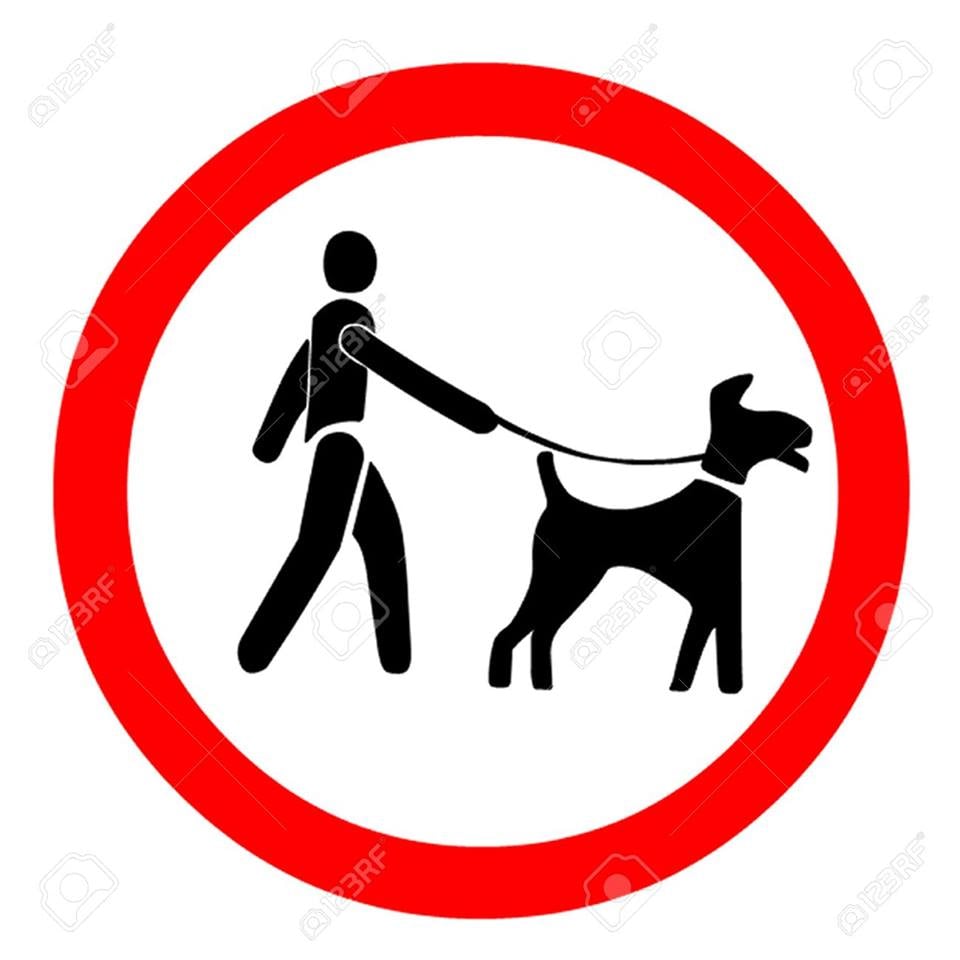
Recent legislation requires people to be responsible for their pets. According to current law, it is mandatory to put a leash on pets in public places—like our village streets.

Moreover, every cat and dog “walking” in public places must wear a collar or harness with the name, address, and/or telephone number of its owner clearly inscribed.

Dogs and cats that haven’t been neutered, but allowed to roam loosely on the streets will follow their natural instincts and biology. Which means that more unwanted puppies and kittens will either be abandoned to the streets or dealt with fatefully in a way that makes me cringe and breaks my heart … even though (some) people believe it’s more merciful than condemning them to a life on the street.

Street animals will always be with us. It’s just the way things are. My comments here aren’t about these destitute critters, but directed to people with pets: Not only are they part of your family, but you have responsibilities – legal obligations — to your dogs and cats, as well as to others who live in the community.

Noise is one of the biggest problems between dogs and the people living around them. You’re responsible for ensuring they don’t disturb your neighbors.

Anyone experiencing problems can contact the police (GNR or PSP) and request that they stop the source of the noise. If you don’t, they can alert the council … which will issue a minimum fine of 500 euros! (You’ll also be fined if driving with dogs or cats in the car that aren’t tethered to the seat belt clasps or in carrying crates or “containers.”)

In addition to walking with pets on leashes in public places (and, presumably, picking up after them), and keeping them from being noisy neighbors, Portuguese law requires that you register your pet and have it licensed at the town hall (Junta de Freguesia) where you and the dog (or cat) live.

You’ll need a health report for the animal (with an up-to-date rabies vaccination) and documentation that an electronic identification chip has been implanted by a veterinarian in the left lateral side of the neck. You then have 30 days to register and license your pets(s) … and the registration must be renewed annually.

(Leave it to Portugal to identify dogs and cats as belonging to specific categories: Category A – Pet dog; B – Dogs for your economic livelihood; C – Dogs for military purposes; D – Dogs for scientific research; E – Hunting dogs; F – Guide dogs; G – Potentially dangerous dogs; H – Dangerous dogs; and I – Cats.Category G includes: Rottweilers, Brazilian Fila Dogs, Argentine Dogo, Pitt Bull Terriers, American Staffordshire Terriers, Staffordshire Bull Terriers, and Tosa Inu.)

People, please respect the rights of others by overseeing your pets. And if you’re planning to move to Portugal (or Spain, which imposes similar requirements and restrictions on pets and their people), be aware of what will be expected of you … and your furry family.

# # # # # # # # # # # # # # #

Disclaimer: I share these stories of our experiences not to complain or seek sympathy, but because we are North Americans acculturating to another country’s norms and expectations. Information in posts such as this aren’t found in tourist or relocation guides … nor asked about and answered in most Facebook groups. Hopefully, some will learn from my anecdotes and be better prepared for the grit and grist, the grain of living abroad. We love Portugal for what it is, not what it isn’t, and have no intention of returning to the USA.

Bruce is publisher and creative director of Portugal Living Magazine. Read the current online issue and subscribe to the magazine at no cost whatsoever: http://portugallivingmagazine.com/our-current-issue

Processing…
Success! You're on the list.

The Bureaucracy Begins: Applying for a Long-Term EU Visa

The Bureaucracy Begins: Applying for a Long-Term EU Visa

Professor/pastor probing media, religion, gender, international living, and allied cultural norms.

These words inscribed on Facebook, LinkedIn, and other social media sites profile how I imagine myself.

So, there: now you know enough about me.

Reading between the lines, however, would inform you that we had moved around the USA quite a bit – living in New York, Virginia, Maryland, Wisconsin, Florida – as career changes and professional opportunities beckoned. Fluent in Spanish, I traveled throughout Mexico, South and Central America, as a liaison for international adoption agencies.

As mentioned, my better half and I had long considered living in another country and experiencing a different culture. Learning a new language to converse and communicate, we believed, was an admirable goal. Some people are so defensive of their own ways and means that their sense of identity and nationalism is threatened when other ways are engaged in and embraced.

With credentials from the University of Madrid, a vacation bolt in Andalucía, and a growing circle of friends there, Spain seemed a natural first choice for us. But the process of applying for and being granted retirement residency in Spain can be onerous and demanding at best, next to impossible at worst.

Many countries of the European Union are also part of what’s known as the “Schengen” zone. The same Schengen application form is used to apply for residency in any of its 22 EU nations. But the interpretations of myriad functional requirements often vary from country to country.

Take finances, for example.

All Schengen countries want to know that you have the financial means to provide adequately for yourself and your dependents, without being a burden on the country and its economy. All countries seek proof that you have the necessary wherewithal—albeit from Social Security, other pensions and annuities, investments and savings, bank accounts, even credit immediately available via “charge” cards.

Spain dictates specific annual earnings expected retirees must receive: “The minimum income required is 400% of the IPREM (Public Income Index) annually plus the required percentage per each additional family member.” At the time, that meant, for a retirement visa and residency in Spain, one was expected to receive no less than $2,500 per month or $30,000 a year. Add $7,500 more for each dependent. I’m told that now, for some reason, those amounts are slightly less.

Wow!

How many Spaniards – especially those living in small towns throughout the country – earn that kind of money? Very, very few! For a country where the cost of living is so relatively low, I maintain Spain is shooting itself in the foot by requiring such high income levels from prospective retirees who would likely support the economy by spending money on their homes, food, and lots of leisure time activities.

Consider Portugal, now: €14,000 annually is an approximated income you have to make to get a “D7” residency visa in Portugal. But it can change depending on the number of “dependents” (wife, children, etc.). That amount is basically considered 100% of the minimum wage (MW) required for the husband/or wife (the visa’s owner) + 50% of the MW for his wife/her husband. For each child, it’s 30% of the MW. Portugal’s 2018 monthly minimum wage was 580 euros … although in 2020 it’s almost 700 euros..

Unless it has changed, financial means or financial subsistence in Portugal doesn’t require proof of income, simply proof of access to funds. Savings, bank accounts, investment funds, etc., all count as money to which you have access.

“You can qualify for permanent residency in Portugal simply by showing a reliable minimum income of at least 1,100 euros per month,” U.S. News & World Report reported. “This program is not intended specifically for retirees and is open to anyone. You can apply and qualify at any age, and the income you show can be earned or passive.”

In other words, money in banks … savings and retirement accounts … investments … even a line of credit on your “charge” card will count towards meeting your financial means in Portugal, as long as you have access to the money. The same holds true in many other EU countries: Italy and France are particularly popular, among others.

The process of applying for the right to reside in a Schengen EU country includes completing and/or acquiring much time-consuming paperwork, lots of patience, and more money than might be imagined. Included among the documents (some only available for a fee) required to be submitted with the official visa application: Original passport, a copy of the passport, and another accepted form of identification (driver’s license, state ID, or voter’s registration card). Plus a copy of this. A notarized document explaining why you are requesting the visa … the purpose, place, and length of your stay (and any other reasons you need to explain). Proof of permanent retirement income from an official institution (social security and/or private source) to live without working. Proof of accommodation: either a lease or title deed of property you own. Proof of other sources of income or properties (if applicable). Proof of health insurance with full coverage, necessarily including repatriation coverage. Criminal History Information/Police Background Check, which must be verified by fingerprints. It cannot be older than three months from the application date. The certificate must be issued from either the State Department(s) of Justice from every state you’ve lived in during the past five years. This document must then be legalized with the Apostille of the Hague Convention by the corresponding Secretary of the State. Alternatively, FBI Records, issued by the U.S. Department of Justice and legalized with the Apostille of the Hague Convention by the U.S. Department of State in Washington, DC, are acceptable. (A local police background check will not be accepted; but you must also get a police record from the countries where you have lived during the last five years.) A recent doctor’s statement signed by the physician on the physician’s or medical center’s letterhead (not older than three months in) indicating that you have been examined and found free of any contagious diseases according to the International Health Regulation 2005. Married? Your spouse must submit the same documents as you, together with a marriage certificate (original, issued in the last six months, plus a photocopy). Minor children must also submit the same documents as the applicant, along with original birth certificates issued in the last twelve months … and a photocopy.

Quite a list, huh? But, that’s only the beginning!

For Spain, every document submitted must be translated into Spanish … and not just by anyone. Only “certified” translators identified – many of whom charge @ $40 per page to translate – are acceptable. Despite being fluent in Spanish and having taught the language for quite a few years, I wasn’t on the list and couldn’t do our own translations.

But, for us, the real sticking point was the annual retirement income requirement. We owned (without a mortgage) our home in Spain and could live quite comfortably in our small town on my monthly Social Security payments. Nonetheless, $1,700 per month supplemented by a $250 private annuity didn’t come close to the $2,500 Spain required. Especially not when factoring in my spousal dependent.

We could enjoy visiting Spain twice each year for up to 90 days per visit when separated by 180 days … but we couldn’t live there full-time.

Bem vindo, Portugal!

Processing…
Success! You're on the list.

An Exceptional Language: Portuguese, La Lingua Franca

Unfortunately, Portuguese was never one of the languages offered in most USA schools.


Spanish and French, yes … with some of the more upscale schools including Latin (or Greek) – even Russian! – in their curriculum.


Mas não português.


So, most of us opted for Spanish or French.


Even a limited knowledge of Spanish, especially, can be both a help and a hindrance — a mixed blessing — to learning Portuguese.

Let me be clear: I am not saying that Portuguese derives from Spanish or that peering into Portugal’s language portal through Spanish eyes is what learning Portuguese is all about. Many people have difficulty understanding and speaking Portuguese (though reading it is somewhat easier), not just because of the vocabulary and syntax, but — especially — because of its pronounciation. But, once our ears are attuned to the sounds and rhythm of the language, there’s a nasalized beauty in the poetics of Portuguese.


The communications professor in me wants to know about a language and understand what makes it tick. Peering through the peephole of Spanish, because it’s my familiar tongue, I try to unpack the mysteries of how the Portuguese language works—and why.


But my Spanish also causes obstacles, hurdles, and stumbling blocks. People constantly remind me that I’m thinking – and talking – in Spanish.


When I speak Portuguese, it comes out sounding like a Spanish mish-mash.


“Fala português … não espanhol!” my Portuguese friends admonish and encourage me.


Intent at understanding the “why” behind the language, its psychology, the rules governing its syntax, I’ve embarked on an ambitious adventure to analyze Portuguese, at least as the language relates to Spanish … arriving at a number of “Eureka!” findings in the process.


Some rules hold true rather regularly between Portuguese and Spanish. For instance:


• An “n” in Spanish is usually an “m” in Portuguese, while the Spanish “ie” is simply an “e” in Portuguese. Examples: una/uma … con/com … en/em … diez/dez … sin/sem … tiene/tem … bien/bem … abierto/aberto … también/tambén … alguien/alguem … siempre/sempre … tiempo/tempo … invierno/inverno … fiesta/festa;


• That “ny”sound (as in“canyon”) signaled by a tilde over the “n” (ñ) in Spanish is much the same in Portuguese, with words having “nh”letters: viño/vinho … señora/senhora … español/espanhol … baño/banho … leña/lenha;


• Although also used in Portuguese – most frequently over the letter “a”(ã) – the tilde produces an entirely different (nasal) sound: João … cartão … educação … manhã … não;


• The “ue” diphthong in Spanish becomes an “o” in Portuguese: luego/logo … puerta/porta … puerto/porto … puede/pode … fuego/fogo … fuerza/força … escuela/escola … cuenta/conta … suerte/sorte … juega/joga.


• “O” in Spanish is often “ou” in Portuguese: poco/pouco … otro/outro, while the Spanish “l” often becomes an “r” in Portuguese: plato/prato … placer/prazer … plaza/praça;


• “U” in Spanish can become “ui” in Portuguese: mucho/muito … at other times, instead, it becomes an “o”: gusto/gosto … punto/ponto;

• The double “ll” in Spanish often translates to “ch” in Portuguese: llave/chave … llama/chama … lluvia/chuvia … llegando/chegando;


• Words beginning with “h” in Spanish often switch to an “f” in Portuguese: horno/forno … hacer/fazer … hablar/falar … hijo/filho … harina/farinha … fugir/huir … hablar/falar … harto/farto;


• When you see a word with a “çao” suffix in Portuguese, it probably ends in “ión” in Spanish: relação/relación … informação/información … edição/edición … habitação/habitación;


Confused?


Wait, the questions keep coming … and we haven’t yet touched upon tenses and sentence structure:


It’s “bom dia, boa tarde, boa noite” in Portuguese, but “buenos días, buenas tardes, buenas noches” in Spanish. Why are the day’s divisions plural in Spanish but singular in Portuguese?


When does “dia” end and “tarde” begin, anyway? Why, after 12:00 PM, of course, you say? Maybe technically. But people in Portugal generally suppose that “tarde” begins after one has eaten lunch. What about “noite”? When it becomes dark … or after eating dinner?


And why are the words for “day” spelled the same in Spanish and Portuguese, while only Spanish gives it an accent mark (día)?


Spanish, like most Latin-derived languages, names the days of our lives: lunes, martes, miércoles, jueves, viernes, sábado, domingo. Except for the weekends (sábado, domingo), Portuguese, instead, numbers them: segunda-feira, terça-feira, quarta-feira, quinta-feira, sexta-feira.


But don’t confuse “feira” (market, as in market days) with “feria” (fair, market, and often, holidays) or ferias: vacation.


Thankfully, many words are identical in both languages: “casa,” “porque,” “tal|vez,” “médico,” “viajar”, “comprar,” “poder,” “vida” … and even “de nada,” to say “you’re welcome.” So, how come cats are cats – “gatos” – in both languages, while a dog is “perro” in Spanish but “cão” in Portuguese? And, for goodness sake, how did “gracias” become “obrigado,” every foreigner’s favorite Portuguese word?


Pronunciation and accents are other matters entirely, as Portugal uses almost every accent mark in existence—and then some! How can anyone other than a native enunciate clearly the subtle differences between “pais” (parents), “país” (country), and “pães” (breads)?

Who but the Portuguese can tell the difference between grandfather and grandmother, when the ending of both seemingly masculine words differs only by an accent mark: avô (grandfather) and avó (grandmother)? Yeah, right. Now try pronouncing them both.


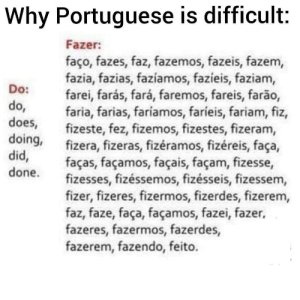
Similarly, verb tenses and conjugations differ in the two countries of Iberia. For instance, consider so-called “reflexive” verbs. More often than not (although not always), their order is reversed: In Spanish it’s “se vende, se trata, se llama,” while in Portuguese we get “vende-se” and “trata-se,” but “se chama” … except when asking a question, used in the negative, and other exceptions: “Se vende a casa?” “Como é que se chama?”

And the past tense (pretérito) is so similar, yet different. Take the verb “ir,” for instance. In Spanish and Portugal, the first person singular in both is “fui.” Yet, while the third person singular is close in the two languages, a miss is as good as a mile: fue (Spanish) and foi (Portuguese).


Here’s where turnabout between the Portuguese and the Spanish isn’t necessarily fair play: Some Portuguese people understand spoken Spanish, because they grew up watching Spanish TV.


Spanish people, however, have a hard time understanding Portuguese. Some say that’s a matter of choice, not of ability. Because whether it’s Portuguese, Spanish, or Portu|ñ|ol, we certainly understand each other at the border cities and towns.


As for me, I don’t think I will ever get used to seeing “Puxar!” on a door and pushing rather than pulling.

Shared here are personal observations, experiences, and happenstance that actually occurred to us as we moved from the USA to begin a new life in Portugal and Spain. Collected and compiled in EXPAT: Leaving the USA for Good, the book is available in hardcover, paperback, and eBook editions from Amazon and most online booksellers.

Processing…
Success! You're on the list.

The Americanization of Iberia

Conveniently, we’re eating lunch in the food court at one of Castelo Branco’s largest shopping centers. With a dozen or so eateries in a semi-circle filled abundantly with tables and chairs, eateries abound: churrascarias (bbq), fish, soup and sandwich, Italian (pizza & pasta), kebabs and gyros, burgers, ice cream, pastries, and other desserts.

Our favorite is a Brazilian steak house where, for €4.90 – about $5.50 – you can get a grilled flank steak on a roll with a side salad, bowl of soup, French fries, and your choice of beverage—wine and beer included. Other meals are comparably priced. All are served on real plates and dishes, with flatware and drinking glasses.

But many of the Portuguese we see prefer to eat, instead, at the Pizza Hut, KFC, Burger King, or McDonalds next door … tapping digital buttons to order food and then waiting for their LED numbers to flash, summoning them to pick up bags with disposable contents.

Meals at these American franchises typically cost more than Portuguese food.

Hamburgers, chicken, pizza, and sandwiches, of course, are international foods, unlimited by American influence. It’s how the food is cooked and served that makes all the difference (along with the type and quality of products used).

Why would anyone want to eat such assembly line food with “paper” plates and plastic utensils, when so much better is available in the very same space?

It got me thinking about the influence America – the USA, in particular – is having on Portugal and Spain in Iberia. Is that still called “imperialism?” Good, bad, or indifferent, the USA has affected Portuguese and Spanish cultures in many ways:

• Language. As American English differs from the British, European Portuguese and Spanish differ from their Brazilian and Hispanic cousins. And American lingo is increasingly taking root in both languages. English – accented by American English, by and large – is mandatory learning in Portuguese schools, from elementary grades through secondary school. English speakers seek to practice their Portuguese; but as soon as we open our mouths with mispronounciation, the Portuguese reply in excellent English. Daily, more American expressions and words are imported, even though native words already exist: “take-away,” and “tênis” (sneakers) … along with many other words of common usage: “marketing,” “workshop,” “brownie,” “cupcake,” “low cost,” “cheap,” “check in,” “designer,” “email,” “blog” “clic(k),” “check up,” and “yummy” are just a few examples, along with the universal gadgets and widgets of technology.

Media. If you watch TV’s The Price Is Right or America’s Got Talent, you’d best take their Spanish and Portuguese equivalents with a large dose of salt! As for cinema, we get first-run American movies here upon release. Soundtracks are hilariously dubbed in Spanish, while shown in their original English with Portuguese subtitles.Heck, there’s even Netflix.es and Netflix.pt. American music – current and oldies – is quite popular on much Iberian radio … until interrupted periodically by Catholic masses and Hail Marys broadcast in their entirety.

• Money. Plastic seems preferred over cash—especially during the pandemic. Although Americans reach for their credit cards, the Portuguese and Spanish are more likely to use debit cards. The ATM was invented by a Brit (not the Yanks), but their use is everywhere today. In Spain, you can withdraw and deposit money, pay bills and even traffic fines at an ATM. Portugal’s “multibanco” machines do even more! They’re so smart, in fact, that they don’t deem cash withdraws – where we’re assessed fees from both the dispensing and our home banks – as such. (Not so with Spain’s ATMs.)

• Medicine. Although universal health care is the birthright of all Spanish and Portuguese citizens (legal residents in Portugal, as well), locals often opt to supplement their public health care with private coverage. There’s quite a difference (in price!) between the USA’s and Iberian medical plans. While the cheapest and least inclusive health insurance policies can cost thousands of dollars per month in America, comprehensive health care insurance in Portugal runs us about $160 per month (all-inclusive) for two people–one 70+, the other almost 60. Spain, too, offers the option for foreigners residing there to buy into the country’s national insurance or purchase comparable coverage through private market insurers.

• Urbanization. How are you going to keep them down on the farm? The Portuguese lament the loss of their younger, educated population who flee the small villages of their birth to elsewhere … other countries, as well as bigger cities in Portugal, where employment opportunities are more plentiful and the proverbial “rat race” appears to be exciting. Buy, sell, spend, borrow, bigger, better … more! After a while, however, keeping up with the Joãs takes its toll. Like the city mouse and the country mouse, there’s a pronounced distinction between city dwellers and their more provincial relatives, with natives dividing lifestyles as either city or country (campo).  Increasingly, however, the Spanish and Portuguese experience that yearning, “saudade,” to return to their roots … tilling the soil and enjoying a more peaceful, tranquil, less hurried and hectic lifestyle. Wherever the location, however, for those looking to buy or rent property, there’s a local office of the Re/Max, ERA, Century 21, and Keller Williams real estate networks.

• Technology. The globalization of technology certainly can’t be limited to the United States. But silicon valleys across the country are the forbearers and creators of our digital world. The most popular mobile phone in Portugal and Spain? Apple’s iPhone.The preferred computer? Apple’s iMac. The ubiquitous operating systems and tools of computers? Microsoft’s. The go-to search engine? Google. The most popular social media platforms? Facebook and its WhatsApp. The best known computer chips and graphic cards? Intel.

Unfortunately, ignorance and belligerence — byproducts of American polarization — appear to be finding friends in Spain and Portugal. Chanting “freedom,” hundreds of people rallied in Madrid and Lisbon in to protest the mandatory use of facemasks and other restrictions imposed by the governments to contain the coronavirus pandemic. And in Portugal, one of the countries intent on containing and crippling the virus, we are impressed with the fortitude and compassion displayed by the Portuguese people. “It is not perfect here,” states an American expat living in Lisbon. “The police need to enforce mask rules (occasionally meeting violent resistance) in some ethnic ghettos, but the city is trying to increase communications and messaging in those neighborhoods and incidents are rare.” In southern Portugal, “most are following the rules, but still get too close at the grocery, leaning in or reaching around. On the boardwalk, tourists don’t cover when they cough and sneeze.”

American outreach has cribbed many inroads to territories Spanish and Portuguese.

T-shirts glorify alleged American icons and phrases, while shopping carts are filled with brands such as Heinz, Tropicana, Listerine, Johnson & Johnson, Old Spice, Colgate, Oral-B, Coca Cola (and Pepsi), Kellogg’s, Finish, Raid, Vaseline, Woolite, Hellman’s, Vaseline, Dove, Bic, Purina, Pedigree, and Friskies (among others) … outpacing the national ones.

So be it.

But if and when Walmart arrives here, it will be time for us say enough is enough!

Shared here are personal observations, experiences, and happenstance that actually occurred to us as we moved from the USA to begin a new life in Portugal and Spain. Collected and compiled in EXPAT: Leaving the USA for Good, the book is available in hardcover, paperback, and eBook editions from Amazon and most online booksellers.

Processing…
Success! You're on the list.

What Do You Call It?

The Portuguese have a word for it.

English really doesn’t.

You can’t define it; to truly understand its meaning, you’ve got to experience it.

It’s different than depression, distress, disillusionment, discouragement, despair. It’s wistful and wishing for the way things were … and ought to be … but aren’t anymore.

Although “melancholy” probably is its closest cousin in English, it’s much more than that: a longing, yearning, aching void.

It’s the heart swelling up and crying out inside. It’s a lump in the throat … anxiety attacks … a feeling of foreboding … brooding … bleeding internally … unable to heal the hurt.

It’s a slow burn about the utter unfairness of it all … coupled with an irresolute resolve to go on and make it through yet another day–despite the turmoil, trespasses, and travails along the way.

It’s caring so much and coping so continuously that we’re overwhelmed and exhausted, unable to do much more than sigh as we watch the world go by(e).

It’s abject and deject, anguish and agony, feeling victimized and caught up in an elusive web of betrayal beyond our control.

It’s something for which, elsewhere at another time, they’d prescribe mind-numbing drugs, psychotherapy sessions, and therapeutic confinement.

It’s sort of like the Yiddish word “Rachmones,” whose translations – mercy, compassion, empathy, understanding – don’t come close to what we actually feel when recognizing the trait in a kindred spirit: Namaste.

It’s a voice heard in Ramah, weeping and great mourning, Rachel weeping for her children and refusing to be comforted, because they are no more.

It’s hiding in Anne Frank’s attic, knowing full well what the future holds.

Yet, it is part of the song and dance that are our lives.

The Portuguese sensitize these doldrums and call them “Saudade.”

For me, it’s a dark cloud hovering over us as I await what’s beyond … looking away and staying inside without precious connection to others … hoping it will pass sometime soon.

I feel like a psalmist, pleading with the Almighty to allow me to be joyful, yet unable to understand how and why we’ve become such drained and divided fragments of our fabric.

Then I remember that verse: “ … weeping may remain for a night, but joy comes in the morning.”

So be it.

Shared here are personal observations, experiences, and happenstance that actually occurred to us as we moved from the USA to begin a new life in Portugal and Spain. Collected and compiled in EXPAT: Leaving the USA for Good, the book is available in hardcover, paperback, and eBook editions from Amazon and most online booksellers.

Processing…
Success! You're on the list.

Vacation

Months after arriving in Portugal and finishing much of the work on our property in Lousa, Castelo Branco, we decided to take our three dogs with us on a “real” vacation and see some of the sights (and sites) we’d thus far only posted Thumbs Up! *Likes* on Facebook pictures.

Our time away would be short (just six days) and our agenda agreeable: We’d stay somewhere near the beaches north of us, close to the coast, with easy access to Portugal’s convenient train system. From there, we’d take day trips: Monday’s market at Espinho, a gondola ride in Alveiro, the extraordinarily tiled buildings (especially the church) of Ovar, and a day sampling some of Porto’s special deliciousness.

Searching the listings on AirBnB, FlipKey, and TripAdviser, we found what sounded like the perfect place: a “romantic room in a magic place near the beach,” the property touted its “artistic atmosphere.” Offering “lots of privacy,” it was in front of the train station–just ten minutes to Porto!

Amenities included bed linens and bathroom towels, WiFi Internet, a private garden, and a kitchen with fridge, stove, toaster, and kettle. Plus, among the property’s features was its waterfront location!

The sole drawback (for us) was that its one-and-a-half bathrooms would be shared.

The place had been booked continuously, from April through October, according to its hosts. But with a bit of shuffling, six consecutive available days were found. I contacted the property’s lister with a bunch of questions: Would three dogs be acceptable? Was it a non-smoking property? How would sharing the bathroom(s) actually work?

“No problem at all,” she replied. “Just enjoy.”

Before losing our chance at what appeared to be a place ideally suited for us, I confirmed the reservation and paid by credit card.

Hindsight, at best, is 20/20. But using a credit card is paying it forward!

“Don’t you think it’s a little strange that, with all those bookings, there’s not even a single review for this place?” Russ asked me. Not one guest had taken a moment to say something – good, bad, indifferent – about their experience there. Most properties had a fair share of comments. Not this one, though.

That should have been a harbinger.

We packed the car and spent about €50 in tolls and a tank full of gas before pulling up and parking in front of the property.

“Is this it?” I asked, incredulously. There’s always one derelict property surrounded by others in pristine condition.

Ours was the destitute one.

Blue boards tried valiantly to look like a cross-weave pattern through which weeds wound their way up, down, and through the broken wooden remnants. An unlatched double gate, painted the same color blue, was opening and closing on one side, blown by the breeze.

From the exterior, at best it could be thought of as a “beach house” … but the word that stuck in my mind was “ramshackle.” Nowhere to be seen was a beach, let alone the promised waterfront.

Facing the house was the train station. Every ten minutes, sometimes sooner, we’d hear the tick-tick-tick-tick signaling an approaching train, followed by a series of bells, as the guard rails came down. Local commuter trains. Freight trains. Express train service between Porto and Lisbon. All stopped or sped by, clickity-clack, clickity-clack on the tracks, as the transports tooted, honked, squealed, and blared off-key melodies announcing their every approach and departure.

While Russ – with some help from the property agent and her artist – emptied the car and carried in our bags, I walked the dogs.

Our amiable hosts apologized when the bedroom’s inside door knob kept falling off and onto the floor, explaining that the property wasn’t actually theirs—they rented it from the owner, who had been negligent in his responsibilities regarding its upkeep.

Although the description specifically stated that the property’s two-bedroom, one full and one-half bath could accommodate four people, whether that took into account the two caretakers and their bedroom is uncertain.

Especially since the listing began in the singular: “Romantic room … near the beach” and unequivocally stated, “A total of 4 people can sleep here comfortably.”

Romantic room. Not rooms. A total of four people …

Our hosts then told us we would be joined the next day by other guests and their dog. Wouldn’t that be nice?

“If you had told us that earlier, we would have reconsidered …” was all I could muster, as we continued to take stock of the accommodations.

Our bedroom was at the front of the house, directly facing the trains. Mismatched furniture – a small “matrimonial” size bed with a well-worn mattress, throw pillows that felt as though they were filled with rice, two totally incompatible nightstands (one with a tiny lamp sold at most Chinese markets for ten euros), a bookcase, a round table with two chairs in front of the window – could all trace their ancestry to rummage sales or second-hand stores. Neither of the two bath towels on the bed compared to the ones we had bought at thrift shops in the USA for use as packing materials, and later used for the dogs.

An eclectic mix done well can be artistic and even elegant: “shabby chic.” Chic? This place was plain shabby.

If you’re renting this room out to a steady stream of people, how about investing twenty euros on a clothing rack, instead of the over-the-door hanger with five hooks? Isn’t that where bathrobes and towels hang? What about a bureau or chest-of-drawers? Where do people put their other stuff—underwear, socks, bathing gear, bathroom necessities, and collaterals? For that matter, where was a garbage can?

Nowhere near the bedroom, both bathrooms were way down the hall, beyond the kitchen. Add the full one (with shower and tub) and the half bath next door with only a sink and a WC, and you’d have one full and proper working bathroom. Depending on the time of day or night. Painted, one toilet was taped shut; the plastic toilet seat cover on the other wasn’t attached; so, using it was awkward. The sink’s faucets were outdated: scalding hot water came out of one spigot, cold from the other, yielding no comfortable temperature without filling the sink.

Not that it mattered. We had no hot water (in either bathroom) that night. Nor were our hosts around to help us deal with it.

The bathroom was missing a bath mat, an anti-slid mat, and a garbage can. The tub was lined with someone else’s bottles of shampoo and conditioner–more than a dozen of them! Two glass shelves near the sink were full of creams and cosmetics, powders and perfumes. There was no space for anything of the guests, so we schlepped our toiletries back to the bedroom.

Settling down to sleep that night, we were thankful the trains, by then, had stopped. (Two did pass in the middle of the night: at 2:00 and 4:00 AM, but didn’t honor us with their horns). Sleepless noises were constant, however, courtesy of the beach and its breezes: the front gate and shutters banged open and shut … again and again and again.

Itching to bite, one or more mosquitoes whined in my ears throughout the night. I slapped my face but missed the bugger.

The next morning, I went quietly to the kitchen. Sometime during the night or early that morning, someone had left a package of cheese open on a plate with a knife, a half-empty glass and coffee cup next to it. Flies weren’t fickle as they feasted.

Russ saw the upset look on my face when I came back to our room. “Let’s pack,” he implored. “We’re going back home!”

Following a hurried and harried breakfast at a nearby café, we hustled ourselves and the dogs out of there and headed back home.

Spending lazy time in Lousa and visiting nearby points of interest, we relaxed and tinkered together.

Merriam-Webster calls that a “staycation.”

Our credit card company, through which we disputed the charge (and won!), agreed with us, calling it a “sham!” and removing the property from its listings.

Shared here are personal observations, experiences, and happenstance that actually occurred to us as we moved from the USA to begin a new life in Portugal and Spain. Collected and compiled in EXPAT: Leaving the USA for Good, the book is available in hardcover, paperback, and eBook editions from Amazon and most online booksellers.

Processing…
Success! You're on the list.