How artificial intelligence quietly took up residence in our inboxes, cars, cameras, bank accounts, and living rooms—long before most of us started worrying about it
Bruce H. Joffe*
At 7:03 on a weekday morning, a man in Lisbon reaches for his phone before he’s fully awake.
He checks his email first. A few messages sit in the inbox; dozens more have been silently diverted elsewhere—junk mail, phishing attempts, marketing blasts, the digital equivalent of flyers stuffed under a windshield wiper. He glances at the weather. He asks for directions to an appointment across town and is told to avoid one route because traffic is building near the river. He dictates a quick text instead of typing it. On the way out the door, his phone suggests the podcast he usually plays on Wednesdays. Later, his bank pings him to confirm a purchase that doesn’t fit his normal spending pattern. That evening, a streaming service serves up a crime series eerily calibrated to his taste, while a security camera at home decides the movement on the front step is a package, not a person.
None of these moments feels especially futuristic. None would make a compelling movie scene. There are no humanoid robots, no glowing red eyes, no disembodied machine voice announcing that civilization has entered a new era. There is only the filtered inbox, the optimized route, the recommended song, the fraud alert, the sharpened photograph, the personalized feed.
Yet artificial intelligence is omnipresent and omniscient in nearly every one of those moments.
Is it omnipotent, too? And are these qualities of AI good things or bad?
That’s the oddity of AI in public life. For years, the technology has been sold to us in two contradictory ways. On one hand, it has been framed as an impending revolution, always just over the horizon, promising either astonishing prosperity or social collapse. On the other, it already has seeped so deeply into ordinary routines that much of it no longer registers as something extraordinary. We talk about AI as though it is arriving tomorrow, even as it has quietly spent the last decade rearranging the texture of daily life.
The result is a strange kind of collective misrecognition. Ask people where AI figures in their lives and many will point to chatbots, image generators, or the latest software capable of imitating human prose, voice, and imagery. Those are the visible, headline-grabbing forms of AI—the kind that inspire awe, panic, or breathless TED Talk predictions. But the more consequential story may be the less theatrical one: AI as a background infrastructure, embedded in the systems that sort, rank, predict, detect, recommend, translate, and optimize.
In that sense, artificial intelligence has become less like a robot and more like plumbing. It sits behind the walls of digital life, unseen but constantly at work, shaping what we see, where we go, what we buy, how we travel, whom we hear from (and don’t), and which risks get flagged before they become crises.
AI is not one single thing. It is a sprawling collection of systems making assumed judgments on our behalf—some trivial, some useful, some manipulative, some indispensable.
To understand how thoroughly AI has become the substance of ordinary life, it helps to stop thinking of it as a master machine and start considering the kinds of work it performs every day. Increasingly, that work falls into four broad categories: predicting what we want, watching for what might go wrong, curating what we see, and making small decisions on our behalf.
In other words, we need to become adept at connecting the dots.
The Prediction Conglomerate
One of AI’s most pervasive talents is prediction—not in the mystical sense of foretelling the future, but in the more mundane, commercially useful sense of guessing what is likely to happen next: What song will you want to hear? What route will get you home fastest? Which word are you trying to type? Which movie are you most likely to watch when you’re too tired to choose carefully? How much money is in your bank account at this moment? Who has taken money out and put money in? What’s the correct spelling of that word you’re wrestling with in Spanish?
Recommendation systems are perhaps the clearest example of AI’s predictive abilities.
Streaming platforms like Netflix, Spotify, and YouTube don’t merely store content; they study behavior. They track what users click, skip, replay, abandon, and binge, then use those patterns to forecast what will keep a person engaged for one more song, one more episode, one more hour. In practice, this means that entertainment platforms are no longer passive libraries. They are active editors of our leisure, arranging choices in ways designed to feel intuitive, personalized, and a little uncanny.
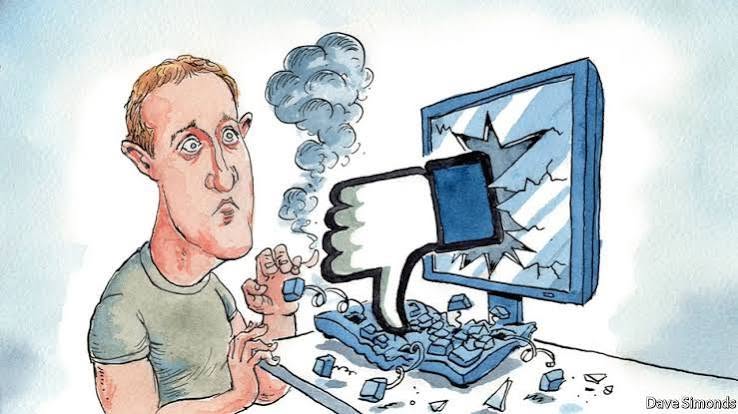
That can be very dangerous and illegal. Take the case of social media, which operates on the same premise. Remember the Facebook–Cambridge Analytica scandal which involved the unauthorized harvesting of personal data from an estimated 87 million Facebook users to micro-target voters during the 2016 U.S. presidential election? The personal data was used to build psychological profiles to influence voters in favor of political campaigns, most notably those of Donald Trump and Ted Cruz.
Following global outrage and an undercover investigation exposing corrupt practices by CEO Alexander Nix, Cambridge Analytica shut down in May 2018. Facebook CEO Mark Zuckerberg was forced to testify before the U.S. Congress, and the company later agreed to a $725 million class-action privacy settlement alongside a $5 billion fine.
How do I feel about knowing that AI is always lurking around, studying me everywhere and recommending what it presumes I would want to see, hear, or do based on my past behavior?
The same predictive logic animates navigation apps. A map app does not simply tell you the shortest route from one address to another; it predicts how traffic is likely to behave by the time you reach a particular interchange, whether an alternate road will save three minutes, and how thousands of other drivers are moving through the same geography. The estimated arrival time on a phone screen is not neutral. It is an algorithmic forecast, continuously revised as conditions change based on real-time data and patterns. That is, assuming it works. Often it doesn’t. Especially in later model vehicles whose GPS and navigation capabilities are based on your mobile phone and the car’s software being in sync and cooperating with each other.
AI algorithms are very different, however, from other qualitative and quantitative metaphysics. Both the primitive Dewey Decimal System and Library of Congress classification and coding systems were archetypical algorithms that helped us to find information easier and quicker. But they were neither predictive nor predatory. AI can be – and is – both.
Prediction also lives in the keyboard. Autocorrect, predictive text, grammar suggestions, “Smart Compose” in email, and even the quick one-tap replies that appear beneath a message all rely on the same premise: language is “patterned” enough that software can guess what a human is about to say or think. Sometimes the guess is useful. Sometimes it is absurd. Either way, it reflects a quiet but radical shift in the relationship between people and their machines. We no longer are simply using tools to write; increasingly, the tools are trying to write alongside or ahead of us.
Does that compromise our creativity? No longer do we scratch out and substitute something different and, hopefully, better (or erase, for that matter). We needn’t even rely on the backspace button on our keyboards. Because no matter the changes we make, AI adapts and adopts them. And continues insisting that it is merely an adjunct, helping us simply to do and make better.
Where does our inherently human train of thought fit amidst this predisposed writing?
Online shopping is fundamentally predictive. It begins when deciding whether “apple” means the fruit or Apple the computers and smart phones. Retailers track what customers browse, compare, buy, and leave behind in abandoned carts, then use those signals to infer taste, price sensitivity, urgency, and intent. The recommendation for the waterproof hiking socks that appears after you buy hiking boots is not random. It is a probabilistic judgment about who you are as a consumer and what you are likely to do next. If Amazon seems to know what you want before you do, that’s not magic. It’s pattern matching at scale.
The cumulative effect of all this prediction is subtle but powerful.
AI does not merely respond to our choices; it increasingly anticipates them, arranging digital life around what it assumes we are about to want
In plain English, AI is curating our reality one swipe at a time.
Foxes in the Hen House?
If one branch of everyday AI exists to anticipate desire, another exists to detect trouble.
This is the less glamorous side of the technology, but often the more valuable one: systems trained not to tease and delight us, but to notice when something is off.
Email spam filters are the veteran workhorses of this category. They scan incoming messages for patterns associated with fraud, phishing, manipulation, and bulk solicitation, quietly sparing users from a flood of junk and scams. Because they work so well most of the time, they have faded into the background. But the ability to distinguish between a legitimate invoice, a political fundraising plea, and a fake password-reset message is not a trivial technical feat. It is a continuous act of machine judgment, built on recognizing ever-changing patterns of digital deception.
It is here, I believe, that AI has gone too far and invades our privacy.
Yahoo Mail now reads my correspondence and, for almost every email I receive, categorizes it, tells me what it’s about, and provides a summary of the content. Sometimes, it even hints at (or suggests) how I am being asked to respond and what actions I should take.
Banks and credit card companies do something similar with money. When a card issuer texts to ask whether you really made a purchase in a city you’ve never visited or flags an online order that doesn’t match your typical spending behavior, it is often responding to an AI system trained to detect anomalies. The software is not “thinking” in any human sense, but comparing the present against a history of past behavior and asking a practical question: does this look like you? Did you do this? (No need to respond if, indeed, you did.)
Moreover, a lot of “Press 1 for billing” systems are now smarter than they sound.
The same logic is moving into homes and cars. Smart doorbells and security cameras distinguish between people, packages, animals, and harmless motion, reducing false alarms while turning ordinary household surveillance into a more selective form of machine attention. Refrigerators inform us when we’re running low on certain groceries. Wearables and smartwatches watch for irregular heart rhythms, unusual sleep disruptions, or sudden changes in biometric patterns. Modern cars monitor lane position, blind spots, nearby vehicles, and sometimes even signs of driver fatigue, sounding alarms or nudging behavior before a lapse becomes an accident. If my 2025 Open Astra suspects that I’m edging out of my lane or too close to the road shoulders, it physically pushes the car back into place.
Does this resemble the cinematic AI of science fiction? Or is it something both more prosaic and useful: software standing guard over the unnoticed vulnerabilities of daily life, scanning for the suspicious charge, the dangerous drift, the missed cue, the thing that doesn’t fit.
So far, so good, huh?
Minding My Business
Prediction and protection are only part of the story.
Some of the most powerful AI systems in everyday life do not simply guess what we want or warn us about danger. They decide what we see in the first place.
This is most obvious on social media, where the feed has become one of the defining AI products of the modern era. What appears on Instagram, Facebook, TikTok, X, or YouTube is not simply a chronological record of what other people posted. It is a ranked and filtered stream assembled by systems designed to maximize attention. AI decides which posts rise, which disappear, which videos autoplay, which creators gain momentum, which comments are hidden, and which ads seem to follow users from one app to the next. The feed can feel organic, even intimate, but it is the result of relentless technological curation. These social media have now invaded my personal email, advising me about job openings I should apply for, suggesting people to friend or follow, alerting me not to miss a given post, podcast, or person on their platforms.
News platforms increasingly work the same way.
Apps and websites recommend stories based on reading history, rank headlines according to predicted interest, and use moderation tools to suppress spam, abusive comments, or suspicious activity. In principle, this makes digital information easier to navigate. In practice, it also means that AI is helping shape the architecture of public attention—what seems urgent, what appears popular, what is amplified, and what quietly disappears.
Search engines belong in this category, too. They are often discussed as neutral gateways to information, but modern search is as much about curation as retrieval. AI helps determine what a query means, which sources deserve prominence, and what kind of answer format—webpage, map, video, snippet, shopping result—will most likely satisfy the user.
Gemini (owned by Google/Alphabet), ChatGPT, Claude, Copilot, Meta AI, and others are quickly replacing Snopes and other fact-checkers. See something posted on social media that doesn’t seem kosher? If it’s questionable, just ask one of these AI engines. Not only will they tell you whether it’s true or false but provide a history and context framing it.
How easy AI makes it to find information!
Who was the actor that played a given TV character? What warning is an H5 code on my air conditioner giving me … and what should I do about it if I can’t find the manual that came with the appliance five years ago? When did man first walk on the moon? Where can a find a particular product nearby (or online)? Why won’t my keyboard characters match what’s appearing on the screen … and how do I correct this? How do I say something in Spanish, French, or Swahili?
Search no longer simply finds information. It organizes a version of the world and presents it back to us in ranked order.
This may be AI’s most underestimated power: not just to respond to human curiosity, but to structure it. To place certain choices, ideas, products, and stories directly in front of us while leaving others in the shadows.
That’s why, when in doubt, I tend to use more than one AI program to double-check another.
Making Decisions for Me
Another category of everyday AI feels almost administrative yet may be the most consequential of all: systems that make small decisions on our behalf so routinely that we barely notice the delegation.
When a customer-service chatbot decides which support path you need, when a call-routing system infers whether you are calling about billing or a lost password, when a hiring platform ranks one résumé above another, or when a translation app decides how to render your sentence into another language, AI is not merely making a suggestion. It is making a choice—sometimes a minor one, sometimes a consequential one—about how the world should be sorted and how a person should proceed through it.
AI is not just recommending content. It’s learning what version of content gets our attention.
Hiring software offers one of the clearest examples. Employers increasingly rely on AI to screen applicants, match résumés to job descriptions, and surface candidates who appear most relevant. On paper, this can sound efficient, even rational. In practice, it means that invisible systems may determine who gets noticed and who gets filtered out long before a hiring manager enters the picture. A messy, subjective human process does not become neutral simply because software now helps administer it. It’s not always fair or accurate, but it is very common.
Customer service works similarly, if on a smaller scale. Chatbots and automated support systems now answer routine questions, summarize previous interactions, draft replies for human agents, and steer customers toward specific solutions. Translation tools make judgment calls about tone, phrasing, and context. Meeting software decides how to transcribe spoken language into text. Smartphone cameras decide how aggressively to brighten a night shot, smooth a face, or blur a background. None of these are monumental decisions. But together they reveal something important about the trajectory of AI: much more of modern life is being mediated by systems that quietly decide, sort, classify, and act before a human intervenes.
That delegation is seductive because it feels efficient. It reduces friction. It saves time. It spares us from tiny acts of effort and judgment. But it also normalizes a world in which mechanisms make more of the small calls that shape daily experience—not only what we consume, but what we miss; not only what gets flagged, but what gets through; not only what gets recommended, but what gets decided for us in advance.
And for whose benefit?
Technology We’ve Already Accepted
The easiest mistake to make about artificial intelligence is to think of it primarily as a future event—as a dramatic threshold we are about to cross. This is the version of AI that dominates public argument: the chatbot that might replace writers, the autonomous agent that might replace office workers, the bots that flood politics with misinformation, the automated supermarket checkout that replaces cashiers, the machine that might one day become out of our control.
Those concerns are not imaginary. But they can obscure a simpler and more immediate truth: much of the AI revolution has already happened … and it happened quietly.
It happened in the inbox, where spam filters became smarter than human patience. It happened in the map app that rerouted the commute. It happened on the streaming platform that learned our tastes, the bank that learned our spending habits, the camera that learned how we preferred to look, and the feed that learned what could hold our attention a little longer. It happened in the thermostat, the smartwatch, the résumé screener, the caption generator, the chatbot, the fraud detector, and the keyboard trying to finish our sentences.
A lot of what people think is a “better camera lens” is actually computational photography powered by AI. Most newer cars are already partial AI systems on whells.
That is what makes AI both less exotic and more important than popular imagination often allows. It is not just a spectacle of futuristic possibility; it is a layer of decision-making and prediction already embedded in the infrastructure of ordinary life. It can be useful, manipulative, protective, intrusive, efficient, biased, boring, indispensable, and unnerving.
Sometimes simultaneously.
Before we ask what artificial intelligence will become, it is worth recognizing what it already is: not merely a tool of the future, but a hidden collaborator in the present. A system of quiet judgments, small conveniences, and invisible interventions that have taken up residence in modern life so thoroughly that most of us notice it only when it fails.
The most common AI in our daily lives isn’t glamorous. It’s not humanoid robots or dramatic sci-fi stuff.
AI, in other words, is no longer just coming for the future.
It has already moved into the house, woven into the invisible plumbing of modern life.
*with a little help from AI.