
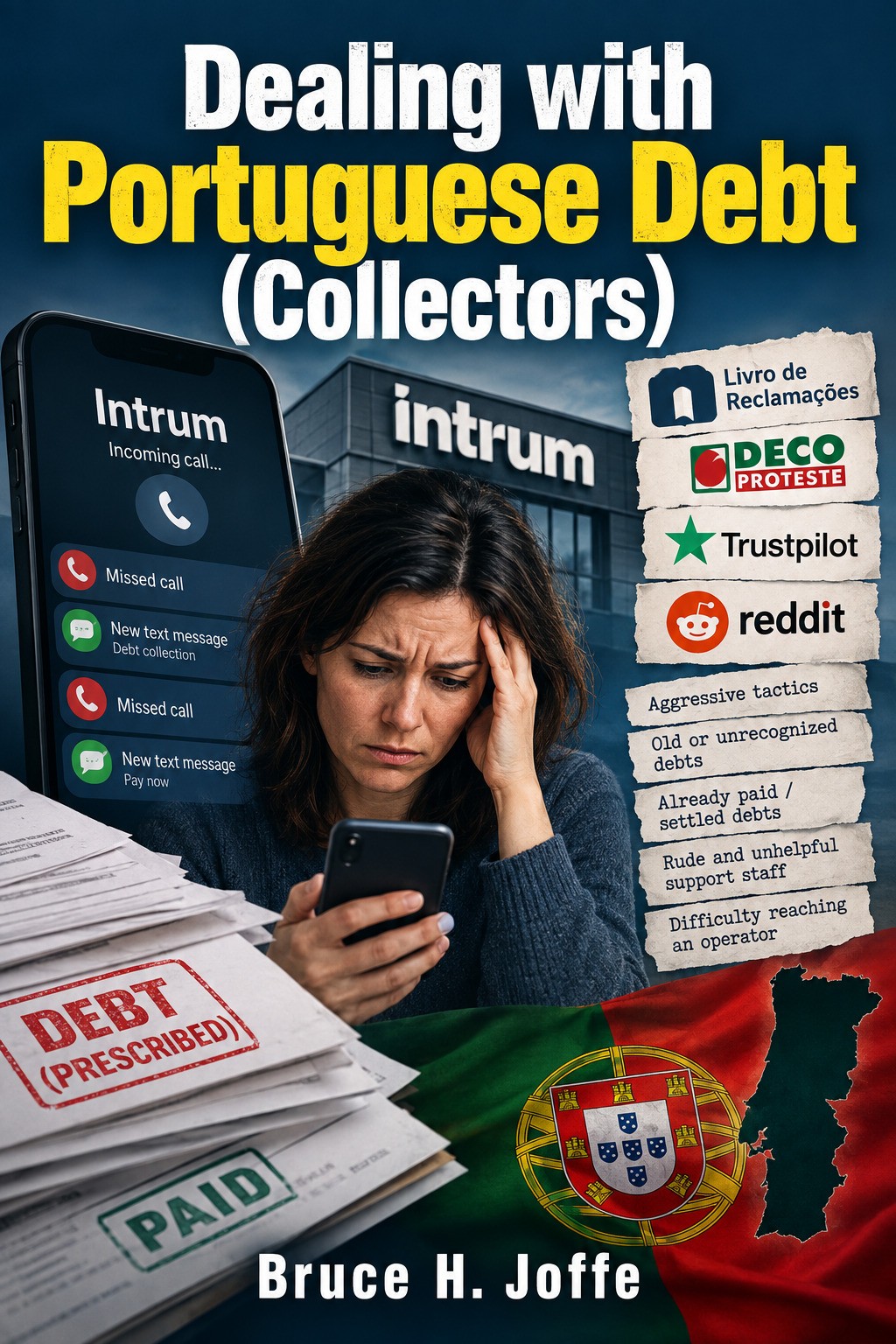
Time and again, debt collector Intrum has proven its operations to be unethical and, possibly, even illegal.
Myriad complaints against the company frequently highlight aggressive debt recovery tactics and administrative errors.
Complaints about Intrum and its tactics are found on multiple platforms:
In the Livro de Reclamações: https://portaldaqueixa.com/brands/intrum-justitia-servicos-de-gestao-e-recuperacao-de-credito/complaints
On Deco Proteste: https://www.deco.proteste.pt/reclamar/empresas/intrum-portugal/87C498E1-928B2A617
On TrustPilot: https://www.trustpilot.com/review/intrum.pt?languages=all
On Reddit: https://www.reddit.com/r/PortugalExpats/comments/1tqvsqq/has_anyone_dealt_with_intrum/
Consumers frequently report receiving relentless phone calls and text messages regarding old or unrecognized debts, sometimes stretching back over a decade. They complain that Intrum attempts to collect legally expired or prescribed debts, often using intimidating language.
Multiple reviews mention being dunned for amounts that were already paid, settled, or cleared through legal agreements. Customers describe unhelpful or rude support staff when trying to resolve discrepancies, alongside difficulty getting through to the operator.
After parting ways with MEO (another consumer complaint accumulator), I was glad my ordeal with this oversize telecommunications provider was over and done with. I had copies of emails from MEO responding to my earlier complaints through Deco Proteste and the Livro de Reclamações about being unable to cancel my contract following its required “loyalty” period. MEO’s emails confirmed that my contract had been cancelled, all of its equipment returned, and that I owed nothing on my account.
Months later, however, I began to receive daily debtor letters from collection agency Intrum, threatening to make my life miserable if I didn’t respond to their messages sent using WhatsApp.
It should be noted that their messages were marked “No Reply” and that it was impossible to reach Intrum staffers on the phone number provided despite 20-plus rings, let alone to reach anyone who could speak English.
So, again I turned to the Livro de Reclamações and Deco Proteste, where I registered complaints online.
Intrum’s rebuttal to my complaints had been repeated over and again to others in a boilerplate note stating, in essence, “Don’t blame us … we’re just the messengers,” an unethical, inaccurate, irresponsible, and totally inaccurate response.
Neither factual nor forthcoming, Intrum neglected to reveal its role in this matter: Is it really representing MEO, or has it purchased MEO’s debt portfolio? If the latter, Intrum is actually the owner–not the agent.
Intrum acts as a debt buyer, purchasing massive portfolios of non-performing loans, utility bills, and telecom accounts (termed carteiras de malparado) from companies like MEO, NOS, banks, and utilities for a small percentage of the actual debt amount (often 5 to 10 cents on the euro). Once bought, the debt legally belongs to Intrum. MEO has already written it off as a loss and wiped their hands of it. If Intrum buys a €500 debt for €25 and manages to scare or pressure the consumer into paying the full €500 (or even a discounted €200 settlement), they make a massive return on investment.
In other cases, usually involving more recent debts (under 6 months old), Intrum is hired by MEO or other firms to serve as an external collections department. In this scenario, MEO still owns the debt, and Intrum earns a commission fee for successfully recovering the past-due payment.
The point, however, was moot in my case, as I’d already proven that I didn’t owe anyone anything.
Documented by correspondence from MEO which accompanied my complaint, any issues the telecommunications giant had had with me were already resolved—including all bills (faturas) paid.
My complaint wasn’t with MEO; it was with Intrum and its messages. Based on questionable and unsubstantiated data presumably provided by its clients (MEO, in my case), Intrum repeatedly threatened, harassed, and intimidated me using privileged, private information (i.e., my telephone number) to bombard me with objectionable SPAM.
I have appealed again to the competent authorities through Portugal’s official complaints portal, asking that Intrum be sanctioned for its abuses and repeated violations of consumer protection.
Handling a debt collection agency like Intrum Portugal requires a calm, documented, and cautious approach. Here are the most effective tips to manage their contacts and protect your rights:
Shift Everything to Writing
Avoid discussing details over the phone. Verbal agreements are difficult to prove, and debt collectors may use high-pressure tactics. Instruct the agency to send all communications, payment proposals, and debt breakdowns via email or registered letter (Carta Registada com Aviso de Receção). State your stance clearly. Use a simple phrase like: “I will only communicate regarding this matter in writing. Please send the complete breakdown of this alleged debt to my email/address.”
Demand Formal Proof of the Debt
Never make a partial or full payment just to get them to stop them from contacting you. In Portugal, making a payment can be legally interpreted as an acknowledgement of the debt, which resets the legal clock.
Under Portuguese law, you have the right to know exactly where the debt originates. Demand copies of the original contract, the last outstanding invoice, and the formal document showing that the original creditor assigned (sold) the debt to Intrum.
Check for “Prescription” (Legal Expiry)
In Portugal, many common consumer debts have very short expiration periods (prescription). So, verify the age: If the creditor does not legally demand payment within this window, they lose the right to collect it.
Know the timelines
> 6 months: Water, electricity, gas, and telecommunications (internet/phone) bills.
> 2 years: Services provided by commercial entities or educational institutions.
> 5 years: Alimony, rent, or interest on loans.
If the debt is past these limits, Intrum cannot legally force you to pay. However, prescription does not happen automatically—you must formally invoke it. Send them a registered letter or email stating that the alleged debt is prescribed under Portuguese law.
Know Your Privacy Rights (RGPD)
Debt collectors cannot call you at unreasonable hours, contact your workplace, or disclose your situation to family members or neighbors. Harassment is illegal here.
If they are calling a number you never gave to the original creditor, or if the calls are excessive, you can explicitly state that they are violating your data privacy rights under GDPR (RGPD) and demand they cease phone contact. In other words, revoke consent.
Create a Log
Document every interaction. Keep a record of the dates, times, emails and phone numbers Intrum uses to call you. Save all messages. Don’t delete any SMS, WhatsApp messages, or emails they send, as these can serve as evidence if you need to file a formal complaint.
Contact Them Directly
Send the debt collection agency a letter from your personal email so you have a digital time-stamp. If possible, ask for a read receipt. Contac t Intrum at this email: info.pt@intrum.com
If they do not reply to the email or continue harassing you, send your complaint via Carta Registada com Aviso de Receção (Registered Letter with Acknowledgement of Receipt) to their official Lisbon address:
Alameda dos Oceanos, 59 – Edifício Espace, Piso 1, Bloco 2 A/B – Parque das Nações 1990-207 Lisboa, Portugal. Keep the postal receipt.
Businesses are expected to operate in good faith. Through its actions, Intrum has proven its culpability.
If I weren’t a foreigner with legal and fiscal residency in Portugal, I would take Intrum to court and invite all others who have been inflicted by its indignities to join me in what’s known as a “class action suit.”
Intrum would never know what had hit them!